
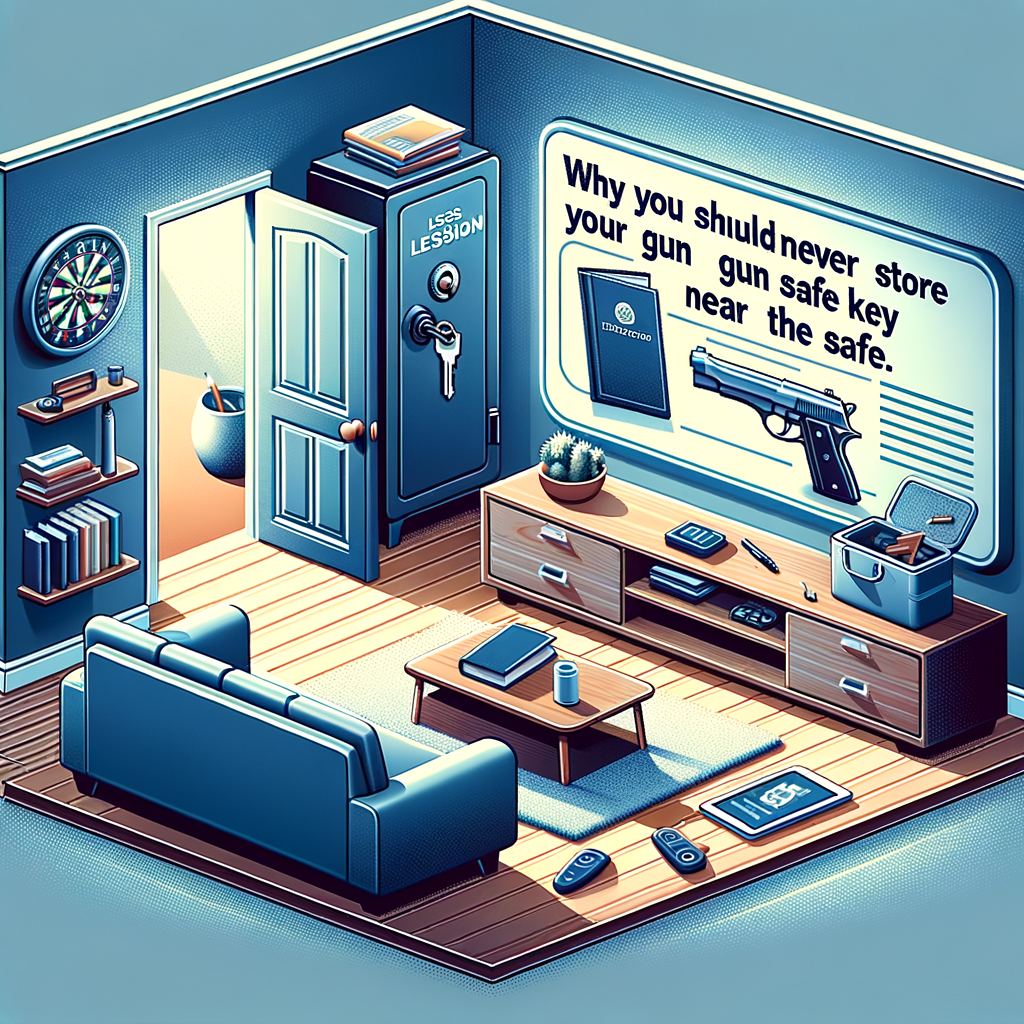
When you own a gun safe, your primary aim is to ensure that your firearms and valuables are secure from unauthorized access. A gun safe offers a significant layer of protection against theft or misuse. However, the security of your gun safe is only as robust as the precautions you exercise with its key. Many owners unknowingly compromise their safety protocol by storing the gun safe key too close to the safe itself. This article delves deep into why this seemingly harmless practice can undermine the very security that gun safes are designed to offer. By understanding the risks and addressing the common oversight of where to store your gun safe key, you can enhance the protection of your valuables and ensure that your firearms do not fall into the wrong hands. This article will explore the compelling reasons you should be cautious about key placement, the consequences of negligence, and proactive strategies for improving gun safe security.
Vulnerability to Theft
One of the principal reasons for not storing your gun safe key near the safe is the increased risk of theft. When burglars break into a home, their goal is to steal quickly and leave before getting caught. If they come across a gun safe, they know that unlocking it could give them access to valuable items. If the key is conveniently located near the safe, it becomes an open invitation for thieves. Experienced burglars often search for keys in obvious places such as drawers, under mats, or even in decorative items near the safe. By removing this temptation and storing your key elsewhere, you decrease the likelihood of a thief quickly accessing the safe during a break-in.
Unintentional Access by Children
Children are naturally curious and often get into places they shouldn’t. A gun safe key stored nearby can easily fall into the hands of young children searching for hidden treasures. Kids might not fully understand the dangers associated with firearms, making it especially critical to ensure that they cannot access a gun safe. Parents should consider the habits of children who might find a key when playing hide and seek or during an innocent exploration around the house. By keeping the safe key in a location far from the safe, the risk of a child unlocking the safe is significantly reduced. Moreover, educating children about gun safety is critical, but the best practice is prevention through secure key storage.
Deterring Opportunistic Attempts
Sometimes, guests, house sitters, or contractors enter your home. While they might not have malicious intentions, leaving a key near the safe can lead to opportunistic temptations. Even visitors with seemingly good intentions might attempt to peek inside the safe if they can access the key. By storing your key far from your gun safe, you eliminate the possibility of these opportunistic events. Consider the implications of someone using a moment of being unsupervised to snoop around. Keeping the key out of reach not only protects your valuables but also preserves trust and respect in personal relationships.
Importance of Key Management Practices
Sound key management practices deliver peace of mind and serve as an added layer of security for your gun safe. Understanding the importance of never storing your key in the immediately obvious places can deter those who might exploit your laxity. Investing time and thought into how you manage your key can reduce the ease with which it is found, align with best practices for gun safe management, and provide better overall protection. Engage with the idea of using a key control system if there are multiple copies of the key. This approach ensures the whereabouts of each key is known and reduces the risk of them being left near the safe.
Utilizing Research and Technology
Modern advancements have introduced secure key storage solutions that provide discretion and innovation. Key safes, lockboxes, or even biometric key storage devices are great options. These tools not only secure the key but allow you to place it in an entirely different part of the house without sacrificing convenience. By employing such technology, you are utilizing the best available options to ensure your key does not land in the wrong hands. Researching and investing in such equipment might seem trivial compared to the safety and security they afford your firearm collection. By embedding these technologies into everyday practices, you enhance your gun safe’s resilience and peace of mind.
Addressing Human Error and Forgetfulness
Humans are prone to forgetfulness, and it’s an ordinary circumstance to forget where you placed the key last. However, when habitually storing it near the safe, it’s easy to foster complacency and inadvertently advertise it to others. For instance, if you place it in an obvious spot like a drawer or nearby trinket box, your mental association leads you back there every time. Consequently, that habit becomes predictable to anyone who follows your behavioral pattern. Encouraging family members to adhere to security protocols helps mitigate these risks. By consciously making an effort to innovate and reorganize key placement, you will eliminate routine behavior that might compromise security.
Psychological Comfort Versus Practical Security
Storing your gun safe key near the safe itself may seem convenient, providing a false sense of preparedness in an emergency. However, this psychological comfort undermines practical security considerations. While convenience is critical in emergencies, the immediate accessibility of the safe key should never compromise the safe’s intended function. Striking a balance between quick access and robust security can be achieved through careful planning. Develop a practice of maintaining the key in a secure location and offering accessibility through logical, strategic thinking. This keeps key security intact while ensuring that you are ready should the need for quick access arise.
Impact of Careless Habits on Insurance Claims
In the unfortunate event of theft or accident, insurance companies scrutinize security practices when evaluating claims. Storing your gun safe key recklessly could nullify your insurance by demonstrating negligence. Insurers might explicitly state that compliance with safe practices is a condition for coverage. Consequently, better storage policies could be instrumental in protecting your claims. Always consult with your policy’s guidelines and align your key storage practices accordingly. This provides a two-fold benefit of securing your firearms and ensuring financial recourse if an unwanted situation arises.
Developing a Security Plan
Creating a comprehensive security plan involves more than merely buying a gun safe. It is a layered strategy that includes choosing ideal locations for your key. List all potential threats to your firearm security, and develop proactive responses—such as a map of where the key is kept and alternative access modes in case of key misplacement or distress. Engage all family members in discussions about why keeping the key near the safe is inadvisable. When everyone is on the same page, you foster a home environment that prioritizes safety. Ensure that secondary security measures are in place to compensate for any weaknesses in the primary key storage strategy, thus ensuring an insulated defense against unauthorized access.
Reevaluating Safe and Key Accessibility
The placement of both the gun safe and its key within your home can affect how access strategies are executed. Evaluate whether the gun safe needs to be in a conspicuous or accessible location. Apply the same scrutiny to the key, ensuring safe and logical positioning. If a spare key must exist, keep it in an entirely different location from the primary key to avoid a complete security compromise. Deciding on the physical barriers to weapon access can be instrumental in providing long-term security solutions. Reevaluate these positions continually to integrate any changes in household lifestyle or structure.
Conclusion
Ultimately, the way you store your gun safe key significantly affects your overall security posture. While it might be tempting to focus primarily on the features of the gun safe itself, it’s crucial to remember that a safe is only as secure as its access point allows. By reassessing key storage habits, you take an active role in safeguarding not only your firearms but also everyone in your household and environment. Avoiding the common mistake of keeping the key near your safe greatly diminishes the risk of unauthorized access. The thoughtful placement of your gun safe key ensures that you uphold the safe’s primary purpose: protection against theft, accidents, and misuse. By prioritizing these considerations in your daily practices, you commit to a proactive defense strategy that emphatically contrasts with the passive assumption of safety that comes from relying on off-the-shelf safety claims. Stay informed, stay secure, and redefine your gun storage practices to reflect a genuinely robust protection system that future-proofs your household’s security requirements.
Frequently Asked Questions
1. Why is it important not to store my gun safe key near the safe?
By storing your gun safe key near the safe, you are essentially nullifying the security benefits the safe provides. Picture this: if a burglar gains access to your home, their first thought after finding your safe will likely be to search for its key within close proximity. It’s human nature to keep things conveniently located, and thieves often rely on this tendency. They know that many people hide their keys in predictable places nearby, such as under a rug, in a drawer, or even taped underneath the safe. This quick access to the key turns your fortified protection into an easy target, making it crucial to keep the key well out of the obvious zones – ideally in a completely separate area or even off-site if possible, thereby ensuring your firearms and valuables remain shielded from unauthorized access.
2. What are the risks of keeping the gun safe key nearby?
Keeping your key near the safe exposes you to several risks. Firstly, in the unfortunate event of a home break-in, the thief could quickly discover its location and gain access to not only your firearms but any other valuables stored inside. Moreover, even someone intentionally entering your home – like guests, repair workers, or nosy neighbors – may be able to locate and identify where you’ve stashed that key. Additionally, consider the curiosity-driven actions of children or teenagers; they often explore and could inadvertently find the key, leading to potentially dangerous interactions with firearms. All these scenarios highlight how a lack of distance can compromise security. Always think of the key as another line of defense – essentially, it represents the last gate protecting your safe’s contents, making it vital to store it thoughtfully and securely.
3. What are some recommended secure places to store a gun safe key?
When considering where to store your gun safe key, creativity and discretion are key. Diversify the places you might consider putting it. For example, you might use a different part of your house that is not regularly traversed by guests or strangers. Some people opt for storing the key in a completely separate building, like a detached garage or workshop, where daily traffic is limited. Some individuals go as far as trusting their bank’s safe deposit box with the task, ensuring it is off practically all potential intruder routes. For added protection, consider using a small lockbox or secondary key safe elsewhere in your home that’s camouflaged within everyday items. Technology-based solutions, such as biometric wallets, can also provide an added layer of security. Just ensure wherever you store it is reliable, secure, and warrants some level of camouflage or protection on its own.
4. How can I ensure my gun safe key management remains effective?
Effective management of your gun safe key revolves around a few pivotal strategies: variation, discreetness, and awareness. First, avoid the temptation to follow a routine path to your key’s hiding spot. Routinely move your key’s location while keeping track of each new spot. Embrace unconventional storage sites that are practical but non-intuitive for unauthorized finders. Secondly, restrain from discussing where your key is stored with anyone who doesn’t require that information for safety or emergency purposes – even casual mentions can lead to unintended consequences. Lastly, be security-conscious about documenting the location. Avoid physical notes that can be misplaced and expose your key’s location, opting instead for an encrypted digital note if necessary. Ultimately, manage the key with the same diligence you practice with your gun safe code or combination to maintain the highest security levels.
5. What should I do if I lose the gun safe key and have stored it securely?
In the unfortunate event that you lose your gun safe key despite securely storing it, don’t panic, but act swiftly. Your first step should be contacting the gun safe manufacturer or issuer for guidance. Many safes have protocols in place for lost keys, including the possibility of duplicating the key or issuing a replacement. You’ll likely need to verify your ownership, which could involve providing the model number and serial number of your safe as well as proof of purchase. Additionally, consider reaching out to a professional locksmith particularly skilled in safes – they often have sophisticated tools to open the safe without damage. Lastly, while awaiting a resolution, closely monitor the area around your safe to ensure that incidental misconduct or theft does not occur amid this temporary insecurity. Taking these steps ensures you regain access efficiently and maintain the integrity of your firearm security system.