
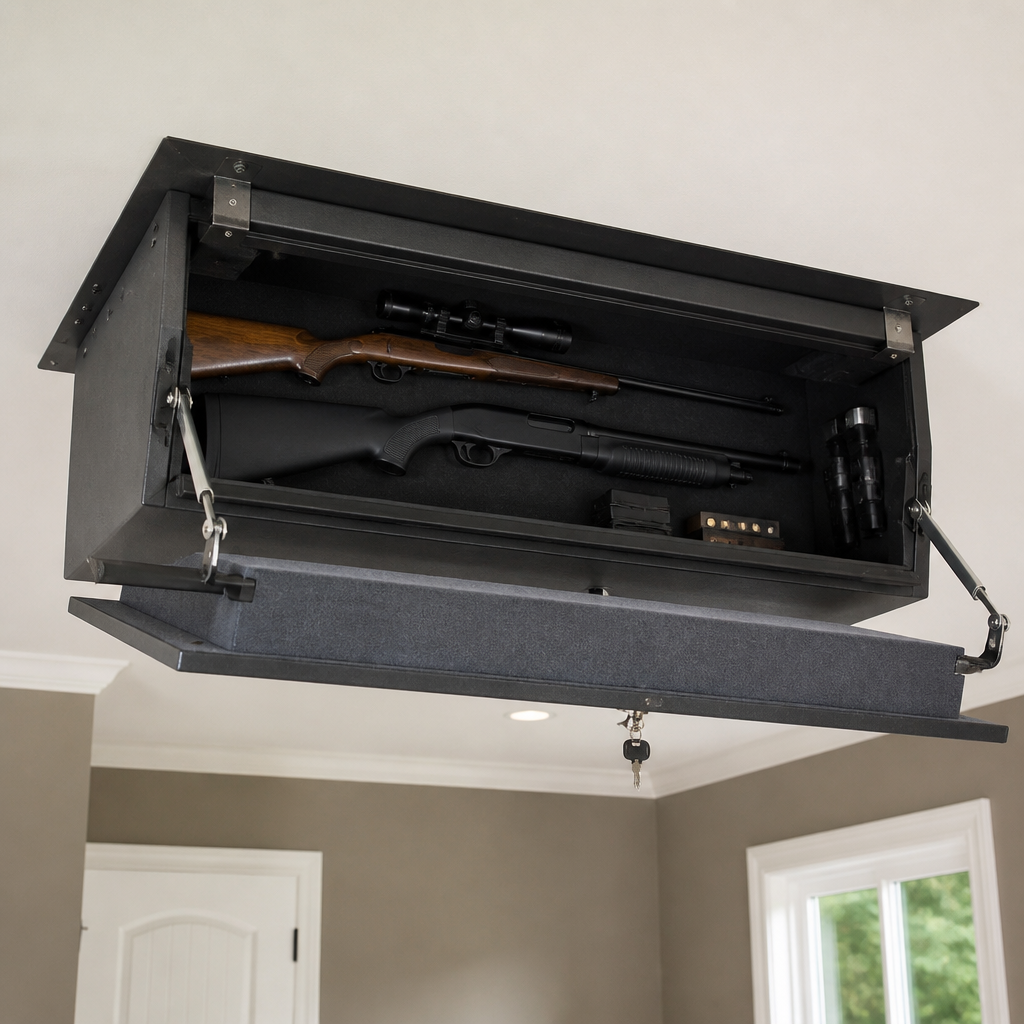
Drop-down gun safes give firearm owners a rare combination of fast access, concealment, and efficient use of space, making them one of the smartest options for discreet ceiling storage in modern homes. In the gun safes and safety category, this topic sits inside the broader world of hidden and discreet gun storage solutions, which includes furniture safes, wall safes, under-bed lockboxes, mirror safes, shelf compartments, and vehicle vaults. A drop-down ceiling gun safe is exactly what it sounds like: a locking storage unit installed between ceiling joists or mounted overhead, then lowered by hinge, motor, or gas-assisted mechanism when opened. The goal is simple. Keep firearms secured from unauthorized access while keeping them out of casual sight and available when needed.
I have evaluated hidden storage products for homeowners balancing security, speed, and room layout, and ceiling units consistently stand out when floor space is limited or visual discretion matters. They are especially useful in primary bedrooms, closets, home offices, and safe rooms where traditional upright gun safes may be too obvious or too heavy for the location. Unlike a large freestanding safe, a concealed overhead unit does not dominate the room. Unlike a nightstand lockbox, it is harder for a child, guest, or burglar to discover during a quick search. That combination explains why discreet gun storage has become a serious planning category rather than a novelty purchase.
The best drop-down gun safes for discreet ceiling storage are not defined by concealment alone. They must meet three practical requirements: structural integrity, access reliability, and real security against unauthorized entry. Structural integrity means the unit, mounting hardware, and surrounding framing can support the combined weight of the safe and firearms. Access reliability means biometric readers, RFID releases, keypad locks, backup keys, and internal hinges must function consistently under normal household conditions. Real security means reinforced steel construction, tamper-resistant fasteners, concealed locking points, and installation that cannot be defeated by simply pulling the unit out of drywall. A ceiling safe that opens smoothly but mounts weakly is not a serious safe. A heavily built unit that is too slow or awkward in a defensive scenario also misses the mark.
This hub article explains how to choose the best drop-down gun safe, where ceiling safes fit among hidden gun storage solutions, what installation standards matter, and which tradeoffs every buyer should understand before cutting into a ceiling. It also serves as a foundation for deeper articles on wall safes, bed-mounted vaults, hidden furniture storage, and child-resistant quick-access options. If you want discreet firearm storage without sacrificing access or safety discipline, start here.
What Makes a Drop-Down Ceiling Gun Safe Worth Buying
A quality drop-down ceiling gun safe is built around three engineering priorities: concealment, speed, and resistance to tampering. In practice, that means formed steel rather than thin sheet metal, secure anchoring into joists or blocking, and a door or tray mechanism that lowers predictably without slamming. The best units are designed around real dimensions of modern pistols, spare magazines, compact carbines, and tactical lights, not vague interior volume claims. If a manufacturer cannot tell you steel thickness, lock type, supported joist spacing, and loaded weight rating, treat that as a warning sign.
Access method matters more than many buyers expect. Biometric safes are convenient, but fingerprint readers vary dramatically in quality. A good biometric system should store multiple prints, read from different angles, and include a keypad or mechanical override. Keypad-only models reduce sensor failure concerns but require memorized input under stress and battery maintenance. RFID-based designs can be very fast and discreet, yet they depend on tag placement discipline and should still have backup entry. In my testing across multiple quick-access products, the most dependable setups always include two independent entry methods plus a low-battery warning that is easy to notice before failure.
Interior design also separates the best units from gimmicks. Foam-lined cradles, magazine slots, motion-activated lighting, and adjustable retention straps improve both safety and access. A pistol stored muzzle-safe, grip-forward, and clear of loose items is easier to retrieve than one rattling in a generic metal compartment. For buyers storing more than one handgun, spacing is critical. Scopes, optics, threaded barrels, and tall iron sights often interfere with narrow interiors. Always compare the listed internal dimensions against your actual firearm setup, including mounted accessories.
Concealment quality depends not only on the safe, but on trim finish and placement. The strongest products sit flush and blend with nearby architectural features such as closet ceilings, tray ceilings, or utility-access patterns. A visible seam in the middle of a living room is not discreet storage. Placement should avoid high-traffic sightlines and should never create a situation where the safe opens above a child’s bed, a staircase, or a fragile surface. Discreet storage works best when it is intentional, not merely hidden.
How Ceiling Safes Compare With Other Hidden Gun Storage Solutions
Ceiling safes are only one branch of hidden firearm storage, and the right choice depends on your room, firearm type, and threat model. Wall safes fit between studs and are excellent for pistols, documents, and compact valuables, but they can be limited by stud spacing and are often found during renovations or burglar searches. Under-bed safes offer very fast access and decent capacity, yet they are easier to spot and sometimes easier to pry if poorly anchored. Hidden furniture safes can blend beautifully into a room, but many prioritize concealment over robust steel and lock quality. Large freestanding safes remain strongest for theft resistance and fire protection, though they are the least discreet and often impractical in upstairs rooms.
Drop-down ceiling safes sit in a useful middle ground. They are more discreet than under-bed or bedside options, often more accessible than deep closet floor safes, and generally less intrusive than a full-size gun cabinet. They are particularly strong for one to four defensive handguns, spare magazines, passports, cash, and similar high-priority items. Their main limitation is capacity. If you need to store a rifle collection, sensitive NFA paperwork, and bulk ammunition, a ceiling unit is not your primary safe. It is an access-and-concealment layer within a wider storage strategy.
| Storage Type | Best For | Main Advantage | Main Limitation |
|---|---|---|---|
| Drop-down ceiling safe | Quick-access pistols in discreet spaces | Excellent concealment with efficient use of overhead space | Limited capacity and installation complexity |
| Wall safe | Pistols, documents, jewelry | Flush concealment between studs | Shallow depth and stud-spacing constraints |
| Under-bed safe | Fast bedroom access | Large drawer-style access | More visible during cleaning or burglary |
| Hidden furniture safe | Blended room aesthetics | Looks like ordinary décor | Security varies widely by brand |
| Freestanding gun safe | Collections and long guns | Highest overall security and capacity | Least discreet and space intensive |
The practical answer for many households is layered storage. A larger anchored safe handles primary storage, legal compliance, and long-term protection, while a discreet ceiling safe covers rapid access in a specific room. That approach is more secure than trying to force one product category to do every job.
Key Buying Criteria: Security, Speed, and Structural Fit
When selecting the best drop-down gun safe for discreet ceiling storage, start with structure before features. The ceiling framing must support the loaded safe, the dynamic force of opening, and any leverage applied during tampering. Most residential joists are wood, commonly spaced 16 inches on center, though 24-inch spacing also exists. Some products are designed to fit between joists; others require added blocking or surface mounting. If the manufacturer does not provide mounting specifications, fastener requirements, and maximum loaded weight, move on. Drywall alone provides no meaningful support for a firearm safe.
Steel thickness is the next filter. Many quick-access products use 14-gauge to 12-gauge steel; stronger units may reinforce door edges and locking points beyond the body thickness. Gauge is not the whole story, but flimsy metal paired with weak hinges is a common failure point. Look for pry-resistant door geometry, protected hinge areas, and internal locking lugs. A secure lock attached to a weak lid is still weak. Trusted lock ecosystems from brands that also serve access-control or safe markets tend to be more dependable than generic imported modules with limited support.
Speed must be measured honestly. Ask how the safe behaves at night, under stress, and with one hand free. Does the tray descend softly enough to avoid noise? Can you retrieve the handgun grip-first? Can a spouse or other authorized user operate the system reliably? Fingerprint readers that work perfectly in demo videos can fail with dry skin, sweat, angled touch, or battery neglect. For that reason, many informed buyers prefer a biometric-plus-keypad combination. It is not the flashiest choice, but it is usually the most resilient.
Environmental fit matters too. Closets may run warmer than open rooms. Attics above the ceiling can introduce dust, temperature swings, and insulation concerns. If the safe sits under an HVAC register or near a shower, humidity exposure changes. Electronics, batteries, and lubricated components all perform better when the installation environment is stable. A dehumidifier rod is not realistic in many ceiling applications, so corrosion control may depend more on room conditions, desiccant packs, and regular inspection.
Installation, Safety, and Legal Considerations
Professional installation is often worth the cost because ceiling safes interact with framing, electrical runs, lighting, and sometimes fire-blocking or insulation systems. Before cutting any opening, identify joists, wiring, plumbing, ducts, and load paths with a stud finder capable of detecting AC lines, then verify manually where possible. If you are working below a second floor, consider foot traffic vibration. If you are below an attic, confirm insulation type and whether recessed placement affects thermal barriers or moisture movement. In several home projects I have reviewed, the safe itself was adequate but the surrounding finish work exposed the installation visually or weakened the framing because blocking was added carelessly.
Child access prevention remains nonnegotiable. A hidden safe is not automatically a child-safe safe. Curious children notice routines, observe adults, and explore closets and spare rooms. The unit must remain locked at all times when not in direct use, backups such as keys or RFID tags must be stored separately, and access codes should be changed when household circumstances change. If local law imposes secure storage requirements, follow the statutory standard, not your assumption of what seems sufficient. Many states impose criminal penalties or civil exposure when a minor gains access to an unsecured firearm.
Fire protection is another area where buyers need realism. Most ceiling safes are not substitutes for heavy fire-rated gun safes tested for sustained heat. Thin quick-access units protect against unauthorized hands and casual theft more than serious fire. Documents, irreplaceable media, and large ammunition inventories belong elsewhere. Likewise, ceiling concealment does not guarantee theft resistance. A determined burglar with time and tools can defeat many residential products. The purpose is to increase security, reduce discovery, and preserve access, not to create an impenetrable vault.
Best Use Cases and How to Build a Discreet Storage Plan
The best use cases for drop-down ceiling gun safes are highly specific. A primary bedroom closet is one of the strongest placements because it is private, structurally predictable, and less likely to be scrutinized by guests. A home office can work well if the safe is positioned away from camera backgrounds and service visits. A dedicated safe room or hardened master suite offers the best overall context because access, concealment, and defensive planning align. In contrast, open family rooms, children’s bedrooms, garages with extreme temperatures, and ceilings containing complex utilities are usually poor candidates.
As the hub for hidden and discreet gun storage solutions, this topic connects naturally to related planning decisions. If your goal is room-to-room access, compare ceiling safes with bedside lockboxes and wall safes. If your concern is blending storage into décor, hidden furniture may deserve a separate review. If theft resistance is your first priority, read your full-size gun safe options before choosing a quick-access product. The strongest strategy is a mapped storage plan: primary safe for the collection, discreet quick-access safe for immediate defensive needs, and a documented routine for maintenance, code changes, and training with authorized adults.
Choose a drop-down ceiling gun safe only after measuring your firearms, verifying framing, and deciding exactly what role the safe will play in your home. The right model delivers discreet storage, faster access than many hidden alternatives, and better space efficiency than bulky cabinets. The wrong model adds cost, complexity, and false confidence. Review your room layout, compare hidden storage categories, and invest in the safe that matches your real security needs.
Frequently Asked Questions
What is a drop-down gun safe, and how does it work for discreet ceiling storage?
A drop-down gun safe is a hidden storage unit designed to mount between ceiling joists or inside an overhead cavity, then lower down when accessed. Unlike a traditional floor safe or bulky standalone gun cabinet, this style is built specifically for concealment and space efficiency. From the room below, many models appear nearly invisible because the outer panel can be finished to blend with the surrounding ceiling, making them an appealing option for firearm owners who want quick access without advertising where a firearm is stored.
Most drop-down ceiling gun safes operate with an electronic lock, RFID access, keypad, biometric scanner, remote mechanism, or a combination of these features. Once unlocked, the unit releases and lowers in a controlled motion, usually with the help of a motorized system, spring-assisted mechanism, or dampened hinge assembly. The interior is typically configured to hold one or more defensive firearms, magazines, and sometimes small valuables. The biggest advantage is that the safe remains out of sight while still staying accessible in a way that many other hidden storage methods cannot match. For homeowners prioritizing discreet firearm storage in bedrooms, closets, hallways, or home offices, a drop-down safe offers a practical balance of concealment, accessibility, and efficient use of unused overhead space.
Are drop-down ceiling gun safes secure enough for home defense and safe firearm storage?
Yes, a quality drop-down gun safe can be a secure and effective solution, but its performance depends heavily on construction quality, lock reliability, and proper installation. The best models use heavy-gauge steel, reinforced locking points, tamper-resistant hardware, and internal retention systems that keep the firearm stable when the unit is raised or lowered. Because these safes are concealed above eye level and often fully hidden within the ceiling, they also benefit from a layer of security through discretion. A safe that an intruder cannot quickly locate is already at an advantage compared with more obvious storage options.
That said, buyers should understand that not every drop-down safe is built to the same standard. Some are intended primarily for fast-access staging of a defensive firearm rather than long-term protection against determined attacks with tools. If your main goal is home defense readiness, a drop-down model can be excellent because it keeps the firearm nearby yet hidden from children, guests, and casual discovery. If your priority is maximum burglary resistance, compare steel thickness, lock type, pry resistance, backup power options, and whether the unit has been tested for tamper resistance. As with any firearm storage product, secure use also includes responsible gun handling, keeping firearms inaccessible to unauthorized users, and following local laws regarding safe storage requirements.
What should I look for when choosing the best drop-down gun safe for my home?
The most important factors are fit, access speed, build quality, and installation compatibility. Start by confirming the safe’s dimensions relative to your ceiling structure. A drop-down unit must fit between joists, clear wiring or ductwork, and operate without obstruction. Before buying, measure the available cavity depth, joist spacing, and ceiling area where you plan to mount it. It is also smart to think about room placement. A bedroom may prioritize rapid access, while a hallway, closet, or office might offer better concealment and less disruption to the room’s appearance.
Next, evaluate access features carefully. Some owners prefer biometric entry for speed, while others favor keypad or RFID systems for consistency and lower false-read risk. The best choice is often one that combines quick electronic access with a reliable backup method in case of dead batteries or electronic failure. You should also examine how the safe lowers. Smooth, controlled deployment matters because a jerky or noisy mechanism can slow access and put strain on both the unit and the firearm inside.
Interior layout is another major consideration. Some drop-down safes are designed for handguns only, while others can secure a short defensive firearm or multiple items. Look for padded interiors, magazine holders, barrel or grip retention features, and enough room for accessories you may want staged with the firearm. Finally, pay attention to finish quality, mounting hardware, warranty support, and the reputation of the manufacturer. The best drop-down gun safe is not just the one with the most features; it is the one that matches your ceiling structure, access preferences, firearm type, and overall home security plan.
Can a drop-down ceiling gun safe be installed in any home, and should installation be professional?
Not every home is an ideal candidate for a drop-down ceiling safe, which is why installation planning matters so much. These safes require adequate structural space between joists, enough depth above the ceiling surface, and a location free from plumbing, HVAC components, electrical wiring, and other obstructions. Ceiling material also matters. Drywall ceilings with accessible framing are common installation points, but older homes, concrete ceilings, finished upper-floor assemblies, or areas with limited cavity space may require a different hidden storage solution altogether.
Professional installation is often the best choice, especially for motorized or hardwired units. A properly installed ceiling safe must be securely anchored to structural framing so it can support both the safe’s weight and the force of repeated operation over time. If the unit is not mounted correctly, it can sag, bind, make excessive noise, or become unsafe to use. Professional installers can also help route power cleanly, preserve the safe’s hidden appearance, and reduce the risk of damaging utilities hidden in the ceiling.
Some experienced DIY homeowners can install certain models themselves, particularly if the product is designed for straightforward framing attachment and battery-powered operation. Even then, precise measurement and careful planning are essential. In general, if you are investing in a premium hidden firearm storage solution, professional installation is usually worth it for safety, reliability, and long-term performance.
How does a drop-down gun safe compare with other hidden and discreet gun storage options?
A drop-down gun safe stands out because it uses overhead space that is otherwise wasted while keeping the firearm completely out of normal sight lines. Compared with furniture safes, wall safes, under-bed lockboxes, mirror safes, shelf compartments, and vehicle vaults, a ceiling-mounted drop-down unit often offers a stronger combination of concealment and fast access inside the home. It is especially attractive for people who do not want a visible safe in the bedroom or who have limited floor and wall space.
Each hidden storage type has strengths. Furniture safes can blend naturally into living spaces and offer easy reach, but they may be more vulnerable to discovery if someone closely examines the piece. Wall safes save space and can be hidden behind art or mirrors, though stud spacing limits their size. Under-bed lockboxes are convenient and common for quick-access storage, but they are also among the first places many intruders know to check. Mirror and shelf safes emphasize visual disguise, while vehicle vaults focus on secure storage during travel rather than primary in-home defense staging.
Drop-down ceiling gun safes are best for owners who want a high level of discretion without sacrificing access speed. They can be particularly effective in master bedrooms, closets, and private office spaces where immediate availability matters but visual concealment is a top priority. The tradeoff is that installation is more specialized than many other hidden storage options. In short, if your home layout supports it, a drop-down ceiling safe is one of the smartest discreet gun storage choices available because it combines hidden placement, efficient use of space, and practical access for responsible firearm owners.