
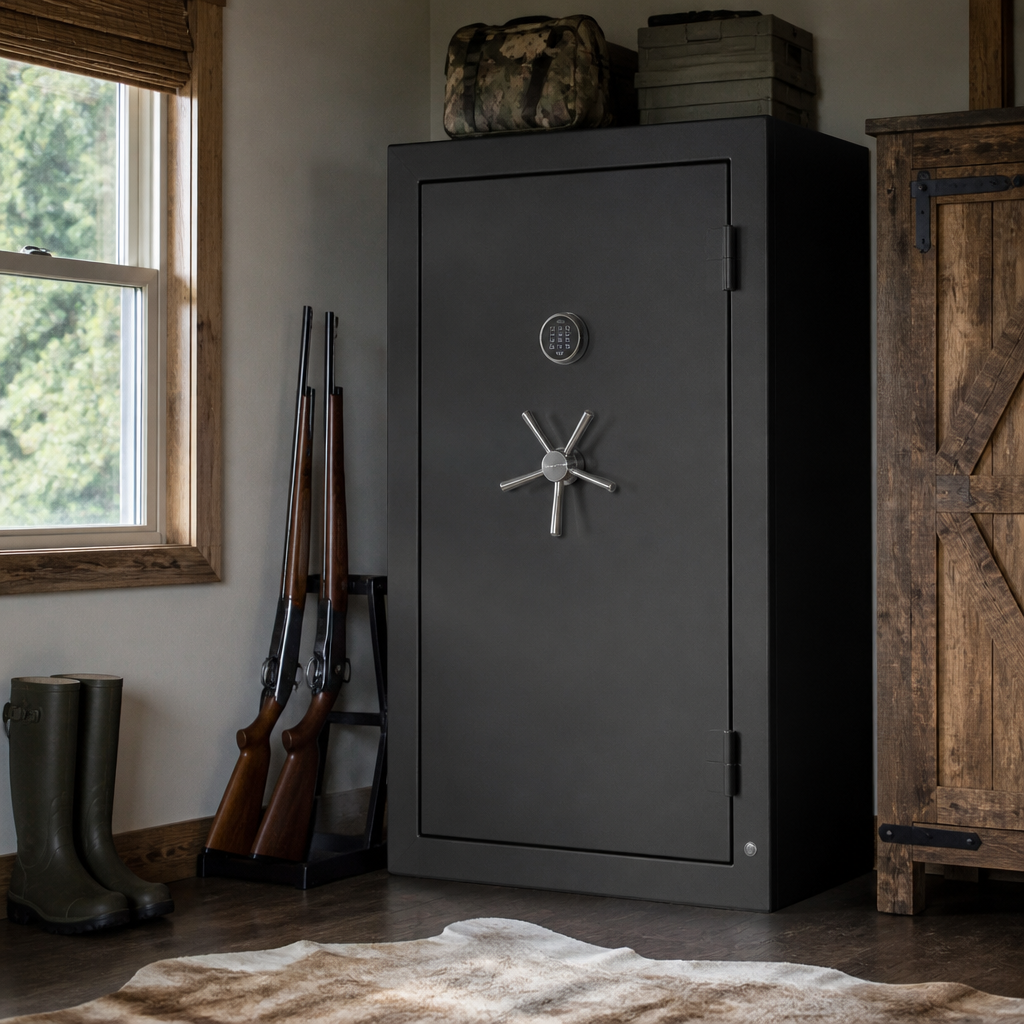
The Winchester Silverado 40 sits in the sweet spot where a large residential gun safe becomes practical for daily use, long-term collection growth, and modern home security planning. In the gun safes and safety category, product reviews matter because buyers are not simply comparing shelves and paint finishes; they are evaluating burglary resistance, fire protection, locking systems, interior flexibility, installation demands, and whether a safe can support responsible firearm storage for years. A hub article on product reviews should help readers understand one model in depth while also giving them a framework for judging every other safe they may research next.
When I evaluate a safe like the Winchester Silverado 40, I focus on four core questions. First, how much usable storage does it really provide once optics, slings, long barrels, and document shelves are factored in? Second, what security features materially slow down unauthorized access instead of just sounding impressive in a brochure? Third, how does fire protection compare with recognized testing approaches and realistic residential fire conditions? Fourth, what ownership factors, from delivery to dehumidification, determine whether the safe performs well in a real home rather than a showroom? Those questions matter because a large safe is a permanent purchase for most households.
The Winchester Silverado 40 is generally positioned as a high-capacity gun safe designed for roughly forty long guns, though every experienced owner knows advertised counts are optimistic. In practical terms, this is a full-size safe aimed at collectors, hunters, sport shooters, and families consolidating firearms, ammunition, documents, and valuables into one secure enclosure. The “modern security features” in this context usually include an electronic lock option, reinforced steel construction, active locking bolts, organized interiors, fireboard insulation, and anchoring capability. A good review has to look past the headline specifications and explain how those features work together under pressure.
This topic matters beyond convenience. Secure storage reduces theft risk, limits child access, supports legal compliance in some jurisdictions, and protects expensive property that is often difficult or impossible to replace. According to long-standing guidance from the National Shooting Sports Foundation and many law enforcement agencies, safe storage is one of the most effective ways to prevent unauthorized firearm access. At the same time, not every gun safe is equal. Construction details, lock quality, and installation quality are what separate a meaningful security upgrade from a large metal cabinet with better marketing. That is why the Winchester Silverado 40 deserves a detailed, plain-language review.
What the Winchester Silverado 40 Is Designed to Do
The Silverado 40 is best understood as a large-capacity, multi-purpose gun safe for residential use. Its primary job is to secure long guns and handguns while also offering enough internal volume for documents, heirlooms, magazines, optics, and small valuables. Buyers looking at this class usually need more than a starter safe. They have reached the point where floor space, organizational layout, and security margin all matter. In homes with several hunters or sport shooters, a safe this size often replaces two smaller units and centralizes inventory in one controlled location.
The big advantage of a model like this is not just capacity but flexibility. A forty-gun interior can usually be reconfigured with shelving for mixed storage, which is important because most owners do not need to stand forty bare rifles shoulder to shoulder. They need room for scoped bolt guns, AR-pattern rifles with accessories, cased handguns, passport folders, jewelry trays, tax records, and backup drives. In my experience, real-world capacity often lands closer to twenty-four to thirty long guns if optics and spacing are respected. That is not a flaw unique to Winchester; it is standard across the category and should be treated as normal buying math.
Another design goal is deterrence. Large safes send a clear signal that firearms and valuables are not casually accessible. Their weight and footprint make smash-and-grab theft harder, especially when properly anchored into concrete. The Silverado 40 is not a commercial TL-rated vault, and it should not be represented as one. It is a residential security container built to delay entry, resist simple pry attacks, and give owners organized, repeatable secure access. For most homeowners, that is the correct lane: meaningful resistance combined with usability, not impossible-to-move bank-vault architecture.
Security Features That Matter in Daily Ownership
Modern security features on a large safe only matter if they perform consistently in everyday use. The most important starting point is the lock. Winchester safes in this class commonly offer electronic locks, and quality electronic locks have real advantages: fast entry, programmable codes, and easy use in low light. Models from established lock manufacturers such as Sargent and Greenleaf or SecuRam are generally preferable because parts support and service familiarity are stronger. A lock should relock after failed attempts, resist manipulation, and allow battery replacement from the exterior so owners are not locked out over routine maintenance.
Steel thickness, door construction, and boltwork are equally important. Many buyers obsess over advertised bolt count, but count alone does not define security. What matters is whether the door frame resists prying, whether the hinge design protects the gap, and whether the locking bars or round bolts engage solidly into reinforced channels. A well-built safe with fewer, stronger engagement points is better than a flashy design with many shallow bolts. On large Winchester units, the real value is the whole system: reinforced door edges, internal hard plate near the lock, and enough body rigidity to prevent fast peel-open attacks with basic hand tools.
Anchoring is another modern security feature, even though it is often treated as an afterthought. A 700-plus-pound safe feels immovable until two thieves arrive with a dolly and time. Once anchored to concrete, the safe becomes far more resistant to tipping and pry leverage. I always tell buyers that the security rating of an unanchored safe is theoretical. Proper anchoring converts weight into actual protection. Placement helps too. A corner location with limited side clearance reduces pry access and makes the safe harder to attack from multiple angles.
| Feature | Why It Matters | What to Check |
|---|---|---|
| Electronic lock | Fast, repeatable access for authorized users | Brand reputation, battery access, lockout behavior |
| Steel body and door | Slows cutting, prying, and forced entry | Gauge details, reinforced frame, door gap quality |
| Locking bolts | Secures the door under attack pressure | Depth of engagement, not just quantity |
| Anchor system | Prevents removal and tipping attacks | Factory anchor holes and concrete installation |
| Interior layout | Supports safe, organized firearm storage | Adjustable shelves, barrel rests, handgun pockets |
| Fire lining and seals | Helps protect contents during a house fire | Time and temperature rating, expanding door seal |
One more point that often gets missed in product reviews is access discipline. A biometric reader may sound more advanced, but for a large family safe, an electronic keypad is often more dependable over the long term. Fingerprint readers can struggle with dirt, cuts, moisture, or inconsistent enrollment. Keypads are slower by a second or two, but they are predictable. In a full-size safe meant for stored collection access rather than bedside emergency access, predictable beats flashy every time.
Fire Protection, Storage Capacity, and Interior Usefulness
Fire ratings on gun safes require careful reading. Manufacturers typically publish a time-and-temperature claim, such as surviving a certain number of minutes at a defined external temperature. That does not mean contents emerge untouched, and it does not guarantee identical performance in every residential fire. The Silverado 40’s fire protection should be evaluated as layered mitigation: insulation board, a heat-expanding door seal, and a sealed enclosure that slows temperature rise. Documents, wood stocks, adhesives, optics, and ammunition all respond differently to heat, so fire protection is always a range, not a magic shield.
The practical question is whether the safe gives owners a realistic chance to protect contents during common house fire timelines until suppression occurs. In suburban settings with strong fire response, a good residential fire-lined safe can make a substantial difference. In remote locations with delayed response or total structural burn, no consumer gun safe should be expected to perform like a commercial media vault. That tradeoff should be stated clearly. If irreplaceable paper records are involved, I recommend adding a smaller UL-classified document box inside the safe for layered protection.
Capacity is where the Silverado 40 becomes especially attractive. Large safes solve a problem many buyers discover too late: collections expand faster than expected. A household may begin with three deer rifles, one shotgun, and two handguns, then add suppressor paperwork, optics boxes, magazines, training pistols, and inherited firearms. Within five years, a nominal twenty-four-gun safe can be overstuffed and unsafe to organize. A forty-class safe delays that ceiling. It also allows spacing between firearms, which reduces stock dings, tangled slings, and awkward retrieval.
Interior usefulness depends on adjustability. Shelves that can be moved or removed are critical because few collections stay static. If the Silverado 40 includes a door panel organizer, handgun holsters, or document pouches, those are not cosmetic extras. They reclaim volume that would otherwise be wasted and keep frequently used items from getting buried. Good interiors also support safer handling. When pistols, passports, and hard drives have designated positions, owners spend less time reaching around muzzles and optics while searching for small items.
Installation, Room Placement, and Long-Term Maintenance
Buying a large safe is only half the job; installation determines whether the security features work as intended. The first checkpoint is floor load and access route. A full-size safe may weigh hundreds of pounds before packaging, and delivery crews need clear measurements for doorways, stair transitions, and turns. Ground-floor concrete is ideal. Wood floors can be suitable, but buyers should confirm joist direction, load distribution, and whether reinforcement is prudent. I have seen excellent safes undermined by poor placement on weak subfloors, creating door alignment issues over time.
Room selection should balance discretion, accessibility, humidity control, and attack resistance. Garages are common because moving a safe there is easier, but garages often expose contents to heat swings, humidity, and public visibility during open-door periods. Interior rooms, closets, or climate-controlled corners are usually better. If a basement is dry and structurally sound, it can be excellent for concealment and stability. Regardless of room, bolting the safe down and limiting side access improves real security more than any decorative exterior upgrade ever will.
Maintenance is straightforward but necessary. Electronic lock batteries should be replaced on a schedule instead of waiting for low-power behavior. Door bolts and hinges benefit from periodic inspection according to the manufacturer’s instructions. Interior humidity should be managed with a dehumidifier rod or desiccant, especially for blued steel firearms, wood stocks, and paper records. I also advise owners to inventory the contents with serial numbers and photos stored off-site or in encrypted cloud storage. A safe protects property, but records protect recovery after loss.
As a hub for product reviews under gun safes and safety, the Silverado 40 also serves as a useful benchmark. When comparing it with other large safes, evaluate body steel, lock pedigree, fire seal design, interior adjustability, warranty support, and dealer delivery quality. Those are the decision points that consistently separate satisfying ownership from buyer’s remorse. If you plan to explore related reviews, compare this model against smaller thirty-gun safes, premium American-made competitors, and modular alternatives for hard-to-access rooms. The goal is not to chase the longest feature list; it is to match protection level, capacity, and installation reality to your home.
The Winchester Silverado 40 stands out because it addresses the problems serious safe buyers actually face: limited space, growing collections, theft risk, and the need for secure, organized access. Its value is not that it claims a large gun count; it is that a large-format safe with modern locking, fire lining, flexible shelving, and anchor-ready construction can serve as the central security point for firearms and valuables. The best way to read any Winchester Silverado 40 review is to focus on practical performance. Ask whether the lock is reliable, whether the steel and boltwork create meaningful delay, whether the fire protection fits your risk profile, and whether the interior works for the firearms you own now and the ones you may add later.
For most households shopping the large-safe category, this model represents a strong balance of size, features, and day-to-day usability. It is not a substitute for high-security commercial vault construction, and it should not be bought on headline numbers alone. But when professionally delivered, properly anchored, and maintained with sensible humidity control, it can provide the secure storage foundation that responsible gun ownership requires. Use this article as your starting point for product reviews in the gun safes and safety category, then compare specifications carefully, inspect dealer support, and choose the safe that fits your room, collection, and security goals.
Frequently Asked Questions
Is the Winchester Silverado 40 a good choice for someone who needs a large safe for both current firearms and future collection growth?
Yes, that is one of the main reasons buyers look at a model like the Winchester Silverado 40. A safe in this size class appeals to owners who have moved beyond entry-level storage and want something that can handle today’s needs without being immediately outgrown. In practical terms, that means room for multiple long guns, handguns, ammunition, accessories, documents, and other valuables, along with enough interior flexibility to adapt as a collection changes over time.
That growth factor matters more than many first-time buyers expect. Stated capacity numbers are often based on tightly packed firearms without optics, slings, bipods, or other accessories. Real-world usable space can be less than the advertised maximum, so choosing a larger safe like the Silverado 40 often makes day-to-day access easier and prevents a cramped interior a year or two later. If you plan to store scoped rifles, defensive firearms that need to remain organized, or a mix of firearms and important household valuables, the extra room becomes a practical advantage rather than a luxury.
It also fits well in the middle ground between oversized vault-style units and smaller cabinets that become frustrating to use. For many households, that makes it a smart long-term purchase: substantial enough to support responsible storage and future expansion, but still realistic for residential placement, routine access, and home security planning.
What modern security features should buyers pay attention to when evaluating the Winchester Silverado 40?
When buyers talk about modern security features in a large gun safe, they are usually looking beyond simple lock-and-key access. With a safe like the Winchester Silverado 40, the important questions involve how the locking system works, how the door is secured, how the body and door are built, and how well the safe can resist common residential burglary attempts. That means paying attention to the lock type, locking bolt coverage, relocker systems, anti-pry design elements, and the overall robustness of the construction.
The locking system is one of the first items to evaluate. Many modern buyers prefer electronic locks because they allow quick access and easy code changes, while others still favor mechanical dial locks for their long-term simplicity and traditional reliability. Neither is automatically better in every situation; the right choice depends on whether the owner prioritizes rapid access, minimal electronics, or personal familiarity. What matters most is that the lock comes from a reputable manufacturer and is paired with a properly designed boltwork system.
Security is also about how the safe performs once an intruder starts applying force. A large safe should include solid locking bolts, reinforced door edges, and features that help reduce vulnerability to prying or punch attacks. Internal hinges or well-protected external hinge designs, relockers that activate during tampering, and substantial steel construction all contribute to real-world resistance. Buyers should remember that a safe is part of a broader security plan. Alarm systems, surveillance, discreet placement, and proper anchoring all strengthen the benefit of the safe itself.
In short, the Silverado 40 should be judged not just by size or appearance, but by how effectively its lock, door design, steel structure, and anti-tamper features work together to slow unauthorized access and protect valuable contents.
How important is fire protection in a safe like the Winchester Silverado 40, and what should owners realistically expect?
Fire protection is extremely important, especially for buyers who are storing more than firearms. A large residential safe often becomes the central storage point for legal documents, passports, jewelry, digital media, family records, and sentimental items that cannot easily be replaced. That makes fire resistance a major part of the value proposition, not just an extra specification on a product sheet.
That said, buyers should approach fire ratings with realistic expectations. A manufacturer’s fire rating usually reflects controlled testing conditions involving a specific temperature and time duration. Those ratings are useful for comparison, but they do not guarantee identical performance in every house fire scenario. Fire intensity, burn time, room placement, structural collapse, and post-fire exposure can all affect results. A higher fire rating is generally better, but it should be viewed as one layer of protection rather than absolute immunity from damage.
For a safe like the Silverado 40, strong fire protection is especially relevant because larger safes often end up storing a wider variety of items. If you intend to keep paper records or irreplaceable valuables inside, it is wise to organize them carefully and consider secondary protective containers for especially sensitive contents. Owners should also think about placement within the home. A safe installed in a climate-controlled interior space may face different risks than one placed in a garage or outbuilding.
Ultimately, a model in this category should provide meaningful fire resistance that supports responsible long-term storage, but smart buyers balance the published fire rating with common-sense planning, interior organization, and an understanding that no residential safe is completely invulnerable under extreme conditions.
Will the Winchester Silverado 40 be difficult to install, move, or fit into a typical home?
That is a very common concern, and it is an important one. Large safes deliver better capacity and often better security, but they also create real installation demands. A safe the size of the Winchester Silverado 40 is not something most homeowners casually move into place without planning. Weight, dimensions, door swing clearance, flooring, stair access, and the path from curb to final location all need to be considered in advance.
Before purchase, buyers should measure doorways, hallways, corners, and the intended installation space carefully. It is also important to account for trim, tight turns, and the full swing of the safe door once installed. Even if the body of the safe fits into a room, the surrounding clearance can determine whether it will actually function conveniently. Placement should also support routine use. A safe that technically fits but is awkward to open or organize may become frustrating over time.
Floor support matters as well. A large, heavily built safe can place significant weight on a specific area, especially once loaded with firearms, ammunition, and valuables. Ground-floor concrete is often ideal, but many upper-floor installations may require additional review depending on the home’s structure. Professional delivery and installation are often well worth the cost because experienced movers have the equipment and expertise to place the safe safely while reducing the risk of property damage or injury.
Most importantly, a large safe should be anchored properly once in place. Anchoring improves stability, helps deter theft attempts that involve moving the entire safe, and enhances the overall effectiveness of the safe as a security device. So while installation is more demanding than with smaller storage options, good planning and professional setup can make a large model like the Silverado 40 entirely practical in a typical residential setting.
How does the Winchester Silverado 40 support responsible firearm storage for everyday use and long-term ownership?
A safe like the Winchester Silverado 40 supports responsible firearm storage by addressing several needs at once: security from unauthorized access, organized daily access for the owner, protection from environmental threats, and enough flexibility to remain useful as storage needs evolve. Responsible storage is not just about locking firearms away. It is about creating a system that keeps firearms secure, accessible to authorized users when needed, and protected from damage over time.
One of the biggest advantages of a large, well-designed safe is organization. Dedicated long-gun storage, adjustable shelving, door storage, and compartment options can make a major difference in how usable the safe feels every day. Instead of stacking firearms and gear in ways that increase the risk of scratches, crowding, or inefficient access, owners can create a cleaner layout for rifles, handguns, magazines, optics, and important documents. That organization matters because it encourages consistent use and better inventory control.
Large safes also help owners separate different categories of stored items more effectively. Firearms can be arranged in a way that supports safety and maintenance, while sensitive documents and valuables can be kept in designated areas. For households with children, guests, or changing living arrangements, that added level of controlled storage is especially valuable. Combined with proper anchoring and a reliable lock, it forms a strong foundation for secure home firearm management.
Over the long term, the Silverado 40 makes sense for buyers who view a gun safe as a permanent part of their home security strategy rather than a short-term accessory. As collections expand and storage needs change, a larger safe with modern security features and adaptable interior space can continue to serve the household effectively for many years. That long view is exactly why so many buyers consider this size category the practical sweet spot for serious, responsible ownership.