
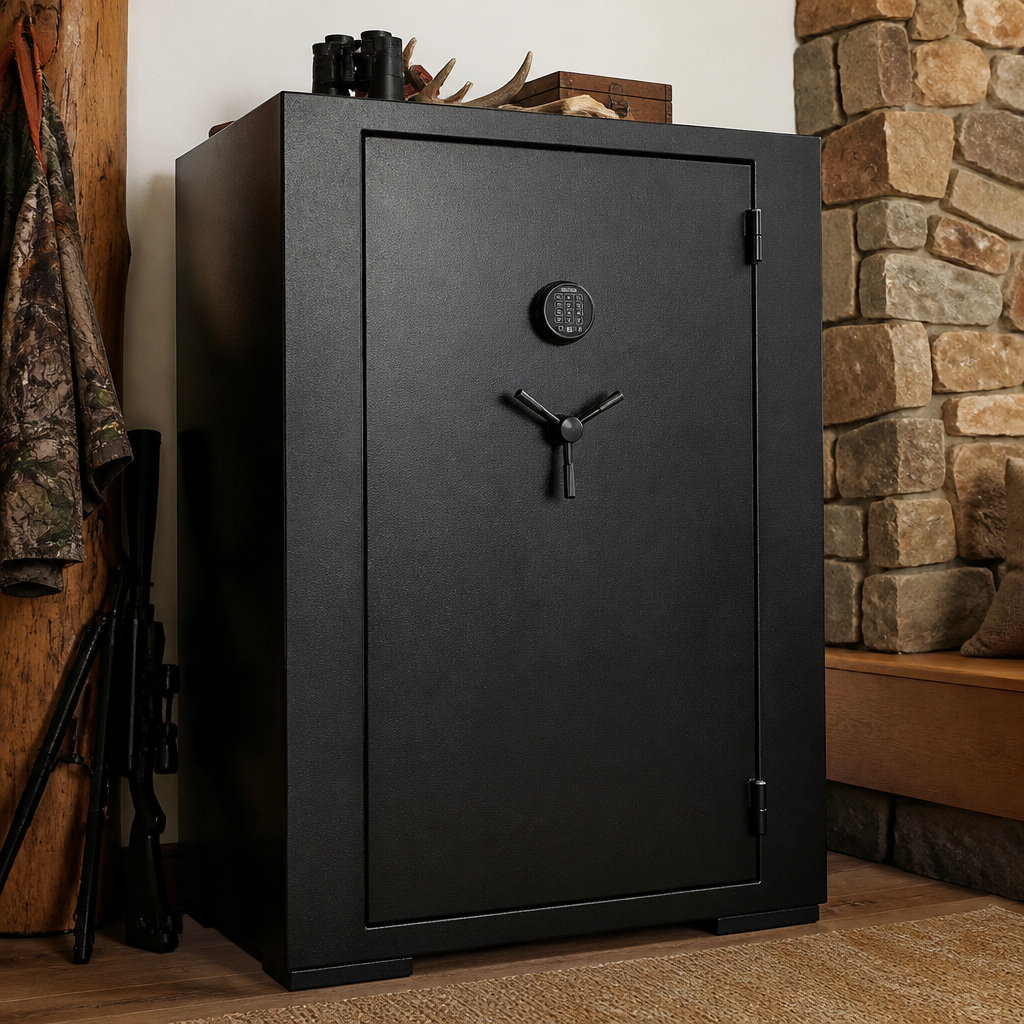
Cabela’s Outfitter E-Lock Safe is a heavy-duty storage solution designed for gun owners who want practical burglary resistance, organized firearm storage, and faster access than a traditional dial lock can provide. In the gun safes and safety category, this model sits in the product review space, where buyers compare construction quality, locking systems, fire ratings, interior layout, and long-term value before committing to a large, heavy purchase. That context matters because a safe is not just a container; it is part of a broader household security plan that also includes responsible storage, child access prevention, humidity control, documentation, and insurance readiness. I have evaluated many safes in showrooms, homes, and installation settings, and the same questions always come up: how strong is the body, how reliable is the lock, what will it actually hold, and does the specification sheet match real-world use? This Cabela’s Outfitter E-Lock Safe review answers those questions while also serving as a hub for product reviews across the wider gun safes and safety landscape, so readers can understand where this safe fits among cabinet-style storage, entry-level residential security containers, and premium fire-rated gun safes.
What the Cabela’s Outfitter E-Lock Safe is built to do
The Cabela’s Outfitter E-Lock Safe is built first for secure firearm storage in a residential setting, with enough steel, weight, and lock protection to deter smash-and-grab theft and enough interior capacity to keep long guns, handguns, documents, and accessories in one controlled location. “E-Lock” refers to an electronic lock, typically a keypad-based system that allows a programmed code and a quicker open-and-close routine than a mechanical combination dial. For many owners, that convenience is the main selling point because a safe only works well if people consistently use it. In practice, electronic entry reduces daily friction, especially for hunters, sport shooters, and homeowners who access the safe more often than a once-a-season storage box.
In product review terms, this safe belongs to the mid-market, heavy-duty segment. It is not a lightweight sheet-metal cabinet intended mainly to hide guns from sight, and it is usually not positioned as a custom luxury safe with plate-steel construction and boutique interiors. Instead, it targets buyers who want serious mass, reinforced locking, and a recognizable retail brand. That placement matters because expectations should be realistic. A residential gun safe should delay forced entry, organize firearms, and protect contents from many common household risks, but it should not be confused with a commercial vault or a high-security safe rated to specialized burglary standards.
The most useful way to evaluate this model is by function. Does it offer meaningful security improvement over a stack-on cabinet? Yes. Does an electronic lock make daily use easier for most households? Usually, yes. Is internal storage capacity exactly what the marketing number suggests? Almost never. Like nearly every gun safe, the stated gun count assumes slim-profile long guns with minimal optics, no bipods, and careful spacing. Buyers who own scoped rifles, tactical shotguns, AR-platform firearms, or multiple handguns should mentally discount the advertised count and focus on shelf flexibility instead.
Construction, steel, and physical security fundamentals
Any serious Cabela’s Outfitter E-Lock Safe review has to start with construction because steel thickness, door design, hinge arrangement, and boltwork matter more than glossy branding. In the field, I look first at body rigidity, door fit, and how the lock area is reinforced. A safe can advertise multiple locking bolts, but if the surrounding steel is weak, those bolts add less real protection than buyers assume. A better indicator is how the door frame resists prying, whether the hinge side includes fixed dead bars or locking features, and whether the lock and relocker components are shielded by hard plate or other anti-drill elements.
Weight is another useful proxy. While weight alone does not guarantee better security, heavier safes generally include thicker steel, more fireboard, more robust door assemblies, or all three. That matters because thieves overwhelmingly prefer speed. A heavier, anchored safe with a reinforced door forces more noise, more tools, and more time. In residential burglary patterns documented by law enforcement and insurance reporting, that time pressure is critical. Most opportunistic burglars do not arrive prepared for a prolonged attack with grinders, pry tools, and privacy. They want cash, electronics, jewelry, and portable firearms. A properly installed gun safe disrupts that plan.
Anchor points deserve direct attention. Even a heavy gun safe should be bolted down. The reason is simple: once a safe is tipped onto its back, pry attacks become easier because the attacker can apply body weight and longer leverage against the door. Anchoring also prevents thieves from attempting to move the unit to a secondary location for later attack. For concrete installations, wedge anchors or manufacturer-approved hardware are standard. On upper floors or wood-frame structures, buyers should verify load capacity and mounting guidance before delivery. That is an installation issue, but it directly affects security performance.
Electronic lock performance, reliability, and user experience
The electronic lock is central to the identity of the Cabela’s Outfitter E-Lock Safe, and it is usually the first feature buyers either want or distrust. In everyday use, an electronic keypad is faster than a dial. You enter the code, wait for the lock to cycle, and turn the handle. That convenience has a practical safety benefit because owners are more likely to secure firearms after each use when the process is simple. Electronic locks also avoid the dialing errors that frustrate occasional safe users, especially in low light or stressful moments.
Reliability, however, depends on lock quality, battery maintenance, and environmental conditions. Most modern electronic safe locks are dependable when installed correctly and kept powered, but they are not maintenance-free. Batteries should be replaced on a schedule rather than after a failure alert, and owners should keep the keypad clean and dry. In humid areas or unconditioned garages, condensation and corrosion can shorten component life. That does not make electronic locks a bad choice; it means they should be treated like any critical device. I recommend recording the lock model, reading the manufacturer’s change-code procedure carefully, and testing the lock with the door open after every battery change or code update.
Buyers often ask whether electronic locks are more secure than mechanical locks. The right answer is that security depends more on the specific lock, the hard plate, the relocker, and the surrounding safe construction than on keypad versus dial alone. Mechanical locks have a strong reputation for longevity and simplicity, while electronic locks offer access speed and ease of use. For many households, that tradeoff favors electronic entry. For remote cabins or low-use safes where long intervals pass between openings, a mechanical dial still has appeal. The best choice is the one that matches how the safe will actually be used, not the one that sounds toughest in abstract debate.
Interior layout, real storage capacity, and organization
Interior organization is where product specs and real ownership often diverge. The Cabela’s Outfitter E-Lock Safe is marketed as a gun safe, but owners rarely store only guns. They also store optics, suppressor paperwork where lawful, ammunition in limited quantities depending on household preference, passports, hard drives, jewelry, and hunting accessories. That is why shelf design, barrel rests, door pockets, and adjustability matter as much as external dimensions. A safe with flexible interior modules usually outperforms a larger but less adaptable model over years of ownership.
Advertised long-gun capacity should be treated as an upper-limit estimate, not a planning number. A realistic count depends on rifle stocks, scope height, sling bulk, and whether firearms can be staggered without stressing optics. In practice, a “24-gun” or “30-gun” safe may hold significantly fewer modern sporting rifles or precision hunting setups comfortably. Buyers who know they will store scoped rifles should reserve more width per firearm and consider how shelves can be reconfigured to create vertical clearance.
| Storage factor | What marketing often assumes | What real owners usually encounter |
|---|---|---|
| Long-gun count | Unscoped rifles placed tightly together | Reduced capacity once scopes, slings, and wider stocks are included |
| Shelf space | Dedicated document or accessory area | Shared use for handguns, optics, magazines, and valuables |
| Door storage | Simple extra capacity | Major convenience gain for pistols and small gear when well designed |
| Ammo storage | Minimal effect on layout | Adds weight quickly and competes with accessory space |
For best use, group contents by access frequency. Defensive firearms and critical documents belong in the easiest reach areas. Seasonal gear, spare optics, and less-used valuables can move to upper shelves or rear corners. Add labeled bins for small parts, and keep silica gel, a dehumidifier rod, or both inside to reduce moisture risk. The result is not just better organization; it is safer handling because you spend less time moving guns around in a crowded safe.
Fire protection, environmental control, and realistic expectations
Fire protection is one of the most misunderstood parts of any gun safe review. When buyers see a fire rating, they often assume the contents are fully protected in all house fires. Real-world performance is more nuanced. Fire ratings vary by test method, temperature threshold, and duration, and the testing body may not be the same across brands. Some manufacturers use independent labs such as Intertek/ETL, while others rely on proprietary testing protocols. That does not automatically invalidate the rating, but it should affect how confidently a shopper compares one number to another.
For firearms, the main fire risk is not only direct flame but also heat transfer, smoke infiltration, and water exposure during suppression. Documents, electronics, and photographs are even more vulnerable because paper chars, plastics deform, and magnetic or solid-state media can fail at lower thresholds than steel components. If the safe will hold irreplaceable records, add a dedicated document pouch or a secondary fire-rated document box inside the safe. That layered approach is common among experienced owners because internal temperatures can still rise significantly during a severe structure fire.
Environmental control matters every day, not only during disasters. Humidity is the long-term enemy of blued steel, wood stocks, ammunition condition, and paperwork. In basements, garages, and humid climates, I strongly recommend active moisture management. A GoldenRod-style dehumidifier or comparable warming rod helps prevent condensation by raising internal temperature slightly, while rechargeable desiccants help absorb excess moisture. Use a hygrometer so you are not guessing. Rust prevention should be systematic: wipe down firearms after handling, especially in hunting season, and avoid foam cases stored long term inside the safe because they can trap moisture.
How it compares with other gun safe product review categories
As a sub-pillar hub for product reviews, this article should place the Cabela’s Outfitter E-Lock Safe within the broader market. Entry-level gun cabinets are the least expensive option and are useful for basic access control, especially where legal compliance or child safety is the immediate concern. Their weakness is thin steel and limited resistance to prying. Mid-tier gun safes like the Outfitter class improve substantially on that formula with heavier bodies, stronger doors, integrated boltwork, and more credible fire insulation. Premium safes then add thicker plate, higher-end interiors, upgraded lock systems, stronger certifications, and often better finishing detail.
Another comparison point is the difference between traditional long-gun safes and modular storage systems. Modular safes can be easier to move into difficult spaces and may suit renters or urban owners, but they often trade some monolithic rigidity for transport flexibility. Likewise, quick-access handgun safes solve a different problem than full-size long-gun safes. Many households should own both: a bedside or closet quick-access safe for an immediately needed handgun and a larger anchored safe for the rest of the collection. That layered setup aligns with how firearms are actually stored and accessed in responsible homes.
Brand comparison should also include serviceability. Replacement parts, keypad support, warranty terms, and dealer networks matter more after purchase than before it. A safe is a durable goods category product; owners may keep it for decades. A model sold by a major outdoor retailer has an advantage in familiarity and availability, but buyers should still read the warranty for lock coverage, fire claims language, and freight or service limitations. Strong product reviews do not stop at the showroom floor. They follow the ownership lifecycle from delivery to years of use.
Buying, delivery, installation, and who should choose it
The best buyers for the Cabela’s Outfitter E-Lock Safe are homeowners who want a meaningful upgrade from a gun cabinet, prefer keypad speed, and need enough space for a modest to medium-size firearm collection plus valuables. It is especially well suited to hunters, recreational shooters, and families prioritizing controlled access. It is less ideal for buyers seeking commercial-grade burglary ratings, highly specialized collector interiors, or the absolute thickest steel available regardless of cost.
Delivery planning is part of the purchase decision. Measure doorways, hallways, stair landings, and the final room location before ordering. Confirm floor load, especially for upper stories. Use professional installers whenever possible because safe moving injuries and property damage are common when owners attempt the job with improvised equipment. Once installed, bolt the safe down, test the lock repeatedly with the door open, document the serial number, and photograph the contents for insurance records. Those small steps materially improve ownership outcomes.
For shoppers building out a full gun safes and safety research path, this review is the starting hub for product reviews. From here, the next useful comparisons are electronic lock versus mechanical lock safes, fire-rated gun safes for documents and firearms, modular safes for tight spaces, handgun quick-access safes, and safe accessories such as dehumidifiers, lighting kits, pistol racks, and door organizers. A good buying decision comes from matching the safe to the collection, the home, and the access pattern. That is where the Cabela’s Outfitter E-Lock Safe earns its place: it delivers substantial residential security, practical storage flexibility, and user-friendly access in one heavy-duty package. If that matches your needs, compare dimensions, capacity, and installation options next, then shortlist the model with realistic expectations and a clear storage plan.
Frequently Asked Questions
What makes the Cabela’s Outfitter E-Lock Safe a strong option for heavy-duty firearm storage?
The Cabela’s Outfitter E-Lock Safe stands out because it is built for buyers who want more than basic lock-and-key storage. In practical terms, that means a heavier cabinet-style design, reinforced steel construction, and a locking system intended to slow down unauthorized entry attempts far better than lightweight security containers. For many gun owners, the appeal is not just that it stores firearms, but that it combines burglary resistance, organized capacity, and day-to-day usability in one package.
Another reason it attracts attention is its role as a long-term storage solution rather than a temporary purchase. Safes in this category are often evaluated based on body strength, door thickness, locking bolt engagement, hinge design, and how confidently the safe can be anchored in place. The Outfitter E-Lock model appeals to practical buyers because it is typically considered with these real-world concerns in mind. People shopping in this segment are usually not looking for decorative storage; they want something substantial enough to protect firearms, ammunition, and other valuables while also fitting into a home security plan.
The “heavy-duty” label also matters from an ownership perspective. A safe like this is generally expected to support multiple long guns, provide shelving or interior organization for accessories, and deliver a level of sturdiness that justifies the cost and floor space. That combination is why it often earns interest from gun owners who want a step up from entry-level options without sacrificing accessibility and storage efficiency.
How does the electronic lock compare with a traditional dial lock on a safe like this?
The electronic lock is one of the biggest reasons buyers consider the Cabela’s Outfitter E-Lock Safe in the first place. Compared with a traditional mechanical dial, an e-lock typically offers faster access, simpler operation, and less trial-and-error when opening the safe under normal use. Instead of rotating through a sequence on a dial, users can generally enter a programmed code and unlock the safe more quickly, which is especially appealing for those who access their firearms or important documents on a regular basis.
That convenience is often the defining advantage. Mechanical dial locks have a long-standing reputation for durability and simplicity, but many owners find them slower and less intuitive, especially in low light or stressful situations. An electronic lock can reduce that friction. For a buyer who values practical accessibility, that can make a major difference in day-to-day satisfaction. It also tends to be easier for multiple authorized users to operate consistently, assuming the code is properly managed and the lock is maintained according to the manufacturer’s guidance.
That said, lock preference still comes down to priorities. Some buyers prefer mechanical dials because they avoid battery dependency and are often seen as more traditional. Others prefer e-locks because speed and convenience are non-negotiable. On a safe in this class, the electronic lock is usually best viewed as a usability upgrade rather than a guarantee of superior security by itself. The overall effectiveness still depends on the quality of the safe’s construction, proper installation, responsible code management, and routine maintenance such as keeping fresh batteries installed when required.
How should buyers evaluate the safe’s burglary resistance and overall construction quality?
Burglary resistance should always be judged as a complete system, not by a single advertised feature. With the Cabela’s Outfitter E-Lock Safe, serious buyers should look closely at the gauge and thickness of the steel body, the design and fit of the door, the number and placement of locking bolts, and whether the safe can be securely bolted down. A heavy safe is valuable, but weight alone is not a complete measure of security. The real question is how well the safe can resist prying, forced entry, and quick smash-and-grab attempts.
Construction details matter because they affect how the safe performs in realistic scenarios. A sturdy door frame, solid boltwork, and minimal weak points around the lock area can make a meaningful difference. Buyers should also pay attention to hinge design, interior panel stability, and the quality of welds and seams where visible. If a safe feels rigid, closes with consistent alignment, and has a substantial door and locking mechanism, those are good signs that the manufacturer prioritized structural integrity instead of just maximizing capacity or appearance.
It is also important to keep expectations realistic. Most consumer gun safes are designed to delay and discourage unauthorized access, not to function like a commercial high-security vault. That is why placement and installation are so important. Anchoring the safe to a solid surface, choosing a discreet location, and integrating it into a broader home security strategy can significantly improve its real-world effectiveness. Buyers who understand that burglary resistance comes from both product design and proper setup will make a better purchasing decision.
Is the interior layout practical for organizing firearms, ammunition, and accessories?
For many owners, the interior layout is just as important as the safe’s lock and steel construction. A heavy-duty safe can only deliver full value if it stores firearms efficiently and keeps gear easy to access. The Cabela’s Outfitter E-Lock Safe is typically considered by buyers who want dedicated long-gun storage along with enough flexibility for handguns, optics, documents, magazines, and ammunition. A well-designed interior helps prevent crowding, reduces the chance of damage from items shifting around, and makes it easier to maintain safe handling practices when retrieving firearms.
Buyers should pay attention to how the shelving is arranged, whether sections can be adjusted or reconfigured, and how much usable room is available once rifles are actually placed inside. Advertised firearm capacity can be optimistic, especially if rifles have scopes, slings, or other attachments. That means the most useful interiors are the ones that balance listed capacity with realistic spacing. Adjustable shelves, door storage, and divided compartments can make a major difference for owners who want one safe to handle both firearms and valuables in an organized way.
From a long-term ownership standpoint, a practical interior also improves convenience and protects the investment. A safe that allows owners to separate firearms from paperwork, store accessories neatly, and adapt the layout over time is often more satisfying than one that simply offers a large empty cavity. If the Outfitter E-Lock model provides a clean, flexible interior layout, that can be a major advantage for households looking for a serious storage solution rather than just a locking box for guns.
Does the Cabela’s Outfitter E-Lock Safe offer good long-term value for the money?
Long-term value in a gun safe comes from how well it balances security, access, durability, storage capacity, and ownership confidence over many years. The Cabela’s Outfitter E-Lock Safe is usually evaluated in that exact way. Buyers considering a large, heavy safe are rarely focused only on the upfront purchase price. They want to know whether the construction quality feels substantial, whether the electronic lock adds meaningful convenience, whether the interior remains practical as their collection changes, and whether the safe will continue to feel like a smart investment after the first few months of ownership.
In many cases, the value proposition comes from avoiding compromise. A less expensive safe may save money initially but fall short in steel strength, organization, lock convenience, or overall fit and finish. A more expensive model may offer premium features that some owners simply do not need. The Outfitter E-Lock Safe can represent strong value if it delivers solid burglary resistance, dependable access, and enough flexibility to serve both current and future storage needs. For a buyer who wants a safe that feels serious without moving into an entirely different price tier, that balance can be very appealing.
It is also worth remembering that a safe purchase is not just about product specs. Delivery logistics, installation requirements, floor support, anchoring options, and where the safe will live inside the home all affect value. A well-built safe that fits the owner’s space, storage needs, and usage habits will often prove more worthwhile than a model with slightly better headline numbers but poorer day-to-day practicality. In that sense, the Outfitter E-Lock Safe offers the best long-term value when it matches the buyer’s real priorities: dependable protection, organized storage, and faster access than a traditional dial lock typically provides.