
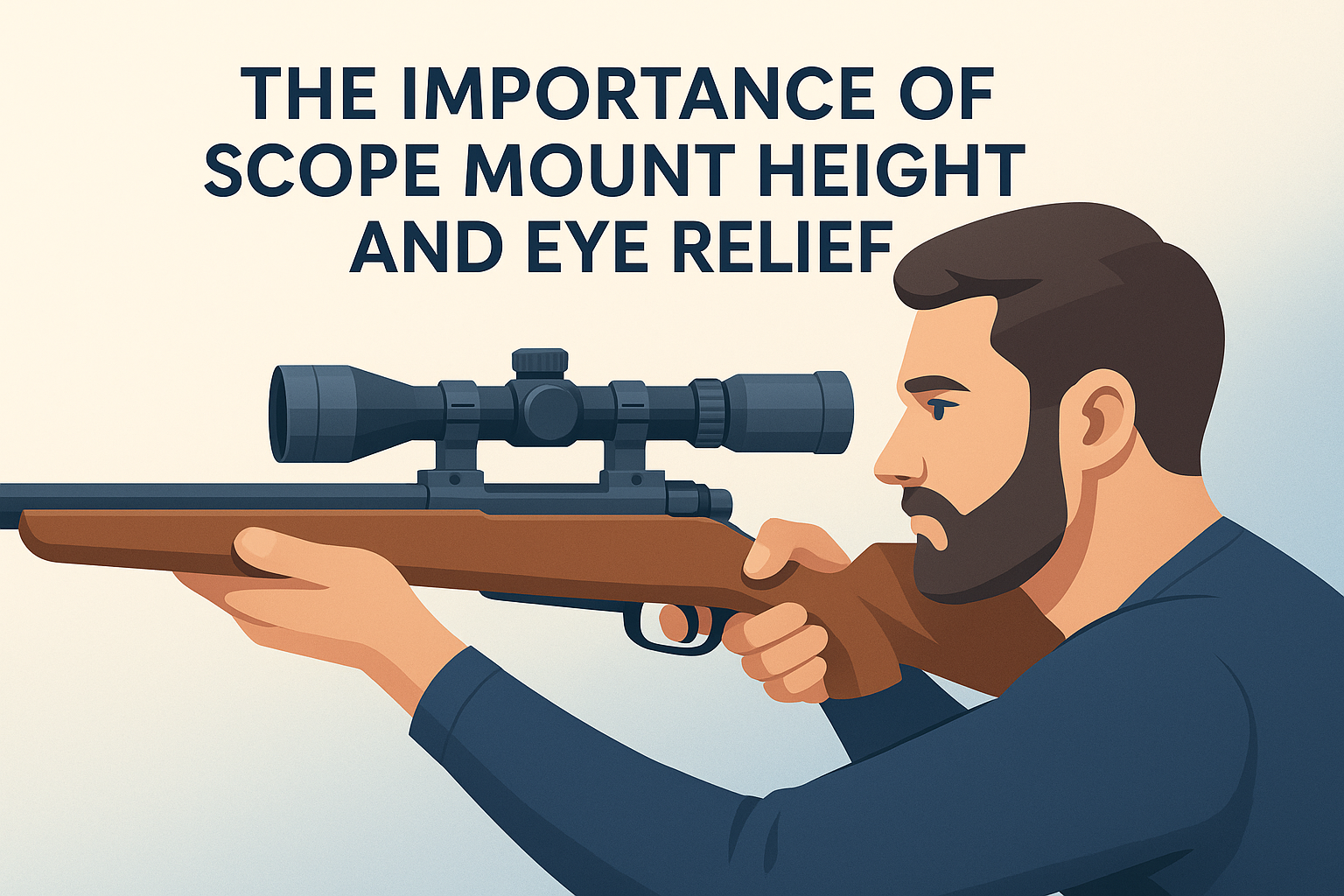
When it comes to precision shooting, few factors are as critical as proper scope mounting. Among the most overlooked yet essential elements are scope mount height and eye relief. These two aspects directly impact shooting accuracy, comfort, and overall performance. Whether you’re hunting, target shooting, or plinking at the range, understanding how mount height and eye relief affect your rifle setup can make all the difference.
Choosing the correct scope mount is the first step toward achieving a stable and accurate shooting experience. For example, if using a Ruger 10/22, selecting a reliable Ruger 10/22 scope mount ensures that your optics remain secure and aligned, especially during repeated recoil. Without a solid mount and proper installation, even the best scope will fall short of expectations.
Why Scope Mount Height Matters
Scope mount height refers to the distance between the centerline of the optic and the rifle’s bore. This measurement is crucial for several reasons:
1. Alignment with the Eye
One of the primary functions of mount height is to provide a natural line of sight. If the mount is too high, shooters may need to raise their heads off the stock, which disrupts stability and leads to inconsistent shots. Conversely, a mount that is too low can prevent proper eye alignment, causing scope shadowing and a limited field of view.
2. Cheek Weld and Shooting Posture
A consistent cheek weld is vital for repeatable accuracy. The mount height must allow the shooter to rest their cheek on the stock comfortably while maintaining a clear view through the scope. Too much or too little height forces awkward posture and increases fatigue during long sessions.
3. Clearance for the Scope
The objective lens diameter also plays a role in determining mount height. Larger lenses require higher mounts to avoid contact with the barrel or handguard. However, the key is to achieve the lowest possible height that still offers adequate clearance.
Understanding Eye Relief
Eye relief is the distance between the rear lens of the scope and your eye where you can see the full field of view. This distance varies based on the scope’s design and should be factored in during the mounting process.
1. Safety and Comfort
Proper eye relief protects the shooter from “scope bite,” especially with high-recoil firearms. Even on low-recoil rifles, maintaining a safe buffer ensures comfort and safety during extended use.
2. Full Sight Picture
Too short an eye relief may lead to a narrowed or blacked-out image, making target acquisition difficult. Too long, and the shooter may need to strain or adjust position to see clearly. Setting the correct eye relief is essential for rapid and accurate shooting.
How to Set the Correct Mount Height and Eye Relief
1. Start with the Right Mount
Choosing a scope mount specifically designed for your rifle model ensures compatibility and alignment. For example, using a scope mount designed for that specific firearm guarantees that the base will fit the receiver securely and offer the optimal platform for the optic.
2. Determine the Ideal Height
Use low, medium, or high rings depending on your scope’s objective lens size and your rifle’s configuration. Measure the clearance needed between the lens and the barrel or handguard. Keep the scope as low as possible without it touching the rifle.
3. Adjust for Eye Relief
With the mount installed, place the rifle in a stable position and shoulder it as if you were aiming at a target. Move the scope back and forth until the full image is visible without any shadowing. Mark that position before tightening the rings.
Mistakes to Avoid
- Using mounts that are too tall or too low: This compromises sight alignment and stability.
- Ignoring eye relief: Setting the scope too close can result in injury, while setting it too far impacts shooting speed and accuracy.
- Over-tightening screws: This can damage both the scope and the mount, leading to misalignment.
- Not using thread locker: Failing to apply a thread-locking compound can lead to screws loosening over time, particularly with repeated recoil.
Final Thoughts
Optimizing scope mount height and eye relief is not just about comfort—it’s about achieving consistent, accurate shots every time you pull the trigger. By selecting the right components and taking the time to properly install your optics, you can transform a good rifle into a great one. Whether you’re installing a new scope or fine-tuning your existing setup, always begin with a solid base, such as a reliable scope mount, and build from there.
Properly mounted optics give you the confidence to perform in the field or at the range. Don’t underestimate the impact of getting these fundamentals right—your accuracy depends on it.
Frequently Asked Questions
1. Why is scope mount height so important for shooting accuracy?
Scope mount height is crucial because it directly affects the line of sight alignment between your eye and the scope. The ideal scope height should allow you to comfortably position your eye at the correct level without having to strain or adjust unnecessarily. Too low or too high a mount can lead to discomfort and inconsistent shooting performance.
When your scope is mounted at the right height, you achieve natural and stable cheek weld on the stock, which aids in maintaining repeatable accuracy. A perfect cheek weld allows you to aim and shoot without having to move your head excessively. Moreover, the height of the scope can influence the bullet’s trajectory due to changes in the angle of departure; thus, mounting your scope at the appropriate height ensures that your impacts are consistent with your zero at various ranges.
2. How does eye relief contribute to shooting comfort and safety?
Eye relief refers to the distance from the eyepiece lens to your eye, where you can see the full field of view effectively. Achieving the correct eye relief is fundamental for both comfort and safety when shooting. If the eye relief is too short, you run the risk of getting hit by the scope upon recoil, which is known as “scope bite.” This not only poses a safety hazard but also results in discomfort that could distract you from proper shooting technique.
On the other hand, having too much eye relief may lead to difficulty in acquiring a quick sight picture, affecting your ability to aim accurately and quickly especially in dynamic situations, such as hunting moving targets. Proper eye relief should allow you to mount the rifle and naturally align your eye with the scope’s view without having to adjust your head position excessively. This ensures a more enjoyable and consistent shooting experience.
3. How do I determine the correct scope mount height for my rifle setup?
Determining the correct scope mount height is about balancing comfort, sight picture, and shooting capability. The key is to achieve the most comfortable horizontal line of sight while maintaining an unimpeded cheek weld on the rifle stock. To figure out the ideal height, consider the rifle’s physical design, the size of the optic, and the purpose of the shooting activity.
Begin by mounting the scope at a height where you can easily achieve a consistent cheek weld without craning your neck. A proper method is to place the rifle in a stable shooting position, then slowly adjust the height until you find a comfortable natural alignment when placing your cheek against the stock. You want your eyes to naturally align with the scope’s centerline when you are in your shooting posture. Additionally, use scope rings or bases that complement the size and shape of the rifle to avoid improper canting of the optic, which can complicate sighting in.
4. Can improper eye relief affect my shooting performance?
Yes, improper eye relief can severely affect your shooting performance. Inadequate eye relief might cause discomfort, requiring you to constantly adjust your head positioning, disrupting your aim and affecting muscle memory. Since shooting is as much about consistent repetition as it is about technique, altering your position with each shot will lead to erratic accuracy and reduced confidence.
Additionally, a poor eye relief setup may cause you to experience vignetting or a restricted field of view, impairing your ability to quickly acquire targets in varied conditions. Consistent and appropriate eye relief allows seamless target acquisition and steady shots, effectively improving accuracy and overall shooting enjoyment. Ensuring proper eye relief fosters good habits by allowing instinctive engagement of targets, crucial in both competitive shooting and hunting scenarios.
5. Are there standard recommendations for scope mounting height and eye relief, or does it vary per individual?
While there are general guidelines for scope mounting height and eye relief, the ideal setup largely varies from individual to individual. Factors such as facial structure, preferred shooting stance, and personal comfort levels influence the best setup uniquely for each shooter. It’s advisable for users to customize their setup tailored to their physique and shooting style.
However, common recommendations suggest starting with a baseline eye relief of about 3 to 4 inches, considering most modern scopes. As for scope height, you should generally begin with the lowest mount that allows the scope to clear the bolt handle and other rifle features. Yet, it’s best to trial different heights and positions by shouldering the rifle and seeking a natural and effortless alignment that doesn’t compromise your posture or peripheral view.
Engage in trial and error; adjusting accordingly until you find your sweet spot, and remember that your setup might need to change if you swap scopes, rifles, or intended use. Ultimately, the best advice is to ensure the shooting setup enhances your performance while maintaining comfort and efficiency.