
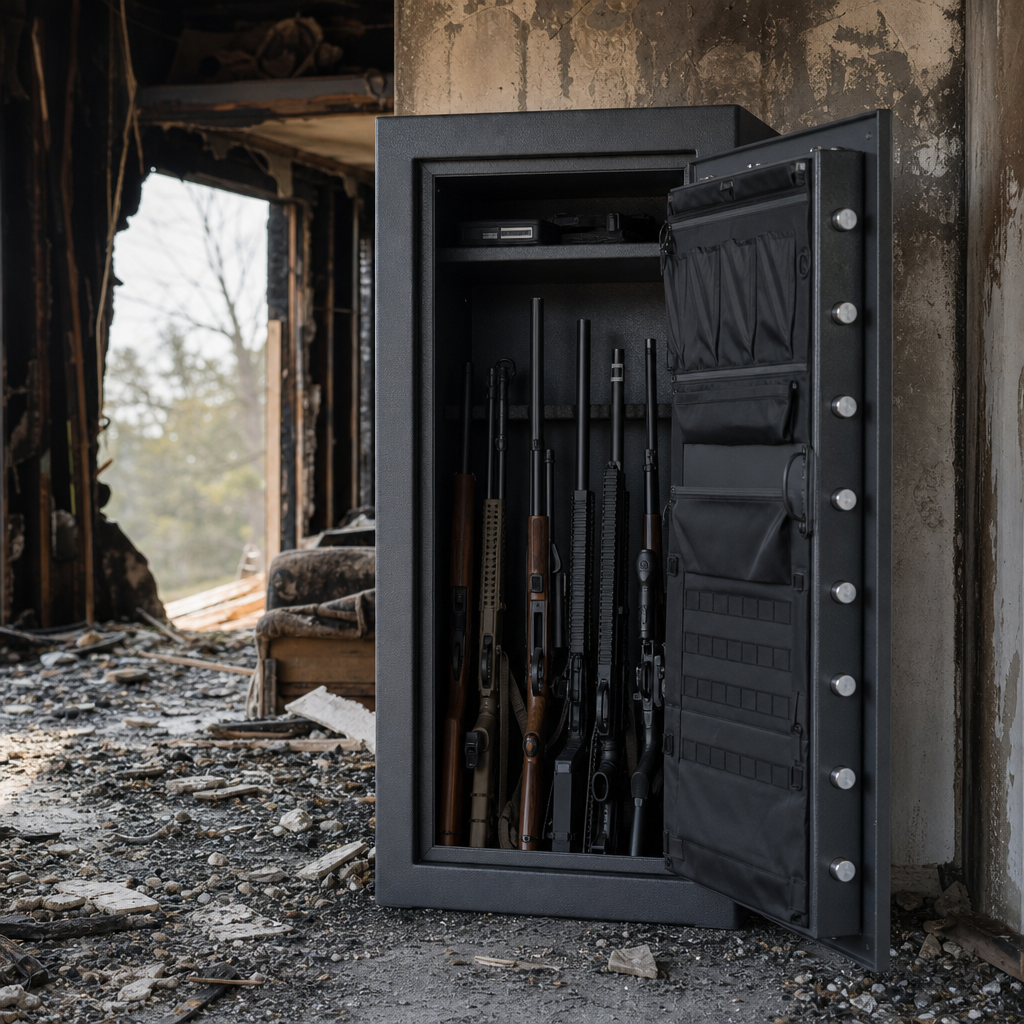
Disaster-resistant gun safes protect firearms, ammunition, documents, and critical accessories when homes face fire, flood, storms, and forced entry at the same time. In practical terms, a disaster-resistant safe is a reinforced storage unit engineered to maintain internal conditions within tolerable limits during emergencies that would destroy ordinary cabinets, closets, or thin steel boxes. Fire resistance refers to a tested ability to keep internal temperatures below thresholds that damage wood stocks, polymer frames, optics adhesives, paper records, and electronic media for a stated duration. Disaster resistance is broader. It includes water protection, corrosion control, impact tolerance, anchoring strength, lock reliability after heat exposure, and structural design that reduces the chance of the entire safe tipping, shifting, or being breached during chaotic conditions.
I have seen the difference firsthand after house fires and storm losses: firearms stored in bargain metal lockers often emerge warped, rusted, or permanently unsafe, while guns inside a properly rated safe are frequently salvageable with immediate cleaning and inspection. That distinction matters because firearms are expensive, tightly regulated in some jurisdictions, and often tied to family history, hunting traditions, or defensive planning. Replacing a collection after a disaster is rarely simple. Insurance may cover part of the value, but documentation gaps, policy limits, and the loss of serial records can complicate claims. A serious safe reduces both physical loss and administrative pain.
For a hub page on fireproof and disaster-resistant storage, the central point is straightforward: not all gun safes are built for emergencies, and marketing language can conceal major differences in performance. Buyers need to understand fire ratings, seal systems, body construction, lock types, placement strategy, and maintenance requirements before they rely on a safe in a crisis. They also need to know where specialized subtopics branch out, including waterproof gun safes, humidity control, safe installation, insurance documentation, and post-disaster firearm recovery. A well-chosen safe acts as the core layer of a broader protection plan, not a standalone guarantee. When you evaluate safes through that lens, you make better decisions and protect firearms more effectively.
What makes a gun safe disaster-resistant
A disaster-resistant gun safe combines thermal insulation, steel structure, secure locking, sealing systems, and stable installation into one system. The steel shell resists pry attacks and helps the safe keep its shape under stress. Insulation slows heat transfer during a fire. Intumescent door seals expand under high temperatures and reduce smoke and heat infiltration around the door gap. Waterproof or water-resistant gaskets help block hose spray, sprinkler discharge, or shallow flooding. Interior support such as reinforced hinges, multi-directional bolts, and robust door frames helps the safe remain closed even if surrounding materials fail.
Real emergency performance depends on how these parts work together. A thick door with weak body steel is not enough. A high fire number on a label means little if the safe sits unanchored in a garage where floodwater can submerge it or where a structural collapse can topple it onto a hot concrete slab. In field inspections after fires, I have noticed that safes with continuous door seals, heavier bodies, and better fit tolerances usually show less smoke staining and less internal heat damage than lightly built units advertised with broad claims but limited testing details. Construction quality shows up when conditions become extreme.
Buyers should also distinguish between residential security containers and true safes. Many gun safes sold through big-box retailers are classified under UL standards as Residential Security Containers, which means they provide a baseline level of burglary resistance against simple attacks but are not equivalent to high-security commercial safes. That does not make them useless. It means you should match the product to the risk. For most homeowners, a well-built gun safe with a credible fire rating, decent steel thickness, internal organization, and correct anchoring is a practical middle ground. If you own rare collectible firearms or maintain a large inventory, stepping up to heavier burglary and fire ratings may be justified.
How fire ratings actually work
Fire ratings are among the most misunderstood parts of gun safe shopping. A rating usually combines a time period and a temperature, such as 30, 60, 90, or 120 minutes at an external temperature that may range around 1200 to 1680 degrees Fahrenheit depending on the test protocol. The important question is not just how hot the furnace gets, but what internal temperature limit is maintained and whether the test includes a cool-down phase. Fire damage often continues during cooling because the safe acts like an oven after external flames are knocked down. If a manufacturer does not explain the test method, ask for specifics.
Independent verification matters. UL Class 350 is a respected benchmark for paper protection, meaning the safe interior stays below 350 degrees Fahrenheit during the stated exposure because paper chars around that range. Firearms involve different concerns. Bluing, wood finishes, lubricants, plastics, optics, and ammunition packaging can degrade at lower or different thresholds, so a paper document rating is informative but not the whole story. Gypsum-based insulation is common in gun safes because it contains water that releases as steam during heating, slowing temperature rise. Better models pair insulation layers with tighter door geometry and heavier steel for more consistent results.
Manufacturers use different testing arrangements, so comparisons can be uneven. One brand may test a single wall sample, another a complete safe, and another may rely on an internal engineering protocol rather than third-party certification. That is why serious buyers look beyond the brochure headline. Ask whether the safe was tested empty or loaded, whether humidity from steam release is considered, and whether a drop test was performed to simulate a floor collapse during a structure fire. Brands such as Liberty Safe, Fort Knox, Browning, AMSEC, and Rhino Metals often publish more detail than entry-level import products, though every model still deserves individual review rather than assumption.
Water, smoke, and corrosion threats after fire
Fire is only part of the emergency. In many losses, the damaging agent inside a safe is actually water, smoke residue, or the humid microclimate that follows. Firefighters can put thousands of gallons of water into a structure. Sprinkler systems activate early and can soak a room long before flames spread. If a safe has only fireboard and no real water barrier, moisture can enter around the door, through bolt penetrations, or from condensation during the heating and cooling cycle. Once trapped inside, that moisture accelerates rust on barrels, actions, magazines, and optics mounts.
Smoke is equally destructive. Soot contains acidic compounds and fine particulates that settle into bores, trigger groups, scope turrets, and checkering. I have opened safes after kitchen and garage fires where the guns avoided flame but still needed immediate detail cleaning because smoke leakage coated every surface. Disaster-resistant storage addresses this with expanding seals, tighter manufacturing tolerances, and interior humidity control. A dehumidifier rod, rechargeable desiccant, or monitored hygrometer is not optional in many climates; it is part of the system. Stainless firearms resist corrosion better than blued steel, but no finish should be trusted against prolonged humidity.
Flooding adds another layer. A so-called waterproof gun safe may only resist a few inches of standing water for a short period when upright and properly latched. That can be valuable, but it is not the same as submersion protection. Buyers in hurricane, coastal, or river flood zones should look for explicit water-depth and time claims, understand whether they are independently tested, and place safes above known flood levels whenever possible. A raised concrete plinth or engineered platform often matters as much as the safe itself.
Choosing the right features for your risk profile
The best disaster-resistant gun safe is the one matched to your specific hazards, firearm mix, and home layout. A suburban homeowner in a wildfire-prone area should prioritize longer fire duration, smoke sealing, and a location away from attached-garage fuel loads. A Gulf Coast buyer may place equal weight on water resistance, corrosion management, and elevated installation. Someone in tornado country should consider anchoring strength and the chance of impact from debris. Apartment residents may have limited floor loading and installation options, which changes the recommendation entirely.
| Risk factor | Safe feature to prioritize | Why it matters |
|---|---|---|
| Wildfire or structure fire | Verified fire rating, intumescent seal, thicker steel | Slows heat transfer and reduces smoke intrusion during long burns |
| Flood or storm surge | Water-resistant door seal, elevated base, corrosion control | Limits water entry and reduces post-event rust damage |
| Tornado or quake | Heavy weight, anchor bolts, reinforced frame | Helps the safe stay upright and closed during violent movement |
| High theft exposure after disasters | Robust lock, relocker, pry-resistant door design | Protects contents when homes are vacant or damaged |
Capacity should be judged realistically. A “24-gun safe” seldom holds 24 scoped rifles in usable fashion. Crowding firearms increases stock dings, reduces airflow, and makes emergency access worse. I usually advise clients to buy at least one size larger than their current inventory and reserve interior space for handguns, documents, suppressor paperwork where lawful, batteries, and maintenance items. Interior door organizers and modular racks help, but they should not block door closure or compromise seal compression.
Lock choice also deserves careful thought. Mechanical dial locks remain reliable, tolerate heat well, and do not depend on batteries, but they are slower. Electronic keypad locks are faster and convenient for frequent access, though battery neglect and low-quality components cause many service calls. Redundant systems, EMP-resistant claims, and biometric scanners sound attractive, yet each adds complexity. The right answer depends on use pattern, not marketing trends.
Installation and placement decisions that improve survival
Safe placement can dramatically affect disaster outcomes. Interior locations on a ground-floor concrete slab are generally better than garages, attics, and upper stories. Garages often contain gasoline, solvents, vehicles, and open framing that intensify heat. Upper floors can fail during fire, exposing the safe to a drop and prolonged burn concentration. Basements may be cooler in a fire but vulnerable to water accumulation. There is no universal perfect spot, which is why site-specific judgment matters more than generic advice.
Anchoring is essential. A heavy safe that is not bolted down can still be tipped with pry bars, appliance dollies, or storm movement. Manufacturers typically provide anchor holes sized for concrete wedge anchors or heavy lag bolts into structural framing, depending on the surface. Follow the safe maker’s pattern, use the recommended hardware, and avoid improvised fasteners. If the safe includes a door seal for water resistance, make sure the installation does not distort the frame or create uneven compression. An out-of-square install can undermine both security and fire performance.
Spacing around the safe also matters. Leaving modest clearance from exterior walls can reduce moisture transfer and simplify inspection. Keeping the unit away from direct sunlight, HVAC condensate lines, or laundry humidity helps preserve finishes and internal conditions. After installation, document the model, serial number, lock type, and contents, then store copies of records off-site or in encrypted cloud storage. That step is often overlooked until a claim must be filed.
Maintenance, inspection, and recovery after an emergency
A disaster-resistant gun safe needs routine maintenance to stay ready. At minimum, inspect the door seal, locking bolts, anchor points, hinge movement, and lock function several times each year. Replace keypad batteries on a schedule rather than waiting for a low-battery warning. Check humidity with a hygrometer and keep relative humidity generally around 45 to 50 percent for mixed firearm storage, adjusting for local climate and wood-stock sensitivity. Too much dryness can stress wood; too much moisture invites corrosion.
After any fire, flood, or severe smoke event, open the safe as soon as authorities say it is safe to enter the property. Wear gloves, photograph everything before handling it, and remove firearms for triage. Unload each firearm if needed, wipe external moisture, and apply a water-displacing protectant. Then move to a detailed cleaning with proper solvents and lubrication. Optics, electronics, and ammunition should be inspected separately because hidden heat damage can make them unreliable. Any firearm exposed to significant heat should be examined by a qualified gunsmith before firing. Temper changes can affect springs, optics bonding, sight regulation, and in extreme cases metallurgy.
The larger lesson is simple: a disaster-resistant gun safe is not just a steel box. It is a risk-management tool that protects value, supports safe ownership, and preserves function when emergencies strike. If you are building your gun safes and safety plan, start with a credible fireproof and disaster-resistant storage strategy, then review related topics such as waterproofing, humidity control, installation, and inventory documentation. Choose the right safe, install it correctly, maintain it consistently, and your firearms will have a far better chance of surviving the worst day your home may ever face.
Frequently Asked Questions
1. What makes a gun safe “disaster-resistant” instead of just secure?
A disaster-resistant gun safe is designed to do much more than simply lock firearms behind steel. Standard security cabinets or thin metal boxes may slow down casual theft, but they often fail quickly when exposed to extreme heat, water intrusion, structural collapse, or violent impact during an emergency. A disaster-resistant safe is engineered to protect contents across multiple threats at the same time, including fire, flood conditions, storm damage, and forced entry attempts that may happen during or after a disaster.
What separates these safes from basic storage is the combination of reinforced construction, protective insulation, sealing systems, and more advanced locking mechanisms. In a fire, the goal is to keep internal temperatures below levels that can damage wooden stocks, polymer components, optics, documents, and ammunition packaging. In a flood or storm, the safe should resist water infiltration long enough to preserve firearms, paper records, passports, cash, and other critical items. During break-in attempts, thicker steel bodies, reinforced doors, internal hinges or protected external hinges, hard plates, relockers, and stronger bolt systems help prevent unauthorized access.
In practical terms, disaster resistance means preserving both the condition and function of what is stored inside when the surrounding environment becomes destructive. That matters because emergencies rarely happen in neat, isolated categories. A house fire may be followed by roof collapse and water from firefighting efforts. A hurricane can bring wind damage, flooding, and looting risk. A tornado can turn unsecured objects into projectiles and leave a home exposed. A true disaster-resistant gun safe is built with this real-world overlap in mind.
2. How do fire-resistant gun safes actually protect firearms and other valuables during a house fire?
Fire-resistant gun safes protect contents by slowing heat transfer from the outside of the safe to the interior. This is typically done through layers of fire-insulating material built into the walls and door, along with door seals that expand under heat to help block smoke and hot gases from entering gaps. The purpose is not to make the contents immune to fire forever, but to buy critical time by keeping interior temperatures within survivable limits for a specified duration under test conditions.
This matters because many items stored in a gun safe are vulnerable to heat well before they appear visibly burned. Firearms can suffer finish damage, warping of stocks, lubricant breakdown, corrosion risk after heat exposure, and damage to optics or electronics. Important documents, titles, identification records, and photographs are even more sensitive. Ammunition may not detonate in the same way it would inside a firearm chamber, but heat can still ruin packaging, primers, and stored reliability. A quality fire-rated safe helps reduce these risks by controlling internal temperature rise during the most dangerous phase of the fire.
It is also important to understand that fire ratings vary. Some safes are rated for shorter durations at lower temperatures, while better-built models may provide longer protection against more intense heat. Placement inside the home can affect performance as well. A safe in a garage, upper floor, or near concentrated fuel sources may face harsher conditions than one anchored on a ground-floor concrete slab in a climate-controlled interior room. For best results, buyers should look beyond marketing language and evaluate tested fire ratings, door construction, seal quality, and overall build integrity. The most reliable protection comes from a safe that pairs a meaningful fire rating with strong burglary resistance and proper installation.
3. Can a disaster-resistant gun safe really protect against floods, storms, and water damage?
Yes, many disaster-resistant gun safes are designed to provide a meaningful level of protection against water intrusion, but the degree of protection depends on the safe’s design, seal system, construction quality, and installation. In emergencies, water damage often comes from more than one source. Floodwater may rise from the ground, while storms can drive rain through damaged roofs and walls, and firefighting efforts can soak the interior of a home after a blaze. Because of that, water resistance is a critical part of comprehensive firearm protection.
A better-built disaster-resistant safe may include tight door seals, raised thresholds, heavy continuous welds, and body construction intended to reduce pathways for water entry. Some models are specifically tested for water resistance for a set depth or duration, while others are simply built to handle incidental exposure rather than full submersion. That distinction is important. If you live in a flood-prone area, it is wise to choose a safe with clearly stated water-protection claims rather than assuming all fire safes are equally flood-resistant.
Storm protection involves more than keeping water out. Severe weather can shift or topple a safe, especially if it is not anchored. Tornadoes, hurricanes, and even major straight-line winds can collapse structures, throw debris, and leave the home open to theft afterward. Anchoring the safe to a solid foundation significantly improves performance by reducing the chance of movement, tipping, or removal. Inside the safe, adding moisture control such as desiccants or a dehumidifier rod can help protect firearms from condensation after exposure to humid post-storm conditions. So while no safe can guarantee zero damage in every extreme event, a properly selected and installed disaster-resistant gun safe can dramatically improve the odds that firearms, documents, and accessories remain intact and usable.
4. Are disaster-resistant gun safes also effective against theft and forced entry during emergencies?
Absolutely. In fact, one of the strongest arguments for a disaster-resistant gun safe is that theft risk often increases during and after emergencies. Natural disasters can displace families, damage doors and windows, overwhelm law enforcement resources, and leave homes temporarily vacant. In those moments, firearms that are left in closets, cases, or lightweight cabinets are especially vulnerable. A true disaster-resistant safe helps bridge the gap between environmental protection and physical security.
Burglary resistance comes from several design elements working together. Heavier steel construction makes prying, cutting, and punching more difficult. Reinforced doors and multi-point locking bolts help resist attacks at the door edge, which is a common point of assault. Quality safes may also include drill-resistant hard plates, relockers that engage when tampering is detected, upgraded lock bodies, and stronger boltwork that holds even if one area is attacked. These features matter because criminals often target the lock, hinges, or door seam rather than trying to destroy the entire safe body.
Weight and anchoring are also major theft deterrents. A safe that is not bolted down can sometimes be tipped, moved, or carried off for later attack, especially if it is on the smaller side. Anchoring a safe to concrete or a structurally sound floor makes that far harder. Placement adds another layer of protection; a concealed location with limited attack space can reduce a thief’s leverage and privacy. In short, the best disaster-resistant gun safes are built to withstand not only heat and water, but also the opportunistic forced-entry attempts that often follow a widespread emergency.
5. What should homeowners look for when choosing the right disaster-resistant gun safe?
Homeowners should start by thinking in terms of layered risk, not just storage capacity. The right safe should match the specific threats most likely in your area, whether that is wildfire, flooding, hurricanes, tornadoes, high humidity, burglary, or some combination of those. From there, focus on the fundamentals: verified fire protection, meaningful water resistance, solid anti-theft construction, sufficient interior space, and proper installation options. A safe that excels in one category but is weak in the others may not deliver the kind of all-around emergency protection the title “disaster-resistant” suggests.
Pay close attention to construction quality. Look for heavier steel, a robust door with strong locking bolts, high-quality hinges and frame design, dependable lock options, and interior organization that allows firearms and accessories to be stored without crowding. Fire ratings should be specific rather than vague, and water resistance claims should be clear if flood or storm exposure is a concern. If you plan to store documents, passports, cash, digital media, or heirlooms alongside firearms, consider whether the interior environment is suitable for those more sensitive items as well.
It is also smart to think ahead about size and placement. Many buyers underestimate how quickly collections grow or how much room accessories, optics, magazines, ammunition, and paperwork require. Choosing a slightly larger safe often prevents immediate overcrowding. Once selected, installation matters just as much as product choice. A safe should be anchored securely, positioned in a location that reduces exposure where possible, and supported by humidity control and regular maintenance. When all of those factors come together, a disaster-resistant gun safe becomes more than a storage box. It becomes a long-term protective system for firearms, critical records, and peace of mind when emergencies strike.