
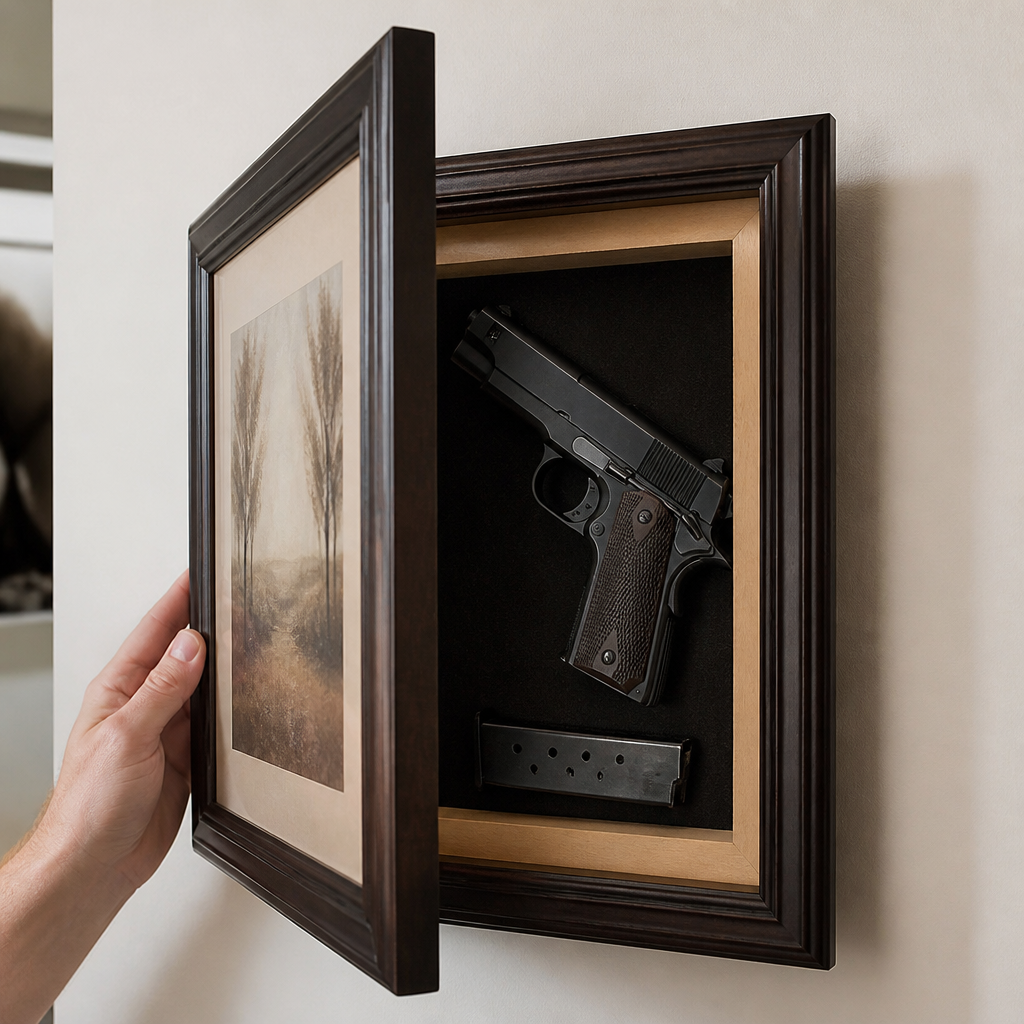
Hidden and discreet gun storage solutions help firearm owners balance rapid access, theft deterrence, child safety, and privacy inside everyday living spaces. Within the broader category of gun safes and safety, this subtopic covers concealment furniture, in-wall compartments, lockable shelves, decoy containers, bedside options, vehicle vaults, and framed wall pieces that hide a defensive firearm without advertising its presence. Many readers arrive looking for a specific project such as how to turn a picture frame into a hidden gun compartment, but the larger issue is choosing a storage method that fits your home layout, risk profile, local law, and access needs.
A hidden gun compartment is a storage space intentionally disguised as something ordinary, such as artwork, a mirror, a cabinet, or a shelf. Discreet storage does not mean unsecured storage. That distinction matters. True safety requires a locking mechanism, controlled access, stable mounting, and separation from unauthorized users, especially children, guests, contractors, or roommates. In my experience evaluating residential storage setups, the failures are usually basic: underestimating wall structure, relying on magnetic latches alone, storing loaded firearms without trigger protection, or placing a concealment unit in an obvious location that any burglar would check first.
Picture frame compartments are popular because they can blend into nearly any room. A framed family photo, landscape print, or certificate wall can conceal a slim quick-access container while preserving a normal appearance. That makes them useful for staged home defense in bedrooms, hallways, offices, and living rooms. Still, they are only one branch of a much bigger strategy. The right hidden gun storage plan should consider response time, line of travel during a break-in, humidity, retention against forced entry, and whether the firearm is intended for defensive access or long-term storage.
This hub explains the main categories of hidden and discreet gun storage solutions, where a picture frame compartment fits, and how to evaluate each option. It is designed to answer practical questions directly: What is the safest way to conceal a handgun? Are concealment shelves secure enough? Where should hidden gun storage be installed? What materials and locks work best? By the end, you should understand not only how a framed compartment works, but also when another approach is smarter, safer, and more durable.
What a Picture Frame Hidden Gun Compartment Actually Is
A picture frame hidden gun compartment is usually a shallow wall-mounted enclosure concealed behind a hinged frame or art panel. The visible front looks like normal decor, while the rear houses a firearm, spare magazine, flashlight, documents, or small medical kit. Commercial models often use RFID locks, mechanical push latches, or electronic keypad releases. DIY versions commonly use a recessed cavity between wall studs, piano hinges, magnetic catches, and a locking shelf or backing plate.
The reason this format works is simple: most defensive handguns are compact enough to fit inside a narrow wall cavity, and most people do not inspect wall art during a quick glance around a room. However, concealment is not security by itself. If the frame swings open with a fingertip and there is no lock, it functions as camouflage, not secure storage. For households with minors or frequent visitors, that is not enough.
As a rule, a framed compartment is best for one handgun and one reload, or for a compact long-gun platform only if the enclosure is purpose-built and strongly anchored. Weight, depth, and stud spacing limit what is realistic. A typical interior wall with 16-inch-on-center studs gives you roughly 14.5 inches of usable width between studs before accounting for framing, liner material, and hardware. That dimension drives the entire design.
How to Turn a Picture Frame Into a Hidden Gun Compartment Safely
The safest approach is to start with a lockable enclosure and then integrate the picture frame as the concealment face, rather than treating the frame itself as the storage box. In practice, that means locating studs, opening a cavity between them, adding structural blocking, installing a rigid steel or hardwood liner, and mounting a locking door whose outer face accepts the frame. I recommend keeping the trigger fully covered with a fitted holster or retention bracket inside the compartment so the firearm stays oriented consistently during access.
Use materials that resist warping and repeated movement. For the enclosure, 16-gauge steel or quality hardwood plywood outperforms thin craft wood. For hinges, a piano hinge spreads load evenly and reduces sag over time. For release methods, RFID and mechanical locks are common, but each has tradeoffs. RFID is fast and discreet, while mechanical simplex-style locks avoid batteries. Gas struts or soft-open lid supports can help control movement, but only if the swing path is clear and the frame cannot slam.
Placement matters as much as construction. Install the compartment where you can reach it under stress, but not where children naturally play or where guests lean against walls. Bedrooms near the bed, home offices, and transition points such as a hallway outside the primary suite are common. Avoid high-humidity bathrooms, direct HVAC airflow, and exterior walls prone to temperature swings unless corrosion protection is excellent. Test access in low light. If you cannot open it reliably while half awake, the design needs work.
Before building, verify local and state law. Some jurisdictions regulate loaded firearms, storage around minors, or firearm access in rental housing. A hidden compartment may also affect insurance claims if a theft occurs and the unit was not considered a recognized locking device. Concealment should supplement compliant storage, not replace it blindly.
Comparing Hidden and Discreet Gun Storage Options
Picture frame compartments are only one solution. In many homes, a hidden shelf, nightstand safe, under-desk vault, or full-size safe in a closet delivers better speed or security. The best choice depends on who needs access, what firearm is stored, how long it stays there, and how likely the storage location is to be searched. Burglars usually prioritize main bedrooms, closets, sock drawers, and obvious offices. They spend less time on convincingly integrated built-ins, but they absolutely notice low-quality concealment furniture sold as novelty decor.
| Option | Best Use | Main Strength | Main Limitation |
|---|---|---|---|
| Picture frame compartment | Fast access to a slim handgun in a lived-in room | Blends into decor and uses wall space efficiently | Limited capacity and depth |
| Concealment shelf | Bedside or living room storage | Dual-purpose furniture with quick access | Often more obvious to informed burglars |
| In-wall safe | Compact secure storage | Better locking security than decor-based concealment | Less disguised unless covered well |
| Nightstand biometric safe | Immediate defensive access | Excellent access speed from bed | Not visually concealed |
| Closet full-size safe | Long-term firearm storage | Highest capacity and theft resistance | Slower access and more visible |
In real homes, layering works best. A common pattern is a rated gun safe for the collection, plus one quick-access hidden option for a defensive handgun. That setup separates security from readiness instead of forcing one product to do both jobs. If you want a hub-level rule, it is this: long guns and larger inventories belong in a true safe; hidden compartments are for selective staging, not primary storage for everything you own.
Security Standards, Hardware, and Installation Details That Matter
The quality of discreet gun storage depends less on the disguise and more on the lock, mounting, and internal retention. Thin MDF boxes with novelty artwork fail quickly under force. Better units use steel reinforcement, welded seams, tamper-resistant screws, and anchor points tied into studs or masonry. If you are buying rather than building, look for clear specifications on steel thickness, lock type, hinge design, power backup, and weight capacity. If the manufacturer hides those details, assume the product prioritizes appearance over security.
Electronic access systems need redundancy. Biometric readers are convenient, but fingerprint performance drops with sweat, dirt, pressure angle, and dry skin. Good systems pair biometrics with a keypad or override key. RFID tags are fast and low-profile, but keep a second credential accessible in case the primary card is lost. Battery-powered units should have low-battery warnings and external emergency power options. During evaluations, I want to see consistent opening across twenty or thirty repetitions, including in darkness.
Mounting errors create more risk than most buyers expect. Drywall anchors alone are not acceptable for a loaded compartment that swings open repeatedly. Fasten into studs, blocking, or concrete. Confirm that the swing direction matches the dominant hand and room layout. Keep the muzzle oriented safely during retrieval, and make sure the interior does not allow loose items to interfere with the trigger guard. Add corrosion control with a desiccant pack or VCI emitter if the room experiences seasonal humidity changes.
Where Hidden Gun Storage Works Best in a Home
The best location is where access is predictable for you and unpredictable for everyone else. That usually means one or two points on the route you would actually move during a nighttime emergency, not random hiding places selected for novelty. In a primary bedroom, a framed compartment can work above a dresser or along the wall near the bed, provided children cannot reach it and the release is genuinely locked. In a home office, it may fit beside certificates, maps, or bookshelves where wall decor already looks natural.
Living rooms are more complicated. They offer excellent disguise opportunities because art belongs there, but they also receive the most visitors. If friends, cleaners, relatives, or service providers spend time in that room, use stronger locks and avoid anything that opens through an obvious touch sequence. Entryway placement can shorten access time, yet it also increases the chance of observation. Kitchens and bathrooms generally rank lower because of moisture, traffic, and poor concealment geometry.
For multi-story homes, think in zones rather than a single universal location. One secure quick-access point upstairs and another in the main living area can make more sense than one central compartment. The limiting factor is always unauthorized access. Every additional hidden gun storage location adds convenience, but it also expands the control problem. Keep an inventory, document lock codes, and review access rules with every adult in the household.
Common Mistakes With Hidden and Discreet Gun Storage
The most common mistake is confusing secrecy with security. A compartment that nobody notices today may still be found tomorrow by a child, houseguest, or burglar conducting a systematic search. Another mistake is storing a firearm loose inside the cavity. Under stress, a shifting handgun can be grabbed inconsistently or contacted near the trigger. Use a holster mount, magazine carrier, and positive orientation points so your hand lands in the same place every time.
Poor environmental control is another preventable issue. Interior walls can still experience condensation or temperature variation, especially near exterior corners or uninsulated spaces. I have seen rust form on neglected firearms stored behind decorative panels in humid climates. Light oil, corrosion inhibitors, and periodic inspection solve most of that. Accessibility testing also gets overlooked. People build a clever concealment piece, try it twice, and assume it is ready. Then they discover the latch binds or the frame catches on trim when opened quickly.
Finally, some owners place hidden compartments in the most predictable locations possible: above the bed, behind the office diploma, or inside a hollowed bookshelf insert advertised all over social media. If a design has become a trend, assume experienced burglars know it too. The goal is not gimmick concealment. The goal is thoughtful placement, secure hardware, and repeatable access.
How This Subtopic Connects to the Rest of Gun Safes and Safety
Hidden and discreet gun storage solutions should never be evaluated in isolation. They connect directly to broader safe-selection decisions, child-access prevention, home hardening, and defensive planning. If you own multiple firearms, your main safe remains the foundation because it provides superior fire protection, burglary resistance, organization, and accountability. Hidden storage fills the gap between a full-size safe and on-body carry by placing one firearm where it may be needed quickly but still controlled.
This is also why the subtopic supports many related articles. A detailed guide on concealment shelves answers whether shelf-style storage is strong enough. An in-wall safe article explains recessed steel options. A bedside quick-access safe piece covers biometric and keypad models. A legal guide addresses storage obligations around minors and prohibited access. A maintenance article explains rust prevention in low-ventilation spaces. A home layout guide can map likely placement zones based on routine movement. As the hub page, this overview helps readers choose which branch matches their next question.
Turning a picture frame into a hidden gun compartment is one practical tactic within the larger field of hidden and discreet gun storage solutions. Done correctly, it can provide fast access, low visual profile, and efficient use of wall space. Done poorly, it becomes an unsecured hiding spot that creates risk rather than reducing it. The difference comes down to fundamentals: a real lock, solid anchoring, safe firearm orientation, sensible placement, and compliance with local law.
The broader lesson is simple. Hidden storage works best as part of a layered plan. Use a quality gun safe for primary storage, add a discreet quick-access option only where it serves a clear defensive purpose, and evaluate every location through the lens of unauthorized access, environmental protection, and repeatable performance. If you are considering a framed compartment, start by measuring your wall cavity, identifying your access needs, and deciding whether a commercial unit or a custom build better matches your home.
From here, explore the supporting articles in this subtopic so you can compare concealment shelves, in-wall safes, bedside vaults, and other discreet options with the same standards in mind. A hidden compartment should never just look clever. It should be secure, reliable, and built for the way you actually live.
Frequently Asked Questions
Is it legal to turn a picture frame into a hidden gun compartment?
Legality depends on where you live, how the compartment is built, and who may have access to it. In many areas, creating a concealed storage space inside your home is not automatically illegal, but firearm owners are still responsible for complying with all local, state, and federal laws related to safe storage, unauthorized access, and firearm possession. For example, some jurisdictions impose strict child-access prevention requirements or require firearms to be secured with a locking device when not under the owner’s direct control. If the hidden picture frame stores a handgun or defensive firearm in a way that could allow a child, prohibited person, or untrained guest to access it, that can create serious legal and safety exposure.
It is also important to distinguish between concealed storage in a residence and transporting or carrying a firearm in a concealed manner. A framed wall compartment in the home is generally a storage question, not a concealed-carry question, but the rules can still become complicated in shared housing, rental properties, or homes where minors are present. Before building or installing one, review the storage laws in your jurisdiction and consider whether your design includes a lock, RFID latch, magnetic lock, keypad, or other access control. A hidden compartment should not be treated as a substitute for a lawful gun safe when the law requires actual secured storage. When in doubt, verify your plans with a qualified attorney or local law enforcement guidance specific to firearm storage laws in your area.
What type of picture frame works best for a hidden gun compartment?
The best picture frame for a hidden gun compartment is one that looks ordinary, matches the room, and is large and deep enough to conceal the intended firearm without drawing attention. A shallow decorative frame may work for documents or small valuables, but a defensive handgun usually requires a sturdier shadow-box style frame or a custom-built frame with enough internal depth to house the firearm and mounting hardware. In practice, many people choose a medium-to-large wall frame that blends naturally with existing decor rather than selecting something oversized that appears suspicious. The goal is concealment through normal appearance, not just physical coverage.
Material matters as much as size. Solid wood or high-quality composite frames are generally better than flimsy budget frames because they can support hinges, hidden catches, back panels, and wall anchors more reliably. You also want a frame that opens smoothly and quietly, especially if rapid access is part of the intended use. A front-opening design, side-swing door, or drop-down panel can all work, but each should be tested for ease of operation, noise, and stability. If you plan to mount the compartment over a wall cavity or recess it partially into the wall, the frame should coordinate with that structure so it still looks like standard wall art from the outside.
Finally, think beyond the frame itself and consider the room, wall construction, and purpose. A hidden frame in a bedroom for quick access may prioritize speed and one-handed opening, while a frame in a living room may prioritize stronger locking and deeper concealment. Interior foam cutouts, pistol magnets, retention clips, and moisture control can improve security and preservation, but they should not interfere with safe handling or trigger protection. The best frame is the one that balances concealment, structural strength, secure retention, and compliance with your household safety needs.
How can you make a picture frame gun compartment both hidden and secure?
Making the compartment both hidden and secure requires more than simply putting a firearm behind artwork. True concealment means the frame should appear completely ordinary and fit naturally into the room, while true security means unauthorized people cannot easily open it, remove it, or access the firearm. Start with solid wall mounting. The frame should be anchored into studs or installed with hardware rated for the total weight of the frame, the compartment, and the firearm. If someone can pull the entire unit off the wall in seconds, concealment has done very little to improve actual security.
The next priority is controlled access. A magnetic catch alone may be enough to keep the door closed, but it is usually not enough for meaningful security in a home with children, frequent visitors, contractors, or extended family. A better setup often includes an RFID lock, hidden mechanical lock, push-button release, or electronic latch designed to remain discreet from the outside. Whatever access method you choose, it should be dependable under stress and should not require excessive force or complicated movements. Many owners prefer systems that open quickly for authorized users but remain difficult for others to discover or defeat. The interior should also hold the firearm in a stable, consistent orientation so it does not shift, snag, or become difficult to retrieve safely.
Just as important, avoid common mistakes that undermine both safety and secrecy. Do not place the frame in a highly obvious “tactical” location that intruders may instinctively check, and do not discuss the hiding spot casually with guests. The compartment should also protect the trigger area, reduce dust exposure, and keep the firearm away from humidity and temperature extremes. In homes with children or anyone who should not have access, hidden storage should generally include a real locking mechanism and should be part of a broader layered security plan, not the only safeguard. The strongest hidden frame compartments are discreet in appearance, solidly mounted, access-controlled, and intentionally designed around safe firearm handling.
Can a hidden picture frame compartment provide quick access in an emergency?
Yes, a well-designed hidden picture frame compartment can provide fast access, but only if the design is intentionally built around speed, consistency, and safe retrieval. Quick access depends on several factors working together: the compartment’s location, the opening method, the retention system inside, and the user’s familiarity with the setup. A bedroom placement near the bed or a home office location near a primary living area may be practical for defensive access, while a hallway or decorative room may be less suitable. The firearm should be stored in a consistent orientation with enough clearance to obtain a proper grip without fumbling or contacting the trigger.
The opening mechanism has a major impact on real-world performance. A hidden latch that feels clever during installation may become frustrating under stress if it requires two hands, precise alignment, or multiple steps. Fast-access options often use RFID, a disguised mechanical release, or an easy-to-reach hidden actuator placed where the owner can operate it by touch. The frame door should swing or drop clear without sticking, and the firearm should not be obstructed by tight foam, decorative backing, or loose accessories. If the compartment is too cramped or the retention magnet is too strong, access may be slower than expected. Testing matters more than assumptions.
That said, speed should never come at the expense of safety. A quick-access hidden compartment is not the same thing as an unsecured hiding place. If children or unauthorized people are ever in the home, rapid access should still include a locking method appropriate to the risk. The best approach is to practice safe retrieval with an unloaded firearm, confirm the opening motion works consistently in low light, and evaluate whether the location truly supports your defensive plan. A hidden picture frame can be a useful quick-access solution, but only when it is thoughtfully positioned, reliably built, and used by someone who has trained with the system.
What are the biggest safety mistakes to avoid when building a hidden gun compartment in a picture frame?
The biggest mistake is assuming that hidden automatically means safe. Concealment can keep a firearm out of casual sight, but it does not prevent access by a child, a curious guest, a determined thief, or anyone who discovers the compartment. A picture frame gun compartment should never rely on secrecy alone when the household includes minors or unauthorized persons. Another common mistake is storing the firearm in a way that leaves the trigger exposed, allows the gun to shift inside the compartment, or forces an awkward draw angle that increases the chance of unsafe handling. The firearm should be retained securely, positioned predictably, and protected from accidental contact during access.
Poor construction is another serious issue. Lightweight frames, weak hinges, cheap wall anchors, and misaligned latches can all create failures at the worst possible time. If the unit pulls away from the wall, opens unexpectedly, or binds when you try to access it, the project has failed both as storage and as a defensive tool. Builders also sometimes overlook environmental factors. Exterior walls, damp rooms, and areas with large temperature swings can expose firearms to moisture and corrosion over time. If the compartment is used for real storage rather than occasional display concealment, it should include basic protection against humidity and dust, along with regular inspection and maintenance.
Finally, many owners fail to think through practical household use. The frame should not be placed where children can easily reach it, where guests may handle it out of curiosity, or where daily traffic makes accidental discovery more likely. It should also not become your only security measure for all firearms in the home. Hidden compartments are typically best for a specific defensive firearm or limited-access role, while the rest of a collection belongs in a proper safe or secure cabinet. The safest hidden picture frame compartments are built with strong materials, anchored correctly, equipped with access control, and integrated into a larger firearm safety plan that includes training, maintenance, and responsible storage habits.