
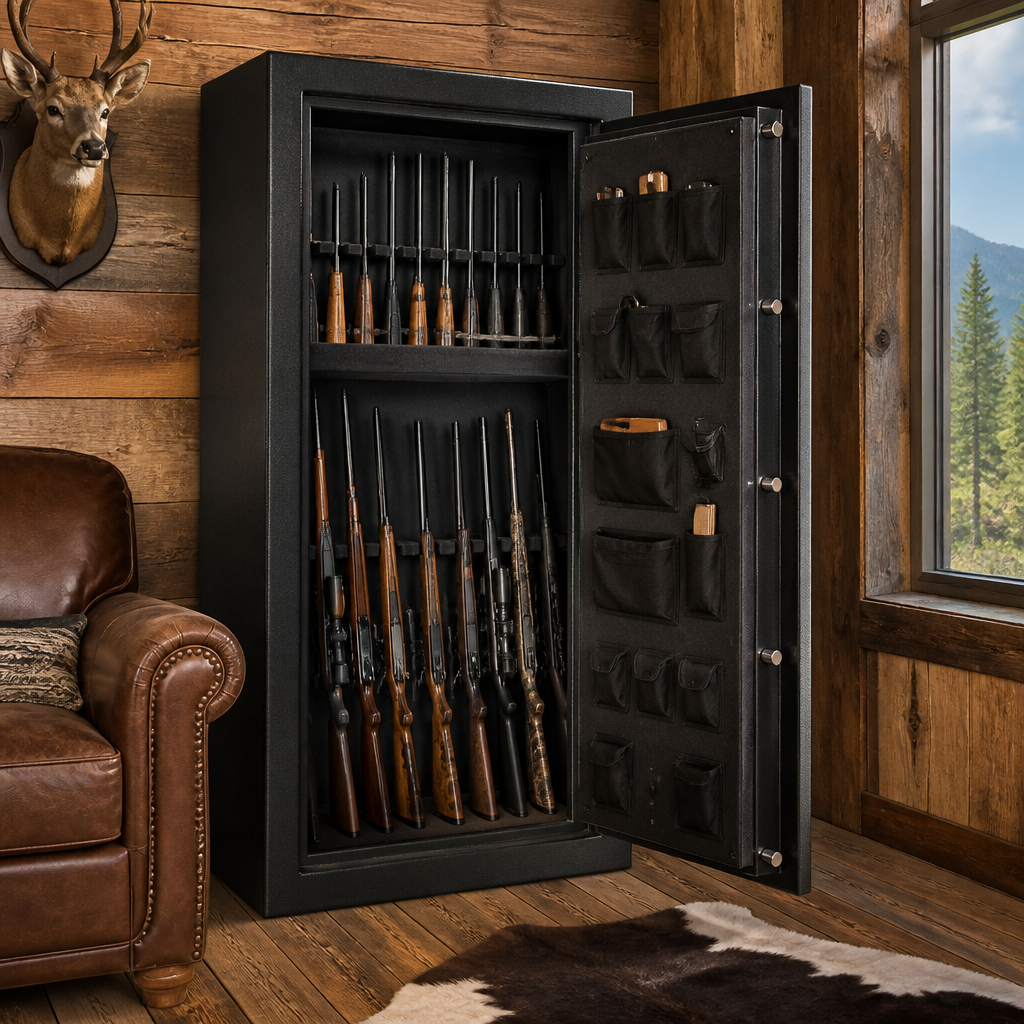
Cabela’s Signature E-Lock 40-Gun Safe stands out in the crowded gun safe market because it combines strong burglary protection, useful capacity, and a furniture-grade appearance that works in a home, hunting cabin, or dedicated gun room. In the “Gun Safes & Safety” category, product reviews matter because buyers are not just shopping for a steel box; they are evaluating fire resistance, locking systems, organization, long-term reliability, and how a safe fits into daily life. A hub page for gun safe product reviews should do more than repeat brochure claims. It should explain what specifications mean, where premium features deliver value, and which tradeoffs are acceptable for different owners.
When I evaluate a safe like this, I focus on the details that affect real use: steel construction, bolt design, door fit, lock responsiveness, interior flexibility, anchoring options, finish quality, and the manufacturer’s reputation for service. The phrase “40-gun safe” also needs context. In practice, quoted capacities are usually based on slim, unscoped long guns placed tightly together. Most owners with optics, slings, bipods, and modern sporting rifles will store fewer firearms comfortably. That is normal across the industry, and understanding it prevents disappointment after delivery.
This article reviews the Cabela’s Signature E-Lock 40-Gun Safe as a stylish and secure option while also serving as a central guide to gun safe product reviews. You will see where this model fits among entry-level, mid-tier, and premium safes; what features deserve the most attention; and how to compare future reviews across this subtopic. If you are choosing one safe to protect firearms, documents, and valuables, the goal is simple: buy enough protection for your risks without paying for features you will never use.
What the Cabela’s Signature E-Lock 40-Gun Safe Offers
The Cabela’s Signature E-Lock 40-Gun Safe is designed for owners who want a recognizable step above basic big-box security cabinets. Its appeal starts with balance. It offers meaningful storage for a collection, electronic lock convenience, and a polished exterior that looks intentional rather than industrial. For many households, that combination is exactly the sweet spot. A safe may live in a master closet, office, den, or finished basement, so appearance matters more than spec sheets often admit.
Electronic locking is one of the biggest reasons shoppers consider this model. A quality e-lock allows fast access, simple code changes, and easier day-to-day use than a traditional dial. That matters if the safe is opened frequently for range trips, hunting season, or document access. The key question is not whether electronic locks are good in theory, but whether the installed lock is responsive, intuitive, and supported by a reputable platform. On current mainstream safes, electronic locks from established manufacturers generally perform well when batteries are changed on schedule and the keypad is treated as a critical component, not an afterthought.
Capacity is another selling point. A 40-gun label suggests room to grow, and for owners with a mix of bolt actions, shotguns, heirloom rifles, and a few optics-equipped firearms, that can be true. Still, practical capacity is lower once shelves, handguns, and gear are added. In my experience, a “40-gun” interior often functions more comfortably as a 20- to 28-long-gun setup if you want easy retrieval and organized storage.
How to Judge Security Beyond the Marketing Label
Security starts with steel thickness, door structure, locking bolt coverage, hinge protection, and anchor installation. Brand literature may emphasize bolt count, but more bolts do not automatically mean better security. The quality of the door edge, frame reinforcement, relocker design, and overall body construction matter just as much. A safe with fewer well-supported bolts and stronger steel can outperform a model covered in flashy numbers.
For a product review hub, this is the standard I use: ask how long the safe would realistically resist a smash-and-grab burglary by common hand tools, not just whether it locks. Residential gun safes are usually classified as residential security containers rather than true high-security commercial safes. That does not make them ineffective. It means they are designed primarily to deter opportunistic theft, delay forced entry, and secure firearms from unauthorized users, especially children or guests.
Anchoring is non-negotiable. Even a heavy safe can be tipped, pried, or removed with dollies and time if it is not bolted down. Concrete slab installation with proper anchor hardware materially improves security. In real break-ins, thieves often attack the side or rear of a safe after moving it into a better working position. A bolted safe takes away that advantage.
| Review Factor | Why It Matters | What to Look For on This Safe |
|---|---|---|
| Steel construction | Thicker steel resists prying and cutting longer | Body and door thickness clearly stated, solid frame |
| Lock type | Daily access depends on reliability and speed | Responsive electronic keypad, trusted lock maker |
| Boltwork | Supports door security on multiple sides | Active bolts, firm engagement, tight door fit |
| Fire protection | Helps protect guns, optics, papers, and media | Rated time, tested seals, layered insulation |
| Interior layout | Determines true usable capacity | Adjustable shelving, door storage, scoped rifle space |
| Anchoring | Prevents removal and pry attacks | Factory anchor holes, stable base, proper install |
Fire Protection, Interior Design, and Daily Usability
Fire ratings deserve careful reading because not all are measured the same way. Some manufacturers cite independent testing, while others rely on internal protocols. The practical takeaway is that fire protection is useful but not absolute. Heat, duration, room fuel load, and firefighting response all change outcomes. For most buyers, a reasonable fire rating paired with smart placement on a lower floor and away from accelerants is a sensible approach. Important documents should still go in a dedicated fire-rated document box or a separate UL-classified media container if digital storage is critical.
The Signature E-Lock’s interior is part of its value story. Adjustable shelving allows mixed-use storage, which is exactly what most owners need. A modern gun safe often holds passports, jewelry, cash, suppressor paperwork where legal, family records, and optics in addition to long guns. Flexible interiors are better than rigid racks because collections change. What looked like a rifle-only safe on day one often becomes a broader household security center within a year.
Daily usability is where a safe earns its keep. A smooth handle throw, readable keypad, adequate interior lighting options, and door-mounted organization make access easier. If retrieving a rifle requires unloading half the safe, the stated capacity is not truly useful. The best product reviews point this out plainly. Real storage convenience matters as much as theoretical cubic footage.
Style, Placement, and Why Appearance Should Not Be Ignored
Many buyers feel awkward admitting that they care how a safe looks, but they should not. A safe this large becomes part of the room. The Cabela’s Signature line typically appeals to buyers who want a textured or polished finish, decorative hardware, and an overall look that signals quality. A refined exterior can help a safe fit naturally into finished spaces, which increases placement options and may improve daily use because the safe is kept where it is most accessible to the owner.
Placement affects both protection and convenience. Ideal locations limit humidity swings, reduce flood risk, allow full door swing, and support secure anchoring. A ground-floor concrete surface is usually best. Closets can add concealment, but be sure there is enough clearance for shelving adjustments and firearm removal. In cabins or rural homes, where environmental conditions can be harsher, owners should plan for dehumidification. GoldenRod-style heater rods, rechargeable desiccants, and a simple hygrometer are low-cost additions that protect bluing, wood stocks, and optics.
One lesson from years of reviewing safes is that the “best” model on paper can become the wrong purchase if it does not fit the room, the stair path, or the owner’s habits. Delivery logistics, floor load, and final install should be considered before purchase, not after the truck arrives.
How This Safe Fits Into the Broader Product Review Landscape
As a sub-pillar hub for product reviews, this page should help readers compare categories, not just one model. The Cabela’s Signature E-Lock 40-Gun Safe fits squarely in the mid-tier segment: more polished and capable than budget cabinets and basic safes, but generally more attainable than boutique, plate-steel, or custom-built premium models. That positioning is important because it matches the needs of a large share of firearm owners.
Entry-level buyers usually prioritize price and minimum secure storage. Mid-tier buyers want better fit and finish, stronger construction, more useful interiors, and better fire protection. Premium buyers chase thicker steel, upgraded lock systems, composite barriers, custom interiors, and often third-party security classifications. Understanding this ladder makes every review easier to interpret.
For readers exploring related gun safe product reviews, useful comparison points include Liberty, Browning, Fort Knox, Winchester, Sports Afield, Rhino, and AMSEC. Each brand tends to emphasize different strengths. Browning often gets attention for interior organization, Liberty for broad dealer presence and varied lineups, AMSEC for respected security engineering, and Fort Knox for customization. Cabela’s branded safes compete by offering recognizable retail access and feature sets that align well with mainstream buyers seeking a practical, attractive upgrade.
The right review question is not “Is this the best safe?” but “Is this the best safe for your risk level, collection size, room, and budget?” For many households, the answer may be yes. If you need a secure, good-looking safe with convenient electronic access and useful capacity, this model checks the most important boxes. If you require very high burglary resistance or truly spacious storage for large scoped collections, stepping up in steel and interior volume may be wiser.
Buying Considerations, Tradeoffs, and Final Verdict
The strongest buying decision comes from matching features to actual use. Choose the Cabela’s Signature E-Lock 40-Gun Safe if you value a strong blend of security, appearance, and everyday convenience. Expect real-world capacity to be lower than the label, especially with optics-heavy rifles. Plan to anchor it properly, manage humidity, and verify the fire rating details that matter to your situation. Those steps do more for long-term satisfaction than chasing headline numbers alone.
The main tradeoffs are typical for the category. An electronic lock is faster, but it introduces battery maintenance and dependence on a keypad. A stylish finish improves room integration, but cosmetics should never distract from construction quality. A 40-gun format sounds expansive, yet owners with growing collections may outgrow it sooner than expected. Whenever possible, buy slightly larger than your current needs and budget for delivery and professional installation.
As a hub for gun safe product reviews, this article sets the framework readers should carry into every comparison: evaluate security honestly, interpret capacity realistically, treat fire ratings carefully, and give proper weight to usability and placement. By that standard, the Cabela’s Signature E-Lock 40-Gun Safe is a stylish and secure option that makes sense for many gun owners who want dependable protection without moving into specialty-safe pricing. Use this review as your starting point, then compare adjacent models in the same class so you can choose a safe that protects not only firearms, but also the routines and responsibilities that come with owning them.
Frequently Asked Questions
What makes the Cabela’s Signature E-Lock 40-Gun Safe stand out from other gun safes in its class?
The Cabela’s Signature E-Lock 40-Gun Safe stands out because it balances three features that many buyers struggle to find in one model: meaningful security, practical storage capacity, and a polished exterior that looks appropriate in a lived-in space. A lot of safes either focus heavily on utility and end up looking industrial, or they emphasize appearance while cutting corners on protection. This model is appealing because it aims to deliver a stronger all-around ownership experience, not just a basic place to lock up firearms.
From a security perspective, buyers are typically looking at steel construction, door strength, internal locking bolts, and the overall quality of the locking system. The electronic lock adds day-to-day convenience, especially for owners who want faster access than a traditional dial can offer. At the same time, the larger 40-gun class gives room not only for rifles and shotguns, but also for accessories, ammunition storage plans, important documents, and valuables. That makes it more versatile than a smaller safe that becomes cramped almost immediately.
Another important differentiator is appearance. The furniture-grade styling is a real selling point for homeowners who do not want a safe to feel out of place in a bedroom, office, den, or hunting cabin. Instead of looking strictly utilitarian, it can blend into a more refined interior. For many buyers, that combination of strong protection, usable organization, and attractive presentation is exactly what makes the Cabela’s Signature E-Lock 40-Gun Safe worth serious consideration.
Is the 40-gun capacity realistic for most firearm owners, and how should buyers think about storage space?
The stated 40-gun capacity should be treated as a maximum rating rather than an everyday real-world number. In the gun safe industry, capacity estimates are often based on ideal conditions, such as slim long guns with minimal optics, no oversized stocks, and very tight placement. In practice, most owners will store fewer than the listed maximum if they have scoped rifles, tactical firearms, wider fore-ends, slings, soft sleeves, or other accessories that take up extra room.
That does not mean the safe is undersized. In fact, a 40-gun safe is often a smart choice for buyers who currently own fewer firearms but want room to grow. It gives flexibility for spacing firearms more safely, avoiding damage from crowding, and creating dedicated space for handguns, documents, jewelry, optics, magazines, and other valuables. If a buyer expects true long-term use, it is usually better to purchase slightly more capacity than they think they need today.
Storage layout also matters as much as raw capacity. Buyers should consider shelf adjustability, door organization, interior divisions, and whether the safe supports a mix of long guns and general household valuables. If the Cabela’s Signature E-Lock 40-Gun Safe includes customizable shelving or door-side storage, that can make the interior far more useful than a simple gun-count number suggests. For most owners, the real value of this size class is not just “how many guns fit,” but how efficiently and safely the interior can be organized over time.
How secure is the electronic lock, and is an e-lock a good choice for everyday use?
An electronic lock is often an excellent choice for everyday use because it combines solid security with faster and simpler access. For many owners, that convenience matters. Instead of spinning a mechanical dial through a sequence every time the safe is opened, an electronic lock allows entry with a programmed code in a matter of seconds. That can be especially useful for people who access the safe regularly, whether for hunting gear, range equipment, documents, or defensive firearms.
Security with an electronic lock depends on the quality of the lock itself, the door construction around it, and the safe’s overall anti-tamper design. A good e-lock should resist casual manipulation, support easy code changes, and operate consistently over years of use. Buyers should also pay attention to features like lockout modes after repeated wrong entries and backup access procedures. While some traditionalists still prefer mechanical dials for their simplicity, modern electronic locks are widely trusted when installed on a well-built safe from a reputable manufacturer.
For daily ownership, electronic locks are often easier for families or authorized users to manage, especially when speed and convenience are priorities. The main responsibility is maintenance: keeping track of battery health, testing the keypad periodically, and following the manufacturer’s instructions for code setup and emergency access. In a safe like the Cabela’s Signature E-Lock 40-Gun Safe, the electronic lock is a strong fit because it supports the product’s overall goal of blending practical security with user-friendly performance.
How important are fire protection and long-term reliability when evaluating this safe?
Fire protection and long-term reliability are two of the most important factors in any gun safe review because they influence whether the safe will still perform when it matters most. Buyers are not only protecting firearms from theft; they are often safeguarding documents, heirlooms, optics, cash, and other valuables that can be permanently damaged by heat, smoke, and moisture. A safe’s fire rating helps indicate how long the interior may remain below damaging temperatures during a fire event, though buyers should always understand that fire ratings vary by manufacturer and test standard.
Long-term reliability goes beyond the published specifications. It includes how well the door seal holds up, whether the lock remains consistent over years of use, how the hinges and bolts feel after repeated opening and closing, and how the interior materials age in different climates. For gun owners in humid areas or seasonal properties like hunting cabins, reliability also means thinking about interior moisture control and routine care. Even a well-built safe benefits from dehumidification solutions and occasional inspection.
When evaluating the Cabela’s Signature E-Lock 40-Gun Safe, buyers should see fire resistance and reliability as part of the total ownership equation, not just bonus features. A stylish exterior may help the safe fit the room, and capacity may solve storage needs, but long-term value comes from dependable protection year after year. The best safe is one that remains secure, functional, and protective through everyday use as well as unexpected emergencies.
Is the Cabela’s Signature E-Lock 40-Gun Safe a good fit for a home, hunting cabin, or dedicated gun room?
Yes, that broad placement flexibility is one of the safe’s biggest strengths. In a primary home, the safe’s furniture-grade styling can make it easier to install in a bedroom, study, living space, or office without it feeling overly industrial or visually disruptive. That matters for buyers who want serious security but also care about maintaining a cohesive look in the room. A safe that blends well into the environment is often easier to live with and less likely to be treated like an eyesore.
In a hunting cabin, the combination of secure storage and useful capacity is equally valuable. Cabins often serve as gear hubs, which means the safe may need to hold long guns, sidearms, ammunition, documents, optics, and other hunting essentials. A larger interior can help keep equipment organized and protected between trips, while the electronic lock offers convenient access when arriving or leaving with gear. Buyers in remote locations should still think carefully about humidity control, anchoring, and room placement to support long-term performance.
For a dedicated gun room, this model can function as both a primary storage solution and a more refined centerpiece. Not every owner wants a purely commercial-looking safe, especially in a space designed to showcase a collection responsibly. The Cabela’s Signature E-Lock 40-Gun Safe works well for buyers who want a safe that feels substantial and secure while also complementing the room. In all three settings, the key is to match the safe’s size, access needs, and appearance with the way it will actually be used day to day.