
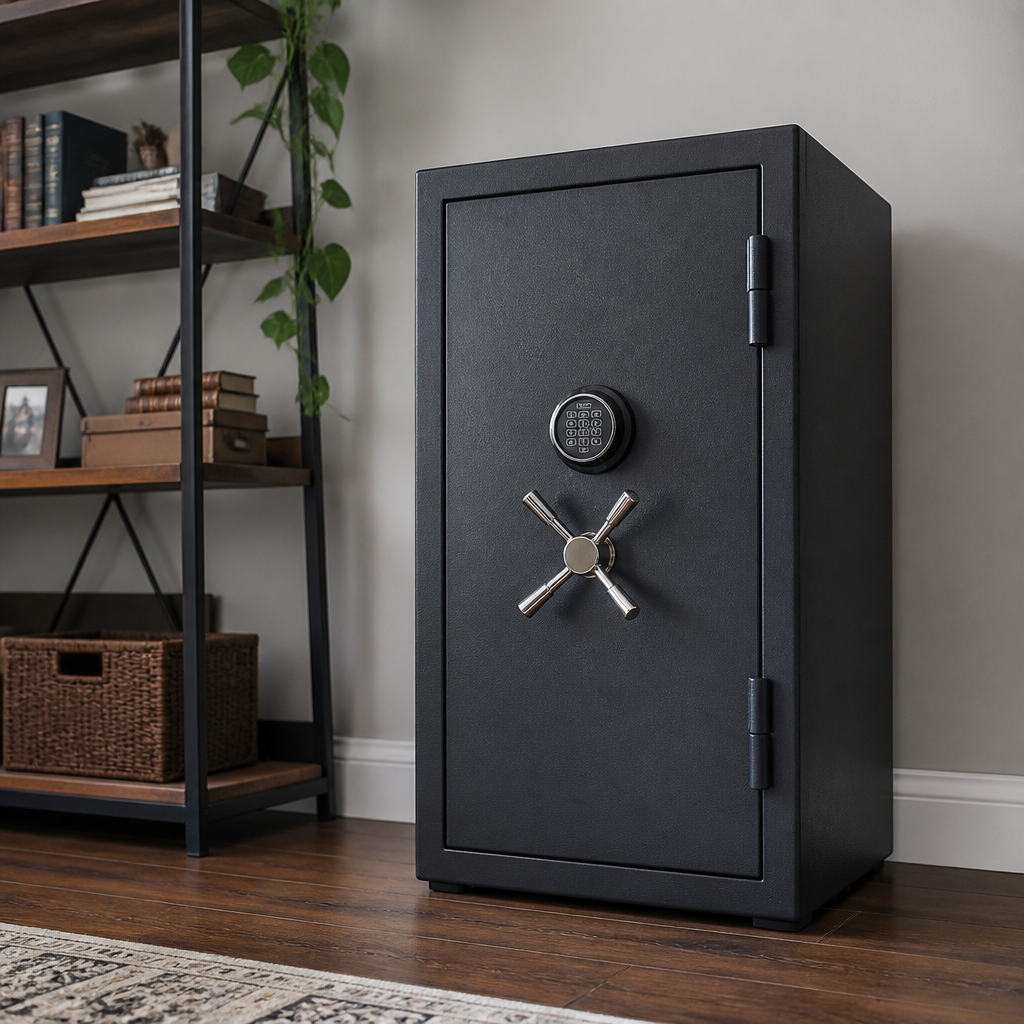
The Heritage Fortress FS14E sits in a crowded part of the gun safe market: the mid-size category aimed at owners who want meaningful protection without paying premium-brand prices. In practical terms, this means a safe large enough for a modest rifle and handgun collection, compact enough for a closet, spare room, or garage corner, and priced for buyers who care about value as much as capacity. As a sub-pillar hub for gun safe product reviews, this guide uses the FS14E to explain what budget-conscious owners should actually measure when comparing safes, from steel thickness and lock type to fire ratings, storage flexibility, and installation requirements. That matters because a gun safe is not a decorative box. It is a security device, a liability-control tool, and often a long-term storage system for firearms, documents, optics, cash, and family records.
When I review safes in this class, I focus less on marketing claims and more on how a model performs in normal ownership. Buyers ask straightforward questions: How many guns will it really hold? Is the electronic lock dependable? Will it fit scoped rifles? How hard is it to bolt down? Does the fire rating reflect a useful real-world threshold or just a sales sticker? Those are the questions that determine whether a purchase feels smart six months later. The Heritage Fortress FS14E deserves attention because it represents the kind of compromise many households make: they need better security than a cabinet offers, but they are not ready to move into the weight, cost, and installation demands of a high-end composite safe.
In the gun safes and safety category, product reviews matter because small specification differences lead to major ownership differences. A safe with a shallow interior can waste space. A lock without an override option can create stress during battery failure. Thin steel can invite fast pry attacks, while a better door design can buy valuable resistance time. For readers using this article as a product review hub, the goal is twofold: understand where the FS14E fits, and learn the criteria that should guide every safe review you read next. That includes checking manufacturer capacity claims against realistic storage layouts, comparing door organization systems, evaluating anchor options, and understanding the line between deterrence and true burglary resistance. The best budget gun safe is rarely the one with the biggest number on the brochure. It is the one whose tradeoffs match your risks, your home, and your collection.
Where the Heritage Fortress FS14E Fits in the Mid-Size Safe Market
The FS14E belongs to a segment that usually appeals to first-time safe buyers, apartment-to-house upgraders, and established owners adding secondary storage. “Mid-size” generally means a footprint that can hold around 10 to 18 long guns under ideal conditions, with enough shelf space for handguns, ammunition, passports, and valuables. In real use, the number is lower, especially once you factor in scopes, bipods, slings, and modern sporting rifles with wider profiles. A nominal 14-gun safe often stores closer to eight to ten long guns comfortably, which is why honest product reviews should separate stated capacity from usable capacity.
For budget-conscious owners, the FS14E’s value is usually in its balance. Safes in this class try to deliver three things at once: an electronic lock for convenience, basic fire protection, and enough interior volume to justify the floor space. That combination matters more than luxury features. Most buyers are moving up from a locking cabinet, under-bed storage, or distributed household hiding spots. The jump to a safe like this creates a measurable improvement in child access prevention, smash-and-grab resistance, and organization. It also supports better ammunition segregation and helps owners maintain more disciplined storage habits, especially when the interior is accessible and easy to arrange.
This position in the market also explains the product review landscape around models like the FS14E. They are not direct competitors to heavy plate-door safes from premium makers, and they should not be judged as if they are. The right comparison set includes entry and mid-tier models from brands commonly sold through sporting goods chains, farm stores, warehouse clubs, and online retailers. In that group, buyers should prioritize practical construction details over branding alone. Weight, locking bolt engagement, hinge design, interior adjustability, and anchor hole placement often tell you more than the logo. The FS14E becomes useful as a hub example because it highlights exactly how buyers should read a spec sheet without getting distracted by inflated gun counts or decorative finishes.
Construction, Security, and What the Specifications Really Mean
The most important part of any gun safe review is translating specifications into actual security performance. On the FS14E, as with most safes in its class, the steel body and door construction matter more than external styling. Manufacturers may emphasize bolt count, but bolt count alone does not determine pry resistance. Door fit, frame rigidity, steel gauge, and how deeply the locking bolts engage all influence how a safe handles attack. In budget and lower mid-tier models, the usual goal is deterrence against opportunistic theft rather than prolonged resistance to experienced tool attacks. That distinction is not a flaw; it is the honest use case.
An electronic lock is typically a major selling point for safes like the FS14E because it allows faster access than a traditional dial. For many owners, especially those storing defensive firearms, that convenience is meaningful. However, not all electronic locks are equal. I always tell buyers to look for evidence of a recognized lock platform, clear battery access, a straightforward keypad layout, and documented relock procedures. A good lock should permit fast daily use without making battery maintenance an afterthought. If a keypad becomes unreliable under normal indoor conditions, the convenience advantage disappears quickly. Reviews should note whether the lock area feels solid, whether code programming is intuitive, and whether the door handle action is smooth under repeated cycles.
Fire protection claims deserve similar scrutiny. Entry and mid-range gun safes often advertise fire ratings based on internal testing standards that are not directly comparable across brands. Temperature threshold, exposure duration, seal design, and insulation method all affect outcomes. For paper documents, internal temperature control is critical because paper begins to char well below structural failure temperatures. Fireboard-lined walls can provide valuable delay, but buyers should understand that house-fire conditions vary widely. A safe rated for a certain number of minutes is not a guarantee of survival in every event, particularly if the safe is placed in a fully involved garage fire or beneath collapsing debris.
| Review Factor | What to Check on the FS14E | Why It Matters |
|---|---|---|
| Usable gun capacity | Count space for scoped rifles, not bare long guns | Prevents overestimating storage and crowding firearms |
| Lock quality | Battery access, keypad response, reset procedure | Affects daily reliability and emergency access |
| Steel and door fit | Door gap, frame stiffness, body weight | Influences pry resistance more than bolt count alone |
| Fire protection | Duration, temperature, seal design, wall lining | Clarifies whether the rating is useful for documents and guns |
| Anchoring | Factory holes and floor compatibility | Reduces risk of tip-over and whole-safe theft |
Another specification buyers often overlook is total weight. In this category, weight is not just a shipping concern; it is a rough indicator of material content. A heavier safe of similar dimensions may provide more steel, more fire lining, or both. That said, weight without anchoring is not enough. A mid-size safe that is not bolted down can still be tipped, pried from a more favorable angle, or removed entirely with basic equipment. The FS14E should therefore be evaluated as part of an installation plan, not as a standalone object. Security begins with the safe itself, but it becomes meaningfully stronger when placement, anchoring, and room access are considered together.
Storage Layout, Everyday Use, and Ownership Experience
Interior layout is where many budget safes either become easy to live with or frustrating within a month. The FS14E’s appeal depends heavily on whether its shelving and long-gun area support real collections rather than showroom assumptions. In practice, owners rarely store identical unscoped hunting rifles. They store a mix: a shotgun with an extended bolt handle, a scoped deer rifle, an AR-pattern rifle with an optic, one or two handguns in cases, a suppressor-ready pistol setup, ammunition boxes, and important papers. A useful mid-size safe has to absorb that variety without forcing the owner to stack gear in ways that slow access or risk cosmetic damage.
Door organization can be especially important in a 14-gun class safe. If the inside of the door includes pouches or a panel system, that feature can free shelf space for hard items like magazines, passports, or small valuables. When it does not, buyers should be realistic about how quickly shelf volume disappears. Product reviews should address whether the long-gun rack spacing is generous enough for scoped rifles and whether shelves can be repositioned without wasting vertical space. A safe with slightly lower stated capacity but better shelf flexibility often performs better over time than a bigger-numbered competitor with a rigid interior.
Daily ownership also comes down to door swing, lighting, and handle feel. These details sound minor until you place a safe in a closet alcove or tight room corner. I have seen otherwise solid safes become awkward simply because the door could not open fully enough for easy rifle removal. Before purchase, owners should confirm external dimensions, internal depth, and required clearance for the handle and door arc. If the FS14E will live in a carpeted closet, buyers should also consider whether the floor is level and whether a riser or shims are needed before anchoring. A safe that racks slightly out of square may still close, but smooth boltwork over time depends on stable positioning.
Noise and speed matter as well. Electronic locks are often chosen for quick access, but the safe still needs to open without sticky boltwork or excessive effort. In reviews, one useful test is repeated opening and closing over several cycles to see whether the keypad, handle, and relocking action remain consistent. Another practical issue is humidity management. Mid-size safes in garages, basements, or humid climates benefit from a dehumidifier rod or desiccant system. Firearms stored in foam-lined cases inside a safe can trap moisture, so reviewers should mention not just the safe’s protection level, but how owners can preserve finishes and optics once the guns are inside.
How the FS14E Compares with Other Product Review Priorities
As a hub for product reviews in the gun safes and safety category, this article should help readers compare the FS14E against adjacent options. The first comparison is between a true gun safe and a steel gun cabinet. Cabinets are lighter, cheaper, and easier to place, but they generally offer far less pry resistance and minimal fire protection. For owners with children, frequent visitors, or a growing collection, the jump from cabinet to safe is significant. The FS14E likely serves buyers who are ready for that upgrade without stepping into the cost and mass of premium burglary-rated units.
The second comparison is between electronic and mechanical locks. Electronic locks provide speed and convenience, especially for users who access the safe regularly. Mechanical dial locks have long-term durability advantages and avoid battery dependence, but they are slower and less intuitive for some households. The right choice depends on use pattern. A bedside quick-access safe is different from a closet long-gun safe, yet many owners still prefer electronic entry on a mid-size unit because the friction of daily use matters. A safe that is inconvenient often leads to bad storage behavior outside the safe.
The third comparison involves brand strategy. Some buyers focus on recognizable retail brands, while others look for the best specifications per dollar regardless of label. That is sensible, but consistency in warranty support, replacement parts, lock servicing, and dealer responsiveness should weigh into the review. A lower price is not a bargain if customer support is weak during a lockout, shipping damage claim, or replacement key request. Strong product reviews therefore go beyond first impressions and examine what happens after delivery, installation, and several months of use. The FS14E is most useful in this context as a representative case: buyers should ask not only “Is this safe good?” but “Compared with what, for which risks, and with what ownership expectations?”
Who Should Buy It, Who Should Skip It, and How to Get the Most Value
The Heritage Fortress FS14E makes the most sense for owners who need a legitimate step up from unsecured or lightly secured storage and who understand the limits of the budget mid-size class. It is a practical fit for someone with a moderate collection, a suburban home, and a desire to centralize firearms, documents, and small valuables in one locked location. It also works well as a secondary safe for separating hunting guns from defensive firearms, or for moving overflow storage out of a primary safe that has reached realistic capacity. For these buyers, value comes from solid baseline protection, organization, and daily convenience.
It is not the right choice for every situation. Owners with high-value collections, NFA-heavy setups, or elevated theft risk should consider heavier safes with thicker steel, stronger door construction, and, where appropriate, listed burglary ratings. Likewise, anyone expecting a nominal 14-gun capacity to hold fourteen accessorized long guns comfortably will be disappointed. Being honest about collection growth is one of the smartest review filters. Many safe buyers underestimate how quickly optics, ammo, documents, and accessories consume interior space. If your collection is already near the stated limit, buying the next size up is often the better financial decision.
The key takeaway is simple: the FS14E should be judged as a budget-conscious mid-size gun safe, not as an all-threat solution. In that role, it can be a smart buy if the lock is dependable, the interior fits your actual firearms, and the safe is properly anchored in a sensible location. Use this product review hub as a framework for every safe you compare next: verify real capacity, inspect construction details, treat fire ratings carefully, and plan installation before purchase. That process leads to better decisions than any brochure claim. If you are shopping within the gun safes and safety category, start by measuring your space, counting your true storage needs, and comparing the FS14E against one size larger and one tier higher before you commit.
Frequently Asked Questions
Is the Heritage Fortress FS14E a good choice for budget-conscious gun owners?
Yes, the Heritage Fortress FS14E is designed for buyers who want a practical balance between cost, capacity, and everyday security. In the mid-size gun safe category, many shoppers are not looking for a top-tier luxury model with every premium feature available. Instead, they want a safe that offers meaningful firearm storage, organized interior space, theft deterrence, and a manageable footprint without pushing the budget into high-end territory. That is where the FS14E fits best.
For budget-conscious owners, value is not just about finding the lowest price. It is about understanding what you are getting for the money. A safe like the FS14E appeals to buyers who want enough room for a modest rifle and handgun collection, along with basic accessories, important documents, or ammunition stored according to their personal setup. If your goal is to move beyond entry-level lock boxes or lightweight cabinets and into something more substantial, this model represents the kind of step-up many practical owners consider.
It is especially well suited to first-time safe buyers, homeowners with limited floor space, and gun owners who want a recognizable middle ground between bare-minimum storage and a premium flagship safe. For those buyers, the FS14E is often less about prestige and more about function: secure storage, reasonable size, and a price point that feels attainable.
How much can the Heritage Fortress FS14E realistically hold?
The FS14E falls into the mid-size class, which means it is typically best for a modest firearm collection rather than a large or rapidly expanding one. In real-world use, buyers should approach stated long-gun capacity numbers with caution. Manufacturer ratings often assume ideal conditions, such as slim-profile rifles, minimal optics, and tightly arranged spacing. In practice, modern sporting rifles, scoped hunting rifles, pistol grips, slings, and other accessories reduce usable capacity.
For most owners, the more realistic question is not the advertised maximum, but whether the interior can comfortably support current storage needs with room for basic organization. If you own several rifles or shotguns, a few handguns, and some smaller valuables, the FS14E may offer a workable layout for keeping everything centralized. It can be a strong fit for someone with a compact collection who wants better storage discipline and easier access than stacking cases in a closet or spreading firearms across multiple unsecured locations.
It is also important to think beyond gun count. Shelving flexibility, door storage, interior depth, and how you plan to store accessories all affect usability. A safe can look generous on paper but feel cramped once optics, magazines, documents, and boxed items go inside. For buyers considering the FS14E, the safest expectation is to treat it as a mid-size solution for a moderate collection, not a long-term answer for someone who expects significant collection growth in the near future.
Where does the FS14E fit best in a home, and is it compact enough for tight spaces?
One of the strongest advantages of a mid-size safe like the Heritage Fortress FS14E is placement flexibility. It is intended for owners who need meaningful protection without dedicating an entire room or oversized footprint to secure storage. That makes it a sensible option for closets, spare rooms, home offices, and garage corners, depending on the layout of the home and the owner’s priorities.
For many buyers, closet placement is ideal because it adds a layer of discretion and keeps the safe out of immediate view. A spare room can also work well, particularly if you want easier door swing access and less concern about cramped installation. Garages are common safe locations too, though owners should consider humidity, temperature swings, and anchoring conditions before deciding. In any location, the goal is to balance access, concealment, and structural practicality.
The FS14E’s appeal comes from being large enough to provide useful storage while still remaining manageable for homes where space is at a premium. That said, compact enough does not mean effortless to place. Buyers should measure doorways, hallway turns, floor load considerations, and final installation clearance before purchase. You should also leave enough room for the door to open fully and for interior shelves or long guns to be used comfortably. In short, the FS14E is well suited to tighter residential spaces, but successful placement depends on careful measuring and installation planning.
What level of protection should buyers expect from the Heritage Fortress FS14E?
Buyers should view the FS14E as a practical theft-deterrent and secure-storage solution within the budget-conscious mid-size market, not as a no-compromise high-security vault. That distinction matters. In this category, the main value comes from creating a meaningful barrier against unauthorized household access, smash-and-grab theft attempts, and casual intrusion, while also offering more structure and protection than lightweight alternatives.
For many households, that level of protection is exactly what is needed. A properly installed safe helps keep firearms away from children, visitors, and opportunistic thieves. It also centralizes storage, supports responsible ownership, and reduces the risk that firearms are left unsecured in drawers, cases, or closets. When anchored correctly, a mid-size safe becomes far more difficult to remove quickly, which improves real-world theft resistance substantially.
At the same time, buyers should keep expectations grounded. In the budget and mid-size segment, construction choices are shaped by affordability. That means shoppers should evaluate security as part of a broader system: safe placement, concealed location, proper anchoring, good household access control, and realistic understanding of what this class of safe is built to resist. If you need commercial-grade protection, very high-end fire performance, or advanced burglary ratings, you may need to look above this tier. But for many ordinary owners, the FS14E can provide a sensible and responsible level of protection for the price.
Who should buy the Heritage Fortress FS14E, and who may need a different type of safe?
The Heritage Fortress FS14E is a strong candidate for first-time safe buyers, budget-focused homeowners, and firearm owners with a moderate collection who want a step up from basic storage without entering premium-brand pricing. It makes sense for people who want a safe that can hold several long guns, some handguns, and a handful of valuables while still fitting into everyday household spaces. It also suits buyers who see a safe as an essential part of responsible ownership but do not need oversized capacity or luxury-level features.
This model is especially appropriate for owners who value practicality. If your priorities are controlled spending, decent storage flexibility, and a more compact footprint, the FS14E aligns well with those goals. It can also be a smart fit for apartment-adjacent living situations, smaller homes, or secondary storage needs, provided dimensions and installation logistics are confirmed in advance.
On the other hand, buyers with larger collections, frequent firearm purchases, or heavy use of optics and accessories may outgrow a mid-size safe quickly. The same is true for those who want room for extensive document storage, layered interior organization, or future expansion without replacing the unit. If you already know your storage needs are growing, it may be more cost-effective to size up now rather than treat a mid-size safe as a short-term solution. In that sense, the FS14E is best understood as a value-focused safe for modest but serious ownership needs, not a universal answer for every collection size or security goal.