
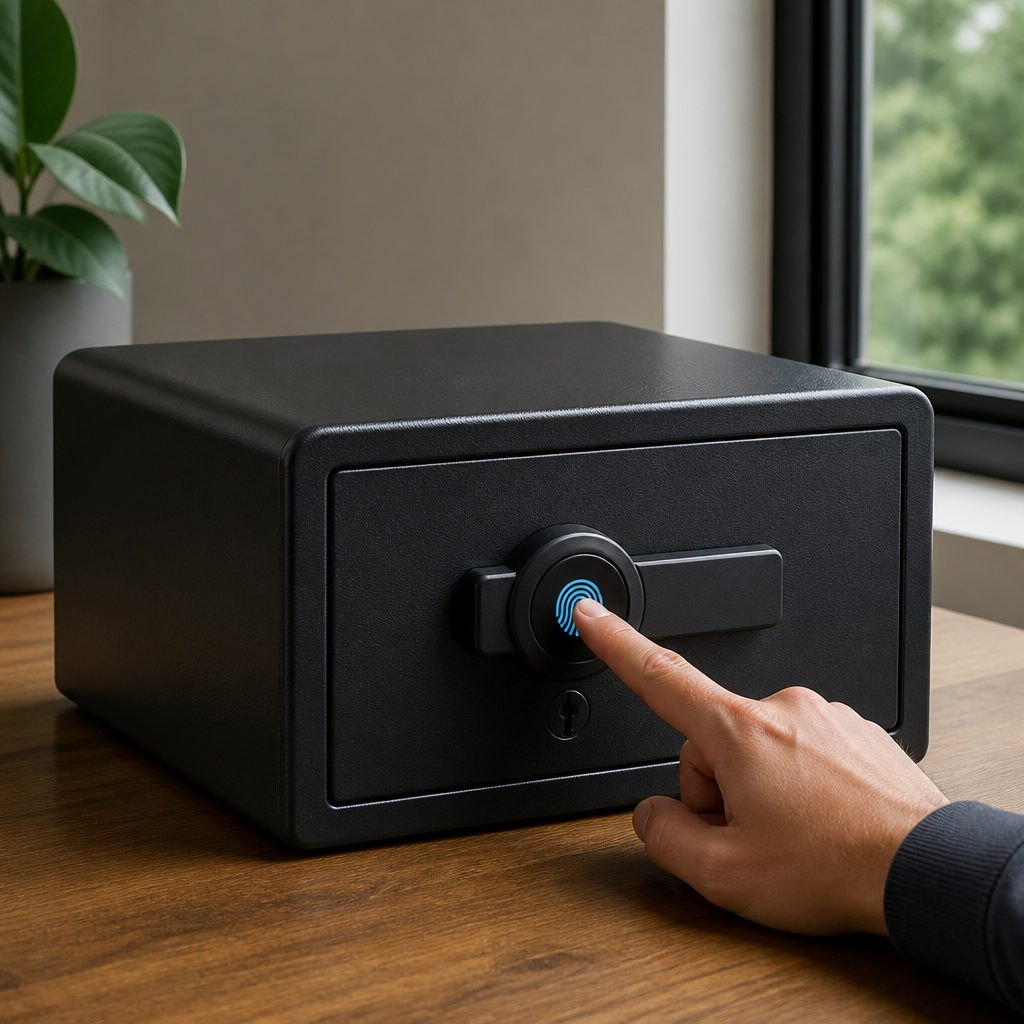
The Liberty HDX-250 Smart Vault sits at the intersection of two fast-growing priorities in the gun safe market: rapid biometric access and compact, furniture-friendly storage. As a sub-pillar hub for product reviews within the broader Gun Safes & Safety category, this guide explains what the HDX-250 is, how biometric security works in a small handgun vault, and where this model fits among bedside safes, vehicle lockboxes, and traditional quick-access pistol safes. I have tested and compared compact handgun vaults in bedrooms, offices, and travel setups, and the same buying questions always come up: Is the fingerprint reader reliable, how strong is the steel, what happens when batteries die, and does the size actually fit a real defensive handgun with accessories? Those are exactly the questions this article answers.
In practical terms, the Liberty HDX-250 Smart Vault is a compact security container designed for one primary mission: keeping a handgun secured from unauthorized access while still allowing an authorized user to open it fast under stress. “Biometric security” refers to identification through a physical trait, most commonly a fingerprint. In a smart vault, that biometric layer is paired with other access methods such as a keypad, backup key, or mobile management features. “Compact form” matters because many owners do not need a full-size safe near the bed, under a desk, or inside a closet shelf. They need a smaller vault that can be bolted down, hidden in plain sight, and opened one-handed in low light.
This topic matters because handgun storage decisions affect both safety and response time. The National Shooting Sports Foundation, firearm instructors, and secure-storage advocates consistently emphasize that safe storage reduces unauthorized access, especially around children, guests, and service workers. At the same time, owners who keep a firearm for home defense do not want a storage method that slows them down or fails during a high-stress event. That tension is why compact biometric vaults have become a major product review category. For many households, the best solution is not a giant safe in the garage but a layered setup: a full-size safe for long guns and valuables, plus a compact handgun vault like the Liberty HDX-250 where immediate access matters most.
As a review hub, this article also provides context for adjacent product-review topics buyers often research next: biometric versus keypad vaults, cable-secured travel lockboxes, nightstand gun safes, and higher-capacity smart safes that hold multiple pistols. If you are comparing the Liberty HDX-250 Smart Vault with Vaultek, Hornady RAPiD, Fort Knox, or entry-level electronic lockboxes, the useful questions are not just about price. They are about lock redundancy, tamper resistance, mounting options, interior dimensions, app dependence, and long-term reliability. Understanding those factors will help you evaluate this model and every other product review in the handgun safe segment.
What the Liberty HDX-250 Smart Vault Is Designed to Do
The Liberty HDX-250 Smart Vault is built for controlled, fast access to a handgun in a small footprint. In use, that means it belongs in spaces where a full-size safe is impractical: on a closet shelf, inside a cabinet, beside a bed, under a desk, or in a secondary residence. Compact handgun vaults succeed when they combine four things well: durable construction, consistent opening speed, secure mounting, and an interior layout that actually accommodates modern pistols. That last point is often overlooked. A compact vault might technically fit a pistol, but not with a weapon light, optic, spare magazine, or foam configuration that keeps the gun from shifting.
From my experience reviewing these products, the best compact smart vaults are not trying to replace a real burglary-rated safe. They solve a narrower but critical problem: preventing unauthorized handling while preserving readiness. The Liberty HDX-250 should be judged on that basis. Buyers should expect pry resistance appropriate for a steel handgun vault, not the attack protection of a heavy UL-listed gun safe. That distinction matters because some disappointed reviews come from using the wrong standard. A nightstand biometric vault is a quick-access device first and a theft deterrent second, especially if it is not anchored properly.
In the wider product review landscape, the HDX-250 category includes single-handgun biometric safes, top-opening and front-opening pistol vaults, and hybrid electronic models with multiple credentials. Liberty’s positioning has appeal because the company is already recognized in residential security storage. Brand reputation does not guarantee perfection, but it does matter for warranty support, replacement parts, and consumer confidence. For shoppers building a complete safe-storage plan, that brand continuity can be useful, especially if they already own a larger Liberty safe and want a secondary access point for a carry gun.
Biometric Performance: Speed, Reliability, and Real-World Use
The core promise of the Liberty HDX-250 Smart Vault is biometric security without friction. In plain terms, the fingerprint reader must work when your hands are dry, slightly sweaty, cold, or under adrenaline. The strongest biometric systems enroll multiple prints from both hands, store templates securely, and allow fallback access if a print is not recognized on the first try. In testing compact biometric safes generally, the biggest performance differences show up not in perfect daytime conditions but at 2 a.m., with awkward hand angles and partial finger placement. A good vault should tolerate that reality.
Fingerprint readers in handgun vaults are usually capacitive sensors, which read the ridges and valleys of the finger by measuring electrical differences. Capacitive readers tend to outperform older optical-style implementations in compact safes because they are less affected by simple image spoofing and usually respond faster in a tight housing. Even so, no biometric safe should be treated as single-point infallible. Dry skin, cuts, residue from cleaning solvents, or poor enrollment can all reduce recognition rates. The solution is straightforward: enroll the same finger multiple times at slightly different angles, enroll both thumbs and index fingers, and test the safe in darkness and under time pressure before trusting it for defensive storage.
Another practical issue is latency. A reader may technically work, yet still feel slow if the sensor, motor, or lid spring introduces delay. In user experience terms, sub-second recognition paired with immediate lid release feels dramatically different from a two-step process that pauses before unlocking. That is why serious product reviews should separate “reader accuracy” from “access sequence speed.” On a bedside safe, half a second matters more than it does on a document lockbox. For households balancing child access prevention with emergency readiness, the ideal smart vault opens in one smooth motion, with no need to stare at a screen or re-enter a code.
Build Quality, Mounting, and Security Tradeoffs
Compact handgun vaults live or die by build quality. Steel thickness, hinge design, latch engagement, weld consistency, and the rigidity of the lid all affect real security. The Liberty HDX-250 Smart Vault should be evaluated as a compact steel vault, not as a decorative lockbox. Reviewers should inspect whether the lid has excessive flex near pry points, whether the hinges are exposed or protected, and whether the lock bolt engages deeply enough to resist casual forced entry. Powder-coated finishes are useful for corrosion resistance, but finish quality should never be mistaken for structural strength.
Mounting is equally important. An unanchored compact vault can often be carried away, defeating the point of local access control. The best installation is bolting the vault into solid wood, concrete, or steel framing with hardware sized for the substrate. If a buyer uses only a security cable, the setup becomes more of a delay measure than true placement security. That can still be appropriate for temporary lodging or vehicle use, but it is a compromise. In product reviews, I always score mounting flexibility highly because the same vault may perform very differently when hard-mounted to a nightstand frame versus left loose in a drawer.
| Review Factor | Why It Matters | What to Check on the HDX-250 |
|---|---|---|
| Fingerprint access | Determines speed and convenience under stress | Multiple print enrollment, low-light usability, failed-read recovery |
| Backup entry | Prevents lockout during battery or sensor issues | Mechanical key quality, keypad option, external power support |
| Steel construction | Affects pry resistance and overall durability | Lid flex, hinge protection, latch depth, weld quality |
| Mounting system | Stops theft by removal | Bolt holes, included hardware, surface compatibility |
| Interior capacity | Determines fit for real carry or duty pistols | Room for optics, lights, spare magazine, foam clearance |
| Power management | Influences long-term reliability | Battery type, low-battery warnings, replacement access |
Security always involves tradeoffs. A lighter vault is easier to position discreetly, but easier to steal if unsecured. A gas-strut or spring-assisted lid improves access speed, but adds moving parts. A highly sensitive biometric reader may open quickly for authorized users, but can require better enrollment discipline to avoid false rejections. The HDX-250’s value depends on how well it balances those tradeoffs for its intended role. For home users, the winning formula is usually moderate pry resistance, strong mounting, quiet operation, and redundant access methods rather than maximum portability.
Interior Capacity, Daily Practicality, and Who Should Buy It
Interior fit is where many compact safe reviews fail buyers. A manufacturer may advertise handgun compatibility, but owners need to know whether the Liberty HDX-250 Smart Vault fits a compact pistol, a full-size handgun, or a setup with a red-dot sight and mounted light. Modern defensive pistols are larger than many old lockbox templates assumed. A Glock 19 with an optic and compact light, a SIG P320 Carry, or a Smith & Wesson M&P with tall sights may require more vertical and diagonal clearance than the published external dimensions suggest. Foam padding helps protect the finish and reduce movement, but thick foam also eats interior volume.
Daily practicality goes beyond fit. A useful compact vault should allow one-handed opening, intuitive retrieval, and consistent closing without wrestling the lid. Audible beeps, interior lights, and app notifications can be helpful or annoying depending on the environment. In a bedroom, a loud confirmation tone may be a drawback. In an office or apartment, discreet operation matters. Battery access also affects ownership experience. If replacing batteries requires awkward disassembly or risks lockout due to poor warning intervals, long-term satisfaction drops fast. The best practice is to use high-quality batteries, test the unit monthly, and replace power on a calendar schedule rather than waiting for failure.
So who should buy the Liberty HDX-250 Smart Vault? It is best suited for handgun owners who need quick local access in a controlled indoor environment and who are willing to install the unit properly. That includes home-defense users, concealed carriers who want a secure staging location when changing clothes, and parents who need child-resistant storage without burying the firearm in a large safe across the house. It is less ideal for buyers seeking deep theft protection, multi-handgun storage, or all-weather vehicle deployment. For those use cases, larger steel safes, console vaults, or travel-specific lockboxes are better review categories to explore next.
How the HDX-250 Fits Into a Complete Product Review Hub
As a hub article for product reviews in Gun Safes & Safety, the Liberty HDX-250 Smart Vault is best understood as one branch of a larger decision tree. Shoppers typically move through related comparisons: biometric versus keypad access, single-pistol versus multi-pistol capacity, bedside vault versus portable TSA-style lockbox, and smart features versus simpler mechanical durability. The HDX-250 belongs in the quick-access biometric bedside and closet-vault segment. Readers researching this model should also compare it with higher-capacity smart safes, simplex-mechanical handgun boxes, and lower-cost electronic vaults to understand what they gain or sacrifice at each tier.
For example, a mechanical simplex-style pistol safe may offer excellent reliability with no batteries, but it usually requires more deliberate manual input and often has a bulkier form factor. A cheaper electronic keypad safe may provide basic access control, yet often falls short in steel rigidity, hinge strength, and lock consistency. Premium smart vaults may add Bluetooth management, tamper alerts, and activity logs, but those features introduce another layer of power consumption and setup complexity. The Liberty HDX-250 Smart Vault should therefore be judged less on feature count alone and more on whether it delivers a dependable blend of speed, compactness, and secure everyday use.
That perspective is what makes a review hub valuable. Instead of treating every safe as a standalone gadget, serious buyers should map products to roles. A full-size long-gun safe handles collection storage, fire protection, and burglary resistance. A compact biometric vault handles immediate-access handgun storage. A travel lockbox handles legal transport and temporary off-body storage. Once those roles are clear, buying decisions become simpler and safer. If the Liberty HDX-250 matches your role, shortlist it, compare dimensions and access methods carefully, and install it correctly. Then continue to the related product reviews in this subtopic to find the best bedside safe, portable lockbox, or multi-handgun smart vault for your broader storage plan.
The key takeaway is simple: the Liberty HDX-250 Smart Vault addresses a real need that many firearm owners have, and it does so in a form factor that fits modern homes better than a traditional safe near every access point. Its value comes from combining compact size, fast biometric entry, and practical unauthorized-access prevention for a single defensive handgun. Like every quick-access vault, it works best when buyers understand its limits. It is not a substitute for a heavy burglary-rated safe, and it should never be left unsecured. But as part of a layered storage strategy, it can solve the most common daily-access problem extremely well.
For product-review shoppers, the most important evaluation points are fingerprint reliability, backup entry options, construction quality, mounting security, and true interior usability with your actual firearm setup. Test the vault with the pistol, optic, light, and magazine configuration you intend to store. Enroll multiple fingerprints, practice opening it in darkness, and verify the mounting surface before making any final judgment. Those steps reveal more than marketing copy ever will, and they apply not only to the HDX-250 but to every compact biometric safe in this category.
If you are building a safer and more efficient handgun storage system, start with the Liberty HDX-250 Smart Vault as a benchmark for what a compact biometric vault should offer. Then use this product review hub to compare bedside safes, travel lockboxes, and larger smart handgun vaults so you can match the right product to the right role. Secure storage works best when it is intentional, tested, and integrated into your routine. Choose the vault that fits your firearm, your room, and your response needs, and make proper installation your next step today.
Frequently Asked Questions
What is the Liberty HDX-250 Smart Vault, and who is it best suited for?
The Liberty HDX-250 Smart Vault is a compact quick-access handgun safe designed for people who want faster entry than a traditional keyed box while keeping a defensive firearm secured from unauthorized users. Its core appeal is the combination of small-footprint storage, biometric entry, and furniture-friendly placement. In practical terms, that makes it especially relevant for nightstands, closets, home offices, apartments, and other spaces where a full-size gun safe would be excessive or inconvenient.
It is best suited for handgun owners who prioritize rapid access for home defense, responsible storage around children or guests, and a cleaner, more discreet setup than a larger steel cabinet. It also fits buyers who want a vault that can bridge multiple use cases: bedside access, closet shelf storage, or even travel between rooms as part of a layered security setup. That said, it is not a replacement for a full-size long-gun safe or a high-capacity fire-rated vault. Instead, it fills a very specific role within the broader gun safe market: secure, compact, quick-access storage for one primary defensive handgun and a few small essentials.
For many buyers, the HDX-250 sits in the sweet spot between basic lockboxes and more elaborate smart safes. Basic lockboxes can be affordable, but they often sacrifice speed or user convenience. On the other end, larger premium safes may offer more capacity but take up more space and cost significantly more. The HDX-250 is attractive because it aims to deliver practical everyday usability in a compact form, which is exactly why it stands out in discussions about bedside safes, pistol vaults, and furniture-compatible handgun storage.
How does biometric security work in a compact safe like the Liberty HDX-250?
Biometric security in a compact handgun vault typically relies on a fingerprint reader that scans and matches an enrolled fingerprint against stored user data. When the system recognizes an authorized print, it triggers the locking mechanism and allows the safe to open without requiring a key or a manually entered code. In a product like the Liberty HDX-250, the goal is not just security in the abstract, but speed under realistic use conditions such as low light, stress, or one-handed access near a bed or desk.
In real-world terms, the quality of the biometric system matters just as much as the feature itself. A fingerprint scanner is only truly valuable if it is responsive, consistent, and tolerant of minor variations in finger placement. High-performing systems are designed to reduce failed reads caused by dry skin, slightly angled contact, or rushed use. That is why setup and enrollment are so important. Registering the same finger multiple times from slightly different positions can often improve reliability because it gives the system more data points to recognize. Many users also enroll more than one finger, and often both hands, to create redundancy in an emergency.
It is also important to understand that biometric access should not be viewed in isolation. The best compact handgun safes pair the fingerprint reader with backup entry methods, such as a keypad or physical override key. That layered approach is what makes a smart vault practical rather than gimmicky. Batteries can eventually drain, fingers can be wet or dirty, and no biometric system is perfect 100 percent of the time. A well-designed safe accounts for those realities. In that sense, biometric access is best understood as the primary convenience feature, supported by secondary access options that preserve reliability when conditions are less than ideal.
For buyers comparing models, the real question is not simply, “Does it have biometrics?” but, “How well is the biometric system integrated into the full ownership experience?” That includes scan speed, enrollment ease, backup access, lock response, and whether the opening action feels dependable under pressure. In a compact safe, those details make the difference between a feature that looks impressive on a product page and one that actually improves defensive readiness and daily usability.
How does the HDX-250 compare with bedside safes, vehicle lockboxes, and traditional quick-access pistol safes?
The Liberty HDX-250 Smart Vault overlaps with several categories, which is part of what makes it interesting. As a bedside safe, it competes on fast access, discreet size, and placement convenience. A good bedside safe needs to open quickly in darkness, fit naturally on or near furniture, and maintain enough security to prevent unauthorized access during normal daily life. In that role, the HDX-250’s compact form is a major strength, particularly for users who want a secure handgun within reach without dedicating floor space to a larger container.
Compared with vehicle lockboxes, however, the priorities shift. Vehicle-focused safes are usually optimized for tethering, concealment under a seat, and smash-and-grab resistance during temporary storage in a car. A compact biometric vault can sometimes be adapted for vehicle use, but not every bedside-oriented safe is ideal for repeated transport, vibration, temperature swings, or the specific mounting needs of a vehicle interior. If someone’s primary use case is in-car storage, they should pay close attention to cable compatibility, footprint, opening direction, and how the safe handles mobile environments. In many cases, the HDX-250 may be more at home in a stationary indoor setup than as a dedicated automotive lockbox.
When compared with traditional quick-access pistol safes, the HDX-250’s differentiator is the “smart vault” angle, especially the biometric component. Traditional models often rely on simplex-style mechanical locks, push-button keypads, or standard tubular keys. Mechanical options are valued for durability and independence from batteries, but they may not be as intuitive for every user under stress. Electronic keypads can be quick, though they still require code entry. Biometric systems aim to remove that extra step. The tradeoff is that they introduce electronics, battery dependence, and scanner quality as factors in the buying decision.
So where does the HDX-250 fit best? It generally makes the most sense for owners who want a modern quick-access safe for a single handgun-focused role, especially in a bedroom, office, or other personal space. It is less about replacing every other category and more about carving out a strong position between them. It offers more convenience than a bare-bones lockbox, more discretion than a larger safe, and potentially faster access than some conventional keypad models. For the right user, that balance is exactly the point.
Is a compact biometric vault like the HDX-250 secure enough for responsible handgun storage?
For its intended purpose, a compact biometric vault can absolutely be a responsible storage solution, provided expectations are realistic. A model like the Liberty HDX-250 is designed to prevent unauthorized access, especially by children, visitors, or opportunistic handling, while still allowing the owner relatively fast retrieval. That is a very different mission from surviving a prolonged burglary attack with power tools or protecting a large firearm collection. Compact handgun safes are about controlled access and fast availability, not maximum fortress-level resistance.
Security in this category comes from several layers working together: steel construction, a protected locking mechanism, resistance to casual tampering, and the ability to secure the unit in place if mounting options are used. One of the most overlooked factors is anchoring. Even a well-built compact safe becomes more effective when it is bolted down or otherwise secured according to manufacturer guidance. If a thief can simply carry the whole box away, the safe is relying too heavily on delayed access rather than true retention. Proper installation significantly improves the practical security of any small vault.
Biometric entry itself does not reduce security when properly implemented, but it does change the risk profile. Instead of worrying only about physical keys or guessed combinations, users must also think about battery maintenance, fingerprint enrollment quality, and backup access control. For example, the override key should be stored securely, not left in the same drawer as the vault. Similarly, a backup code should be memorable but not obvious. Responsible storage is not just about the hardware; it is also about user habits.
The bottom line is that the HDX-250 should be judged against the standards of a quick-access handgun safe, not against full-size burglary safes or fire-resistant gun cabinets. Within that compact category, a well-designed biometric vault can be a strong option for everyday handgun security. It offers meaningful protection against unauthorized access while preserving the rapid retrieval that many owners want for defensive use. As long as the buyer understands its role, installs it properly, and maintains it consistently, it can be a very sensible part of a broader safe-storage strategy.
What should buyers consider before choosing the Liberty HDX-250 Smart Vault?
Before choosing the Liberty HDX-250, buyers should start with intended use rather than features alone. The most important question is where the safe will live and what it needs to store. If the goal is bedside access to a single defensive handgun, a compact smart vault can be an excellent fit. If the buyer needs room for multiple pistols, spare magazines, passports, or valuables, capacity may become a limiting factor. Interior dimensions matter more than exterior marketing language, especially if the firearm has a weapon light, optic, or extended magazine.
The second major consideration is access preference. Some people love biometric entry because it feels immediate and intuitive. Others prefer mechanical simplicity and are skeptical of electronics. Neither approach is universally right. Buyers should think honestly about their comfort level with