
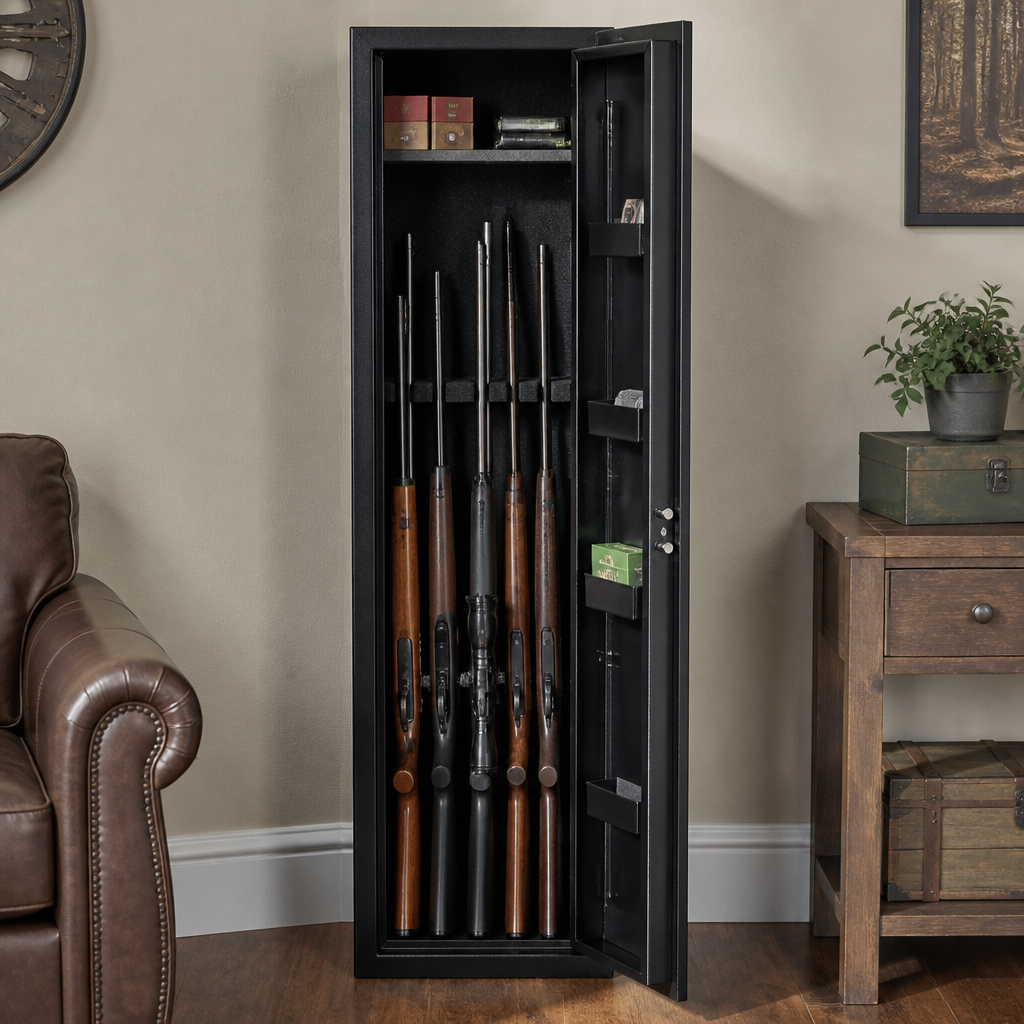
The Stack-On GCB-18C is one of the most searched entry-level gun storage cabinets because it promises basic organization, faster access than a full safe, and a price that stays within reach for first-time firearm owners. In practical terms, this model sits in the gun cabinet category rather than the gun safe category, and that distinction matters. A gun cabinet is typically built from thinner steel, uses a simple key-locking system, and is designed primarily for deterrence, storage discipline, and keeping firearms away from unauthorized hands inside the home. A true gun safe usually adds thicker steel, more robust bolt work, fire insulation, and substantially greater burglary resistance.
I have worked with both low-cost cabinets and heavier residential security containers, and the Stack-On GCB-18C fits a familiar use case: someone needs organized long-gun storage now, has a limited budget, and understands the product’s limits. That buyer may be a new hunter storing a few shotguns, a homeowner trying to reduce access by children or guests, or a collector who needs overflow storage separate from a heavier primary safe. For those users, this cabinet can be a sensible tool if expectations are realistic and installation is done correctly.
This product review hub article examines what the GCB-18C offers, where it falls short, and how it compares with other storage choices within the broader Gun Safes & Safety category. You will find answers to the questions most buyers ask: How many guns does it really hold? Is the steel strong enough? Is it secure enough for a house? Is it worth the money? By the end, you should know whether the Stack-On GCB-18C is the right budget-friendly gun cabinet option for your situation, or whether your money is better spent stepping up to a heavier safe, a smaller quick-access safe, or a different cabinet design entirely.
What the Stack-On GCB-18C Is and Who It Fits Best
The Stack-On GCB-18C is a convertible steel security cabinet marketed for up to eighteen long guns, though actual capacity depends heavily on optics, stock shape, slings, and whether you own scoped rifles or traditional shotguns. In real homes, rated capacity is almost always optimistic. If you have several scoped hunting rifles, practical capacity may be closer to ten to fourteen long guns with comfortable spacing. That is not unusual in this category; manufacturers commonly measure capacity under idealized conditions using slim firearms with minimal accessories.
The “convertible” design is a meaningful feature. Interior sections can be arranged to store a mix of long guns and gear rather than forcing a single all-rifle layout. That flexibility is useful for buyers who need space for ammunition boxes, soft cases, range bags, hearing protection, cleaning supplies, or handguns stored in locked cases. For a family managing multiple activities such as deer season, trap shooting, and weekend range trips, that adaptability makes the cabinet more useful than a fixed-rack design.
The best buyer for this cabinet is not someone seeking high-end burglary protection. It is someone who wants structured storage at a modest cost. In apartments, starter homes, hunting camps, or garages where a 400- to 700-pound safe is impractical, this type of cabinet often solves the immediate problem of firearms being left in closets, under beds, or behind doors. That alone is an important safety upgrade.
Security, Steel Thickness, and Realistic Protection
The most important review point is simple: the Stack-On GCB-18C is a locking cabinet, not a heavy-duty safe. Buyers should evaluate it on that basis. Security cabinets in this price class generally use sheet steel around the 18-gauge range, with variations by model year and production run. That is enough to create a locked enclosure and discourage casual access, but it is not comparable to the steel body of a quality gun safe or UL-rated residential security container. Pry attacks, cutting tools, or determined forced entry can defeat a cabinet much faster than a real safe.
The lock system is also basic by design. Most versions of the GCB-18C use a traditional key lock with a three-point locking system. Three-point locking sounds impressive in marketing, but the practical meaning is that several locking points engage the frame. It improves resistance versus a single-point latch, yet it does not erase the cabinet’s thin steel construction. In other words, the lock is only one part of the security equation; cabinet rigidity, door fit, hinge protection, and anchoring matter just as much.
Where this cabinet performs best is against unauthorized household access, not professional theft. If anchored properly into wall studs and concrete or a solid subfloor, it becomes much harder for a thief to tip, carry away, or attack comfortably. In one installation project I handled for a rural property owner, simply bolting a similar cabinet through the back into studs and through the base into a concrete slab transformed it from “easy to move” to “annoying enough that a smash-and-grab intruder would likely pass.” That is the right lens for judging the GCB-18C: delay and deterrence, not invulnerability.
Interior Layout, Capacity, and Everyday Usability
Daily use is where the Stack-On GCB-18C often earns its value. The cabinet gives owners a centralized, upright storage area that is much easier to manage than scattered cases or improvised closet arrangements. Barrel rests, shelf sections, and separated compartments help prevent firearms from leaning into one another. That may seem minor, but disorganized storage leads to dings, tangled slings, damaged optics, and frustration before a hunt or range trip.
Usability also depends on how honestly you size the cabinet. If you own six long guns and expect to grow to ten, the GCB-18C can be a comfortable fit. If you already have fifteen firearms with scopes, bipods, or oversized bolt handles, the cabinet will feel crowded. Crowding matters because tightly packed firearms are harder to remove safely without bumping neighboring guns. In a home with multiple users, cramped spacing also increases the chance of someone handling more firearms than necessary to reach one item.
Another practical point is accessory management. Budget cabinets rarely offer the polished interiors, door organizers, and dehumidification systems found in premium safes. Owners usually add aftermarket solutions such as silicone-treated gun socks, rechargeable desiccant units, magnetic LED lights, and small bins for spare parts. Those upgrades are inexpensive and can significantly improve the ownership experience without changing the cabinet’s core value proposition.
| Feature | What the GCB-18C Offers | What It Means in Real Use |
|---|---|---|
| Advertised capacity | Up to 18 long guns | Realistic capacity is often lower with scopes and accessories |
| Locking system | Key lock with multi-point engagement | Good for controlled access, limited against forced entry |
| Construction | Light-gauge steel cabinet | Affordable and movable, but not equivalent to a gun safe |
| Interior layout | Convertible shelving and gun storage | Useful for mixed gear, ammo, and long-gun organization |
| Installation needs | Pre-drilled mounting points | Must be anchored well to deliver meaningful security |
| Fire protection | None or minimal by safe standards | Do not rely on it for document or firearm fire protection |
Installation, Placement, and Safety Best Practices
Installation is the difference between mediocre performance and acceptable performance. A lightweight cabinet that is not anchored is fundamentally compromised. It can be rocked, pried, or removed. The GCB-18C should be installed in a low-visibility location and fixed to structural material. Ideal placement is a closet corner, utility room, interior garage wall, or basement area where access is controlled and the cabinet cannot be easily surrounded by tools. Avoid obvious display locations where the cabinet advertises itself to visitors or contractors.
Anchoring through both the back and the floor is best practice. Use lag bolts into studs for wood-frame walls, and concrete anchors if mounting to masonry or slab. If the floor is finished and direct slab anchoring is impossible, at minimum secure the unit to studs and reduce side-to-side leverage by placing it tightly in a corner. Owners should also think beyond theft. Humidity matters. If the cabinet sits in a garage or basement, use a hygrometer and rust-prevention plan. Firearms stored in fluctuating moisture conditions can corrode even inside a locked cabinet.
From a broader safety perspective, the cabinet should support, not replace, responsible firearm handling. Store guns unloaded unless specific defensive needs dictate otherwise, separate ammunition when appropriate for your household plan, and maintain key control rigorously. If children are present, layered security is essential: locked cabinet, hidden keys, chamber flags where suitable, and age-appropriate firearm safety education. Storage hardware works best when combined with household rules.
How the GCB-18C Compares With Other Gun Storage Options
Compared with a full gun safe, the Stack-On GCB-18C wins on purchase price, weight, and ease of installation. Many true safes cost several times more, require freight delivery, and may need reinforced placement because of mass. A safe also generally consumes more budget before accessories, moving fees, or professional installation. For a buyer trying to secure firearms quickly without crossing into four-figure spending, the cabinet is often the only feasible immediate purchase.
Compared with an unsecured closet or soft case, the GCB-18C is unquestionably better. It introduces access control, vertical organization, and a habit of centralizing firearms. That is a substantial improvement in households with visitors, teens, or routine service personnel entering the home. Compared with smaller handgun safes or under-bed safes, the GCB-18C serves a different mission: bulk long-gun storage rather than rapid-access defensive use.
The tradeoff is that the money saved upfront buys less steel, less lock sophistication, and no serious fire barrier. If your threat model includes burglary risk, collectible firearms, suppressors, expensive optics, or legal exposure tied to inadequate storage, a heavier safe may be the wiser long-term investment. Insurance considerations also matter. Some policies or riders may treat firearms differently depending on storage method and declared value, so owners should verify documentation and coverage.
Buying Verdict: When This Budget-Friendly Gun Cabinet Makes Sense
The Stack-On GCB-18C is a worthwhile buy when your priority is affordable firearm organization with basic access restriction, and when you understand exactly what you are not getting. You are not buying premium anti-theft engineering, composite fire protection, or commercial-grade locking hardware. You are buying a practical steel cabinet that can help a household move from casual storage to controlled storage at a manageable price.
That makes it a strong fit for entry-level gun owners, seasonal hunters, landlords furnishing a hunting property, or experienced owners who need secondary storage for less valuable long guns. It is also a reasonable bridge purchase. I have seen owners start with a cabinet like this, then later upgrade to a heavier safe for high-value firearms while keeping the cabinet for cleaning gear, training rifles, or overflow use. In that role, the purchase continues to make sense even after your collection grows.
The key is disciplined setup. Anchor it well, place it discreetly, control the keys, manage humidity, and do not overload the interior. If you need strong burglary resistance or fire protection, skip the cabinet category and shop for a verified safe instead. If your goal is a budget-friendly gun cabinet option that improves safety, tidies storage, and delivers fair value for the money, the Stack-On GCB-18C remains a credible choice. Review your storage needs, compare this model with your collection size and risk level, and choose the solution that protects both your firearms and your household responsibly.
Frequently Asked Questions
Is the Stack-On GCB-18C a gun safe or a gun cabinet?
The Stack-On GCB-18C is best understood as a gun cabinet, not a true gun safe, and that difference is important for buyers. A gun cabinet is generally made from lighter-gauge steel, uses a simpler locking system, and is intended to provide organized, lockable firearm storage with a basic level of deterrence. By contrast, a gun safe is typically built with much thicker steel, more robust locking bolts, greater pry resistance, and in many cases added fire protection. The GCB-18C fits squarely into the cabinet category because its main value is affordability, accessibility, and storage discipline rather than high-security protection against a determined break-in. For first-time firearm owners, that can still make it a practical option. It helps keep guns secured from casual access, keeps them in one controlled location, and usually offers quicker day-to-day access than a large safe. The key is having realistic expectations: this model is designed to be a budget-conscious storage solution, not a premium defensive vault.
Who is the Stack-On GCB-18C a good fit for?
The Stack-On GCB-18C is a strong fit for buyers who want a low-cost, entry-level firearm storage cabinet and understand its role. It often appeals to first-time gun owners, renters, budget-conscious households, and anyone who needs basic long-gun organization without paying safe-level pricing. If your goal is to get firearms out of closets, corners, or unsecured cases and into a dedicated lockable cabinet, the GCB-18C can make a lot of sense. It is also useful for owners who prioritize faster access and a smaller financial commitment over premium burglary resistance. That said, it is not the ideal choice for someone storing a high-value firearm collection, anyone wanting substantial theft protection, or households looking for fire-rated security. Buyers in those situations are usually better served by stepping up to a true gun safe. In short, the GCB-18C works best for people who want an affordable, practical first layer of firearm security and are willing to improve its performance by placing it discreetly and anchoring it properly.
How secure is the Stack-On GCB-18C for home firearm storage?
The Stack-On GCB-18C offers basic security, and that is the most accurate way to describe it. It is designed to deter unauthorized casual access and support more responsible firearm storage, especially in homes where keeping guns locked away from children, guests, or opportunistic handling is a priority. Its locking system and steel construction create a barrier that is clearly better than leaving firearms unsecured, but it should not be mistaken for a heavy-duty anti-theft safe. A determined intruder with time, tools, and privacy will generally find a cabinet easier to breach than a true safe. Because of that, the cabinet’s real-world effectiveness improves significantly when it is installed intelligently. Anchoring it to wall studs or concrete, placing it in a less visible part of the home, and limiting who knows where it is all help. Many owners also separate ammunition, use trigger or cable locks for an added layer, and avoid advertising firearm ownership. So while the GCB-18C is not a maximum-security product, it can still play a meaningful role in a layered home storage plan when used correctly.
What are the main advantages of choosing the Stack-On GCB-18C over a full-size gun safe?
The biggest advantage is value. The Stack-On GCB-18C gives firearm owners a dedicated lockable storage solution at a much lower price point than most gun safes, which is exactly why it gets so much attention in entry-level searches. It helps solve a common problem: many people want better firearm organization and safer day-to-day storage, but they are not ready to spend the much higher amount required for a heavy safe. Another benefit is convenience. Cabinets like this are typically lighter, easier to move into place, and less complicated to install in homes where floor load, space, or budget may be limiting factors. Access can also be quicker and more straightforward than with a larger safe, which matters to some owners. In addition, the GCB-18C can provide a cleaner, more structured way to store multiple long guns and related gear without taking up the footprint or demanding the planning that a traditional safe often requires. The tradeoff, of course, is reduced security and usually no meaningful fire protection. For many buyers, the attraction is simple: it covers the essentials of locked firearm storage without the cost and bulk of a premium safe.
How can you get the best performance out of the Stack-On GCB-18C?
To get the most from the Stack-On GCB-18C, treat it as one part of a broader security strategy rather than a standalone answer. The first and most important step is anchoring it securely. A lightweight cabinet becomes much more effective when it is bolted to a wall, floor, or both, because that reduces the chance of tipping, removal, or easy tampering. Placement matters too. Installing it in a closet, utility room, basement corner, or other discreet low-traffic area can make it less visible and less attractive during a quick burglary. Good internal organization also helps. Store firearms in a consistent layout, keep the interior tidy, and avoid overloading the cabinet so access remains simple and safe. Many owners add moisture control products if the cabinet is in a humid environment, and some use soft sleeves, barrel rests, or protective liners to reduce wear. For added safety, consider storing ammunition separately and using secondary locking devices on certain firearms if appropriate. The bottom line is that the GCB-18C performs best when expectations are realistic and setup is deliberate: anchored well, positioned smartly, and used as an affordable locked storage tool rather than as a substitute for a true high-security safe.