
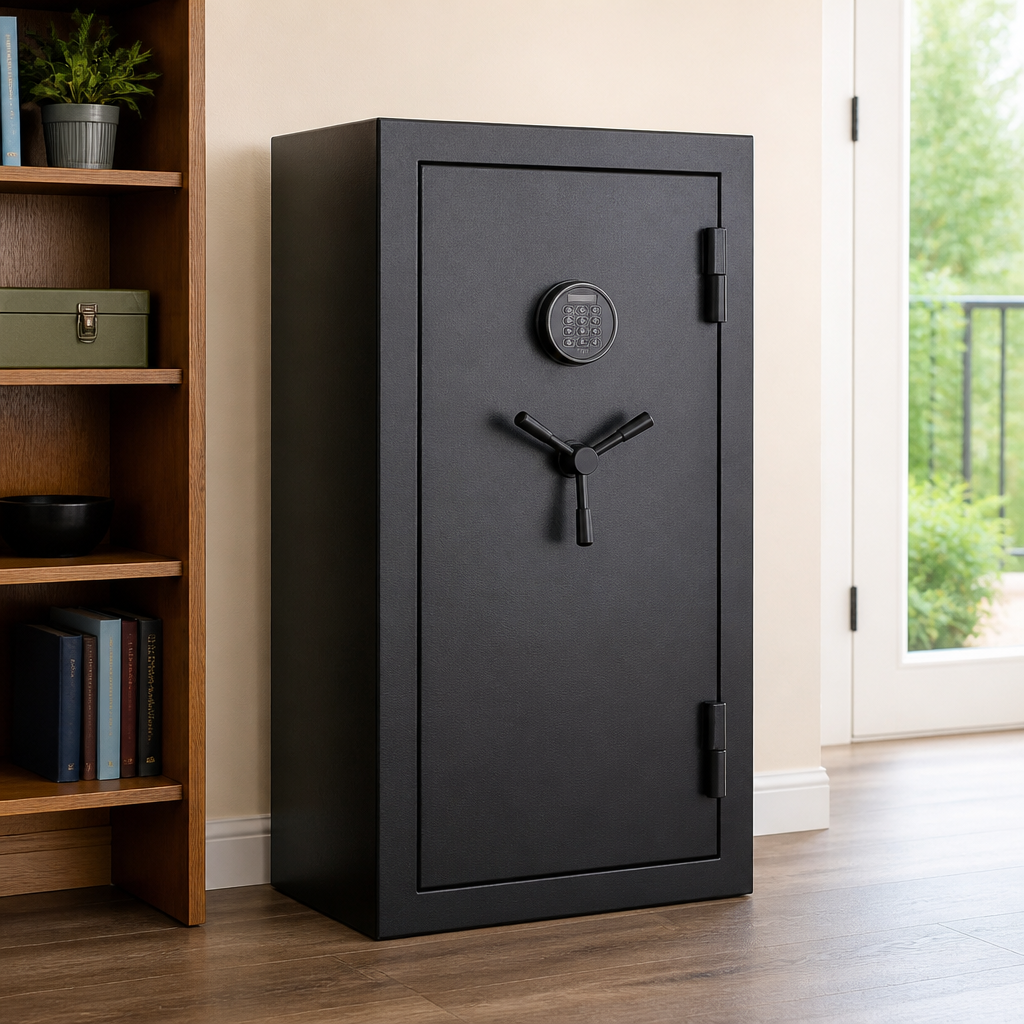
The Bighorn 24ECB sits in a valuable niche: an entry-level gun safe that gives first-time buyers meaningful security features without forcing them into premium pricing. In the gun safe market, “entry-level” usually means a cabinet or a thin steel box with a lock, while “strong features” refers to construction details that materially improve burglary resistance, fire protection, organization, and day-to-day usability. The Bighorn 24ECB matters because many households need a practical first safe for rifles, handguns, documents, and family valuables, yet they also need a product review they can trust before spending money on a security item that may stay in service for years.
As a hub article within Gun Safes & Safety, this review also frames how to evaluate product reviews across the category. A good gun safe review should go beyond brochure claims. It should explain steel thickness, locking bolt geometry, hinge design, interior capacity, anchoring options, lock reliability, and realistic fire expectations. It should also separate marketing numbers from real-world use. I have seen buyers choose a safe based only on a stated gun count, then discover that scoped rifles, slings, and accessories cut the practical capacity in half. That kind of mismatch is common, and it is exactly why a focused review of the Bighorn 24ECB is useful.
For many shoppers, the core question is simple: is the Bighorn 24ECB good enough to secure firearms responsibly while staying affordable? The short answer is yes, for the right use case. It is not a high-security commercial safe, and it should not be described that way. Instead, it is a residential gun safe designed to improve access control, deter opportunistic theft, organize firearms, and provide a baseline level of fire and pry resistance that is meaningfully better than a locker or unsecured closet. Understanding that role is essential before comparing it with heavier safes from Liberty, Cannon, Winchester, Browning, or Rhino.
Product reviews in this subcategory should answer several buyer questions directly. What does the Bighorn 24ECB actually protect against? Who should buy it? Where does it fall short? How does it compare with similarly priced gun safes? And what setup steps make the biggest difference after delivery? The sections below cover those answers in plain terms, using the Bighorn 24ECB as both a standalone review and a reference point for evaluating entry-level gun safe reviews more broadly.
What the Bighorn 24ECB Is Designed to Do
The Bighorn 24ECB is best understood as a residential security container aimed at gun owners who want a true safe form factor without stepping into the price class of thicker-bodied, heavier burglary-rated models. In practical terms, that means it is built to slow down smash-and-grab theft, restrict unauthorized access by children or visitors, and keep firearms consolidated in one lockable space. For many households, that is the first and most important layer of firearms safety.
The “24” designation typically points to a nominal long-gun capacity, but that number should be treated as a marketing estimate, not a real storage promise. In actual use, most safes in this size category hold fewer firearms once optics, bipods, extended magazines, and soft cases enter the picture. A better expectation is mixed storage: several scoped rifles, a few shotguns, handguns on shelves or door organizers, and room left for ammunition, passports, and small valuables. This is where product reviews need to be honest. Usable layout matters as much as total volume.
In my experience reviewing safes in this segment, buyers often underestimate the importance of footprint and overestimate the need for maximum capacity. The Bighorn 24ECB tends to work well because it is large enough to be useful but still manageable for installation in a closet, spare room, or garage corner, assuming humidity control is addressed. That combination makes it a common fit for first-time owners, apartment-to-house transitions, and secondary storage in multi-safe homes.
Construction, Locking System, and Security Basics
The first thing to examine in any gun safe review is construction. On entry-level models, manufacturers compete heavily on appearance, interior trim, and headline capacity, but the fundamentals are steel body thickness, door structure, boltwork, and anchor points. The Bighorn 24ECB typically earns attention because it packages a formed steel body, multi-bolt locking system, and electronic lock in a way that feels more substantial than the least expensive big-box options.
An electronic lock is one of the defining convenience features here. For many owners, it provides faster access than a mechanical dial and encourages consistent locking because the process is simpler. That said, electronic locks are only as good as their quality and battery maintenance. A responsible review should always note that owners need to replace batteries on schedule, test lock operation regularly, and keep override procedures or service contacts documented. Lock convenience is a major strength, but lock neglect creates preventable failures.
Locking bolts on an entry-level safe are often misunderstood. More bolts do not automatically equal more security if the door frame, body steel, and relocker design are weak. What matters is how the door resists prying and whether the safe is anchored properly. A properly anchored Bighorn 24ECB is significantly more difficult to remove or tip than an unanchored one, and that single installation step often does more for real theft resistance than any marketing claim on the carton.
Here is a practical comparison framework for shoppers reviewing safes in this class:
| Feature | Bighorn 24ECB Strength | Buyer Caveat |
|---|---|---|
| Electronic lock | Fast everyday access and easy code changes | Requires battery upkeep and periodic testing |
| Nominal 24-gun size | Useful entry footprint for mixed firearm storage | Actual capacity drops with scopes and accessories |
| Multi-bolt door | Improves resistance to casual prying attempts | Performance depends heavily on anchoring and body strength |
| Interior shelving | Flexible layout for rifles, handguns, and documents | May need aftermarket organizers for best use of space |
| Fire lining and seals | Better protection than basic security cabinets | Not equivalent to a dedicated high-end fire safe |
Fire Protection, Interior Layout, and Daily Use
Fire protection is where many entry-level safe reviews become either too generous or too cynical. The balanced view is this: the Bighorn 24ECB offers a useful fire-resistance layer for a residential gun safe in its class, but buyers should interpret fire ratings carefully. Fire ratings vary by manufacturer test method, exposure duration, seal design, and internal temperature threshold. A stated fire rating is not meaningless, yet it is not a universal standard like a burglary rating from a major testing body.
For ordinary users, the practical takeaway is straightforward. The safe can help buffer contents during a house fire, especially in shorter-duration events or rooms not at the seat of the fire. However, no entry-level gun safe should be treated as guaranteed protection for irreplaceable papers, digital media, or extremely heat-sensitive items. If documents are mission-critical, use a separate document-rated fire box inside the safe. That layered approach is far more defensible than trusting one all-purpose enclosure.
The interior layout on the Bighorn 24ECB is one of its strongest selling points for new owners. Adjustable shelving and a rifle section create the flexibility most people actually need. Product reviews often overfocus on exterior specs, but interior usability determines satisfaction after the first month. If a safe cannot accommodate a scoped hunting rifle, a defensive carbine, ear protection, cleaning supplies, and important documents without constant reshuffling, owners stop using it efficiently. The Bighorn format generally avoids that issue better than compact cabinets.
Daily use also includes the small details: door swing clearance, shelf stability, carpeting quality, visibility in low light, and whether the lock keypad is intuitive under stress. These details rarely make headlines, yet they shape the ownership experience. In homes where multiple adults may need authorized access, the combination of a simple electronic interface and organized storage is often more valuable than one extra advertised locking bolt.
Where the Bighorn 24ECB Fits in Product Reviews
Within the broader product reviews landscape, the Bighorn 24ECB belongs in the “best first gun safe” conversation rather than the “highest security safe” category. That distinction matters. Comparing it directly to heavier safes with thicker steel bodies, composite doors, and premium locking systems is unfair and unhelpful. A smarter review compares it to similarly priced residential gun safes sold through warehouse clubs, sporting goods retailers, and farm supply chains.
Against those peers, the Bighorn 24ECB usually stands out for offering a respectable balance of storage, access speed, and visible security features at an approachable price. It often appeals to buyers who want something more serious than a stack-on style cabinet but cannot justify the weight, delivery complexity, or cost of a top-tier safe. That middle ground is where a lot of real purchasing happens, especially among new homeowners and growing families.
This is also why the page works as a sub-pillar hub for product reviews. The same evaluation logic applied here should carry into reviews of larger safes, pistol safes, closet safes, and modular options. Look at intended use first, construction second, lock type third, actual capacity fourth, and installation requirements fifth. Reviews that skip those steps and lean only on brand reputation are incomplete. Reviews that explain them clearly help buyers match products to risks instead of marketing.
A useful way to think about the Bighorn 24ECB is that it solves the most common first-safe problem: getting firearms out of drawers, closets, and under-bed storage and into one controlled environment. That alone is a significant upgrade in household safety. In responsible ownership terms, controlled access is not a luxury feature. It is the foundation.
Limitations, Setup Best Practices, and Buying Advice
No honest product review is complete without limitations. The Bighorn 24ECB is not ideal for collectors with large rifle inventories, owners who need certified commercial burglary protection, or users storing extremely high-value jewelry and cash. It is also not the best fit if your main priority is surviving prolonged, high-intensity fire exposure. Buyers with those needs should look at heavier-gauge steel safes, higher-end composite door designs, and products with stronger third-party testing pedigrees.
Placement and setup matter as much as model choice. Install the safe on a solid surface, anchor it according to the manufacturer’s instructions, and prefer a location with limited visibility from windows or exterior doors. In garages, add a dehumidifier rod or desiccant strategy because temperature swings and moisture can affect both firearms and documents. If the safe sits on concrete, use a moisture barrier where appropriate. These are routine precautions, but they materially improve long-term performance.
Buyers should also budget beyond the sticker price. Delivery, professional installation, anchoring hardware, power access for interior lighting or dehumidification, and accessory organizers can all add value. I regularly advise new owners to leave room in the budget for a door panel organizer and humidity control before spending on cosmetic extras. Those two upgrades usually improve real usability more than anything else.
When reading other product reviews in this subtopic, use the Bighorn 24ECB as a benchmark for entry-level value. Ask whether a competing safe offers better steel, a more proven lock, more useful interior dimensions, or a stronger warranty at the same price. If the answer is no, then the alternative may simply be different, not better. That distinction prevents a lot of buying mistakes.
The Bighorn 24ECB earns its place as an entry-level safe with strong features because it addresses the needs that matter most for typical households: controlled firearm access, practical theft deterrence, better organization, and reasonable fire protection in one approachable package. It is not a miracle safe, and that is precisely why it is easy to recommend. The value comes from honest capability, not inflated claims. For first-time buyers, that kind of clarity is more useful than premium branding or oversized capacity numbers.
As a hub article for product reviews in the Gun Safes & Safety category, this review highlights the standards every buyer should use: evaluate construction, lock quality, real capacity, fire expectations, installation needs, and total ownership cost. If you apply that framework consistently, the Bighorn 24ECB compares well within its class. It offers meaningful protection above basic cabinets and unsecured storage, while staying accessible for households that need a practical first step into safer firearm storage.
The main benefit is simple: it makes responsible storage achievable without demanding a premium-safe budget. If that matches your situation, use this review as your baseline, compare nearby competitors carefully, and focus on proper installation as much as purchase price. Then continue exploring related product reviews in this subtopic so you can choose the right safe size, lock style, and security level for your home.
Frequently Asked Questions
What makes the Bighorn 24ECB stand out as an entry-level gun safe?
The Bighorn 24ECB stands out because it fills an important middle ground between a basic locking cabinet and a much more expensive premium safe. In the entry-level category, many products offer only minimal steel thickness, simple locking hardware, and limited interior flexibility. The 24ECB is notable because it aims to give first-time buyers more meaningful protection in the areas that matter most: burglary resistance, fire protection, organization, and everyday usability.
That matters in practical terms. For many households, a first safe is not just about checking a box for firearm storage. It is about reducing unauthorized access, securing valuables in one location, and getting a product that feels like a genuine upgrade from lightweight storage options. A safe like the Bighorn 24ECB becomes appealing when it offers stronger construction details, more secure locking features, and a more usable interior without pushing the buyer into a price tier that may be unrealistic for a first purchase.
In other words, the 24ECB is compelling because it is designed for buyers who want real features, not just a lockable container. If someone is shopping for their first gun safe and wants better value than a thin cabinet but cannot justify high-end pricing, this model sits in a very practical niche.
Is the Bighorn 24ECB a good choice for first-time gun safe buyers?
Yes, for many first-time buyers, the Bighorn 24ECB is a very sensible choice because it focuses on the core benefits most people need from a first safe. New safe buyers are usually trying to balance several concerns at once: secure firearm storage, household safety, reasonable fire protection, enough capacity for current needs, and a price that does not feel excessive. The 24ECB is attractive because it addresses those priorities without requiring the buyer to jump straight into premium-safe territory.
It is especially well suited to homeowners or families who want more than a basic cabinet but are still watching their budget carefully. That includes people buying their first long guns, households that need to prevent child access, and owners who want to store a combination of firearms, documents, and other valuables in one place. The safe can serve as a strong starting point because it gives the owner a structured, more secure storage solution while introducing many of the features people eventually look for in higher-end models.
That said, first-time buyers should still think realistically about their needs. If the goal is a practical, all-around safe with a better-than-basic feature set, the 24ECB makes a lot of sense. If the buyer expects top-tier steel thickness, advanced anti-pry engineering, or very large long-term capacity, that usually means moving into a higher category and a much higher price point. For what it is meant to be, though, the Bighorn 24ECB is a strong fit for beginners who want value and substance.
How does the Bighorn 24ECB compare to a basic gun cabinet or low-cost safe?
The difference usually comes down to the quality of protection and the confidence the owner gets from daily use. A basic gun cabinet is often intended more for organized storage and casual deterrence than for serious resistance to forced entry. Many low-cost cabinets use thinner metal, simpler door designs, and locking systems that do not inspire much trust when someone wants more meaningful security. By contrast, an entry-level safe with stronger features is expected to improve on those weaknesses in noticeable ways.
With a model like the Bighorn 24ECB, the value is typically found in the details. Better construction can help the body and door feel more substantial. Improved locking components can offer more resistance to prying or quick smash-and-grab attempts. Fire protection features can provide an added layer of security for firearms, documents, or personal keepsakes. Interior organization also tends to be more useful, making it easier to store rifles, handguns, accessories, and valuables in a cleaner, more deliberate way.
Another important difference is long-term ownership satisfaction. Many people who buy a very cheap cabinet end up replacing it once they realize its limitations. A safe like the 24ECB is often more satisfying from the start because it feels like a true security product rather than a temporary compromise. It may not compete with heavy premium safes, but it can deliver a much more reassuring ownership experience than the bargain-basement alternatives that dominate the low end of the market.
What kinds of security and fire protection features should buyers expect from the Bighorn 24ECB?
Buyers should expect the Bighorn 24ECB to offer the kinds of features that make an entry-level safe meaningfully more protective than a simple metal cabinet. In this class, “strong features” generally refers to construction details that improve real-world performance rather than cosmetic add-ons. That can include a more robust door design, stronger locking bolts, reinforced areas around the lock, and a body that provides greater resistance to quick forced-entry attempts. While no entry-level safe is impenetrable, better construction raises the difficulty and time required for unauthorized access.
Fire protection is another major part of the appeal. For many buyers, a first safe is not just for firearms. It may also hold legal papers, family records, photos, jewelry, and other items that would be devastating to lose in a home fire. A safe like the 24ECB becomes more valuable when it provides a defined level of fire resistance that goes beyond simple locked storage. Buyers should still verify the manufacturer’s specific fire rating and understand what that rating actually means, but having dedicated fire protection features is a major upgrade over basic cabinets that offer none at all.
The key point is to view these features as practical layers of protection. The 24ECB is not meant to replace a commercial high-security safe, but it is designed to give everyday owners a stronger security baseline. When properly installed and used, those security and fire features can make a significant difference in how well the safe performs during theft attempts or household emergencies.
Is the Bighorn 24ECB large and versatile enough for firearms, valuables, and everyday use?
For many households, yes. One reason the Bighorn 24ECB is appealing is that it is positioned as a practical all-around safe rather than a narrowly limited storage box. Buyers in this segment often want one secure location for long guns, handguns, documents, cash, jewelry, and other important items. A safe that offers reasonable capacity and flexible interior organization can meet those needs much better than a simple cabinet with minimal shelving or layout options.
Versatility matters because safe ownership quickly becomes part of a daily routine. Owners may open the safe often, rotate firearms in and out, store seasonal valuables, or reorganize the interior as their collection changes. A well-designed entry-level safe becomes more useful when it supports that reality with accessible shelving, sensible layout options, and enough room to avoid overcrowding from the start. The Bighorn 24ECB is especially attractive to first-time owners who want room for current needs while leaving some space for future additions.
That said, buyers should remember that listed firearm capacities are often optimistic and based on idealized storage conditions. Actual usable space depends on rifle size, optics, accessories, door storage, shelves, and how much non-firearm property will also be kept inside. For a modest collection and mixed-value storage, the 24ECB should be a strong and practical fit. For larger collections or heavily accessorized firearms, buyers may want to size up sooner rather than later. As an entry-level safe with broad everyday usefulness, however, it is well positioned to meet the needs of many first-time owners.