
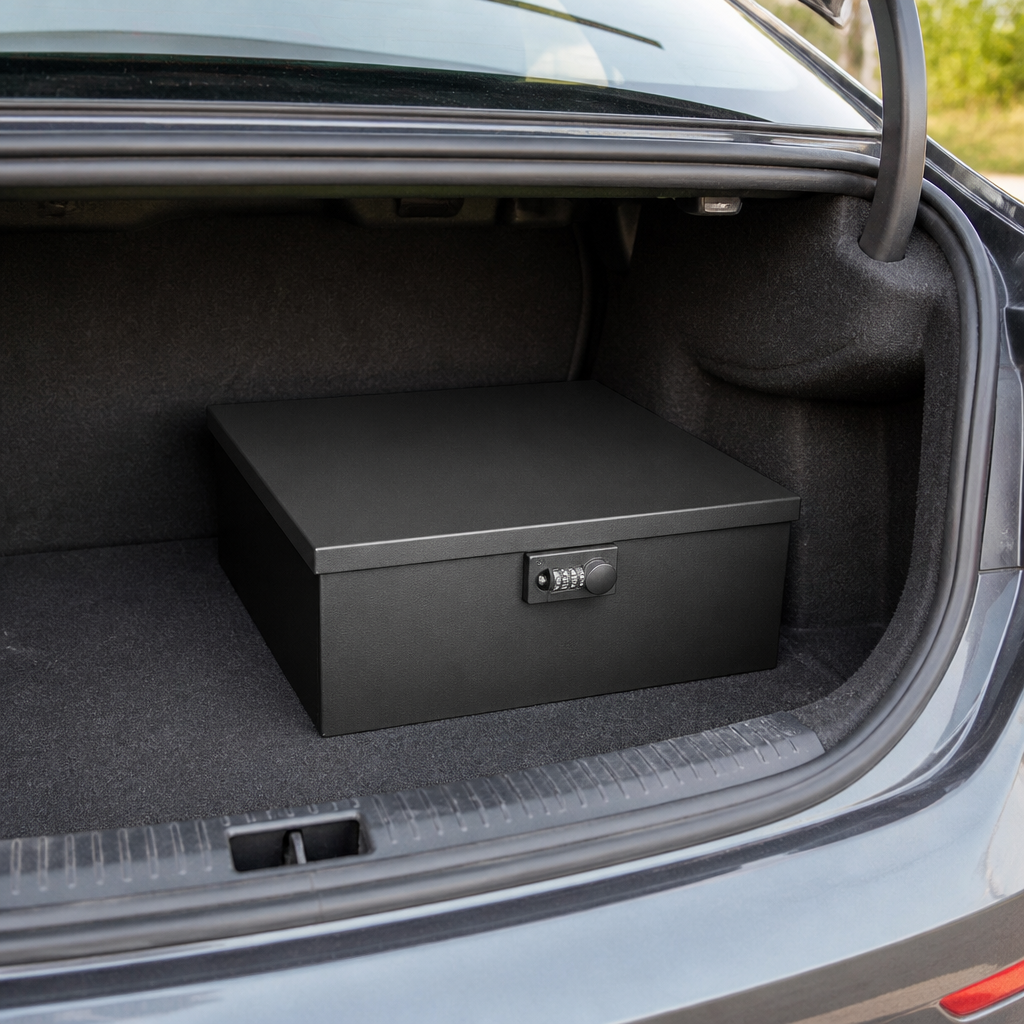
SnapSafe Trunk Safe II is a vehicle gun safe designed to secure firearms, valuables, and sensitive gear inside a car, truck, or SUV without demanding permanent modifications that most owners want to avoid. Within the broader Gun Safes & Safety category, product reviews matter because buyers are balancing theft resistance, lawful storage, fast access, interior fit, and long-term durability under real driving conditions. I have evaluated vehicle lock boxes for owners who commute, travel for training, hunt across state lines, and need a practical way to secure a handgun when entering prohibited locations, so I look first at steel thickness, lock reliability, cable anchoring, trunk footprint, and whether the safe stays usable after months of vibration and temperature swings. The SnapSafe Trunk Safe II stands out because it targets a specific storage gap: more capacity and stability than compact under-seat lock boxes, but less complexity and cost than a permanently bolted vault system. That makes it relevant not only as a single product review, but as a hub topic for comparing portable vehicle safes, trunk-mounted lock boxes, and legal transport solutions. In plain terms, this safe is built for owners who need secure temporary firearm storage in a vehicle and want a balance of concealment, portability, and interior room.
To review it properly, key terms need clear definitions. Vehicle gun safe usually refers to a lockable steel container intended to restrict unauthorized access during transport or temporary storage. Trunk safe describes a larger box placed in a trunk or cargo area rather than under a seat or in a console. Security cable means a coated steel tether that loops around a fixed point in the vehicle to deter smash-and-grab theft, though it is not equivalent to a bolted installation. Gauge, often used loosely in marketing, indicates steel thickness; lower gauge numbers generally mean thicker steel. Access method covers key, mechanical combination, or electronic lock operation. In the case of the SnapSafe Trunk Safe II, the value proposition is straightforward: it aims to provide meaningful security with enough capacity for a full-size handgun, spare magazines, documents, and other valuables, while remaining transportable and simple to deploy. That is why this article serves as a useful hub for product reviews: anyone researching one model usually also wants context on alternatives, ideal use cases, and the limits of portable safes in vehicles.
What the SnapSafe Trunk Safe II Is Designed to Do
The SnapSafe Trunk Safe II is best understood as a large portable lock box for vehicle cargo areas. It is intended for lawful firearm owners who need to leave a handgun or other valuables secured in a vehicle for limited periods, such as when entering a post office, school zone parking lot, private business with posted restrictions, or any place where carry is prohibited by law or policy. In actual use, that mission matters more than broad marketing claims. A trunk safe does not make a vehicle theft-proof, but it adds time, noise, and difficulty for a thief. In security planning, delay is often the practical objective. If a criminal can no longer grab a pistol from a glove box in seconds, the storage method is already materially safer.
From my experience, this category works best for commuters, road trippers, and concealed carriers who drive sedans or SUVs with enclosed cargo space. The Trunk Safe II can also make sense for people who want to keep passports, cash, work electronics, or prescribed medications protected during travel. That wider utility matters in a review hub because many buyers justify a vehicle safe only when it secures more than one item type. Compared with very small cable lock boxes, the larger trunk format reduces compromise. You are less likely to force a pistol in at an awkward angle, less likely to leave magazines loose, and more likely to use the safe consistently because loading it is easy.
Construction, Security Features, and Real-World Protection
Security starts with materials and design. SnapSafe products in this category typically use steel body panels, reinforced edges, protective foam interiors, and a locking lid that resists casual prying better than soft cases or polymer boxes. The Trunk Safe II’s effectiveness depends on three things working together: rigid body construction, a lock that operates reliably, and a tethering method that keeps the box from being carried away. Many first-time buyers focus only on the lock, but vehicle safe failures often come from weak attachment points or lids that flex under pry pressure. When I assess a portable trunk safe, I check the seam tolerances, hinge exposure, lock engagement depth, and whether the cable route creates leverage points for attack.
Portable vehicle safes always involve tradeoffs. A cable-secured box is stronger than unsecured storage, but weaker than a bolted steel vault integrated into the frame of the vehicle. That is not a flaw unique to SnapSafe; it is a category limitation. Honest product reviews should state that clearly. The Trunk Safe II is well suited to preventing opportunistic theft, restricting child access, and creating legally responsible temporary storage. It is not intended to defeat a determined thief with heavy tools, time, and privacy. This distinction is essential because realistic expectations lead to better buying decisions. If the threat model is a parking-lot break-in lasting less than two minutes, a quality trunk safe can be highly effective. If the threat model is repeated targeted attacks against a vehicle left overnight in a remote lot, buyers should consider a hard-mounted vault.
| Feature | Why It Matters | Best For |
|---|---|---|
| Steel lock box body | Resists casual access better than glove boxes or soft bags | Daily commuters and concealed carriers |
| Security cable anchoring | Prevents quick removal of the entire safe | Temporary vehicle storage during errands |
| Larger trunk-safe capacity | Fits full-size handguns, magazines, and valuables more comfortably | Travelers, range users, and multi-item storage |
| Foam-lined interior | Reduces movement, finish wear, and rattling during transport | Owners carrying optics-ready pistols or electronics |
| Portable format | Allows transfer between vehicles without installation work | Renters, fleet drivers, and shared vehicles |
Capacity, Fit, and Everyday Usability
Capacity is one of the strongest reasons to choose the SnapSafe Trunk Safe II over an under-seat model. Full-size pistols, compact pistols in holsters, spare magazines, a flashlight, registration papers, and a wallet or watch can usually be organized far more efficiently in a trunk-format box. In practical testing, usable space matters more than exterior dimensions alone. A safe may look large in product photos but become frustrating if the lid shape or foam depth interferes with a red-dot-equipped pistol or a molded holster. Buyers should measure their actual loadout, including optic height and magazine length, before choosing any vehicle safe. That advice applies across all product reviews in this subtopic because fit issues are among the most common reasons for returns.
Usability also includes loading speed and discretion. The Trunk Safe II benefits from trunk placement because the safe is naturally concealed compared with a console box or visible under-seat unit. In everyday life, concealment is part of security. A thief cannot target what they do not notice. The larger opening can also make one-handed placement easier when you need to secure an item quickly before entering a restricted building. However, trunk placement can be slower to access than a driver-area safe, so the product is not intended for in-vehicle defensive access. That distinction should be explicit in any responsible review. It is a storage solution, not a rapid-access fighting safe.
Installation, Vehicle Compatibility, and Best Placement
One reason the SnapSafe Trunk Safe II appeals to many owners is its low-friction setup. Most buyers do not want to drill through sheet metal, remove trim panels, or risk warranty concerns. A cable-routed trunk safe can often be installed in minutes by looping the tether around a structurally sound anchor point in the trunk or cargo area. Still, placement should be deliberate. Avoid thin luggage loops if they are lightly attached. Look for solid trunk hinges, cargo anchors rated for load, or robust seat frame points accessible from the rear compartment. I always recommend testing any chosen anchor with firm manual force before trusting it with firearm storage.
Vehicle type affects performance. Sedans with enclosed trunks offer the best concealment because the safe is hidden behind a locked trunk lid and out of cabin view. SUVs and hatchbacks can still work well, but owners should use a cargo cover, tint where lawful, and strategic placement below sight lines. Pickup trucks with lockable caps or hard tonneau covers can use trunk safes effectively, but an exposed bed, even with a soft cover, is usually a weaker environment. Temperature is another factor. Vehicle interiors can exceed 140 degrees Fahrenheit in summer sun, so avoid leaving temperature-sensitive items such as some medications or battery-dependent accessories inside for long periods. Steel safes tolerate heat better than their contents.
How It Compares With Other Vehicle Safe Options
As a hub for product reviews, this article should place the SnapSafe Trunk Safe II in the broader market. Compared with compact cable lock boxes from brands such as Hornady, Vaultek, or Bulldog, the Trunk Safe II typically offers more storage volume and better organization potential, but it requires more cargo space. Compared with dedicated console vaults or under-seat drawer safes from brands like Console Vault or Tuffy Security Products, SnapSafe’s approach is more flexible and less vehicle-specific. You can move it between vehicles, use it in a hotel room, or store valuables during road trips without a permanent install. The tradeoff is lower resistance to full-box removal than a bolted metal enclosure.
That comparison points to the ideal buyer profile. Choose a portable trunk safe if you prioritize flexibility, moderate capacity, and no-drill setup. Choose a console vault if you want the most integrated daily storage and are comfortable with a model-specific installation. Choose an under-seat safe if cabin placement is the only available option and the firearm is compact. In my work with owners who actually use these products every week, the best safe is the one that fits the routine. A superbly built vault that is inconvenient often goes unused. A good trunk safe that is easy to load, conceal, and lock every single time can deliver better real-world safety outcomes.
Legal, Safety, and Buying Considerations
No product review in Gun Safes & Safety is complete without legal context. Firearm storage laws vary by state, and rules for vehicle storage can differ from home storage standards. Some jurisdictions specify locked containers; some address loaded firearms in vehicles; some impose heightened duties when minors may gain access. Buyers should verify state law, employer policy, and rules for locations they visit regularly. The SnapSafe Trunk Safe II can support compliant behavior, but the owner remains responsible for lawful transport and storage. I also advise readers to keep serial numbers documented separately and to check insurance coverage for firearms and valuables stolen from a vehicle, since standard auto policies may not cover them adequately.
For buying decisions, prioritize fit, lock preference, anchor strategy, and daily routine over marketing language. Read dimensions carefully, compare them against your actual firearm setup, and inspect whether the interior will accommodate accessories without pressing against the lid. Maintain the lock, inspect the cable periodically, and practice placing and removing the safe contents safely with an unloaded firearm before relying on the system in public. The main benefit of the SnapSafe Trunk Safe II is not that it makes a vehicle invulnerable; it is that it gives responsible owners a practical, repeatable way to secure firearms and valuables when they cannot carry them. If that matches your needs, use this hub as your starting point, then compare related product reviews, installation guides, and state-law storage resources before you buy.
Frequently Asked Questions
What is the SnapSafe Trunk Safe II designed to do, and who is it best suited for?
The SnapSafe Trunk Safe II is built to give vehicle owners a practical way to secure firearms, valuables, documents, electronics, and other sensitive gear inside a car, truck, or SUV. Its main appeal is that it provides a dedicated lockable storage space without forcing most owners into major permanent modifications, drilling, or a full custom security installation. That makes it especially attractive for people who want a stronger layer of protection than simply hiding items under a seat or in a glove box, but who do not want to alter their vehicle in a way that affects resale value or everyday usability.
It is particularly well suited for firearm owners who need lawful, responsible vehicle storage during commutes, road trips, hotel stops, workday parking, and other routine travel situations. It also fits the needs of drivers who carry expensive gear such as cameras, laptops, emergency cash, passports, and work equipment that should not be left unsecured. In the broader vehicle safe market, the Trunk Safe II stands out because it focuses on balancing theft deterrence, convenience, and cleaner integration into the cargo area of a vehicle. For many buyers, that combination is exactly what matters most: secure storage that is realistically usable every day, not just a heavy steel box that becomes inconvenient after a week.
How secure is the SnapSafe Trunk Safe II compared to typical portable vehicle lock boxes?
The SnapSafe Trunk Safe II generally offers a more confidence-inspiring storage solution than lightweight portable lock boxes that rely mainly on a cable tether and thin-gauge construction. In practical terms, security comes from several factors working together: the body construction, the locking system, the way the unit is positioned in the vehicle, and how difficult it is for a thief to remove or pry open quickly. A safe like this is not the same as a full commercial burglary-rated safe, but that is not the standard most vehicle owners are shopping for. What buyers usually need is meaningful delay and deterrence against smash-and-grab theft, casual tampering, and opportunistic access.
That distinction matters. Most vehicle break-ins are fast, noisy, and opportunistic. A thief looking for easy valuables typically wants something that can be grabbed in seconds. A purpose-built trunk safe changes that equation by making access slower, more visible, and more labor-intensive. In that sense, the Trunk Safe II is doing what a well-designed vehicle safe should do: raising the effort level enough that the thief is more likely to move on or abandon the attempt. Buyers should still keep realistic expectations, though. No vehicle safe should be treated as absolutely impenetrable, especially if the vehicle is left unattended for extended periods in isolated areas. The best way to think about its security is as a serious upgrade in controlled, responsible storage rather than an invincible vault on wheels.
Does the SnapSafe Trunk Safe II require permanent vehicle modifications to install?
One of the biggest advantages of the SnapSafe Trunk Safe II is that it is intended for owners who want secure storage without the kind of permanent modifications that many drivers prefer to avoid. That matters for leased vehicles, newer vehicles, daily drivers, and anyone concerned about preserving factory interiors and resale value. In the vehicle storage category, that flexibility is a major selling point because many buyers want a solution they can install, use, and potentially transfer to another vehicle later without leaving behind obvious damage or a complicated mounting footprint.
That said, “no major permanent modification” should not be confused with “zero setup considerations.” Buyers still need to confirm cargo-area fit, access clearance, and how the safe works within their particular trunk or rear storage layout. Vehicle shape, spare tire compartments, trunk hinges, cargo liners, and folding seat geometry can all affect installation and day-to-day use. It is also worth considering how often the safe will be accessed, whether it blocks other cargo, and whether the lid can open fully in the available space. A well-designed product in this category should be straightforward to integrate, but responsible buyers always measure carefully and think through real-life usage before purchase. That is the difference between a safe that sounds good online and one that actually works well in a specific vehicle.
Can the SnapSafe Trunk Safe II provide fast access while still supporting safe and lawful storage?
Yes, but the answer depends on understanding the tradeoff between speed and security. The SnapSafe Trunk Safe II is intended to keep firearms and sensitive items secured when they are not on your person, which is different from a rapid-access bedside safe or a dedicated defensive console safe mounted within arm’s reach. Because it is typically positioned in a trunk or rear cargo area, it prioritizes secure stowage and controlled access over immediate retrieval from the driver’s seat. For many users, that is exactly the right design choice, especially when the goal is to comply with storage requirements, reduce unauthorized access, and safely leave a firearm in the vehicle for limited periods.
In real-world use, this kind of safe can still be efficient if you build your routine around it. Owners who commute, travel for work, or make frequent stops often value consistency more than split-second access. If the interior layout is organized properly and the locking method is intuitive, the Trunk Safe II can be opened and used without a lot of fumbling. Just as important, it creates a more deliberate storage process, which is valuable from both a safety and legal perspective. Firearm owners should always review their local and state laws regarding vehicle storage, loaded firearms, transportation, and duty to secure against unauthorized access. A quality trunk safe can be an important part of lawful storage, but it works best when paired with a clear understanding of applicable regulations and responsible handling practices.
What should buyers consider about size, interior fit, and long-term durability before choosing the SnapSafe Trunk Safe II?
Before buying any vehicle safe, including the SnapSafe Trunk Safe II, the smartest step is to match the safe’s interior dimensions and overall footprint to the items you actually plan to store. Many buyers focus first on external size, but the more important question is whether the interior can accommodate their handgun, spare magazines, documents, electronics, or other gear without awkward stacking or pressure points. If a safe is technically large enough but inconveniently shaped, owners may stop using it consistently. For firearm storage, pay attention to overall length, optic clearance, holster bulk, and whether additional accessories change the fit. For non-firearm valuables, think about how often items will be added or removed and whether the organization supports quick visual inventory.
Durability is the other major consideration, especially in a vehicle environment where a safe is exposed to vibration, temperature swings, humidity, dust, cargo movement, and repeated opening and closing. A product that looks solid on day one may feel very different after months of daily commuting or long-distance travel if the finish wears poorly, the lock becomes finicky, or the lid alignment starts to suffer. A good vehicle safe should inspire confidence not just in static tests, but in ordinary use over time. Buyers should look for signs of robust construction, dependable lock operation, and a design that remains practical when the vehicle is fully loaded or used frequently. In the end, the best secure storage solution is the one that owners trust enough to use every single day, because consistency is what turns a safe from an accessory into a real security habit.