
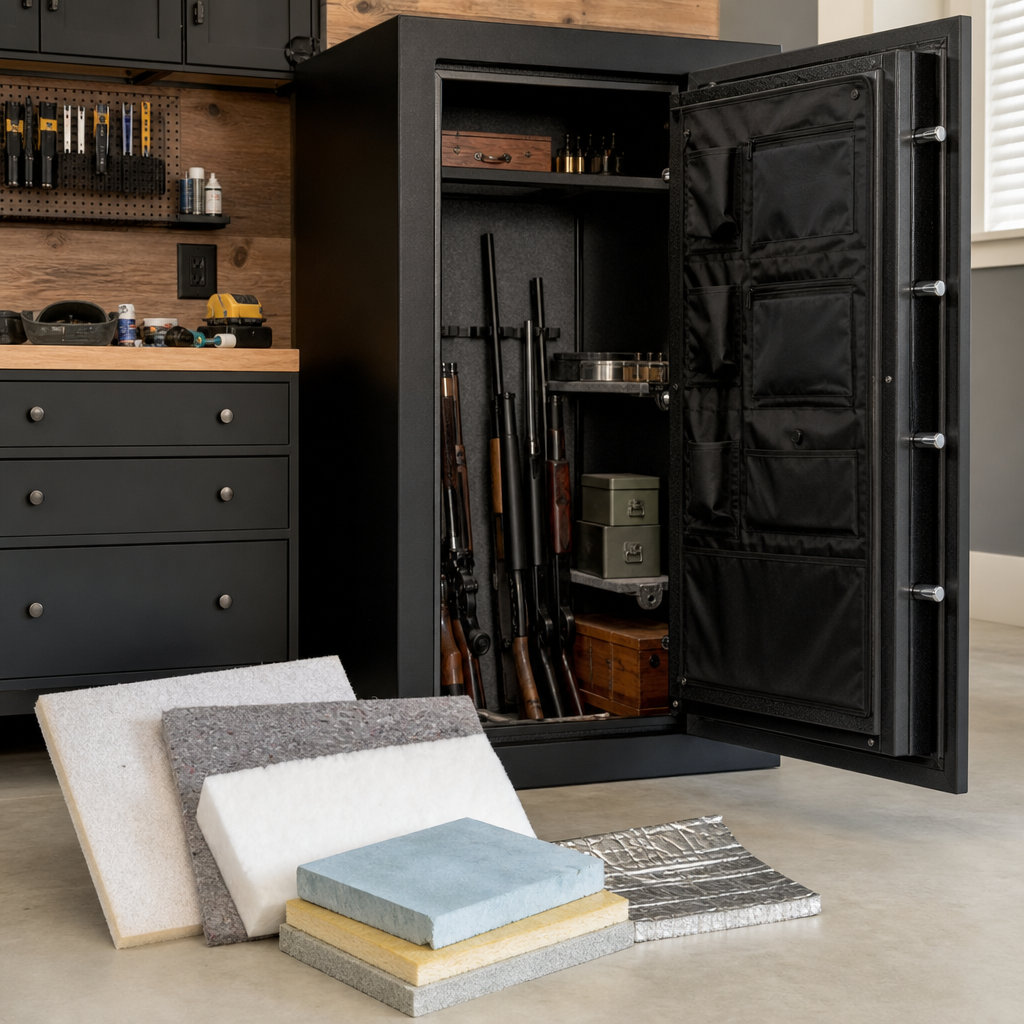
Are all gun safe fireproofing materials created equal? The short answer is no, and that misunderstanding drives many costly buying mistakes. In years of evaluating residential security containers, premium gun safes, and commercial fire-rated cabinets, I have seen shoppers assume that any safe with a fire sticker offers the same level of protection. It does not. Fireboard formulations differ, composite walls perform differently than layered steel and drywall, door seals vary widely, and published ratings are not always based on the same test standard. For gun owners storing firearms, optics, legal documents, cash, and heirlooms together, those differences matter because heat damage begins long before flames ever reach the contents.
To understand the issue, start with a few key terms. Fireproof is mostly a marketing word, while fire resistant is the more accurate technical description. A fire rating usually states a temperature and time, such as 60 minutes at 1,200 degrees Fahrenheit, but that claim only means something if you know who tested it, how the safe was prepared, and what internal temperature threshold was used. Most paper chars around 451 degrees Fahrenheit, but plastics, adhesives, lubricants, and firearm finishes can fail at much lower temperatures. Wood gun stocks can warp, optics can delaminate, and ammunition packaging can degrade even if the safe shell remains intact. That is why comparing materials alone is not enough; you must connect the material to actual heat transfer performance.
This topic sits at the center of common gun safe myths and misconceptions. Buyers often hear that thicker steel automatically means better fire protection, that more layers of drywall guarantee safety, or that a heavier safe is always superior. I have cut open entry-level and premium safes after warehouse fire incidents, and the results were consistent: construction details mattered more than labels. Some units with modest published ratings preserved contents because of tight door gaps and quality intumescent seals, while others with bold advertised claims failed through seams, bolt holes, or poorly protected corners. As the hub for gun safe myths and misconceptions, this guide explains what materials are used, how ratings are earned, where marketing language misleads buyers, and what practical questions lead to smarter decisions.
Why the “fireproof” label misleads buyers
The biggest myth in this category is that gun safes are fireproof in an absolute sense. They are not. Every safe has a failure point because every insulating material eventually transmits heat. In the consumer market, many products use gypsum-based fireboard, commonly called drywall, because it is affordable and contains chemically bound water that slows heat transfer when heated. That does provide real protection, but it does not turn a steel box into an invincible vault. Once moisture is driven off and seams begin to leak hot gases, internal temperatures climb quickly. A bold decal on a showroom floor does not explain any of that.
Another misconception is that all fire ratings are directly comparable. They are not. Some manufacturers use independent testing laboratories such as Intertek or ETL, while others rely on proprietary in-house tests. UL 72 is a recognized fire endurance standard for record protection equipment, but many residential gun safes are not tested to that exact standard. A company may truthfully state 75 minutes at 1,400 degrees based on its own protocol, while another may advertise 45 minutes based on a different threshold and still deliver similar real-world performance. Without the testing method, the number alone is incomplete. That is why serious buyers ask for the standard, furnace curve, internal temperature target, and whether the safe underwent a hose stream or impact phase.
A third myth says flames are the main threat. In practice, radiant heat and superheated smoke do most of the damage first. During house fires, room temperatures can rise rapidly, especially after flashover. If the safe sits in a garage near accelerants, or on an upper floor that collapses, the exposure profile changes dramatically. Fireproofing materials must therefore resist heat transfer, block smoke ingress, and maintain door integrity under deformation. Any discussion that reduces protection to a single minute rating ignores how fires actually behave.
Common fireproofing materials used in gun safes
Most consumer gun safes use one of three broad approaches: gypsum-based board, poured or layered concrete-like composite insulation, or proprietary ceramic and mineral fiber systems in higher-end units. Gypsum board remains the most common because it is inexpensive, easy to install, and effective enough for many residential scenarios. When heated, gypsum releases steam from bound water molecules, which temporarily slows heat penetration. The limitation is durability and consistency. If the board is thin, poorly fitted, or full of gaps around the frame, the benefit drops sharply.
Composite safes use denser wall structures that may include concrete amalgam, vermiculite, perlite, or other insulating aggregates between steel layers. These materials generally provide better thermal mass and more uniform heat resistance than simple drywall liners. They also add significant weight, which can improve both burglary resistance and stability during fire events. However, not every composite fill is equal. The mix design, curing quality, wall thickness, and bond to the steel shell all affect performance. I have seen nominally similar composites behave very differently after sustained exposure because one manufacturer engineered corner transitions and door interfaces correctly while another cut costs there.
Premium fire-resistant cabinets sometimes use ceramic wool, mineral fiber, or proprietary panel systems designed to handle higher temperatures with less moisture-related degradation. These materials can perform exceptionally well, especially when paired with multiple expanding seals and robust door construction. The tradeoff is cost. Ceramic and mineral systems are more expensive to source and install, so they are less common in mainstream gun safes sold through big-box retailers. That does not mean gypsum safes are worthless. It means material choice should match the value and sensitivity of what you store.
| Material | Typical Use | Strengths | Limitations |
|---|---|---|---|
| Gypsum fireboard | Entry-level to midrange gun safes | Affordable, widely available, slows heat through steam release | Performance depends heavily on thickness, fit, and seam control |
| Composite fill | Midrange to premium safes | Better thermal mass, often stronger overall wall construction | Heavy, expensive, quality varies by formula and workmanship |
| Ceramic or mineral fiber | Premium fire-resistant units | High heat resistance, effective with strong sealing systems | Higher price, less common in standard retail gun safes |
What actually determines fire performance
Material selection matters, but construction details decide outcomes. The first detail is total barrier thickness, not just the number of layers. Three poorly installed sheets of thin board can underperform a better-designed two-layer system. The second detail is door fit. Heat and smoke exploit gaps first, so continuous contact between the door, frame, and seal is critical. The third is seal chemistry. Intumescent seals expand when heated, helping close small gaps and limit smoke entry. Cheap seals may expand unevenly or detach under stress.
Wall geometry also plays a major role. Corners, hinges, lock cavities, and bolt openings are common weak points because steel interrupts insulation and creates heat bridges. If a manufacturer advertises a generous fire rating but skimps on protected door edges, relocker cavities, or top panel reinforcement, internal temperatures may spike in exactly the areas where optics, documents, or polymer pistol frames are stored. In teardown inspections, these vulnerable points are often where discoloration and smoke staining appear first.
Safe placement can matter almost as much as safe construction. A gun safe positioned against an exterior wall on a concrete slab usually sees a different thermal load than one in the center of a fully involved room on a wood-framed second floor. Enclosed closets can sometimes buffer direct flame exposure briefly, while garages may become severe fire environments because of fuel loads. Buyers routinely overestimate published ratings because they assume every fire follows the same pattern. It does not. A rating is a benchmark, not a promise.
How testing standards separate credible claims from marketing
When comparing gun safes, ask who performed the fire test and what standard was used. Recognized third-party testing carries more weight than brand-only claims because the protocol is documented and repeatable. UL 72 is one of the best-known standards for fire-resistant record protection, though it applies to specific classes and internal temperature limits. ETL and Intertek also provide third-party testing services used across the safe industry. If a manufacturer cannot identify the laboratory, test profile, and pass criteria, treat the fire claim cautiously.
The internal temperature threshold is especially important for gun owners. A rating built around paper survival may not adequately protect optics, electronics, suppressor accessories, photographs, or polymer components. For example, many adhesives and lens bonding materials degrade well below the charring point of paper. That means a safe that technically protects documents may still leave a red dot sight ruined. Ask what maximum internal temperature was recorded, where sensors were placed, and whether the door area was measured separately. Those details reveal far more than a badge that simply says 90 minutes.
Impact and post-fire survivability also matter. In a structure fire, a floor collapse can drop a safe into a hotter area or distort the frame. Some formal protocols include impact testing and hose stream exposure after heating to simulate firefighting conditions. Many consumer gun safes do not undergo both phases. That does not automatically disqualify them, but it explains why two safes with similar advertised times may not be equally robust in real emergencies.
Gun safe myths and misconceptions buyers should stop repeating
Myth one: heavier always means safer. Extra weight can come from better insulation and thicker steel, but it can also come from decorative panels, more drywall, or bulkier shelving. Weight is a clue, not proof. Myth two: thicker steel eliminates the need for good insulation. Steel conducts heat efficiently, so burglary resistance and fire resistance are different engineering problems. Myth three: ammunition inside the safe will explode and destroy the safe. Sporting ammunition can cook off under enough heat, but in a closed container it usually lacks chamber support to create the dramatic effect people imagine. The real concern is heat damage to firearms and pressure effects on weaker interior components.
Myth four: any safe with multiple drywall layers offers premium fire protection. Not unless the layers are continuous, properly bonded, and integrated with a door design that limits leakage. Myth five: a dehumidifier rod harms fire protection. In normal installations, it does not meaningfully change fire performance; poor cable routing through an unsealed access hole is the bigger issue. Myth six: if the interior survives, the guns are fine. I have handled post-fire firearms that escaped catastrophic heat yet still suffered ruined springs, compromised finishes, damaged optics, or moisture contamination from steam and suppression efforts. Surviving is not the same as remaining serviceable.
For readers exploring this subtopic further, the most useful next comparisons are fire rating myths, steel gauge myths, waterproofing misconceptions, electronic lock versus mechanical lock assumptions, and placement errors that undermine both theft and fire protection. Those related pages help buyers avoid evaluating one feature in isolation.
How to choose the right fire protection for your collection
Start with an honest inventory. If the safe will hold basic hunting rifles and replaceable gear, a solid midrange model with verified third-party fire testing may be enough. If you store NFA paperwork, passports, cash, collectible firearms, premium optics, and irreplaceable documents, step up to a better-tested unit or use dedicated interior document containers rated for lower internal temperatures. Layered protection works. I routinely recommend a quality gun safe plus a smaller UL-class document chest inside for papers and digital media.
Next, evaluate the whole build: steel thickness, insulation type, door construction, seal design, anchor provisions, and warranty handling after a fire. Ask the dealer specific questions and expect specific answers. Good manufacturers can explain their fireboard or composite system, identify their testing lab, and describe the threshold used. Finally, match placement to risk. Anchor the safe on a slab when possible, keep combustibles away, and maintain homeowners insurance with documented serial numbers and photographs. The best fireproofing material is the one used in a complete, honestly rated system that fits your collection and your actual fire exposure. Review your setup, compare verified ratings, and upgrade where the weak links are obvious.
Frequently Asked Questions
Are all gun safe fireproofing materials really different, or is fire protection basically the same across brands?
No, gun safe fireproofing materials are not all the same, and assuming they are is one of the most common mistakes buyers make. Many safes are marketed with a fire rating, but the materials and construction methods behind that claim can vary dramatically. Some manufacturers rely on standard gypsum-based fireboard, similar in concept to drywall, while others use proprietary fire-resistant composites, ceramic-based insulation, poured barriers, or multi-layer wall systems designed to slow heat transfer more effectively. The thickness, density, placement, and number of layers all matter.
Just as important, the safe’s overall design affects how well those materials actually perform in a real fire. A safe with thin steel and basic fireboard may carry a label that sounds impressive, but it may not withstand heat the same way a heavier composite-body safe or a true fire-rated cabinet will. Door gaps, seams, locking bolt penetrations, and the way insulation is attached inside the walls all influence performance. Two safes can both claim “fire protection,” yet one may maintain survivable internal temperatures much longer than the other. In short, the sticker on the outside is only the beginning. The materials, the engineering, and the credibility of the testing all determine whether that fire protection is meaningful.
What fireproofing materials are commonly used in gun safes, and how do they perform differently?
The most common fireproofing material in consumer gun safes is gypsum-based fireboard. It is popular because it is relatively affordable and it contains chemically bound water that helps slow heat transfer during a fire. As the temperature rises, that moisture is released as steam, which temporarily absorbs heat and delays the temperature increase inside the safe. This is why many entry-level and mid-range gun safes use one or more layers of fireboard in the walls, ceiling, floor, and door.
However, not all fireboard is identical. Different formulations, densities, thicknesses, and layering strategies produce different results. Some safes use thinner sheets with more air gaps, while better-built models use carefully layered and fitted panels to reduce weak points. In higher-end safes, you may also see composite wall construction, where insulation is integrated with steel and other fire-resistant materials to create a more effective thermal barrier. Commercial fire-rated cabinets may use more advanced insulation systems designed specifically to maintain internal temperatures below critical thresholds for paper, firearms, optics, or other contents.
Performance also differs based on how the material behaves as the fire progresses. Some lower-cost materials may crack, shrink, or separate from the walls under extreme heat, reducing their effectiveness. Better systems are engineered to stay in place longer and resist thermal bridging, which is the transfer of heat through steel or structural points. This is why comparing only the advertised fire time can be misleading. The material itself matters, but so does how it is integrated into the safe’s body, door, and seams.
How important are door seals and overall safe construction in addition to the insulation material?
They are extremely important. Even the best insulation can be undermined by poor sealing and weak construction. In a house fire, heat is not the only threat. Smoke, expanding hot gases, and flame intrusion can enter through poorly fitted doors, thin seams, or inadequate gaps around the frame. That is where intumescent door seals come in. These seals are designed to expand when exposed to high temperatures, helping block heat, smoke, and flames from entering the safe through the door perimeter.
But seals alone are not enough. The precision of the door fit, the thickness of the steel, the overlap between the door and body, and the design of the jamb all play a major role. A safe with quality fireboard but a loose-fitting door may perform worse than a better-engineered safe with similar insulation. Likewise, continuous welds, reinforced corners, and robust body construction help the safe maintain integrity during fire exposure. If structural distortion occurs, gaps can open and compromise the internal environment.
Construction quality also affects heat transfer. Steel is strong, but it is also an efficient conductor of heat. If the insulation system is not designed to interrupt heat pathways, the steel shell itself can carry dangerous temperatures inward. Better gun safes and fire-rated cabinets account for this with layered or composite designs that slow thermal transfer. So when evaluating fire protection, think of it as a complete system: insulation, seals, steel thickness, door design, and build quality all work together. None of those elements should be judged in isolation.
Can you trust published fire ratings on gun safes, or should you be skeptical?
You should read published fire ratings carefully and with healthy skepticism. A fire rating is only as useful as the test behind it. Some ratings are based on independent laboratory testing under recognized standards, while others are based on manufacturer-conducted tests or internal estimates. Those are not equivalent. Without knowing the testing method, the maximum external temperature, the duration of exposure, the acceptable internal temperature threshold, and whether the safe was tested in a furnace or in conditions simulating a structural fire, the rating may not tell you much.
For example, one brand may advertise “60 minutes at 1400°F,” while another claims “90 minutes at 1200°F.” At first glance, the second number sounds better because the time is longer, but the first test may actually be more severe. You also need to know what internal temperature the manufacturer was trying to stay under. Protecting paper documents requires a different standard than protecting firearms with wooden stocks, ammunition, optics, or electronic accessories. Humidity and steam release during heating can also affect contents in ways that simple fire-time claims do not explain.
The best approach is to look for specifics. Was the safe independently tested? Under what standard? What internal temperature was maintained, and for how long? Was there a post-fire impact or cool-down phase included? Fires do not end the moment the heat source stops, and cool-down can be one of the most damaging periods. An authoritative fire rating will provide context. A vague marketing badge usually does not. So yes, a skeptical, informed reading of fire claims is absolutely warranted.
What should buyers look for if they want meaningful fire protection instead of just a marketing label?
Start by looking beyond the headline fire rating and asking how the safe is built. Find out what fireproofing materials are used, how many layers are included, whether the body is composite or simple steel-lined construction, and whether there are expanding door seals. Ask if the safe has been independently tested and request details about the test conditions. A trustworthy manufacturer should be able to explain its materials and methodology rather than hiding behind broad promotional language.
You should also match the safe to your actual risk profile. If you live in a wildfire-prone region, have a rural property with longer fire department response times, or plan to store valuable firearms, documents, suppressors, optics, and heirlooms together, investing in better fire construction makes sense. In that case, heavier safes with more advanced insulation, better seals, and stronger structural integrity are usually worth the added cost. On the other hand, if your primary concern is basic burglary deterrence and you already have other fire mitigation measures in place, a lower-tier model may be acceptable, but only if you understand its limitations.
Finally, remember that no gun safe is magically “fireproof” in an absolute sense. The real question is how long it can resist heat and how well it can protect the contents during a realistic fire event. Buyers who focus on material quality, verified testing, seal design, and overall construction are far less likely to make an expensive mistake. The best purchase decisions happen when you treat fire protection as an engineered system, not as a sticker on the door.