
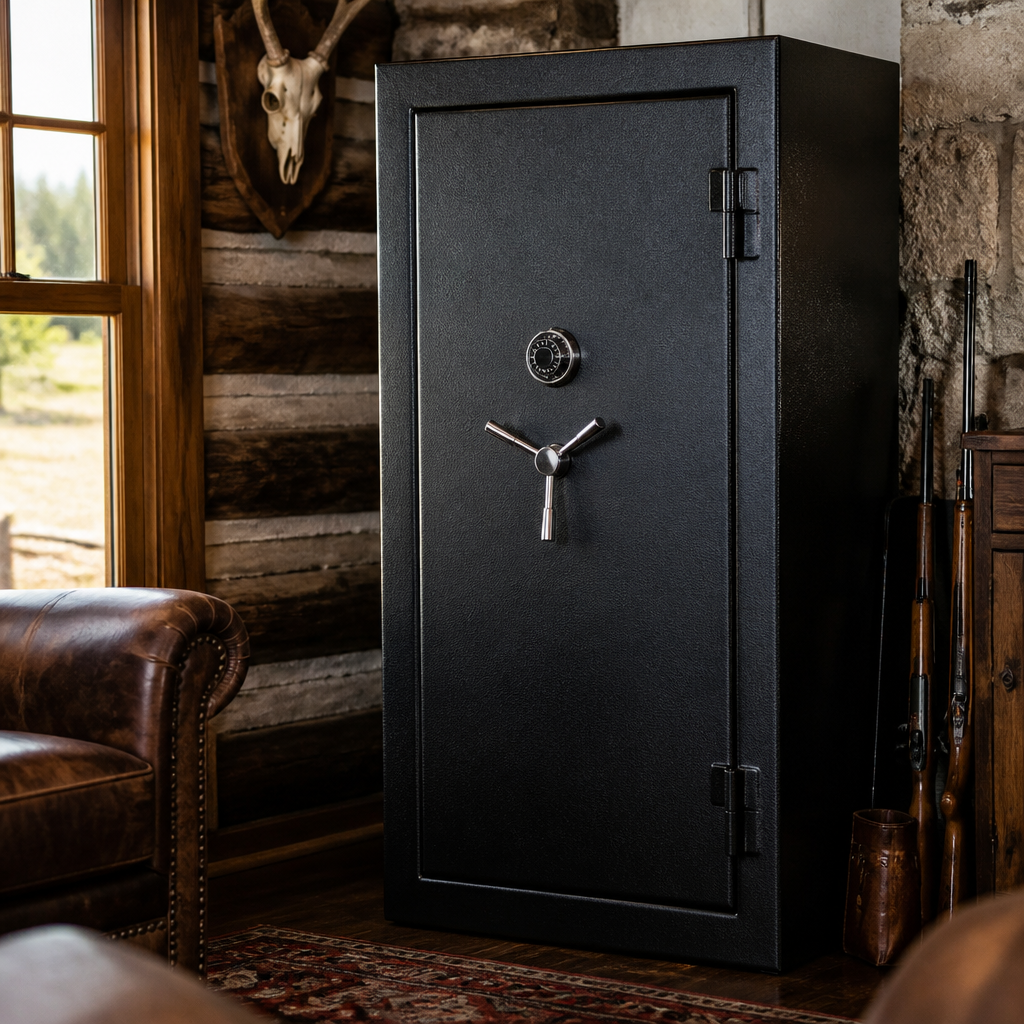
The Dakota DS42 Gun Safe stands out because it combines heavy steel construction, practical fire protection, and straightforward mechanical reliability in a market crowded with glossy features that often matter less than core security. In the Gun Safes & Safety category, product reviews serve an important role: they help buyers separate meaningful specifications from marketing claims, compare tradeoffs honestly, and choose storage that matches firearm collections, household risks, and long-term ownership costs. A sub-pillar hub on Product Reviews should do more than praise or criticize a single model. It should explain how to judge build quality, lock performance, interior flexibility, capacity ratings, installation needs, and service support so readers can evaluate this safe and related models with confidence.
When I review gun safes, I start with the details that affect real protection. Steel thickness, door reinforcement, bolt design, lock type, fire lining, hinge placement, anchoring options, and shelf usability all matter more than branding language. The Dakota DS42 is positioned as a full-size long-gun safe with an old-school emphasis on durability. That phrase usually points to a simple idea: fewer gimmicks, heavier materials where possible, and a design intended to keep working after years of regular opening, seasonal humidity changes, and the occasional hard bump during installation. For many buyers, especially collectors who value reliability over touchscreen extras, that approach is exactly the appeal.
This hub article examines the Dakota DS42 as a representative product review while also giving readers a framework for comparing other safes in the same class. It covers construction, security features, fire resistance, interior organization, installation considerations, ideal use cases, and the strengths and weaknesses you should weigh before buying. It also connects this review to the broader Product Reviews subtopic within Gun Safes & Safety, because most shoppers do not stop at one model. They compare dimensions, lock systems, warranty terms, and dealer reputation across multiple brands. By the end, you should know not just whether the DS42 is a strong candidate, but how to assess any full-size gun safe using the same standards.
What the Dakota DS42 Is Designed to Do
The Dakota DS42 is best understood as a residential gun safe aimed at owners who need meaningful theft deterrence, organized long-gun storage, and a respectable level of fire protection without moving into the price bracket of true high-security vaults. The “42” in the model name generally signals its advertised long-gun capacity, though experienced safe owners know those ratings are optimistic. If you own modern sporting rifles with optics, pistol grips, bipods, or slings, actual capacity usually lands well below the headline number. In practical terms, many safes labeled for 42 long guns store closer to 20 to 28 comfortably, depending on shelving layout and accessory bulk.
That practical gap is not a flaw unique to Dakota. It is an industry-wide issue, and it is one of the first things a good product review should explain. Capacity numbers are often measured using slim, unscoped long guns arranged tightly with little consideration for access. In real homes, buyers need room to retrieve a firearm without scraping optics or knocking neighboring rifles loose. The Dakota DS42 fits buyers who want a larger cabinet footprint than entry-level models provide, but still need a safe that can be delivered into a garage, closet, or interior room with careful planning and proper anchoring.
Old-school durability in this context means the safe prioritizes fundamentals: solid body construction, a substantial door, mechanical or proven electronic lock options, simple interiors, and broad serviceability. Buyers looking for app controls, biometric readers, LED-heavy marketing packages, or ultralight composite construction may find the DS42 less exciting. Buyers who care about thick steel, robust hinges, and a safe that feels substantial when the door swings open will understand the value proposition immediately.
Construction Quality and Why Steel Details Matter
The first thing I look at on any gun safe review is steel thickness, because steel is the backbone of burglary resistance. Many mass-market safes compete aggressively on paint, upholstery, and accessory door panels while using thinner body steel than buyers assume. A safe can look imposing and still be relatively vulnerable to pry attacks or cutting attempts if the body walls are light. The Dakota DS42 earns attention because buyers associate it with a more traditional, durability-first build philosophy. Even when a manufacturer does not market the safe as a commercial burglary-rated unit, heavier steel and better door reinforcement can make a meaningful difference in delay time during an attack.
Door construction often matters even more than body walls. Most attacks focus on the door edge, lock area, and boltwork because those are the points where prying pressure is applied. A serious review should evaluate whether the door uses composite layers, internal reinforcement plates, full drill-deflector protection, and sufficient active locking bolts. Continuous weld quality also matters. Spotty welds and thin frame sections can undermine otherwise decent steel gauges. In the field, I have seen buyers assume all large safes are equally strong, then discover major differences once the interior panels are removed or a locksmith explains how boltwork is arranged.
Weight is a useful clue, though not a complete test. Heavier safes tend to include more steel, denser fire materials, or both. Still, weight alone does not prove superior engineering. A good review asks where the mass comes from and whether it supports genuine protection. The DS42’s old-school reputation makes sense if its added heft translates into stronger door edges, better hinge support, and less cabinet flex under load. Those are the differences owners notice years later, especially when the safe remains square, the door alignment stays true, and shelves do not sag under ammunition, documents, and handguns.
Security Features Buyers Should Verify Before Purchase
No residential gun safe is impenetrable, and honest reviews should say that clearly. The goal is to create enough delay, noise, and difficulty that opportunistic theft fails and targeted theft becomes significantly harder. On the Dakota DS42, the key questions are lock reliability, bolt coverage, relocker design, anchoring points, and the fit between the door and frame. If those elements are sound, the safe can provide strong real-world protection for most households.
Lock choice is especially important. A UL-listed mechanical dial lock remains a benchmark for longevity and field serviceability. Properly maintained, it can run for decades without batteries, software glitches, or keypad failure. Electronic locks offer faster access and simpler code changes, which many families prefer. However, not all electronic locks are equal. Established lock makers such as Sargent and Greenleaf, SecuRam, and La Gard have stronger track records than generic imports. If the DS42 is offered with multiple lock options, buyers should choose based on use pattern, not novelty. Daily access users often prefer electronic convenience, while long-term storage users often favor mechanical simplicity.
| Review Factor | What to Check on the DS42 | Why It Matters |
|---|---|---|
| Lock type | UL-listed mechanical or reputable electronic model | Determines reliability, service life, and access speed |
| Boltwork | Number of active bolts and door-edge coverage | Improves resistance to prying and forced entry |
| Anchor holes | Factory-drilled floor mounting points | Prevents thieves from tipping or removing the safe |
| Door gap | Tight, even fit around the frame | Reduces pry opportunities at weak points |
| Relocker protection | Presence of relockers or hardplate near the lock | Helps resist drill attacks on the lock area |
Anchoring is non-negotiable. Even a heavy safe can be defeated more easily if thieves can tip it over, attack vulnerable sides, or haul it away with a dolly. In product reviews across this subtopic, I consistently tell buyers to budget for proper installation hardware and, when needed, professional moving. The best safe is weakened quickly by poor placement. A DS42 installed on a concrete slab and anchored with quality wedge anchors performs far better than the same unit left free-standing in a garage corner.
Fire Protection: What Ratings Mean in Real Homes
Fire protection is often the most misunderstood part of a gun safe review. Manufacturers typically advertise a duration and temperature rating, but the testing method behind those numbers varies widely. Some brands rely on independent labs such as Intertek/ETL, while others use proprietary testing protocols that are harder to compare directly. That does not make the rating meaningless, but it does mean buyers should read carefully. The Dakota DS42 should be judged not only on the stated fire time, but also on door seals, body insulation, seam construction, and the environment where the safe will sit.
In real residential fires, conditions differ dramatically by room, fuel load, response time, and ventilation. A safe on a ground-floor concrete slab may experience different heat exposure than a safe in an upstairs closet over a garage. Fireboard thickness, layered insulation, and expanding door seals can help protect contents from heat and smoke, but no consumer safe guarantees perfect survival of every item. Paper documents, optics adhesives, wood stocks, and polymer components all react differently to heat. That is why experienced owners use a layered approach: the gun safe for bulk protection, plus smaller document or media containers inside for especially sensitive items.
For the DS42, the practical question is whether its fire package matches your local risk profile. In suburban homes with average fire department response times, mid-range fire protection may be entirely reasonable. In remote rural properties where response times are longer, buyers may want to compare safes with thicker insulation, higher tested ratings, or dedicated document storage added inside. Good reviews never treat fire numbers as universal truth. They place them in context and explain the limit of what a residential gun safe can realistically do.
Interior Layout, Capacity, and Daily Use
A gun safe can be structurally impressive and still be frustrating to live with if the interior is poorly designed. This is where the Dakota DS42’s value depends on execution. Adjustable shelving, barrel supports, door organizers, and protected surfaces determine whether owners can actually use the advertised space efficiently. In homes with a mix of scoped bolt guns, AR-platform rifles, shotguns, suppressor-ready setups, handguns, and ammunition, flexible interiors matter as much as exterior dimensions.
One of the most common mistakes buyers make is selecting a safe based on today’s collection instead of the likely collection three to five years from now. The DS42, as a larger-format model, gives more room to grow than compact safes, but only if the layout supports mixed storage. I recommend mentally subtracting at least one-third from claimed rifle capacity before deciding. If you plan to store documents, jewelry, camera gear, or magazines alongside firearms, subtract more. The result is a more realistic ownership picture and fewer regrets after installation.
Daily use also includes door swing, shelf height, lighting, and dehumidification. In humid regions, a GoldenRod-style dehumidifier or desiccant system is not optional; it is basic preventive maintenance. Interiors lined with carpet or fabric help reduce cosmetic wear, but they do not stop corrosion. Buyers reviewing the DS42 should confirm whether there is power access for lighting or dehumidifier cords and whether door-mounted organizers reduce interference with stored long guns. Seemingly small layout details often determine whether a safe stays orderly or becomes a cramped, frustrating box.
Who Should Buy the Dakota DS42 and Who Should Keep Comparing
The Dakota DS42 makes the most sense for buyers who want a full-size residential gun safe built around straightforward durability rather than tech-heavy features. It suits households with growing firearm collections, owners who prioritize a substantial physical feel, and shoppers who understand the difference between a serious gun safe and a thin steel security cabinet. It is also a strong fit for buyers who value a traditional lock-and-bolt approach and expect to keep the safe for many years.
However, it is not automatically the right choice for every use case. Apartment dwellers, second-floor installers, and anyone facing tight stair turns may need a lighter or modular alternative. High-volume collectors with dozens of optics-equipped rifles may outgrow the internal layout faster than expected. Buyers seeking top-tier burglary certification such as TL-rated construction are shopping in a different category entirely, with much higher cost and weight. And households that require very fast defensive access may want a separate quick-access handgun safe in addition to a larger long-gun unit like the DS42.
As the hub page for Product Reviews under Gun Safes & Safety, this article points readers toward the right comparison mindset. Evaluate safes by steel, lock pedigree, anchoring, fire construction, interior realism, and service support. Read dealer reviews. Ask who performs warranty lock work locally. Confirm delivery path dimensions before purchase. Those practical steps matter more than brochure language.
The Dakota DS42 Gun Safe earns its reputation when judged on the basics that still define a worthwhile safe: strong construction, dependable locking hardware, useful capacity, and the kind of old-school durability that remains valuable long after trend features feel dated. For many gun owners, that is exactly the point. A safe should not impress only on delivery day. It should protect firearms, documents, and valuables quietly for years, resist common attack methods, and stay functional with routine maintenance and proper installation.
The biggest takeaway from this review hub is simple. Product reviews are most useful when they teach you how to judge every model, not just whether to like one brand. The DS42 appears strongest for buyers who want a traditional full-size safe with practical security and fire resistance, understand realistic storage capacity, and are willing to anchor and maintain it correctly. Its limitations are the same ones found across this class: advertised capacity can be optimistic, fire ratings need context, and no residential safe replaces layered home security.
If you are comparing gun safes now, use the Dakota DS42 as a benchmark for old-school build priorities. Then review related models in the Product Reviews section and compare specifications line by line before you buy. That extra diligence is what turns a good purchase into long-term protection.
Frequently Asked Questions
What makes the Dakota DS42 stand out in a market full of feature-heavy gun safes?
The Dakota DS42 stands out because it focuses on the fundamentals that matter most in a real-world gun safe: solid steel construction, dependable mechanical operation, and practical fire protection. Many modern safes are marketed with long lists of flashy add-ons, decorative finishes, electronic extras, and headline-grabbing claims, but experienced buyers often care more about structural integrity, lock reliability, and how the safe performs over years of daily use. The DS42 appeals to that mindset by emphasizing old-school durability over gimmicks.
For many firearm owners, that approach is a major advantage. A safe is ultimately a security tool, not just a showroom piece. Buyers want to know whether the body feels robust, whether the door inspires confidence, whether the locking system is proven, and whether the unit is designed to protect contents through common household threats like unauthorized access, heat exposure, and long-term wear. The Dakota DS42 earns attention because it appears built for those practical expectations rather than for marketing gloss alone.
That does not mean features are unimportant. Instead, it means the DS42 is attractive to people who want meaningful features rather than superficial ones. In product reviews, this kind of safe often scores well because it gives shoppers a clearer view of the tradeoffs: you may not be buying the most tech-packed model on the floor, but you may be getting stronger value in the areas that genuinely affect security, longevity, and peace of mind.
How important is heavy steel construction when evaluating a safe like the Dakota DS42?
Heavy steel construction is one of the most important factors in any gun safe evaluation because it directly affects resistance to forced entry, overall rigidity, and long-term durability. When people talk about a safe feeling “serious,” they are usually responding to the thickness and strength of the steel in the body and door. A heavier, more robust build can make prying, bending, and other physical attacks more difficult, while also helping the safe maintain structural stability over time.
In the case of the Dakota DS42, the emphasis on old-school durability suggests that the safe is designed to prioritize that kind of confidence-inspiring build quality. For buyers, this matters because many safe comparisons become confusing when marketing materials highlight accessories while giving less attention to construction details. Reviews help cut through that by reminding shoppers that steel thickness, door strength, hinge protection, bolt engagement, and overall fit are core security considerations.
Heavy construction also affects daily ownership in subtle but important ways. A sturdier safe often has a more solid door action, a more substantial presence in the room, and a better sense of permanence once installed and bolted down. That can matter for households storing not only rifles and handguns, but also optics, documents, valuables, and heirlooms. In short, the Dakota DS42’s appeal is closely tied to the idea that real protection starts with real material strength, and that remains one of the most meaningful measures of safe quality.
Is practical fire protection enough, or should buyers be looking for the highest fire ratings available?
Practical fire protection is often more useful than simply chasing the highest advertised fire rating, because not all ratings are presented, tested, or interpreted equally across the industry. Buyers should absolutely care about fire protection, but they should also understand what that protection is intended to do. A safe like the Dakota DS42 is attractive because it appears to aim for realistic, everyday protection rather than relying solely on inflated marketing language.
For most households, the key question is whether a safe provides a credible buffer against heat and smoke during a typical residential fire scenario, especially long enough for emergency response or containment to make a difference. That is different from assuming that a bigger number on a sales sheet automatically means better real-world performance. Product reviews are valuable here because they help explain how fire protection fits into the overall buying decision, including where the safe will be placed, what is being stored, and whether additional protection for documents, ammunition, or irreplaceable valuables might be needed.
With the Dakota DS42, the important point is balance. A safe that combines meaningful fire resistance with strong construction and dependable access can be more sensible than one that leans heavily on a single specification. Buyers should still verify the fire rating details, compare them honestly, and think about their specific risk level, but in many cases, practical fire protection paired with strong security is exactly the right formula.
Why do some buyers still prefer straightforward mechanical reliability over newer electronic features?
Many buyers prefer straightforward mechanical reliability because simplicity often translates into trust. In a gun safe, access matters just as much as protection. Owners want confidence that the locking system will work consistently, whether the safe is opened daily or only when needed under stress. Mechanical systems have long appealed to traditional safe buyers because they are familiar, proven, and generally less dependent on batteries, circuit boards, or electronic components that may fail or require maintenance over time.
That preference aligns closely with the Dakota DS42’s identity as a safe built around old-school durability. In a product category where electronic keypads, biometric options, and smart-style features are increasingly common, some users still value the predictability of a more traditional setup. This is especially true for buyers who want fewer points of failure, who store the safe in locations with temperature swings or humidity concerns, or who simply prefer hardware that feels time-tested rather than trend-driven.
That does not mean electronic locks are inherently bad. In fact, many are convenient and perfectly serviceable. But the appeal of mechanical reliability is that it centers the safe on core function: secure locking, consistent operation, and fewer distractions. Reviews often highlight this because it helps shoppers match the safe to their ownership style. If a buyer values uncomplicated performance and long-term dependability over modern extras, the Dakota DS42 is likely to feel like a strong fit.
Who is the Dakota DS42 best suited for, and what should buyers compare before making a final decision?
The Dakota DS42 is best suited for buyers who want a traditional, security-first gun safe that emphasizes build quality, straightforward operation, and practical protection. It is likely to appeal to firearm owners who are less interested in flashy branding and more interested in whether the safe can reliably protect rifles, handguns, accessories, and important household valuables over the long term. That includes experienced gun owners who understand the value of steel and lock quality, as well as newer buyers who want to invest in a safe that prioritizes substance over show.
Before making a final decision, buyers should compare several important factors beyond simple capacity claims. Interior layout matters because the number printed in the model name or the advertised gun count does not always reflect realistic storage with scoped rifles, slings, handguns, shelves, and accessories. Exterior dimensions matter because placement affects fire exposure, convenience, and whether the safe can be properly anchored. Buyers should also compare lock type, steel specifications, bolt design, fire rating details, warranty support, and total weight, since all of these influence security and long-term ownership satisfaction.
It is also wise to think about household context. A safe for a modest collection in a low-risk environment may call for one balance of features, while a growing collection, children in the home, or concerns about burglary and fire may push a buyer toward stronger construction and better overall protection. That is exactly why reviews in the Gun Safes & Safety category matter: they help translate specs into practical buying guidance. For someone who values durability, honest tradeoffs, and a no-nonsense approach to firearm storage, the Dakota DS42 is the kind of safe that deserves a close look.