
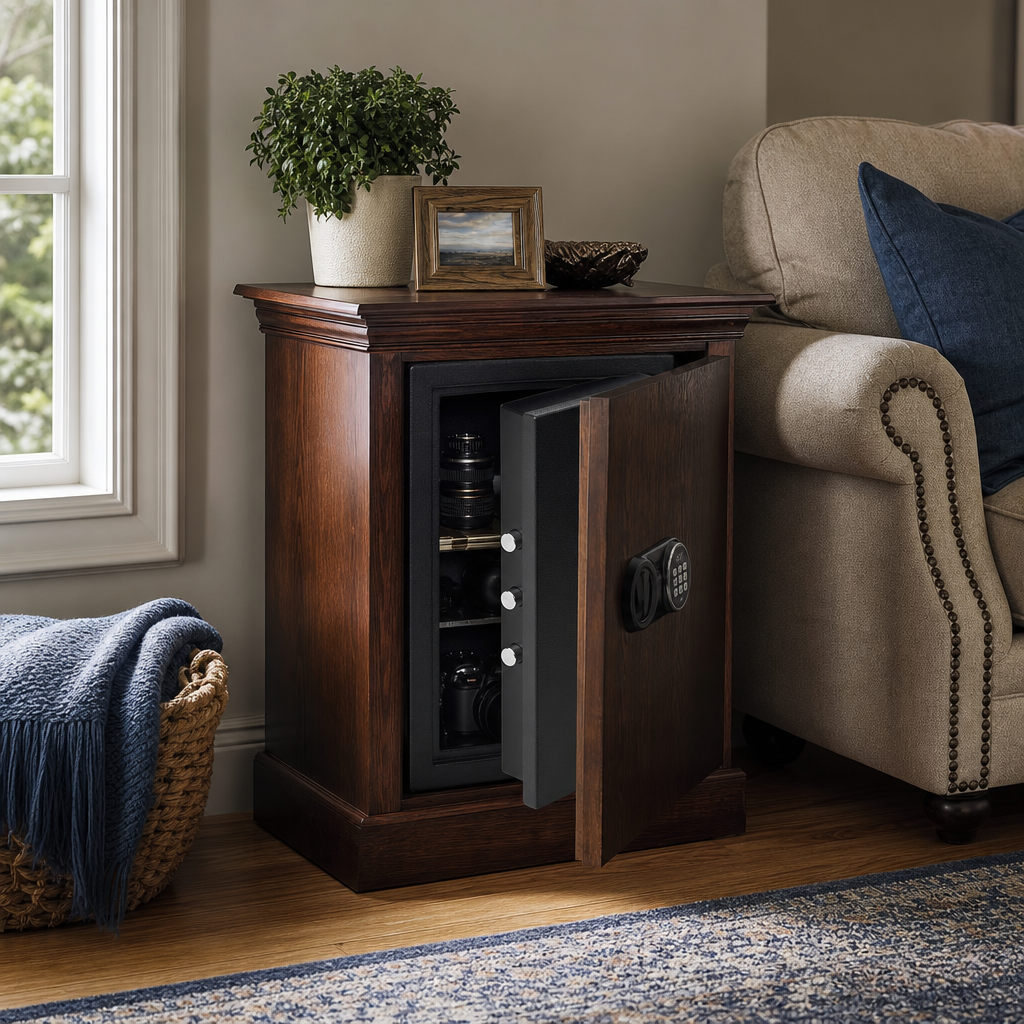
Disguising a gun safe as everyday furniture is one of the most practical ways to improve firearm security without advertising what you own. In plain terms, a disguised gun safe is a secure storage unit designed to look like a normal household item such as a cabinet, bench, mirror, nightstand, or bookcase. Hidden and discreet gun storage solutions aim to reduce visibility, delay unauthorized access, and help owners integrate safe storage into daily life. I have worked with homeowners who wanted faster access than a basement vault provided, but who also understood that a visible safe can attract curiosity from children, guests, contractors, and burglars. A furniture-style safe solves a real problem: it keeps firearms secured while blending into rooms people actually use.
This topic matters because concealment and security are not the same thing, yet they work best together. A thin lockbox hidden in a closet may be discreet, but it is not equivalent to a true safe with reinforced steel, tamper-resistant bolts, and an anchored base. On the other hand, a heavy traditional safe placed in the middle of a room provides strong physical protection, but it clearly signals that valuables are inside. The best hidden gun storage solutions combine both goals. They are built to meet the realities of home defense, child access prevention, theft resistance, humidity control, and room aesthetics. For many owners, especially in suburban homes, apartments, and shared households, disguised storage is the difference between keeping a firearm accessible and storing it too far away to be useful.
Before choosing a disguised safe, define the key terms. Concealment means the storage does not look like firearm storage. Discreet storage means it does not draw attention, even if it is technically visible. Quick access usually refers to biometric, RFID, simplex mechanical, or electronic keypad entry that can be opened within seconds. Long-gun storage requires more interior height and often deeper furniture dimensions than handgun storage. In-wall and under-bed units count as hidden storage, but this hub focuses on furniture-style solutions because they are the most adaptable for bedrooms, living rooms, offices, mudrooms, and entryways. The central question is not simply how to hide a safe. It is how to disguise a gun safe as everyday furniture without undermining safety, function, or legal responsibilities.
Done correctly, disguised gun safe furniture delivers several benefits at once. It lowers the chance of opportunistic theft, reduces social visibility, preserves room design, and encourages consistent storage habits because the safe sits where people already spend time. Done poorly, it creates dangerous tradeoffs: weak furniture hardware, poor anchoring, obvious seams, and decorative choices that make the piece look more suspicious than a plain safe would. The sections below explain how to select the right furniture form, evaluate construction, place it strategically, and avoid the mistakes that experienced installers see repeatedly.
Choose the Right Furniture Form for the Room and Firearm Type
The most effective disguised gun safe is the one that matches its environment so naturally that nobody gives it a second look. Start with use case. A bedside handgun safe may be disguised as a nightstand, floating shelf, or storage bench at the foot of the bed. A living room long-gun safe may be built into a console table, sideboard, or full-height cabinet. In a home office, a locking credenza or printer cabinet can conceal both handguns and documents. In an entryway, a bench safe can hold a compact long gun, defensive tools, and emergency items while still functioning as normal seating.
Scale matters. I often advise owners to measure not just the firearm, but the total storage profile including optics, slings, spare magazines, and door swing clearance. A tactical shotgun with an extended magazine tube may fit the stated interior height but fail when stored with a mounted light. Likewise, a rifle with a low-power variable optic may require more depth than a standard bookshelf-style hidden compartment provides. The disguise must remain credible, so avoid forcing oversized firearms into furniture that would never logically contain that volume.
Style consistency matters just as much as dimensions. In a modern apartment, a distressed farmhouse cabinet can look out of place and therefore memorable. In a traditional home, a glossy black biometric drawer built into an otherwise rustic bedroom may stand out immediately. The best furniture-style gun safes borrow the wood tone, hardware finish, proportions, and visual language already present in the room. Real concealment is about pattern matching. Burglars and visitors notice anomalies first.
Security Features That Matter More Than the Disguise
A disguised safe is still a safe, not a stage prop. The first security question is material thickness. Look for steel bodies and reinforced doors rather than furniture made of medium-density fiberboard around a light-gauge metal insert. Steel gauge alone does not tell the whole story, but residential security containers with heavier construction, solid locking bolts, protected hinges, and pry-resistant door geometry are generally far more resistant than decorative concealment boxes. For quick-access handgun storage, reliable lock types include mechanical simplex locks, quality biometric readers with backup entry, and established electronic keypads. Cheap electronic locks fail more often, especially in humid environments or after battery neglect.
Anchoring is nonnegotiable. A disguised cabinet that can be carried away defeats the entire purpose. Bolt the unit into floor joists, wall studs, masonry, or a manufacturer-approved subframe. If the safe is integrated into furniture, the anchoring system should secure the steel core, not just the decorative shell. I have seen beautiful hidden cabinets rendered useless because only the trim enclosure was fastened down. A determined thief can remove the outer furniture skin in minutes if the core is not properly fixed.
Fire and moisture protection also deserve attention. Not every hidden safe needs a fire rating, but many owners use these units for passports, cash, hard drives, and legal documents in addition to firearms. Fire ratings should be interpreted carefully because testing standards vary by manufacturer, yet some level of thermal insulation can be valuable. For humidity, use a desiccant pack, rechargeable silica system, or an electric dehumidifier rod where power and space permit. In concealed furniture cavities, trapped moisture is common, particularly in exterior-facing walls, basements, and mudrooms.
| Furniture style | Best for | Main advantage | Main limitation |
|---|---|---|---|
| Nightstand safe | Bedside handgun access | Fast access during sleep hours | Limited storage volume |
| Bench safe | Entryway or bedroom long-gun storage | Useful seating plus concealment | Can be hard to anchor discreetly |
| Bookcase or cabinet safe | Living room or office mixed storage | Blends well with existing furniture | Heavier units require careful floor planning |
| Mirror or picture-frame safe | Compact handgun storage | Very low visual profile | Usually shallow and less theft resistant |
| Coffee table or console safe | Common-area access | Natural fit in shared spaces | Higher chance of guest interaction |
Design Principles That Make Hidden Storage Look Ordinary
The strongest disguise is behavioral as much as visual. Everyday furniture has ordinary wear patterns, practical placement, and believable contents around it. A hidden gun safe works best when it functions like the item it imitates. If it is a bookcase, put books and normal objects on it. If it is a bench, let it serve as a bench. If it is a side table, give it a lamp, coasters, or mail tray. Empty surfaces and awkward isolation create suspicion.
Hardware and reveals are common failure points. Oversized gaps, unusually heavy lids, magnetic seams, or decorative panels with no matching design logic can make a piece look custom in the wrong way. The goal is not theatrical invisibility; it is normalcy. Soft-close slides, concealed hinges, touch latches, and well-matched trim help maintain the illusion. For higher-end builds, many fabricators use false backs, pocketed compartments, and hidden release points integrated into crown molding, under-edge lip details, or recessed handholds. These details should support access without announcing the mechanism.
Sound also matters. Hollow furniture, rattling contents, or a steel-on-steel ring when a door closes can reveal more than appearance does. Use interior foam, barrel rests, felt liners, and cable management to prevent noise. Test the unit at night when the home is quiet. If opening it wakes the room or causes nearby objects to shake, the design needs refinement. Good discreet gun storage should be accessible, but not acoustically obvious.
Placement Strategy: Where a Disguised Gun Safe Works Best
Room selection should follow risk, routine, and privacy. Bedrooms remain the most common location for quick-access handgun safes because they align with nighttime defensive scenarios and usually offer more privacy from guests. Home offices work well for mixed storage because desk cabinets and credenzas are common, and many owners already store paperwork there. Living rooms can support concealed furniture safes, but they require more discipline because visitors interact with furniture more often. Entryways are convenient but higher traffic. Children, delivery workers, cleaners, and contractors may all pass through that space.
Avoid locations that add environmental stress or reduce access reliability. Garages expose steel to temperature swings, condensation, and dust. Exterior walls can produce humidity pockets. Kitchens and bathrooms bring steam and frequent non-family traffic. Also avoid rooms where the furniture type feels implausible. A nightstand in a den or a storage bench squeezed into a narrow hallway can draw more attention than a conventional safe hidden inside a closet.
Think through emergency movement. During a high-stress event, you should be able to reach the disguised safe in darkness, open it consistently, and access the firearm without moving decorative objects or repositioning furniture. Practice the path. I recommend timing retrieval under low light with your normal sleeping or work setup. This immediately exposes weak placements, especially pieces that require kneeling, awkward lid lifts, or precise finger placement on hidden releases.
Custom Built Versus Ready-Made Hidden Gun Storage Solutions
Ready-made furniture safes are faster to deploy, usually tested as complete units, and often include integrated quick-access locks. Brands in this category typically offer nightstands, mirrors, benches, and concealment shelves that suit standard handgun or compact long-gun use. The advantage is predictability. You know the lock type, interior dimensions, and installation method before purchase. The limitation is compromise. Factory designs may not match your room exactly, and many use generic finishes or fixed interiors that waste space.
Custom built solutions excel when you need exact dimensions, unusual concealment, or architectural integration. Cabinetmakers can wrap a steel insert inside a built-in window seat, media console, dresser, or bookcase so the result looks native to the room. This is especially useful for homeowners storing suppressed rifles, scoped carbines, or a combination of firearms and valuables. The critical point is division of labor. A skilled furniture maker is not automatically a safe engineer. The secure core should be designed by a metal fabricator or sourced from a reputable safe component manufacturer, then integrated into the furniture shell.
Cost usually tracks complexity. A simple concealed handgun shelf may cost a few hundred dollars. A high-quality biometric nightstand safe or bench safe often lands in the mid-range. A custom built-in with steel core, concealed compartment, finish-matched cabinetry, and professional anchoring can cost several thousand dollars. In my experience, owners are happiest when they spend more on lock reliability, steel construction, and installation quality than on decorative flourishes.
Common Mistakes and Best Practices for Safe, Discreet Ownership
The biggest mistake is treating concealment as a substitute for responsible storage. If children or prohibited persons may be present, the safe must stay locked whenever the firearm is unattended. Another common mistake is overstuffing the interior. Crowded compartments slow access, snag slings, and increase the chance of negligent handling. Set up the inside for one clean motion. The firearm should come out without shifting unrelated items.
Poor maintenance is another frequent issue. Replace batteries on a schedule, confirm biometric enrollment for all authorized users, and test backup keys or override methods before an emergency. Inspect anchor bolts, hinges, and drawer slides at least twice a year. If the piece includes wood veneer or upholstery, monitor for swelling, sagging, or finish changes that could affect alignment. Furniture disguises live in normal household conditions, and normal household conditions wear things down.
Finally, keep discretion operational, not just physical. Limit who knows the piece conceals firearms. Be cautious with delivery, installation, and social media photos. Review applicable storage and child access laws in your state, and align your setup with the firearm’s actual role: home defense, collection security, or dual-use valuables protection. The best disguised gun safe looks ordinary, opens reliably, resists theft, and supports safe habits every day. If you are building out a broader gun safes and safety plan, use this hidden storage hub as your starting point, then evaluate room-specific options, lock types, anchoring methods, and moisture control before you buy.
Frequently Asked Questions
What does it mean to disguise a gun safe as everyday furniture?
Disguising a gun safe as everyday furniture means using a secure firearm storage unit that is intentionally built or concealed to look like an ordinary household item rather than a traditional metal safe. Instead of drawing attention with a visible vault-style door, keypad, or heavy industrial finish, the storage blends into the room as a bench, cabinet, nightstand, mirror, coffee table, bookcase, or similar piece. The goal is not to replace security with appearance, but to add a valuable layer of discretion. When a storage unit does not immediately announce itself as a gun safe, it is less likely to attract curiosity from guests, children, service workers, or opportunistic thieves.
In practical terms, disguised gun storage works best when it combines strong locking hardware, solid construction, and a believable furniture design. A well-designed concealed safe should still resist tampering, unauthorized access, and casual discovery. It should also fit naturally with the home’s layout and decor so it does not stand out. This approach is especially useful for homeowners who want fast access in a bedroom or living area while keeping firearms secured and out of plain sight. The key idea is simple: concealment supports security by reducing visibility, but it should always be paired with responsible storage practices and dependable locking mechanisms.
Is a disguised gun safe actually secure, or is it mostly for looks?
A disguised gun safe can be genuinely secure, but only if it is built with security as the priority rather than treated as a decorative novelty. Many people assume that a hidden safe is automatically less protective than a standard standalone safe, but that is not always true. The real question is how the unit is constructed. A quality disguised gun safe should have a reinforced locking compartment, durable materials, tamper-resistant hardware, and a locking system that matches the level of access control you need. In other words, the furniture exterior should be cosmetic, while the inner storage core should still function like a serious secure container.
That said, it helps to be realistic about the role of concealed furniture safes. Their biggest advantage is discretion. They can reduce the chance of quick detection during a casual walk-through or smash-and-grab burglary. However, if someone has a lot of time, tools, and clear knowledge of what they are looking for, concealment alone will not stop them. That is why the best approach is layered security: anchor the unit when possible, choose a reliable lock, place it in a smart location, and avoid discussing it openly. If your main concern is long-term protection against forced entry, fire, or large-volume storage, a traditional full-size safe may still be the better primary option. For many homeowners, though, a disguised safe works very well as part of a broader firearm security plan.
What types of furniture work best for hidden gun safe designs?
The best furniture for hidden gun safe designs is furniture that looks ordinary, fits the room naturally, and allows enough interior space for secure storage without appearing oversized or suspicious. Nightstands, entryway benches, bookcases, wall mirrors, console tables, and cabinets are among the most practical options because they are common, useful, and easy to integrate into daily life. In bedrooms, a nightstand or under-bed bench can offer discreet access while still looking completely normal. In living rooms or home offices, a bookcase, side table, or media cabinet can provide larger concealment opportunities while blending in with other furnishings.
When choosing furniture-style gun storage, the most important factor is believability. The piece should match the rest of your home in size, style, color, and use. A rustic bench in a modern minimalist room or a heavy cabinet with no practical purpose can draw exactly the kind of attention you want to avoid. It is also important to think about access. A hidden compartment that is too awkward to reach or blocked by doors, drawers, or decor may defeat the purpose. The ideal design balances three things: it looks normal, it stores firearms securely, and it allows responsible access when needed. Homeowners often get the best results by choosing a piece they would genuinely use even if it contained no safe at all.
Where should you place a disguised gun safe in the home?
The best place for a disguised gun safe depends on your goals, your daily routine, and who has access to your home. In most cases, placement should support both concealment and control. A bedroom is one of the most common choices because it offers privacy and convenience, especially for furniture pieces like nightstands, benches, or wardrobes. A home office can also work well if the furniture fits naturally into the room and the space is not heavily trafficked by guests. Entryways, hallways, or living rooms may be suitable for certain designs such as benches, mirrors, or console cabinets, but these locations require extra care because they are more visible and accessible to others.
Good placement means more than simply hiding the safe. You want the furniture to look like it belongs there, to remain easy for you to access, and to stay difficult for unauthorized people to inspect. Avoid areas where children play, where guests tend to linger, or where movers, cleaners, or contractors routinely work up close. It is also wise to avoid obvious “hiding spots” that burglars often search first, such as the primary bedroom closet, unless the disguise is especially convincing and the unit is properly secured. If possible, place the unit where it can be anchored or where its weight and structure make removal more difficult. Thoughtful placement is a major part of what makes disguised storage effective: the right piece in the wrong location can still attract attention, while the right piece in the right location can blend in for years.
What should homeowners consider before buying or building a furniture-style gun safe?
Before buying or building a furniture-style gun safe, homeowners should think carefully about security level, intended use, room placement, firearm size, access speed, and overall quality. Start with the basics: what exactly will be stored, who needs access, and how often will it be opened? A compact bedside unit for one defensive firearm has very different requirements than a larger concealed cabinet meant for multiple long guns. Measurements matter, especially if optics, lights, slings, or other accessories are involved. Interior layout, door swing, shelf design, and padding can all affect how practical the storage is day to day.
Construction quality is equally important. The outer furniture should be sturdy and convincingly designed, but the internal safe compartment is where security is won or lost. Look for strong locks, reinforced entry points, reliable hinges, and materials that resist prying or quick break-in attempts. If you are considering a custom-built solution, make sure it does not sacrifice real protection for appearance alone. It is also smart to consider whether the unit can be anchored, whether it protects against moisture, and whether it fits with your local legal responsibilities for firearm storage. Finally, think long term. The best disguised gun safe is one you will consistently use because it is secure, convenient, and unobtrusive. If the design feels awkward, flimsy, or too obvious once installed, it will not deliver the level of protection and discretion most homeowners are looking for.