
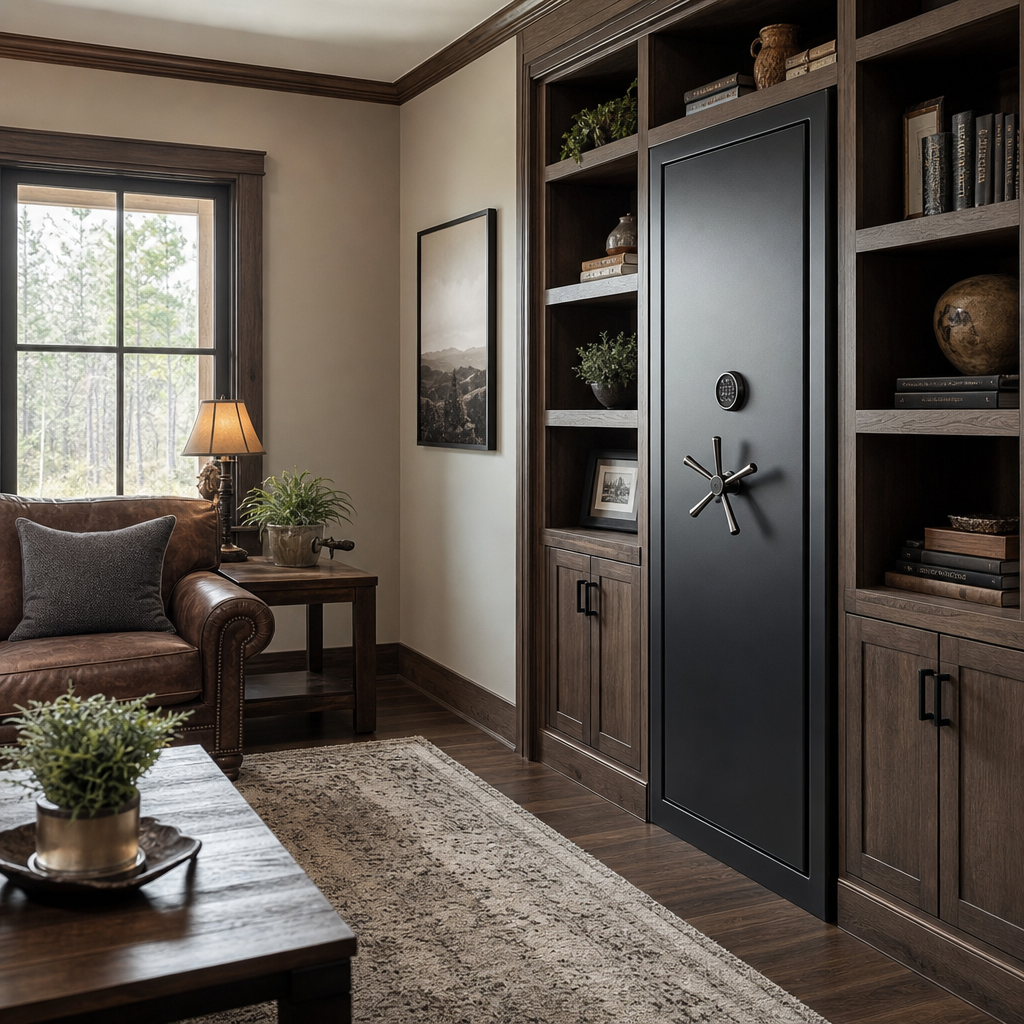
Integrating a gun safe into your home decor starts with a simple goal: secure firearm storage should protect people first, preserve quick authorized access second, and still look intentional in the room instead of like an afterthought. In practical terms, a gun safe is a lockable container designed to prevent unauthorized access, reduce theft risk, and, in many models, provide fire protection. Hidden and discreet gun storage solutions go a step further by concealing that security function within furniture, cabinetry, architectural features, or low-visibility placements. I have helped homeowners plan these setups in primary bedrooms, studies, mudrooms, dens, and even small apartments, and the same pattern appears every time: the best result comes when security requirements lead the design, not the other way around.
This topic matters because the stakes are unusually high. According to long-standing guidance from the National Shooting Sports Foundation and public safety organizations, firearms should be secured from children, guests, burglars, and anyone not expressly authorized to use them. A decorative approach that compromises locking strength, anchor integrity, or access control is not discreet storage; it is risky storage. At the same time, many owners do not want an obvious black metal safe dominating a carefully designed room. They want a concealed gun safe, a hidden gun cabinet, or built-in discreet firearm storage that fits the home’s style. That is a reasonable goal, provided the installation respects weight loads, ventilation, anchoring, lock reliability, and local legal obligations.
As a hub for hidden and discreet gun storage solutions, this article explains how to blend a gun safe into your interior design without sacrificing function. It covers placement strategy, furniture integration, built-in options, room-by-room design choices, common lock types, and the tradeoffs between concealment and speed. It also addresses a point many articles skip: decor integration is not just visual camouflage. It includes traffic flow, sightlines from doors and windows, humidity control, floor structure, and whether the chosen location invites tampering. When done correctly, a hidden gun safe supports safe storage, improves room aesthetics, and adds a layer of discretion that can reduce casual discovery. When done poorly, it creates weak access, moisture problems, awkward use, or a false sense of security.
Start with Security, Access, and Legal Requirements
The first design decision is not color, wood species, or cabinet style. It is defining what the safe must do. A bedside handgun safe has different requirements from a long-gun safe in a study or a concealed wall safe in a hallway. I begin every project with four questions: who needs access, how fast is access required, what firearms are being stored, and what level of theft resistance is needed? A quick-access pistol safe intended for one or two authorized adults usually prioritizes reliable opening methods and controlled concealment. A larger safe for multiple rifles and documents needs stronger anchoring, more interior organization, and often a more deliberate room location.
State and local laws vary, but the broad principle is consistent: secure storage obligations become more serious when children, prohibited persons, or frequent visitors are present. Hidden storage does not replace lawful storage standards. If a decorative bench has a magnetic catch but no true lock, it is furniture, not secure firearm storage. For many households, the minimum acceptable baseline is a recognized gun safe or lockbox with a mechanical, electronic, or biometric lock, fixed to framing or concrete when feasible. If theft resistance is a priority, look for heavier steel construction, reinforced doors, anti-pry features, and anchoring hardware approved by the manufacturer.
Concealment should be treated as a secondary security layer. It helps prevent casual discovery, but it does not stop determined entry on its own. That distinction matters when people compare a hidden gun safe behind a mirror with a full-size safe concealed inside a custom closet wall. The second option can combine real burglary resistance with visual discretion. The first may be acceptable for a staged concealment solution if the lock is robust and the mounting is done correctly, but it should not be mistaken for a high-security installation. Good home decor decisions become much easier once those boundaries are clear.
Choose the Right Type of Hidden and Discreet Gun Storage
Hidden gun storage solutions fall into a few clear categories, and each suits different homes. Furniture safes are built into nightstands, coffee tables, benches, headboards, or console cabinets. Wall safes fit between studs and disappear behind artwork, mirrors, or shallow millwork panels. Closet-integrated safes sit inside wardrobes or dressing rooms, often concealed by hanging clothes or paneled cabinetry. Floor safes offer strong concealment but are less convenient for long guns and can be vulnerable to moisture if installed carelessly. Full-size safes can also be made discreet by wrapping them with cabinetry, placing them in a recessed alcove, or hiding them within a walk-in closet.
From experience, furniture-integrated handgun storage works best when the furniture itself already belongs in the room. A nightstand with a hidden compartment can look seamless in a bedroom, but only if its dimensions, finish, and hardware match the surrounding casegoods. In a living room, a concealed compartment inside a sideboard is often more convincing than a novelty coffee table with visible seams and odd proportions. The design should look normal from every angle, including from doorways and seated positions. If concealment depends on a viewer never noticing an awkward gap line, the design probably needs refinement.
Built-in options usually produce the cleanest aesthetic because they can mirror the home’s trim profile, paint grade, or stain finish. A recessed safe concealed by wall paneling, library shelving, or custom millwork often feels like part of the architecture rather than an inserted object. That said, built-ins are less flexible if you move house, and they generally cost more once carpentry, finishing, and installation are included. Portable furniture-based solutions are easier to relocate, but they can trade away capacity and structural rigidity. The right choice depends on whether permanence, speed of access, budget, or visual invisibility matters most.
Match Safe Placement to Room Function and Traffic Patterns
Where you place a gun safe affects both decor and safety. The best location is usually a low-visibility area that authorized users can reach naturally without drawing attention. In bedrooms, that often means the side of the bed opposite the doorway, inside a closet zone, or within a nightstand designed around how the room is actually used. In home offices, a concealed safe inside a credenza or built-in bookcase can work well because office furniture already supports enclosed storage. In entry-adjacent mudrooms, secure lockers may make sense for households that transition gear on arrival, but only when the area is not heavily exposed to guests or service workers.
Sightlines matter more than many people realize. Stand at the room entrance, then at the primary window, then at any adjacent hall, and note what is directly visible. A safe integrated into decor should not sit in the first visual cone from a doorway. It also should not create an obvious “secret spot” by placing a single piece of art too low, using one oddly deep cabinet, or leaving unexplained dead space in millwork. Natural concealment comes from repetition and consistency. If a wall has paneled sections, every panel should make architectural sense. If a closet contains cabinets, their layout should serve normal storage too.
Traffic patterns also affect practical access. A beautiful hidden gun cabinet loses value if you must kneel awkwardly, move a chair, or cross a brightly lit room to reach it. I prefer placements that let the owner open the compartment while maintaining normal body positioning and line of movement. For quick-access handgun storage, that usually means one hand can reach the lock while the other stabilizes the door or drawer. For long-gun storage, there should be enough swing clearance to remove a firearm without striking trim, shelves, or adjacent furniture. Decor integration is successful when the safe disappears visually but remains simple to use under stress.
Design Styles That Conceal a Gun Safe Without Looking Gimmicky
The safest decorative strategy is to make the storage solution blend into an established interior style rather than building the room around the concealment feature. In traditional interiors, that may mean integrating a safe within paneled wainscoting, a stained wood wardrobe, or a classic chest with period-appropriate hardware. In modern homes, flat-panel cabinetry, push-latch doors, and low-profile millwork can hide a safe elegantly because the visual language is already minimal. Rustic spaces often support concealed storage inside blanket chests, reclaimed wood cabinets, or bench seating, but the craftsmanship must be tight. Rough styling should not mean sloppy joinery.
Color and finish matching do much of the visual work. If a large gun safe is being hidden inside a cabinet enclosure, continue the same paint sheen, crown detail, toe kick, and hardware used elsewhere in the room. If the safe remains partially visible inside a closet or dressing room, wrapping the surrounding walls in matching millwork reduces contrast and helps the opening read as standard storage. Some homeowners use wallpapered panels, framed textiles, or oversized art to cover shallow wall safes. That can work, but the piece should be scaled like ordinary decor. An undersized painting placed at suspicious height signals concealment instead of masking it.
Another principle is to avoid theatrical concealment. Secret compartments activated by books, novelty latches, or dramatic moving panels may feel clever, but they often age poorly and can reduce reliability. A discreet gun safe should look ordinary, operate consistently, and withstand daily use. The most convincing hidden storage solutions are usually boring in the best sense: a cabinet door that aligns perfectly, a bench lid with internal steel reinforcement, a closet panel with concealed hinges, or a drawer front that matches the rest of the built-ins exactly. Good design lowers visual attention rather than trying to impress with tricks.
Compare Common Concealed Storage Options
Homeowners usually choose among a short list of concealed storage formats. The right option depends on firearm type, response time, room size, and whether the installation must be movable. The table below summarizes the practical tradeoffs I see most often.
| Option | Best Use | Main Advantage | Main Limitation |
|---|---|---|---|
| Nightstand or headboard safe | Quick-access handgun storage in bedrooms | Fast reach, easy decor integration | Limited capacity, often lighter construction |
| Wall safe behind art or panel | Compact handgun and document storage | Excellent visual concealment | Stud-bay size limits depth and width |
| Closet-integrated full-size safe | Multiple firearms, valuables, documents | Strong security with discreet appearance | Higher cost, less portable |
| Bench or console cabinet safe | Living room or entry-adjacent storage | Blends with everyday furniture | Must be anchored and carefully proportioned |
| Floor safe | Deep concealment for compact valuables | Hard to spot, can be very discreet | Poor ergonomics, moisture and access concerns |
For most households, closet-integrated full-size safes offer the best balance of true security and clean aesthetics. They accommodate long guns, support dehumidification, and allow the decor layer to be handled by cabinetry instead of by compromising the safe itself. Quick-access bedside solutions remain important for households that need defensive access, but they should complement, not replace, larger secured storage for the rest of the collection. A layered setup is often the most practical answer.
Locks, Power, and Access Reliability
A discreet gun safe is only as effective as its lock and opening method. Mechanical simplex-style pushbutton locks are valued for reliability and independence from batteries. Electronic keypad locks allow rapid entry and multiple user codes but require battery maintenance and quality components. Biometric safes are convenient when they are well made, yet performance varies widely based on sensor quality, finger condition, enrollment practices, and backup entry options. I never recommend choosing a model based on biometrics alone. Any biometric safe should have a dependable secondary keypad or override method and should be tested regularly by every authorized user.
Power planning matters when integrating a safe into custom furniture or built-ins. Interior lighting, dehumidifiers, charging docks, and electronic locks may need outlets or cable routing. If the safe sits inside cabinetry, leave service access for battery changes and keypad replacement. I have seen beautiful installations fail in practice because the owner had to unload a shelf or remove trim to reach the battery compartment. That is a design failure, not a minor inconvenience. Reliable access requires maintenance pathways, adequate door clearance, and enough light to use the safe correctly in low-visibility conditions.
Speed should also be discussed honestly. The more deeply concealed the safe, the slower access may become. That is not always a problem. For archival storage, spare firearms, or collections, slower concealed access is perfectly acceptable and often preferable. For defensive use, however, the safe should open in a predictable motion sequence with minimal fine-motor complexity. Practice with an unloaded firearm and a cleared safe is the only way to verify whether the design works in real conditions. A hidden compartment that looks elegant but takes twelve seconds and two hands to access may not suit its intended purpose.
Installation Details That Protect Both Decor and Security
Good concealed gun storage depends on proper installation more than marketing claims. Weight is the first issue. Large safes can exceed several hundred pounds before contents are added, and some premium models reach well beyond one thousand pounds. Upstairs placement may require checking joist direction, span, and load concentration, especially in older homes. On slab foundations, anchoring is usually more straightforward. On wood subfloors, anchoring should hit structure, not just finish materials. Manufacturer instructions are not optional here; they define approved anchor points, fastener types, and spacing that preserve performance.
Humidity control is another frequent oversight. Closets on exterior walls, garages, basements, and floor-safe cavities can experience condensation, seasonal temperature swings, or elevated relative humidity. Firearms stored in those environments benefit from desiccants, electric dehumidifier rods where appropriate, and interior airflow planning. Soft furnishings or tightly sealed decorative wraps should not trap damp air around the safe body. If the safe is enclosed in cabinetry, leave enough ventilation to avoid creating a stagnant microclimate. This is especially important for blued steel firearms, wood stocks, documents, and optics.
Finally, protect the finish and function of the room itself. A concealed safe should not force door swings that damage baseboards, scrape floors, or stress cabinet hinges. Use soft-close hardware where it does not interfere with speed, and specify hinges rated for the panel weight if millwork doors are involved. In custom projects, I like to mock up access with painter’s tape and cardboard before any finish carpentry begins. That simple step reveals problems with reach, clearance, and visual balance before they become expensive corrections.
Best Practices for a Whole-Home Hidden Storage Plan
The strongest approach is to treat discreet firearm storage as a whole-home plan rather than a single product purchase. Many homeowners benefit from one primary safe for the collection, one quick-access handgun safe where lawful and necessary, and one or two low-profile supporting storage areas for accessories, documents, or staged transport cases. That setup keeps the highest-security storage doing the heavy lifting while allowing decor-conscious concealment in key rooms. It also reduces the temptation to overstuff one compartment or to place every firearm in a location optimized only for appearance.
As this subtopic hub makes clear, hidden and discreet gun storage solutions work best when concealment, security, and design are balanced instead of competing. Choose a real safe or lockbox first, match the format to the room’s function, use decor to reduce visual attention, and install everything with proper anchoring, humidity control, and service access. The main benefit is confidence: your firearms stay secured from unauthorized hands while your home remains calm, coherent, and uncluttered. Review your current storage room by room, identify what is too visible or poorly positioned, and use that audit to plan a safer, better-integrated solution.
Frequently Asked Questions
1. How can I integrate a gun safe into my home decor without making it obvious?
The most effective approach is to treat the gun safe as part of the room’s design plan rather than as a last-minute security add-on. Start by identifying spaces where the safe can blend naturally with existing furniture, built-ins, or architectural features. For example, a safe can be incorporated into a custom cabinet, hidden behind paneled doors, placed inside a closet with coordinated shelving, or disguised within a piece of functional furniture such as a bench, console, or nightstand. The key is to choose a location that feels intentional and supports the style of the room, whether that style is modern, rustic, traditional, or minimalist.
Color, finish, and scale matter just as much as placement. A large black metal box placed in the middle of a light, carefully designed room will always draw attention, but a safe concealed within cabinetry or matched to surrounding finishes is far less noticeable. Many homeowners use trim, millwork, or furniture-grade enclosures to soften the industrial appearance of the safe while keeping it accessible. If concealment is a priority, hidden and discreet gun storage solutions can mask the security function entirely, but they should never sacrifice safe operation or responsible firearm storage. The best result is one where the safe supports the room visually, remains difficult for unauthorized users to identify, and still allows quick access for the authorized owner when needed.
2. What should I prioritize first: appearance, concealment, or security?
Security should always come first, and from there you can work outward toward concealment and appearance. The primary purpose of a gun safe is to prevent unauthorized access, reduce theft risk, and in many cases provide additional protection such as fire resistance. That means the safe needs to be appropriate for the firearms being stored, equipped with a dependable locking system, and installed in a way that prevents easy removal or tampering. If a storage solution looks beautiful but can be accessed by children, visitors, or burglars, it has failed its most important job.
Once the safe meets security requirements, the next priority is practical access for the authorized user. A safe hidden too well or placed in an inconvenient location can become frustrating in daily use, which often leads people to compromise safe storage habits. After security and authorized access are addressed, appearance and concealment can be refined through thoughtful placement and design integration. In other words, the ideal hierarchy is people first, quick authorized access second, and aesthetics third. Fortunately, with today’s cabinetry options, hidden compartments, and furniture-style enclosures, homeowners usually do not have to choose between responsible firearm storage and a cohesive interior design.
3. Where are the best places in the home to put a gun safe so it looks intentional and still works well?
The best location depends on the type of firearm storage you need, how often you need access, and who lives in the home. Bedrooms, home offices, walk-in closets, dens, and finished basements are among the most common choices because they offer a balance of privacy, convenience, and design flexibility. In a bedroom, a smaller safe might be integrated into a closet system, built into a cabinet, or concealed in a nightstand-style piece of furniture. In a home office or den, a safe can often be hidden within custom built-ins, behind bookshelves, or inside cabinetry that already matches the room’s style.
When choosing placement, think beyond looks alone. The safe should be anchored properly when required, positioned on a structurally appropriate surface, and kept away from overly humid conditions unless it is specifically protected against moisture. It should also be located where authorized users can reach it efficiently without making it obvious to guests or household members who should not have access. Avoid high-traffic display areas where concealment is poor, and be cautious about garages or unfinished areas unless the safe is rated and installed for those conditions. The most intentional-looking installations are usually those that combine privacy, structural practicality, convenient access, and visual consistency with the rest of the room.
4. Are hidden gun storage furniture pieces as secure as a traditional gun safe?
They can be useful, but they are not all equal, and this is where homeowners need to be especially careful. Some hidden storage furniture is primarily designed for concealment, not for true security. It may keep firearms out of casual sight, but concealment alone does not provide the same level of protection as a properly constructed gun safe with a reliable locking mechanism, solid build quality, and theft-deterrent installation. If your goal is to prevent unauthorized access, especially in homes with children, frequent visitors, or elevated theft concerns, you should evaluate the unit as a security product first and a decor piece second.
A well-designed hidden gun storage solution can absolutely be part of a responsible setup if it includes robust locking hardware, durable construction, and placement that limits discovery and tampering. For some homeowners, the best answer is a hybrid approach: use a true gun safe as the primary storage solution and integrate it into decor through cabinetry, millwork, or furniture-style concealment. This gives you the real protective benefits of a safe while maintaining a discreet appearance. Before buying any hidden storage product, review how it locks, how quickly authorized users can access it, whether it can be anchored, and whether it provides meaningful resistance to forced entry. If it cannot meet your safety standards, it may be stylish, but it is not an adequate substitute for secure firearm storage.
5. How do I balance fast authorized access with a clean, stylish look in the room?
The balance comes from designing around your real-life use case instead of choosing decor first and trying to force security into it later. If quick access matters, the safe needs to be located where the authorized user can reach it naturally and operate it confidently, even in low light or under stress. That might mean integrating a compact safe into a bedside cabinet, placing a concealed unit in a nearby closet, or using custom furniture that hides the safe without obstructing the door, lock, or retrieval motion. Decorative panels, hinged artwork, cabinet doors, and built-ins can all work well, but only if they do not create extra steps that slow access too much.
From a design perspective, simplicity usually works best. Choose concealment methods that match the room’s existing materials and proportions so the safe feels built in rather than improvised. Avoid overly clever disguises that are cumbersome to use, difficult to maintain, or likely to fail over time. Also think about everyday functionality: battery changes for electronic locks, visibility of the keypad or biometric reader, door swing clearance, and the need to open the safe fully without moving surrounding decor. A good integration feels seamless because it respects both safety and design. When done well, the room stays polished, the storage remains discreet, and the authorized user retains dependable access without advertising where firearms are kept.