
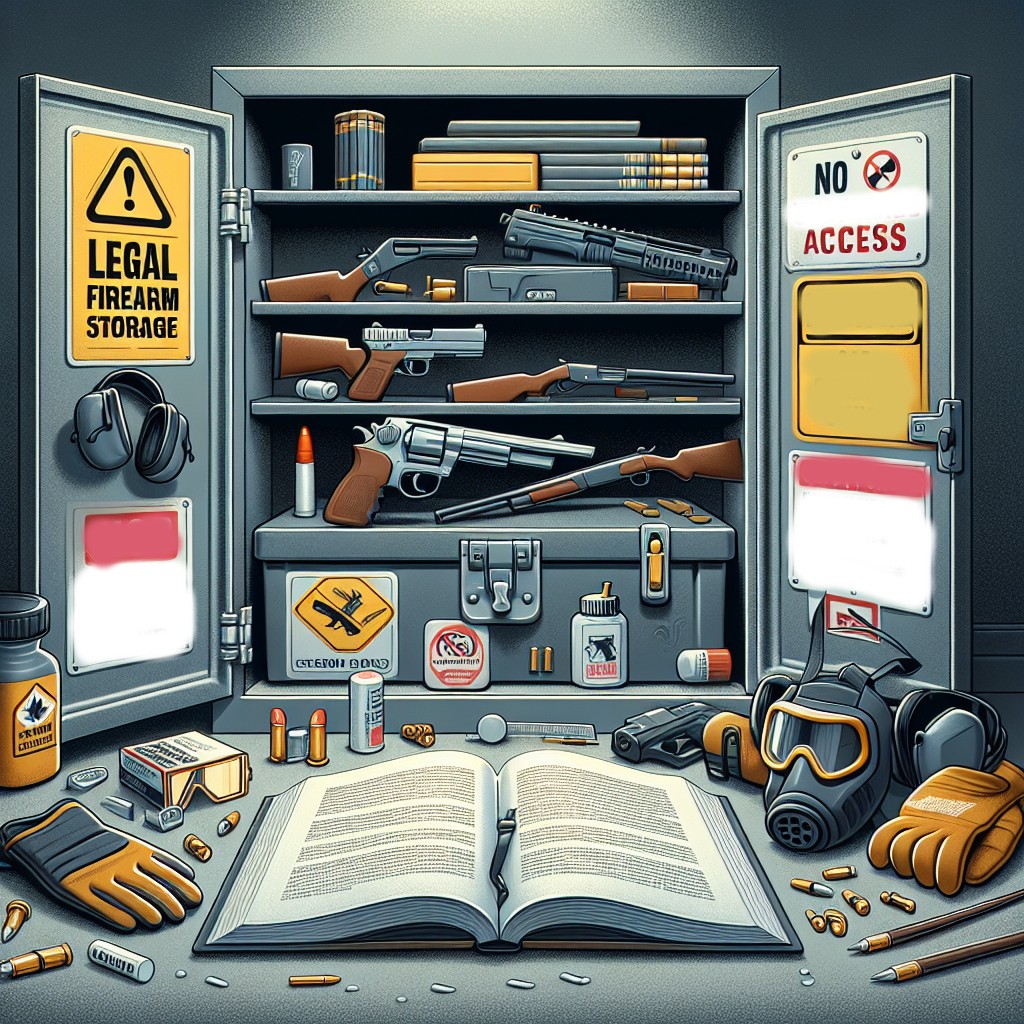
Owning a firearm comes with significant responsibility, not just to oneself but also to one’s family, community, and society at large. It’s not simply a matter of exercising a right but also adhering to a set of rules and guidelines designed to ensure safety for everyone. The legal aspects of firearm safety and storage are crucial components in this context. Violations can lead to severe consequences, both legally and morally. This article aims to provide a comprehensive understanding of the laws surrounding firearm safety and storage, helping you become a more responsible firearm owner. Whether you’re a novice just acquiring your first gun or a seasoned firearm enthusiast, the legal landscape surrounding firearm safety is complex and requires continuous education and awareness.
For instance, do you know that improper storage can lead to criminal charges in many states? Or that specific requirements must be met to ensure your firearm is stored legally? Many people are unaware of the nuances involved, which can lead to unintended breaches of the law. Therefore, familiarity with these laws and regulations is critical for anyone who owns or plans to own a firearm. This article will explore the various legal aspects of firearm safety and storage, including state-specific regulations, federal laws, and recommended best practices to ensure you’re always on the right side of the law.
Understanding Federal Laws
Federal laws governing firearm safety and storage lay the foundation for what is expected of gun owners across the United States. The Gun Control Act of 1968 and the Brady Handgun Violence Prevention Act of 1993 are pivotal statutes that shape how firearms are sold, transferred, and stored. Under federal law, certain categories of individuals are prohibited from owning firearms, including felons, individuals with specific mental health issues, and those convicted of domestic violence offenses. Therefore, knowing who can legally possess a firearm is the first step in understanding your obligations under federal law.
Furthermore, federal laws also require licensed firearm dealers to provide a secure gun storage or safety device with the sale of any handgun. While this may not extend to private sales or transfers, it underscores the importance the federal government places on safe firearm storage. Ignorance of these laws is not a valid excuse in the eyes of the judiciary, making it vital to stay updated on any amendments or new regulations. As federal laws serve as the minimum standard, many states have introduced their own more stringent laws to deal with firearm safety and storage. These state laws often build on the foundational standards set by federal legislation, as we will explore in the next section.
State-specific Regulations
State laws on firearm safety and storage can vary significantly, and it is crucial to be well-versed in the specific requirements of your state. Some states have laws mandating the use of trigger locks or requiring firearms to be stored in a locked safe or a secure room when not in use. For example, in states like Massachusetts and California, failure to properly store a firearm can result in criminal charges. These laws are not just for show; they aim to mitigate the risk of accidental discharges, theft, and misuse.
Moreover, certain states have enacted “red flag” laws, which allow law enforcement agencies to temporarily confiscate firearms from individuals deemed a risk to themselves or others. Compliance with these laws can prevent tragic incidents and legal repercussions. Always consult with local law enforcement agencies or legal advisors to understand the specific requirements in your state. Taking this initiative can save you from both legal troubles and moral dilemmas. Just as with federal laws, being well-informed about state regulations is an ongoing responsibility that requires diligence and awareness.
Legal Considerations for Home Storage Solutions
When it comes to storing firearms at home, the primary goal is to balance accessibility with safety. Various laws require secure storage to prevent unauthorized access, especially by minors. For instance, some states impose strict liability on gun owners if a minor gains access to an unsecured firearm and uses it to cause harm. Courts have increasingly been holding gun owners accountable under negligence theories, making it essential to invest in approved gun safes and storage devices.
Moreover, technology has revolutionized firearm storage solutions, offering biometric safes that only grant access to authorized users. These advanced storage solutions are not just compliant with the law but also offer peace of mind, knowing that your firearms are inaccessible to unauthorized individuals. Remember that the investment in high-quality storage solutions is a small price to pay compared to the legal repercussions and moral guilt associated with an improperly stored firearm. Reviewing and upgrading storage solutions periodically ensure continued compliance with evolving laws and technological advancements.
Transporting Firearms Legally
Another critical aspect of firearm safety and legal compliance involves the transportation of firearms. The rules for transporting firearms can differ from state to state and depend on the type of firearm being transported. Generally, federal law requires that firearms be unloaded and stored in a locked container or compartment when being transported. Ammunition should be stored separately to further reduce the risk of an accidental discharge. Some states have additional requirements, such as mandatory background checks or permits for transporting certain types of firearms.
Crossing state lines with a firearm brings additional complexities. The Firearm Owners Protection Act provides some legal protection for interstate transport of firearms, but it requires strict adherence to certain conditions, such as the firearm being unloaded and stored in a locked container, and not readily accessible from the passenger compartment. Ignorance or non-compliance?—even if accidental—can lead to severe penalties, arrest, or confiscation of the firearm. Therefore, always consult legal counsel or refer to reliable sources before transporting firearms across state boundaries.
Legal Responsibilities in Case of Theft or Loss
Reporting lost or stolen firearms swiftly is not only a common-sense safety practice but also a legal obligation in many states. Timely reporting helps law enforcement agencies act quickly to recover the firearm and prevent it from being used in criminal activities. Failure to report a lost or stolen firearm can result in legal consequences, including fines and potential criminal charges. Owning up to the responsibility can also protect you from liability if the firearm is used in any unlawful activity.
It’s advisable to keep detailed records of all the firearms you own, including serial numbers, purchase dates, and any modifications done. This information is invaluable when filing a report with law enforcement agencies. Moreover, insurance companies require thorough documentation to process any claims related to lost or stolen firearms. By maintaining comprehensive records, you ensure a quicker and more streamlined recovery process. Always stay informed about your state’s specific reporting requirements and take immediate action if a firearm goes missing.
Conclusion
In conclusion, being a responsible firearm owner extends beyond knowing how to operate a gun safely. It also involves understanding and adhering to federal and state laws that govern firearm safety and storage. Failing to comply with these laws can lead to severe legal and moral consequences, impacting not just the firearm owner but also those around them. From federal laws like the Gun Control Act and state-specific regulations to proper home storage solutions and safe transportation practices, every aspect requires diligent attention and continuous education.
Investing in high-quality storage solutions, staying updated on legal responsibilities, and taking immediate action in case of theft or loss can collectively ensure you’re a law-abiding, responsible firearm owner. Always remember that the ultimate goal is to prevent unauthorized access and accidental discharges, thus ensuring the safety of everyone. Conduct regular reviews of your storage practices, consult legal advisors, and stay informed about any changes in the law to remain compliant and responsible. The knowledge and actions you take today will contribute significantly to a safer tomorrow.