
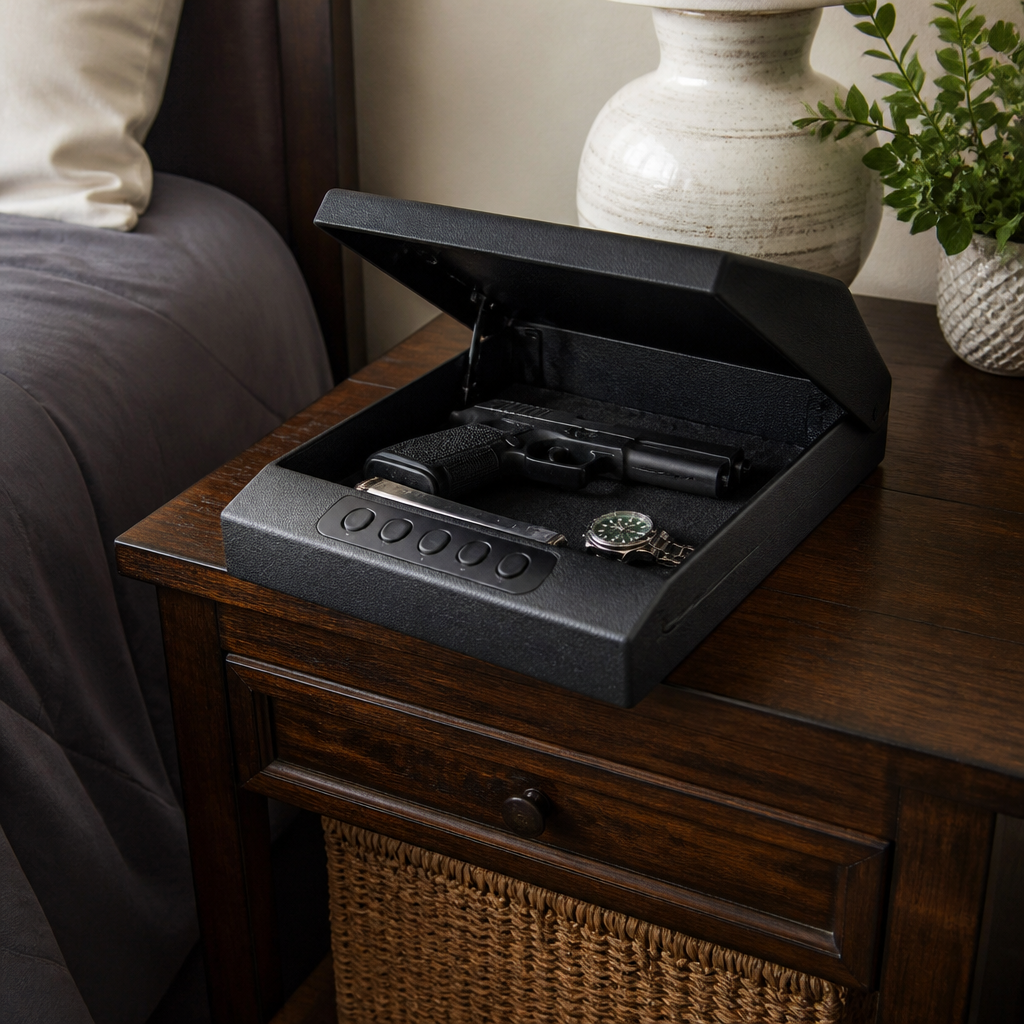
The SecureIt Rapid Access Safe is designed for one job above all others: giving lawful owners fast, controlled access to a defensive firearm while reducing unauthorized handling. In the gun safes and safety category, that makes it more than a single product review. It represents a broader product class: quick-access safes built for bedrooms, closets, home offices, and other places where seconds matter. This hub article examines how the SecureIt Rapid Access Safe fits into the larger world of gun safe product reviews, what features actually affect performance, and how buyers should evaluate speed, security, construction, mounting, and long-term reliability. When I test storage products for defensive use, I focus on real conditions rather than brochure claims. A safe can look impressive in photos and still fail the practical test if the door binds, the keypad lags, the mounting system shifts, or the interior does not accommodate a ready-to-use setup. For home defense, a rapid-access safe must balance three requirements at once: immediate entry by the owner, resistance to casual or forced unauthorized access, and safe storage practices that support responsible ownership.
Rapid-access safe is the key term here. It refers to a compact firearm safe engineered for quick opening through an electronic keypad, biometric reader, mechanical simplex-style lock, RFID system, or backup key. Unlike a full-size gun cabinet or a heavy residential security container built for large collections, a rapid-access safe is usually intended for one handgun, one carbine, or a tightly defined defensive loadout. The SecureIt Rapid Access Safe sits in that practical middle ground where many homeowners shop first. They want a storage solution that can be mounted near the bed or in a discreet location, opened under stress, and trusted around children, guests, or service workers. Because this article serves as a hub for product reviews in the broader subtopic, it also explains the standards and comparisons that matter across brands, including Vaultek, Fort Knox, Hornady, V-Line, and SnapSafe. Understanding those benchmarks will help readers use this page as a foundation before drilling down into individual model comparisons, biometric lock evaluations, long gun quick-access options, and installation guides.
What the SecureIt Rapid Access Safe Is Built to Do
The SecureIt Rapid Access Safe is aimed squarely at home-defense readiness. Its value proposition is straightforward: store a firearm in a way that keeps it secured from unauthorized users while preserving a fast retrieval path for the owner. In practice, that means the design priorities differ from those of a fire-rated safe or a theft-resistant safe meant to hold multiple valuables. The first things I examine in a rapid-access unit are opening method, door geometry, mounting stability, and interior compatibility with a staged firearm. If the safe forces awkward hand placement, requires two unnecessary movements, or positions the firearm so the grip is obstructed, access time increases dramatically under stress.
SecureIt has built its reputation around organized firearm storage and quick deployment concepts, and that philosophy carries over here. A well-executed rapid-access safe should let the owner approach in low light, open it consistently, and establish a firing grip without fumbling around ammunition boxes or loose accessories. That sounds simple, but many products fail this test because they are designed around dimensions on a spec sheet rather than actual defensive use. For a bedside role, the user may be waking from sleep, operating with reduced dexterity, and trying to avoid telegraphing movement. For a closet or office role, concealment and orientation become equally important. The SecureIt concept works best when buyers treat it as part of a layered home-defense plan rather than as a universal storage answer for every firearm in the house.
Key Features That Matter in Real-World Use
When comparing a SecureIt Rapid Access Safe to competing quick-access gun safes, several features deserve more attention than marketing terms. Lock speed is first. Electronic keypads can be extremely fast if button layout is intuitive and activation is immediate, but poor backlighting or delayed wake-up can cost valuable time. Biometric systems promise one-touch access, yet they vary widely based on sensor quality, enrollment process, and how well they read a finger that is sweaty, dirty, or pressed at an angle. Mechanical push-button locks often trade a little raw speed for consistency, especially because they avoid battery dependence. Every system has tradeoffs, so the best lock is the one you can open correctly while half awake and under stress.
Steel thickness and pry resistance matter next. Compact does not automatically mean weak, but buyers should understand the difference between preventing child access and resisting a determined burglary attempt. A rapid-access safe commonly prioritizes speed and concealability over heavy body construction. That is acceptable when expectations are realistic. The hinge side, latch engagement, and anti-pry design determine whether a door feels secure or merely cosmetic. Interior layout is another overlooked factor. Foam can protect the firearm, but over-compressed foam or poorly cut inserts can slow presentation. Power redundancy also matters. Good designs provide low-battery warning, backup entry, and simple battery replacement without creating a security vulnerability.
| Evaluation Area | What to Look For | Why It Matters for Home Defense |
|---|---|---|
| Access Method | Fast keypad, reliable biometric, or mechanical backup | Determines whether you can open the safe consistently under stress |
| Mounting System | Pre-drilled holes, strong hardware, stable anchor points | Prevents movement, tipping, or removal during forced entry |
| Construction | Solid steel body, reinforced door edge, secure latch design | Improves resistance to prying and unauthorized access |
| Interior Layout | Accessible grip angle, room for light or optic, organized storage | Reduces fumbling and supports a safe, repeatable draw |
| Power and Backup | Battery alerts, emergency override, dependable electronics | Keeps the safe functional when maintenance is overdue or power drops |
How It Compares With Other Rapid-Access Safe Categories
Not every quick-access firearm safe solves the same problem, so category comparison is essential. Pistol safes are the most common and generally fit nightstand, dresser, or under-desk use. They are ideal for a handgun with a weapon light and possibly a spare magazine. Vertical long-gun safes target a different user: someone who keeps a home-defense rifle or shotgun staged but secured. Larger hidden furniture safes blend into the room but often sacrifice pure speed. Portable travel lockboxes serve vehicle or temporary storage needs, yet they are rarely the best primary home-defense option because cable security and thinner construction limit resistance. The SecureIt Rapid Access Safe should be judged against the category it occupies, not against a full-size safe that weighs several hundred pounds.
Compared with brands like Vaultek, SecureIt products often appeal to buyers who prioritize purpose-built defensive organization over app-heavy feature sets. Vaultek has pushed smart safe technology with Bluetooth controls, status monitoring, and modular interiors. Hornady is known for RFID-based systems that can work well when placement and practice are dialed in. Fort Knox and V-Line remain strong references for mechanical locking systems that many experienced owners trust for simplicity and durability. In product reviews across this sub-pillar, the most useful question is not which brand sounds premium. It is which design aligns with your access pattern, household risk profile, and chosen firearm. For example, a parent with young children may prioritize tamper resistance and mounting security above every other factor. A single adult in a low-traffic home may rank silent entry and pure speed higher.
Installation, Placement, and Access Strategy
A rapid-access safe performs only as well as its installation. I have seen otherwise capable safes become frustrating because they were mounted too low, positioned behind a swinging door, or installed so the lid or door could not open fully. With a bedside safe, the ideal placement usually allows access from a natural kneeling or seated posture and keeps the code entry area visible in low light. Closet installations should account for door clearance, hanging garments, and the hand path needed to establish a clean grip. Under-desk placements work well in a home office, but they must avoid leg interference and should not expose the keypad to anyone sitting nearby.
Mounting is nonnegotiable. If a safe is marketed for home defense and can be picked up and carried away in seconds, it is not fully doing its job. Proper anchoring into wood framing, masonry, or a structurally sound surface dramatically improves security and consistency. It also prevents the safe from shifting while you try to open it. Owners should test access in daylight, darkness, and partial lighting with the exact firearm, light, optic, and magazine configuration they intend to store. Dry runs should include opening the safe from bed, from the room entrance, and from a stress-elevated state after light physical movement. Those practical repetitions reveal ergonomic issues that no spec sheet will show. This is where a review hub becomes useful: installation and placement often matter as much as the lock itself.
Security Limits, Safety Benefits, and Who Should Buy One
No rapid-access safe should be described as a magic solution. Compact defensive safes are excellent for access control, readiness, and day-to-day responsible storage, but they are not substitutes for a high-mass burglary safe when the goal is broad theft protection for an entire collection. Their chief safety benefit is immediate: they create a controlled barrier between the firearm and unauthorized hands without pushing access so far away that the owner leaves the gun unsecured out of convenience. That practical middle ground is why this category has grown so quickly. The best safe is often the one people will actually use every day, and quick-access designs solve that compliance problem better than many traditional cabinets.
The SecureIt Rapid Access Safe makes the most sense for homeowners who keep one primary defensive firearm ready, want faster access than a conventional safe provides, and are willing to practice with the system. It is especially appropriate for bedside storage, secondary staging points, and homes where children or visitors make unsecured access unacceptable. It is less appropriate as the only firearm storage solution for a large collection, and buyers in high-burglary environments should pair it with a heavier main safe and broader hardening measures such as alarms, cameras, reinforced doors, and layered physical security. If you are building out your research in the gun safes and safety category, use this page as your starting point: compare lock types, study mounting methods, review handgun versus long-gun access options, and match the product to the problem. That process leads to better buying decisions and safer daily storage. The SecureIt Rapid Access Safe stands out when judged by the right criteria: reliable speed, practical placement, disciplined installation, and realistic expectations. Choose your access method carefully, mount the safe correctly, practice regularly, and continue to the related product reviews in this hub to find the best fit for your home defense plan today.
Frequently Asked Questions
What is the SecureIt Rapid Access Safe designed to do, and who is it best for?
The SecureIt Rapid Access Safe is built around one primary goal: giving a lawful firearm owner fast, controlled access to a defensive firearm when time matters, while helping reduce the risk of unauthorized handling. That makes it especially relevant for people who keep a home-defense handgun or other defensive firearm nearby but do not want to leave it unsecured on a nightstand, desk, shelf, or in a closet. In practical terms, it fills the gap between complete accessibility and responsible storage.
This type of safe is best for homeowners, apartment dwellers, and responsible gun owners who want a firearm close at hand in places such as a bedroom, home office, mudroom, or primary living area. It can also be useful for people with children in the home, frequent visitors, or a desire to add an additional layer of access control beyond simply hiding a firearm. The product category matters here: quick-access safes are not trying to replace every full-size gun safe in the house. Instead, they are designed for the specific use case of immediate access under stress, often during a potential defensive emergency.
For many buyers, the value comes from balancing readiness with security. A traditional heavy safe may be ideal for long-term storage, collections, documents, and theft resistance, but it is not always practical for the firearm someone may need most urgently. A rapid-access unit is intended to solve that problem by keeping a defensive firearm stored in a more controlled way without burying it behind a slower, multi-step access process. That is why products like the SecureIt Rapid Access Safe matter in the broader gun safes and safety category: they are purpose-built for one of the most time-sensitive storage roles in the home.
How fast is a rapid-access safe compared with a traditional gun safe?
In general, a rapid-access safe is significantly faster to open than a traditional full-size gun safe, especially in low-light or high-stress situations. A conventional gun safe often prioritizes capacity, fire protection, and long-term storage security, which usually means heavier doors, more locking bolts, and access methods that are not optimized for split-second retrieval. By contrast, a rapid-access safe is designed around speed, simplicity, and repeatable access under pressure.
That speed advantage matters because defensive firearm access is rarely about convenience alone. In a true emergency, fine motor skills can degrade, visibility may be limited, and every extra step becomes more difficult. A quick-access safe is typically designed so the owner can develop a reliable opening routine through repetition. Depending on the locking system, that may involve a keypad, biometric entry, RFID-style access, or a mechanical combination designed for tactile use. The best rapid-access safes reduce hesitation and complexity, helping the owner retrieve the firearm in a more direct and predictable way.
That said, speed is not the only measurement that matters. The fastest safe is only useful if it opens consistently, stores the firearm securely, and fits the owner’s habits and environment. Some users may prefer a biometric system for quick access, while others trust a button-based mechanical or electronic layout they can operate by feel. The SecureIt Rapid Access Safe sits within this category as a solution focused on immediate access, but buyers should always evaluate opening speed alongside reliability, mounting options, battery considerations if applicable, and ease of use in realistic conditions such as darkness, fatigue, and stress.
Can a quick-access safe like the SecureIt Rapid Access Safe help improve home firearm safety?
Yes, for many households, a quick-access safe can significantly improve practical firearm safety because it creates a controlled-storage solution for a firearm that might otherwise be left unsecured for the sake of readiness. One of the most common safety challenges in home defense planning is that owners want fast access, but they also want to prevent casual access by children, guests, roommates, or unauthorized adults. A rapid-access safe directly addresses that tension.
When used correctly, this type of safe helps limit unnecessary handling and keeps the firearm in a defined, protected location rather than out in the open or hidden in improvised places. That alone can reduce the chances of a firearm being found unexpectedly or handled without permission. It can also support better daily habits, because owners are more likely to secure a firearm consistently if the storage method is both convenient and fast to use. In that sense, quick-access safes often improve real-world compliance with responsible storage practices.
It is important, however, to treat a rapid-access safe as one part of a broader safety system, not a complete solution by itself. Responsible ownership still includes proper training, understanding local laws, maintaining the safe, practicing access procedures, and making thoughtful decisions about where the unit is placed and how it is mounted. If the safe is used as intended, placed strategically, and integrated into a larger home-defense plan, it can play a very meaningful role in reducing unauthorized handling while preserving legitimate defensive access.
Where should you place a SecureIt Rapid Access Safe in the home?
The best location depends on your home layout, your defensive plan, and who lives in or visits the home, but in most cases the ideal placement is somewhere that offers fast access to the authorized user while remaining discreet, stable, and difficult for others to tamper with. Common installation areas include beside the bed, inside a closet, in a home office, near a dressing area, or in another room where the owner spends substantial time and may realistically need access during an emergency. The core principle is simple: the safe should be close enough to matter, but placed thoughtfully enough to support secure and consistent use.
Bedroom placement is especially common because many home-defense incidents occur at night, when people are asleep and visibility is poor. In that setting, a rapid-access safe can provide a repeatable access point that the owner can locate and open quickly. A home office can also make sense for people who spend long hours working in a fixed room and want defensive access without leaving a firearm unsecured in a drawer. Closets may offer better concealment, but buyers should think carefully about whether the tradeoff in accessibility is worth it.
Wherever it is installed, mounting and positioning matter. A quick-access safe should ideally be secured according to manufacturer guidance so it is not easily removed or repositioned. The opening method should also be easy to operate from the user’s likely approach angle, including in darkness. Avoid placing it somewhere cluttered, difficult to reach, or vulnerable to moisture, extreme heat, or constant interference. In short, the best location is one that supports rapid retrieval for the authorized user, discourages unauthorized discovery or handling, and fits naturally into the owner’s daily movement patterns.
What should buyers look for when comparing the SecureIt Rapid Access Safe to other quick-access gun safes?
When comparing the SecureIt Rapid Access Safe to other models in the same class, buyers should begin by focusing on the specific mission of a quick-access safe: fast, dependable access to a defensive firearm with reasonable protection against unauthorized handling. That means the first questions should be about reliability, ease of opening under stress, and how well the safe fits the intended firearm and storage location. A unit that looks impressive on paper but is awkward to use in the dark or inconsistent in operation may not be the right choice for defensive readiness.
Key comparison points include lock type, access speed, backup entry options, interior fit, mounting capability, and overall build quality. Some buyers strongly prefer biometric entry, while others trust keypad or mechanical systems more because they can be learned by touch and may be less sensitive to finger placement. Interior dimensions are also critical. The safe needs to accommodate the firearm as configured, including sights, lights, or other accessories if applicable. A poorly sized interior can slow retrieval or force the user to store the firearm in a less practical condition.
It is also wise to think beyond the lock itself. Consider how the door opens, whether the firearm presents naturally for retrieval, how intuitive the unit feels in low light, and whether it can be anchored securely in the intended location. Buyers should also evaluate durability, power requirements if electronic features are involved, and the reputation of the manufacturer for consistency and support. Ultimately, the best rapid-access safe is the one that fits the owner’s environment, works reliably under pressure, and supports responsible, repeatable access to a defensive firearm without adding unnecessary complexity.