
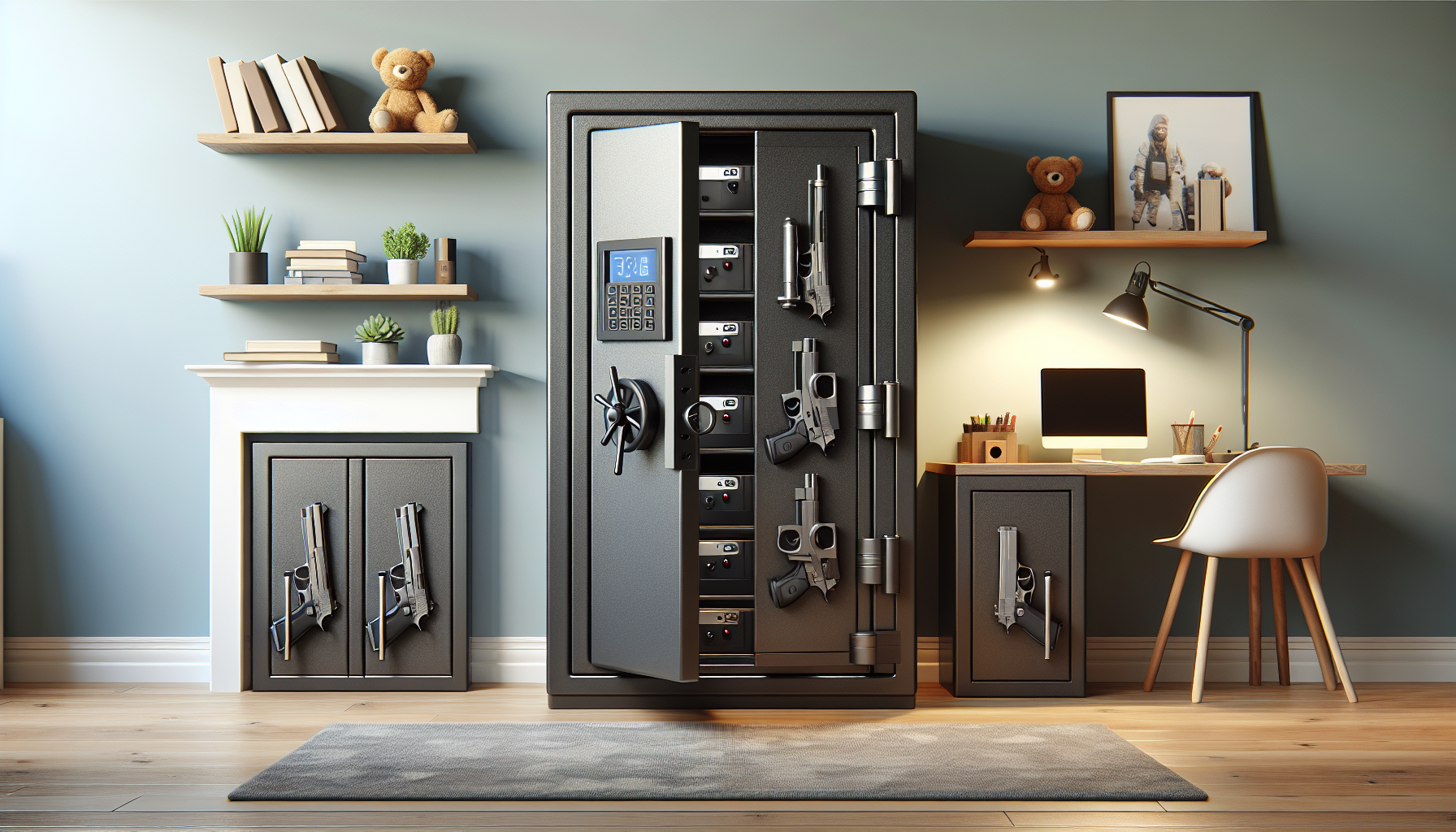
Choosing the best gun safes for homeowners with children starts with one priority: preventing unauthorized access while still allowing a responsible adult to reach a firearm quickly when needed. In homes with kids, a gun safe is not just a storage box. It is a layered safety system that reduces the risk of accidental injury, theft, and misuse. A good buying guide must explain more than size and price. It should cover lock types, fire ratings, installation methods, legal considerations, and how children actually interact with household environments.
When I evaluate gun safes for family homes, I focus on the difference between a true safe, a residential security container, and a lock box. Most products sold to homeowners are residential security containers, often tested to basic burglary standards rather than the heavier commercial safe standards used in jewelry or banking. That distinction matters because marketing language can mislead buyers into thinking every steel cabinet offers the same protection. For a family with children, the right choice depends on what is being stored, where it will sit, how quickly access is needed, and whether the goal is child resistance, theft deterrence, fire protection, or all three.
This topic matters because unsecured firearms in homes remain a preventable safety problem. The American Academy of Pediatrics and the National Shooting Sports Foundation both emphasize secure storage, especially when children or teens are present. In practice, the safest setup combines a properly anchored safe, separate ammunition management when appropriate, user training, and routine checks to confirm locks, batteries, and access codes are working. Homeowners searching for the best gun safes for homeowners with children usually want one answer, but the truthful answer is more specific: the best gun safe is the one that matches your firearm type, access needs, room layout, and household risk profile without leaving openings a child can exploit.
As a hub buying guide, this article covers the key decisions homeowners face before purchasing. It explains what features matter most, compares common safe categories, outlines installation best practices, and shows how to balance quick access with childproofing. If you are researching handgun safes, long-gun cabinets, biometric models, bedside units, closet installations, or fire-rated options, the core principles begin here.
What Makes a Gun Safe Suitable for a Home With Children
The best gun safes for homeowners with children share five nonnegotiable traits: reliable lock security, resistance to tampering, proper anchoring, predictable adult access, and a design matched to the firearm being stored. Child safety is not achieved by one feature alone. A biometric scanner, for example, may speed access, but if the unit is light enough to be carried away or pried open with hand tools, it does not solve the real problem. Likewise, a thick steel body is useful, but a weak keypad housing or exposed hinge design can undermine the whole product.
In family homes, I usually separate needs into two categories. The first is rapid-access storage for a defensive handgun. These safes are often placed in a bedroom, closet, or discreet furniture compartment. The second is higher-capacity storage for long guns, extra handguns, magazines, documents, and valuables. That larger unit is usually installed in a closet, basement, office, or garage-adjacent utility area, though garages create humidity and temperature concerns. Many homeowners need both. A bedside safe can support emergency access, while a larger anchored safe handles everything else when the firearm is not under direct control.
Parents should also think like a determined child or teenager, not like a catalog reader. Children observe keypad entries, test drawers, search for backup keys, and imitate adult behavior. Teenagers may use internet videos to learn bypass techniques. That is why basic hiding places, magnet mounts, or unanchored lock boxes are weak solutions in a child-occupied home. A proper safe should defeat curiosity, withstand casual force, and leave an audit trail in the form of repeatable routines: locked when not in use, code kept private, backup key secured elsewhere, and batteries replaced on schedule.
Key Buying Factors: Lock Type, Steel, Fire Rating, and Size
Lock selection is usually the first buying decision. Biometric safes offer speed and can work well when they are from reputable brands and include a secondary keypad or key override. Good units store multiple fingerprints and open consistently under different finger angles, but cheap biometric readers often fail when hands are sweaty, dry, dirty, or misaligned. Electronic keypad locks are the most common middle ground. They are usually reliable, fast, and easy to change if a code is exposed. Mechanical dial locks avoid battery dependence and can last decades, but they are slower in urgent situations. For homes with children, the safest practical choice is often a vetted electronic keypad or a quality biometric model with redundant entry options.
Steel thickness matters more than many buyers realize. A safe built with thinner steel can be bent, punched, or peeled apart faster than advertisements suggest. On many residential units, body thickness may be listed in gauge, while doors may be measured differently. Lower gauge numbers indicate thicker steel. A 12-gauge body is generally stronger than a 14-gauge body, and many premium residential containers improve protection further with reinforced door frames, hard plates over lock areas, and multiple locking bolts. If a manufacturer avoids publishing steel thickness, that is a warning sign.
Fire ratings should be read carefully. Some manufacturers self-certify, while others rely on independent testing such as UL classifications for fire endurance. Ratings differ by temperature, duration, and pass criteria. A label promising thirty or sixty minutes does not mean a safe is invulnerable in every house fire. It means the interior stayed below a stated threshold under test conditions. For firearm storage, fire protection is valuable, especially if optics, documents, heirlooms, or serialized items are inside, but fire rating should not distract from burglary resistance and child access prevention.
Size is another area where homeowners routinely underestimate future needs. A “24-gun” safe rarely stores twenty-four scoped rifles in a practical way. Optics, slings, magazine wells, shelves, and door organizers all reduce usable space. For families, extra room also helps keep ammunition, passports, jewelry, and legal documents organized without crowding firearms. Buying slightly larger than current needs is usually the smarter long-term decision, provided the safe can still be anchored properly and placed in a room with adequate floor support and door clearance.
Best Types of Gun Safes for Different Family Setups
There is no single best gun safe for every household with children. The right format depends on whether you own one handgun for home defense, several pistols for sport shooting, a mix of rifles and handguns, or collectibles requiring higher fire protection. In my experience, buyers make better decisions when they match the safe category to a real use case instead of chasing the broadest marketing claims.
| Safe Type | Best For | Main Strength | Main Limitation |
|---|---|---|---|
| Rapid-access handgun safe | Nightstand or closet defensive pistol | Fast adult entry with keypad or biometric lock | Limited capacity and usually lighter construction |
| Large residential gun safe | Families storing rifles, shotguns, and handguns | Better theft deterrence, organization, and fire options | Slower access and higher cost |
| Under-bed safe | Homes with limited closet space | Low-profile storage for long guns or multiple handguns | Needs careful anchoring and dust management |
| Wall safe or in-wall cabinet | Discrete storage of a handgun or documents | Concealment in finished rooms | Restricted size and often weaker than full-size units |
| Modular gun safe | Upper-floor rooms or tight stair access | Can be assembled in place without heavy moving equipment | Fewer choices and premium pricing |
Rapid-access handgun safes work well for parents who keep one defensive pistol available but inaccessible to children. Models from brands such as Fort Knox, Vaultek, Hornady, and GunVault are commonly considered, though quality varies significantly by line. The best versions have reinforced lids, protected gas struts, interior lighting, and pre-drilled anchor holes. Large long-gun safes from companies like Liberty Safe, Browning, Winchester, Rhino Metals, and Cannon provide broader protection, but buyers should compare steel thickness, bolt design, lock reputation, and actual interior dimensions rather than choosing by logo alone.
For apartments or homes with narrow stairs, modular safes deserve attention. Systems from brands like Zanotti have long addressed the challenge of moving heavy units through tight spaces. They are especially useful when a parent wants stronger storage on an upper floor without risking structural damage during delivery. Under-bed safes can also be smart in child-centered homes because they reduce visual exposure, but they must still be bolted down and checked for clearance so children cannot tamper with handles or cables.
Installation, Placement, and Child-Resistance in Real Homes
Even the best gun safe fails if it is installed poorly. In homes with children, anchoring is essential. A small safe that is not bolted to floor joists, concrete, or approved structural surfaces can be removed, attacked elsewhere, or opened later at leisure. Full-size safes should also be anchored, not only to prevent theft but to reduce tipping hazards. Placement matters too. A master bedroom closet is common, but visibility to children, humidity, and emergency access path all need evaluation. I generally advise homeowners to avoid obvious locations if alternatives exist, but not to sacrifice safe daily use for secrecy alone.
Environmental conditions affect both firearms and safe performance. Basements may offer concealment and better structural support, yet they often need dehumidifiers, desiccants, or goldenrod-style heating rods to control rust. Garages expose safes to moisture swings and can advertise ownership when doors are open for neighbors or service workers. Upstairs bedrooms may be convenient for a handgun safe, but a large long-gun container should be placed only after confirming load capacity, especially in older homes. If the safe is heavy, professional delivery and installation are worth the cost.
True child-resistance also depends on family procedures. Do not store override keys in the same room as the safe. Do not let children watch code entry. Change keypad codes after guests, contractors, house sitters, or older children may have observed a pattern. Test biometric readers with the actual adult users under realistic conditions, including low light and stressed hand placement. If the safe uses batteries, replace them proactively instead of waiting for low-power warnings. Mechanical reliability is part of safety.
One point homeowners often miss is the value of layered storage. If there is one handgun intended for fast access and several other firearms not needed immediately, split them between different safes. This reduces unnecessary exposure each time the primary defensive firearm is accessed. It also creates a cleaner routine for inventory control. Parents managing multiple firearms should know at a glance what is in the rapid-access unit, what remains in long-term storage, and where ammunition is located.
Common Buying Mistakes and How to Avoid Them
The most common mistake is buying on speed alone. A fast-opening safe that a teenager can pry open with a screwdriver is not a family safety solution. The second mistake is assuming concealment equals security. Hidden compartments, dresser drawers, and shelf inserts may keep a firearm out of casual sight, but they rarely meet the standard needed in a house with children. Another frequent error is underbuying on size, then leaving overflow firearms unsecured because the first safe filled up too quickly.
Homeowners also overtrust budget biometric products. In testing, I have seen inexpensive fingerprint readers reject authorized users repeatedly, then open for partial prints after enough attempts. That inconsistency is dangerous. Reputable electronics are worth paying for, and every electronic safe should be tested regularly. Another mistake is ignoring the lock brand. On larger safes, lock quality from established names such as Sargent and Greenleaf or SecuRam can matter as much as the cabinet itself. Cheap lock components fail more often than steel shells.
Finally, buyers sometimes skip documentation. Record the safe model, serial number, combination change procedure, warranty details, and installer information. Keep purchase records and photos in a separate secure location. If there is ever a fire, burglary attempt, insurance claim, or lockout, that documentation saves time and reduces confusion. A well-chosen gun safe supports child safety best when it is treated as a maintained security system, not a one-time purchase.
How to Choose the Best Gun Safe for Your Household
The best gun safes for homeowners with children are the ones that make safe behavior easier every day. Start by listing what you own, where you need access, and who lives in the home now and in the next five years. Then choose a safe category that matches that reality, prioritize solid lock performance and anchoring, verify steel and fire specifications, and plan installation before you buy. If possible, see the unit in person and operate the lock yourself. Doors, hinges, interiors, and keypad feel reveal quality quickly.
For most families, the strongest approach is simple: one anchored rapid-access safe for the defensive handgun, one larger anchored safe for everything else, routine code and battery maintenance, and clear household rules about firearms. That combination protects children better than relying on concealment, convenience gadgets, or marketing claims. Use this guide as your starting point, then compare specific models, capacities, and installation options with your home layout in mind. The right gun safe does more than store firearms. It creates a safer household, supports responsible ownership, and gives parents confidence that security does not depend on luck.
Frequently Asked Questions
What features matter most when choosing a gun safe for a home with children?
The most important feature is reliable unauthorized-access prevention. In a home with children, a gun safe should do much more than simply hide a firearm. It should create a strong barrier against curious hands, impulsive misuse, and theft. That means looking first at the locking system, construction quality, and installation method. A quality locking mechanism should be consistent, tamper-resistant, and appropriate for how quickly a responsible adult may need access. Many homeowners prefer biometric, electronic keypad, or simplex-style mechanical push-button locks for faster entry, but whichever type you choose, reliability is critical. Fast access is only useful if the lock performs consistently under stress.
Construction is equally important. Thin metal cabinets may be marketed as safes, but they usually provide limited protection against forced entry. For households with children, a true safe with solid steel construction, reinforced doors, strong locking bolts, and pry-resistant design is a better choice. Interior organization also matters because secure storage is more effective when firearms, magazines, and ammunition can be separated and arranged safely. Some homeowners prefer safes with dedicated handgun cradles, rifle racks, door organizers, and lockable internal compartments for ammunition or documents.
Another essential feature is anchoring capability. Even a heavy safe can become vulnerable if it is not bolted down. A properly installed safe is harder to tip, move, or remove from the home. This matters for both child safety and theft prevention. Fire protection is also worth considering, especially if the safe will store not only firearms but also important records, valuables, or emergency items. Finally, size should be chosen with future needs in mind. Many buyers underestimate how much space they will need. A safe that is too small encourages poor storage habits, and poor storage habits undermine safety.
Which lock type is best for a gun safe in a household with kids: biometric, keypad, or mechanical?
There is no single best lock for every household, but there is a best fit depending on your priorities. In homes with children, the ideal lock balances security, speed, reliability, and ease of use for authorized adults only. Biometric locks are popular because they can allow very fast access using a fingerprint. This can be appealing for bedside handgun safes or quick-access units. However, biometric systems vary widely in quality. A well-made biometric safe can perform very well, but lower-end models may struggle with inconsistent scans, dirty sensors, or changes in finger condition. If you choose biometric access, it is wise to select a model with a backup keypad or key override and to test it regularly.
Electronic keypad locks are a common middle ground. They allow quick access, can be easy to use in low light, and often provide dependable performance when powered properly. For family homes, one advantage is that adults can memorize a code while keeping the firearm inaccessible to children. The downside is that batteries need maintenance, and cheap keypads may fail sooner than expected. It is smart to replace batteries on a schedule rather than waiting for low power warnings, and homeowners should practice opening the safe so the process is familiar in an emergency.
Mechanical locks, including dial locks and mechanical push-button locks, are often valued for durability and reduced dependence on batteries or electronics. Traditional dial locks are secure but usually slower to open, which may not suit homeowners seeking rapid access. Mechanical push-button locks can be a strong choice for quick-access safes because they are simple, dependable, and not battery-dependent. Ultimately, the best option is the one that your household can operate quickly and reliably while still keeping access restricted. In homes with kids, consistency and disciplined use are more important than flashy features.
Do homeowners with children need a fireproof gun safe, or is basic security enough?
Basic security is essential, but fire protection is often worth having as well. A gun safe in a family home may end up storing much more than firearms. Many homeowners place passports, insurance papers, birth certificates, cash, digital backups, jewelry, and other valuables inside. In that case, fire resistance becomes an important part of the buying decision. A fire-rated gun safe can help protect contents during a house fire, but it is important to understand that “fireproof” is often used casually in marketing. In practice, safes are usually fire-resistant for a limited amount of time at a specified temperature.
When comparing fire ratings, look beyond the headline number. A rating should indicate how long the safe can maintain an internal temperature below a certain threshold when exposed to external heat. Higher-quality manufacturers are generally more transparent about test standards, insulation materials, and construction methods. For homeowners with children, a fire-rated safe can provide added peace of mind because it turns the safe into a broader emergency-protection tool, not just a firearm container.
That said, fire protection should not come at the expense of security. A safe with a generous fire rating but weak steel construction or poor locking design may not be the right choice. The better approach is to treat safety as layered protection: unauthorized-access prevention first, then theft resistance, then fire resistance. If budget requires trade-offs, prioritize robust security and proper installation before paying extra for marketing-heavy fire claims. Ideally, choose a safe from a reputable brand that offers both strong anti-access features and credible fire resistance.
Where should a gun safe be installed in a home with children?
The safest location is one that balances security, discretion, and adult accessibility. In homes with children, the safe should be placed somewhere kids cannot easily observe, reach, or tamper with, but where a responsible adult can still access it without delay if needed. For larger gun safes, common choices include a closet, bedroom corner, office, or a low-visibility area of the home. Quick-access handgun safes are often installed near the bed, in a secured closet, or inside furniture designed to conceal and stabilize the unit. The key is that the location should support your actual safety plan, not just look convenient on installation day.
Anchoring is extremely important. A gun safe should be bolted to the floor, wall, or another solid structure whenever the manufacturer allows it. This reduces the risk of theft, prevents tipping, and makes it much harder for a child or intruder to manipulate the unit. In family homes, installation should also account for humidity, flood risk, and temperature swings. Garages and damp basements may expose firearms to corrosion unless moisture control is used. If the safe is installed in a closet or bedroom, ensure the structure can support the weight and that the door can open fully without obstruction.
Another often-overlooked point is privacy. Children are observant, and repeated exposure to where a safe is kept and how it is opened can increase risk over time. Avoid discussing combinations, entering codes where children can watch, or treating the safe as a normal household object. The safest installation is one paired with safe habits: concealed placement, strong anchoring, controlled access, and consistent storage practices every single time the firearm is not in direct authorized use.
Are there legal and safety responsibilities homeowners should know about when storing guns around children?
Yes, and they are extremely important. Firearm storage laws vary by state and locality, but many jurisdictions have child access prevention laws, secure storage requirements, or legal standards that can impose serious consequences if a minor gains access to a firearm. Even where specific storage laws are limited, civil liability and criminal exposure can still arise after negligent storage. For that reason, homeowners should never assume that simply placing a firearm out of sight is enough. Secure storage should meet both legal expectations and common-sense safety standards.
Best practice in a home with children is to keep firearms unloaded when not in active authorized use, store them in a locked safe, and secure ammunition separately whenever practical. The exact setup can depend on the homeowner’s defensive needs, but the guiding principle is to reduce every opportunity for unauthorized access. Beyond the safe itself, responsible storage also includes controlling combinations, keys, backup keys, and biometric access enrollment. Children should never know where override keys are kept, and access codes should be changed if there is any concern they have been seen or guessed.
It is also wise to include firearm safety in broader family education. That does not mean relying on education instead of secure storage; it means using both. Children should be taught age-appropriate rules about not touching firearms and immediately telling an adult if they encounter one. Adults in the household should be trained on how the safe operates, how firearms are stored, and what the family emergency plan is. A gun safe is a critical safety tool, but it works best as part of a complete system that includes legal compliance, household discipline, regular maintenance, and responsible firearm ownership habits.