
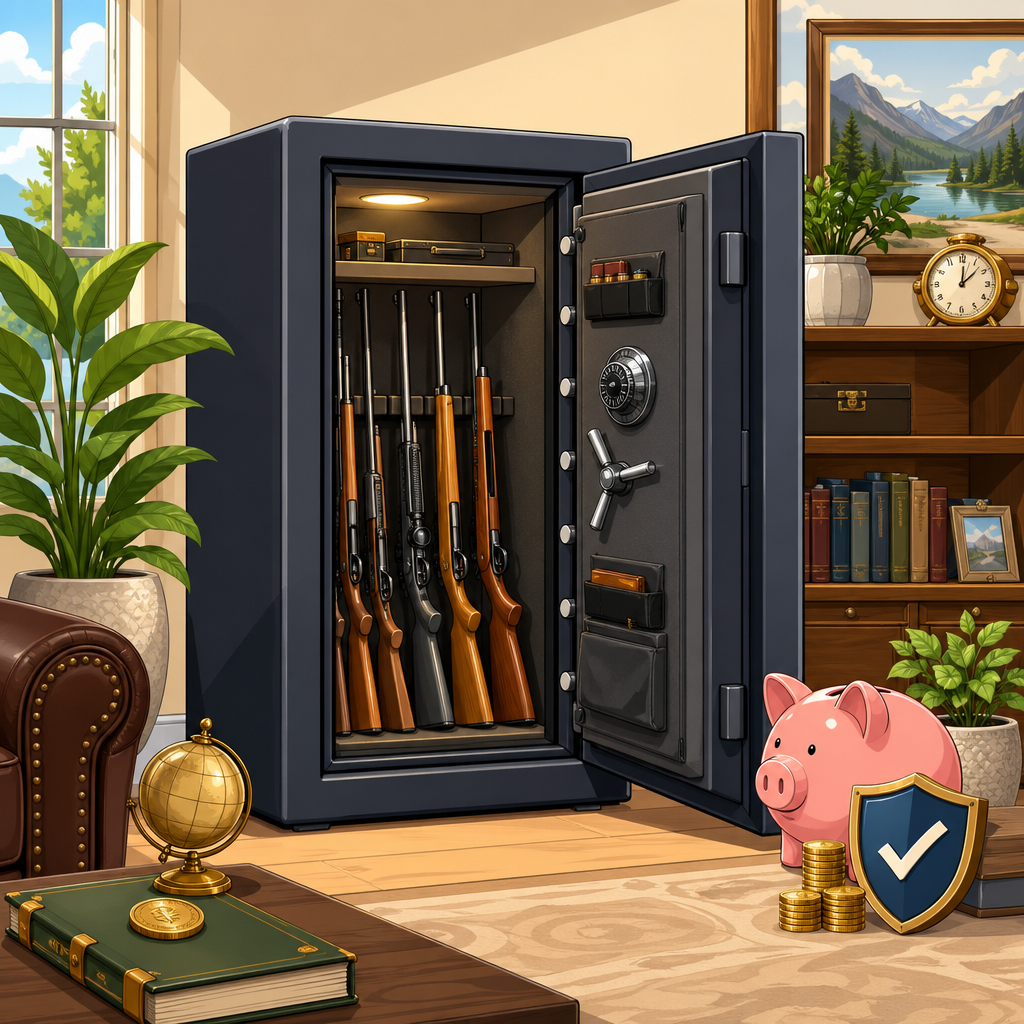
Choosing the best gun safes that offer long-term investment value starts with one practical idea: a safe is not just a box for firearms, but a durable security asset that protects property, supports responsible storage, and can save money over decades of ownership. In the gun safes and safety category, buying guides matter because most owners purchase one safe and expect it to perform for twenty years or more. A poor choice creates hidden costs through rust damage, broken locks, outgrown capacity, difficult installation, and weak burglary resistance. A strong choice preserves firearms, documents, optics, and heirlooms while reducing replacement risk and improving day-to-day access control.
When I evaluate long-term value, I look at four factors first: construction quality, fire protection, lock reliability, and total ownership cost. Construction quality means steel thickness, door fit, bolt design, weld integrity, and internal reinforcement. Fire protection refers to tested heat resistance, insulation type, door seals, and the difference between marketing labels and meaningful performance. Lock reliability includes mechanical dial locks, electronic keypads, redundant systems, and serviceability over time. Total ownership cost covers delivery, installation, dehumidification, maintenance, warranty support, and whether the safe remains useful as a collection grows. Those factors matter more than flashy interiors, decorative paint, or headline capacity claims based on unrealistically scoped rifles.
This buying guide is designed as a hub for anyone researching gun safe sizes, fire ratings, security levels, lock types, and price tiers. It covers the core questions shoppers ask before buying: What makes a safe a good investment? How much steel is enough? Which brands are known for value? Is a heavier safe always better? How should buyers compare entry-level, mid-range, and premium models? By answering those questions clearly, this page helps buyers narrow the field and identify the type of safe that keeps delivering value long after the first purchase.
What Long-Term Investment Value Means in a Gun Safe
Long-term investment value in a gun safe means the product continues to protect firearms effectively, remains functional with reasonable maintenance, and avoids premature replacement. In practical terms, the best gun safes balance up-front price with durability and future usefulness. A safe that costs less today but uses thinner steel, weak boltwork, and a low-grade keypad may become expensive later if it fails under attempted break-in, suffers lock issues, or fills up within a few years. By contrast, a well-built safe with a reinforced door, proven lock, and realistic capacity can serve multiple phases of ownership, from a few rifles to a mixed collection with handguns, suppressors, optics, ammunition, and paper records.
Value also depends on fit for purpose. A homeowner storing two hunting rifles in a low-crime area may get excellent return from a compact residential security container bolted to concrete and paired with a monitored alarm. A collector with transferable machine guns, engraved shotguns, or high-value optics needs thicker steel, higher burglary resistance, and stricter environmental control. The safe must match the collection, the risk profile, and the room where it will live. Overspending on luxury finish without improving security is not smart value. Underspending on a safe that cannot resist pry attacks is not value either. The goal is durable protection aligned with real use.
How to Judge Build Quality Before You Buy
The most important specification in any gun safe buying guide is steel thickness. Many retail models use 12-gauge or 14-gauge steel bodies, which can be adequate for basic deterrence when anchored well, but stronger long-term options often move into 10-gauge bodies or composite construction. Door steel matters even more because attacks focus there. A thick door plate, robust frame, internal hinges or protected external hinges, and full-length locking engagement increase resistance to pry tools. Weight is a clue, not proof. Some safes are heavy because of fireboard rather than steel, so buyers should read actual body and door specs instead of relying on shipping weight alone.
Welds, seams, and boltwork separate quality safes from lookalikes. Continuous welds are preferable to sparse stitch welds. Locking bolts should engage deeply and move smoothly without racking. More bolts do not automatically mean more security; bolt diameter, engagement depth, hard plate protection, relockers, and door frame design matter more than bolt count printed on a sales tag. I also look for UL-listed locks, drill-resistant hard plates, and relocker mechanisms that activate if the lock is attacked. These are not glamorous features, but they directly affect how a safe performs in a real burglary attempt.
| Feature | Budget Range | Mid-Range Value | Premium Long-Term Value |
|---|---|---|---|
| Body steel | 14 to 12 gauge | 12 to 10 gauge | 10 gauge or composite |
| Lock type | Basic electronic | UL-listed electronic or mechanical | High-grade mechanical or redundant |
| Fire rating | 30 to 45 minutes | 60 to 90 minutes | 90 minutes plus verified design |
| Capacity reality | Often overstated | Moderately realistic | Usually configurable interiors |
| Best buyer | Starter owner | Growing collection | Collectors and heirloom storage |
Fire Protection, Humidity Control, and Preservation
Fire ratings sell safes, but buyers should interpret them carefully. A label such as sixty minutes at 1,200 degrees Fahrenheit is only useful when paired with information about test method, internal temperature threshold, door seal design, and construction details. Fireboard thickness, layered insulation, and expanding intumescent seals can slow heat and smoke entry, but ratings vary widely across manufacturers. UL fire classifications exist for data and record protection, yet many gun safes use proprietary tests instead. That does not automatically make them bad, but it means comparison requires caution. For long-term investment value, prioritize a manufacturer that explains how the safe is built rather than one that relies on a large sticker and vague wording.
Humidity control is just as important as fire protection for long-term firearm preservation. I have seen quality blued rifles develop rust because owners focused on theft and ignored moisture. The best gun safe setup uses a dehumidifier rod or desiccant, a hygrometer, and enough airflow around stored guns to avoid trapped condensation. Basements, garages, and exterior walls create added risk because temperature swings can trigger internal moisture even when the room feels dry. Interior fabric and shelving should support organization, but they should not block airflow. If the safe will store wood-stocked hunting rifles, collectible handguns, optics, and paper documents, stable humidity around 45 to 50 percent is a reasonable target in most homes.
Lock Types, Access Speed, and Serviceability
Every gun safe buying guide should explain the tradeoff between convenience and long-term serviceability. Mechanical dial locks remain the benchmark for durability. They are slower, but high-quality models from Sargent and Greenleaf or La Gard can run for decades with minimal issues when used correctly. Electronic locks are faster and easier for daily access, especially for owners who open the safe frequently. Good electronic locks from established makers are reliable, but they depend on battery changes, proper keypad protection, and clean electronics. Cheap consumer-grade keypads are one of the first places cost cutting appears, and that matters because a failed lock can turn a value purchase into a costly locksmith call.
For true long-term value, buyers should ask who can service the lock ten years from now and whether replacement parts are standard. Redundant locks, such as a digital system backed by a mechanical key or second entry method, can be useful on quick-access handgun safes, but many full-size long-gun safes are better served by one proven lock rather than a complex setup. Regardless of type, verify UL listing, relocker presence, and hard plate protection. Also consider access pattern. A competition shooter opening a safe multiple times a week may reasonably prefer a quality electronic lock. A collector opening the safe less often may prefer the proven lifespan of a mechanical dial.
Size Planning, Interior Flexibility, and Real Capacity
Capacity claims in gun safes are notoriously optimistic. A safe marketed for thirty rifles rarely holds thirty modern long guns with scopes, slings, bipods, and varied stock shapes in a practical arrangement. Long-term investment value usually comes from buying larger than current needs suggest. A safe that seems oversized on day one can feel crowded after a few seasons of new purchases, inherited firearms, and added accessories. I generally advise shoppers to buy for at least fifty percent more capacity than their present collection. That margin protects the investment by delaying or eliminating the need for a second safe.
Interior flexibility matters almost as much as raw size. Adjustable shelving, modular racks, handgun door organizers, and space for document boxes make a safe useful across changing needs. Owners often start with hunting rifles and later add handguns, suppressors, magazines, optics, and valuables unrelated to firearms. A good interior adapts. Height matters for scoped rifles and long barrels. Door swing matters in tight rooms. External dimensions matter for moving through hallways and stairwells. Before purchase, measure the route, the floor load, and the final footprint. Installation mistakes are expensive, and they can undermine value if the safe ends up in a poor location simply because it would not fit where it belonged.
Brand Tiers, Price Bands, and Where Value Usually Lives
The best value in gun safes usually sits in the upper mid-range, where construction improves meaningfully without the steep premium of custom finishes and boutique branding. Entry-level options from stores like Tractor Supply or warehouse clubs can work for basic needs, especially from lines associated with Winchester, Cannon, or Stack-On, but buyers must read specifications closely because features vary significantly by model. Mid-range manufacturers such as Liberty, Browning, Rhino Metals, Sports Afield, and certain Winchester lines often offer the strongest blend of usable fire protection, acceptable steel, decent interiors, and established service networks. Premium makers including Fort Knox, AMSEC, Graffunder, and some heavier Liberty or Browning lines serve buyers who want thicker steel, more customization, and stronger long-term resale confidence.
AMSEC is a useful example because its lineup spans true value tiers. Its entry products cover common household storage needs, while models like the BF series have long been respected for combining serious burglary resistance with practical fire protection. Fort Knox is often chosen by buyers who want customization and heavier construction. Liberty has broad market reach and good dealer support, which matters when service and delivery are part of the ownership equation. Browning often wins on interior organization. No brand is universally best. The right question is which line within a brand gives the most steel, lock quality, and interior utility for the money, while still fitting your collection and threat model.
Installation, Anchoring, and Hidden Ownership Costs
A gun safe can lose much of its security value if it is poorly installed. Even a heavy residential safe can be tipped, pried, or removed with dollies if it is not anchored. Bolting to concrete is the standard recommendation. On framed floors, anchoring requires checking joist structure and load distribution. Placement should reduce visibility, limit pry access, and keep the back or sides near walls when possible. Closet installations, corner placement, and alarm coverage all improve real-world performance. Delivery is not a minor line item. Professional movers with stair equipment and safe experience are worth paying for because damage to flooring, walls, or the safe body can quickly erase any savings from bargain shipping.
Hidden costs include electrical access for lighting or dehumidifiers, replacement shelving, maintenance, insurance documentation, and lock service. A safe in a damp basement may need a GoldenRod, rechargeable desiccants, and periodic humidity checks. Electronic locks need battery discipline. Painted exteriors in garages may suffer corrosion faster than expected in coastal climates. Buyers should also think about warranty terms. A lifetime fire and break-in warranty sounds strong, but read who pays freight, who authorizes service, and how quickly parts are supplied. Long-term value is built on total ownership planning, not just the sticker price on a holiday sale.
How to Choose the Best Gun Safe for Your Budget
For most buyers, the best gun safe is the one that fits the collection, the home, and the risk level without forcing compromise on core security features. If the budget is under one thousand dollars, focus on honest expectations: buy the strongest steel body available, insist on anchor capability, choose a reputable lock, and accept that fire protection may be basic. In the one-thousand-to-three-thousand-dollar range, value improves substantially. This is where many homeowners find the sweet spot for a larger safe with better boltwork, a useful fire rating, adjustable interior layouts, and stronger dealer support. Above that range, buyers should expect measurable gains in steel thickness, fit and finish, lock options, and customization, not just nicer upholstery.
The clearest takeaway from this buying guide is that long-term investment value comes from disciplined comparison. Read steel specs, not marketing slogans. Verify lock pedigree, fire construction, and warranty details. Buy larger than your current collection requires, install the safe correctly, and control humidity from day one. Brands matter, but model-level details matter more. A well-selected gun safe protects firearms, preserves heirlooms, supports safe storage practices, and avoids replacement costs for years. Use this hub as your starting point, then compare size guides, fire-rating breakdowns, lock-type articles, and brand reviews to choose a safe that will still feel like a smart purchase a decade from now.
Frequently Asked Questions
What makes a gun safe a good long-term investment instead of just a storage purchase?
A gun safe becomes a strong long-term investment when it delivers lasting value well beyond basic firearm storage. The best models protect against theft, fire, humidity, and unauthorized access while remaining dependable for decades. That matters because most buyers do not replace safes often. A well-built safe can serve the same owner for twenty years or more, which means the original purchase price should be judged against long-term performance rather than short-term savings.
Investment value comes from several factors working together. First is construction quality. Thicker steel, reinforced doors, reliable locking systems, and strong bolt work help a safe stay effective over time. Second is usable capacity. Many buyers underestimate how quickly a firearm collection, important documents, optics, and valuables can outgrow a small interior. Choosing a safe with realistic room for future needs helps avoid the hidden cost of upgrading too soon. Third is environmental protection. Interior dehumidification options, better door seals, and organized shelving can reduce rust, wear, and accidental damage that would otherwise lower the value of stored items.
A good gun safe can also produce financial value in indirect ways. It may help reduce the chance of theft loss, support responsible ownership practices, and potentially contribute to lower insurance concerns depending on the policy and provider. Just as important, a durable safe holds its functional usefulness for years, while a cheap model that develops lock failures, corrosion, or structural weaknesses often costs more in repairs, replacement, or damaged contents. In that sense, the best gun safes are not simply containers. They are long-life security assets that protect both property and peace of mind.
Which features should buyers prioritize if they want a safe that will still be worth owning in 20 years?
If long-term ownership is the goal, buyers should focus on features that affect durability, security, and adaptability. Steel thickness is one of the first things to examine because it influences pry resistance and overall structural strength. A heavier, better-built body and door generally indicate a more serious safe. Door construction also matters. Composite doors, reinforced frames, internal hinges designed for strength, and solid locking bolts can all improve long-term security performance.
The lock type is another major decision. High-quality mechanical dial locks are valued for their simplicity and track record, while premium electronic locks offer speed and convenience. Either can be a smart choice if the lock is made by a reputable manufacturer and supported by a good warranty. What matters most is avoiding low-end components that are more likely to fail after years of use. Buyers should also look at fire protection carefully. Fire ratings are useful, but they should be considered alongside door seals, construction methods, and overall brand credibility rather than marketing claims alone.
Interior flexibility is often overlooked, yet it directly affects investment value. Adjustable shelving, modular storage, door organizers, and room for accessories make a safe more likely to fit changing needs over time. Anchoring capability is also essential. Even a well-built safe loses value as a security investment if it can be removed easily. Finally, warranty support and brand reputation matter because a long-term product should come from a company known for service, replacement parts, and dependable customer support. In practical terms, the safest long-term purchase is usually the one that balances strong physical protection, a trusted lock system, realistic capacity, and proven manufacturer support.
How important is safe size when evaluating long-term value?
Safe size is one of the most important parts of long-term value because capacity problems are among the most common reasons owners regret a purchase. Many safes are marketed by an optimistic firearm count that does not reflect real-world use with scopes, slings, tactical stocks, shelves, document storage, and spacing needed to prevent scratches or crowding. A safe labeled for a certain number of long guns may hold far fewer in a practical setup. If the interior fills up too quickly, the owner may be forced to add another safe or replace the original one earlier than expected, which lowers the value of the first purchase.
Buying a slightly larger safe than current needs usually makes financial sense. Firearm collections often change over time, and many owners eventually store handguns, ammunition, passports, jewelry, family documents, hard drives, and other valuables in the same unit. A larger interior with adjustable storage gives the safe more useful life and makes it easier to stay organized. That organization matters because cramped storage can lead to dings, pressure on optics, and inconvenience that discourages proper use.
However, bigger is not always better if it compromises placement, flooring support, or budget to the point that construction quality suffers. The goal is to buy the largest safe that comfortably fits the space, can be properly installed, and still meets standards for steel strength, locking quality, and fire protection. In long-term investment terms, size should be viewed as a hedge against future replacement costs. A safe with room to grow usually offers better ownership value than a bargain model that is already too small on the day it is installed.
Do more expensive gun safes really save money over time?
In many cases, yes, a more expensive gun safe can save money over time if the higher price reflects genuinely better materials, engineering, and reliability. The key is distinguishing meaningful quality from branding or cosmetic upgrades. A well-made safe can reduce the risk of theft, fire damage, moisture issues, lock replacement, and premature obsolescence. Those benefits add up over years of ownership, especially when the safe is protecting firearms, optics, legal documents, and other valuables with much higher replacement costs than the safe itself.
Less expensive safes often look appealing at first because they reduce upfront spending, but hidden costs can emerge later. Thin steel may offer less resistance to attack. Inferior locking systems may create maintenance headaches. Weak interiors may not handle real storage needs. Poor seals and inadequate moisture control can contribute to rust and corrosion, especially in humid areas. If the owner must repair, upgrade, replace, or supplement the safe within a few years, the original savings can disappear quickly.
That said, the most expensive model is not automatically the best investment. Long-term value comes from paying for the features that matter most to your situation. For some buyers, a mid-range safe from a reputable brand with solid steel construction, a reliable lock, anchoring capability, and practical interior space may deliver better value than a luxury model with features they will never use. The smartest approach is to calculate total ownership value: expected lifespan, likelihood of replacement, protection level, maintenance needs, and ability to serve future needs. When viewed that way, spending more upfront on proven quality often turns out to be the more economical decision.
How can buyers tell whether a gun safe brand is truly built for long-term ownership?
One of the best ways to judge a gun safe brand is to look beyond marketing language and focus on evidence of durability, support, and product consistency. A brand built for long-term ownership usually provides clear specifications on steel thickness, lock options, fire ratings, bolt design, and internal features rather than relying on vague promises. Reputable manufacturers also tend to offer stronger warranties and have established service networks for lock issues, replacement parts, and other support needs that may arise years after purchase.
Customer experience over time is especially useful. Instead of reading only first-impression reviews, buyers should look for feedback from owners who have had the safe for several years. Comments about lock reliability, door alignment, finish durability, shelf performance, and customer service response can reveal whether the brand stands up to real-world use. Dealer reputation also matters. Experienced safe dealers often know which brands produce fewer service problems and which models have a history of holding up well after installation and repeated use.
Another sign of long-term quality is thoughtful design. Brands that build safes for extended ownership usually pay attention to practical details such as reinforced anchor points, adjustable interiors, replaceable components, and door organization systems that keep the safe useful as storage needs change. They also tend to source better lock systems and maintain more consistent manufacturing standards. In the end, a trustworthy brand is one that combines transparent specifications, dependable support, proven field performance, and product designs that remain functional for decades. That combination is what gives a safe lasting investment value rather than temporary appeal.