
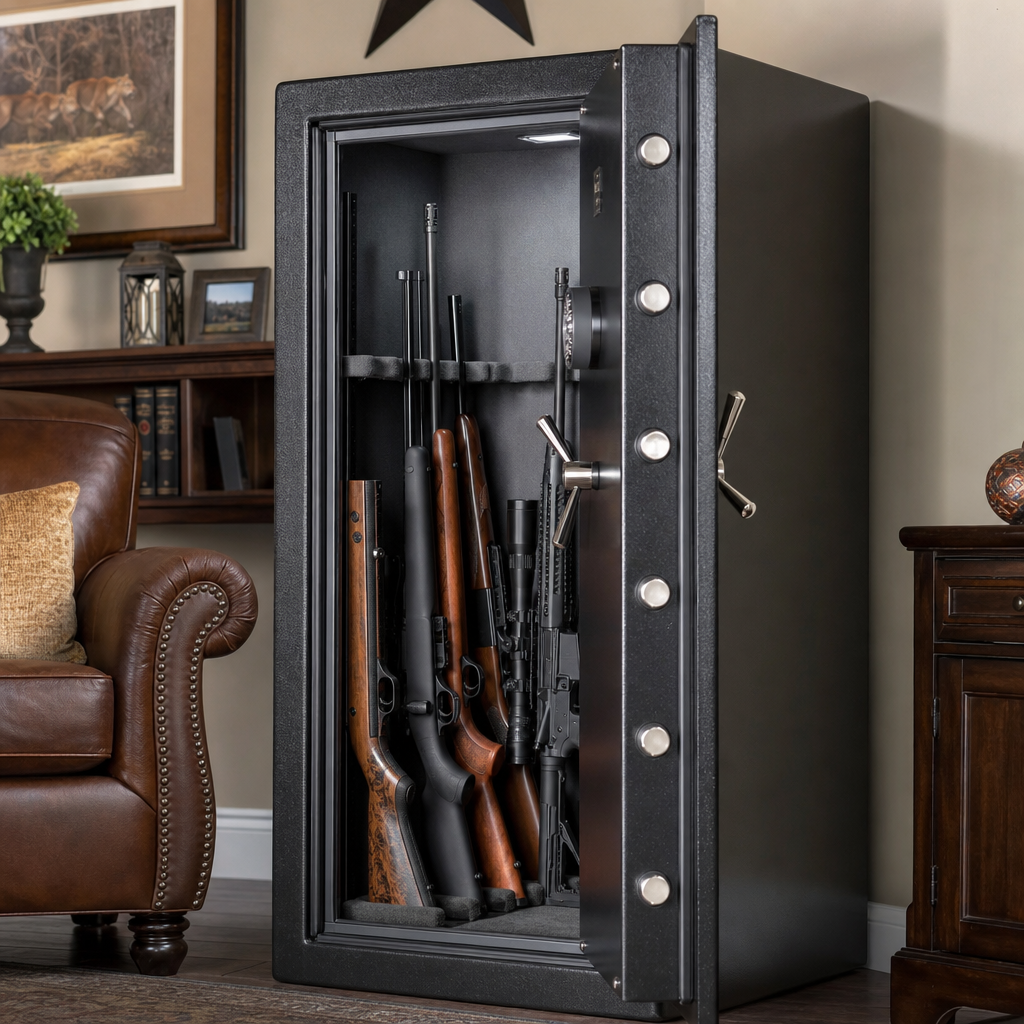
Fireproof gun safes with advanced heat seals are the core of disaster-resistant firearm storage because they are built to protect weapons, ammunition documents, and valuables from the two threats most likely to destroy them in a home emergency: extreme heat and water intrusion. In practical terms, a fireproof gun safe is a reinforced steel enclosure tested to maintain an interior below damaging temperatures for a stated period, while advanced heat seals are expanding intumescent gaskets that swell when exposed to heat and help block smoke, flame, and hot gases at the door gap. For gun owners, that distinction matters. A locking cabinet may stop casual theft, but it will not preserve firearms through a structure fire, and a generic home safe may not fit long guns or resist pry attacks. Over years of evaluating safes, reviewing fire test data, and inspecting failed units after real incidents, I have learned that the best protection comes from matching verified fire performance, robust door sealing, and correct installation to the actual risks in your home. This hub explains how fire ratings work, what advanced heat seals really do, which construction details separate strong models from weak ones, and how to choose a safe that performs when a house fire, burst pipe, hurricane, or wildfire turns a storage problem into a survival problem.
What Fireproof Really Means in Gun Safe Design
Fireproof is often used loosely, but in the gun safe market it should mean a safe designed with layered insulation, a heat-reactive door seal, and a tested time-and-temperature rating. The purpose is not to keep the outside cool; that is impossible in a major fire. The purpose is to delay heat transfer long enough that the interior stays below the threshold where wood stocks char, optics fail, adhesives soften, polymer parts deform, and critical documents ignite. Paper typically chars around 350 degrees Fahrenheit, and many safe makers use that benchmark for document protection. Firearm finishes and lubricants can be affected at lower or higher temperatures depending on exposure time, humidity, and direct contact with heated interior surfaces.
Most quality gun safes achieve fire resistance with gypsum-based boards, ceramic wool, proprietary poured insulation, or layered composite construction. Door thickness alone is not a fire rating. Heavy steel is valuable for security, but steel also conducts heat, which is why insulation and seals matter more than raw weight in a fire scenario. Advanced heat seals address the weakest point in almost every safe: the perimeter gap around the door. When temperatures rise, the gasket expands several times its original size, filling small openings that otherwise admit smoke and superheated air. This can make the difference between a smoky, humid interior and a survivable environment for firearms and records.
The best models also account for secondary disaster effects. During suppression, thousands of gallons of water may hit the safe. In hurricanes and severe storms, floodwater and wind-driven rain can attack seams and lock areas. In garages, detached shops, and basements, rapid temperature swings create condensation that corrodes metal long before a fire occurs. That is why disaster-resistant storage should be understood as a system, not just a label on a sales tag.
How Fire Ratings, Heat Seals, and Testing Standards Should Be Evaluated
The safest buying approach is to treat every published fire rating as a claim that needs context. A label such as 60 minutes at 1200 degrees Fahrenheit sounds precise, but buyers need to ask who performed the test, how the safe was instrumented, whether the safe was preheated, and what internal temperature threshold counted as passing. Independent testing from recognized laboratories carries more weight than a manufacturer’s internal protocol. UL 72 is the most respected standard for record protection, though many residential gun safes are not certified to the full standard because testing is expensive. That does not automatically make a safe poor, but it does mean the buyer should examine the manufacturer’s methodology closely.
In field evaluations, I look for three signs that a fire rating is credible. First, the company discloses the external temperature and test duration clearly. Second, the construction details support the claim, such as multiple insulation layers, a full door frame seal, and substantial door overlap. Third, the safe has a realistic relationship between size and rating. A very large safe advertised with a high rating but minimal weight often signals thin steel and light insulation. By contrast, brands such as Fort Knox, Liberty Safe, AMSEC, Hollon, Browning, and Rhino typically explain their fire packages in more technical detail, including insulation type, door seals, and body thickness.
Advanced heat seals deserve their own scrutiny. The best versions are continuous perimeter seals mounted where expansion closes the entire door edge uniformly. Some safes use a single gasket; better units may combine an intumescent seal for heat with a smoke seal for ambient conditions. If a manufacturer mentions “Palusol” or another named intumescent material, that is usually a positive sign because it indicates a defined fire sealing product rather than generic weather stripping. Seals alone cannot create a fireproof safe, but a good fireproof safe almost always uses them.
Features That Separate the Best Fireproof Gun Safes From Basic Models
The best fireproof gun safes with advanced heat seals combine security engineering and fire engineering in the same enclosure. In real buying decisions, six features matter most: steel thickness, insulation design, door seal system, lock quality, boltwork, and anchoring provisions. Steel thickness is usually listed in gauge. Lower gauge numbers are thicker; for example, 10-gauge steel is thicker than 14-gauge steel. Many entry-level residential gun safes use 14-gauge or 12-gauge bodies, while stronger models move to 10-gauge, 7-gauge, or composite bodies with plate steel doors. Door construction often matters more than body thickness because the door is the primary attack point.
Insulation design varies widely. Drywall-style fireboard is common and can perform adequately when layered correctly, but poured concrete amalgamate or proprietary composite fills often provide more mass and better thermal buffering. Door seals should be continuous and protected from accidental peeling or compression damage. Boltwork should engage on multiple sides, and hard plates should protect the lock against drilling. For locks, a UL-listed mechanical dial remains the durability benchmark, while quality electronic locks from SecuRam, Sargent and Greenleaf, and La Gard offer faster access if the safe is kept in a climate-controlled area and batteries are maintained.
Interior design also affects disaster resilience. Adjustable shelving, barrel rests, and door organizers are useful, but the better fire-resistant interiors include soft liners that reduce finish damage and elevated floor sections that keep firearms slightly above any water entering the base. Dehumidifier ports, internal power outlets, and anchor holes should be sealed carefully so they do not become weak points for moisture or heat leakage. In premium builds, you will often see robust external hinges paired with recessed doors and deep jambs, a design that improves both pry resistance and seal performance.
Top Fireproof Gun Safe Categories and Who They Suit Best
There is no single best fireproof gun safe for every buyer because collection size, home layout, local fire response times, and theft risk differ sharply. The strongest category for most serious owners is the heavy residential security safe with a 60 to 120 minute fire rating, continuous intumescent door seal, and at least a 10-gauge body. This is the sweet spot for owners storing several long guns, optics, suppressor paperwork, and passports in a primary residence. It offers meaningful burglary resistance without moving into the price and weight of a true high-security composite safe.
For collectors or rural homeowners with longer fire department response times, premium composite safes from manufacturers like AMSEC or Fort Knox are often the better fit. These units usually cost more and weigh substantially more, but they provide thicker bodies, better fire mass, and stronger doors. In wildfire-prone areas, that additional fire margin is not theoretical. Homes can be exposed to prolonged radiant heat and repeated ember attack even without a direct internal blaze. A safe with a higher-end seal system and denser insulation gives more time before the interior reaches damaging temperatures.
Apartment owners or buyers with limited floor load capacity may need a compact fire-rated safe rather than a full-size long-gun model. In that case, prioritize certified fire resistance, a real heat seal, and anchor capability over claimed gun capacity. Capacity numbers are routinely optimistic. A “24-gun” safe may hold far fewer modern rifles once optics, bipods, and slings are considered. Buy for at least thirty percent more space than your current collection requires. That extra room improves organization and reduces stock and optic damage during hurried retrievals or post-disaster inspections.
| Safe category | Best for | Typical strengths | Main tradeoff |
|---|---|---|---|
| Entry fire-rated residential safe | New gun owners, smaller collections | Affordable, basic heat seal, moderate fire delay | Thinner steel, lower burglary resistance |
| Mid-tier heavy residential safe | Most households with long guns and documents | Better steel, stronger boltwork, 60 to 90 minute ratings | Higher cost and delivery complexity |
| Premium composite safe | Collectors, rural homes, wildfire zones | Superior insulation mass, robust seals, stronger doors | Very heavy and expensive |
| Compact fire-rated safe | Apartments, closets, document plus handgun storage | Smaller footprint, easier placement, useful for essentials | Limited long-gun capacity |
Water, Humidity, Flooding, and Other Disaster Risks Beyond Fire
Fire is the headline risk, but water causes more long-term loss than many owners expect. After a structure fire, firearms that survive heat exposure may still rust rapidly if they remain in a sealed, wet safe for days. Flooding creates even harsher conditions because silt, contaminants, and standing moisture attack metal finishes, optics internals, and wooden stocks. A safe marketed as fireproof is not automatically waterproof. Some brands specify limited water resistance based on door seals and body construction, while others make no such claim. If flood exposure is possible, place the safe above known flood levels when practical, use desiccants or an electric dehumidifier, and store irreplaceable documents in secondary sealed containers inside the safe.
Humidity control is critical in basements, coastal climates, and detached buildings. GoldenRod dehumidifiers, rechargeable silica packs, and wireless hygrometers are simple additions that materially improve firearm preservation. I recommend checking interior relative humidity regularly and aiming for roughly 45 to 50 percent for mixed storage. Too much moisture promotes corrosion; too little can dry wood components. After any nearby fire or sprinkler event, open the safe as soon as conditions are secure, remove firearms, wipe them down with a corrosion inhibitor, and inspect optics for fogging or seal failure.
Disaster resistance also includes physical placement. Avoid garages if possible because vehicle fuel loads, tools, and temperature extremes increase risk. If the garage is the only option, choose a higher-rated safe, elevate it slightly above the slab, and anchor it properly. In multi-story homes, consult a contractor or engineer before placing a thousand-pound safe on a framed floor. The ideal location is usually a ground-floor interior corner with limited exterior wall exposure, low visibility, and easy anchoring into concrete or substantial framing.
Buying, Installing, and Maintaining a Safe That Will Perform Under Stress
Buying the right model is only half the job. Installation determines whether a safe performs under theft pressure and whether it stays stable during a disaster. Always anchor the safe using the manufacturer’s specified hardware and substrate recommendations. An unanchored safe can be tipped for pry attacks, moved to a less secure location, or shifted by floodwater and collapse debris. Professional delivery is usually worth the cost for safes over several hundred pounds, especially when stairs, tile, or tight turns are involved.
Before purchase, verify external dimensions, door swing clearance, and interior usable volume, not just listed capacity. Ask whether the fire rating includes the door, body, and top uniformly. Confirm whether the lock is UL listed and whether the safe includes relockers, hard plate, and internal hinges or an equivalent anti-pry design. Review warranty terms carefully. Some manufacturers offer fire replacement warranties, but details vary regarding freight, installation, and proof of loss. Good service after a disaster matters almost as much as the original rating.
Maintenance is straightforward but often ignored. Replace electronic lock batteries annually with name-brand alkaline batteries if recommended by the manufacturer. Inspect the door seal for damage, debris, or paint buildup that could affect closure. Test the dehumidifier, monitor humidity, and keep an updated inventory with photos, serial numbers, and receipts stored securely offsite or in encrypted cloud storage. For owners with NFA items, suppressors, or high-value optics, a documented inventory speeds insurance claims and law enforcement reporting after a fire or break-in. The best fireproof gun safe is not just a box; it is part of a documented, maintained protection plan built to preserve assets when ordinary storage fails.
Fireproof and disaster-resistant storage comes down to a clear formula: credible fire performance, advanced heat seals, solid burglary resistance, correct placement, and consistent maintenance. The best fireproof gun safes protect more than firearms. They preserve serial-numbered assets, legal documents, optics, heirlooms, and recovery options after a crisis. When comparing models, ignore inflated capacity claims and focus on verified fire ratings, continuous intumescent seals, steel thickness, lock quality, and anchorability. Then consider the broader hazards in your area, including humidity, flooding, wildfire exposure, and emergency response times.
As the hub for fireproof and disaster-resistant storage, this topic should guide every related buying decision you make. A safe that survives heat but fails at moisture control is incomplete. A secure cabinet without a real fire seal is incomplete. A premium safe installed badly is incomplete. Build the full system and you dramatically improve the odds that your firearms and essential records remain intact when the unexpected happens. Use this page as your starting point, compare the subtopics in your buying checklist, and choose a safe that is engineered for the conditions your home actually faces today and over time.
Frequently Asked Questions
1. What makes a fireproof gun safe with advanced heat seals better than a standard gun safe?
A fireproof gun safe with advanced heat seals is designed to address the two biggest risks in a home emergency: intense heat and water intrusion. A standard gun safe may offer basic theft deterrence, but it often lacks the layered protection needed to keep firearms, ammunition, important documents, optics, and other valuables safe during a serious house fire or after fire-suppression efforts. The key difference is that a true fire-rated safe is built and tested to hold interior temperatures below a threshold that could damage sensitive contents for a specific amount of time, such as 30, 60, 90, or even 120 minutes.
Advanced heat seals add another critical layer of defense. These are typically intumescent seals that expand dramatically when exposed to high temperatures. As they swell, they close the small gaps around the door opening that would otherwise allow heat, smoke, and hot gases to enter the safe. That matters because many items stored in a gun safe, including wood stocks, polymer components, paperwork, and electronics, can be damaged not just by direct flame, but by superheated air and smoke infiltration. In many cases, the seal is also part of the safe’s resistance to water and steam intrusion, which is especially important after sprinklers activate or firefighters hose down the area.
In short, the best fireproof gun safes are more than heavy metal boxes. They combine reinforced steel bodies, fire-resistant insulation, robust door construction, and expanding heat seals to create a far more protective storage environment. If your goal is true disaster resistance rather than simple locking storage, those features make a meaningful difference.
2. How do fire ratings on gun safes actually work, and what should buyers pay attention to?
Fire ratings tell you how long a safe is designed to protect its contents at a specified external temperature while keeping the interior below a damaging level. For example, a safe might be rated for 60 minutes at 1,200 degrees Fahrenheit or 90 minutes at 1,400 degrees Fahrenheit. That sounds straightforward, but buyers should understand that not all fire ratings are created equal. Some are based on independent testing by recognized laboratories, while others come from manufacturer testing or internal standards. Independent verification generally carries more weight because it gives you a better sense that the safe has been evaluated under repeatable, documented conditions.
One of the most important details is the internal temperature limit used during testing. Paper can begin to char around 350 degrees Fahrenheit, but other items commonly stored in a gun safe, such as digital media, photographs, optics, batteries, and polymer accessories, may be damaged at lower temperatures or by humidity and steam. That is why the rating itself should be viewed as a useful benchmark, not an absolute guarantee that every item inside will come through untouched. The higher the quality of insulation, door design, and sealing system, the better the odds of preserving a wide range of contents.
Buyers should also pay attention to realistic household conditions. A safe placed in a garage, workshop, or room with high fuel loads may face more severe fire exposure than one installed on a ground floor inside a climate-controlled part of the home. Likewise, safes on upper floors can be vulnerable if a structure collapses during a prolonged blaze. The smartest approach is to compare the fire duration, external test temperature, insulation design, and seal technology together, rather than shopping by minutes alone. A well-built safe with advanced heat seals and credible testing is usually a better investment than a cheaper model with a vague or inflated fire claim.
3. Do advanced heat seals also protect against water damage, smoke, and humidity?
Yes, advanced heat seals can contribute to protection against water, smoke, and moisture, but it is important to understand exactly what they are designed to do. In a fire, intumescent heat seals expand as temperatures rise, forming a tighter barrier around the door frame. That barrier helps slow the entry of hot gases, smoke, and heat, which are major causes of damage inside a safe. Because the seal closes the door gap more aggressively during extreme heat, it can also reduce the amount of water vapor and steam that reaches the interior in a fire event.
Many fireproof gun safes also include door seals intended to help resist water from sprinklers, fire hoses, or minor flooding. However, water resistance is not always the same as being waterproof. Some safes are built to withstand standing water for a specified period and depth, while others simply offer basic protection from incidental exposure. If flood risk is part of your concern, you should look for explicit water-resistance claims rather than assuming every fire seal will perform like a waterproof gasket. The two functions can overlap, but they are not identical.
Humidity is a separate issue. Heat seals are excellent for emergency protection, but they are not a complete solution for long-term moisture control. Firearm storage often requires active humidity management to prevent rust, corrosion, and stock damage over time. That is why many owners add dehumidifier rods, desiccant packs, or climate-monitoring devices inside the safe. The best setup combines a fire-rated safe with advanced heat seals for emergency defense and an internal humidity-control plan for day-to-day preservation. Together, those measures provide far better all-around protection for firearms and valuables.
4. What features should I look for when choosing the best fireproof gun safe for my home?
Start with the core protective features: a credible fire rating, advanced expanding heat seals, heavy-gauge steel construction, and a strong locking mechanism. These are the foundation of a quality fireproof gun safe. A longer fire rating is generally better, but construction quality matters just as much. Look for solid door thickness, reinforced locking bolts, pry-resistant designs, and secure hinges. If possible, choose a safe from a manufacturer with transparent testing information and a strong reputation for build quality rather than relying on marketing language alone.
Capacity and interior layout are also critical. Many gun owners outgrow their first safe because advertised capacity numbers are often optimistic and based on tightly packed rifles without optics, slings, or accessories. If you plan to store scoped rifles, handguns, documents, ammunition, and jewelry or heirlooms, buy more space than you think you need. Adjustable shelving, door organizers, pistol racks, and dedicated document compartments can make a major difference in usability. A safe that protects your belongings but forces poor organization is less convenient and often less secure in day-to-day use.
You should also evaluate access and installation. Electronic locks offer quick entry, while mechanical dial locks are valued for simplicity and long-term durability. Some buyers prefer biometric options, especially for rapid access, but quality varies widely, so reliability matters more than novelty. Finally, think about where the safe will be placed. The best safe performs better when it is anchored properly, positioned on a solid surface, and installed in a location that minimizes exposure to theft and extreme fire conditions. A larger, well-anchored safe with strong fire protection and advanced seals is usually the best long-term choice for homeowners serious about firearm safety and disaster preparedness.
5. How can I get the best performance from a fireproof gun safe after I buy it?
Proper installation and maintenance play a major role in how well a fireproof gun safe performs. First, anchor the safe according to the manufacturer’s instructions. Bolting it down improves security against theft and can also help keep the safe in place during structural disturbance or fire response. Placement matters too. A ground-floor location on a concrete slab is often preferable because it reduces the risk of a safe falling through weakened flooring during a fire. Avoid damp areas unless the safe is specifically suited for them, and try not to place it in direct contact with persistent moisture sources.
Inside the safe, organize contents with both protection and airflow in mind. Avoid overpacking, especially around documents and sensitive gear, because crowded interiors can trap moisture and make inspection harder. Use desiccants or an electric dehumidifier to control humidity, and check them regularly. Firearms should be cleaned and lightly protected against corrosion before long-term storage. Important papers, passports, title documents, and backup drives should be placed in additional fire-resistant sleeves or boxes if they are especially valuable or sensitive, since layered protection always helps.
You should also inspect the safe periodically. Check the door alignment, locking mechanism, anchoring hardware, and seal condition. Advanced heat seals are usually passive and durable, but they should still be kept clean and free of damage that could compromise door closure. If your home has experienced a minor fire, smoke event, or significant water exposure, have the safe inspected before assuming everything is still functioning as intended. The best fireproof gun safe is not a set-it-and-forget-it purchase; it is part of a broader storage strategy. With proper setup, climate control, organization, and routine checks, you will get the strongest possible protection from the safe’s fire rating and advanced heat-seal system.