
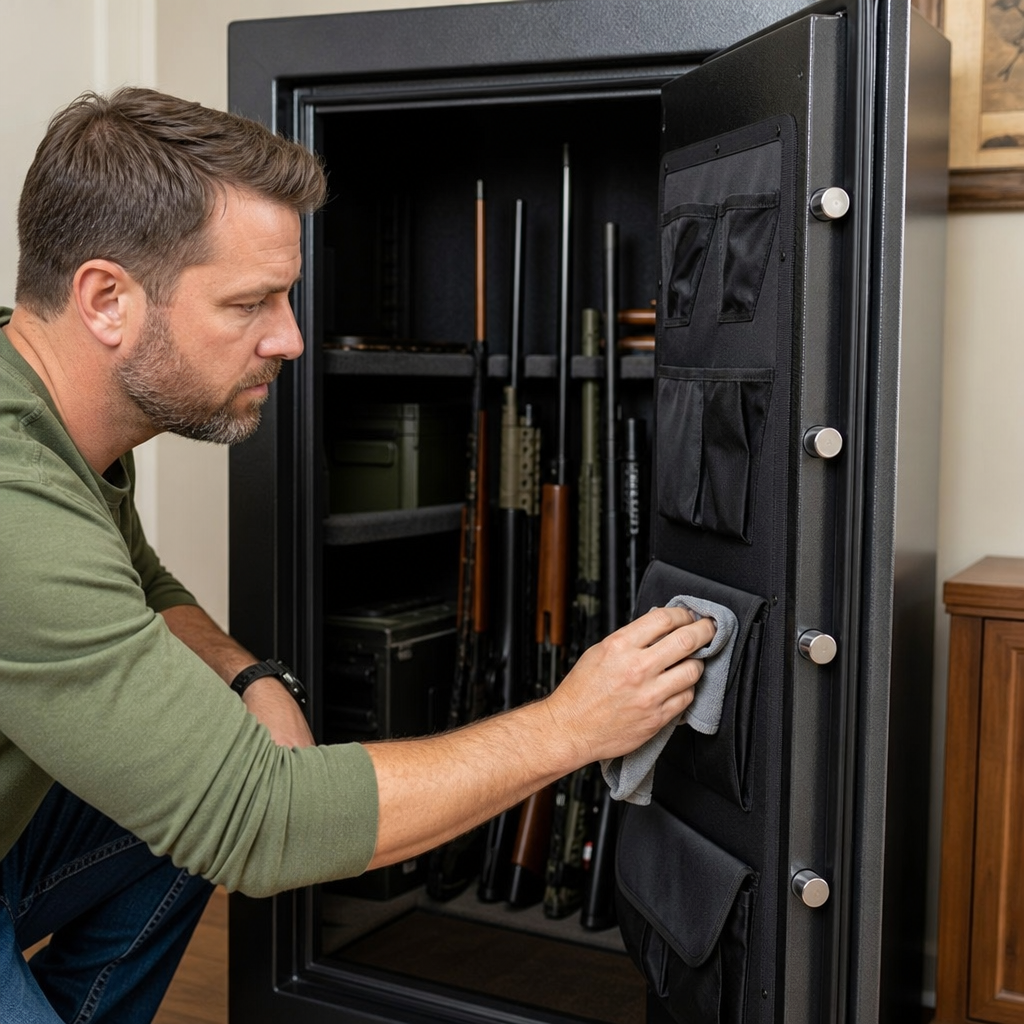
A gun safe’s fire rating is not a permanent guarantee. It is a system made of steel, insulation, seals, hinges, lockwork, and placement choices that must stay intact if you expect the safe to protect firearms, documents, and valuables during a real house fire, flood, or structural collapse. Knowing how to maintain the fireproofing of your gun safe over time is essential because heat resistance degrades when seals dry out, insulation absorbs moisture, boltwork shifts, or owners unknowingly drill, modify, or overload the unit.
In practical terms, fireproofing means the safe is designed to keep the interior below a target temperature for a stated period under controlled test conditions. Most manufacturers describe this with a rating such as 30, 60, 90, or 120 minutes at an external temperature, often between 1200 and 1700 degrees Fahrenheit. Disaster-resistant storage goes further. It includes water resistance from fire hoses or sprinklers, smoke protection, humidity control, anchoring against tip-over, and room placement that reduces exposure. A gun safe can be sold as fire-rated yet still perform poorly in a real emergency if maintenance is neglected.
I have seen this firsthand during safe moves, warranty inspections, and post-fire evaluations: the safes that hold up best are rarely the newest or most expensive. They are the ones owners inspect, clean, dehumidify, and operate correctly year after year. This hub article explains the complete maintenance picture for fireproof and disaster-resistant storage, including what parts age, how environmental conditions affect performance, what inspection schedule works, and when repair or replacement is the smarter choice. If you want your safe’s label to mean something when conditions turn severe, ongoing maintenance is the difference.
Understand what parts actually provide fire protection
The first step in maintaining fireproofing is knowing what creates it. In most residential gun safes, fire resistance comes from layers of gypsum-based board, proprietary composite insulation, ceramic wool, or poured concrete-like barriers installed between steel walls. These materials slow heat transfer and, in some designs, release chemically bound water vapor as temperature rises, which helps absorb heat. Around the door opening, an intumescent seal expands during high heat to close small gaps and block smoke and hot gases. A tight door fit, correctly aligned hinges, and intact locking bolts all support that seal.
This matters because owners often focus on the steel thickness and overlook the thermal system. Thick steel improves security, but steel is a heat conductor. The insulation package and door seal determine whether the interior remains below approximately 350 degrees Fahrenheit, the threshold commonly used to protect paper. Firearms, optics, ammunition, wood stocks, passports, backup drives, and heirlooms each have different heat tolerances, so maintenance decisions should reflect what you store. If your safe protects optics, suppressor paperwork, or digital media, your margin for error is smaller than the marketing label suggests.
Manufacturer testing also has limits. Some brands use independent testing through laboratories such as Intertek or UL, while others rely on internal protocols. The exact ramp rate, peak temperature, cool-down phase, and pass criteria vary. That does not make every claim unreliable, but it means maintenance should be conservative. Treat the published fire rating as a baseline achieved by an undamaged, properly installed safe in controlled conditions, not as a lifetime promise immune to wear, humidity, impact, or modification.
Inspect seals, gaps, and door alignment on a fixed schedule
The most important recurring task is checking the door opening. The expanding fire seal only works when it is continuous and the door closes evenly against the frame. Inspect the perimeter every three to six months with a flashlight. Look for cracked, brittle, peeling, compressed, or missing sections of seal material. Run your fingers lightly along the gasket channel and door edge to feel for interruptions. If dust, oil residue, or adhesive breakdown is present, clean only as the manufacturer recommends; harsh solvents can damage seal compounds.
Door alignment deserves equal attention. A heavy safe door can sag over time, especially after rough moves, repeated overloading of door organizers, or installation on an uneven floor. Warning signs include rubbing, uneven bolt engagement, latch resistance, visible daylight at one corner, or a changed sound when the door closes. In a fire, even a small gap can admit superheated gases before the intumescent material fully expands. I tell owners to perform a simple paper test at several points around the perimeter: close the door on a strip of paper and check whether resistance feels consistent when pulling it free.
If the safe fails that basic test, do not assume lubrication will fix it. The issue may be hinge wear, body twist, anchor tension, or floor settlement. Many premium safes allow hinge or striker adjustments, but those should follow the factory procedure exactly. Unauthorized modifications, shimming, or grinding can void a fire rating and create larger sealing problems. If your safe has an external hinge design, remember that external hinges do not automatically reduce fire protection; the critical factor is the integrity of the door jamb and seal line, not hinge visibility.
Control humidity because moisture can damage fire-resistant materials
Many owners think humidity only threatens blued steel and wood stocks. In reality, moisture management is central to maintaining fireproof and disaster-resistant storage. Gypsum board, composite liners, and fireboard adhesives can degrade if the safe is exposed to chronic dampness, basement seepage, condensation, or repeated flood events. Water intrusion may not be obvious. You might see a musty smell, rust on interior screws, warping in shelves, bubbling on interior fabric, or white mineral staining near the bottom panel. These are not cosmetic issues; they suggest the fire barrier may be compromised.
Use a hygrometer inside the safe and keep relative humidity generally around 40 to 50 percent for mixed firearm storage. In humid climates, a powered dehumidifier rod plus rechargeable desiccant packs works better than relying on one passive product. Check the readings monthly and after major weather swings. If the safe sits on a slab, use a moisture barrier under it unless the manufacturer prohibits one. In flood-prone areas, elevating the safe on an engineered platform can reduce contact with standing water, but anchoring requirements must still be met.
Placement matters as much as interior climate control. Avoid unconditioned garages with daily temperature swings, direct contact with exterior walls that sweat in winter, and basements with known vapor problems. After a sprinkler discharge, plumbing leak, or minor flood, empty the safe, document damage, and contact the manufacturer before assuming it is still fully rated. Fire seals and insulation layers can absorb water and lose effectiveness long before the steel shell shows obvious distortion.
Protect the safe from modifications, impacts, and poor installation
One of the fastest ways to undermine a fire rating is to alter the safe without understanding the thermal path. Drilling new holes for power cords, lighting, humidors, racks, or hard mounting accessories can create direct channels for heat, smoke, and water. Some safes include factory pass-through ports with protected grommets and tested layouts; use those instead of improvised holes. If you need electrical access for a dehumidifier or interior light kit, choose manufacturer-approved solutions whenever possible.
Moving damage is another hidden risk. During relocations, I often inspect safes with bent door edges, shifted bodies, scraped seal channels, and cracked interior liners caused by stair drops or aggressive dolly handling. Even if the lock still works, the fire barrier may no longer be continuous. After any move, inspect the exterior seams, door swing, interior panel joints, and anchor points before reloading firearms. If the safe was laid on its back or side during transport, verify that interior insulation panels did not shift.
Installation quality matters too. A safe that rocks on the floor can twist over time, reducing door contact pressure. Follow the manufacturer’s bolt-down guidance and use anchors appropriate for concrete or wood framing. Keep enough clearance around the safe to inspect side seams and prevent wall moisture transfer. In wildfire regions, an interior location on a lower level and away from large fuel loads often gives a better survival chance than a garage corner packed with solvents, cardboard, and lawn equipment.
| Maintenance task | Recommended frequency | What to check | Why it matters |
|---|---|---|---|
| Door seal inspection | Every 3–6 months | Cracks, gaps, peeling, compression | Maintains smoke and heat blockage at the door line |
| Humidity reading | Monthly | Hygrometer level, condensation, odors | Prevents corrosion and moisture damage to insulation |
| Door alignment test | Every 6 months | Even closure, paper resistance, bolt engagement | Confirms proper seal contact during heat exposure |
| Post-event inspection | After moves, leaks, floods, or impacts | Body twist, liner shifts, seam damage | Detects hidden loss of fire resistance |
Maintain locks, hinges, and interiors without harming thermal performance
Routine safe maintenance should support fire resistance, not accidentally reduce it. Start with the lock and boltwork. Mechanical dial locks need periodic professional service if dialing becomes inconsistent or stiff. Electronic locks need fresh batteries on schedule, clean battery contacts, and weather awareness, since temperature extremes can shorten battery life. However, never spray general-purpose lubricants into lock bodies, relocker areas, or door seams unless the lock manufacturer specifically approves the product. Overspray can contaminate internal components and migrate onto seal materials.
Hinges and moving metal surfaces may need light lubrication, but less is usually more. Use a non-petroleum product only where approved and wipe away excess immediately. For interior care, avoid soaking fabric panels or shelf supports with cleaners. Excess liquid can wick into insulation layers or adhesives behind decorative interiors. A slightly damp microfiber cloth is typically enough for shelves and door panels. If mildew appears, investigate the moisture source instead of masking it with scented products.
Be careful with aftermarket organizers. Door panel storage is convenient, but too much weight from magazines, handguns, and document pouches can change door alignment. Likewise, tightly packing long guns against interior walls may interfere with airflow from a dehumidifier rod. Leave some space for circulation, keep documents in separate fire-rated pouches if they are mission-critical, and remember that a gun safe’s stated fire rating is not the same as a dedicated media safe rating for hard drives, SSDs, photos, or backup tapes.
Know when a fire-rated safe should be repaired, re-certified, or replaced
Not every problem requires replacement, but some do. Replace seals when the manufacturer offers approved parts and the underlying frame is still true. Seek professional evaluation after significant water exposure, smoke contamination, structural impact, or any fire event, even a nearby one. Heat can warp door geometry and degrade insulation chemically without dramatic exterior damage. If the safe has been drilled, cut, welded, or repainted after damage, assume the original fire rating may no longer apply unless the manufacturer documents a tested repair standard.
Older safes deserve particular scrutiny. Adhesives age, boards settle, and replacement parts become scarce. If your safe predates current testing disclosures, lacks a credible rating source, or shows repeated moisture issues, upgrading may be more cost-effective than trying to preserve uncertain performance. Modern models may offer better composite construction, continuous door seals, multiple relockers, and improved anchoring systems. For owners in hurricane, wildfire, or flood zones, replacement should be evaluated in terms of total risk, not just burglary resistance.
As a hub for fireproof and disaster-resistant storage, the practical lesson is simple: a fire-rated gun safe protects well only when its heat barrier, seal integrity, dry interior environment, and installation remain intact. Build a maintenance routine around inspections, humidity control, careful operation, and post-event checks. Avoid unauthorized modifications, verify alignment after every move, and treat water exposure as a serious threat to fire performance. If you are unsure about your safe’s current condition, schedule a manufacturer-backed inspection and review whether your storage setup still matches the hazards in your home. A few disciplined checks each year can preserve the protection you already paid for and give your firearms and critical documents a much better chance of surviving the worst day.
Frequently Asked Questions
1. Does a gun safe’s fire rating last forever, or can it decline over time?
No, a gun safe’s fire rating should not be treated as a lifetime guarantee. A fire rating is based on a complete system working together as designed, including the steel body, fire insulation, door seals, hinges, locking mechanism, boltwork alignment, and even the way the safe is installed and used. Over time, normal wear, humidity, accidental damage, poor maintenance, and unauthorized modifications can reduce how well that system performs under extreme heat. For example, expanding fire seals can dry out, crack, or lose flexibility, which may allow smoke and heat to enter the door gap sooner than intended. Internal insulation can also absorb moisture or shift if the safe has been exposed to damp conditions, flooding, or rough movement during relocation. Even door sag or boltwork misalignment can create tiny gaps that weaken the safe’s ability to resist heat intrusion. The best way to preserve fire protection is to inspect the safe regularly, follow the manufacturer’s maintenance guidelines, keep it in a stable environment, and avoid assuming that because the safe once had a certified rating, it will always perform the same way decades later without upkeep.
2. What parts of a gun safe should I inspect regularly to maintain its fireproofing?
Start with the door seal, because it is one of the most important and most overlooked fire-protection components. Many fire-rated safes use heat-activated intumescent seals that expand during a fire to block heat and smoke. Inspect these seals for cracking, brittleness, separation, flattening, peeling adhesive, mold, or contamination from oil and cleaning products. Next, look at the door alignment and hinges. If the door is sagging, rubbing, or failing to close evenly, the seal may not contact the frame the way it should. Check the locking bolts and boltwork for smooth engagement, because resistance or uneven movement can signal shifting that affects the door’s fit. You should also inspect the safe body and interior for rust, moisture, staining, bulging panels, or signs that insulation has been compromised. If the safe has anchor points, verify that they are secure and that no cracks, distortion, or drilled modifications have affected the fire barrier. Pay attention to any holes made for dehumidifier cords, lighting kits, or aftermarket accessories, since improperly sealed penetrations can weaken both fire and water resistance. A practical inspection schedule is every few months for basic visual checks and at least once a year for a more complete review of seals, alignment, anchoring, and environmental conditions around the safe.
3. Can drilling holes or adding accessories reduce the fire protection of a gun safe?
Yes, absolutely. One of the easiest ways owners unknowingly compromise a fire-rated gun safe is by drilling holes for power cords, mounting hardware, organizers, lights, or custom lock upgrades without understanding how the safe was constructed. Fire protection depends on the continuity of the safe’s barrier layers. When you drill through the body or door, you may break the steel shell, disturb insulation, create a direct pathway for heat and smoke, or weaken the sealing integrity around the opening. The same concern applies to aftermarket electronic accessories, interior retrofits, and unauthorized lock changes that require cutting or drilling. Even if the hole seems small, it can still create a failure point during a high-heat event. If you need electrical access for a dehumidifier or lighting, use only factory-provided pass-through ports or manufacturer-approved methods. If modifications are necessary, contact the safe manufacturer or a certified safe technician first. They can tell you whether the change will affect the fire rating, void the warranty, or require a specific fire-resistant sealing procedure. As a general rule, if a modification was not designed into the safe from the factory, assume it could reduce fire performance unless a qualified professional confirms otherwise.
4. How do humidity, water, and the location of the safe affect long-term fireproofing?
Environmental conditions have a major impact on how well a gun safe retains its fire-resistant qualities. High humidity can accelerate rust on the body, hinges, bolts, and internal hardware, but it can also affect hidden materials such as insulation and seal adhesives. If insulation absorbs moisture over time, its thermal performance may change, and trapped dampness can contribute to mold, corrosion, and interior damage. Flooding or repeated water exposure is even more serious. Water can saturate insulation, weaken adhesives, swell interior materials, and leave mineral deposits or corrosion in areas you cannot easily inspect. Placement matters too. A safe installed directly on damp concrete, in a garage with temperature swings, in a basement prone to leaks, or against an exterior wall with condensation risk may age faster than one kept in a climate-controlled interior room. To protect the fireproofing system, place the safe in a dry, stable environment whenever possible. Elevate it slightly above bare concrete with an appropriate barrier or platform if moisture is a concern, use a dehumidifier or desiccant inside the safe to control internal humidity, and promptly address any leak, flood, or condensation issue. If the safe has been exposed to significant water intrusion, do not assume it is still fully fire-rated; have it inspected by the manufacturer or a qualified technician.
5. What is the best maintenance routine to preserve a gun safe’s fire resistance over the years?
A strong long-term maintenance routine combines inspection, gentle cleaning, environmental control, and professional service when needed. Every few months, open the safe and inspect the door seal for cracks, stiffness, or detachment. Wipe dust away carefully with a dry or slightly damp soft cloth, but do not saturate seals or apply oils, solvents, or household cleaners unless the manufacturer specifically says they are safe. Test the door for smooth closing and even contact all the way around the frame. If you notice rubbing, gaps, or a change in latch pressure, have the alignment checked before the issue worsens. Keep hinges and lockwork maintained according to the manufacturer’s directions, but avoid over-lubricating areas near fire seals. Manage humidity year-round with desiccants, rechargeable drying units, or a safe dehumidifier, and monitor the surrounding room for leaks, dampness, and extreme temperature swings. Review the anchor bolts and the floor beneath the safe periodically to make sure movement, settling, or corrosion has not affected stability. Also keep records of the safe model, fire rating, serial number, purchase date, and any maintenance or repairs, because that documentation can be useful if the safe is ever evaluated after a fire or insurance claim. Most importantly, schedule professional service if the safe has been dropped, relocated roughly, exposed to water, modified, or involved in any event that could have disturbed its structure. Preventive attention is what helps a fire-rated safe remain as dependable as possible when a real emergency happens.