
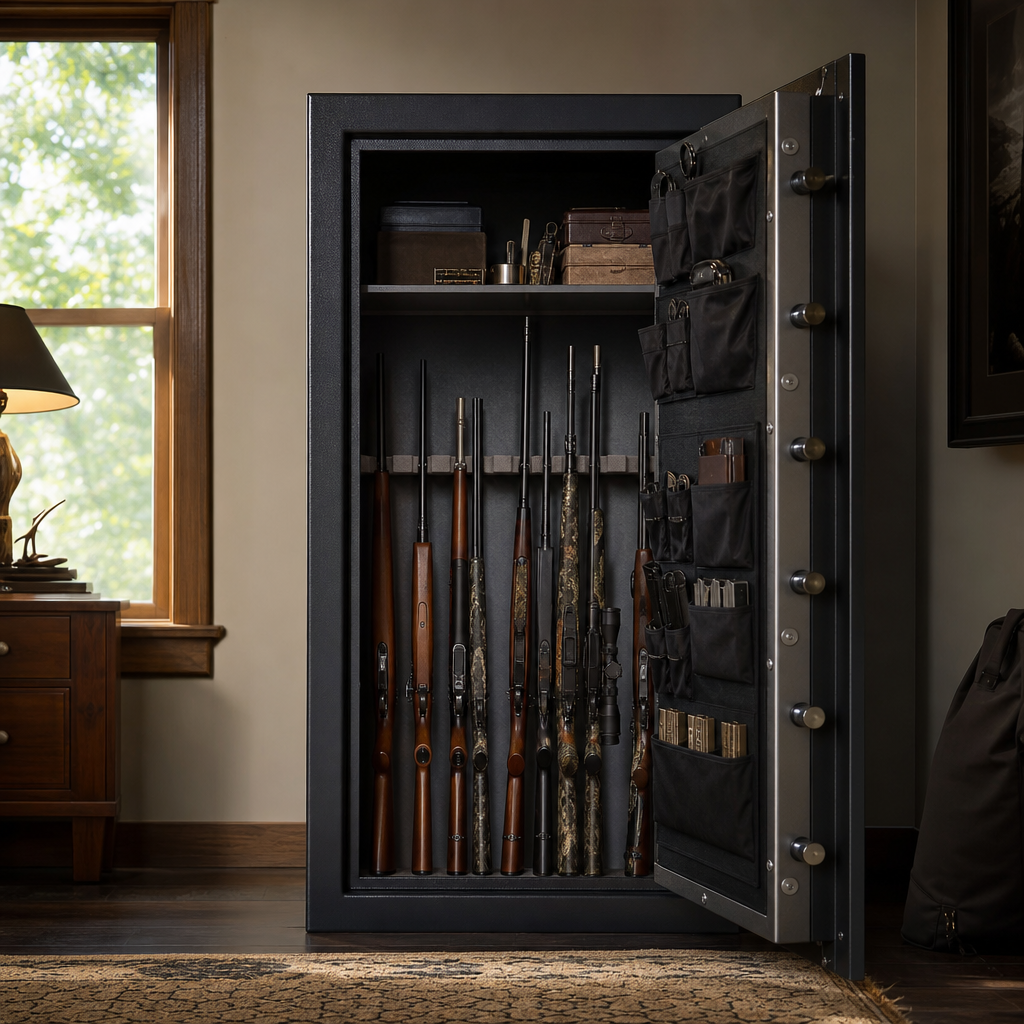
Choosing the best gun safe brands for firearms and valuables storage starts with understanding what a safe must actually do: resist unauthorized access, slow fire damage, organize contents, and fit the way you live. In the gun safes and safety category, brand matters because engineering quality, lock reliability, steel thickness, warranty support, and dealer service vary widely between manufacturers. After comparing models for homeowners, collectors, and first-time buyers, I have found that the best gun safe brands separate themselves not with flashy marketing, but with consistent construction standards and clear performance tradeoffs.
A gun safe is a secure storage container designed for firearms, ammunition, documents, jewelry, and other valuables. The term covers everything from compact pistol vaults to full-size long-gun safes weighing more than 1,000 pounds. Fire protection refers to how long internal temperatures remain below damage thresholds during a controlled burn test. Burglary protection refers to resistance against pry attacks, lock manipulation, drilling, and forced entry. Capacity ratings are usually optimistic, especially for scoped rifles, so a “36-gun” safe may hold far fewer modern firearms in practical use.
This topic matters for three reasons. First, safe storage reduces theft and unauthorized access, especially in homes with children or frequent visitors. Second, a quality safe protects high-value collections, legal documents, passports, cash, and heirloom items in one controlled space. Third, choosing the right brand prevents expensive mistakes. I have seen buyers focus only on price and size, then regret thin steel bodies, cramped interiors, unreliable electronic locks, or poor warranty response after a fire or attempted break-in. A strong hub article should answer the big question directly: which gun safe brands are worth shortlisting, and how do you compare them intelligently?
The leading names usually fall into a few tiers. Premium brands emphasize thicker steel, higher-grade boltwork, better fit and finish, and stronger customization. Mid-market brands balance protection and affordability for most households. Value brands deliver basic security at accessible prices, often through big-box retail channels. There is no universal best choice for every buyer. The best gun safe brand for a handgun owner in an apartment is different from the best brand for a rural collector storing twenty rifles, optics, tax stamps, family records, and precious metals. The right comparison starts with use case, risk level, and budget.
How to Compare Gun Safe Brands the Right Way
When I evaluate gun safe brands, I start with the specifications that most directly affect real-world protection. Steel thickness is one of the most important. Many consumer safes use 14-gauge to 12-gauge steel bodies, while stronger models may move into 10-gauge, 7-gauge, or even thicker plate construction. Thicker steel generally means better pry resistance, but it also increases weight and price. Door construction matters just as much. A composite door with reinforced edges, hard plates, and robust bolt engagement can outperform a lighter design even when capacity looks similar on paper.
Lock type is another major differentiator. Mechanical dial locks from recognized names such as Sargent and Greenleaf or La Gard have a long reputation for durability. Electronic keypad locks offer speed and convenience, especially for frequent access, but quality varies. The lock body, relocker design, hard plate protection, and internal linkage matter more than the keypad alone. Biometric access can be useful on quick-access handgun vaults, but fingerprint readers should be judged carefully because reliability changes with sensor quality, finger condition, and battery maintenance.
Fire ratings require careful reading. Brands often advertise 30, 60, 90, or 120 minutes of fire protection, but test conditions are not standardized across all consumer products. Some manufacturers use independent verification such as UL classifications for certain product categories, while others rely on proprietary furnace tests. Dry insulation, door seals, and body design all affect survival, but safe placement also matters. A safe on a garage slab with minimal surrounding combustibles often faces different risks than one on a framed second floor. Fire ratings are useful, but they should not be treated as absolute guarantees.
Interior design, anchoring provisions, warranty support, and dealer network also deserve attention. Adjustable shelving, door organizers, power ports, and dehumidifier compatibility improve daily use. Bolt-down capability is essential because even a heavy safe becomes vulnerable if thieves can tip it or remove it. The best brands make service straightforward, provide replacement support, and maintain reliable parts availability. That matters long after purchase, particularly if you ever need lock service, moving assistance, or post-incident repairs.
Top Gun Safe Brands Worth Shortlisting
Several brands consistently appear on serious buyer shortlists because they serve distinct needs well. Liberty Safe is one of the most recognized names in the United States, with broad dealer support, varied price tiers, and strong brand familiarity. Its lineup ranges from entry-level models to premium safes with upgraded steel, fire packages, and interior options. Fort Knox has long been associated with heavy customization, robust U.S.-built construction, and premium positioning. Buyers who want tailored sizes, colors, liners, and security upgrades often look there first.
American Security, commonly called AMSEC, stands out for offering both residential security containers and higher-security products, including BF series safes and commercial burglary-rated units. In practical comparisons, AMSEC often appeals to buyers who care about steel thickness and meaningful security design rather than cosmetics alone. Browning ProSteel earns attention for thoughtful interiors, flexible rifle storage systems, and broad availability. It is especially popular with hunters and homeowners who want practical organization without moving into ultra-premium pricing.
Rhino Metals, including Rhino and Ironworks lines, is notable for blending strong visual design with solid construction. Some buyers value the vintage appearance of Ironworks safes for offices or living spaces where the safe remains visible. Winchester gun safes, often sold through major retailers, serve the broad middle market and can offer good size-for-price value when specifications line up with actual needs. Cannon has similar mass-market visibility and is often considered by first-time safe buyers, though model-by-model scrutiny is important because feature sets can vary significantly across retail channels.
Steelwater has built a following among online shoppers seeking relatively aggressive specifications for the money, especially in steel gauge and included features. Vaultek dominates many conversations around modern handgun safes and modular smart storage, with app connectivity, quick access, and compact designs suited to apartments, bedside use, and office storage. SnapSafe is worth mentioning for modular and ready-to-assemble solutions, which help buyers who cannot move a welded safe through stairs, tight hallways, or upper-floor spaces. For many households, these brands represent the most practical starting field before narrowing by budget and required protection level.
Brand Comparison by Strengths, Weaknesses, and Best Use Cases
The most useful way to compare gun safe brands is to match each one to a specific storage problem. Liberty is a strong all-around brand for mainstream homeowners who want broad dealer access, familiar warranty support, and many size options. Its weakness is that lower-tier models may not satisfy buyers focused on maximum steel thickness for the price. Fort Knox is excellent for customization and premium finish quality, but the cost can climb quickly once you add upgrades. AMSEC often delivers stronger technical credibility in security-focused discussions, though some buyers may find fewer decorative options than with highly customized brands.
Browning’s biggest strength is interior layout. In homes where scoped rifles, shotguns, handguns, documents, and accessories must coexist, smart organization can be as valuable as a few extra nominal gun slots. Winchester and Cannon often win on availability and promotional pricing, which helps new buyers get into a larger safe sooner, but shoppers should compare body steel, lock options, and fire claims carefully because big-box convenience does not always equal best long-term value. Steelwater can look impressive on specification sheets, though dealer service and local support may be thinner depending on region.
| Brand | Best Known For | Typical Buyer | Main Caution |
|---|---|---|---|
| Liberty | Wide lineup and dealer network | Mainstream homeowner | Entry models may use lighter steel |
| Fort Knox | Customization and premium build | Collector or long-term buyer | High cost with upgrades |
| AMSEC | Security-focused engineering | Buyer prioritizing burglary resistance | Fewer style-focused options on some lines |
| Browning | Interior organization | Hunter with mixed gear storage | Compare model specs carefully |
| Vaultek | Quick-access handgun storage | Apartment or bedside user | Not a replacement for full-size long-gun storage |
Vaultek is a category leader for quick-access pistol safes, vehicle safes, and compact smart vaults. I recommend it most often when the priority is fast access and discreet placement rather than deep long-gun storage. SnapSafe serves a niche that matters more than many buyers realize: access constraints. If you live in a condo, historic home, or upstairs space, a modular safe may be the only practical route to meaningful security without structural and delivery problems. That is why brand comparison must always consider installation realities, not just showroom specifications.
How to Match the Best Gun Safe Brand to Your Needs
The best gun safe brand for firearms and valuables storage depends on the collection you own today, the collection you expect in five years, and the threats most relevant to your home. For a first-time gun owner with one handgun and important documents, a compact quick-access safe from Vaultek or a small residential safe from a mainstream brand may be enough. For a family with multiple long guns, suppressors, optics, passports, and emergency cash, a larger anchored safe with at least mid-tier burglary and fire protection is a more realistic baseline.
Collectors should buy more safe than they think they need. Optics, slings, bipods, and modern sporting rifle profiles consume far more interior volume than advertised gun counts imply. In my experience, buying a safe rated for at least 1.5 times your current collection reduces overcrowding and lowers the chance of stock damage, scope contact, and disorganized stacking. A buyer with twelve long guns usually shops more successfully in the “24-gun” to “36-gun” class than in a nominal “12-gun” cabinet or compact safe.
Location should shape brand choice too. In humid climates, look for interiors that accommodate dehumidifier rods or desiccant systems. In theft-prone urban settings, prioritize thicker steel, strong anchoring, concealed placement, and minimal exterior branding. In wildfire regions, fire resistance and document protection may deserve extra weight, though no consumer gun safe should be treated like a data-rated media safe. If the safe will sit in a garage, verify floor level, moisture conditions, and local temperature swings. These practical details often determine whether a well-known brand performs well for your specific household.
Budget discipline also helps. Many buyers spend heavily on capacity but overlook delivery, installation, electrical dehumidification, insurance documentation, and anchor hardware. A slightly smaller better-built safe is often a smarter purchase than a very large lightly built model at the same price. If you are choosing between premium fit and stronger steel, security should usually win. Appearance matters, but in a real pry attack, metal thickness, door design, locking protection, and anchoring decide the outcome.
Buying Tips, Installation, and Hub Topics to Explore Next
A few buying principles consistently prevent disappointment. First, inspect or verify body steel gauge, door edge design, boltwork, lock brand, and anchor-hole placement before purchasing. Second, read warranty language closely. Some brands cover parts and labor differently after fire, attempted break-in, or lock failure. Third, ask who services the lock locally. A good warranty means less if qualified technicians are difficult to schedule in your area. Fourth, confirm delivery path, stair dimensions, and floor load concerns early, especially for safes approaching or exceeding 700 pounds.
Installation is part of security, not an afterthought. A safe should be anchored whenever possible to concrete or structurally appropriate flooring using the manufacturer’s guidance. Placement in a corner can reduce pry access. Concealment behind cabinetry, in a closet, or within a secured room adds another defensive layer. For valuables storage, use document sleeves, shelves, and inventory records. Photograph serial numbers, retain receipts, and review whether your homeowners policy, scheduled personal property rider, or specialty firearms insurance adequately covers the collection.
As a hub for gun safe comparisons and brand spotlights, this topic naturally connects to deeper guides on fire ratings, mechanical versus electronic locks, modular safe options, handgun safes for nightstands, safe capacity myths, and professional moving and installation checklists. Those subtopics matter because brand reputation is only half the equation; the other half is choosing the correct model, lock, size, and placement strategy. A respected manufacturer can still be the wrong fit if the selected safe is undersized, poorly installed, or mismatched to your risk profile.
The best gun safe brands for firearms and valuables storage are the ones that align construction quality, access method, fire performance, and service support with your actual needs. Liberty, Fort Knox, AMSEC, Browning, Winchester, Cannon, Steelwater, Vaultek, Rhino, and SnapSafe all deserve consideration, but for different reasons. Compare steel, locks, fire testing, organization, installation constraints, and long-term support before comparing paint colors or headline discounts. If you are building your shortlist now, start with your risk level, space, and collection size, then move brand by brand until the right safe is obvious. That process leads to better protection and fewer regrets.
Frequently Asked Questions
What should I look for when comparing the best gun safe brands?
Start with the fundamentals: security, fire protection, build quality, and long-term reliability. A good gun safe brand should offer solid steel construction, strong door bolts, reliable locking systems, and a design that resists pry attacks and tampering. Steel thickness matters because heavier-gauge steel generally provides better resistance against forced entry, while reinforced doors and quality boltwork help protect the most vulnerable part of the safe.
Fire protection is the next major factor. Reputable brands clearly state fire ratings, internal temperature thresholds, and the length of time the safe is designed to withstand heat exposure. While no residential gun safe is completely fireproof, better brands typically use more advanced insulation and tighter door seals to slow heat and smoke penetration. It is also smart to look at how transparent a manufacturer is about testing methods rather than relying only on marketing claims.
Beyond protection, consider practical usability. The best brands design interiors that can be adjusted for rifles, handguns, optics, documents, jewelry, and other valuables. Shelving flexibility, door organizers, interior lighting, and access speed all matter in day-to-day use. Finally, do not overlook warranty support, lock service, replacement parts availability, and the quality of the local dealer network. A safe is a long-term purchase, and a strong brand is one that stands behind its products well after delivery.
Are more expensive gun safe brands always better?
Not always, but price often reflects meaningful differences in materials, engineering, and support. Premium gun safe brands typically invest more in thicker steel, better weld quality, more sophisticated locking systems, stronger hinges and boltwork, and improved fire insulation. They may also provide cleaner interior finishes, better organization features, and stronger warranties. In many cases, spending more does buy a safer, longer-lasting product.
That said, the most expensive option is not automatically the best fit for every buyer. A first-time gun owner with a modest collection may not need a high-end safe built for large collections, rare firearms, or extreme fire resistance. Some mid-range brands offer excellent value by balancing security, storage capacity, and price very effectively. The key is to match the safe to your actual risk level, storage needs, and budget rather than assuming the highest price tag guarantees the smartest purchase.
It is also important to look at where the money is going. Some safes cost more because of cosmetic upgrades, branding, or dealer markups rather than major security improvements. Focus on measurable features such as steel gauge, lock type, fire rating, internal capacity, anchoring capability, and after-sale support. In short, expensive can mean better, but informed comparison is what separates a wise investment from overpaying.
Which lock type is better for a gun safe: mechanical, electronic, or biometric?
Each lock type has strengths, and the best choice depends on how you prioritize speed, simplicity, and long-term maintenance. Mechanical dial locks are known for durability and proven reliability over time. They do not rely on batteries or electronics, which appeals to buyers who want a simple, time-tested system. The tradeoff is slower access, especially in low light or stressful situations, and some users find them less convenient for frequent opening.
Electronic keypad locks are extremely popular because they offer faster access and easier day-to-day use. Many quality gun safe brands now pair electronic locks with dependable commercial-grade components, making them a practical choice for most homeowners. They are especially useful when multiple authorized users need access. However, buyers should pay attention to lock brand reputation, battery access, and override or service options, since not all electronic locks are equal in quality.
Biometric locks can be the fastest option, allowing fingerprint access without entering a code. They are appealing for quick-access safes and defensive firearm storage, but performance can vary depending on sensor quality, placement, and environmental conditions. In a full-size gun safe, biometric access can be convenient, but it should come from a trusted manufacturer with a good track record. For many buyers, the safest approach is choosing a respected brand that uses high-quality locking hardware, regardless of type. The lock matters, but so does the overall design and integrity of the safe around it.
How important is fire rating when choosing a gun safe for firearms and valuables?
Fire rating is very important, especially if you plan to store documents, heirlooms, cash, electronics, or collectible firearms in addition to standard long guns. A gun safe is not just about stopping theft; it is also there to buy time during a house fire. Better brands understand this and provide more credible fire protection through insulation, expanding door seals, and stronger body construction that helps slow internal temperature rise.
That said, fire ratings should be read carefully. Not all ratings are tested the same way, and manufacturers may use different standards, temperatures, and time intervals. One brand’s 60-minute rating may not be directly comparable to another’s. The safest approach is to view fire protection as one part of a larger protection strategy rather than the only deciding factor. If you live in an area with higher wildfire risk or want to protect irreplaceable paperwork and valuables, fire performance should move much higher on your priority list.
Also remember that placement affects real-world fire performance. A safe installed on a ground floor, away from obvious heat concentrations and properly anchored, may fare better than one placed in a vulnerable location. For especially sensitive items such as passports, deeds, or digital media, some owners place those items inside an additional fire-resistant document box within the safe. The best gun safe brands make fire protection a serious design priority, but buyers should still combine that protection with smart placement and realistic expectations.
What size gun safe should I buy, and is it better to size up?
In most cases, yes, it is better to size up. Safe capacity estimates are often optimistic, especially when firearms have scopes, slings, bipods, wider stocks, or other accessories. A safe advertised for a certain number of guns may feel crowded much sooner than expected in real use. If you also plan to store handguns, ammunition, documents, jewelry, cash, or family valuables, usable space disappears quickly.
Choosing a larger safe gives you more flexibility for organization, better airflow around stored items, and room for future purchases. It also makes access easier because you are not constantly shifting guns and gear to reach what you need. Many of the best gun safe brands offer adjustable shelving and modular interiors, which can be a major advantage if your storage needs change over time. A well-designed interior can turn one safe into a practical storage hub for both firearms and everyday valuables.
Before buying, measure the installation area carefully, including doorways, hallways, stairwells, and floor load considerations. Think beyond external dimensions and compare actual interior layout, shelf design, and door storage options. Bigger is usually smarter, but only if the safe still fits your home, your preferred location, and your ability to install it securely. The best purchase is not simply the largest safe you can afford; it is the one that offers enough room, strong protection, and a layout that works well for how you live.