
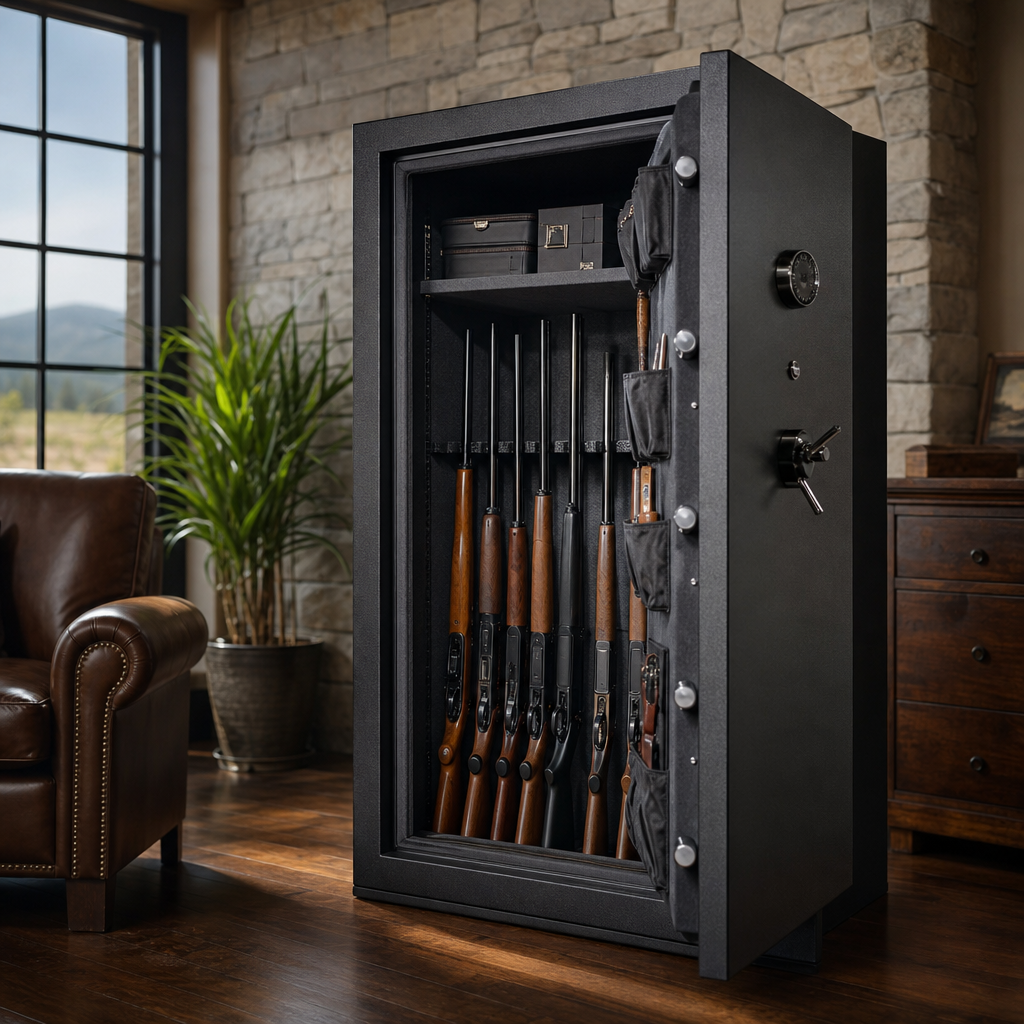
Fire protection is one of the most misunderstood parts of buying a gun safe, and it is often the feature that matters most once a burglary-resistant box is already in place. In my experience evaluating residential security containers, many buyers focus on steel gauge, lock type, and interior capacity, then treat the fire label as a simple number to compare across brands. That shortcut causes bad decisions because fireproofing claims are not standardized across the gun safe market, test methods vary widely, and two safes with the same advertised rating can perform very differently in a real house fire.
This hub page explains which gun safe brands offer the best fireproofing features, how those features work, and how to compare major names in the gun safe comparisons and brand spotlights category. A gun safe is a secure storage container designed to limit unauthorized access to firearms. Fireproofing, more accurately called fire resistance, refers to the safe’s ability to keep interior temperatures below levels that damage paper, optics, polymer parts, wood stocks, ammunition packaging, and electronic media for a stated period under heat exposure. Most gun safes are not truly fireproof in the absolute sense; they are fire-rated to a specific temperature and duration, usually based on manufacturer testing or third-party protocols.
This topic matters because firearms, tax stamps, passports, photos, suppressor paperwork, and hard drives are often stored together. In actual installations I have reviewed, owners usually discover too late that a safe with a bold “90 minute” sticker may rely on gypsum board layers, expanding door seals, and a test profile that does not mirror severe structural fires. On the other hand, some brands combine thicker steel bodies, multi-layer insulation, intumescent seals, reinforced door gaps, and documented testing that gives buyers a stronger margin of safety. Understanding those differences helps you choose a safe that protects not only guns, but also irreplaceable records and expensive accessories.
As a sub-pillar hub under Gun Safes & Safety, this guide covers the key questions shoppers ask: which brands are strongest on fire resistance, what features actually improve survival odds, how premium and mid-market options compare, and when a separate document safe or media chest is still necessary. Use it as the starting point for deeper brand-specific reviews, side-by-side safe comparisons, and installation planning across the broader Gun Safe Comparisons & Brand Spotlights cluster.
What fireproofing in a gun safe really means
Fire ratings on gun safes usually describe how long the interior remains below a threshold temperature while the exterior is exposed to heat. Common claims include 30, 45, 60, 90, or 120 minutes at temperatures ranging from about 1200 to 1700 degrees Fahrenheit. The problem is that there is no single universal testing requirement for all gun safes sold in the consumer market. Some brands use independent labs such as Intertek or ETL. Others conduct proprietary furnace tests. Some include a cool-down phase, while others measure only active heating. Those details matter because interior temperature often continues rising after the burners stop.
The materials matter too. Many residential gun safes use layers of gypsum-based fireboard in the walls and door. Gypsum contains chemically bound water that turns to steam during heating, slowing temperature rise. Better designs add multiple layers, denser composite construction, tighter door tolerances, and intumescent seals that expand when heated to reduce smoke and heat intrusion. Higher-end safes may use poured or proprietary concrete-like insulation blends that generally outperform basic drywall-lined cabinets, though they add cost and weight. Steel thickness does not create insulation by itself, but heavier bodies can improve structural integrity during fire and collapse events.
Buyers should also separate fire resistance from burglary resistance. A safe with an impressive 120-minute fire label but thin steel and weak boltwork may still be a poor overall choice. Likewise, a heavy plate-steel safe with little insulation can protect against forced entry yet fail important paper documents in a serious fire. The best purchase balances both risks based on your location, response times from the local fire department, home construction, and whether the safe will sit in a basement, garage, or interior room.
Best gun safe brands for fireproofing features
Several brands consistently stand out when fire protection is the priority, though they do so at different price points and with different construction philosophies. Liberty Safe remains one of the most recognized names because it offers broad model coverage, clear marketing around layers of fireboard and door seals, and respectable fire ratings in many lines. Browning ProSteel is also strong, especially in upper-tier models where upgraded insulation packages pair with thoughtful interiors and solid fit-and-finish. Fort Knox has earned its reputation by allowing extensive customization, including upgraded fire packages and heavier steel options that appeal to buyers who want to configure a safe rather than accept a fixed feature set.
American Security, commonly called AMSEC, deserves special attention because its BF series has long been a benchmark for shoppers who want a stronger blend of burglary and fire performance. The BF line uses a composite body that combines steel with a proprietary fire-insulating material rather than relying solely on drywall layers. In practical terms, this often gives AMSEC an edge among buyers who want robust thermal performance without jumping straight to true high-security commercial safes. Graffunder and Rhino also belong in serious comparisons. Graffunder safes are expensive, heavy, and built like tanks, with thick steel and insulation approaches that support premium fire resistance. Rhino’s higher-end models, including its Ironworks and Kodiak lines depending on configuration, have built a loyal following by pairing useful fire ratings with attractive interiors and good value.
Champion, Hollon, and Cannon round out the discussion in different ways. Champion Safe markets substantial fire protection in many models and generally competes well in the upper mid-tier. Hollon is especially notable for offering some safes with concrete-like composite fire insulation and for serving buyers who want a strong document-protection angle. Cannon is widely available through major retailers, making it a common comparison brand, though performance varies significantly by series. The key point is that no brand is best across every model. Fireproofing strength is line-specific, not logo-specific.
How major brands compare on fire-resistance design
When I compare safes for clients, I look past the headline time rating and document the actual design choices that influence heat resistance. The table below summarizes how leading brands are commonly differentiated in the market. Exact specifications vary by model year, so always verify the current manufacturer sheet before purchase.
| Brand | Typical fireproofing strengths | Best fit buyer |
|---|---|---|
| AMSEC | Composite construction in BF series, strong door design, respected balance of burglary and fire resistance | Owners wanting premium all-around protection |
| Liberty | Multiple fireboard layers, expanding seals, wide range of ratings across lines | Shoppers wanting broad model choice and dealer support |
| Fort Knox | Customizable fire packages, upgraded steel options, premium build quality | Buyers who want to tailor specifications |
| Browning ProSteel | Competitive fire ratings, quality interiors, solid upper-tier construction | Collectors balancing storage and fire protection |
| Graffunder | Very heavy construction, high-end insulation, elite craftsmanship | Luxury buyers prioritizing maximum durability |
| Rhino | Useful fire ratings, good value in premium decorative lines, practical features | Homeowners seeking strong aesthetics and protection |
| Hollon | Composite-style fire insulation in select models, strong document-protection appeal | Users storing guns plus papers and valuables |
| Cannon | Accessible pricing, big-box availability, model-specific fire packages | Budget-conscious shoppers comparing entry to mid-level safes |
AMSEC and Graffunder usually rise to the top when buyers want confidence rooted in construction rather than just advertising. Liberty and Browning are often easier to shop locally and compare side by side. Fort Knox stands out if you care about build customization and are willing to pay for it. Rhino, Hollon, Champion, and Cannon can all make sense depending on budget, document storage needs, and local dealer support.
Features that actually improve fire performance
The best fireproofing features are specific, measurable, and visible in the product specifications. First, look for layered or composite insulation with a clear description of material thickness. A vague claim like “advanced fire protection” is weak compared with “three layers of 5/8-inch fireboard in the door and body” or “poured composite insulation in the walls.” Second, look for an intumescent door seal. This expanding seal helps block smoke and hot gases, which often damage contents before flames ever reach the safe. Third, evaluate door fit and body construction. Narrow gaps, sturdy hinges, and reinforced door frames reduce pathways for heat intrusion.
Fourth, consider mass and placement. Heavier safes generally retain structural integrity better during prolonged exposure and can resist tip-over or floor collapse effects more effectively when properly anchored. Fifth, ask whether the rating includes a cool-down period. This is one of the most important details because contents can cook after heat exposure ends. Sixth, verify whether the interior temperature limit was set for paper, electronics, or data media. Paper chars around 350 degrees Fahrenheit, but digital media can fail at much lower temperatures. If you store hard drives, thermal optics, or backup drives, a gun safe alone is rarely enough.
Real-world examples make the point clear. A Liberty or Browning safe with multiple fireboard layers and a good seal may protect rifles and paper records in a moderate house fire, especially if installed on a lower floor away from accelerants. An AMSEC BF safe, because of its composite body, may offer better protection under harder heat loads. A thin entry-level safe with a 30-minute claim may still be useful against children or smash-and-grab theft, but it should not be trusted with irreplaceable NFA paperwork unless paired with a dedicated document container.
How to read fire ratings without being misled
The safest way to interpret a fire label is to treat it as one data point, not a guarantee. Start by asking four questions. Who performed the test? What peak temperature was used? Was the safe preheated or was the furnace ramped up over time? Did the protocol include internal temperature monitoring during cool-down? Brands that can answer those questions clearly deserve more trust than brands that simply print a large time number on a hang tag.
Also compare the rating to likely fire conditions in your area. According to the National Fire Protection Association, modern residential fires can develop faster because synthetic furnishings burn hotter and produce more toxic smoke than older natural materials. That means a safe in a room with heavy fuel loads may face intense conditions quickly. Placement therefore matters almost as much as the safe itself. A garage installation near gasoline, paint, or a vehicle is usually a worse fire environment than an interior basement corner on a concrete slab.
Watch for false precision in marketing. A “75-minute” rating is not automatically better than a “60-minute” rating if the 60-minute safe used a tougher test or better insulation. I have seen mid-priced safes with longer claimed durations but lighter construction than premium models with shorter, more credible ratings. Read the spec sheet, ask for the test basis, and compare body construction, not just minutes.
Choosing the right brand for your use case
If your priority is the best blend of fire resistance and burglary protection, AMSEC BF and premium Fort Knox or Graffunder models should be on the shortlist. If you want broad dealer availability, polished interiors, and many sizes, Liberty and Browning are practical brands to compare. If you are value-focused but still want meaningful fire features, Rhino, Champion, and select Hollon models deserve attention. If you are shopping at big-box stores, Cannon may be your easiest entry point, but compare series carefully because feature depth differs widely.
Think about what you are actually protecting. A hunter with three rifles and basic paper records has different needs than a collector storing scoped precision rifles, suppressor documents, family passports, and digital backups. In many homes, the smartest setup is a quality gun safe for firearms plus a smaller UL-classified document or media safe placed inside or beside it. That layered approach solves the common problem of storing heat-sensitive items in a container optimized mainly for guns.
Before buying, inspect warranty terms, delivery options, anchoring plans, humidity control, and service access for electronic locks after a fire event. A safe is part of a complete storage system, not a standalone product sticker. Compare brands by construction, test transparency, and suitability for your home, then visit a reputable dealer and examine the models in person.
The best gun safe brands for fireproofing features are the ones that pair credible fire-resistant construction with honest ratings and a design that matches your risk profile. Liberty, Browning, Fort Knox, AMSEC, Graffunder, Rhino, Hollon, Champion, and Cannon all have a place in the market, but they are not interchangeable. Composite insulation, multiple fireboard layers, intumescent seals, tight door tolerances, and well-documented testing separate stronger safes from weak imitations.
For most buyers, AMSEC stands out for balanced protection, Liberty and Browning for accessible quality across many sizes, Fort Knox for customization, and Graffunder for uncompromising premium build standards. Value brands can still work well when you understand their limits and install them intelligently. The biggest takeaway is simple: compare the construction details behind the fire label, not just the advertised minutes.
Use this hub as your starting point for deeper gun safe comparisons and brand spotlights across the Gun Safes & Safety category. Shortlist two or three models, verify the fire test basis, and match the safe to your firearms, documents, and home layout before you buy.
Frequently Asked Questions
Which gun safe brands are most respected for strong fireproofing features?
Several gun safe brands are repeatedly discussed when buyers want better fire protection, but the right answer depends on whether you mean better published fire ratings, more robust insulation methods, stronger door seals, or a more transparent approach to testing. Brands like Liberty, Fort Knox, American Security (AMSEC), Browning, Rhino Metals, Champion, and some higher-end lines from Winchester and Hollon are often part of the conversation because they offer models with more serious fire packages than entry-level safes. That said, no brand should be chosen on name alone. Even within a single manufacturer, the fire protection can vary dramatically from one series to another.
For example, premium lines may use thicker layers of fireboard, better construction around the door frame, and expanding heat-activated seals that help block smoke and heat infiltration. Some brands also build fire protection into the entire body and door system more consistently, rather than simply advertising a high number based on insulation thickness in limited areas. AMSEC often gets attention for offering both residential security containers and more serious composite safes, while Fort Knox and Liberty are frequently considered by buyers looking for feature-rich residential gun safes with upgraded fire options. Browning and Rhino are also commonly compared for buyers who want a balance of interior organization and fire resistance.
The most important point is that “best” does not mean the brand with the highest temperature-and-minutes label printed on a brochure. A well-built model from a reputable brand with realistic testing, good sealing, and solid overall construction is usually a better choice than a cheaper safe advertising an inflated fire number. When comparing brands, look beyond marketing and evaluate the exact model, how the fire protection is built, whether the safe uses multiple layers of fireboard or poured/composite materials, what kind of seal is installed, and whether the company explains how its rating was developed.
Why can’t I just compare gun safes by the fire rating number on the label?
Because fire ratings in the gun safe market are not standardized the way many buyers assume they are. One brand may advertise 60 minutes at 1,200 degrees, another may claim 90 minutes at 1,400 degrees, and a third may say 120 minutes without making the testing conditions clear at all. Those numbers sound precise, but they are not always based on the same procedure, the same pass/fail threshold, or even the same interpretation of what interior temperature is acceptable for firearm protection.
This is where many people make an expensive mistake. A fire label looks objective, so it feels easy to compare. But if one company tested with a gradual heat rise, another used an internal target temperature that still allows damage to wood stocks, optics, documents, or electronics, and a third simply extrapolated its rating from insulation design, the numbers are not apples to apples. The result is that a safe labeled for fewer minutes may actually be built more seriously than one with a higher advertised claim.
A better approach is to ask what the rating actually means. Was the entire safe tested, or was the rating based on insulation calculations? Was the safe heated in a furnace, and if so, how quickly was temperature increased? Was there a cool-down phase, which matters because fire damage often occurs during prolonged residual heat after the main blaze? What internal temperature was considered acceptable? Were seals, hinges, corners, and door gaps part of the real-world test challenge? These questions tell you far more than the headline number. The fire label is a starting point, not the conclusion.
What fireproofing features should I look for when comparing gun safe brands?
The most important fireproofing features are the insulation system, door seal design, body and door construction, and overall fit and finish. Start with insulation. Many gun safes use layers of gypsum-based fireboard, which can be effective when used generously and installed well. More expensive safes may use thicker multi-layer fireboard packages or composite-style construction that can perform better under prolonged heat. The key is not just the material itself, but how much of it is used and how completely it surrounds the protected interior.
Next, pay close attention to the door seal. A good heat-activated expanding seal can be one of the most valuable features in a house fire because smoke, steam, and superheated air often reach the contents through door gaps before direct flame causes structural failure. A safe with a decent insulation package but poor sealing can still allow damaging heat and smoke intrusion. Better brands typically emphasize the seal as part of the entire fire system, not as an afterthought.
You should also look at how the door and body are assembled. Continuous welds, tighter door tolerances, reinforced door edges, and better frame geometry can all help a safe hold up more effectively in fire conditions. Thin steel alone does not provide fire protection, but construction quality affects how well the safe stays intact as insulation is stressed by heat. Interior materials matter too. Upholstery, shelving, and door panels may not survive extreme heat even if the safe shell remains intact, so buyers storing documents, optics, cash, or hard drives should think beyond firearms alone.
Finally, look for evidence of transparency. Brands that explain their fire package in practical terms tend to inspire more confidence than those relying only on oversized rating numbers. If a manufacturer describes insulation layers, seal placement, and testing assumptions clearly, that is usually a good sign. In short, compare systems, not slogans.
Are premium gun safe brands with higher fire ratings really worth the extra cost?
Often, yes, but only when the higher price reflects genuinely better fire protection and not just more aggressive marketing. Once you already have a safe that offers reasonable burglary resistance, fire protection becomes a major part of what you are paying for. In many homes, the more likely threat to the contents is heat and smoke damage during a structure fire rather than a sophisticated forced-entry attack. That means an upgraded fire package can be a very sensible investment, especially if the safe will hold heirloom firearms, important paperwork, suppressor paperwork, optics, cash, or irreplaceable personal items.
Premium brands and upper-tier models often justify the added cost with thicker or multiple layers of insulation, stronger door designs, improved seals, better manufacturing consistency, and sometimes heavier total mass that helps slow heat transfer. In practical terms, that can mean a safer interior environment during a shorter residential fire and a better chance of protecting contents during the heat soak period that follows. It can also mean fewer compromises elsewhere, since some low-cost safes spend their budget on cosmetic features while overselling fire performance.
That said, paying more is not automatically the same as getting more protection. Some expensive safes are priced higher because of branding, finish options, interiors, or dealer margins rather than dramatically better fire resistance. The smartest buy is usually a model where the construction details support the price. If the premium version adds real insulation thickness, upgraded sealing, and stronger overall build quality, the extra cost is usually easier to justify. If it only adds a prettier interior and a bigger fire label without meaningful technical detail, the value is less convincing.
In other words, the best brands are worth the premium when they deliver verifiable improvements in how the safe is built. Fire protection is one area where cutting too many corners can defeat the purpose of buying a safe in the first place.
How can I choose the best fireproof gun safe for my home without being misled by marketing?
Start by matching the safe to your real risk profile. Think about where you live, how quickly your local fire department typically responds, whether your safe will be installed in a garage, basement, interior room, or upper floor, and what you are protecting. A buyer storing only modern firearms has different needs than someone also storing paper records, passports, rare wood-stock rifles, or digital media. The more heat-sensitive the contents, the more careful you need to be about fire claims.
Then compare specific models instead of comparing brand reputations in the abstract. Read the product specifications carefully and look for meaningful details: total insulation thickness, number of fireboard layers, presence of an intumescent door seal, body thickness, door construction, and safe weight. Heavier safes are not always better, but weight can hint at more substantial materials. Ask dealers or manufacturers how the rating was determined and whether there was a furnace test, an internal temperature threshold, and a cool-down period. If those answers are vague, treat the rating cautiously.
It also helps to remember that placement and installation affect fire survival. A safe bolted on a concrete slab in a climate-controlled interior area may fare better than one sitting in a garage surrounded by fuel, chemicals, and intense thermal exposure. If possible, avoid locations where fire load is higher. Consider adding a dehumidifier and using separate document or media protection inside the safe for especially delicate items. Even an excellent gun safe is not the same thing as a dedicated media safe or record vault.
Finally, buy from a dealer or brand that can discuss construction honestly rather than just repeating brochure language. The best fireproofing features are rarely the flashiest ones in advertising. Good purchasing decisions come from understanding how the safe is built, how the rating was developed, and whether the overall design supports the claim. If you take that approach, you are far less likely to be misled by a big number on a sticker.</