
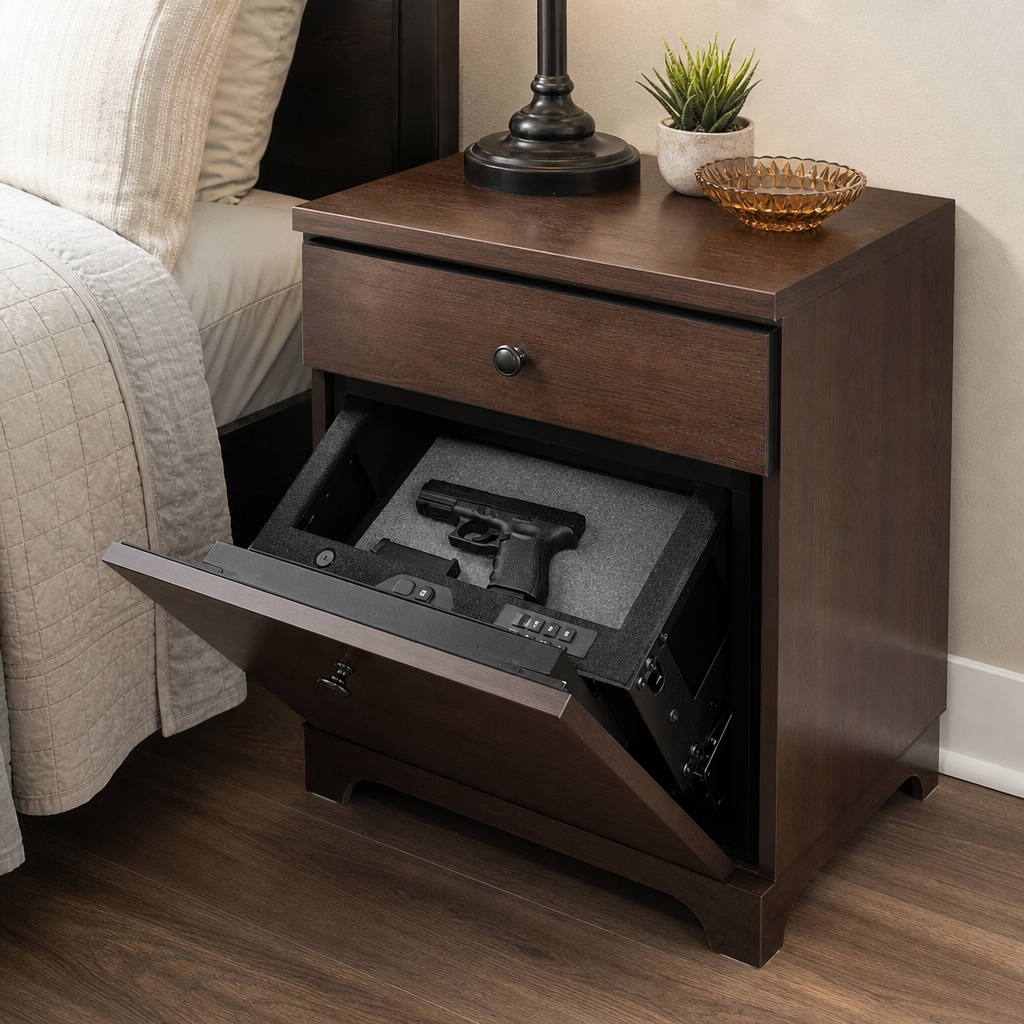
Hidden gun safes solve a practical problem for responsible firearm owners: how to keep guns secured, quickly accessible when lawful use is necessary, and completely out of casual view inside an everyday home. In the gun safes and safety category, hidden and discreet gun storage solutions refer to safes designed to blend into furniture, walls, floors, vehicles, closets, or ordinary household objects rather than announcing themselves as security equipment. I have tested and installed these systems in bedrooms, home offices, mudrooms, and small apartments, and the best models balance concealment, lock quality, anchoring strength, and realistic access speed. A hidden gun safe is not simply a regular safe tucked behind a coat; true discreet storage uses intentional camouflage, low visual signature, and secure mounting so children, guests, contractors, and opportunistic thieves are less likely to notice it. This matters because most residential gun theft is not the work of professional vault attackers. It is often a fast burglary where thieves search master closets, nightstands, dresser drawers, and obvious lockboxes first. Concealment adds time and uncertainty for an intruder while helping owners maintain privacy in homes where visitors come and go.
The best hidden gun safes also support core firearm safety practices. Secure storage reduces unauthorized access, supports child safety, and can help owners comply with state storage laws or insurance requirements. Depending on the application, a hidden safe may store a bedside handgun, a defensive carbine, spare magazines, important documents, or valuables that should not be displayed. Key terms matter here. A concealment safe prioritizes visual disguise. A quick-access safe emphasizes fast opening through biometric, keypad, or RFID entry. A wall safe fits between studs and hides behind art or a mirror. A furniture safe is built into a bench, shelf, headboard, or end table. A floor safe sits below the walking surface and is usually covered by a rug or furniture. Each design solves a different problem, and no single style is best for every household. The right choice depends on firearm type, room layout, who lives in the home, and whether your top priority is maximum secrecy, speed, capacity, or resistance to attack.
What Makes a Hidden Gun Safe Effective
An effective hidden gun safe does four jobs at once: it conceals the firearm, restricts unauthorized access, survives common tampering, and lets the owner retrieve the gun under stress without confusion. In practice, that means construction and placement matter more than marketing language. Thin sheet-metal boxes hidden in clever furniture may stop a child, but they will not hold up against a thief with a pry bar. Better concealment safes use thicker steel, reinforced doors, internal hinges or protected hinge pins, and anchor points that tie the unit to framing, concrete, or substantial furniture. A hidden safe should also have an access method you can operate in darkness, half awake, and under adrenaline. Mechanical simplex locks remain respected because they do not rely on batteries. Electronic keypads are common and fast. Biometric scanners can be convenient, but fingerprint performance varies based on moisture, skin condition, and sensor quality. Good units include backup keys or external power options for battery failure.
Placement is equally important. Many people instinctively think about bedrooms, but hidden gun safes often work better in transitional spaces where routine movement looks natural. A mudroom bench, home office credenza, or living room side table can provide better concealment than a predictable nightstand. For long guns, the dead space behind a full-length mirror, within a false HVAC return, or inside a closet panel can be more discreet than a large upright cabinet. However, concealment should never interfere with safe handling. The firearm must be accessible without muzzling yourself during retrieval, and the compartment should not force awkward loading or unholstering angles. I recommend owners practice with an unloaded firearm and timer, testing how quickly they can unlock, present, and secure the gun again. A safe that looks brilliant on a showroom floor can fail in real use if the door swing is blocked by furniture, if the keypad is hard to see, or if the compartment is too shallow for a pistol with a red dot or weapon light.
Best Types of Hidden Gun Safes for Different Rooms
Different rooms call for different hidden gun storage solutions because traffic patterns, furniture style, and access needs change throughout the home. In bedrooms, the strongest options are headboard safes, under-bed slide-out safes, and wall safes disguised by artwork or mirrors. A bedside hidden safe should open quietly, avoid bright internal beeps or lights, and accommodate the exact handgun setup you actually use. In living rooms, concealment furniture such as end tables, coffee tables, and floating shelves can work well when anchored and built from hardwood or steel-lined panels. These are useful when the room is where you spend most evening hours, but they must be inaccessible to children and should not be placed where guests routinely set drinks or search for chargers.
Home offices are one of the most underrated locations. Desk pedestal safes, false-back cabinets, and bookcase compartments blend into a space already associated with private storage. For long guns, wall-inset rifle safes behind framed prints offer an excellent mix of accessibility and discretion if stud spacing permits. Garages and workshops are usually poor locations for primary defensive firearms because humidity, temperature swings, and visitor traffic create extra risk, though they can make sense for secondary storage when the safe has corrosion control and is bolted properly. In apartments, where structural modifications may be limited, concealment furniture and closet-integrated safes are often the most practical answer. In vehicles, dedicated console or under-seat lockboxes can supplement home storage, but they should never be treated as the long-term equal of a properly installed residential safe.
| Safe type | Best use | Main advantage | Main limitation |
|---|---|---|---|
| Wall safe behind art or mirror | Handguns or compact rifles in bedrooms and offices | Excellent concealment with fast access | Limited by stud spacing and wall depth |
| Furniture safe | Living rooms, bedrooms, apartments | Blends into everyday décor | Quality varies widely; anchoring is critical |
| Under-bed safe | Pistols, spare magazines, documents, some long guns | Uses wasted space and offers good capacity | Can be obvious if a burglar checks under beds |
| Floor safe | Low-traffic rooms, concrete slabs, valuables plus handguns | Hard to remove when installed correctly | Slower access and more complex installation |
| Closet panel or false wall safe | Long-gun concealment | High discretion for larger firearms | Requires custom carpentry or framing work |
Key Features to Look for Before You Buy
When evaluating the best hidden gun safes, start with steel thickness, lock reliability, and anchoring provisions rather than cosmetic disguise. The safe must fit the firearm with any optic, suppressor-height sights, flashlight, or mounted light you intend to store. I have seen buyers order compact hidden safes only to discover their pistol no longer fits once a red dot and threaded barrel protector are installed. Interior dimensions are more important than exterior claims. Lock speed should be measured realistically. A keypad with tactile, backlit buttons and silent mode is more useful than a fingerprint sensor that fails one in ten attempts. If you choose biometric access, look for multi-user enrollment, high-resolution sensors, and consistent independent reviews from firearm owners rather than generic gadget sites.
Anchoring is nonnegotiable. A hidden safe that can be carried away defeats the purpose. Wall safes should tie into framing. Floor safes should be set into concrete when possible. Furniture safes need hidden lag bolts or steel brackets into studs, joists, or masonry. Fire ratings are less common in discreet safes than in full-size gun safes, so if document protection matters, verify tested ratings rather than assumptions. Interior protection also matters. Foam liners should not press the trigger or snag controls, and moisture control such as desiccants or dehumidifier packs is essential in basements, garages, and humid climates. Finally, think about noise discipline. Some electronic locks chirp loudly enough to wake a household. Better safes allow muted input, smooth door operation, and low-light orientation so retrieval does not become a clumsy search.
Installation, Placement, and Security Layers
The safest hidden storage installations combine concealment with physical security layers, not concealment alone. Start by deciding whether the safe is intended for emergency defensive access, long-term storage, or both. Emergency-access safes should be placed where you can reach them from a natural position, such as bed, desk chair, or primary seating area, without crossing the room. Long-term storage can prioritize deeper concealment and heavier installation. Once the role is clear, install the safe where it is shielded from casual observation during normal household activity. A mirror on a bedroom wall can hide a handgun safe elegantly, but if that wall faces the doorway and every visitor sees it, the concealment is weaker than it appears.
Use layered security around the safe. Alarm contacts on doors and windows, monitored systems, quality exterior lighting, cameras, and reinforced strike plates all reduce the chance that a burglar has enough uninterrupted time to search thoroughly. Hidden storage works best when it is one obstacle among several. For custom installations, keep weight distribution in mind. A loaded under-bed or furniture safe can stress weak fasteners over time if it is mounted only to thin panels. In older homes, stud spacing, plaster walls, and uneven floors can complicate flush installation. In those cases, a professional carpenter or locksmith is often worth the cost. Clean workmanship matters because gaps, crooked trim, or suspicious seams can draw attention. The best hidden safe is the one no one notices and no one can remove quickly even if they do notice it.
Common Mistakes with Discreet Firearm Storage
The most common mistake is confusing hidden with secure. A hollow book safe, a magnetic shelf compartment, or a decorative clock with a latch may conceal a handgun from casual glance, but those products often provide almost no resistance to a teenager, houseguest, or burglar. They are concealment accessories, not serious safes. Another mistake is choosing a location based only on convenience. Nightstands, top closet shelves, and dresser drawers are among the first places thieves check. If your hidden solution relies on a location every burglar already knows, concealment value drops sharply. Poor fit is another frequent problem. Handguns with optics, mounted lights, extended magazines, or retention holsters require more depth and width than buyers expect.
Owners also underestimate the need for repetition. You should be able to open the safe consistently under stress without looking directly at the controls. Practice matters, especially with keypads and mechanical pushbutton locks. Battery neglect is another preventable issue. Replace batteries on a schedule rather than waiting for a low-power warning. Finally, do not advertise the existence of the safe through social media, service calls, or careless conversation. Hidden gun safes lose effectiveness when too many people know where they are or what they contain. Discreet firearm storage is partly hardware and partly operational discipline.
How to Choose the Right Hidden Gun Safe for Your Needs
Choose your safe by matching the firearm, the room, and the threat scenario. If your priority is a bedside handgun for lawful home defense, a fast-opening wall safe or anchored furniture safe is usually better than a floor safe because access is quicker and body position is more natural. If you need to store a short rifle discreetly, look for a closet-integrated, wall-inset, or behind-mirror design with enough depth for the optic and magazine. If children are in the home, lock reliability and tamper resistance should outrank pure speed. If you rent, focus on solutions that anchor securely with minimal structural alteration and can be removed without major repair.
Budget matters, but there is a clear floor below which quality drops fast. Very cheap concealment products often spend money on appearance while skimping on steel, hinges, and lock durability. Better brands usually specify steel gauge, boltwork, lock type, battery compartment design, and mounting hardware requirements. Read dimensions carefully, verify left- or right-hand door swing, and measure how the safe opens in the real room. As a sub-pillar topic within gun safes and safety, hidden and discreet gun storage should also be considered alongside quick-access pistol safes, under-bed safes, wall safes, biometric gun safes, and childproof firearm storage plans. Building that broader storage strategy is how owners create homes that are both safer and more private.
The best hidden gun safes keep firearms out of sight without compromising control, safety, or practical access. The right solution is not the most cleverly disguised product on the market; it is the one that fits your firearm, your room, your daily routine, and your security priorities. Wall safes, furniture safes, under-bed units, floor safes, and custom closet or panel systems each have real strengths when installed correctly. Across all of them, the same rules apply: strong construction, dependable locking, solid anchoring, discreet placement, and regular practice. Concealment helps because many thieves move fast and search obvious locations first, but concealment works best as one layer within a larger home security plan.
For most households, the winning approach is simple. Store the firearm in a true safe rather than a novelty concealment item, place it where unauthorized users cannot discover or reach it casually, and make sure you can open it reliably in realistic conditions. Measure your firearm with all attached accessories, evaluate who lives in the home, and choose the room and safe style that match your real use case. If you are building out a complete gun safes and safety plan, continue with related guides on wall safes, quick-access handgun safes, under-bed storage, and child-resistant firearm storage so every firearm in the home has a defined, secure place.
Frequently Asked Questions
What is a hidden gun safe, and how is it different from a traditional gun safe?
A hidden gun safe is a secure firearm storage solution designed to stay out of plain sight by blending into normal household surroundings. Instead of looking like a large steel cabinet in a garage or closet, a hidden safe may be built into a wall, concealed inside furniture, tucked under a bed, installed in a floor, hidden behind a mirror or picture frame, or integrated into a vehicle console or compartment. The main difference is not that it stops being a safe, but that it adds discretion as part of its security strategy. A traditional gun safe relies heavily on obvious physical mass, thick steel, and visible deterrence. A hidden gun safe relies on secure construction plus concealment, which can reduce the chance of unauthorized discovery in the first place.
For many responsible gun owners, that matters because the real-world goal is not just locking a firearm up, but keeping it secured, accessible when lawful use is necessary, and completely out of casual view from visitors, children, contractors, or anyone else moving through the home. In my experience testing and installing these systems, the best hidden gun safes work when they are treated as purpose-built security devices rather than novelty concealment products. Good models use solid locking mechanisms, strong mounting points, and thoughtful placement. Poor ones may hide well visually but fail under basic prying or can be removed too easily. So the best hidden gun safe is one that combines actual security, fast access, and smart concealment without sacrificing responsible storage practices.
Are hidden gun safes actually secure enough for home use?
Yes, many hidden gun safes are secure enough for home use, but only if you choose the right type for the firearm, the location, and the level of risk you are trying to address. This is where buyers often need a reality check. A hidden safe is not automatically equal to a full-size, premium burglary-rated safe, especially for long-term collection storage. But for staging a defensive handgun, securing a compact firearm in a bedroom, office, mudroom, or vehicle, or keeping a gun locked away from children and casual access, a quality hidden safe can be an excellent solution. The key is evaluating security based on actual construction and installation, not just concealment.
Look for steel thickness, reinforced door edges, reliable lock quality, solid welds, anti-pry features, tamper-resistant hinges, and mounting capability into structural material such as wall studs, floor joists, subfloor, masonry, or heavy furniture framing. I always pay close attention to whether the safe can be physically removed. A concealed compartment that looks clever but is held in place with weak hardware is not a serious storage solution. Security also depends on access control. Mechanical simplex locks, quality electronic keypads, RFID systems, and biometric readers can all work well, but they vary in speed, reliability, and maintenance needs. The best hidden safes are secure enough because they are difficult to find, difficult to access without authorization, and difficult to remove or pry open once discovered. That layered approach is what makes them practical in real homes.
Where are the best places to install a hidden gun safe in a home?
The best place to install a hidden gun safe depends on how you plan to use the firearm, who lives in the home, and how quickly lawful access may be needed. In practice, the most effective locations are the ones that balance discretion, structural support, and realistic access under stress. Bedrooms are one of the most common choices, especially for a handgun safe inside a nightstand, behind a headboard panel, under the bed, or recessed between wall studs. Home offices also work well because they allow concealed access in desks, cabinets, or bookcase installations while keeping the safe close during long stretches of daily use. Closets can be excellent if they provide privacy and enough framing strength for a wall or floor installation. For larger setups, false-bottom cabinets, built-in furniture compartments, and concealed wall units can work well when professionally integrated.
The biggest installation mistake I see is choosing a location based only on how well it hides the safe rather than how well it supports secure use. A safe hidden deep behind clutter may be too slow to reach. A safe placed in a flimsy piece of furniture may not resist removal. A wall safe installed in the wrong cavity may run into plumbing, wiring, or insufficient depth. I also encourage homeowners to think about who routinely enters each space. The right location should avoid obvious traffic patterns and should not invite casual discovery during cleaning, repairs, or guest visits. If you need a firearm available for defensive use, test your ability to reach, unlock, and access it safely in realistic conditions, including low light and awkward body position. A hidden safe should support your routine, not complicate it.
What features should I look for when buying the best hidden gun safe?
The best hidden gun safe should be chosen around function first and appearance second. Start with fit and intended use. You want enough internal space for the firearm, magazine configuration, holster if applicable, and any accessories you plan to store, but not so much extra room that the gun shifts around or access becomes awkward. Then evaluate the lock system carefully. Biometric locks can be fast and convenient, but they need consistent sensor quality and regular testing. Electronic keypads are popular and simple to train on. Mechanical push-button locks are often favored for reliability and speed because they do not depend on batteries. RFID access can be useful in furniture-style concealment units where fast, discreet entry matters. There is no one universal best lock, but there is definitely a best lock for your environment and habits.
Next, focus on physical security and installation quality. Look for a steel body that resists bending and prying, a robust latch or bolt design, internal hinges or protected hinge areas, and pre-drilled mounting points that make a solid anchor possible. Soft interior protection is a plus, especially for handguns with optics or delicate finishes. Interior lighting can help in low-light access situations. Quiet door operation matters more than many buyers realize, particularly for bedroom use. If the safe is disguised as furniture or décor, the concealment element should be believable without looking gimmicky. Finally, buy from brands with a proven track record, clear specifications, responsive support, and replacement part availability. In my experience, the hidden gun safes that perform best over time are the ones designed as security products first and concealment products second.
Are hidden gun safes a good choice for homes with children or frequent visitors?
Yes, hidden gun safes can be a very good choice for homes with children or frequent visitors, provided they are truly lockable, properly installed, and used consistently. Concealment adds an important layer of protection because it reduces visibility and curiosity. A firearm that is never seen is less likely to become the subject of exploration or accidental discovery. That said, concealment alone is never enough. In a home with children, teens, guests, babysitters, housekeepers, repair crews, or extended family coming and going, the firearm must be locked in a secure device that prevents unauthorized handling even if the hiding place is found. This is where a quality hidden safe offers real value: it combines out-of-sight placement with restricted access.
For family homes, I recommend choosing a model that supports fast owner access but does not rely on weak magnetic panels, simple slide compartments, or decorative concealment without a genuine lock. You should also think beyond the safe itself. Practice your routine for locking the firearm every time it leaves your immediate control. Keep backup entry methods secure. Check batteries if you use an electronic or biometric unit. Teach age-appropriate firearm safety in the home, but never substitute education for secure storage. If visitors are common, avoid discussing the safe location and be cautious about installation choices that create obvious patterns, such as a suspiciously placed wall frame or furniture item that stands out from the room. When installed correctly and used responsibly, a hidden gun safe can be one of the best tools for keeping firearms secured, discreet, and inaccessible to anyone who should not have access.