
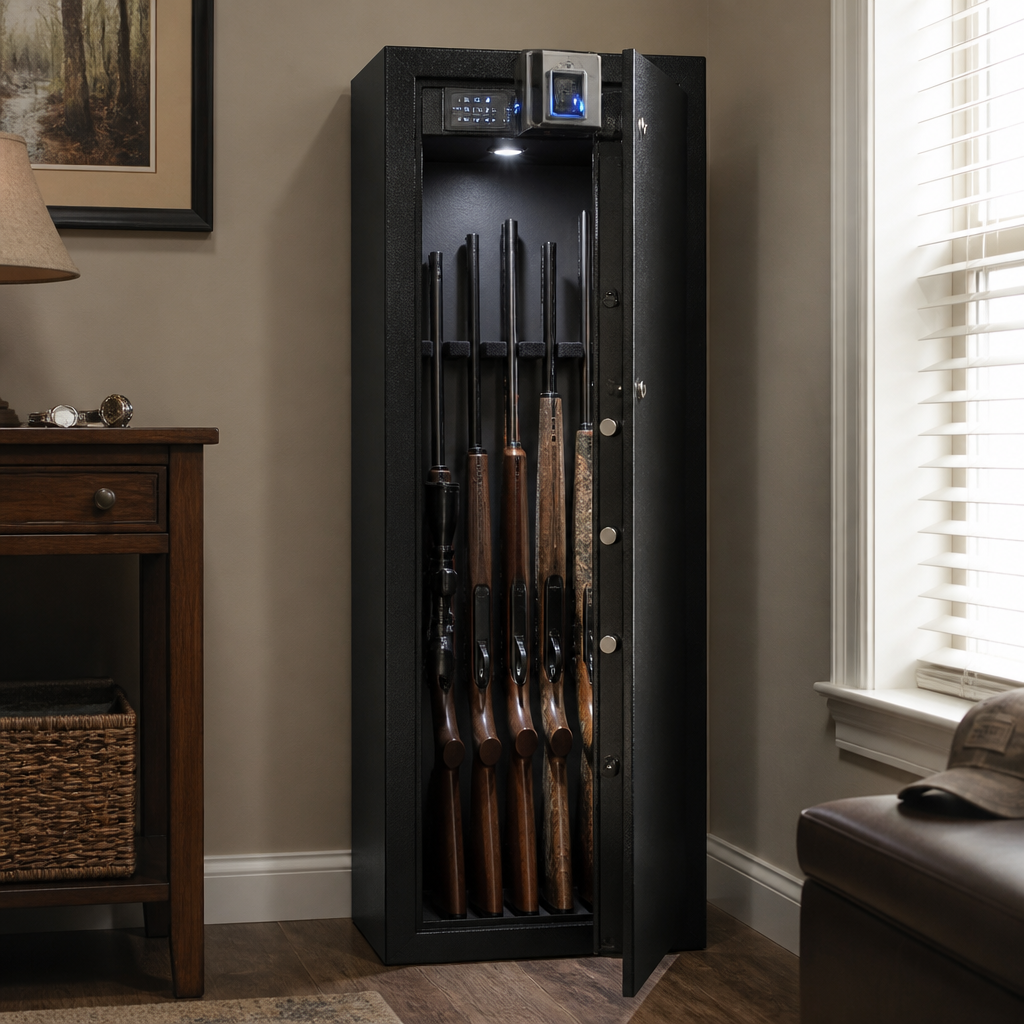
The Barska HQ700 Biometric Rifle Safe sits at the intersection of firearms security, fast access, and modern electronics, making it a notable option for owners who want a dedicated long-gun safe without stepping up to a full vault room. In the gun safes and safety category, product reviews matter because buyers are balancing several risks at once: unauthorized access, delayed defensive access, theft, fire exposure, and the possibility of storing optics, documents, or ammunition in the same enclosure. A biometric rifle safe promises speed and control, but the value depends on build quality, lock reliability, capacity realism, and installation. I have worked through enough safe evaluations to know that marketing terms like “biometric,” “tamper resistant,” and “quick access” only matter when they hold up under daily use, varied fingerprints, power interruptions, and imperfect mounting conditions.
This Barska HQ700 Biometric Rifle Safe review serves as a hub for product reviews within the broader gun safes and safety topic because it covers the criteria readers use across the category: lock type, steel construction, storage layout, backup entry methods, mounting, battery dependence, and who the safe actually fits. “Biometric” refers to unlocking through fingerprint recognition rather than solely with a key or mechanical combination. “Rifle safe” in this context means a tall cabinet-style enclosure designed for long guns, usually with a slim footprint for closets, bedrooms, offices, or utility rooms. The Barska HQ700 is aimed at users who want quicker entry than a dial safe, more control than a simple gun cabinet, and a price point below heavy premium safes from brands like Fort Knox, Liberty, or Browning. Understanding where it excels and where it compromises is the key to making a smart purchase.
For many households, the central question is simple: can this safe keep rifles secured from children, guests, smash-and-grab thieves, and casual misuse while still allowing timely access for the owner? That is the right question, and it requires more than reading the feature list. It requires examining the safe as a system: electronic reader, backup key override, locking bolts, door fitment, anchor points, interior supports, and environmental placement. The Barska HQ700 matters because it represents a common buying decision in this market. It is not an ultra-heavy burglary-rated safe, but it is also not just a sheet-metal locker with a keyed latch. Buyers considering any long-gun safe review should use this model as a benchmark for understanding what high-tech security means in practical, not promotional, terms.
What the Barska HQ700 Is Designed to Do
The Barska HQ700 Biometric Rifle Safe is designed for vertical storage of long guns in a relatively narrow enclosure that can fit in locations where a wide traditional safe would be impractical. Its main job is controlled access. The biometric scanner allows registered users to open the safe quickly, while the fully enclosed steel body creates a locked barrier against unauthorized handling. In practical use, this kind of safe is especially appealing to apartment dwellers, homeowners with limited floor space, and gun owners who want to separate defensive long guns from general household access. The product category prioritizes immediate retrieval more than deep fire resistance or commercial burglary resistance.
Barska as a brand is better known to many buyers for optics, safes, and security products positioned in the value segment. That matters because expectations should be calibrated correctly. The HQ700 is best evaluated against competing biometric rifle safes and fast-access cabinets, not against 1,000-pound composite safes with certified ratings. In that comparison set, the key points are whether the scanner enrolls fingerprints reliably, whether the lock mechanism engages consistently, whether the interior can realistically handle scoped rifles, and whether installation hardware and anchor geometry support meaningful security. Those are the points that determine whether the product performs as a genuine safety upgrade or just adds electronic complexity.
Most owners looking at the HQ700 are trying to solve one of three use cases. First, they need child-access prevention while keeping a home-defense rifle available. Second, they want to consolidate several long guns in one locked location rather than spreading cases around the house. Third, they need a secondary safe in a bedroom, office, or detached space in addition to a larger primary safe. In all three cases, the HQ700 can make sense if the buyer accepts its design intent: fast controlled access and organized storage, not maximum mass or elite fire protection.
Core Features, Access Methods, and Daily Use
The defining feature of the Barska HQ700 is its biometric entry system. A fingerprint scanner lets authorized users open the door without spinning a dial or typing a long code under stress. When biometric safes work well, they reduce fumbling and remove the need to keep a key immediately accessible. In my experience testing quick-access storage, the scanner matters less as a tech novelty and more as a repeatability issue. A good scanner must read dry fingers, slightly angled placement, and consistent enrollment data. Owners should register the same finger multiple times, add at least two fingers per user, and test access under realistic conditions such as low light or rushed handling. That setup step dramatically affects satisfaction.
The HQ700 also includes backup access, typically in the form of physical override keys. That is essential, not optional. Batteries fail, electronics age, and sensors can misread after dirt buildup or poor enrollment. Any serious review of a biometric gun safe should treat backup access as part of the security design rather than a footnote. The tradeoff is clear: override keys improve resilience but create another item that must be stored securely away from the safe. Leaving the override key in the same room defeats the point.
Daily use depends heavily on the door swing, interior clearance, and stock-and-optic geometry of the firearms being stored. Slim rifle safes often advertise a certain number of guns, but real capacity is usually lower once optics, slings, bipods, extended charging handles, and wider fore-ends are involved. That is not unique to Barska; it is standard across the category. A safe marketed for multiple rifles may store fewer if those rifles wear scopes or modern sporting rifle accessories. Buyers should measure the tallest optic-equipped firearm and compare that to interior height and shelf placement before purchase.
| Evaluation Point | What to Check on the HQ700 | Why It Matters |
|---|---|---|
| Fingerprint scanner | Enrollment speed, read consistency, multiple finger storage | Determines real fast-access performance |
| Backup entry | Physical key override location and key control plan | Prevents lockout during battery or sensor failure |
| Interior capacity | Rifle count with scopes, slings, and accessories installed | Advertised numbers are often optimistic |
| Mounting | Pre-drilled anchor points, wall or floor structure compatibility | Reduces tip risk and theft by removal |
| Construction | Door fit, hinge protection, lock bolt engagement | Affects resistance to prying and forced entry |
One practical benefit of this style of safe is noise discipline. Keyed cabinets often require more manipulation, and mechanical dials take time. A biometric reader paired with a straightforward door handle can be quieter and faster, which matters in shared homes. The limitation is that owners must maintain the system. Fresh batteries, clean sensor surfaces, and periodic testing should be part of the routine, just like checking optic batteries or replacing smoke detector cells.
Construction Quality, Security Limits, and Installation Reality
The most important truth about the Barska HQ700 Biometric Rifle Safe is that its security depends as much on installation as on its steel body or electronic lock. A tall narrow safe that is not anchored can be tipped, dragged, or attacked from easier angles. When I assess long-gun cabinets and entry-level safes, I look first at how the unit interfaces with the building. If it can be lag-bolted into wall studs, anchored into concrete, or secured through a reinforced floor, its real-world resistance goes up significantly. If it stands loose in a closet, its defensive value drops. That is true even when the lock itself is competent.
Construction in this class usually involves formed steel panels, locking bolts on the door edge, and an interior liner or barrel rest arrangement meant to protect firearm finishes. Buyers should inspect or confirm gauge, bolt count, and whether the hinges are internal or protected by the locking structure. External hinges are not automatically a flaw if the door is secured by deadbolts on the opening side, but flimsy doors and excessive frame flex are concerns. The HQ700 should be seen as a residential security container style product rather than a heavily insulated burglary-rated safe. That distinction helps buyers make sober decisions.
Another installation issue is placement. The best spot is usually out of casual view, on a stable surface, in a low-humidity area, and near structural members that allow proper anchoring. Closets are common choices because they conceal the safe and limit prying angles. Basements can work if moisture is controlled with desiccants or dehumidifier rods. Garages are less ideal unless climate swings are managed, because condensation and corrosion can affect both firearms and electronics. If you plan to store documents or optics in the same unit, interior humidity management becomes even more important.
Security also has a behavioral side. No biometric rifle safe is a substitute for layered storage habits. Ammunition may be stored separately depending on household needs and local practices. Override keys should be off-site or in another locked container. Fingerprints should be re-enrolled after cuts, abrasions, or scanner issues. The owner should also rehearse access, because a fast-opening safe only delivers an advantage if the user can reach, open, and present the firearm safely under stress. Product reviews that ignore those realities give incomplete advice.
Who Should Buy It, Alternatives to Compare, and Final Take
The Barska HQ700 makes the most sense for firearm owners who prioritize quick electronic access, need a compact footprint, and understand the limits of a lighter, technology-forward rifle safe. It is a practical fit for a bedside room-adjacent long-gun setup, a secondary storage unit for a few defensive rifles or shotguns, or a household that needs better access control than a basic cabinet provides. It is less ideal for collectors with numerous scoped rifles, buyers seeking significant fire insulation, or anyone expecting commercial-grade forced-entry resistance. In those cases, a heavier safe with thicker steel, fireboard layers, and certified lock components is the better investment.
Alternatives worth comparing include biometric long-gun safes from SecureIt, Winchester, and Vaultek, along with traditional keypad or mechanical-lock options from Stack-On, Cannon, and Liberty. SecureIt often emphasizes modular organization and tactical access. Vaultek focuses on app-connected electronics, audit features, and refined quick-access design. Traditional safe makers may sacrifice opening speed but offer better mass, stronger bodies, or better fire protection for the money. The right comparison is not “Which brand is best?” but “Which security profile matches the actual risk at my home?” That framing leads to better purchases than chasing one feature.
As a hub article for gun safe product reviews, this evaluation highlights the standards that should guide every purchase in the category. Check whether the lock system is reliable in daily use, whether backup entry is secure and sensible, whether the claimed capacity reflects real firearms with accessories, whether the safe can be anchored properly, and whether the steel construction matches your threat model. The Barska HQ700 Biometric Rifle Safe delivers its strongest value when used exactly as intended: as a compact, fast-access long-gun safe installed correctly and maintained consistently. If that matches your needs, shortlist it, compare it against similar biometric rifle safes, and choose the model that gives you the best balance of access, restraint, and real-world security.
Frequently Asked Questions
1. What makes the Barska HQ700 Biometric Rifle Safe different from a traditional keyed or dial-lock gun safe?
The Barska HQ700 Biometric Rifle Safe is designed around one major advantage: faster, more controlled access to long guns through electronic biometric entry. Unlike a traditional keyed cabinet or a dial-lock safe, which can require more time and fine motor precision to open, a biometric system allows an authorized user to access the safe with a registered fingerprint. For many buyers, that matters because a rifle safe is not just about locking firearms away from children or unauthorized users; it is also about being able to retrieve a firearm quickly when needed.
Another important difference is convenience in day-to-day use. Mechanical locks have a long-standing reputation for durability, but they can be slower and less practical for users who want regular access without handling keys or remembering combinations under stress. The HQ700 aims to bridge that gap by pairing modern electronics with a dedicated long-gun storage format. That makes it especially appealing to owners who want more advanced access control than a simple cabinet, but who do not necessarily need or want the size, weight, and cost of a full-scale vault-style gun safe.
It is also worth noting that the HQ700 falls into a category where users are often balancing multiple priorities at once: preventing unauthorized access, maintaining readiness, protecting optics and accessories, and organizing firearms in a smaller footprint. In that sense, its value is not just the biometric reader alone, but the combination of targeted long-gun storage and modern access technology. Buyers should still remember, however, that biometric speed does not automatically equal maximum burglary or fire resistance. The HQ700 is best understood as a specialized security solution for access control and organized storage, rather than a substitute for the heaviest fire-rated vault safes on the market.
2. Is a biometric rifle safe like the Barska HQ700 reliable enough for defensive access and everyday firearm security?
In practical terms, a biometric rifle safe can be reliable for both everyday security and quick access, provided it is set up correctly and used within its limits. The biggest factor is enrollment quality. Fingerprint readers tend to work best when users carefully register the same finger multiple times from slightly different angles, ensuring better recognition under real-world conditions. If the scanner is clean, the batteries are fresh, and the user has taken time to configure it properly, access can be very fast and convenient.
That said, biometric technology should never be treated as infallible. Finger placement, moisture, dirt, worn skin, cuts, and environmental conditions can all affect read accuracy. For that reason, buyers should always confirm whether the safe includes backup entry methods, such as a key override or secondary keypad access, and they should test those methods regularly. Defensive access is not just about how fast the scanner works on a perfect day; it is about whether the owner has a realistic plan if the fingerprint reader does not respond immediately. A well-prepared owner practices the opening process and keeps the unit maintained, rather than assuming the technology will handle everything automatically.
For everyday firearm security, the HQ700 can be a strong choice for owners who mainly need controlled access inside the home and dedicated storage for long guns. It adds a meaningful barrier against children, casual tampering, and opportunistic access. However, if the primary concern is determined theft, very high fire resistance, or large-scale storage of rifles, handguns, documents, and ammunition together, some buyers may ultimately prefer a heavier, more robust gun safe with expanded ratings and thicker construction. In short, the HQ700 can be very reliable for the right use case, but it should be matched to realistic expectations rather than marketed as a one-size-fits-all answer.
3. How much protection does the Barska HQ700 offer against theft, unauthorized access, and fire?
The Barska HQ700’s strongest selling point is controlled access, especially for owners who want to keep long guns secured from unauthorized users while maintaining quicker access than many traditional safes allow. In a household setting, that can be extremely valuable. Preventing access by children, guests, or anyone without permission is one of the most important functions of any firearm storage solution, and a biometric rifle safe directly addresses that concern by restricting entry to enrolled users.
When it comes to theft resistance, buyers should take a nuanced view. A dedicated rifle safe generally provides a more serious layer of protection than an unsecured closet, soft case, or lightweight locking cabinet. However, not every long-gun safe is built to the same anti-theft standard as a premium, high-mass vault safe. Real burglary protection depends on factors such as steel thickness, pry resistance, door design, lock protection, internal hinges versus exposed hinges, and whether the safe is bolted down properly. Even an electronically advanced safe benefits enormously from correct installation. If the HQ700 is securely anchored and placed in a less exposed area of the home, it becomes a much less attractive target than a freestanding unit that can be tipped, pried, or removed.
Fire protection is another area where buyers should read specifications very carefully. Many shoppers understandably assume that all gun safes offer meaningful fire resistance, but that is not always the case. Some safes emphasize access control and basic physical security more than extended fire ratings. If you plan to store optics, important documents, or other heat-sensitive items alongside firearms, you should verify the manufacturer’s stated fire protection details rather than relying on category labels alone. The bottom line is that the HQ700 may be an excellent option for access control and organized long-gun storage, but buyers focused heavily on burglary endurance or prolonged fire survival should compare its construction and ratings directly against larger, heavier fire-rated safes before deciding.
4. Can the Barska HQ700 store more than just rifles, such as optics, ammunition, or important documents?
Yes, many owners will naturally use a safe like the Barska HQ700 for more than just bare rifles, but how well it handles extra gear depends on the interior layout, available shelving, and the size of the firearms being stored. Long guns with mounted optics, slings, bipods, lights, or other accessories often take up more room than their basic dimensions suggest. A safe that appears to hold a certain number of rifles on paper may have a lower practical capacity once scoped rifles or bulkier tactical setups are involved. That is very common across the category, so buyers should think in terms of realistic storage rather than maximum advertised counts.
For accessories, a dedicated rifle safe can be useful for organizing magazines, small tools, paperwork, and selected valuables, especially if it includes shelves or compartments. Some owners also use space inside for passports, hard drives, or legal documents, particularly because the safe already provides restricted access. However, that raises an important consideration: ammunition, documents, and electronic optics do not all share the same ideal storage conditions. Moisture control becomes increasingly important when you combine firearms and sensitive valuables in one enclosed space. Adding desiccants or a dehumidification solution can help preserve finishes, prevent corrosion, and protect paper items from humidity-related damage.
It is also wise to think about role separation. If the HQ700 is being used for rapid-access defensive long-gun storage, overloading it with miscellaneous gear can make retrieval slower and interior organization less efficient. On the other hand, if your main goal is consolidated secure storage in a compact form, it may serve very well as a mixed-use safe for rifles and related valuables. The best approach is to evaluate the interior as a working storage system: how many long guns you actually own, which ones wear optics, whether documents need fire-rated protection, and whether ammunition should be stored there based on your local laws, household needs, and personal safety practices.
5. Who is the Barska HQ700 Biometric Rifle Safe best suited for, and when should you consider a larger or heavier safe instead?
The Barska HQ700 is best suited for firearm owners who want a dedicated long-gun safe with modern access technology and a more streamlined footprint than a full-size vault. It makes particular sense for users who prioritize fast authorized access, need to secure rifles from children or unauthorized adults, and want a storage solution that feels more purpose-built than a basic locking cabinet. In homes where space matters and the safe needs to fit into a bedroom, office, closet area, or similar location, a biometric rifle safe can strike a practical balance between accessibility and controlled security.
It is also a strong candidate for buyers who are specifically focused on a handful of long guns rather than an entire collection. If you do not need massive storage capacity, extended fire protection for large amounts of paper valuables, or industrial-level anti-theft construction, the HQ700 may hit a very reasonable middle ground. That middle ground is exactly why products like this attract attention in the gun safes and safety category: they solve a real problem for owners who want more than a cabinet but less than a vault room.
You should consider a larger or heavier safe instead if your priorities extend beyond fast biometric access into more demanding security territory. For example, if you own numerous rifles and handguns, need high-capacity shelving, want stronger fire ratings, or are especially concerned about burglary resistance during a break-in, a heavier traditional gun safe may be the better investment. The same is true if you plan to store expensive optics, family records, jewelry, cash, and other valuables in one place. In those situations, safe mass, steel thickness,