
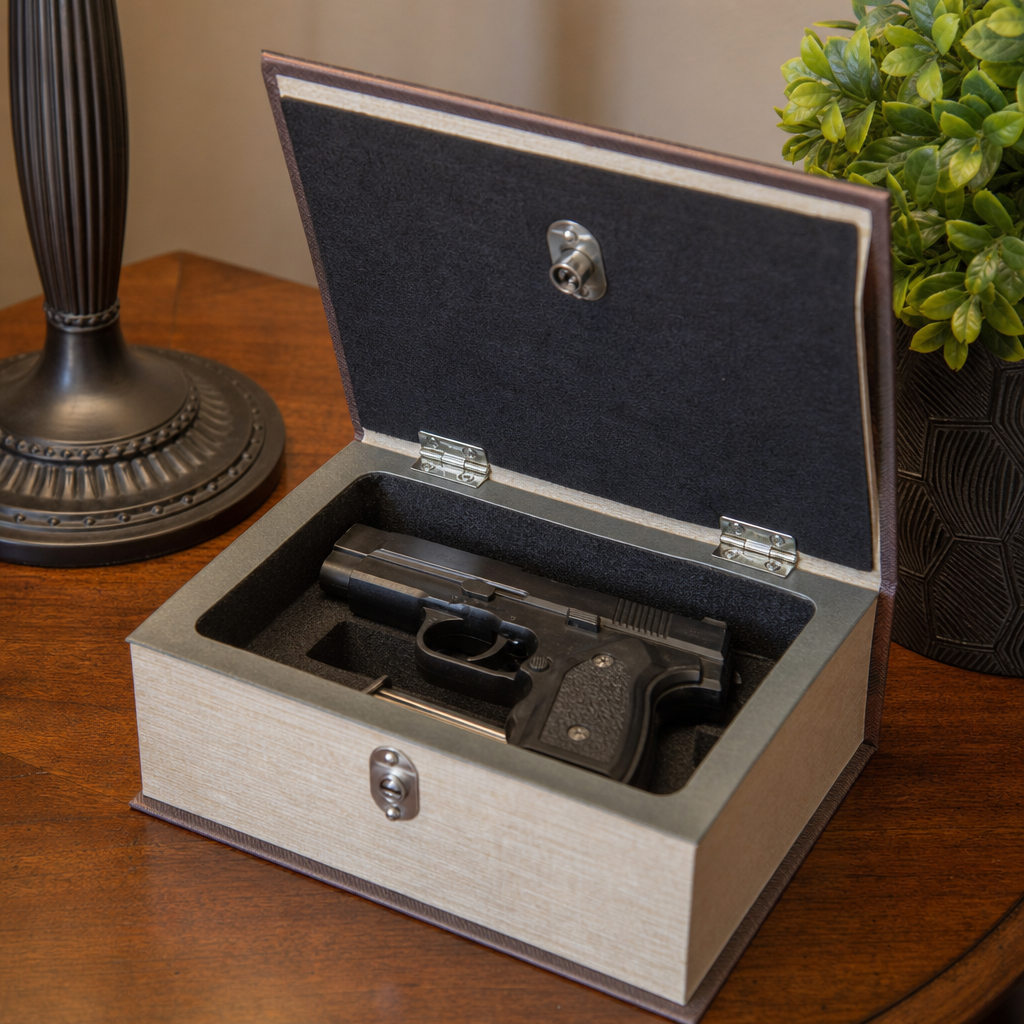
DIY hidden gun safe ideas help firearm owners store rifles, shotguns, and handguns discreetly while still keeping them secure, accessible, and protected from unauthorized use. Hidden gun storage means a compartment, piece of furniture, structural cavity, or custom enclosure designed to conceal a firearm safe from plain view. Concealment is not the same as security, and that distinction matters: a hidden compartment may delay discovery, but a true gun safe also needs solid construction, tamper resistance, controlled access, and safe placement. I have worked on storage layouts for homeowners who wanted better concealment without sacrificing responsible ownership, and the best projects always started with a clear goal: prevent casual discovery, preserve quick access for the authorized user, and reduce the chance of theft.
For readers researching hidden and discreet gun storage solutions, this topic sits at the intersection of home security, firearm safety, interior design, and legal responsibility. A poorly planned hiding spot can expose a gun to children, guests, moisture, or burglars who know common tricks. A well-built hidden safe blends into the room, supports safe handling, and matches the owner’s actual use case, whether that means bedside access for a defensive handgun or deeper storage for a collection. This hub covers the main DIY approaches, materials, placement strategies, locking methods, and practical tradeoffs, so you can choose a concealed gun safe idea that fits your home rather than copying a design that only looks clever online.
What makes a hidden gun safe effective
An effective hidden gun safe combines three elements: concealment, access control, and environmental protection. Concealment keeps the safe from attracting attention. Access control limits entry through a keyed lock, mechanical push-button lock, electronic keypad, RFID reader, or biometric scanner. Environmental protection addresses humidity, dust, wall temperature swings, and corrosion risk. If one element is missing, the system is incomplete. For example, a magnetic wall compartment behind a picture frame may be discreet, but if it has no lock, it is hidden storage, not a secure safe solution. Likewise, a compact pistol safe under a desk may be secure, but if it is visible, it fails the concealment goal.
The strongest DIY hidden storage projects also consider human behavior. Burglars typically search primary bedrooms, closets, bedside tables, offices, and obvious wall décor first. Children explore low drawers, baskets, and furniture cavities. Guests notice novelty items and awkward wall hangings. That is why the best concealment ideas rely on normal room patterns. A vent cover that sits at a believable height, a shelf with consistent proportions, or a toe-kick compartment under cabinetry usually performs better than a theatrical mirror safe with unusual trim. In practice, successful concealment comes from blending with architecture and avoiding anything that signals a secret compartment.
Best locations for discreet gun storage in the home
Location determines both safety and usefulness. In most homes, hidden gun safes work best in low-traffic areas that still support fast access for the authorized owner. For handguns, common placements include behind a headboard, inside a nightstand false back, under a desk in a locking enclosure, or within a closet wall between studs. For long guns, deeper installations such as wardrobe false panels, stair storage cavities, or bench compartments are more practical. Anchoring matters. A small safe hidden in furniture should still be bolted to framing or heavy structure when possible, because concealment does not stop a thief from carrying the entire unit away once discovered.
Room conditions matter as much as room layout. Basements can offer excellent concealment but often create humidity problems that require a desiccant pack, rechargeable dehumidifier, or low-wattage safe rod. Exterior walls can introduce condensation and temperature fluctuation. Kitchens and bathrooms present moisture concerns and constant household traffic. Garages are usually the worst choice for defensive access because they are easier to breach, have wider temperature swings, and expose firearms to dust and corrosion. In my experience, an interior wall in a bedroom closet or office gives the best balance of concealment, structural stability, and climate control for many DIY hidden gun safe builds.
DIY hidden gun safe ideas that work in real homes
Wall safes between studs remain one of the most practical concealed gun storage solutions because standard residential stud spacing often provides enough depth for compact pistol safes or narrow rifle cabinets. A framed picture, mirror, shallow cabinet, or hinged panel can cover the opening without advertising what sits behind it. The best DIY versions reinforce the opening, mount the safe directly to studs, and use a cover panel that matches nearby trim and paint exactly. Another reliable option is a false-back cabinet. A linen closet, pantry-style cabinet in a study, or wardrobe can conceal a locked compartment behind an ordinary shelf arrangement, making the hidden space visually unremarkable.
Furniture-based builds are effective when they preserve normal function. A storage bench with a locked internal compartment can hold a shotgun or rifle while still serving as seating. A coffee table with a hidden drawer can house a pistol safe if the drawer movement feels standard and the lock remains concealed. Headboard compartments are popular for quick-access handguns, but they need rigid construction and a positive latch so the panel does not open accidentally. Toe-kick safes under kitchen or bathroom cabinetry are clever for compact handguns, though they should be used carefully because these areas are accessible to children and often overlooked during routine humidity control checks.
| DIY concealed storage idea | Best for | Main advantage | Main limitation |
|---|---|---|---|
| In-wall safe behind art or mirror | Handguns, documents | Blends with room architecture | Limited depth between studs |
| False-back closet or wardrobe | Long guns, mixed storage | Excellent concealment in plain sight | Requires careful carpentry |
| Bench or headboard compartment | Quick-access defensive firearm | Fast reach from living or sleeping area | Must prevent accidental opening |
| Toe-kick or stair cavity safe | Compact handgun | Uses dead space efficiently | Lower accessibility and higher dirt exposure |
Materials, hardware, and lock choices
Materials determine whether a project is merely hidden or meaningfully resistant to abuse. Solid hardwood, cabinet-grade plywood, steel plate, and welded steel lockboxes provide far better performance than MDF alone. For wall or furniture installations, use heavy screws driven into studs or structural members, not just drywall anchors. Concealed hinges, full-extension slides rated for the load, magnetic catches, and mechanical latches should all be selected with durability in mind. Where firearms are involved, soft-close hardware is not enough; you need hardware that stays aligned over years of use. Misalignment is a common failure point in DIY hidden compartments, especially in humid homes where wood movement changes reveal gaps or causes binding.
Lock choice should follow the use case. Mechanical simplex-style push-button locks are reliable, fast, and do not depend on batteries. Electronic keypads allow flexible code changes and can fit small spaces well, but they require battery maintenance and quality control varies by brand. Biometric locks are convenient for a bedside setup, yet they should be tested repeatedly with dry, clean, and slightly sweaty fingers before you trust them. RFID locks are discreet and useful in furniture applications, though tag management becomes another security task. In practice, I advise owners to prioritize proven lock reliability over novelty. A hidden safe that fails to open under stress is just as problematic as one that opens too easily.
How to balance access speed with child safety
The central challenge in hidden gun storage is balancing rapid access against prevention of unauthorized handling. If a firearm is intended for defensive use, the storage method must allow consistent opening in darkness, under stress, and from the owner’s normal position in the room. That usually favors a dedicated quick-access pistol safe hidden within furniture or mounted inside a closet near the bed rather than a deeply concealed compartment requiring several motions. At the same time, concealment should never substitute for secure locking when children are present. The American Academy of Pediatrics and the National Shooting Sports Foundation have long emphasized storing firearms unloaded and locked, with ammunition secured separately when practical for the household’s risk profile.
There is room for nuance. Some owners keep one defensive handgun loaded in a rapid-access safe while storing all other firearms unloaded in larger locked safes. That layered approach works well because it matches speed to purpose. Training is part of storage. Practice opening the compartment, presenting the firearm safely, and re-securing it without sweeping your hand or body. Test whether your spouse or other authorized adult can use the system correctly. If the hiding place requires moving décor, reaching above shoulder height, or using a sequence that breaks down under pressure, redesign it. The safest hidden safe is one that the right person can operate consistently and the wrong person cannot access at all.
Common mistakes that defeat concealment
Most failed hidden gun safe projects are not defeated by sophisticated burglars; they are defeated by obvious clues. Fresh trim in one section of an older room, a picture frame with odd spacing from the wall, a bench too heavy for its size, or a shelf that does not carry believable items all attract attention. Another mistake is placing the compartment exactly where internet tutorials always suggest: above the bed, behind the bathroom mirror, or inside the home office bookcase with a trigger book. Burglars and investigators alike recognize those patterns. Real concealment comes from natural integration, not novelty. The compartment should look boring, proportionate, and entirely consistent with the home’s existing finishes.
Security errors are just as common. Owners sometimes hide a soft pistol case in a vent box or hollow furniture piece and assume concealment is enough. It is not. Others build a strong enclosure but fail to control rust by ignoring humidity, foam off-gassing, or air circulation. Some overcomplicate access with servo-driven releases, smart-home triggers, or hidden magnets that can fail during a power outage or software issue. The more moving parts you add, the more maintenance you create. A final mistake is poor documentation control. If contractors, guests, or social media followers can identify the compartment location, the value of concealment drops sharply. Hidden storage works best when almost nobody knows it exists.
Planning your hidden gun safe as a long-term system
The best DIY hidden gun safe ideas start with a written plan, not a saw. Define the firearm type, intended access time, number of authorized users, room conditions, and local legal requirements before choosing the concealment method. Measure overall firearm length, optic height, magazine clearance, and the swing or slide path of the opening panel. Think through staging, maintenance, and upgrades. If you later add a light, optic, suppressor-height sights, or a larger safe insert, will the compartment still work? Good projects also include maintenance intervals for lock batteries, lubricant, desiccant renewal, and fastener inspection. Concealed storage is not a one-time build; it is an ongoing safety system that should be reviewed like any other critical household security measure.
As the hub for hidden and discreet gun storage solutions, this overview points toward the most useful next steps: compare wall safes versus furniture safes, review quick-access lock types, study humidity control methods, and evaluate room-by-room placement strategies. The main lesson is straightforward. Maximum concealment does not come from the most secret-looking compartment. It comes from blending a secure safe into ordinary architecture, choosing reliable hardware, and matching access speed to the firearm’s purpose. If you are planning a DIY build, sketch the space, list your safety requirements, and test the opening method before cutting materials. A concealed gun safe should disappear into the room while still performing exactly as needed when it matters most.
Frequently Asked Questions
What makes a DIY hidden gun safe truly secure, not just concealed?
A DIY hidden gun safe should do more than blend into a room or disappear behind furniture. True security starts with the safe itself: solid steel construction, pry-resistant doors, reinforced hinges, dependable locking hardware, and secure anchoring to wall studs, concrete, or substantial framing. Concealment helps reduce casual discovery, but if an intruder finds the compartment and the container can be removed or forced open quickly, the setup is only hidden, not secure. That is the key distinction firearm owners need to keep in mind when planning a hidden storage project.
For maximum effectiveness, think in layers. The outer layer is the disguise, such as a mirror, cabinet, bookshelf, bench, headboard, or false wall panel. The second layer is the safe or lockbox concealed behind that feature. The third layer is access control, which may include a mechanical lock, electronic keypad, RFID system, or biometric lock, depending on the use case. In many DIY builds, the mistake is putting too much effort into the hidden door and not enough into the actual secure enclosure. A well-concealed compartment with weak materials can be defeated far faster than many owners realize.
You should also account for tamper resistance, moisture control, and child safety. A hidden compartment in drywall or furniture may look clever, but if it lacks rigidity, can be pulled free, or leaves the firearm exposed to humidity, it falls short of responsible storage. A better approach is to integrate a real handgun safe, vertical rifle cabinet, or fabricated steel enclosure into the hidden structure. This way, the project serves both concealment and retention. If your goal is maximum concealment without compromising safety, the strongest DIY concept is usually a hidden access point wrapped around a properly secured safe rather than a simple secret compartment holding an unprotected firearm.
What are the best DIY hidden gun safe ideas for rifles, shotguns, and handguns?
The best hidden gun safe idea depends on the type of firearm, the space available, and how quickly you need access. For handguns, common DIY options include concealment inside a nightstand, under a desk, behind a framed wall feature, inside a false-bottom drawer, or within a bench or ottoman that contains a bolted handgun safe. These designs work well because handguns require less space and can fit inside compact lockboxes while staying within reach for defensive access. The most practical versions combine a legitimate furniture piece with a dedicated locking safe concealed inside it.
For rifles and shotguns, wall cavities, false cabinets, closet integrations, built-in shelving, and modified wardrobes are among the most effective ideas. A shallow vertical compartment behind a mirror, paneling, or full-height artwork can store long guns discreetly if the wall depth and framing allow it. Another popular idea is converting a section of a closet into a hidden safe zone behind hanging clothes or behind a secondary panel. Furniture-based builds such as storage benches, large headboards, or entertainment consoles can also work, but long guns demand careful measurement for barrel length, optics clearance, and retrieval angle. You want enough space not only to store the firearm but also to draw it safely without snagging sights, slings, or accessories.
The strongest DIY projects usually share a few traits: they look ordinary, they do not advertise themselves as tactical storage, they include a real locking mechanism, and they allow the firearm to be stored in an organized, protected way. Foam supports, barrel rests, dehumidifier elements, and lined interiors can improve both function and protection. If maximum concealment is the goal, choose a design that matches the room naturally. A hidden safe in a bookshelf, dresser, or built-in cabinet often attracts less attention than a dramatic secret panel. In many homes, subtlety beats novelty. The best idea is the one that fits your floor plan, supports secure construction, and allows consistent, responsible access.
How can I build a hidden gun safe that still allows fast access in an emergency?
Fast access begins with location. A hidden gun safe should be placed where you can reach it naturally under stress, without crossing the room, moving multiple obstacles, or performing complicated motions in the dark. For a defensive handgun, that often means near the bed, inside a discreet bedroom furniture piece, beside a desk, or in a living space where you spend time regularly. For long guns, quick access is more challenging because the compartment must accommodate the firearm’s size while still opening smoothly. If speed matters, avoid designs that require removing heavy decorative items, unlocking multiple stages, or opening narrow panels that interfere with the draw.
The opening method matters just as much as the location. Push-latch panels, magnetic catches, disguised hinges, or sliding trim can work for the concealment layer, but the safe itself should have a lock you can operate reliably. Many owners prefer electronic keypads or biometric locks for quick access, while others favor simplex-style mechanical locks because they do not depend on batteries. Whichever system you choose, practice with it. In an emergency, fine motor skills drop, visibility may be poor, and anything overly clever becomes a liability. A hidden compartment should feel intuitive to open, not like solving a puzzle.
Design the interior for immediate retrieval. That means the firearm should be oriented consistently, with adequate clearance around the grip, stock, optics, and muzzle. Do not pack the compartment so tightly that the gun catches on shelves, hooks, or stored accessories. If you keep a loaded defensive firearm, follow all applicable laws and prioritize childproofing and unauthorized-access prevention. Many firearm owners benefit from a layout where magazines, lights, and other essentials are secured but separate enough not to interfere with the draw. Ultimately, maximum concealment and rapid access can coexist, but only when the design is simple, repeatable, and built around real-world use rather than appearance alone.
Where is the safest and most discreet place to install a hidden gun safe in a home?
The safest and most discreet place is usually a location that combines low visibility, structural support, controlled access, and everyday normalcy. Bedrooms, closets, home offices, and built-in cabinetry are often strong candidates because they offer privacy and can accommodate anchored storage without drawing attention. A hidden safe works best when it is placed in a part of the home that visitors are less likely to inspect closely, yet remains practical for the owner to access. For example, a concealed safe behind a closet panel, inside custom bedroom furniture, or integrated into office cabinetry often strikes a strong balance between discretion and usability.
Structural considerations are important. Wall cavities can be effective for handguns or slim long-gun setups, but they are limited by stud spacing, wiring, plumbing, insulation, and load-bearing concerns. Floors and concrete slabs may provide better anchoring opportunities for heavier safes, especially if the hidden enclosure is incorporated into furniture or built-ins placed against a wall. Basements and garages can offer more flexibility for size and anchoring, but they may be less ideal for humidity control and defensive access. Moisture, temperature swings, and lower day-to-day accessibility can reduce their practicality unless you take steps to address environmental conditions.
From a concealment perspective, the best installation is one that does not break the visual logic of the room. If a panel, cabinet, mirror, or bookshelf looks out of place, people notice it. A hidden gun safe should appear to belong exactly where it is. Avoid locations that scream “secret compartment,” such as one odd wall feature in an otherwise plain room. Also avoid storing firearms where children can routinely interact with the furniture or where service workers, guests, or contractors may spend time unsupervised. A discreet location is not just hidden from burglars; it is also integrated into the rhythms of the home in a way that reduces casual exposure while preserving secure, responsible access.
What legal and safety issues should I consider before building a DIY hidden gun safe?
Before building any hidden gun storage, start with the laws and regulations that apply where you live. Firearm storage requirements vary by state and locality, especially when minors are present, when firearms are stored loaded, or when unauthorized access could lead to injury or criminal liability. Some jurisdictions impose standards related to locking devices, child access prevention, negligent storage, or transportation between storage locations. A hidden compartment that is not actually locked may fail to meet legal expectations even if it is difficult to notice. Because rules differ widely, it is wise to verify current requirements through official state or local sources rather than relying on assumptions.
Safety considerations are equally important. The storage system should prevent access by children, guests, and prohibited persons while protecting the firearm from moisture, corrosion, impact, and accidental handling. If you are building into a wall, floor, bed frame, or cabinet, make sure the project does not compromise electrical wiring, plumbing, HVAC lines, or structural elements. The safe or enclosure should be anchored securely enough that it cannot simply be carried away. For electronic or biometric locks, consider battery failure and emergency override options. For any hidden installation, think through fire risk, humidity control, and whether the compartment creates unsafe muzzle directions during retrieval.
It is also smart to consider the broader purpose of the storage system. If the firearm is intended for defensive use, your design should support quick but controlled access. If it is intended for long-term storage, prioritize theft resistance, environmental protection, and organization. In either case, concealment should never replace safe handling practices or