
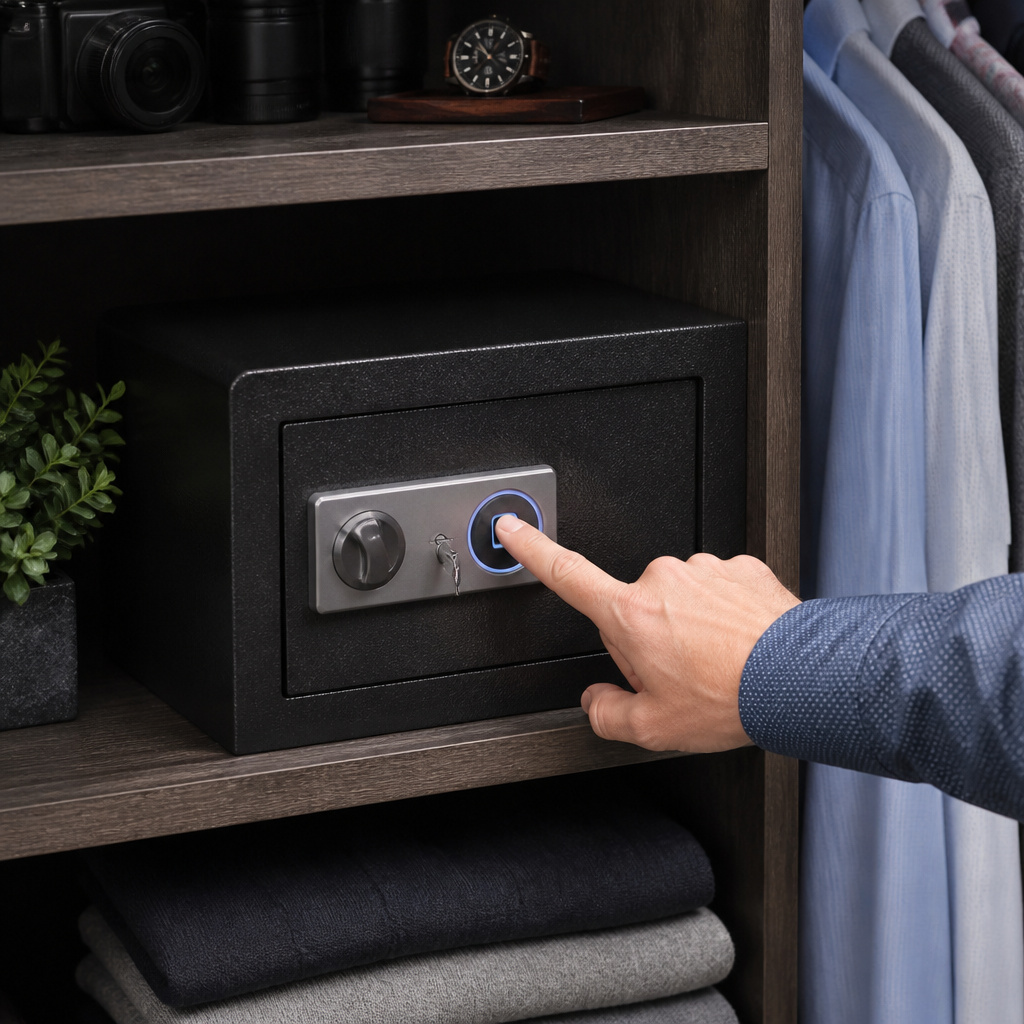
Barska Quick and Easy Access Biometric Safes sit at the intersection of speed, secure storage, and practical home defense, making them a central product category within any serious Gun Safes & Safety buying guide. A biometric safe uses a fingerprint scanner to verify identity and unlock without a key or manual combination, while quick-access design means the safe is built to open in seconds under stress. In product reviews, those terms matter because a safe can be sturdy yet frustratingly slow, or fast yet poorly constructed. I have tested bedside vaults, drawer safes, and compact pistol boxes long enough to know that real value comes from balancing access time, reliability, anti-tamper design, battery management, and fit for actual firearms.
Barska has become a familiar name in this category because it focuses on biometric handgun safes designed for nightstands, closets, offices, and vehicles. The company’s Quick and Easy Access line is especially relevant for owners who need to secure a defensive handgun from children, guests, or opportunistic theft while still keeping it available in an emergency. That use case defines this entire review hub. Buyers are not just comparing steel boxes; they are evaluating whether a specific model can open consistently in low light, whether it stores one pistol or several, whether the mounting hardware is adequate, and whether the scanner recognizes enrolled prints on the first touch.
This matters because firearm storage is both a safety issue and a legal issue. In many jurisdictions, negligent access by minors can create criminal or civil liability. Beyond law, responsible ownership demands layered risk reduction. A quick-access biometric safe can reduce unauthorized access without forcing owners into a slow routine that discourages secure storage. That is why this sub-pillar hub focuses on product reviews in a structured way: not only which Barska biometric safes exist, but how to assess them against recognized criteria such as lock redundancy, steel thickness, pre-drilled mounting points, internal foam protection, and false rejection rates. If you are researching Barska Quick and Easy Access Biometric Safes, this guide gives you the framework to compare models intelligently and connect to deeper reviews across the broader Gun Safes & Safety category.
What Barska Quick and Easy Access Biometric Safes Are Designed to Do
Barska positions these safes around immediate handgun access and controlled entry. In plain terms, they are intended to keep a firearm locked away from unauthorized hands while allowing an enrolled user to retrieve it rapidly. Most models use an optical fingerprint reader paired with a battery-powered locking mechanism. Many also include backup access through physical keys, and some add silent access modes or keypad support depending on the series. In practice, that means they are best suited for handguns, spare magazines, passports, cash, and compact valuables rather than long guns or heavy anti-burglary protection.
The phrase quick and easy access should be read carefully. It does not mean instantaneous under every condition. Fingerprint readers perform best when the scanner window is clean, the finger is placed consistently, and enrollment has been done thoughtfully using multiple angles of the same finger. In my experience, users who rush setup often blame the safe when the actual problem is poor enrollment. Barska units generally reward proper setup. When configured well, a bedside model can open fast enough to serve a home-defense role while still creating a meaningful barrier for children or casual intruders.
These safes also fill an important gap between cable-locked firearms and large traditional gun safes. A full-size safe is still the standard for broad theft resistance, fire protection, and collection storage. But large safes are not ideal for a single defensive pistol needed near a bed or desk. Barska’s compact biometric line addresses that gap. As a review category, then, these products should be judged on intended use: rapid retrieval and basic tamper resistance, not bank-vault performance.
How to Review Barska Biometric Safes Like a Serious Buyer
A useful product review starts with the right criteria. For Barska biometric safes, I focus on five categories: scanner reliability, opening speed, build quality, mounting options, and interior practicality. Scanner reliability is the top issue because a biometric safe is only as good as first-touch recognition. Opening speed comes next, especially for a bedside handgun box where seconds matter. Build quality includes door fitment, hinge protection, pry resistance, steel construction, and whether the lid opens smoothly without snagging. Mounting matters because even a locked safe can be stolen if it is not bolted down. Interior practicality covers whether the safe fits modern handguns with mounted lights, spare magazines, or documents without forcing awkward placement.
Battery dependency deserves its own mention. Most compact biometric safes run on AA batteries. That is normal, but buyers should look for low-battery alerts, easy external key backup, and battery compartments that do not require partially disassembling the unit. A safe that works perfectly in month one but becomes unreliable after neglected battery maintenance is not truly dependable. I advise replacing batteries on a schedule rather than waiting for failure, particularly for any unit used in a defensive role.
Noise is another real-world factor often overlooked in short product roundups. Some safes beep during operation, and some let you mute alerts. In a quiet house at night, that matters. So does lid action. A spring-assisted door that pops open too aggressively can shift contents; one that barely lifts may slow access. Good reviews describe these details because they shape user experience more than generic feature lists do.
| Review Factor | What to Check | Why It Matters |
|---|---|---|
| Fingerprint scanner | Enrollment capacity, first-touch recognition, multi-angle print setup | Determines whether the safe opens reliably under stress |
| Access speed | Time from touch to unlock, lid assist, button placement | Critical for bedside or defensive use |
| Construction | Steel body, recessed door, anti-pry design, internal hinges | Improves resistance to tampering and casual theft |
| Mounting | Pre-drilled holes, included hardware, surface compatibility | Prevents smash-and-grab removal of the entire safe |
| Capacity | Fit for full-size pistols, optics, lights, magazines | Avoids buying a safe that is unusable for your actual setup |
Popular Models and What Differentiates Them
Barska’s lineup includes compact biometric pistol safes, top-opening bedside units, and slightly larger security boxes intended for multiple handguns or mixed valuables. The most common buyer decision is between a slim single-handgun safe and a roomier multi-gun version. A slim box works well in a drawer, under a vehicle seat, or on a nightstand with limited space. It is often the better choice for minimalist carry pistols such as a Glock 19, SIG P365 XMacro, or Smith & Wesson M&P Compact. A larger box is better for owners using a full-size pistol with a weapon light, a spare magazine, and perhaps documents or jewelry.
Another differentiator is door orientation. Top-opening models are often preferred for bedside use because they present the grip in a natural downward reach. Front-opening models may suit closet shelves or cabinets better, where vertical clearance is limited. I have found that layout can matter as much as dimensions. A safe with adequate cubic space may still be awkward if the handgun must be inserted diagonally or if the lid blocks access.
Some Barska safes also vary by fingerprint capacity. Higher storage capacity helps households with multiple authorized users, but it can be overvalued. For many buyers, storing twenty or more prints sounds attractive but offers little practical benefit beyond two or three carefully enrolled fingers per user. The better question is whether the unit handles those stored prints accurately over time and after months of regular use.
Strengths, Weaknesses, and Real-World Performance
The strengths of Barska Quick and Easy Access Biometric Safes are straightforward: affordable entry into biometric access, convenient form factors, generally simple programming, and a broad enough range to fit common handgun-storage scenarios. For many households, that makes Barska a pragmatic middle-ground brand. You are usually not paying premium prices associated with heavier commercial security products, yet you still get faster access than a manual lockbox and better child deterrence than a trigger lock alone.
The weaknesses are equally important. Compact biometric safes in this price class are not substitutes for UL-rated burglary safes, and Barska models should not be marketed or understood that way. Steel thickness is limited compared with full-size residential security containers. Biometric scanners, while convenient, can produce occasional false rejections if fingers are wet, dirty, cut, or poorly placed. Some owners also discover that accessory-equipped pistols fit more tightly than expected, particularly with suppressor-height sights or bulkier lights.
In actual use, performance usually comes down to setup discipline. Owners who mount the safe securely, enroll the same finger several times from different angles, test opening in darkness, and replace batteries proactively tend to report positive results. Owners who skip those steps often end up dissatisfied. That pattern is not unique to Barska, but it is especially relevant in quick-access biometric reviews because no feature compensates for poor implementation.
Who Should Buy One and How to Choose the Right Fit
Barska biometric safes are best for handgun owners who prioritize fast controlled access in a bedroom, office, apartment, RV, or vehicle-adjacent setup. They are a strong fit for newer firearm owners transitioning from basic cable locks to more practical daily storage. They also suit experienced owners who already have a full-size gun safe but want a separate access point for one defensive handgun. If your main goal is preventing child access while preserving emergency readiness, this category makes sense.
If your main concern is theft resistance against determined burglars, a compact Barska safe should be one layer, not the whole plan. Use it for immediate access, but store the rest of your firearms in a heavier anchored gun safe. Likewise, if you need fire protection for documents or heirlooms, check ratings carefully because many quick-access handgun safes are not built around meaningful fire insulation. Product reviews should state those limits clearly.
To choose the right model, start with your firearm and placement location. Measure your pistol with any optic or light installed. Measure the drawer, shelf, or nightstand where the safe will live. Decide whether you need one-handed top access or front-door access. Confirm mounting points before buying. Then compare biometric capacity, backup key design, battery type, and internal padding. That process leads to better results than shopping by advertised speed alone.
How This Hub Supports the Broader Gun Safes and Safety Topic
As a sub-pillar hub, this article is meant to organize product reviews within a wider Gun Safes & Safety resource. Barska Quick and Easy Access Biometric Safes deserve that treatment because they raise recurring buyer questions that connect to adjacent topics: how biometric locks compare with RFID or keypad safes, how to mount a handgun safe properly, how to store a home-defense pistol safely with children in the home, and when a compact lockbox is not enough. Those are the natural next steps for internal review coverage.
A strong review hub does more than list products. It gives readers a repeatable decision framework and directs them toward the next article they need. Here, that means understanding that Barska’s lineup is useful when evaluated honestly: fast access, reasonable convenience, and suitable security for specific scenarios, with clear limitations in burglary resistance and size. The brand’s appeal is practical, not mythical. It solves a common storage problem for many handgun owners better than a loose nightstand drawer and faster than a traditional dial safe.
If you are building out your firearm storage plan, treat this guide as your starting point for Product Reviews under Gun Safes & Safety. Compare models by access reliability, mounting, capacity, and everyday usability, then move deeper into individual reviews and companion guides before you buy. The right Barska biometric safe can deliver fast security at your fingertips, but the best outcome comes from matching the model to your handgun, your room, and your actual routine. Start with those specifics, and your next safe choice will be smarter and safer.
Frequently Asked Questions
1. What makes Barska Quick and Easy Access Biometric Safes different from traditional gun safes?
Barska Quick and Easy Access Biometric Safes are designed around one major advantage: speed. Traditional gun safes often prioritize long-term storage capacity, thick steel construction, and multi-step locking systems, which are excellent for securing firearms and valuables but can be slower to open when seconds matter. A quick-access biometric safe, by contrast, is built for immediate entry. Instead of dialing a combination or locating a key in the dark, you place an enrolled finger on the scanner and the lock releases in moments.
That difference matters in real-world home defense and bedside storage scenarios. Under stress, fine motor skills can decline, and even familiar mechanical locks can feel slower than expected. Barska’s biometric models are intended to reduce those delays by offering a straightforward fingerprint-based entry method. This makes them especially appealing for handgun owners who want a secure place to store a defensive firearm while still maintaining fast access.
Another important distinction is size and intended use. Many Barska quick-access safes are compact enough for nightstands, closets, shelves, or vehicle-related storage applications, depending on the model. They are not usually meant to replace a full-size gun safe for a large firearm collection. Instead, they fill a specific role within a broader gun safety plan: securing a single handgun or a small number of critical items in a location where immediate access is the priority.
In short, the defining benefit is the balance between security and readiness. These safes are meant to help prevent unauthorized access by children, guests, or intruders while avoiding the frustration of a lock that is technically secure but too slow or cumbersome when you need it most.
2. Are biometric safes like Barska models reliable enough for home defense use?
Biometric safes can be highly practical for home defense, but reliability depends on both the product design and how the owner sets it up and maintains it. Barska biometric safes are popular because they focus on quick entry, but no biometric safe should be treated as a “set it and forget it” device. To get dependable performance, users need to properly enroll fingerprints, test the scanner regularly, and keep the safe powered with fresh batteries when applicable.
Fingerprint reliability is influenced by several factors. A clean scanner, a properly placed finger, and a high-quality enrollment process all improve success rates. Many users get better results by programming the same finger multiple times from slightly different angles, as well as enrolling more than one authorized finger. This helps account for natural variation in placement, hand position, and pressure, especially during stressful situations or low-light conditions.
It is also important to understand that biometric access should be part of a layered system rather than the only feature you evaluate. A good home defense safe should offer fast opening, consistent lock performance, solid construction for its class, and a backup entry method such as a key override. Barska models often include that kind of redundancy, which is valuable if batteries run low or the scanner does not read on the first attempt.
For many households, the answer is yes: a Barska biometric safe can be reliable enough for home defense if it is chosen realistically and used correctly. It is best suited for owners who want faster access than a manual lock typically offers, but who also understand the importance of routine testing and backup planning. The safest approach is to practice opening the safe periodically under realistic conditions so that operation feels familiar when it truly counts.
3. How secure are Barska Quick and Easy Access Biometric Safes against unauthorized access?
These safes are designed to provide meaningful security for quick-access storage, especially against casual or opportunistic unauthorized access. For example, they can be very effective at keeping firearms away from children, visitors, or a burglar looking for an easy grab. Their biometric locking system adds a layer of user-specific access control that is more secure and convenient than leaving a firearm unsecured in a drawer, under a mattress, or in a nightstand.
That said, security should always be judged in relation to the safe’s intended purpose. A compact quick-access biometric safe is not the same thing as a heavy, full-size burglary-rated safe or a dedicated vault. Its role is generally to secure a handgun or small valuables while allowing rapid retrieval. Within that category, key factors include steel construction, pry resistance, lock quality, tamper resistance, and whether the safe can be bolted down to a fixed surface.
Mounting is especially important. Even a well-designed compact safe becomes less secure if it can simply be carried away. Many buyers overlook this step, but anchoring the safe to furniture, a floor, or another stable structure greatly improves real-world security. Barska quick-access models are often strongest when they are installed properly and used as intended rather than treated as portable, unanchored storage.
It is also wise to have realistic expectations about biometric security. Fingerprint access reduces the chance of unauthorized opening by someone who does not have an enrolled print, but it should not be marketed in your mind as invincible. The true value is in the combination of restricted access, speed, and deterrence. For bedside handgun storage, that combination can be highly effective. For long-term storage of multiple firearms, important documents, and high-value items, many owners pair a quick-access safe with a larger traditional gun safe for comprehensive protection.
4. What should buyers look for when choosing a Barska biometric safe?
Start by thinking about your actual use case rather than shopping by feature list alone. If the safe is for bedside home defense, the most important qualities are fast opening, consistent fingerprint recognition, easy placement, and a size that fits your firearm with any attached accessories such as a light or optic. If it is for closet or office storage, you may care more about interior space, mounting flexibility, and how discreetly the unit fits into the room.
Scanner performance should be near the top of the list. Look for a model that can store multiple fingerprints and allows simple enrollment. In practical terms, this means different members of the household may be authorized if appropriate, and a single user can register multiple fingers for better reliability. You should also check whether the safe offers silent or low-noise operation, interior protective lining, and a lid or door design that opens cleanly without snagging.
Construction and mounting options matter just as much as electronics. A quick-access biometric safe should feel solid, close securely, and provide pre-drilled mounting points or another reliable anchoring method. The best ownership experience usually comes from choosing a model that is strong enough for its category, easy to bolt down, and sized correctly for where it will live. A safe that is technically secure but awkward to position or too small for your handgun can quickly become frustrating.
Finally, never ignore backup access and power management. A dependable Barska biometric safe should include a manual override option and straightforward battery replacement. Since speed is the product’s main selling point, buyers should favor models that are simple to maintain and easy to test regularly. The best choice is rarely the one with the most marketing language; it is the one that performs consistently, fits your firearm properly, and integrates smoothly into your daily safety routine.
5. How can you get the best performance from a Barska Quick and Easy Access Biometric Safe?
The first step is proper setup. When enrolling fingerprints, take your time and follow the instructions carefully rather than rushing through the process. Register the same finger more than once if the safe allows it, and enroll additional fingers that you are likely to use under stress. Many experienced owners program both thumbs and index fingers so they have options depending on hand position, body posture, or how the safe is mounted.
Routine maintenance is equally important. Keep the fingerprint scanner clean and free from dust, oils, and residue. Replace batteries on a regular schedule instead of waiting for signs of weakness. Test both biometric access and any backup key override so you know the system is functioning as expected. A safe intended for fast defensive access should be checked proactively, because reliability is not something you want to verify for the first time during an emergency.
Placement can also improve performance dramatically. Install the safe where your hand can approach the scanner naturally and where the door or lid can open fully without obstruction. If it is beside a bed, make sure you can reach it comfortably from your normal sleeping position. If it is inside a closet or cabinet, confirm that shelves, walls, or nearby objects do not interfere with your ability to present a finger quickly and retrieve the contents smoothly.
Finally, practice matters more than many buyers expect. Quick-access performance is not just about electronics; it is also about familiarity. Open the safe periodically in daylight and darkness, from standing and seated positions, and in the exact place where it is installed. This turns the safe from a gadget into a dependable part of your home defense plan. When a Barska biometric safe is properly mounted, well maintained, and regularly tested, it is far more likely to deliver the fast, secure access that buyers expect from the category.