
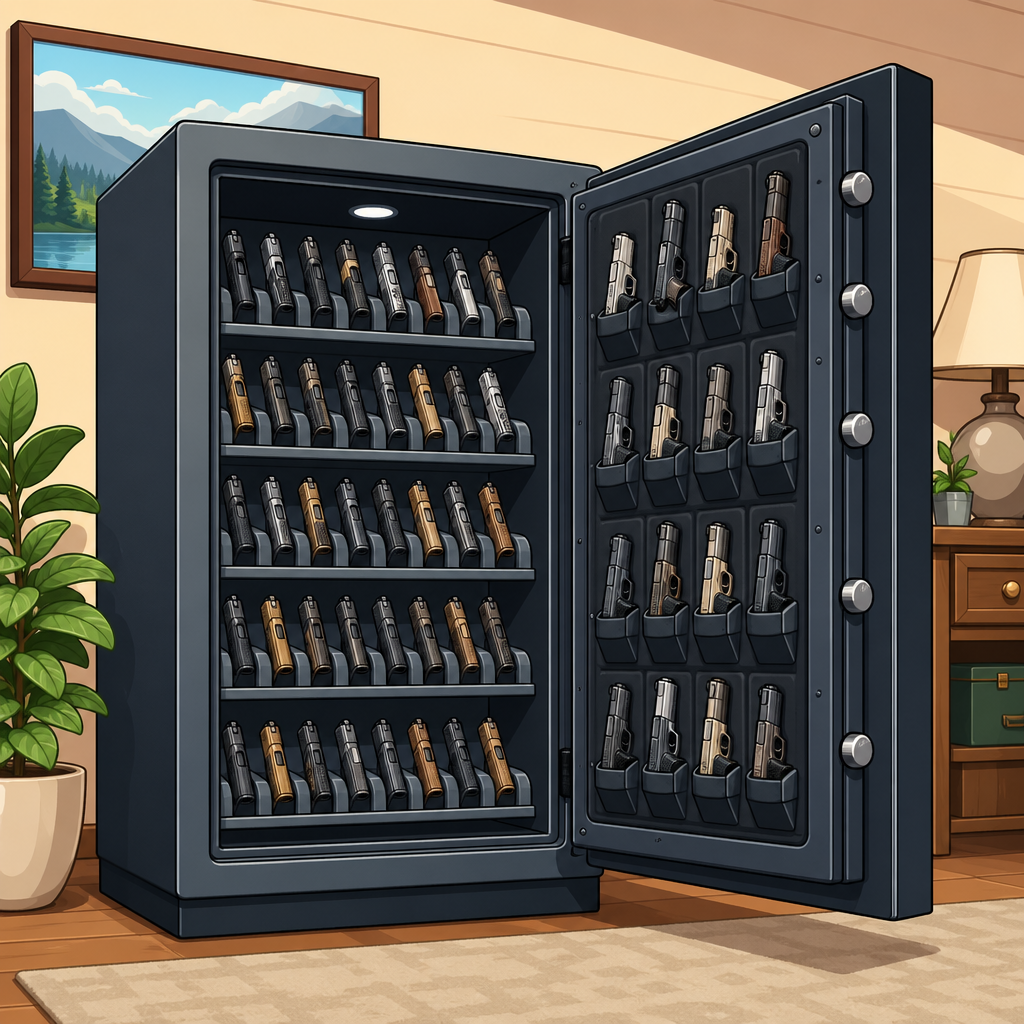
High-capacity handgun safes solve a specific storage problem: they secure a growing pistol collection, magazines, documents, and accessories in one controlled space without sacrificing fast access, fire protection, or organization. For buyers comparing the best gun safes that offer high-capacity storage for handguns, the challenge is not finding options but separating true security features from marketing language. In this buying guide, high-capacity usually means a safe that can hold at least ten to twenty handguns with shelving, door organizers, racks, or modular interiors designed around pistols rather than long guns. That distinction matters because many cabinets advertise large numbers yet waste interior volume, fit poorly around optics, or provide little protection against theft, humidity, and fire. I have helped evaluate residential safes for mixed collections, and the same pattern appears repeatedly: buyers underestimate future growth, overestimate manufacturer capacity ratings, and overlook installation details that determine whether a safe performs as expected. A well-chosen handgun safe protects investments, supports safe handling habits, simplifies inventory, and keeps firearms away from unauthorized users. This hub guide explains what high-capacity handgun storage really means, which construction details matter most, how to compare common safe types, and how to buy for security, accessibility, and long-term value.
What High-Capacity Handgun Storage Really Means
High-capacity storage is not just about the biggest external dimensions. In practical terms, the best gun safes for handguns maximize usable interior cubic space, support dense but organized placement, and protect each firearm from impact, moisture, and careless stacking. Capacity claims can be misleading because manufacturers often count compact pistols placed tightly without accounting for optics, weapon lights, spare magazines, suppressor-height sights, or protective socks. A safe advertised for twenty handguns may realistically store twelve to sixteen full-size pistols comfortably. That is why interior layout matters as much as shell size.
Most buyers in this category choose from three broad formats: dedicated handgun safes, full-size residential security containers with pistol-focused interiors, and modular gun cabinets upgraded with shelves and racks. Dedicated handgun safes prioritize quick access and often fit closets, offices, or bedrooms, but the highest-capacity models tend to be heavy drawer-style or chest-style units. Full-size safes provide the most flexibility for mixed storage, including documents and valuables, though they consume more floor space. Cabinets cost less and may hold many handguns, but they generally offer thinner steel and lower burglary resistance.
For a sub-pillar buying guide, the key buying principle is simple: buy based on your real collection plus projected growth over five to ten years. If you own eight pistols today and rotate carry guns, range guns, and collectibles, a safe rated for only twelve handguns is already too small. High-capacity handgun storage should also support labeling, inventory control, dehumidification, and easy cleaning. The best setup is one you can actually use consistently without burying firearms behind each other.
Core Security Features That Separate Good Safes From Weak Ones
The first factor to evaluate is steel thickness. In the handgun-safe segment, body steel often ranges from 14 gauge on lighter units to 10 gauge, 9 gauge, or heavier on premium safes. Lower gauge numbers mean thicker steel. For meaningful burglary resistance in a high-capacity safe, 10 gauge bodies or composite constructions with reinforced doors are preferable. Thin steel can be bent, peeled, or cut more quickly with pry bars and portable power tools. Door thickness matters even more because most attacks focus there.
Locking systems deserve equal attention. Mechanical dial locks remain durable and time-tested, while electronic keypad locks offer faster access and simpler code changes. Some premium models add redundant key backup or biometric entry, though biometric systems vary widely in reliability. In my experience, a quality electronic lock from a recognized lock maker is usually the best balance for a household handgun safe, provided batteries are replaced on schedule and the keypad is tested routinely. Cheap biometric locks often fail under dry fingers, angled placement, or inconsistent enrollment.
Look closely at boltwork, hinges, relockers, and anchor points. Active locking bolts on at least three sides improve resistance to prying, but more bolts do not automatically mean more security if the door frame is weak. Internal hinges protect against hinge attacks and allow a cleaner profile, while external hinges can permit wider door swing. Hard plates and relockers matter because they complicate drilling attacks. Just as important, a safe must be bolted into concrete or substantial framing. Even a strong safe can be defeated if thieves can tip it over and work on it privately.
Fire Protection, Moisture Control, and Environmental Risks
Fire ratings in gun safes require careful reading. Some manufacturers state temperatures and durations based on internal testing, while others rely on independent verification such as UL classifications on selected models or components. A claim like 60 minutes at 1400 degrees Fahrenheit sounds useful, but buyers should ask what the internal temperature threshold was, whether the rating covered the whole safe, and how door seals performed. Handguns are less vulnerable to stock damage than long guns, but heat can still damage grips, optics, lubricants, ammunition packaging, and important paperwork stored alongside firearms.
Moisture is often the more immediate threat for handgun collections. Basements, garages, and exterior-wall closets experience temperature swings that create condensation. Blued steel pistols, magazines, and small parts can rust surprisingly quickly in stagnant air. Effective high-capacity storage therefore includes a dehumidifier rod, rechargeable desiccants, or both. I strongly recommend a hygrometer inside any handgun safe. Relative humidity around 45 to 50 percent is a solid target for most collections. Higher levels increase corrosion risk; excessively low levels can dry some materials unnecessarily.
Placement also affects performance. A safe in a conditioned interior room generally faces lower moisture stress than one in an uninsulated garage. If garage placement is unavoidable, elevate the safe slightly off bare concrete and monitor humidity more often. Fireboard-lined safes can also wick moisture in humid environments, which is another reason active moisture control matters. Environmental protection is not a luxury feature; it is part of preserving function, finish, and value.
Best Safe Types for Large Handgun Collections
Different safe categories fit different buyers, budgets, and rooms. The comparison below reflects what usually matters most when storing many handguns efficiently.
| Safe type | Best for | Main strengths | Main limitations |
|---|---|---|---|
| Dedicated high-capacity handgun safe | Pistol-focused collections in bedrooms, offices, closets | Efficient shelving, quick access, compact footprint | Less flexible for rifles or bulky valuables |
| Full-size residential gun safe | Growing collections and mixed firearm storage | Highest total capacity, stronger fire protection, room for documents | Heavier, costlier, requires more floor space |
| Modular cabinet with pistol racks | Budget-conscious buyers needing organization | Lower cost, adaptable interior, easier installation | Typically lower steel thickness and burglary resistance |
Dedicated handgun safes from brands such as Fort Knox, V-Line, Vaultek, and SecureIt can work well when the interior is intentionally arranged around shelves, trays, and rack systems. For the highest-capacity applications, however, many collectors end up buying a larger residential safe from makers like AMSEC, Liberty, Browning, Rhino Metals, or Hollon and then reconfiguring shelves for pistols. That approach often gives better steel, better fire ratings, and more room for future expansion.
Modular systems deserve consideration if stairs, apartment constraints, or rental housing make traditional safe delivery difficult. SecureIt-style cabinets, for example, can be practical for organization and access, but they should be understood as a different security class from a heavy composite safe. Matching the safe type to your threat model is more important than chasing a generic “best” label.
Interior Layout, Capacity Planning, and Access Speed
The best high-capacity handgun safes make every inch usable. Shelf spacing should fit full-size pistols upright or on angled racks without forcing optics to scrape the shelf above. Door organizers add meaningful capacity for magazines, passports, and compact handguns, but they can also interfere with shelf depth if poorly designed. Adjustable shelving is essential because handgun collections change. Today’s layout may include polymer striker-fired pistols; later it may need room for revolvers, metal-frame guns, boxed ammunition, or hearing protection.
Pistol racks are one of the simplest upgrades with the highest return. Foam or wire racks keep handguns separated, visible, and easy to count. This reduces handling, protects finishes, and speeds retrieval. I recommend planning around realistic spacing rather than maximum density. If firearms are packed too tightly, owners stop rotating inventory, scratch slides and optics, and create a frustrating access problem that defeats the purpose of organized storage.
Access speed depends on both lock choice and interior discipline. If a safe stores twenty pistols but the one defensive handgun you need is always buried behind range gear, the setup is poorly designed. Separate defensive access from bulk storage whenever possible. Keep primary-use handguns on a middle shelf or dedicated quick-access compartment and reserve lower shelves for backups, collectibles, and accessories. Good storage is not just secure; it is intuitive under stress.
How to Evaluate Brands, Certifications, and Real-World Value
Brand reputation matters because safes are long-life products that may require lock support, replacement parts, warranty service, and moving guidance years after purchase. Established manufacturers usually provide clearer specifications on steel thickness, lock brands, fire insulation, and boltwork. Be cautious with listings that emphasize interior lighting, branding, or glossy paint while omitting body gauge and anchor hole details. Those omissions usually signal a value-engineered product aimed more at appearance than protection.
Certifications can help, but they must be interpreted correctly. UL-listed locks indicate that a locking component has met a recognized standard, which is useful. Residential Security Container ratings, California DOJ approvals on certain models, and independent fire testing also add confidence. Still, not every good safe has every certification, and not every certified feature guarantees complete protection against determined attack. Standards should inform decisions, not replace close reading of specifications.
Total value includes delivery, installation, humidity control, power access, and interior accessories. A lower-priced safe can become more expensive after freight surcharges, stair carries, and mandatory anchoring hardware. Conversely, a premium safe that includes shelves, door organizers, and electrical passthroughs may be the better buy over ten years. Read warranty terms carefully, especially exclusions for cosmetic damage, electronic lock failures, and fire claims. Real-world value comes from performance after installation, not just the price tag on a retailer page.
Buying Mistakes to Avoid and How to Choose Confidently
The most common mistake is buying for current inventory only. The second is trusting advertised capacity numbers without mapping actual handgun dimensions and accessories. The third is ignoring the room where the safe will live. Measure doorways, stairwells, flooring, and opening clearance before ordering. I have seen buyers choose an excellent safe that could not make the final turn into a closet, forcing a downgraded replacement.
Another frequent error is overprioritizing speed over security. Small biometric boxes have a role for one bedside pistol, but they are rarely the answer for a serious collection. If your goal is high-capacity storage for handguns, focus first on structural integrity, anchoring, and organized interior design. Then create a layered setup with a separate quick-access safe if needed. That model reflects how many experienced owners actually store firearms at home.
To choose confidently, start with a written list: number of handguns, optics, magazines, documents, and other valuables; required fire resistance; preferred lock type; room dimensions; and target budget including delivery. Narrow your options to safes with clearly stated steel thickness, credible lock hardware, anchor capability, and adjustable interiors. When possible, see models in person. Open the door, inspect welds, move shelves, and picture your collection inside. The best handgun safe is the one that remains secure, organized, and practical every day, not just impressive in a product photo.
High-capacity handgun safes are worth the investment because they do more than hide firearms; they create a controlled storage system that improves safety, preserves condition, and supports responsible ownership as a collection grows. The strongest buying decisions come from understanding real capacity, comparing steel and lock quality, accounting for fire and moisture risks, and choosing an interior layout that keeps handguns visible and protected. Dedicated pistol safes, full-size residential safes, and modular cabinets each have a place, but the right choice depends on your threat level, space, and future expansion plans. Buyers who plan for growth, insist on clear specifications, and budget for proper installation usually end up satisfied for years. As the central buying guide within Gun Safes & Safety, this page should help you evaluate every related review and comparison with sharper judgment. Use it as your checklist, shortlist two or three credible models, and invest in a safe that fits both your collection and your home.
Frequently Asked Questions
What qualifies as a high-capacity handgun safe?
A high-capacity handgun safe is typically designed to store a larger pistol collection while still leaving room for magazines, important documents, and related accessories. In practical buying terms, that usually means a safe capable of holding at least ten handguns, though many models can accommodate significantly more depending on interior layout and shelf configuration. The key difference between a standard handgun safe and a true high-capacity model is not just size, but how efficiently that interior space is organized. Adjustable shelves, door organizers, handgun racks, and modular storage systems all help maximize usable capacity rather than forcing owners to stack firearms in ways that are inconvenient or unsafe.
It is also important to understand that manufacturer capacity claims are often optimistic. A safe advertised for a certain number of firearms may assume tight placement, minimal accessories, or a mix of gun sizes that does not reflect real-world use. Full-size pistols with optics, weapon lights, extended magazines, and hard cases all reduce actual storage capacity. For that reason, shoppers should focus less on the advertised number alone and more on interior dimensions, shelf spacing, accessory storage, and whether the layout supports the way they plan to store their collection. A well-designed high-capacity handgun safe should provide secure storage without crowding, allow quick identification of each firearm, and support future growth as the collection expands.
What security features matter most when choosing a high-capacity safe for handguns?
The most important security features begin with the safe’s physical construction. Look for a solid steel body, a reinforced door, strong locking bolts, and pry-resistant design elements that make forced entry more difficult. Steel thickness matters because it directly affects resistance to attack, but it should be considered alongside door construction, hinge protection, and the quality of the locking mechanism. A safe with thin steel and flashy marketing claims may not provide meaningful protection, while a well-built unit with a robust frame and secure locking system offers a much better level of real security. If the safe includes pre-drilled anchor points, that is another major advantage, because bolting the unit to the floor or wall structure significantly reduces the risk of theft by removal.
Lock type is another major factor. Electronic keypad locks offer fast access and convenience, biometric locks can be useful for speed if they are reliable, and mechanical dial locks are often valued for long-term durability and simplicity. None of these is automatically best for every buyer. What matters is the quality of the lock, consistent performance, and whether it fits the owner’s access needs. Buyers should also pay attention to relockers, hard plates, anti-tamper features, and backup entry methods in case of battery failure or lock malfunction. If fire protection is a priority, review actual fire ratings carefully rather than assuming all ratings are equal. Ultimately, the best high-capacity handgun safe combines solid anti-theft construction, dependable access, secure anchoring capability, and interior protection features that match the value of what is being stored.
Are fire protection and water resistance important in a handgun safe with large storage capacity?
Yes, they can be extremely important, especially when the safe is being used for more than just firearms. Many high-capacity handgun safes are also used to store passports, cash, legal papers, digital media, suppressor paperwork, and other valuables that are vulnerable to heat, smoke, and moisture. Fire protection adds another layer of defense by helping maintain survivable internal temperatures for a specific amount of time under tested conditions. That said, buyers should read fire ratings carefully. Not all fire tests are the same, and some ratings are based on manufacturer standards rather than independent verification. A stated fire rating is useful, but it should be viewed as one part of the overall protection package, not a guarantee under every house fire scenario.
Water resistance matters as well because many losses after a fire come from sprinkler systems, firefighting efforts, or flooding conditions inside the home. Some safes include door seals that help block smoke and water intrusion, while others offer limited water protection for short durations. If documents, electronics, or collectible firearms are going inside the safe, moisture management becomes especially important. Buyers should also think beyond disasters and consider everyday humidity control. A larger handgun safe with poor ventilation or no dehumidification plan can expose metal components to corrosion over time. For long-term storage, it is smart to pair the safe with desiccants or an internal dehumidifier rod when compatible. A high-capacity safe should not only hold more gear, but also protect that gear from the environmental risks that come with storing everything in one place.
How should a high-capacity handgun safe be organized for fast access and efficient storage?
Good organization is one of the biggest advantages of buying a high-capacity handgun safe, but it only works if the interior is set up intentionally. The best approach is to separate firearms by size, frequency of use, and role. Defensive handguns that may need to be accessed quickly should be placed in the most reachable positions, while range pistols, collectibles, and backup firearms can go on secondary shelves or dedicated racks. Pistol stands, foam handgun racks, door-mounted magazine panels, and labeled bins for optics, holsters, and ammunition-related accessories can dramatically improve efficiency. Without that structure, even a large safe can become crowded and frustrating to use.
It is also wise to plan for growth. Many owners buy a safe based on current needs and quickly outgrow it, especially when adding extra magazines, red dot optics, cleaning supplies, and paperwork. Adjustable shelving is valuable because it lets the interior evolve over time instead of locking the owner into one layout. Keep heavier items lower for stability, avoid piling firearms on top of each other, and leave enough space between handguns to prevent finish wear and improve visibility. If the safe stores both firearms and documents, use separate areas so paperwork is protected from oils and frequent handling. A well-organized high-capacity handgun safe should make it easier to inventory the collection, retrieve the right pistol quickly, and maintain safe, orderly storage without wasting valuable interior space.
Is a large handgun safe better than multiple smaller safes?
For many buyers, one large high-capacity handgun safe is the better solution because it centralizes storage, simplifies organization, and often provides better value per cubic foot of protected space. A single larger safe can hold handguns, magazines, paperwork, and accessories in one secure location, which is especially useful for collectors or households trying to reduce clutter and improve accountability. It also makes it easier to manage humidity control, inventory, and maintenance because everything is housed together. If the safe includes quality shelving and access features, a larger model can be both secure and efficient without sacrificing convenience.
That said, multiple smaller safes can make sense in some situations. A homeowner may want one high-capacity safe for long-term storage and a separate quick-access safe for a bedside defensive handgun. Others may prefer distributed storage for convenience across different rooms or to separate collection pieces from everyday-use firearms. The tradeoff is that multiple safes often cost more in total, take up more floor space, and may complicate security if some units are lighter-duty than others. The right choice depends on the collection size, home layout, access priorities, and budget. In most cases, if the main goal is to secure a growing handgun collection with room for accessories and documents, a well-built high-capacity safe offers the most practical long-term solution.