
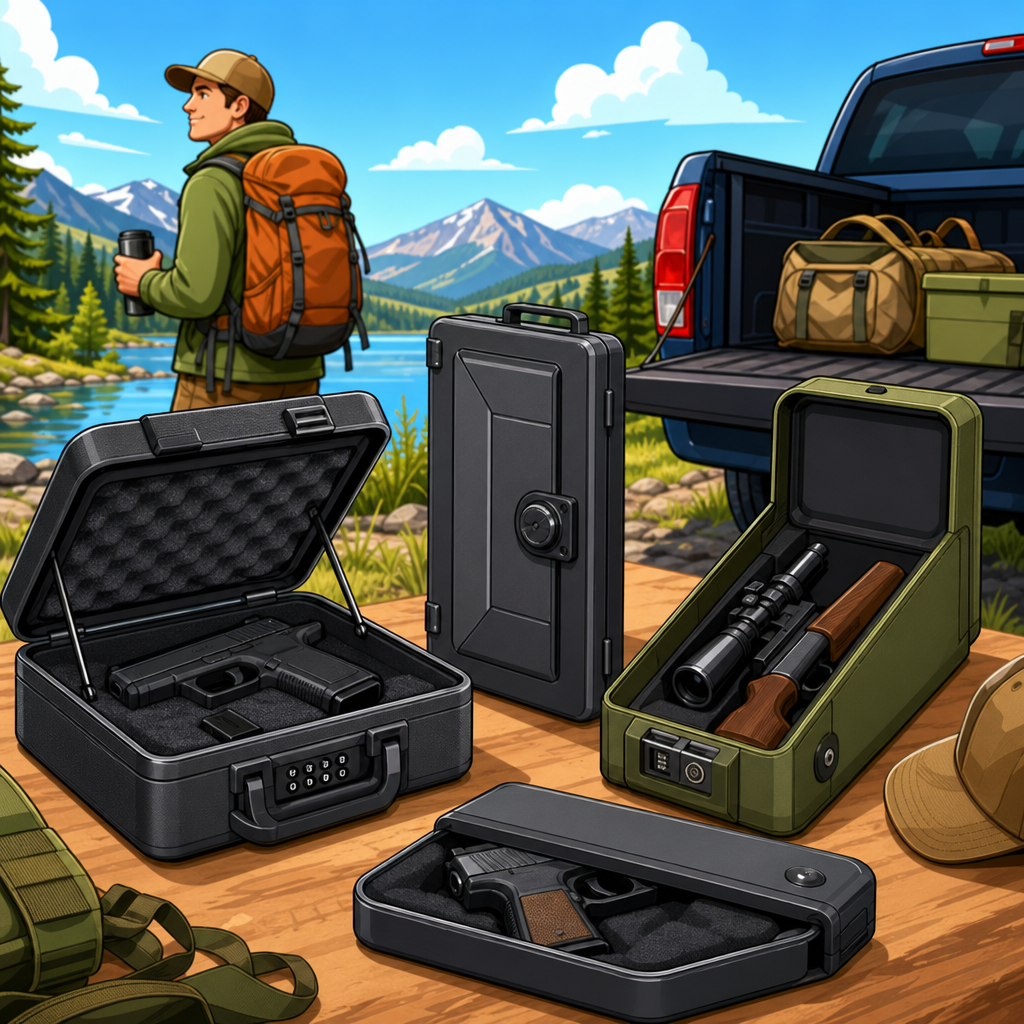
Choosing the best lightweight gun safes for portable protection means balancing security, speed, weight, legal compliance, and daily practicality. A lightweight gun safe is a compact lockbox or portable safe designed to secure a handgun or other small firearm without the mass and fixed installation of a full-size residential security container. In my experience testing lockboxes for travel, vehicle storage, bedside access, and temporary off-body carry, the difference between a useful portable safe and a frustrating one comes down to details: lock reliability, steel gauge, interior fit, cable anchoring, battery behavior, and how quickly the safe opens under stress.
Portable protection matters because many owners need secure storage away from a dedicated gun room. A handgun may need to be secured in a hotel, inside a vehicle, at a rented apartment, in a dorm-adjacent off-campus setting where local rules apply, or in a home where children or visitors are present. Responsible storage is not simply about theft prevention. It is also about unauthorized access, especially in transitional moments when a firearm is carried, staged for self-defense, or transported. The best lightweight gun safes reduce those risks while staying easy enough to use every day.
This buying guide serves as a hub for portable gun-safe decisions. It explains which features matter, how lock types compare, what materials and standards signal quality, and which use cases demand specialized designs. If you are comparing biometric handgun safes, TSA-compatible travel lockboxes, car gun safes, or tethered bedside boxes, the goal is the same: find a portable safe light enough to move, strong enough to deter quick access, and dependable enough to trust when seconds count.
What Makes a Lightweight Gun Safe Worth Buying
A lightweight gun safe is worth buying when it solves a real storage problem without introducing new failure points. Weight alone is not the objective. The ideal unit is portable enough to carry or reposition, yet built from formed steel with reinforced seams, concealed hinges where possible, and a lock mechanism that resists casual prying. Most good portable handgun safes weigh between 4 and 15 pounds. Below that, many products become little more than thin lockboxes. Above that, daily portability drops off sharply unless the safe has a dedicated purpose, such as vehicle mounting.
For most buyers, the essential features are straightforward. First, the safe should fit the actual firearm, including a mounted optic or weapon light if applicable. I regularly see people buy a compact safe only to discover their pistol no longer fits once a red dot or taller suppressor-height sights are added. Second, it should open consistently in low light, half awake, or under stress. Third, it needs at least one anchoring method, usually a steel security cable or hard-mount option. A portable safe that can be carried away easily still protects against unauthorized access, but it does less for theft resistance.
Build quality shows up in subtle ways. Better safes use thicker steel, cleaner welds, tighter lid gaps, and internal foam that supports rather than binds the firearm. Reputable brands publish dimensions clearly and specify whether external measurements differ substantially from usable interior space. Better models also include backup keys, low-battery warnings, and tamper alerts. In practice, these are not luxury features. They are what separate a product that works in reviews from one that works after a year of regular use.
Key Buying Criteria: Size, Weight, Lock Type, and Construction
The first decision is size. A portable handgun safe should be sized around your largest realistic carry configuration, not your smallest pistol. If you rotate between a Glock 19 with a micro red dot, a full-size duty pistol, or a revolver with a speed loader, buy for the largest combination you expect to secure. Interior dimensions matter more than exterior dimensions, especially for clamshell models where hinge geometry reduces usable space. If the safe is for documents, passports, spare magazines, or medication as well, verify divided compartments do not compromise firearm access.
Weight should reflect how the safe will be used. For hotel travel, 4 to 8 pounds is a practical range. For under-seat vehicle use, 8 to 15 pounds often gives better rigidity and pry resistance. Ultralight models are easier to stash in luggage or a backpack, but they usually rely more heavily on cable anchoring and less on structural strength. There is no free lunch here. Lighter safes are more convenient; heavier ones generally feel more trustworthy when someone attempts a quick smash-and-grab.
Lock type is the next major variable. Mechanical simplex-style pushbutton locks are prized because they do not require batteries and can be opened by touch, but they tend to appear on more expensive products. Electronic keypad safes are common, affordable, and quick if the keypad is responsive and the buttons are well spaced. Biometric safes are popular for fast access, but fingerprint performance varies widely depending on sensor quality, enrollment method, skin condition, and battery state. Many of the best portable biometric gun safes include a keypad or key backup because no biometric system is flawless.
Construction details matter more than marketing labels. Look for 16-gauge steel or thicker as a baseline for serious portable use, understanding that many compact lockboxes use thinner material to save weight and cost. A recessed door, anti-pry lips, welded seams, and robust hinge pins improve security more than a generic claim of “tamper proof.” Foam interiors should protect the finish without blocking the lockwork. If the safe will live in a vehicle or humid climate, corrosion-resistant finishes and sealed electronic compartments are worth prioritizing.
Comparing Lock Types for Portable Protection
Each lock type serves a different user. Mechanical locks are best for reliability and long-term ownership. If you want a bedside or travel safe that can sit unused for months and still open instantly, a mechanical lock is hard to beat. The downside is cost, plus a learning curve for entering the combination by feel. Electronic keypads are usually the best middle ground. They are simple to program, relatively fast, and widely available across price tiers. The critical factor is build quality: mushy keypads, weak solenoids, and poor battery contacts are common failure points on cheap units.
Biometric locks can be excellent when well implemented. Higher-end models from brands such as Vaultek and Hornady often support multiple enrolled fingerprints, faster sensors, and app-based battery monitoring. Still, they require disciplined setup. In testing, fingerprint safes perform best when users enroll the same finger several times from slightly different angles and maintain clean, dry sensor surfaces. They perform worst when purchased and trusted immediately without testing. For defensive access, I advise treating biometrics as a convenience layer, not the sole reason to trust a safe.
| Lock Type | Best For | Main Strength | Main Limitation |
|---|---|---|---|
| Mechanical pushbutton | Bedside, long-term reliability | No batteries, tactile entry | Higher cost, fewer models |
| Electronic keypad | General home, travel, vehicle use | Good speed and value | Battery dependence |
| Biometric | Fast personal access | Quick opening for enrolled users | Sensor quality varies widely |
| Key-only | Budget backup storage | Simple and inexpensive | Slower access, key management risk |
If you are deciding between biometric and keypad, ask one practical question: how will this safe actually be opened at 2 a.m., in a hotel room, or inside a cramped vehicle? That scenario usually reveals the right choice. For many buyers, the answer is a keypad or mechanical safe with a biometric option rather than a biometric-only design.
Best Use Cases: Travel, Vehicles, Bedside Storage, and Temporary Carry
Different use cases favor different designs. For air or hotel travel, the best lightweight gun safe is typically a compact steel lockbox with a cable, non-slip base, and dimensions that fit discreetly in luggage. Airline rules for unloaded firearms in checked baggage require a hard-sided locked container, but travelers must still verify current TSA guidance and the airline’s own firearm policy before every trip. In practice, a good travel safe protects the gun in a hotel room, secures it during road stops, and doubles as a legal transport container where local law requires secure storage.
For vehicle storage, prioritize a safe that fits the vehicle layout and can be anchored effectively. Under-seat profiles work well in trucks and SUVs, while console vaults are more vehicle-specific and less portable. A cable-only setup is better than leaving a firearm unsecured, but hard mounting is better when feasible. Remember that vehicles are high-risk theft environments. Even the best car gun safe is a delay device, not a substitute for taking the firearm with you when lawful and practical.
Bedside storage introduces a different priority: immediate access with child resistance. Here, opening speed, quiet operation, and predictable hand placement matter more than ultra-low weight. Some owners prefer a vertical quick-access safe mounted to furniture; others want a low-profile horizontal model that slides into a drawer. Test the angle from which you reach the safe. A lock that is easy while standing may be awkward from bed. This is one of the most overlooked buying mistakes.
Temporary off-body carry, such as storing a firearm in a backpack at work where lawful but sensitive, demands discretion and retention. The safe should be compact, low profile, and resistant to accidental opening. Rounded corners, secure cable routing, and a lid that does not pop under pressure are important. In these situations, blending in matters almost as much as steel thickness.
Top Features That Separate Better Portable Gun Safes from Cheap Lockboxes
The best lightweight gun safes share a cluster of practical features. Interior lighting is more useful than it sounds, especially in a dark room or vehicle footwell. Gas struts or spring-assisted lids improve one-handed access and prevent the lid from dropping onto your hand or firearm. A reinforced cable attachment point matters because some low-cost safes include a decent cable attached to weak sheet metal. Exterior finish also matters; textured powder coat hides wear better than glossy paint and generally stands up better to repeated travel.
Brand reputation deserves attention because quality control is uneven in this category. Vaultek, Fort Knox, V-Line, Hornady, SnapSafe, and GunVault are widely recognized, but each brand has stronger and weaker models. I have seen outstanding hardware undermined by poor app support on connected safes, and I have also seen simple non-connected boxes outperform more advanced units because the basic latch and hinge design were sound. Buy the model, not just the logo.
Look for independent signs of rigor. California Department of Justice firearm safety device listings can be relevant for some buyers, though inclusion does not automatically mean superior anti-theft performance. For full-size safes, buyers often reference UL standards such as Residential Security Container ratings, but portable safes rarely carry equivalent burglary certifications. That means you must evaluate materials and design more critically. Read product photos closely, study hinge construction, and pay special attention to owner reports after six months or a year, not only unboxing impressions.
Finally, avoid false expectations. No lightweight portable gun safe offers the burglary resistance of a bolted-down residential safe. What it can offer is controlled access, lawful transport support, theft deterrence against opportunistic criminals, and enough convenience that you will actually use it consistently. In safety products, consistent use is everything.
How to Choose the Right Model and Maintain It for Long-Term Reliability
Start with a short checklist. Measure your firearm with any mounted accessories. Decide where the safe will live most of the time: luggage, nightstand, vehicle, closet shelf, or backpack. Choose the fastest lock you can operate reliably in the actual environment where you will use it. Confirm there is a backup access method. If theft deterrence matters, require a cable or mounting option. If children may be present, emphasize reliable latching and secure placement over absolute speed.
Once you buy the safe, test it hard before trusting it. Program multiple codes or fingerprints if supported. Open it from different positions, in the dark, and with your non-dominant hand. Replace batteries on a schedule instead of waiting for a warning chirp. Keep override keys secured separately, never loose inside the same bag as the safe. Periodically inspect hinge screws, foam compression, and cable wear. If the safe rides in a vehicle, check for heat-related battery degradation and interior condensation during seasonal changes.
This buying guide is the foundation for every portable-storage decision in Gun Safes & Safety. From here, buyers should explore deeper comparisons on biometric handgun safes, car gun safe setups, travel firearm storage, and bedside quick-access models. The main takeaway is simple: the best lightweight gun safe is the one that fits your real firearm, your real routine, and your real risk level without adding friction that makes secure storage less likely. Choose a model built for your primary use case, practice with it until opening is automatic, and upgrade when your carry setup or storage needs change.
Frequently Asked Questions
What should I look for when choosing a lightweight gun safe for portable protection?
The best lightweight gun safe is one that matches how and where you actually plan to use it. Weight matters, but it should never be the only consideration. A good portable safe needs enough security to deter quick theft, enough durability to handle daily movement, and enough practicality that you will consistently use it. Start with the body construction. Steel thickness, pry resistance, reinforced edges, and a secure lid fit all make a noticeable difference in real-world performance. Many lightweight models look similar online, but the better ones resist twisting and flexing when pressure is applied around the latch area.
Next, pay close attention to the locking system. Simple keyed locks can work for low-frequency access, but many people prefer a mechanical combination or electronic keypad for faster entry. If the safe may be used for bedside access, speed and reliability become especially important. A lock that is technically secure but frustrating under stress can become a liability. Interior size also matters more than buyers often expect. You want enough room for the handgun and possibly a spare magazine, but not so much empty space that the firearm shifts excessively during transport. A foam-lined interior or a fitted insert can help protect both the firearm and the safe’s finish.
Finally, consider how the safe will be anchored. Most lightweight gun safes are not designed to be impenetrable if a thief has unlimited time and privacy. Their main job is to provide controlled access and delay opportunistic theft. A quality security cable, tether point, or bolt-down option can dramatically improve effectiveness in a vehicle, hotel room, office, or temporary storage situation. Also make sure the safe supports your legal obligations in your state or locality, especially if you are storing a firearm in a car or around children. The best choice is not simply the lightest safe; it is the one that balances portability, secure retention, dependable access, and consistent everyday usability.
Are lightweight gun safes actually secure enough, or are they mainly just basic lockboxes?
Lightweight gun safes are best understood as portable security devices rather than substitutes for a full-size residential gun safe. That distinction is important. A well-made portable safe can absolutely be secure enough for many common uses, including vehicle storage, hotel stays, temporary off-body carry, and keeping unauthorized users away from a handgun at home. But its security is based on delay, access control, and portability rather than heavy, permanent anti-burglary protection. In other words, the goal is usually to stop casual access, prevent grab-and-go theft, and provide a safer storage method when a full-size safe is not practical.
The security level depends heavily on the design. Better lightweight safes use stronger steel, better lock housings, tighter lid tolerances, and improved cable attachment points. Weaker models often fail in the same predictable ways: thin metal that bends, exposed hinges, poor lock placement, or flimsy tethers that can be defeated quickly. A strong portable safe should feel rigid, close firmly, and resist prying around the opening seam. That said, no lightweight unit should be treated as invulnerable. Given enough time, tools, and privacy, a determined thief can defeat many portable containers.
That does not make them ineffective. In practical terms, a lightweight gun safe can be the difference between responsible, compliant storage and leaving a firearm unsecured in a glove box, backpack, nightstand, or suitcase. Used correctly, these safes materially reduce unauthorized access and improve safety. The key is using them within their intended role. If you need all-day theft resistance against a targeted burglary, you should look at a heavier, permanently installed safe. If you need compact, portable protection that secures a handgun during travel or transitional storage, a quality lightweight gun safe can be a very smart and effective solution.
Which lock type is best for a portable gun safe: keyed, combination, biometric, or electronic keypad?
Each lock type has advantages, and the best one depends on your priorities. Keyed locks are usually simple, affordable, and familiar. They can work well for travel or infrequent access, but they require disciplined key management. If the key is lost, left nearby, or carried in an obvious place, the security benefit drops quickly. Mechanical combination locks are valued for reliability because they do not rely on batteries, and many users appreciate that. However, they are not always the fastest option, especially in low light or when fine motor coordination is affected by stress.
Electronic keypads are often the sweet spot for many buyers. A good keypad safe can offer fast, repeatable access without the need to carry a separate key. The best models have tactile buttons, clear programming, a low-battery warning, and a dependable backup entry method. Biometric locks can be very convenient, particularly for bedside use, but quality varies widely. A well-designed biometric scanner can be fast and intuitive, while a poor one can be inconsistent due to finger placement, skin condition, moisture, or sensor quality. That is why experienced buyers usually prefer biometric safes only when they also include a dependable secondary entry method such as a keypad or backup key.
For portable protection, reliability should rank just as high as speed. A lock that opens quickly in perfect conditions but fails intermittently is not ideal. Think about your use case. If this safe is primarily for legal vehicle storage during short stops, a keyed or keypad model may be perfectly suitable. If it is for quick-access home use, a quality keypad or well-tested biometric model may be more appealing. In all cases, the right answer is to choose a lock type from a reputable manufacturer, test it repeatedly in realistic conditions, and avoid treating any single feature as a substitute for overall build quality.
Can I use a lightweight gun safe for vehicle storage and travel, and what legal issues should I keep in mind?
Yes, lightweight gun safes are commonly used for vehicle storage and travel, and in many situations they are one of the most practical tools for lawful, responsible firearm transport. In a vehicle, a portable safe helps secure a handgun when you must leave it behind temporarily, such as when entering a prohibited location. The most effective setup is usually a compact steel safe connected to a fixed point with a strong security cable or mounted in a discrete location. This is far better than relying on an unlocked console, glove compartment, or loose bag. For travel, a lightweight safe can also provide an added layer of control in hotels, rented accommodations, and temporary overnight stays.
However, the legal side is critical. Firearm storage and transport laws vary significantly by state, municipality, and travel method. Some jurisdictions require firearms to be unloaded during transport. Others specify whether they must be locked, separated from ammunition, or placed in a particular area of the vehicle. If you are traveling across state lines, local reciprocity and possession laws may affect what is legal at each point in your route, not just where your trip begins and ends. Air travel introduces another set of rules, including TSA and airline-specific requirements for hard-sided locked containers and declaration procedures.
The safest approach is to research the laws that apply to your location and route before you travel. A portable gun safe can support compliance, but owning one does not automatically make every storage choice lawful. It is also wise to consider practical discretion. A safe that is easy to conceal and secure out of sight reduces attention and may lower theft risk. For everyday vehicle use, choose a model that fits your firearm properly, anchors solidly, and can be opened without awkward fumbling. The right lightweight gun safe can be extremely useful for travel and vehicle storage, but it works best when paired with a clear understanding of the legal requirements and common-sense theft prevention.
How much weight can I realistically save with a lightweight gun safe, and does lighter always mean better?
You can often save a meaningful amount of weight by choosing a lightweight gun safe instead of a larger steel lockbox or a permanently mounted storage solution. Many portable handgun safes are designed specifically to stay manageable in a backpack, suitcase, under a vehicle seat, or in a bedside setup that may occasionally need to be moved. Depending on the materials and size, the difference between models can be substantial. Some are easy to carry one-handed and practical for routine travel, while others quickly cross the line into “portable in theory, inconvenient in practice.” That is why weight is a valuable buying factor.
But lighter does not automatically mean better. Reducing weight usually involves tradeoffs in steel thickness, overall rigidity, lock housing strength, and anti-pry resistance. A very light safe may be easy to carry yet easier to bend, pry, or cut away from its tether point. The sweet spot is usually not the absolute lightest product on the market, but a model that feels solid enough to inspire confidence without becoming too bulky or heavy for daily use. If a safe is inconvenient, people tend to stop using it consistently, which defeats the purpose of having it in the first place.
Think about your real priorities. If you need a safe for frequent travel or temporary off-body carry, shaving a few pounds may matter a lot. If the safe will mostly live in a vehicle or on a nightstand, a slightly heavier model with better construction may be the smarter choice. Also consider dimensions, not just weight. A safe that is thin, well-shaped, and easy to position can be more practical than a technically lighter one with awkward proportions. In