
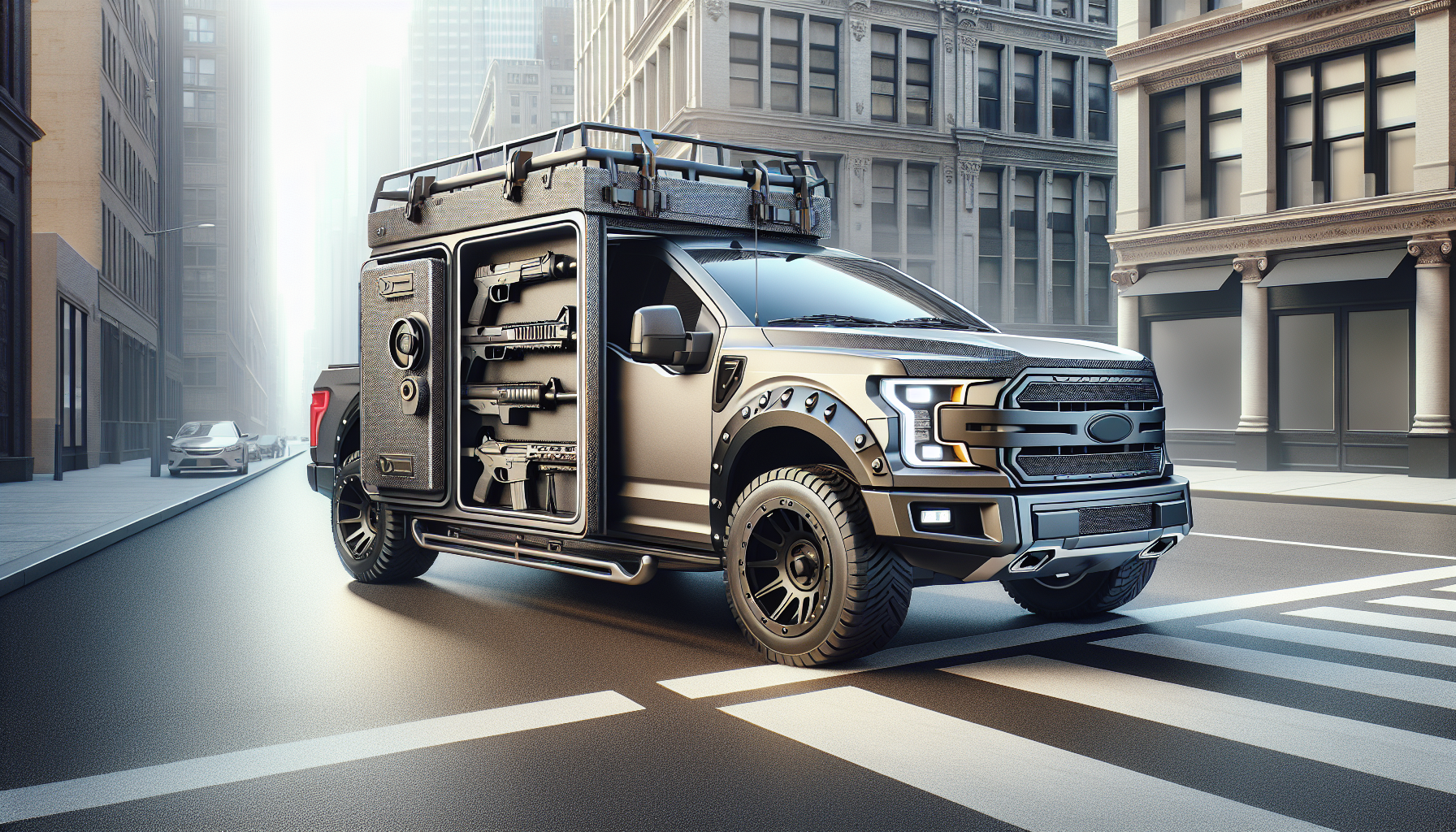
Vehicle-mounted gun safes give everyday carriers a practical way to secure a defensive handgun inside a car, truck, or SUV without leaving it loose in a console, stuffed under a seat, or hidden in a glove box. In plain terms, a vehicle-mounted safe is a lockable container designed to be fixed to the vehicle structure with a cable, bracket, or bolted mount so the firearm stays protected from smash-and-grab theft, unauthorized access, and unnecessary handling during daily travel. This matters because a parked vehicle is one of the most common places guns are stolen, and many owners discover too late that factory compartments offer concealment, not real security. After installing and testing these products across commuter sedans, work trucks, and family SUVs, I have found that the best models balance fast access, discreet placement, solid steel construction, and legal compliance with local transport and storage rules.
Choosing the best vehicle-mounted gun safe for everyday carry starts with understanding the core buying criteria. The lock type determines speed and reliability: mechanical simplex locks work without batteries, electronic keypads offer quick one-handed entry, biometric readers promise convenience but vary widely in cold weather, dirty conditions, and inconsistent finger placement. The body material matters just as much. Look for 12-gauge or thicker steel where possible, reinforced latch points, internal hinges or protected hinge pins, and anti-pry lips that prevent a screwdriver from peeling the door. Interior dimensions matter more than exterior marketing claims. A safe advertised for full-size pistols may not accommodate a red-dot-equipped handgun with a weapon light and spare magazine. Mounting method also defines real-world usefulness. A tethered lockbox may satisfy temporary needs, but a bolted bracket attached to seat rails or the floor pan provides meaningfully better retention. Because this page serves as a buying guide hub, it covers the major types, top features, fit considerations, common mistakes, and the standards I use when recommending a unit for daily carry.
What makes a vehicle-mounted gun safe suitable for everyday carry
A good everyday carry vehicle safe must do four jobs well: resist theft, prevent unauthorized access, fit the firearm you actually carry, and allow consistent access under stress. Many products only do two of those jobs. In hands-on use, the biggest separator is not the advertised lock technology but the total system. A sturdy lock on a thin shell attached by a light cable is still a weak setup. Conversely, a simple mechanical lock on a well-mounted steel enclosure can be an excellent choice for daily use. For most carriers, the sweet spot is a compact steel safe mounted under a front seat, secured to seat bolts or a dedicated bracket, with a lock that can be opened by touch in low light.
Placement affects both security and access. Under-seat placement is usually best because it keeps the safe out of direct sight, uses dead space, and allows solid attachment points. Console replacement safes can be elegant in trucks and body-on-frame SUVs, but they are highly vehicle-specific and often cost more. Portable lockboxes with security cables are common because they are inexpensive and easy to move between vehicles, yet they are the least resistant to determined theft. If a criminal has privacy and basic hand tools, a cable-secured box is vulnerable. That does not make it useless; it simply means it should be viewed as an entry-level option for short stops rather than the gold standard for unattended overnight vehicle storage.
Everyday carry also changes the size equation. A micro-compact pistol in a flush-fit configuration can fit almost anywhere, but many real carry guns now wear optics like the Trijicon RMR, Holosun 507C, or Shield RMSc, plus compact lights such as the Streamlight TLR-7 Sub. Those additions increase height and overall profile, and some shallow safes will not close cleanly. Before buying, measure the firearm in its carry condition, including mounted accessories and preferred holster if you intend to store it holstered. I recommend allowing at least half an inch of extra clearance in each critical dimension so the gun is not wedged awkwardly during a rushed return to the safe.
Key buying factors: lock type, steel thickness, mounting, and fit
Lock choice drives user satisfaction more than any other single feature. Mechanical push-button locks, especially simplex-style designs, remain the benchmark for reliability. They function without power, tolerate vibration, and can be opened by feel after practice. Their downside is limited code complexity and typically higher cost on well-built safes. Electronic keypads are fast and widely available. Better units from brands such as Fort Knox, V-Line, Vaultek, and Hornady use responsive buttons and include backup keys, low-battery warnings, and illuminated pads. However, batteries can fail, keypads can age, and some low-cost units use flimsy membrane buttons that feel vague under stress. Biometric locks have improved, especially on premium models, but fingerprint readers still require careful enrollment and regular cleaning. In testing, they are best treated as a convenience layer, not the only access method.
Steel thickness and door design separate true security products from mere lockable containers. A 16-gauge shell may stop casual tampering, but 14-gauge and 12-gauge construction is preferable for a vehicle environment where pry attacks are the most realistic threat. Door overlap, recessed openings, welded seams, and protected hinges add significant resistance. I also look for a latch that engages deeply into the body rather than a tiny tab holding the door closed. Interior padding should protect the firearm, but it should not interfere with lockwork or crowd the gun. Thin closed-cell foam is better than bulky egg-crate material in compact spaces.
| Feature | Best Choice for Daily Use | Why It Matters |
|---|---|---|
| Lock type | Mechanical or quality electronic keypad | Faster, more reliable access than cheap biometric-only systems |
| Steel body | 14-gauge to 12-gauge | Improves resistance to prying and smash-and-grab attacks |
| Mounting | Bolted bracket or seat-rail mount | Much harder to remove than a cable-secured lockbox |
| Fit | Allows pistol, optic, light, and spare magazine | Prevents buying a safe that only fits a stripped handgun |
| Access method | One-handed opening in low light | More practical during routine entry and exit from the vehicle |
Mounting deserves special attention because it defines whether the safe is merely present or actually secure. The most durable installations use vehicle-specific or universal brackets tied into seat rails, floor reinforcement points, or console structure. When I install a safe for a daily commuter, I avoid drilling blindly into thin sheet metal, fuel line paths, or wiring channels. If drilling is necessary, use proper backing hardware, corrosion protection, and verify what sits beneath the mounting point. If you want a no-drill option, some under-seat systems clamp to seat bolts effectively, but torque specifications must be respected when reinstalling hardware. A loose seat-rail bolt is a safety hazard far beyond the safe itself.
Best types of vehicle-mounted gun safes and who they suit
For most people, under-seat safes are the most balanced choice. They hide well, can often be mounted solidly, and work in sedans, crossovers, and pickup trucks. Brands like Tuffy Security Products, Console Vault, Hornady, and selected V-Line models cover this category, though exact fit varies by vehicle. A compact under-seat safe suits commuters, rideshare drivers who lawfully carry, sales professionals moving between appointments, and parents who need strict separation between a firearm and curious passengers. The biggest limitation is seat clearance. Power seat tracks, HVAC vents under the seat, and rear passenger foot space can all complicate installation.
Console vaults are excellent when available for your exact vehicle. These units replace or reinforce the factory center console compartment and usually use thick steel, precision-cut doors, and clean integration. In full-size trucks from Ford, Chevrolet, GMC, and Ram, a console vault often feels like original equipment. They are ideal for drivers who want discreet access from the front seats without adding a visible box elsewhere. Their weakness is compatibility. If your vehicle lacks a supported center console design, this route disappears. Console vaults also secure the compartment, not necessarily the entire console assembly, so the surrounding structure still matters.
Cable lockboxes are the budget entry point. They are better than leaving a gun unsecured, and in some jurisdictions they may satisfy minimum transport expectations. They are useful for rental cars, temporary travel, or owners who need occasional off-body storage while entering prohibited locations. But they should be chosen with realistic expectations. Better examples use heavier steel, shielded locks, and thicker braided cables routed around a seat frame. They remain easier to steal than bolted solutions. If your routine includes long periods away from the vehicle or parking in high-theft areas, a cable box should not be your first recommendation.
There is also a niche category of custom console and rear-seat storage systems for law enforcement-style use, overlanding builds, and dedicated truck platforms. These can be outstanding, especially when integrated with drawer systems or lockable equipment organizers, but they are often overkill for ordinary concealed carriers. Everyday carry buyers usually benefit more from a smaller, faster-access safe than from a large tactical storage setup that slows retrieval and attracts attention during installation.
How to evaluate specific models before you buy
Start with dimensions you can trust. Ignore generic fit language and compare the listed internal length, height, and depth against your actual firearm. If the maker does not publish internal dimensions, that is a warning sign. Next, study the opening path. Some doors pop upward, others hinge sideways, and some slide. In a tight footwell, a theoretically roomy safe can become awkward if the lid collides with seat supports. I always test with the seat in my normal driving position and again in its full travel range to make sure the safe does not interfere with movement, wiring, or airbag components.
Then evaluate lock ergonomics. Can you enter the code without looking? Are the buttons distinct enough for gloved hands? Does the biometric reader allow multiple enrolled fingers from both hands? Is there a mechanical override, and where is that keyway located? Some keyways are so poorly placed that using the backup key under a seat becomes frustrating. For battery-powered units, check whether the battery is user-accessible from the outside. A dead battery inside a locked safe with a buried keyway is a predictable problem, not bad luck.
Read reviews carefully, but filter them. The most useful feedback comes from owners who mention their exact vehicle, carry gun, mounting method, and duration of use. Complaints about “too small” often trace back to buyers trying to fit a pistol with an optic and extended magazine into a safe sized for a subcompact. On the other hand, repeated reports of lock failure, warped doors, or stripped mounting points should be taken seriously. Reputable brands publish installation videos, replacement part policies, and clear warranty terms. Those signals matter because a vehicle-safe purchase is not just about steel; it is about support if something fails years later.
Security, legal, and practical ownership considerations
No vehicle-mounted gun safe is invulnerable. The goal is layered risk reduction: conceal the presence of the safe, strengthen retention, minimize unattended storage time, and use the vehicle safe as a transition point rather than a long-term repository. A thief who never sees the safe cannot target it easily. Tint, cargo covers, disciplined parking, and avoiding firearm stickers all help. So does consistency. If you repeatedly handle a gun in plain view before entering a restricted building, observers notice patterns. The safer practice is discreet transfer inside the vehicle with the doors locked and the safe positioned for minimal visibility.
Legal requirements vary sharply by state and locality. Some jurisdictions regulate loaded firearms in vehicles, school-zone proximity, employer parking lot rules, and storage obligations when minors may gain access. If you cross state lines, reciprocity for carry permits does not automatically mean identical vehicle storage laws. Insurance is another practical issue. Standard auto policies may offer limited coverage for stolen firearms, while homeowners or riders may handle them differently. Record model and serial numbers, keep purchase receipts, and photograph the safe installation for your records. If the firearm is stolen, prompt, accurate reporting helps both recovery and legal compliance.
Maintenance is simple but necessary. Vacuum grit from the keypad area, check mounting bolts for torque, replace batteries on a schedule rather than after failure, and inspect foam for moisture retention in humid climates. In trucks that see temperature swings, I have seen cheap adhesives fail and interior padding shift into the latch path. A quick monthly check prevents that. If you rely on a biometric reader, re-enroll your fingerprints after cuts, heavy manual work, or seasonal skin changes. Most importantly, practice storing and retrieving the unloaded firearm until the sequence is smooth and safe.
For buyers building a complete safety plan, this hub should connect with deeper guides on handgun safe lock types, console vault fitment, under-seat installation, and travel storage best practices. Use those supporting resources to narrow your shortlist, confirm compatibility, and choose a model that matches your routine rather than a marketing photo. The best vehicle-mounted gun safe for everyday carry is the one you can install correctly, access consistently, and trust not to become the weakest point in your broader storage strategy. Measure your firearm, inspect your vehicle’s mounting options, compare lock systems honestly, and buy once with security as the priority.
Frequently Asked Questions
What is a vehicle-mounted gun safe, and why is it better than storing a handgun in a glove box or center console?
A vehicle-mounted gun safe is a dedicated lockbox designed to secure a handgun inside a car, truck, or SUV using a steel cable, bracket, seat-frame tether, or a more permanent bolted installation. Unlike a glove box or center console, which are primarily convenience compartments, a purpose-built vehicle safe is made with theft resistance and controlled access in mind. It creates a defined, lockable storage point so the firearm is not left loose under a seat, wedged between cushions, or casually hidden in a compartment that can be opened quickly by a thief or curious passenger.
The biggest advantage is security. Most factory glove boxes and consoles are not true safes, and many can be forced open in seconds. A quality vehicle-mounted safe adds a hardened steel enclosure, reinforced locking mechanism, and an anchored connection to the vehicle structure. That makes smash-and-grab theft more difficult and helps reduce unauthorized access by children, passengers, valet staff, or anyone else who may enter the vehicle. It also helps the firearm stay in one protected location during daily driving rather than shifting around and being handled more than necessary.
For everyday carriers, that practical difference matters. There are times when carrying on-body is not possible or lawful, such as entering certain workplaces, government buildings, medical facilities, or posted locations. In those moments, a vehicle-mounted gun safe offers a more responsible temporary storage option. It supports safer transitions in and out of the vehicle while keeping the handgun more secure, more discreet, and easier to retrieve in a controlled way when you return.
What features should I look for when choosing the best vehicle-mounted gun safe for everyday carry?
The best vehicle-mounted gun safe for everyday carry should balance security, access speed, fit, and installation practicality. Start with construction quality. Look for thick-gauge steel, a pry-resistant lid or door, reinforced seams, and a locking system that does not feel flimsy or easy to defeat. A safe that flexes easily, has a weak hinge, or relies on a thin cable without a solid lock body may not provide meaningful protection against theft.
Next, evaluate the locking method. Common options include keyed locks, mechanical push-button locks, RFID systems, and biometric fingerprint scanners. Each has tradeoffs. Keyed locks are simple and often reliable, but key management matters. Mechanical push-button locks avoid batteries and electronics, which many owners prefer for consistency. Biometric safes can be convenient for fast access, but quality varies widely, and performance may be affected by dirty fingers, cold weather, or low batteries. If speed is important, choose a system with a proven record of dependable access under real-world conditions, not just ideal showroom use.
Interior dimensions are also important. The safe should fit your everyday carry handgun with any practical accessories you actually use, such as night sights, an optic, or a compact weapon light if applicable. At the same time, it should not be so large that it becomes difficult to conceal or mount securely. Foam-lined interiors can help reduce movement and protect the finish, but overall retention and fit are more important than cosmetic padding alone.
Finally, consider how the safe mounts inside the vehicle. Some models are designed for under-seat placement with tethered cables, while others use custom brackets or direct bolting for a more secure installation. For many users, the ideal choice is the most secure model that still allows discreet placement, legal compliance, and convenient access from the driver’s seat without interfering with seat travel, pedals, airbags, or routine vehicle operation. A good safe should fit your handgun, your vehicle, and your daily routine equally well.
Are biometric vehicle gun safes reliable enough for daily use, or is a keyed or mechanical lock better?
Biometric vehicle gun safes can be reliable enough for daily use, but only when the safe comes from a reputable manufacturer and the fingerprint reader is well-designed, properly enrolled, and regularly maintained. The main appeal of biometric access is speed. For many concealed carriers, being able to open the safe quickly without fumbling for a key or remembering a code is attractive, especially during daily transitions in and out of the vehicle. However, speed is only valuable if the system works consistently when you need it.
In practice, biometric systems vary more than mechanical locks. Factors such as wet hands, worn fingerprints, dirt, gloves, cold weather, and low battery power can affect scanner performance. That does not mean biometric safes are inherently poor choices, but it does mean buyers should not assume all fingerprint readers perform equally. If you choose biometric, look for models with strong user reviews over time, backup entry methods, and enough memory capacity to store multiple prints from multiple fingers. Registering more than one finger on each hand is a smart safeguard.
Mechanical push-button locks are often favored by users who prioritize long-term reliability and simplicity. They do not depend on batteries, apps, or sensors, and they tend to perform consistently in a wider range of conditions. Keyed locks are also simple, though they are only as convenient as your ability to keep the key secure and immediately available. For many EDC users, the best answer is not that one system is universally superior, but that the best lock is the one you can operate quickly, consistently, and confidently under realistic daily conditions. Reliability should always outweigh gimmicks.
Where should a vehicle-mounted handgun safe be installed for the best mix of security, access, and discretion?
The best installation location is usually one that stays out of plain sight, anchors securely to the vehicle structure, and allows controlled access without interfering with driving or normal passenger use. Under a front seat is a common choice because it can be discreet, relatively accessible, and often close to a strong anchor point. Some owners also use dedicated console vaults or bracket-mounted safes designed for specific vehicle models. The right location depends on your vehicle layout, seat clearance, and how you enter and exit the vehicle during the day.
Security and concealment should come first. A safe that is visible from outside the vehicle can attract attention, even if it is locked. At the same time, an installation that is too deeply hidden may encourage awkward handling or unnecessary searching when you need to secure the handgun before entering a prohibited area. The goal is a placement that is discreet but practical. It should allow you to store the firearm in a deliberate, calm manner rather than forcing rushed or conspicuous movement in a parking lot.
It is also important to avoid unsafe or impractical mounting locations. Do not place a safe where it obstructs pedal movement, seat tracks, airbags, wiring, or emergency access. Before final installation, check seat travel, passenger comfort, and clearance during normal vehicle operation. If bolting is involved, confirm what is beneath the mounting surface so you do not damage wiring harnesses, fuel lines, or other critical components. A well-installed safe should feel like part of the vehicle’s security setup, not an afterthought that creates new problems.
Do vehicle-mounted gun safes completely prevent theft, and what other steps should everyday carriers take to protect a firearm in a vehicle?
No vehicle-mounted gun safe can completely prevent theft. A determined thief with enough time, tools, and privacy can defeat almost any security device. The purpose of a vehicle safe is to dramatically increase resistance, reduce opportunity, and discourage the fast smash-and-grab thefts that are common in parking lots, garages, and driveways. In other words, a good safe buys time, creates noise and effort for the thief, and makes your vehicle a less attractive target than one with an unsecured firearm hidden in a glove box or loose under a seat.
That is why the best approach is layered security. First, choose a quality safe with solid construction and a credible mounting method. Second, install it properly to a real anchor point or with a robust bracket system rather than relying on a casual placement. Third, keep the safe out of sight and avoid firearm-related stickers, branded range bags, or visible gear that signals a gun may be inside. Many vehicle break-ins are crimes of opportunity, and visible clues can make your car more interesting to a thief before they ever test the door handle.
Everyday carriers should also think about routine habits. Park in well-lit, high-traffic areas when possible. Lock the vehicle every time. Do not leave the firearm in the vehicle longer than necessary, especially overnight. Know your state and local laws regarding temporary vehicle storage, loaded firearms in cars, and storage responsibilities around minors. Most importantly, treat vehicle storage as a temporary solution, not a substitute for proper possession or home storage. The safest and most responsible use of a vehicle-mounted gun safe is to bridge those unavoidable moments when you cannot legally or practically keep the handgun on your person but still need a secure, controlled place to store it.