
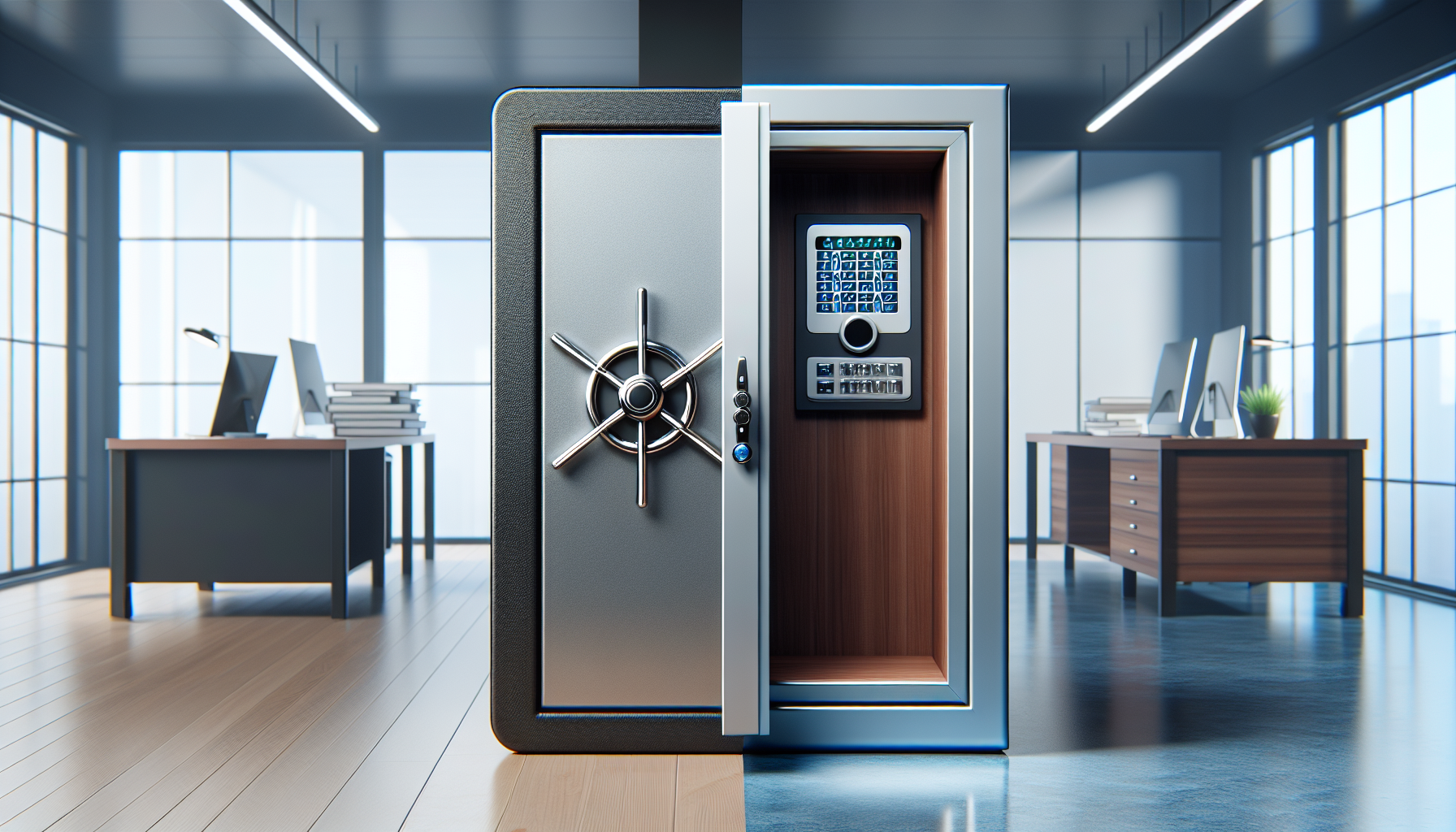
Choosing between a biometric and a combination lock gun safe matters because the lock is the part you will trust under stress, in the dark, and possibly with seconds to act. In the gun safes and safety category, lock choice is not a cosmetic feature. It determines access speed, reliability, maintenance, failure points, and long-term ownership cost. A buying guide that ignores the lock is incomplete, because the lock defines how the safe performs in real life, not just on a showroom floor. For households storing defensive firearms, hunting rifles, heirloom handguns, or regulated items, the right lock type directly affects safety, compliance, and day-to-day confidence.
Biometric gun safes use fingerprint recognition to verify an authorized user. Combination lock gun safes use either a mechanical dial or an electronic keypad with a numerical code. Both categories can secure firearms effectively, but they solve the access problem differently. Biometric safes prioritize fast, one-touch entry. Combination safes prioritize proven access methods that can remain dependable for years when correctly built and maintained. In my experience evaluating home safes, bedside handgun vaults, and full-size rifle safes, buyers often focus on the headline promise of speed or simplicity while missing the practical details that make one system better for their routine, environment, and risk profile.
This guide is designed as a hub for buying guides within Gun Safes & Safety. It answers the core question directly: neither biometric nor combination lock gun safes are universally better. The better option depends on where the safe will be used, who needs access, what firearm is stored, how often the safe is opened, and how much maintenance the owner will realistically perform. A bedside pistol safe for home defense has different requirements than a fire-rated long-gun safe in a basement, and both differ from a quick-access vehicle lockbox. Understanding those use cases is the fastest path to a smart purchase.
There is also a broader safety context. Secure storage reduces unauthorized access, especially by children, visitors, and thieves. It can support compliance with state storage laws, insurer expectations, and best practices recommended by organizations such as the National Shooting Sports Foundation. It also protects optics, documents, ammunition segregation plans, and valuable accessories. If you are building out a full buying strategy, this article should connect with related decisions such as safe size, fire rating, steel thickness, installation method, and placement. Lock type is one pillar of the buying guide, but it is the pillar users interact with every single day.
What biometric and combination lock gun safes actually do best
The short answer is simple. Biometric gun safes are usually best for quick-access scenarios where a trained, authorized user needs fast entry with minimal fine motor movement. Combination lock gun safes are usually best for buyers who prioritize long-term dependability, broader model choice, and fewer concerns about fingerprint read quality. That distinction sounds clean, but the details matter. A premium biometric lock with a good sensor, quality firmware, and backup keypad behaves very differently from a low-cost import with inconsistent scanning. Likewise, a true mechanical dial from an established lock maker is not the same as a budget electronic keypad tucked into thin sheet metal.
Biometric safes shine in bedside and closet-defense roles. If your hands may be sweaty, cold, or shaking, placing a registered finger on a sensor can be faster than dialing a code. Many owners also prefer that they do not have to remember a sequence under adrenaline. Better units store multiple fingerprints, including several angles of the same finger, which improves first-read success. Some models add app-free local administration, tamper alerts, interior lighting, and silent mode. These features matter because defensive access often happens in low light and high stress, not in ideal conditions.
Combination safes shine in predictability and broad compatibility across safe formats. Mechanical dial locks have decades of real-world history in commercial and residential security containers. Electronic keypads, while technically combination systems too, provide faster access than dials while keeping a familiar code-based method. For large rifle safes, many buyers choose combination locks because they are widely available from established brands such as Sargent and Greenleaf, SecuRam, and La Gard. Replacement parts, locksmith service, and technician familiarity are generally stronger in this ecosystem than in the fragmented biometric market.
The buying mistake I see most often is treating lock type as a standalone verdict. It is not. The lock has to be judged with the safe’s steel body, door construction, boltwork, pry resistance, hinge design, fire insulation, anchor points, and warranty support. A fast biometric reader on a weak safe body does not create meaningful security. A robust safe with a poor keypad still creates access problems. The best buying guide question is not “Which lock is better?” but “Which lock is better on a safe built well enough for my threat level and access needs?”
Speed, reliability, and failure modes in real-world use
Searchers often ask which option opens faster. In general, biometric safes are faster when the sensor reads correctly on the first attempt. A good bedside biometric vault can open in roughly one second after touch activation, while an electronic keypad usually requires several button presses and a confirmation input. A mechanical dial is slower still because the user must rotate to precise numbers in sequence. If your top priority is immediate access to a defensive handgun at night, biometric systems hold an advantage on speed.
Reliability is more nuanced. A combination lock is usually more predictable over time because it relies on either a memorized code or a mechanical alignment process, not on matching a live finger scan to a stored template. Fingerprint readers can struggle with dirty sensors, dry skin, cuts, worn fingerprints, lotion residue, moisture, or poor finger placement. These problems are not hypothetical. I have tested biometric units that worked flawlessly during setup, then dropped to inconsistent reads after a few weeks of normal dust and skin oil buildup. Better sensors reduce this issue, but they do not eliminate it.
Battery dependence is another major difference. Most biometric safes and many electronic keypad safes require batteries. Good products provide low-battery warnings and external power contacts, but dead batteries remain a common lockout cause. Mechanical combination dials avoid that problem entirely. If a buyer wants the fewest electronic failure points, a mechanical dial remains the benchmark. On the other hand, many modern electronic locks are reliable enough for home use when batteries are replaced on schedule and the owner tests function monthly.
Here is the practical comparison buyers need most:
| Factor | Biometric Lock | Combination Lock | Best Fit |
|---|---|---|---|
| Access speed | Usually fastest with successful first scan | Electronic keypad is moderate; mechanical dial is slowest | Bedside defensive access |
| Consistency | Depends on sensor quality and finger condition | Usually more predictable when code is known | Frequent daily use |
| Power needs | Requires battery power in most models | Mechanical dial needs none; keypad needs batteries | Low-maintenance storage |
| User management | Easy to add approved fingerprints on some models | Simple code sharing, but security drops if code is reused | Multiple adult users |
| Serviceability | Varies widely by brand | Strong support from established lock makers | Long-term ownership |
Failure modes should drive your decision more than marketing claims. Biometric failure usually means misread fingerprints, drained batteries, sensor faults, or software glitches. Combination failure usually means forgotten codes, keypad wear, failed electronics on digital models, or lock mechanism wear over many years. Mechanical dial failure exists too, but it is relatively understood and often repairable by a qualified safe technician. When buying, ask yourself not just how the lock works when everything is ideal, but how it fails, how you recover access, and who can service it locally.
Security, tamper resistance, and what thieves actually target
A common question in buying guides is whether biometric locks are more secure because fingerprints are unique. In practical safe security, uniqueness alone does not decide resistance. Thieves rarely defeat gun safes by “guessing” a fingerprint or slowly trying random combinations. They more often attack weak steel, exposed hinges, poor mounting, thin doors, or the entire safe’s placement. For that reason, the lock matters, but the safe body and installation matter at least as much.
That said, lock design still affects tamper resistance. Quality combination locks from recognized manufacturers have a longer service record and clearer certification pathways. Some locks are tested to UL standards, and some residential security containers are evaluated under UL 1037 criteria. A serious buyer should check whether the safe or lock has independent testing rather than relying only on advertising language. Many biometric handgun safes are built for quick access, not for extended burglary resistance, which is acceptable if the buyer understands the tradeoff. They are intended to delay unauthorized access in a home environment, especially from children or casual theft, not to function as high-security commercial burglary safes.
Biometric systems can introduce unique attack surfaces. Poorly designed sensors, weak override keys, insecure app connectivity, or sloppy admin controls can undermine the technology. If a biometric safe includes Bluetooth or Wi-Fi, review whether those features are necessary. In my assessments, simpler local-only operation usually creates fewer security questions. Combination locks are not immune either. Easy-to-guess codes, visible keypad wear, and default factory sequences can defeat the user long before a burglar needs advanced tools. The safest lock is the one paired with good habits: anchored installation, a strong unique code, hidden placement, and routine function checks.
For most homes, the main goal is layered protection. A quick-access bedside safe should prevent unauthorized handling while allowing the owner prompt access. A larger anchored gun safe should protect a collection from smash-and-grab theft, delay more determined attacks, and add fire protection where needed. In that layered strategy, biometric and combination locks can both make sense in different locations within the same house.
How to choose the right lock for your use case and buying priorities
If you want a direct recommendation, choose a biometric gun safe when all four conditions apply: you need very fast handgun access, you are willing to maintain batteries and clean the sensor, the model has a backup entry method, and you have personally tested enrollment and opening consistency. Choose a combination lock gun safe when all four conditions apply: you value long-term dependability over maximum speed, you may store long guns or multiple firearms, you want broader service options, and you prefer a simpler failure profile. Those rules fit most buyers.
Consider the environment first. Bedrooms, humid basements, garages, and vehicles all stress locks differently. High humidity can affect electronics and encourage corrosion if the safe lacks climate control. Dusty garages can foul sensors and keypads. Cold weather can change battery performance. If the safe lives in a harsh environment, a mechanical or proven keypad combination lock often ages better than a budget biometric unit. Next, consider users. If two adults need access, biometric enrollment can be convenient, but only if both users consistently register. If one user has worn fingerprints from manual labor, a code may be more reliable.
Brand and support should weigh heavily in any buying guide. Look for established safe makers, clear warranty terms, available replacement parts, and actual locksmith support in your area. Ask whether the safe has an override key and whether that keyway reduces security. Check bolt size, steel gauge, interior capacity claims, and anchoring hardware. Read independent reviews that mention ownership after six months or a year, not just unboxing impressions. As this sub-pillar hub points buyers toward deeper content, related articles should cover safe size calculators, fire ratings, handgun versus long-gun storage, and safe placement strategy, because lock choice works best when integrated into the full purchase plan.
Biometric versus combination lock gun safes is ultimately a question of fit, not hype. Biometric locks are better for buyers who need the fastest possible access and will maintain the system like any other defensive tool. Combination locks are better for buyers who want a more proven, serviceable, and often more predictable solution over years of ownership. The strongest buying decision starts with your use case, then tests lock type against reliability, serviceability, safe construction, and installation quality.
If you are building a complete Gun Safes & Safety buying guide, use this article as the hub and evaluate every safe through the same lens: access, security, construction, fire protection, and long-term support. Buy the lock you can trust half asleep, under pressure, and after years of normal use. Then anchor the safe, practice opening it, and review the rest of your storage setup before you purchase.
Frequently Asked Questions
1. Is a biometric gun safe better than a combination lock gun safe for quick access?
For pure speed, a biometric gun safe usually has the edge. A properly designed biometric lock can open in seconds with a registered fingerprint, which is why many buyers choose one for bedside, closet, or quick-access use. In a high-stress situation, that speed matters. You do not have to remember a code, dial a sequence, or rely on fine motor skills the same way you would with a traditional combination lock. If your hands are cold, shaky, or you are waking up in the dark, a fingerprint reader can feel much more intuitive.
That said, quick access is not only about the lock type on paper. It is about how reliably that lock works under real conditions. Biometric safes can be fast, but performance depends heavily on sensor quality, fingerprint enrollment, battery condition, and whether the scanner can read your finger when it is sweaty, dirty, dry, or slightly misaligned. Cheap biometric safes often disappoint because they are inconsistent, not because the technology itself is flawed. A high-quality biometric model that stores multiple finger angles and allows backup entry tends to perform much better than a budget unit with a basic reader.
Combination locks are usually slower, especially mechanical dial locks, but they offer predictability. An electronic keypad combination safe can still be very fast once the user is practiced. If your top priority is immediate access in a home-defense scenario, biometric often wins. If your priority is consistent entry with fewer variables and less dependence on electronics, a combination lock may be the better fit. The most practical answer for many households is to choose a safe that combines biometric access with a backup keypad or key override, so you get speed without relying on a single access method.
2. Which is more reliable over the long term: biometric or combination locks?
Over the long term, combination locks—especially mechanical ones—generally have the stronger reputation for reliability. They have fewer electronic components, no fingerprint sensor, and in the case of traditional dial locks, no batteries. That simplicity matters. Fewer parts and fewer digital systems usually mean fewer failure points over years of ownership. If the safe is intended for long-term firearm storage and instant access is not the main goal, a combination lock is often seen as the more dependable choice.
Biometric locks can also be reliable, but they require more trust in technology and more attention from the owner. The scanner has to recognize fingerprints accurately, the electronics have to remain functional, and the power source has to be maintained. Over time, dust, battery neglect, low-end components, or repeated poor-quality scans can create frustration. A good biometric safe from a reputable brand can serve well for years, but it is rarely as maintenance-light as a solid mechanical lock.
It is also important to separate lock style from lock quality. A premium biometric safe may outperform a poorly made electronic keypad or cheap mechanical design. Reliability is affected by manufacturing standards, construction quality, lock certification, and customer support just as much as by lock category. The safest conclusion is this: if long-term reliability with minimal upkeep is your top concern, combination locks usually come out ahead. If you want faster access and are willing to manage batteries, testing, and occasional troubleshooting, a quality biometric lock can still be a strong choice.
3. Do biometric gun safes fail when your fingerprint is wet, dirty, or under stress?
They can, and that is one of the most important concerns buyers should take seriously. Fingerprint scanners work by reading patterns on the finger, and anything that interferes with that reading—moisture, dirt, oil, cuts, dry skin, poor placement, or rushed contact—can reduce accuracy. Under calm conditions, many biometric safes perform well. Under stress, in darkness, or when the user is half-awake, the chance of a bad read can increase if the scanner is not especially good or if the fingerprints were not enrolled properly.
This does not mean biometric safes are inherently unreliable. It means they need to be evaluated realistically. Better models reduce these issues by allowing multiple fingerprints, storing the same finger from different angles, and using more responsive sensors. Owners can improve performance by enrolling several fingers from both hands, testing access regularly, and practicing in the same kinds of conditions in which they might actually need the safe. If the safe is intended for defensive use, that practice matters just as much as the feature list.
The smartest way to think about biometric failure is not “Can it fail?”—because any lock system can fail. The better question is “What happens if it does?” That is why backup access matters. A biometric safe with a dependable keypad backup is usually a safer choice than one that relies entirely on the fingerprint reader. For many gun owners, the best approach is to treat biometrics as a speed feature, not as the only layer of access. That mindset leads to better buying decisions and fewer surprises later.
4. Are combination lock gun safes safer and more secure than biometric models?
In terms of pure lock security, combination locks often inspire more confidence, particularly mechanical combination locks with a long history of use on full-size gun safes. They are not reading a fingerprint or relying on a sensor, and they are less vulnerable to problems tied to electronics such as battery failure, circuit issues, or scanner inconsistency. For buyers focused on secure storage rather than immediate defensive access, a combination lock is often viewed as the more conservative and proven solution.
However, “more secure” depends on what kind of threat you are talking about. If the issue is unauthorized access by children, guests, or smash-and-grab thieves, both biometric and combination safes can be secure if the safe itself is well built and the owner uses it correctly. A lock is only one part of the equation. Steel thickness, pry resistance, bolt design, mounting method, tamper protections, and overall construction matter just as much as whether access is by fingerprint or code. A weak safe with a fancy biometric scanner is still a weak safe.
There is also a practical security issue many people overlook: user behavior. A combination lock is only secure if the user remembers the code, keeps it private, and can operate it reliably. A biometric safe is only secure if fingerprints are enrolled correctly and backup access is protected. In real life, the better lock is the one you can use consistently and correctly without hesitation. For maximum confidence, many buyers prefer a combination or electronic keypad lock for primary security, while others prioritize biometric access for fast response. The right answer depends on whether your highest priority is resistance to failure, resistance to unauthorized access, or speed in an emergency.
5. What should you choose for home use: biometric or combination lock gun safes?
For home use, the best choice depends on how the safe will actually be used day to day. If you want a bedside safe for defensive access, a biometric model can make a lot of sense because it offers very fast entry with minimal thought. That speed can be valuable if you need access in the dark or under pressure. But for that role, it is important to buy quality and not just convenience. Look for a biometric safe with a strong scanner, fast response time, interior lighting, silent mode if desired, and a dependable backup keypad or override method.
If the safe is mainly for secure storage, less frequent access, or long-term ownership with minimal maintenance, a combination lock often makes more sense. Mechanical combination locks are especially appealing for buyers who want a time-tested system without batteries or fingerprint-reading variables. Electronic keypad combination locks sit in the middle: they are usually faster than mechanical dials, easier for many users to operate, and still more predictable than some biometric systems. For many households, that balance is ideal.
A useful way to choose is to ask three questions. First, how fast do you truly need access? Second, who will need access and under what conditions? Third, how much maintenance and testing are you willing to do? If the safe is part of a defensive plan, speed and repeatable real-world performance matter most. If it is primarily about secure storage, long-term reliability may matter more than instant opening. In many cases, the strongest option is not strictly biometric versus combination, but a well-built safe that offers layered access methods and matches the owner’s real habits. A lock should not just look advanced in a buying guide—it should work when it matters most.