
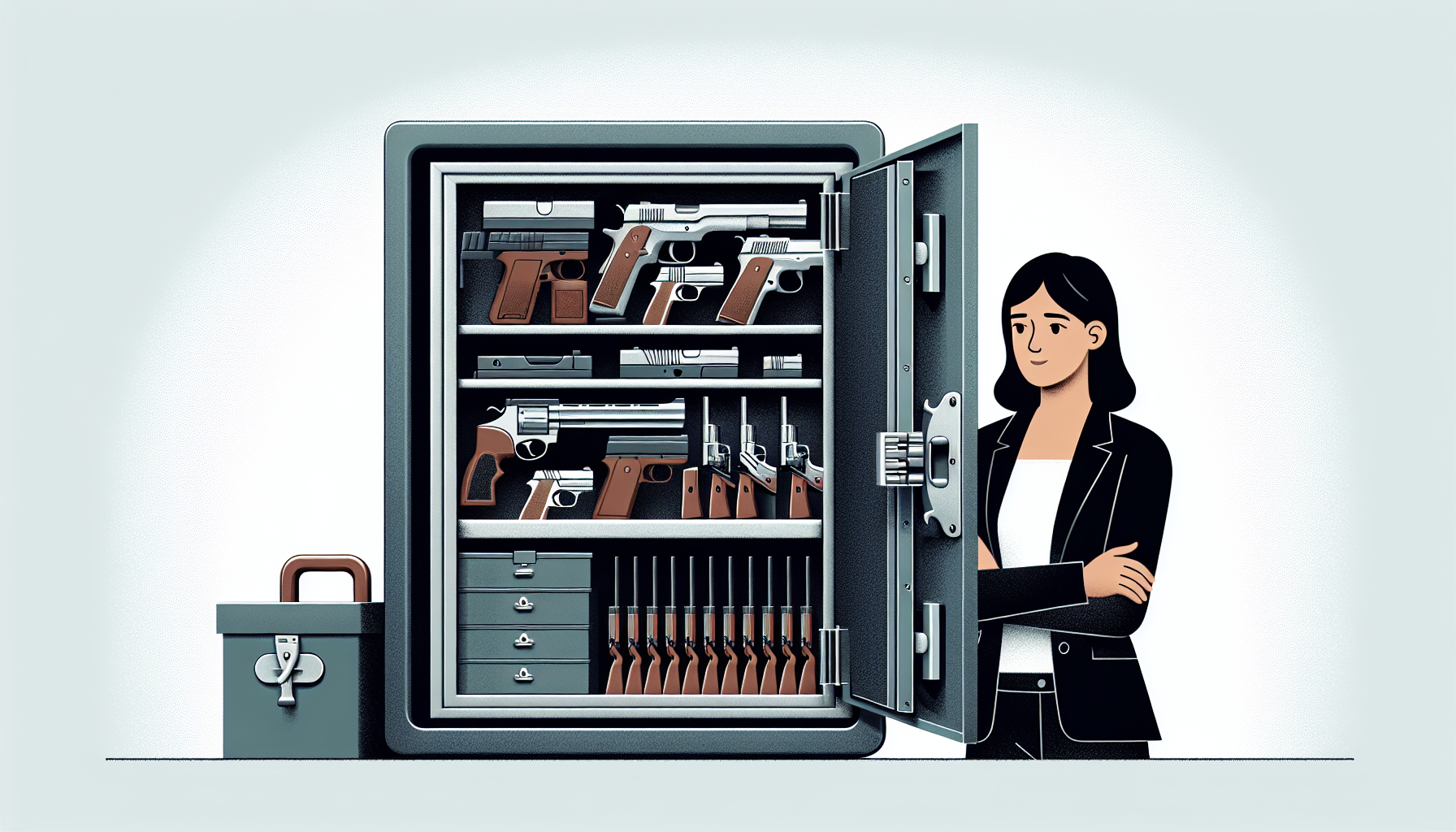
Choosing a gun safe for a large firearms collection requires more than picking the biggest box with a lock. A serious buying guide has to account for capacity, fire resistance, burglary protection, organization, installation, and long-term collection growth. In the “Gun Safes & Safety” category, this hub page covers the core decisions behind buying guides for large-capacity safes, because the wrong purchase is expensive, hard to move, and difficult to fix later. If you own dozens of rifles, shotguns, and handguns, or plan to expand your collection, a well-chosen safe protects firearms from theft, fire, moisture, and unauthorized access while keeping them organized and accessible.
A gun safe is a secure steel enclosure designed to store firearms and related valuables. For a large collection, that definition expands. You are not simply buying storage; you are buying a layered risk-management system. Key terms matter. “Capacity” refers to the manufacturer’s claimed number of firearms, though listed numbers are usually optimistic. “Fire rating” describes how long the interior is designed to remain below a target temperature under test conditions. “UL-listed lock” means the lock meets recognized security standards from Underwriters Laboratories. “Residential Security Container,” or RSC, is a common UL classification for consumer safes that meet a baseline attack resistance standard, but it is not the same as a commercial TL-rated burglary safe.
This topic matters because large collections magnify every mistake. I have seen buyers outgrow a safe within a year because they trusted a 48-gun rating that assumed slim, unscoped hunting rifles packed tightly together. I have also seen people spend heavily on glossy interiors and overlook weak door construction, poor anchoring, or inadequate dehumidification. A large firearms collection often includes optics, suppressors where legal, magazines, documents, and inherited pieces with sentimental value. That means your safe must support different storage profiles, preserve finishes, and fit your home’s structure and daily use patterns. Good buying decisions reduce risk, improve compliance with household safety expectations, and save money over the life of the collection.
As a hub article for buying guides, this page answers the main questions shoppers ask first: What size gun safe do you really need? Which security features matter most? Are fire ratings trustworthy? What lock type is best? Where should a large safe be installed? The practical answer is that the best gun safe for a large firearms collection balances true usable space, credible security construction, interior flexibility, and correct installation. Brand reputation matters, but specifications matter more. Focus on steel thickness, door design, lock quality, boltwork, fire protection method, and layout options before you focus on cosmetics. If you start with those fundamentals, every later comparison becomes easier and much more accurate.
Start with realistic capacity, not advertised capacity
The first step in choosing a gun safe for a large firearms collection is recalculating capacity based on real firearms, not catalog numbers. Manufacturers often rate safes assuming unscoped long guns placed stock-to-barrel in tightly spaced racks. In real collections, AR-platform rifles with pistol grips, precision rifles with large optics, lever guns, tactical shotguns, and handguns in pouches consume more room. A safe sold as a 64-gun model may comfortably hold 30 to 40 long guns if many wear optics or accessories. A good buying rule is to purchase at least 30 to 50 percent more space than your current inventory requires.
Count by category. Separate scoped rifles, unscoped long guns, tactical rifles, break-action shotguns, and handguns. Then add non-firearm storage needs such as ammunition documents, cleaning kits, magazines, and valuables. Many experienced owners keep ammunition outside the main safe for weight and organization, but they still need shelf space for defensive magazines, paperwork, and accessories. Modular interiors from brands such as Liberty, Browning, Fort Knox, Hollon, and Rhino can help, but they do not create steel dimensions that are not there. Exterior width, interior cubic footage, and shelf adjustability are more reliable indicators than the gun-count sticker.
For larger collections, wide-body and double-door configurations usually work better than tall narrow models because they reduce crowding and improve visibility. Depth is just as important as width if you store scoped rifles. An interior depth around 22 inches or more often handles modern optics better than shallower cabinets. Door organizers can add handgun and accessory storage, but they also consume internal depth, so verify clearance before buying. If your collection includes collector-grade wood stocks or delicate finishes, avoid forced packing. Tight contact between firearms increases the chance of dents, scratches, and moisture pockets over time.
Evaluate burglary protection by construction details
Burglary protection is where many buying guides stay too general. For a large firearms collection, you need to inspect the construction details that actually slow forced entry. Start with steel thickness. Thicker steel generally resists prying and cutting better than thin sheet metal. Many entry-level gun safes use 14-gauge or 12-gauge steel bodies, which can be adequate for baseline protection when anchored correctly, but serious buyers should compare 10-gauge, 7-gauge, or composite body designs for better resistance. The door deserves equal attention because attacks often focus there. A thick plate door or a reinforced composite door with robust boltwork is far more meaningful than decorative external hinges.
Look for a UL-listed lock, hard plate protection against drilling, relockers, and substantial locking bolts supported by a strong frame. Continuous welds are preferable to minimal stitch welds. Pry-resistant door returns and tight door gaps matter because they reduce leverage points. The RSC rating is common and useful, but understand its limit: it indicates resistance to a defined attack using basic tools for a specific period, not invulnerability. If your collection has very high value, a true burglary-rated safe or a dedicated vault room may be more appropriate than a consumer gun safe.
Installation is part of burglary protection, not a separate afterthought. A 1,000-pound safe can still be tipped, pried, or removed with dollies if it is not anchored. Bolt the safe to concrete whenever possible. If installation is on wood framing, confirm structural capacity and use approved anchoring methods. I strongly prefer placing large safes in corners or alcoves where side access is limited, because reduced clearance makes pry attacks harder. Concealment also helps. A safe in a visible garage invites attention; a safe in a climate-controlled interior room with restricted visibility is usually a better security choice.
Understand fire ratings, heat transfer, and test claims
Fire protection matters because house fires often damage firearms through heat, soot, steam, and suppression water even when theft is not involved. The challenge for buyers is that fire ratings are not always directly comparable. Some brands use independent testing, while others rely on proprietary methods. The most important question is not just the number of minutes advertised, but what test standard was used, what exterior temperature was reached, and what interior temperature threshold was maintained. Paper chars around 350 degrees Fahrenheit, but firearm finishes, wood stocks, optics, lubricants, and polymer parts can be affected differently by sustained heat and humidity.
Thicker insulation, heat-expanding door seals, and robust door fit all contribute to better fire performance. Drywall-based insulation is common in consumer gun safes; poured or composite insulation systems may perform differently depending on design. Weight is not a perfect proxy for fire protection, but exceptionally light “fire safes” often lack the mass and materials needed for serious performance. Water resistance also deserves attention because sprinklers and firefighting efforts can soak the interior. Elevated interiors, sealed door gaps, and desiccant or electric dehumidification after installation help reduce corrosion risk following an incident.
Buyers should treat fire ratings as comparative guidance rather than absolute guarantees. A 90-minute rating from a reputable manufacturer with detailed test information is more credible than a vague 120-minute claim with no context. If the collection includes irreplaceable heirlooms, appraisals, or NFA paperwork where legal ownership records matter, consider redundancy: digital copies offsite, documents in a separate UL-classified document safe, and the gun safe for the firearms themselves. Fire protection is strongest when it is part of an overall preparedness plan that includes smoke detection, household extinguishers, and thoughtful safe placement away from likely ignition sources.
Choose the right lock, interior, and access strategy
Lock choice affects daily use more than most buyers expect. The three common options are mechanical dial, electronic keypad, and biometric lock systems. Mechanical locks are proven, durable, and do not depend on batteries, but they are slower. Electronic keypad locks are the current mainstream choice because they offer fast access and easy code changes. Biometric systems can be convenient, especially for quick-access handgun storage, but on large safes they vary widely in reliability and should be considered carefully. For a primary large-collection safe, I generally recommend a high-quality UL-listed mechanical or electronic lock from established makers such as Sargent and Greenleaf or SecuRam.
Interior design becomes critical once collections exceed a few dozen firearms. Adjustable shelving, modular barrel racks, door-mounted handgun systems, and pull-out storage can dramatically improve usable capacity. This is one area where buyers should match the safe to the collection profile instead of the other way around. If you own many AR-style rifles, look for interiors that accommodate optics and pistol grips without wasting vertical slots. If you collect classic sporting guns, padded racks and wider spacing may matter more. LED lighting, power outlets, and dehumidifier ports are not luxuries in large safes; they improve visibility and preservation.
| Feature | What to look for | Why it matters for large collections |
|---|---|---|
| Body steel | 10-gauge or thicker, or composite construction | Better resistance to pry and cut attacks |
| Lock | UL-listed mechanical or electronic | Reliable daily access and recognized security standard |
| Interior depth | 22 inches or more when storing optics | Prevents crowding of scoped rifles and door organizers |
| Fire seal | Expanding door seal with documented fire test | Reduces heat and smoke intrusion during a fire |
| Anchoring | Concrete anchoring hardware and pre-drilled holes | Prevents tipping and removal of the safe |
| Interior layout | Adjustable shelves and modular racks | Handles mixed firearm types as collections evolve |
Access strategy should align with how the firearms are used. A large safe in a basement may maximize concealment and floor support, but it is less convenient if you rotate range guns weekly. Some owners solve this by using a large main safe plus a smaller quick-access safe for defensive firearms. That two-safe approach often produces better safety and organization than forcing every use case into one cabinet. If multiple authorized adults need access, use a lock type and code-management approach that supports controlled sharing, and document who has access. Good storage is secure, practical, and consistent enough that people actually use it every time.
Plan installation, environment, and total cost of ownership
A large gun safe is a major household installation, not a parcel delivery item. Before purchase, confirm the safe’s exterior dimensions, door swing clearance, delivery path, stair constraints, and floor load capacity. Concrete slabs are ideal. On upper floors or wood-framed rooms, consult a qualified contractor when the loaded weight becomes substantial, especially with safes exceeding 1,000 pounds plus firearm and accessory weight. Professional delivery with stair equipment, anchoring, and placement is money well spent. Damage to flooring, walls, or the safe itself usually costs more than proper installation.
Environmental control is essential for firearm preservation. Humidity drives rust, stock movement, mildew, and tarnish. In most climates, a goldenrod-style electric dehumidifier rod combined with monitored room humidity works better for a large safe than desiccant alone, though rechargeable desiccants are useful as backup. Aim to keep the storage environment stable rather than chasing extreme dryness. Silicone socks, rust inhibitors, and periodic inspections help, but they do not replace climate control. If the safe will sit in a garage, be realistic: garages experience higher humidity swings, dust, and heat stress, which can shorten lock and finish life.
Total cost of ownership includes more than the sticker price. Budget for delivery, anchoring, humidity control, lighting, interior accessories, and insurance documentation. Photograph the collection, record serial numbers securely, and update values as the collection changes. If a safe protects high-value firearms, ask your insurer whether a rider or specialized firearms policy is needed; many standard homeowners policies have sub-limits. The best buying decision is usually the safe you will not outgrow, installed correctly, in a stable environment, with security and fire features proportionate to the value it protects. Use this hub page to guide deeper comparisons across size, fire ratings, lock types, and brand-specific reviews, then buy once with room to grow.
The best way to choose a gun safe for a large firearms collection is to treat the purchase as a long-term protection system rather than a simple storage box. Start by sizing for real-world capacity, not marketing numbers. Then prioritize steel thickness, door strength, lock quality, fire protection, and anchoring. Make sure the interior layout matches the types of firearms you own, especially if many wear optics or accessories. Finally, install the safe in a location that supports security, structural safety, and climate control. Those choices determine whether the safe works well for ten years or becomes an expensive compromise within one.
For shoppers researching buying guides under the broader “Gun Safes & Safety” topic, the central takeaway is straightforward: capacity, construction, fire rating, and installation matter more than branding or appearance. A large collection deserves a safe with documented specifications, a credible lock, flexible organization, and enough extra room for future acquisitions. There are tradeoffs at every price point, but the strongest value usually comes from buying slightly larger and stronger than you think you need. That protects the collection better and prevents an early upgrade.
If you are comparing models now, build a shortlist using the criteria in this guide, measure your space carefully, and verify every specification before ordering. Then move to detailed brand and size comparisons with a clear checklist in hand.
Frequently Asked Questions
How large should a gun safe be for a large firearms collection?
For a large firearms collection, the safest rule is to buy substantially more capacity than you think you need. Manufacturer capacity ratings are often based on tightly packing slim, unscoped long guns side by side, which rarely reflects how real collections are stored. If you own dozens of rifles, shotguns, handguns, optics-equipped firearms, and accessories, a “40-gun” safe may function more like a comfortable 20- to 28-gun safe once shelves, scoped rifles, padded storage, and spacing are taken into account. That is why experienced buyers usually size for current inventory plus future growth rather than shopping only for what fits today.
Start by making a realistic inventory of your collection. Count long guns, handguns, short-barreled firearms, valuable optics, suppressors where legal, documents, magazines, and ammunition you may want to keep nearby. Then think about how you prefer to organize the interior. If you want dedicated shelving, handgun racks, door organizers, and space for accessories, that layout consumes usable volume quickly. A large collection also benefits from room to handle guns without scraping stocks, bumping optics, or stacking items in ways that make access awkward and unsafe.
In practical terms, many collectors are better served by stepping up to a higher-capacity model than they originally planned, or even considering two safes instead of one extremely crowded unit. Extra capacity improves organization, reduces wear on firearms, and gives you flexibility as the collection changes. Since a gun safe is expensive, difficult to move, and intended to last for years, choosing a larger size at the beginning is usually cheaper and smarter than replacing an undersized safe later.
What security features matter most when choosing a gun safe for burglary protection?
Burglary protection should be evaluated as a system, not a single feature. Buyers often focus on lock type first, but real-world security depends on steel thickness, door construction, bolt design, pry resistance, relockers, hinge protection, and proper installation. A large gun safe protecting a serious collection should have a robust body and door structure that resists prying, punching, drilling, and peeling attacks. Thicker steel generally offers better resistance than thin sheet metal, and a well-built door with reinforced edges can make a major difference against attempted forced entry.
Lock quality still matters. Both mechanical dial locks and electronic locks can be good choices when sourced from reputable manufacturers. Mechanical locks are valued for long-term reliability and simplicity, while electronic locks offer faster access and user convenience. More important than choosing one category over the other is selecting a proven lock from a trusted brand and making sure the safe includes security features such as hard plates and relockers that help defend the lock area against attack.
Collectors should also pay attention to how the safe is anchored. Even a heavy safe can be vulnerable if thieves can tip it, pry at weak points, or remove it entirely. Bolting the safe to a solid floor is one of the most overlooked but important security upgrades. Placement matters too. Installing the safe in a tight location where doors, walls, or corners limit pry-bar access can improve real burglary resistance. In short, the best burglary protection comes from a combination of solid construction, high-quality locking components, smart placement, and proper anchoring rather than marketing claims alone.
How important is fire resistance in a gun safe, and what should buyers look for?
Fire resistance is extremely important for a large firearms collection because the financial and sentimental loss from a fire can be devastating even if theft never occurs. However, fire ratings can be confusing, and not all published numbers mean the same thing. Some ratings are based on internal testing by manufacturers, while others come from more standardized independent methods. That means buyers should read fire claims carefully instead of assuming every “60-minute” or “90-minute” label represents identical performance.
When comparing safes, look beyond the headline time rating and ask what temperature standard was used, how the safe was tested, and whether the rating reflects realistic structural protection. The goal is to keep internal temperatures low enough to protect firearms, wood stocks, optics, documents, and other valuables for a meaningful amount of time during a house fire. Better fire protection often involves multiple layers of fire board or composite construction, quality door seals that expand in heat, and a design that limits heat transfer into the interior.
It is also important to match your fire expectations to your home and location. A collector in a rural area with longer emergency response times may reasonably prioritize higher fire protection than someone in a dense urban area with faster fire service access. That said, no residential gun safe is indestructible in a prolonged, intense fire. Fire resistance should be seen as damage mitigation, not a guarantee. If your collection includes especially valuable firearms, paperwork, or irreplaceable heirlooms, consider whether separate document protection, insurance coverage, and strategic safe placement within the home should be part of your overall plan.
What interior organization features are best for storing a large firearms collection safely?
Interior organization becomes far more important as a collection grows. In a large safe, poor layout wastes space, makes access frustrating, and increases the risk of bumps, scratches, and unstable storage. The best interiors are flexible rather than fixed. Adjustable shelving, configurable long-gun sections, door-mounted storage, and accessory racks allow you to tailor the space around the actual shape of your collection instead of forcing every firearm into the same arrangement. This is especially useful if you own a mix of scoped rifles, tactical firearms, shotguns, handguns, and gear that changes over time.
Door organizers are especially valuable in large-capacity safes because they move handguns, documents, choke tubes, magazines, and other small items off the shelves and out of the main gun area. That creates more space for long guns and reduces clutter. Shelves should also be sturdy enough to hold ammunition, optics, and boxed accessories without sagging. For collectors with premium firearms, soft-touch surfaces, barrel rests, and dedicated handgun supports can help prevent cosmetic wear and keep items more stable when the safe is opened and closed.
Do not overlook lighting, dehumidification, and visibility. A large safe that is dark and poorly organized often leads to neglected maintenance and awkward handling. Interior lighting makes it easier to identify specific firearms quickly, while a dehumidifier or desiccant system helps control moisture and protect finishes, wood, and optics. The best organizational setup is one that lets you access what you need safely, inspect the collection easily, and leave enough open room that your firearms are stored securely rather than crammed together.
Should you buy one very large gun safe or multiple safes for a growing collection?
The answer depends on your space, budget, security priorities, and how your collection is used, but many serious owners should at least consider multiple safes. One very large safe can centralize storage, simplify installation, and provide a single secure location for the collection. It may also be more cost-effective on a per-cubic-foot basis. For some households, that simplicity is ideal, especially if there is one dedicated location with suitable flooring, enough room for delivery, and a layout that supports a large safe without creating access problems.
That said, multiple safes offer advantages that are easy to overlook. They can reduce crowding, allow better separation by firearm type or use, and give you more flexibility in how you expand over time. For example, one safe can be set up for long guns, another for handguns and documents, or one can hold high-value collectibles while another stores more frequently used firearms. Multiple safes can also distribute weight more easily across available spaces and may be easier to move into the home than one oversized unit.
There is also a risk-management benefit. If one safe is compromised by fire, moisture, or a break-in attempt, the entire collection is not necessarily concentrated in a single place. On the other hand, multiple safes may increase total cost and require more planning for placement and anchoring. The best choice usually comes down to how fast your collection is growing, how much room you have to work with, and whether long-term organization matters as much as raw capacity. For many large collections, the most practical strategy is not simply “buy the biggest safe,” but “build a storage plan that still works five or ten years from now.”