
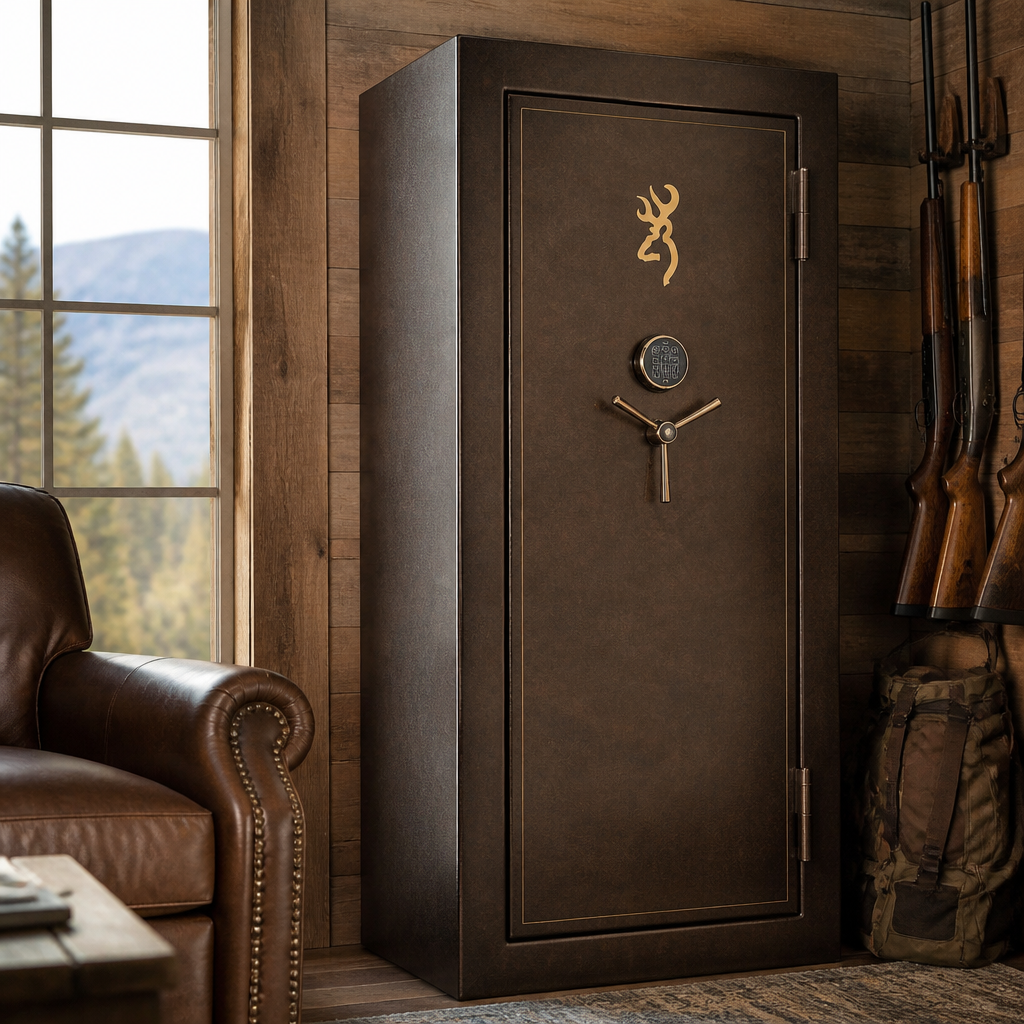
The Browning HTR33 Hunter Series stands out in the crowded gun safes and safety market because it pairs a traditional exterior with modern protection features that serious firearm owners actually use. In product reviews, many safes lean heavily toward either appearance or security, but this model earns attention by delivering both: a classic finish suitable for a home interior and a practical storage system built around long guns, accessories, and day-to-day access. For readers exploring gun safes and safety, this article serves as a product reviews hub by examining what the Browning HTR33 Hunter Series is, how it performs, where it fits, and which evaluation standards matter when comparing it with other safes.
When I review a gun safe, I look beyond marketing phrases like “heavy duty” or “premium protection.” The critical terms are more specific. Fire protection refers to the safe’s tested or stated ability to resist internal temperature rise during external heat exposure. Burglary resistance involves steel thickness, door construction, bolt coverage, hinge design, pry resistance, and lock integrity. Capacity is not just a number on a brochure; it reflects whether the interior can actually store scoped rifles, shotguns, handguns, documents, and accessories without forcing awkward placement. Usability includes handle operation, shelf flexibility, lighting, interior organization, and how reliably the lock works under normal household conditions. A good product review must address all of those points because buyers are not purchasing furniture alone; they are purchasing controlled access and risk reduction.
This matters for legal, financial, and safety reasons. A gun safe helps prevent unauthorized access by children, visitors, or thieves. It also protects optics, suppressor paperwork, heirloom firearms, and hunting gear from heat, moisture, and household damage. Insurance carriers may ask how firearms are stored after a loss, and many gun owners now expect a safe to serve as a central storage platform rather than a simple metal box. The Browning HTR33 Hunter Series fits squarely into that expectation. It is often considered by buyers who want an attractive, medium-to-large long gun safe with organized shelving and a recognizable brand reputation. As a hub article for product reviews, the goal here is not to push one model blindly, but to give a framework readers can use when evaluating this safe and related options across the category.
What the Browning HTR33 Hunter Series Is Designed to Do
The HTR33 Hunter Series is built for firearm owners who want a residential security container that balances household aesthetics with practical storage. Browning positions the line toward hunters, collectors with moderate-size inventories, and homeowners who prefer a traditional finish instead of an industrial-looking cabinet. The “33” generally indicates a nominal long gun capacity, though as with almost every safe brand, real-world capacity is usually lower once rifles have scopes, slings, bipods, oversized bolt handles, or soft cases. In my experience, buyers who expect true one-slot-per-gun storage for 33 modern rifles are usually disappointed unless many of those firearms are slim, unscoped, or rotated across different shelf configurations.
What the model does well is create a more adaptable interior than many entry-level big-box safes. Browning is known for interior organization systems that aim to maximize depth and vertical use, often with barrel racks, shelving modules, and door storage layouts. For hunters, that matters. A safe should hold not only deer rifles and shotguns but also rangefinders, ammunition in sensible quantities, choke tubes, hearing protection, pistols, and important documents. The Hunter Series typically appeals to people who want one primary safe in a bedroom, office, den, or dedicated gun room rather than multiple smaller lockers spread around the house.
The classic finish is not a trivial detail. Many homeowners need a safe that can live in a visible space without looking out of place. Textured black boxes have their place, especially in garages, but a traditional wood-tone or furniture-inspired finish can reduce resistance from other household decision-makers and make proper storage more likely. In that sense, the finish contributes indirectly to safety: a safe that fits the home is a safe more people are willing to install in the right location.
Build Quality, Security Features, and Fire Protection
Security begins with materials and construction, not branding. On a safe like the Browning HTR33 Hunter Series, buyers should examine body steel thickness, reinforced door edges, locking bolt engagement, hard plate protection around the lock, relocker presence, and overall fitment. Browning’s better-known models generally compete in the upper consumer segment, where a safe is meant to delay smash-and-grab burglary attempts and resist opportunistic attacks, not function as a commercial TL-rated vault. That distinction is important. Residential gun safes are fundamentally delay devices. They buy time, create noise, complicate pry attacks, and reduce the likelihood that a thief can remove firearms quickly.
Fire protection claims also require context. Manufacturers often quote fire ratings based on proprietary testing conditions rather than a single universal standard across the entire category. The right question is not “What is the number?” but “What does that number likely mean for my risk profile?” If your primary concerns are house fire survivability for paper records, optics, and firearms, insulation design, door seals, and placement in the home all matter. A safe installed on a concrete slab away from concentrated fuel loads usually has a better chance than one upstairs in a room packed with combustibles. I always advise buyers to read the stated fire rating carefully and treat it as one data point rather than an absolute promise.
The HTR33’s practical value comes from combining this level of residential protection with recognizable fit-and-finish improvements over many promotional safes. The lock, whether electronic or mechanical depending on trim and configuration, should be evaluated for reliability, battery access if electronic, and serviceability. A good lock is one that opens consistently, supports disciplined access control, and does not encourage owners to leave the safe unlocked out of frustration. That sounds basic, but poor usability is one of the most common reasons security practices fail in real homes.
| Evaluation Area | What to Check on the HTR33 | Why It Matters |
|---|---|---|
| Capacity | Real fit for scoped rifles, shelf flexibility, door storage | Advertised counts rarely equal usable counts |
| Security | Steel thickness, bolt coverage, pry resistance, lock type | Determines delay against forced entry |
| Fire Protection | Rated duration, seal design, insulation approach, placement | Affects survival in a residential fire |
| Interior Layout | Racks, shelving modules, accessory storage, lighting options | Improves organization and safe daily use |
| Installation | Weight, anchoring points, floor strength, delivery path | Prevents tip risk and theft by removal |
| Finish | Exterior durability, color consistency, room compatibility | Supports long-term satisfaction in visible spaces |
Interior Layout, Capacity Reality, and Everyday Use
Interior organization is where many Browning safes separate themselves from lower-cost competitors. On paper, long gun capacity is easy to advertise. In practice, modern rifles consume more space than legacy counting methods assume. A scoped bolt-action rifle may occupy the footprint of two traditional slots. An AR-platform rifle with an optic, weapon light, and extended magazine can disrupt neighboring positions. Shotguns with wider fore-ends and slings also reduce density. That is why the HTR33 should be judged by layout flexibility, not just the number in the model name.
For everyday use, adjustable shelving matters as much as raw capacity. Owners often store a mix of long guns, handguns in pouches or racks, passports, jewelry, camera gear, and tax records. A fixed interior can become frustrating fast. Browning’s modular approach usually gives owners better odds of creating zones: one for hunting rifles, one for defensive carbines, one for pistols and documents, and one for accessories. This is more than convenience. Better organization reduces muzzle knock, optic damage, and the all-too-common habit of leaning uncased firearms in closets because the safe has become too cluttered.
Door storage is another underrated feature. Handgun pockets, choke tube loops, and document sleeves can free shelf space and keep frequently used items visible. However, door organizers should not be overloaded with heavy objects if they interfere with rifle clearance or pressure against the interior when closing. The best setup is balanced: use the door for flat or medium-weight items and reserve central space for long guns that need secure, upright support.
Usability also depends on the opening angle, handle smoothness, interior lighting options, and threshold design. In households where the safe is accessed several times a week during hunting season, small friction points become major annoyances. A safe that opens cleanly, presents contents visibly, and allows fast retrieval without snagging slings or optics is more likely to be used correctly every time. That is the difference between a safe that merely stores firearms and one that genuinely supports responsible ownership.
Where the HTR33 Fits in Product Reviews and Buyer Comparisons
As a hub within product reviews, the Browning HTR33 Hunter Series represents a specific class: premium-leaning residential gun safes with lifestyle-friendly aesthetics and above-average interior design. It is not the cheapest option, and that is part of its identity. Buyers comparing it with entry-level store brands should expect to pay more for finish quality, interior refinement, and brand reputation. Buyers comparing it with heavier custom safes or commercial burglary-rated units should recognize that the HTR33 targets a different use case and price bracket.
In review methodology, I group safes into five buyer questions. First, how hard is it to defeat quickly? Second, how much usable storage does it really provide? Third, how credible is the fire protection for a normal residence? Fourth, how easy is it to live with every day? Fifth, does the appearance suit the intended room? The HTR33 scores strongest in the middle three categories for most households. It usually offers better day-to-day organization than budget models, more visual appeal than tactical-style boxes, and enough protection to satisfy owners who want meaningful delay and solid home storage without moving into vault-room budgets.
The tradeoffs are worth stating clearly. If your highest priority is maximum steel mass per dollar, an industrial-looking safe with fewer cosmetic touches may deliver more raw material value. If your collection includes a large number of precision rifles with bulky optics, thermal devices, or suppressors, you may outgrow a nominal 33-gun format sooner than expected. If you live in an area with elevated burglary risk and long police response times, anchoring, alarm integration, surveillance, and room placement matter just as much as the safe model. No gun safe should be reviewed in isolation from the larger security plan.
Installation, Placement, and Long-Term Ownership
Even an excellent gun safe underperforms if it is installed poorly. The Browning HTR33 Hunter Series should be anchored to a suitable surface using the manufacturer’s hardware guidance or upgraded anchors chosen for the specific slab or floor structure. Anchoring reduces tip hazard, makes pry attacks harder, and prevents thieves from removing the entire safe for off-site attack. Delivery path matters too. Measure doorways, hallways, stairs, and turning clearances before purchase. Many safe problems start when buyers focus on brochure dimensions but overlook trim, thresholds, and floor load considerations.
Placement should support both security and survivability. A concealed location is useful, but accessibility matters because inaccessible safes tempt owners to delay storage. Ground-floor placement on concrete is generally favorable for weight support and fire outcomes. Dehumidification should also be part of the plan. Firearms stored in any enclosed space can develop corrosion if humidity is ignored. GoldenRod-style dehumidifiers, rechargeable desiccants, and hygrometers are inexpensive compared with the cost of rust on blued steel or optics mounts.
Long-term ownership includes maintenance and periodic reassessment. Test the lock, replace electronic lock batteries proactively, inspect anchor integrity, and revisit the interior layout as the collection changes. A safe that worked well for six hunting rifles and two shotguns may become overcrowded after a few years of acquisitions. The best product review advice is simple: buy for your next stage, not only your current inventory. If the HTR33 matches your projected growth, room aesthetics, and realistic threat level, it can be a strong central safe for a responsible household.
The main takeaway is that the Browning HTR33 Hunter Series succeeds because it treats a gun safe as both protective equipment and everyday infrastructure for firearm ownership. Its classic finish broadens placement options, its interior design supports real organization, and its security and fire features align with what most residential buyers actually need. Like any safe, it must be judged honestly on usable capacity, installation quality, and how it fits into a wider security plan that includes anchoring, humidity control, and disciplined access management.
As a product reviews hub within gun safes and safety, this model provides a useful benchmark. It shows what buyers should expect when stepping above entry-level cabinets: better layout engineering, better visual integration into the home, and a more complete ownership experience. It is not a universal answer for every collection or threat environment, but it is a credible option for hunters and homeowners who want dependable storage without sacrificing appearance.
If you are comparing safes now, use the HTR33 as your reference point. Check the real interior dimensions, verify the lock and fire specifications, plan the installation carefully, and compare it with other models in the same class before you buy.
Frequently Asked Questions
What makes the Browning HTR33 Hunter Series different from other gun safes in its class?
The Browning HTR33 Hunter Series stands out because it does not force buyers to choose between appearance and function. Many gun safes in this category are either heavily styled to look tactical or stripped down to focus only on basic security. The HTR33 takes a more balanced approach. It features a traditional, furniture-friendly exterior that looks appropriate in a home, cabin, or dedicated gun room, while still delivering the protective features firearm owners expect from a modern safe.
What also separates it from many competing models is the way it is designed around real use. This is not simply a large metal box with shelves. The interior layout is intended to support long-gun storage, accessory organization, and easier day-to-day access. For owners who rotate rifles and shotguns in and out during hunting season, store optics, ammunition, documents, or range gear nearby, that practical storage design matters just as much as lock type or exterior finish.
In short, the HTR33 appeals to buyers who want a gun safe that feels serious without looking industrial. It offers the visual warmth of a classic finish along with the security, storage flexibility, and everyday usability that experienced firearm owners appreciate after living with a safe over time.
Is the Browning HTR33 Hunter Series mainly about looks, or does it offer serious protection too?
It is fair to say that the classic exterior is one of the first things people notice, but the Browning HTR33 Hunter Series is not just a decorative safe. Its appeal comes from combining an attractive finish with the core protective features buyers are actually looking for: secure storage, controlled access, and organized firearm containment. For most responsible owners, a gun safe must do more than look good in a room. It must help limit unauthorized access, support safe firearm storage practices, and provide confidence that valuable guns and related gear are stored in a more protected environment.
That is where the HTR33 earns its reputation. Browning’s approach generally emphasizes not only locking security but also usability, because a safe that is difficult to organize or frustrating to access often ends up being used less effectively. The Hunter Series is geared toward practical ownership, especially for those storing multiple long guns and hunting equipment. That means buyers are getting a safe designed with real-world storage needs in mind, not just an eye-catching cabinet meant to blend into décor.
For shoppers comparing options, the best way to think about the HTR33 is this: its appearance helps it fit comfortably into a home setting, while its construction and storage system are what make it a serious purchase. It is a model aimed at people who want both confidence and convenience, not one at the expense of the other.
Who is the Browning HTR33 Hunter Series best suited for?
The Browning HTR33 Hunter Series is especially well suited for firearm owners who want a safe that supports regular use rather than simply long-term storage. Hunters, sporting firearm owners, and collectors with a mix of rifles and shotguns are likely to find it appealing because the safe is oriented around long-gun capacity and practical interior management. If you have ever been frustrated by cramped interiors, awkward shelf placement, or a safe that technically holds your firearms but makes them difficult to access, this type of design will likely make sense.
It is also a strong fit for buyers who care about how a safe looks inside the home. Not every owner wants an aggressively tactical finish in a visible room, office, or den. The Hunter Series offers a more classic style that can feel less intrusive in a residential environment. That makes it appealing to homeowners who want secure storage without making the safe the most industrial-looking object in the space.
At the same time, it is a practical option for people who need room for more than firearms alone. Accessories, optics, important papers, ammunition storage planning, and other gear all benefit from a well-thought-out interior. So while the HTR33 is naturally attractive to hunters, it also makes sense for anyone who wants a secure, organized, visually refined safe for everyday ownership.
How practical is the interior storage system for long guns and accessories?
Interior practicality is one of the biggest reasons people look at a model like the Browning HTR33 Hunter Series. On paper, capacity numbers can be helpful, but they rarely tell the full story. What matters in day-to-day use is whether the safe allows you to store long guns in a way that is accessible, stable, and organized without turning the interior into a crowded puzzle. Browning has built a strong reputation around interior layouts that aim to make better use of available space, and that is a major selling point for buyers who own scoped rifles, shotguns, and related equipment.
A practical interior storage system should do several things well: protect firearms from unnecessary contact, help users separate long guns from smaller valuables and accessories, and make it easier to retrieve what they need without reorganizing the whole safe. That is the kind of value buyers are looking for in the HTR33. Rather than focusing only on maximum theoretical capacity, the design is intended to support realistic storage patterns, including space for accessories and gear that often end up cluttering lesser safes.
For the average owner, this means the HTR33 is likely to feel more usable over time. A safe with a smarter interior tends to stay cleaner, safer, and more efficient, especially during hunting season or frequent range use. If your priority is not just how many items can fit, but how well they can be stored and accessed, the interior layout becomes one of the model’s strongest advantages.
Is the Browning HTR33 Hunter Series a good choice for someone buying a gun safe for the home?
Yes, for many buyers it is a very strong home-use option, particularly if they want a combination of traditional styling, practical organization, and credible firearm storage utility. A home gun safe has to solve several problems at once. It should provide a more secure location for firearms, fit within the home without feeling out of place, and make it easy enough to use that owners consistently store firearms properly. The Browning HTR33 Hunter Series checks those boxes in a way that feels tailored to real households rather than showroom impressions.
One of its biggest advantages in a home setting is that it acknowledges the fact that appearance matters. A classic finish can make a safe easier to place in a den, study, spare room, or other visible area without clashing with the environment. At the same time, that design restraint does not mean it gives up the practical benefits serious owners need. It is still centered on secure firearm storage and efficient interior use, which is exactly what most responsible buyers should prioritize.
For anyone researching safes for home use, the HTR33 is appealing because it feels like a long-term purchase rather than a compromise. It is suitable for buyers who want their safe to look appropriate in the home, work well with long guns and accessories, and deliver the kind of everyday functionality that becomes more important after the initial purchase. That blend of classic presentation and modern utility is exactly why it attracts attention in a crowded market.