
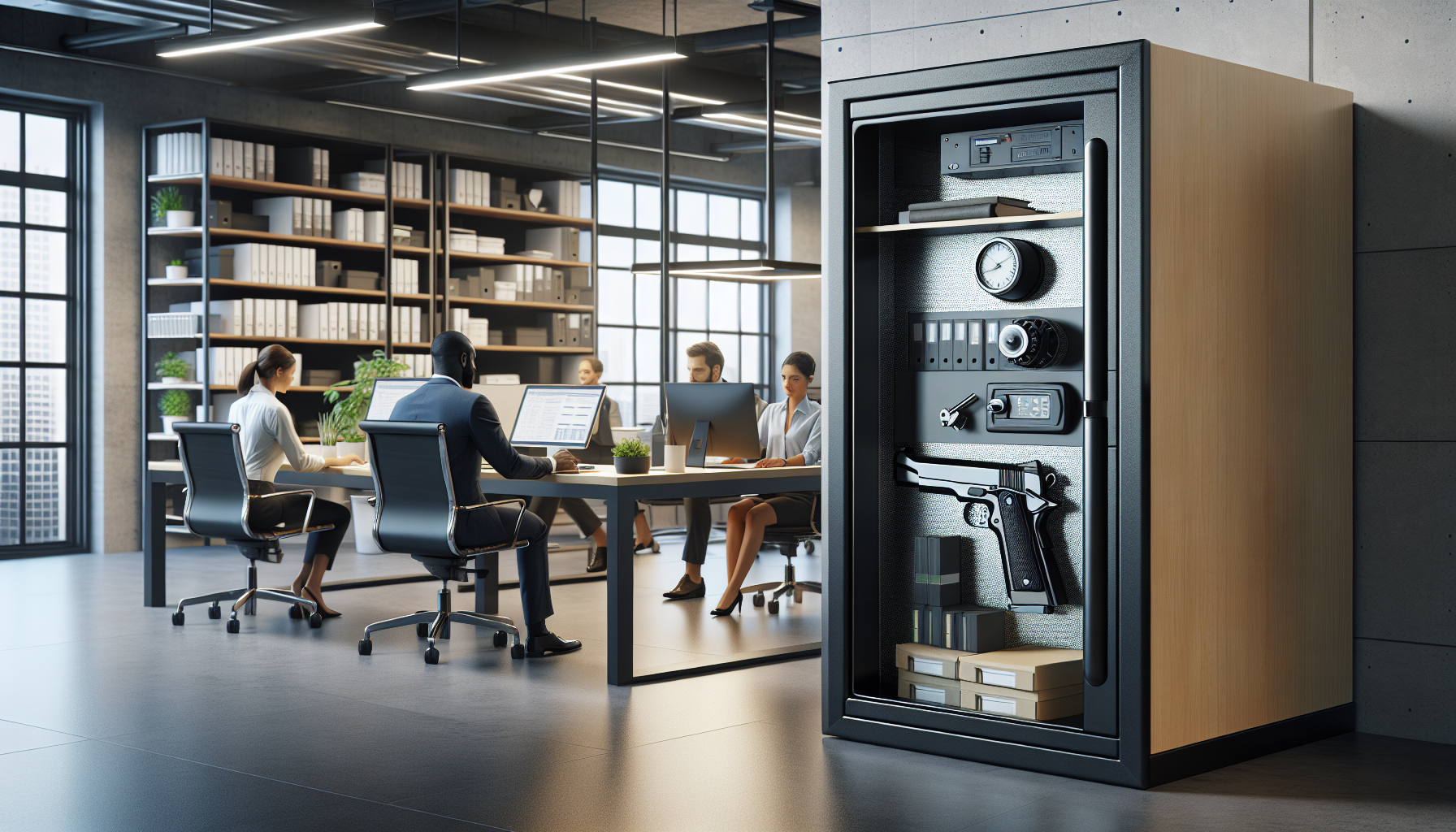
Choosing the right gun safe for your office or workplace starts with understanding that commercial storage has different risks, legal duties, and access patterns than storing firearms at home. In a business setting, a gun safe is not simply a heavy metal box; it is a controlled-access security asset designed to prevent unauthorized handling, reduce theft risk, document accountability, and support workplace safety policies. I have helped organizations compare safes for private offices, security firms, agricultural operations, executive protection teams, and retail back rooms, and the same lesson comes up every time: buying the wrong safe creates operational problems long before it fails in a break-in.
For workplaces, the core terms matter. A gun safe usually refers to a reinforced container with locking mechanisms, internal storage features, and some level of burglary and fire resistance. A cabinet is lighter duty, often thinner steel, and better suited to low-risk environments where delay against casual access matters more than resistance to a determined attack. A vault room is a dedicated hardened space for higher inventory volume. Access control can include mechanical dial locks, electronic keypad locks, biometric readers, dual custody systems, audit trails, and integration with broader physical security systems. Capacity also needs honest interpretation, because manufacturer ratings often assume tightly packed long guns without optics, slings, or accessories.
This topic matters because the workplace creates liabilities that are broader than simple property loss. A stolen firearm can trigger insurance claims, regulatory scrutiny, employee relations issues, and reputational damage. Improper storage can also expose employers to negligence arguments if an unauthorized person gains access. In some industries, the issue is not optional. Security contractors, armored transport businesses, law offices with executive protection needs, rural property operations, and licensed firearms businesses may all need structured storage protocols. Even firms that permit lawful employee possession on premises need a clear decision about whether firearms will be prohibited, personally secured, or centrally stored under policy.
The right buying guide therefore has to answer practical questions directly: what level of protection is enough, which lock type best fits your workflow, how large should the safe be, where should it be installed, what standards actually matter, and how do you balance speed of access against control? A good office gun safe purchase is one that fits your threat model, your policy, your users, and your building. That is the standard this guide uses, and it is the reason a careful selection process almost always outperforms buying the biggest or cheapest safe on the showroom floor.
Start with risk, policy, and who will access the safe
The first step in choosing a gun safe for your office or workplace is defining the use case in writing. I recommend starting with four questions: who will store firearms, who can retrieve them, how quickly is access ever required, and what are the consequences if the safe is compromised? A receptionist area, a manager’s office, a security dispatch center, and a warehouse supervisor’s room are not equivalent environments. The same safe that is acceptable for temporary after-hours storage in a restricted office may be inadequate for a site holding duty handguns, patrol rifles, and serialized accessories every day.
Policy should drive the hardware decision. If only one authorized person needs occasional access, a quality mechanical or electronic lock may be sufficient. If multiple employees need controlled access, the requirement changes. You may need individual credentials, opening logs, shift-based permissions, or a two-person rule. In businesses with unionized workforces or formal safety committees, access rules should be coordinated with HR, legal counsel, and security leadership. If your policy states that only designated supervisors can issue or secure firearms, the safe must support that rule in real operation, not just on paper.
Threat assessment also separates commercial buyers from residential buyers. In offices, theft often comes from a blended threat profile: outside burglary, insider misuse, opportunistic access by cleaning crews or contractors, and simple key or code mishandling. A safe that resists smash-and-grab attacks for ten minutes may be enough in a monitored building with access control, cameras, and fast alarm response. That same safe may be inadequate in a lightly occupied industrial site where intruders could work uninterrupted after hours. Matching the safe to the realistic attack window is one of the most important buying decisions you will make.
Understand construction, ratings, and what protection really means
Safe marketing often emphasizes thickness, weight, and dramatic videos, but commercial buyers need to read specifications critically. Steel gauge alone does not tell the full story. The body construction, door plate design, hard plate around the lock, bolt work, relockers, hinge protection, weld quality, and anchoring provisions all determine real resistance. In practice, a well-designed safe with robust door construction and proper anchoring can outperform a heavier but poorly engineered model. Interior drywall-based fire lining also adds mass but should not be mistaken for burglary protection.
Burglary and fire ratings deserve careful interpretation. For workplace use, independently tested burglary ratings are more meaningful than generic “tamper-proof” claims. Commercial-grade products may reference Underwriters Laboratories categories for residential security containers, tool-resistant ratings, or listed locks. Fire ratings also vary in testing method, duration, and target internal temperature. Paper chars at a lower threshold than many electronics, but optics, lubricants, polymers, and ammunition packaging can also be damaged by heat and humidity. If the safe will store records or digital media alongside firearms, that is a separate storage problem requiring different protection.
Buyers should also understand the difference between delay and invulnerability. No gun safe is truly impenetrable given enough time, tools, and privacy. The goal is to increase time, noise, and complexity so the attack is interrupted or abandoned. That means the safe works best as one layer within a broader security program that includes intrusion alarms, surveillance cameras, controlled keys and codes, visitor management, after-hours procedures, and incident review. Businesses that treat the safe as a standalone solution usually overspend in the wrong areas and underinvest in the controls that make the safe effective.
Choose the right size, interior layout, and placement strategy
Size is where many workplace buyers make expensive mistakes. Manufacturer capacity numbers are usually optimistic, especially for long guns with scopes, lights, slings, or larger handguards. In offices, mixed storage is more common than uniform storage, so the interior must handle handguns, patrol rifles, magazines, duty belts, holsters, ammunition kept under policy, and sometimes chain-of-custody paperwork. I usually advise commercial buyers to add at least 25 to 40 percent more space than their current inventory suggests. Growth happens faster than expected, and cramped storage leads to damaged equipment, unsafe stacking, and poor accountability.
Placement matters just as much as size. A gun safe should sit in a location that is restricted, discreet, structurally suitable, and easy for authorized users to access without exposing the contents to foot traffic. Back offices with limited visibility from public areas are usually better than front administrative spaces. The floor must support the weight, especially for larger composite safes in older buildings or upper stories. Concrete anchoring is preferred whenever possible. If the safe is installed on wood framing, consult a qualified contractor about load distribution and anchor method rather than improvising.
Environmental conditions deserve more attention in workplaces than many buyers expect. Warehouses, outbuildings, and shops may have temperature swings and humidity that accelerate corrosion. Dehumidifier rods, desiccants, and sensible HVAC placement reduce risk. If the safe will sit in a maintenance area or agricultural office where dust, chemicals, or vibration are common, select finishes, seals, and lock housings with durability in mind. Interior organization also matters. Adjustable shelving, pistol racks, door organizers, and labeled compartments make inventory control faster and reduce handling errors, which is a real safety gain in daily use.
| Workplace scenario | Best safe profile | Why it fits |
|---|---|---|
| Executive office with one authorized user | Mid-size anchored safe with mechanical or keypad lock | Balances discreet storage, reliable access, and moderate burglary resistance |
| Security company dispatch room | Commercial safe with audit-capable electronic lock and organized interior | Supports frequent controlled access, credential management, and accountability |
| Rural business storing long guns seasonally | Larger fire-lined safe with humidity control and expansion space | Protects varied firearms in changing environmental conditions |
| Retail back room with higher theft exposure | Higher-rated burglary-resistant safe integrated with alarm coverage | Improves delay time against targeted attacks and insider risk |
Lock types, access speed, and accountability in daily operations
The best lock for a workplace gun safe depends on traffic, staffing, and tolerance for administrative complexity. Mechanical dial locks remain highly respected for durability and long service life. They do not rely on batteries or electronics, and many security managers like them for low-frequency access. Their drawback is speed. Opening a dial lock correctly under stress or during shift turnover is slower than using a keypad, and the combination cannot be revoked as easily if too many people learn it.
Electronic keypad locks are the most common commercial choice because they offer fast entry, easy code changes, and, in better models, multiple user codes and time-delay functions. For offices and security operations, this flexibility often outweighs the maintenance burden of battery changes and periodic testing. Not all electronic locks are equal, however. Buyers should look for established lock manufacturers, listed lock options, lockout features after repeated failed attempts, and clear emergency procedures if the keypad fails. Cheap consumer-grade electronics create avoidable downtime.
Biometric access sounds attractive, but I recommend caution for most workplaces. Fingerprint readers can be useful for single-user, rapid-access handgun safes in controlled conditions, yet they are less dependable when hands are dirty, gloved, wet, or injured. In industrial settings, those variables are common. For shared workplace use, biometrics are usually better as a secondary convenience feature than as the only access method. If accountability is important, consider systems that record openings by user credential or integrate with broader access management. In any office that may face legal review after an incident, a documented access history is more valuable than a flashy unlock method.
Installation, compliance, and total cost of ownership
Buying the safe is only part of the project. Delivery, installation, anchoring, code setup, user training, and maintenance determine whether the investment performs as intended. Professional installation is worth the cost for most workplaces because commercial safes are heavy, difficult to move safely, and easy to install badly. I have seen excellent safes lose much of their practical security because they were left unanchored in a closet, placed where a pry attack had room to work, or positioned so staff had to expose contents in public view every time the door opened.
Compliance requirements vary by state, industry, lease terms, and insurer expectations, so buyers should verify local rules rather than relying on assumptions. Some employers also need written procedures for possession, check-in and check-out, incident reporting, and key or code control. Insurance carriers may require minimum burglary ratings, monitored alarms, or documentation of serial number inventory. If your workplace is leased, confirm floor loading, anchoring permissions, and after-hours contractor access rules before the safe arrives. These details are easier to solve in procurement than after a failed installation day.
Total cost of ownership is the final filter. A lower-priced safe can become the expensive option if it lacks audit capability, needs replacement after your inventory grows, or causes productivity losses during every access event. Budget for accessories, humidity control, lock upgrades, service intervals, and policy training. The best buying decision is usually a safe that meets today’s risk profile while leaving room for modest expansion and stronger procedures later. If you are evaluating models now, document your inventory, define authorized users, measure the installation site, and compare independently credible ratings before you buy. That process leads to a safer workplace and a purchase you will not need to correct later.
Choosing the right gun safe for your office or workplace comes down to fit, not hype. The right model matches your risks, your firearm inventory, your access policy, your building conditions, and your operational tempo. For a small executive office, that may mean a discreet anchored safe with a reliable lock and enough interior organization for one or two authorized users. For a security company or higher-risk commercial site, it may mean stronger burglary resistance, logged access, stricter key control, and integration with alarms and cameras.
The main benefit of a well-chosen workplace gun safe is controlled accountability. You reduce unauthorized access, make theft more difficult, improve day-to-day handling, and support a defensible safety program if an incident is ever reviewed. The wrong purchase does the opposite: it wastes budget, complicates access, and leaves gaps in policy enforcement. That is why buying guides matter in this category. Construction details, lock design, capacity planning, installation quality, and compliance factors all shape the real-world outcome more than glossy marketing claims.
As you move forward, treat this page as your planning hub for gun safe buying decisions. Review your use case, confirm your legal and insurance requirements, shortlist safes by credible construction and lock features, and involve facilities, security, and leadership before purchase. A careful selection process will give your workplace safer storage, clearer procedures, and fewer expensive surprises. Start by assessing your risk profile and installation space today, then compare options with those facts in hand.
Frequently Asked Questions
What makes a gun safe for an office or workplace different from a gun safe for home use?
A gun safe in a workplace serves a different purpose than one used in a private residence. In an office, warehouse, retail location, security firm, or other commercial setting, the safe functions as part of a broader security and compliance system rather than just a personal storage container. Businesses usually face more complex access needs, including multiple authorized users, shift changes, supervisor oversight, and documented key or code control. That means the safe must support controlled access, accountability, and consistent security procedures in a way many residential safes are not designed to handle.
Commercial risks are also different. A workplace may have employees, contractors, customers, cleaning crews, or delivery personnel moving through the premises, which increases the chance of unauthorized access if firearms are not properly secured. There may also be higher theft exposure because offices and business locations can be targeted after hours. For that reason, important features often include heavier construction, anchoring capability, tamper-resistant locking systems, audit-friendly access controls, and strategic installation in a restricted area. In many cases, businesses should think beyond “Will this hold a firearm?” and instead ask, “Will this safe support our workplace safety policy, chain of custody expectations, and physical security plan?”
Another major difference is legal and policy alignment. Depending on the industry and location, an employer may need to address occupational safety, internal security rules, insurance conditions, and state or local firearm storage laws. A suitable workplace gun safe should fit into written procedures covering who may access it, under what circumstances, how firearms are checked in or out, and what happens if an employee leaves the company or changes roles. In short, the right office gun safe is a business security asset, not just a personal convenience item.
Which features should matter most when choosing a gun safe for a business environment?
The best gun safe for a workplace depends on the role firearms play in that business, but several features consistently matter more in commercial settings than buyers first expect. Security construction is at the top of the list. Look for robust steel thickness, reinforced doors, strong locking bolts, pry resistance, and a design that can be securely anchored to the floor or structure. A safe that is heavy but not properly installed can still be removed or attacked, so installation planning is just as important as the safe itself.
Access control should be evaluated very carefully. In a private office, a simple high-quality mechanical or electronic lock may be enough if only one or two authorized individuals need entry. In a larger workplace, however, the better option may be a system that allows controlled credential assignment, code changes when staff roles change, and clear separation between primary users and emergency override authority. Reliability matters here. Businesses should favor lock types and brands known for durability, consistent performance, and serviceability rather than choosing solely based on convenience features.
Capacity and interior configuration also deserve more attention than many buyers give them. The safe should fit the firearms being stored, along with magazines, documentation, and related equipment, without forcing unsafe stacking or crowding. If a business stores handguns for security personnel, compact compartmentalized layouts may be ideal. If long guns are involved, interior dimensions, rack design, and barrel support matter more. Some organizations also benefit from separate internal compartments for ammunition, credentials, or individually assigned equipment.
Fire protection can be important, but it should be viewed realistically. In many business use cases, burglary resistance and access control are more important than extended fire ratings. That said, if the safe will hold records, serialized inventory information, permits, or other sensitive materials alongside firearms, then fire resistance becomes more valuable. Finally, consider maintenance, manufacturer reputation, warranty support, and locksmith availability in your area. A safe is a long-term security investment, so serviceability and support after purchase are not minor details.
How should a company decide who gets access to the gun safe?
Access should be based on role, necessity, and accountability, not convenience or seniority alone. One of the most effective workplace safety practices is limiting access to the smallest number of people required for legitimate job functions. For example, in a small office that stores a firearm for an executive protection role or controlled emergency use, access may be limited to a designated manager and one backup administrator. In a security company, access may be assigned to trained supervisors or armorers with clearly documented authority. The key principle is that every authorized user should have a defined operational reason for access and documented responsibility for how that access is used.
Training is essential before granting access. Anyone with authorization should understand the company’s firearm storage policy, safe operation procedures, re-locking verification, key or code protection requirements, and reporting expectations for any irregularity. They should also know what to do if a lock malfunctions, if an access credential is compromised, or if there is evidence of tampering. Access without policy and training creates preventable risk. In many workplaces, it is wise to require written acknowledgment of responsibilities and periodic review of those responsibilities.
Businesses should also build in layers of oversight. That may include maintaining an access log, changing codes immediately when personnel change, separating daily access from override authority, and requiring dual authorization in sensitive environments. For some organizations, especially those with multiple firearms or multiple shifts, the safest approach is a formal chain-of-custody process documenting who accessed the safe, when, and for what reason. This not only strengthens internal control but can also help with insurance questions, incident review, and policy enforcement. If access cannot be clearly justified and monitored, it is probably too broad.
Where is the best place to install a gun safe in an office or workplace?
The right installation location balances security, discretion, structural support, and authorized accessibility. In most workplaces, the best location is not the most obvious one. A front office, reception area, or visible management office may be convenient, but it can also increase exposure to observation, forced access, or coercion. Instead, many businesses are better served by placing the safe in a restricted-access room, private secured office, locked equipment room, or monitored back-office area with limited foot traffic. The goal is to reduce visibility while still allowing controlled authorized access when needed.
Physical installation conditions matter a great deal. The safe should be anchored according to manufacturer guidance and the building’s structural realities. Floor type, wall clearance, door swing, and the ability to fully operate the lock and handle all need to be considered in advance. In upper-floor offices, weight distribution may also need review. It is smart to coordinate with the building owner, facilities manager, or installer if there are questions about load capacity or anchoring limitations. A strong safe placed poorly or installed loosely does not provide the level of protection a business expects.
Environmental and operational factors should also influence placement. Avoid areas with frequent public access, unnecessary humidity exposure, flood risk, or cleaning and maintenance traffic that could draw attention. If the business uses cameras, alarm systems, or access-controlled doors, install the safe where those systems enhance security rather than leave blind spots. At the same time, do not place it somewhere so inconvenient that staff begin bypassing procedure. The best workplace safe location is one that supports policy compliance, discourages unauthorized discovery, and strengthens the site’s overall security design.
What legal, insurance, and policy issues should a business consider before buying a gun safe?
Before selecting a gun safe, a business should confirm the legal and regulatory framework that applies to firearm possession and storage at that specific workplace. Requirements can vary widely based on state and local law, the type of business, the role firearms play in operations, and whether the firearms are company-owned or personally owned by employees. Some jurisdictions impose storage or transfer rules, some employers operate on leased premises with contractual restrictions, and some industries may have additional expectations tied to licensing or security operations. Because of that, the safe should be chosen as part of a policy review, not as a standalone purchase.
Insurance considerations are equally important. A carrier may have specific expectations regarding burglary protection, anchoring, alarm integration, documented inventory, and who can access stored firearms. If a loss occurs, the ability to show that firearms were secured in an appropriate, professionally installed safe under a written access policy may affect how a claim is evaluated. Businesses should also think about liability exposure. If an unauthorized person gains access because storage procedures were weak, the consequences can go far beyond property loss. A stronger safe, used under a clear policy, helps demonstrate that the company took reasonable steps to protect people and property.
Internal policy may be the most overlooked piece. A good workplace firearm storage policy should define whether firearms are allowed on the premises, who may possess or store them, where they must be secured, who controls the safe, how access is documented, how credentials are changed, and how incidents are reported. It should also address termination, leave, role changes, and emergency procedures. The safest and smartest purchase is the one that fits the company’s actual operating rules. When businesses align the safe, the location, the access controls, and the written policy, they create a storage program that is much more defensible, secure, and practical over the long term.