
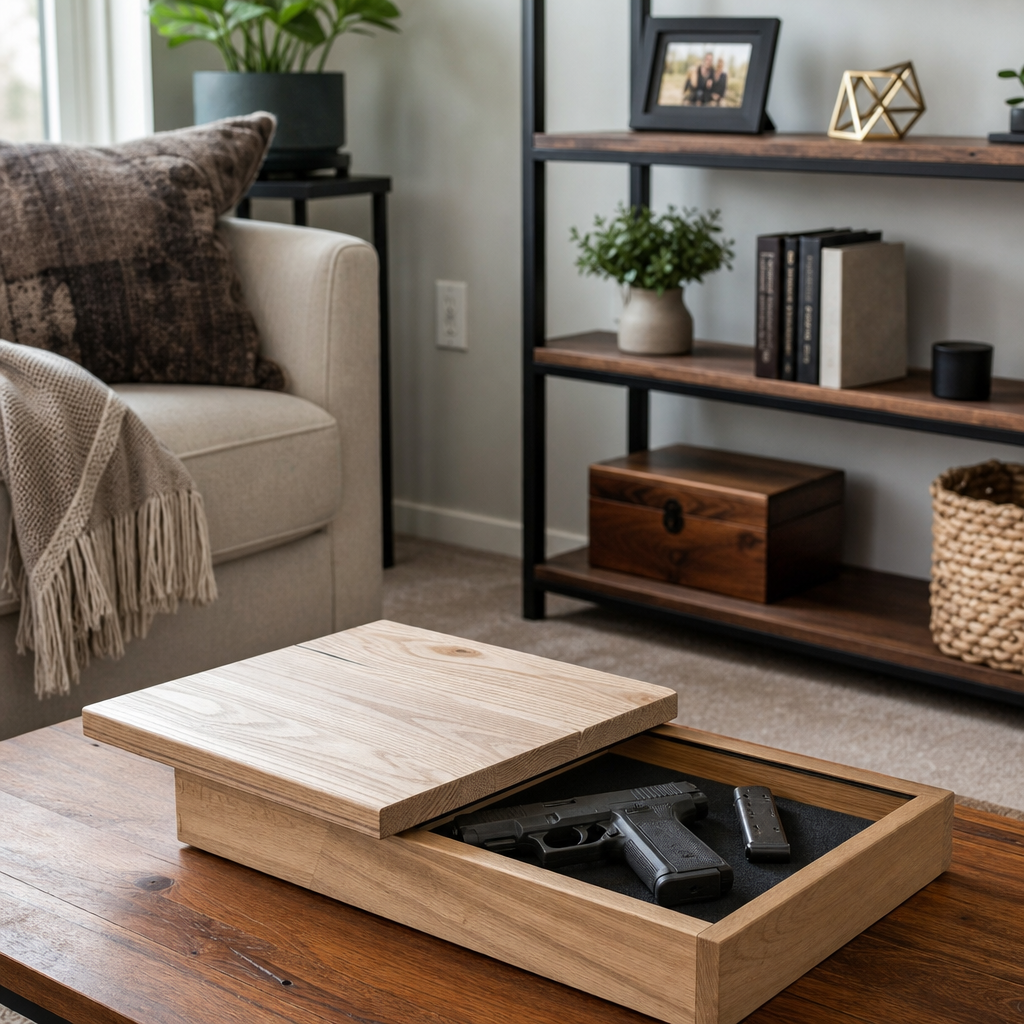
DIY concealment gun safe projects for apartments solve a difficult problem: how to secure firearms in limited space without advertising ownership to landlords, guests, maintenance staff, or thieves. A concealment gun safe is a locking storage unit disguised as ordinary furniture, décor, or built-in shelving, while apartment-friendly means the project avoids structural damage, stays movable, and fits lease restrictions. In my experience helping renters set up secure storage, the best results come from balancing three priorities at once: unauthorized access prevention, discreet appearance, and practical daily use. This matters because apartment dwellers typically face tighter square footage, shared walls, more frequent visitors, and less control over renovations than homeowners. A good project must therefore address fast access, tamper resistance, child safety, fire considerations, humidity control, and legal compliance without relying on permanent construction. This hub article covers the full landscape of custom and DIY gun safe modifications for renters, from hidden compartments and furniture conversions to lock upgrades, anchoring methods, interior organization, and common mistakes, so you can choose a project that is secure, realistic, and worth building.
What Makes a DIY Concealment Gun Safe Apartment-Friendly
An apartment concealment safe project should begin with threat modeling rather than woodworking. Ask who you are securing against: curious children, casual visitors, cleaners, maintenance crews, smash-and-grab burglars, or determined thieves with tools. That answer determines the level of steel, locking hardware, concealment depth, and anchoring method you need. For most renters, a disguised locking container delays discovery and prevents unauthorized handling, but concealment alone is never enough. A hollow coffee table with magnetic latches may hide a pistol from guests, yet it is not a true safe if a screwdriver opens it in seconds. The strongest apartment projects pair discreet design with hardened components such as 12 to 14 gauge steel lock boxes, reinforced hinges, anti-pry lips, and mechanical or electronic locks from established makers like Simplex, SecuRam, or Vaultek.
Apartment-friendly also means reversible installation. Projects that require cutting wall studs, bolting into concrete, or building false vents into permanent cabinetry can violate leases and create liability. Better options include freestanding nightstands with hidden lock boxes, under-bed drawer safes secured to steel bed frames, bench seats with internal steel compartments, or closet modules that mount to furniture-grade backer panels rather than the building itself. Weight matters too. A 600-pound safe may exceed elevator convenience and stress old floors, while a 70- to 180-pound modular concealment build can usually be moved by two people and still accept meaningful anchoring. If the unit cannot leave with you when you move, it is rarely ideal for an apartment renter.
Best DIY Concealment Gun Safe Project Types for Small Spaces
The most successful renter projects usually start with existing furniture. Nightstands are the classic choice because they support bedside access, hide a handgun naturally, and can house a drop-in steel pistol safe beneath a false drawer. A common build uses a standard two-drawer nightstand, where the upper drawer is shallow and functional while the lower section hides a lock box on full-extension slides. From the outside, it looks ordinary; inside, the firearm sits in foam or a kydex holster mount with room for a flashlight and spare magazine. Coffee tables can work in studio apartments, especially lift-top designs with a steel insert under the tabletop, but they need child-resistant locks because living room furniture gets touched more often.
Other practical projects include wall-hung mirrors with shallow locking compartments for compact pistols, entry benches with hidden long-gun storage if local law allows, and headboards built around steel lock enclosures. In closets, renters often convert an Ikea-style wardrobe or utility cabinet by installing a steel security cabinet inside a wood shell, creating visual camouflage without pretending wood itself provides security. I have also seen excellent under-bed projects using locking truck vault drawers mounted to plywood platforms on casters, allowing the whole unit to roll out for access while remaining invisible during normal use. The project category should match your firearm type, access speed requirement, and room traffic pattern rather than whatever design looks clever online.
| Project Type | Best For | Main Advantages | Main Limitations |
|---|---|---|---|
| Nightstand false-bottom safe | Handgun access near bed | Fast access, easy disguise, minimal footprint | Limited capacity, needs quality lock box insert |
| Coffee table lift-top safe | Studio apartments, common areas | Uses existing furniture, can store documents too | Higher guest contact, slower emergency access |
| Under-bed drawer vault | Handguns or compact long guns | Excellent space efficiency, hard to notice | Prone access position, dust accumulation |
| Bench or ottoman safe | Entryways and multipurpose rooms | Good concealment, larger interior volume | Must reinforce lid and hinges carefully |
| Wardrobe with internal steel cabinet | Collections needing more capacity | Best blend of concealment and true locking security | Takes closet space, heavier to move |
Materials, Locks, and Hardware That Actually Improve Security
The difference between a gimmick and a credible DIY concealment gun safe is material selection. Wood is for disguise and structure; steel is for security. If you are storing firearms, the lock-bearing compartment should be steel, ideally 12 to 14 gauge for handgun applications and thicker where practical around lock engagement points. Thin 18 to 20 gauge sheet metal found in bargain cabinets bends too easily under pry attack. Continuous piano hinges or concealed hinges with protected pins are preferable to exposed utility hinges. Use carriage bolts, weld nuts, or backing plates where a pull force could rip through particleboard. For furniture shells, quality plywood outperforms MDF in screw holding, durability, and moisture resistance, which matters in apartments with seasonal humidity swings.
Lock choice is equally important. Mechanical pushbutton locks such as the Simplex family remain a strong option because they avoid batteries, support quick access, and have a long track record in handgun safes. Electronic keypads can be excellent if sourced from reputable brands and paired with low-battery warnings, tamper alerts, and backup entry methods. Biometric locks have improved, but I still treat fingerprint access as a convenience layer rather than the sole control because dirty fingers, dry skin, and rushed presentation can reduce reliability. Magnetic RFID bookshelf latches are fine for hiding a decorative panel, but they are not sufficient as the primary firearm lock. Every apartment concealment project should also use quality gas struts, drawer slides rated for the load, and interior edge protection so optics, wood stocks, and pistol finishes are not damaged during repeated use.
Anchoring and Placement Without Damaging the Apartment
A concealment safe that can be carried away is only partly secure, so anchoring deserves careful planning. In rentals, the goal is to anchor to furniture, removable platforms, or heavy assemblies rather than the building envelope. One effective method is to bolt the steel safe insert to a thick plywood plinth hidden inside a nightstand or bench, then ballast the base with weight plates or dense storage. Another is to secure an under-bed vault to the bed frame using U-bolts and custom steel brackets, making removal noisy and time-consuming without touching walls or floors. Inside wardrobes, a steel cabinet can be through-bolted to an internal backer panel that spans the cabinet width, distributing force and preventing tip-over. These solutions do not make the unit invincible, but they significantly raise the effort required for theft.
Placement should reduce both discovery and abuse exposure. Avoid obvious zones such as master bedroom closets where burglars routinely search, and do not position the safe where maintenance staff may need access to plumbing, HVAC returns, or electrical panels. Think about sightlines from doors, windows, and video calls. A mirror compartment visible behind you on a webcam is poor concealment. Heat and moisture also matter. Radiators, bathroom walls, exterior windows with condensation, and unconditioned storage rooms accelerate corrosion and can degrade electronics. If you keep defensive firearms loaded, consider how you access the unit under stress at night or when someone is at the door. The safest place is not always the most useful place, so placement must reconcile concealment with safe, controlled access.
Interior Modifications for Capacity, Access, and Protection
Most DIY builders focus on the hidden exterior and neglect the interior, but the inside determines whether the safe is practical. A good layout prevents trigger snagging, protects optics, and lets you retrieve the correct firearm without fumbling. For handguns, closed-cell foam cutouts, kydex holster mounts, and angled rack inserts all work, but each has tradeoffs. Foam is inexpensive and cushions finishes; however, it can hold moisture if the safe environment is damp. Kydex mounts give the fastest indexing and keep trigger guards covered, which is especially useful in bedside builds. For compact long guns, barrel saddles and stock blocks can stabilize the firearm vertically inside a wardrobe or bench, but they must fit actual accessories such as weapon lights or red dots, not just the factory profile.
Organization also supports safety. Separate ammunition compartments are not always legally required, but dedicated bins reduce clutter and speed magazine identification. Labeling matters more than many owners admit, especially in households with multiple calibers. Add motion-activated low-output LED strips so you can confirm the contents without sweeping a flashlight across the room. Use silicone-treated gun socks or VCI products if long-term storage is part of the plan, and place a rechargeable desiccant unit or mini dehumidifier inside larger compartments. In one renter build I helped refine, simply raising the pistol rack by two inches and adding a magazine caddy eliminated repeated knuckle strikes on the drawer frame and cut access time noticeably. Small ergonomic changes often create the biggest day-to-day improvement.
Legal, Safety, and Lease Considerations Renters Cannot Ignore
Before building any concealment gun safe, verify state and local storage requirements. Some jurisdictions impose specific standards when minors could access firearms, while others regulate loaded storage, prohibited persons, or negligent access. If you use the safe for transport between residences, vehicle storage laws may also matter. Lease terms deserve equal attention. Many apartment agreements prohibit modifications to walls, doors, flooring, or built-ins, and some restrict possession of weapons entirely. Even where firearm ownership is lawful, violating the lease can trigger disputes you do not want. Review the contract, document the project’s freestanding nature, and avoid exterior alterations that could be characterized as damage or dangerous modifications.
Concealment can also introduce safety pitfalls. Hidden compartments must not create a situation where children can observe your access method and later imitate it. Disguising a safe as a toy chest, speaker, or vent can increase curiosity and is poor judgment. Any quick-access project should protect the trigger and maintain consistent orientation so the firearm is retrieved safely every time. Test the lock in darkness, under mild stress, and from realistic body positions rather than only at a workbench. Fire protection is another area where renters overestimate DIY capability. Wood furniture and insulation board do not equal certified fire resistance. If fire rating is a priority, start with a tested safe insert or cabinet and build concealment around it.
Common DIY Mistakes and How to Build a Better Hub Project Plan
The most common mistake is confusing hidden storage with secure storage. Secret shelves, magnetic panels, and sliding bookcases look impressive online, but many fail basic pry resistance and access control tests. Another mistake is overbuilding the disguise while underbuilding the lock interface. I have seen beautiful furniture conversions ruined by a flimsy cam lock attached to particleboard. Poor tolerances are also frequent: drawers bind, gas struts slam shut, and false fronts shift enough to reveal the compartment. Builders often ignore finish durability, leading to fresh tool marks, uneven stain, or obvious gaps that draw exactly the attention concealment is supposed to avoid. Security projects should look boring and normal, not theatrical.
As the central resource for custom and DIY gun safe modifications, this topic works best when approached as a system. Start with the firearm type, define the threat level, choose a reversible furniture platform, then specify a real steel locking insert, anchoring method, humidity solution, and interior layout. After that, test access speed, concealment from ordinary observation, and resistance to casual tampering. The best apartment builds are modest, clean, and disciplined: a reinforced nightstand, a bed-frame vault, a wardrobe over-cabinet, not a movie-prop hiding place. If you are planning a concealment gun safe project for an apartment, sketch the space, measure twice, verify your lease and local law, and build around security first, disguise second. That order produces safer firearms storage and better long-term results.
Frequently Asked Questions
What makes a DIY concealment gun safe project truly apartment-friendly?
An apartment-friendly DIY concealment gun safe project needs to do three things well: protect access, preserve your lease, and blend into normal apartment living. In practical terms, that means the safe should be secure enough to prevent unauthorized handling, but it also needs to be movable, non-destructive, and discreet. Renters usually cannot cut into walls, bolt large units into floors, or make permanent alterations to cabinetry, so the best projects are built into freestanding furniture such as nightstands, benches, end tables, bookshelves, or decorative cabinets. These pieces can be brought in, used normally, and removed at move-out without leaving evidence behind.
A good apartment setup also accounts for who may enter the unit besides the renter. Landlords, maintenance staff, cleaners, guests, and even movers may see the space, so concealment matters almost as much as the lock itself. A firearm storage solution that obviously looks tactical defeats much of the purpose in a rental environment. The strongest designs are ordinary-looking furniture pieces with hidden lock compartments, false backs, concealed drawer releases, or hidden access panels that do not attract attention. The goal is not just to lock the firearm away, but to avoid advertising that firearms are present at all.
Another key factor is weight and transportability. Apartment dwellers may need to move more often than homeowners, and a DIY project that is too heavy, too awkward, or too fragile becomes a burden. The best concealment safe designs use solid materials and reinforced locking areas without becoming impossible to relocate. They should also fit the apartment’s dimensions, especially in smaller bedrooms, closets, or living rooms where square footage is limited. If a project can be carried through a stairwell, loaded into a vehicle, and placed without specialized installation, it is much more realistic for renters.
Finally, apartment-friendly means complying with both legal responsibilities and household realities. A concealment piece should keep firearms inaccessible to children, visitors, and unauthorized adults, while still allowing the lawful owner to retrieve them when needed. In most cases, the sweet spot is a lockable, disguised furniture piece that supports safe handling, avoids permanent mounting, and looks like it belongs naturally in the room. That balance is what makes a DIY concealment gun safe project truly work in an apartment setting.
What are the best DIY concealment gun safe ideas for small apartments?
The best DIY concealment gun safe ideas for small apartments are the ones that serve a real furniture purpose while hiding secure storage inside. Multi-use designs usually perform best because every square foot matters in a rental. A storage bench near the entryway, a lockable bedside table, a coffee table with a hidden compartment, or a narrow bookshelf with a concealed rear cavity can all work well. These projects allow the safe to disappear into everyday living instead of taking up space as a dedicated, obvious security item.
Bedside furniture is one of the most popular options because it offers fast access, natural placement, and easy visual concealment. A nightstand with a hidden side-opening panel or a false drawer front can keep a handgun secured while appearing completely ordinary. For living rooms, an end table with a locking interior compartment is often ideal because it blends in with lamps, books, and décor. In studio apartments or one-bedroom units, benches and ottomans can be especially effective because they provide seating, storage, and concealment in one compact footprint.
Bookshelves are another excellent choice, especially for renters who want a project that looks built-in without actually being attached to the structure. A freestanding shelf unit can include a hidden vertical cavity behind books, framed art, or a false back panel. Decorative wall-hanging concealment pieces are also common, but renters should be cautious here. If a project requires extensive wall anchoring or large holes, it may stop being apartment-friendly. A better approach is often a leaner, freestanding piece placed against the wall and stabilized in a lease-compliant way if needed.
When choosing the right idea, think about both access and lifestyle. A project for defensive access may need to be near the bed or main living area, while a project intended for general secure storage can be tucked into a closet or office. Also consider how believable the furniture piece will look in your apartment. A concealment cabinet works best when it matches the room’s style and scale. In my experience, the most successful small-apartment projects are the ones no one notices because they look completely normal, fit the space naturally, and avoid gimmicky hidden features that draw attention.
How secure can a DIY concealment gun safe really be compared to a standard gun safe?
A DIY concealment gun safe can be very useful and reasonably secure, but it should be evaluated honestly. In most cases, it will not match the burglary resistance, fire protection, or tested construction of a high-end commercial gun safe. However, that does not mean it is ineffective. For apartment renters, the purpose is often layered security: concealment to avoid detection, a solid locking compartment to prevent casual access, and smart placement to reduce the chance of theft or tampering. That combination can be highly practical when done correctly.
The biggest strength of a concealment safe is that it may never be identified as a gun storage unit in the first place. A thief looking through an apartment quickly is more likely to target electronics, cash, jewelry, or an obvious safe than a normal-looking side table or storage bench. Concealment adds a powerful first layer of defense because many crimes are opportunistic. If no one realizes firearms are present, the odds of targeted theft can drop significantly. That advantage is especially important in apartments where strangers may occasionally enter for legitimate reasons, such as repairs or inspections.
That said, the physical security of the project still matters. Thin wood, weak screws, cheap hinges, and decorative locks are not enough. A well-built DIY concealment safe should reinforce the locking compartment with stronger internal framing, hidden or protected hinges, quality fasteners, and a dependable lock mechanism. Some builders line the compartment with steel panels or reinforce key pry points to improve resistance. Even so, most DIY furniture safes are best understood as anti-access and anti-discovery solutions rather than true heavy-duty vaults. They are designed to delay, deter, and disguise, not necessarily to withstand a prolonged attack with tools.
The most realistic comparison is this: a standard gun safe is usually better if you have the space, budget, and freedom to install one, while a DIY concealment safe may be the better fit for an apartment where visibility, mobility, and lease restrictions are major concerns. For many renters, the best answer is not choosing one idea over the other in theory, but selecting the strongest practical solution for their living situation. If you build the concealment unit with quality materials, use a real locking system, and keep it discreet, it can be a very effective part of a responsible apartment security plan.
What materials and locking methods work best for a DIY concealment gun safe project?
The best materials are those that balance strength, appearance, and manageable weight. Hardwood plywood, furniture-grade plywood, and solid wood trim are common choices because they create an ordinary furniture look while providing enough structure for hidden compartments. Medium-density fiberboard can be useful for cosmetic elements, but it is generally weaker around screws and lock hardware, so it should not be the main structural material for a secure compartment. If added security is a priority, many DIY builders reinforce interior panels or door areas with steel sheet, flat bar, or metal brackets to make prying more difficult.
Hardware quality matters just as much as material choice. Weak hinges, short screws, and cheap latch systems can undermine an otherwise attractive build. Hidden hinges, piano hinges installed in protected positions, or interior-mounted hinges are often better than exposed surface hardware. Long screws driven into reinforced framing, not just thin panels, create a stronger box. Magnetic catches alone are not security devices; they may help with concealment but should not be the primary means of locking a firearm compartment. The hidden compartment should have a real lock, not just a secret panel.
For locking methods, the right choice depends on whether the project is intended for quick access, long-term storage, or both. Mechanical cam locks and tubular locks are common in furniture builds and can work for basic security, but they vary widely in quality. Electronic keypad locks can provide faster access and cleaner concealment, especially when the keypad is hidden or integrated subtly into the design. RFID locks are popular because they preserve the furniture’s normal appearance, but they should be chosen carefully and tested for reliability. Biometric locks are convenient in theory, but performance can vary depending on quality, battery condition, and user consistency.
In apartment settings, reliability and discretion usually matter more than novelty. A well-installed lock that works every time is better than a flashy hidden release system that fails under stress. It is also wise to think in layers: a concealed compartment, a sturdy door or panel, a dependable lock, and a placement strategy that keeps the piece out of obvious view. If the build looks like natural furniture, uses reinforced framing around the lock area, and avoids cheap decorative hardware, it will usually perform far better than a project built for appearance alone. Good concealment starts with design, but real security comes from solid construction and dependable hardware.