
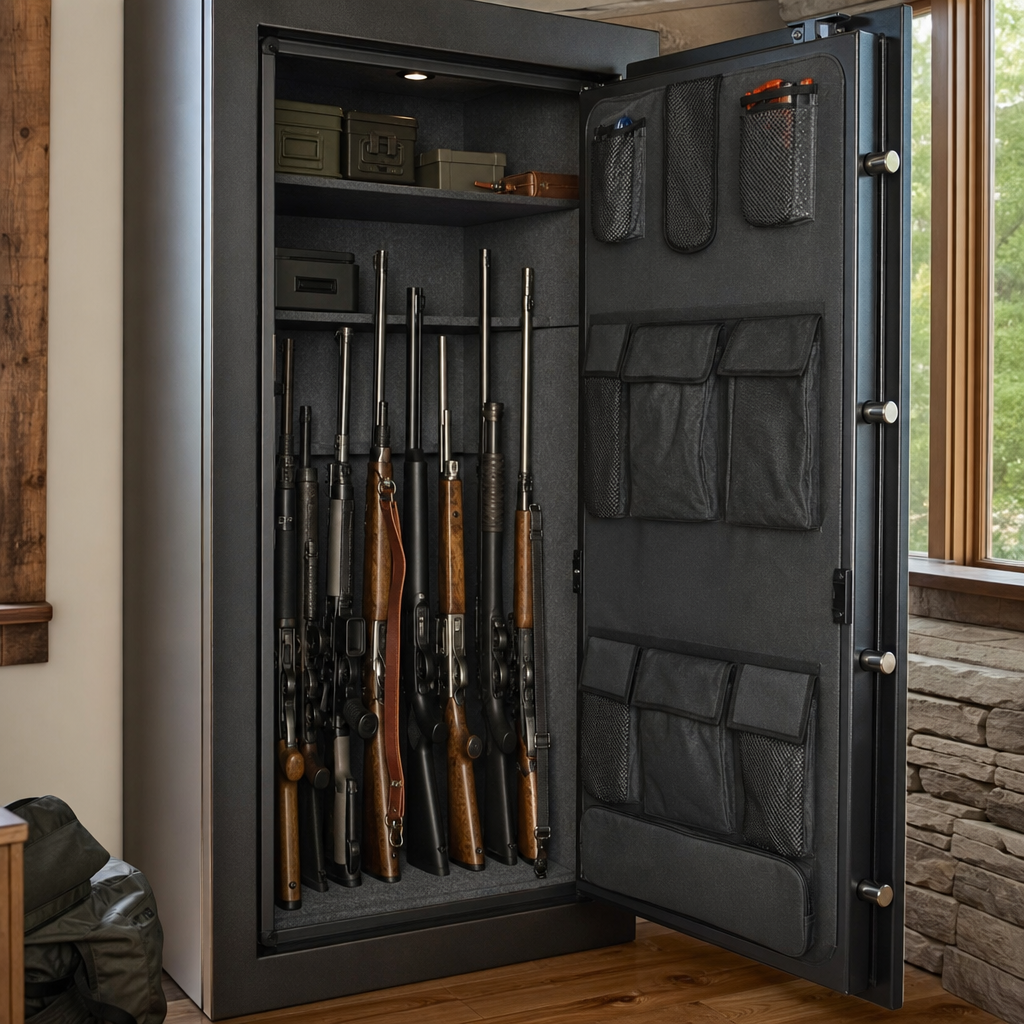
Moisture is one of the quietest threats to any firearm collection, which is why the question “Does a gun safe need ventilation to prevent moisture damage?” deserves a precise answer: a gun safe needs moisture control, but it does not always need passive ventilation in the way people assume. Many owners picture a safe as a sealed steel box where trapped humidity automatically causes rust. In practice, corrosion risk depends on relative humidity, temperature swings, air exchange, safe placement, insulation, and the condition of the firearms stored inside. Understanding those factors matters because a bad moisture strategy can damage bluing, pit bores, swell wood stocks, degrade optics, and even affect important documents, ammunition packaging, and leather accessories stored alongside guns.
When I evaluate safes for clients, I separate three ideas that are often blended together: ventilation, dehumidification, and environmental stability. Ventilation means allowing air to move in and out of the safe, usually through gaps, ports, or intentional vents. Dehumidification means actively or passively lowering moisture content inside the enclosure with tools such as desiccants, goldenrod-style heater rods, or rechargeable silica units. Environmental stability means reducing rapid temperature and humidity swings through insulation, climate control in the room, and smart placement away from exterior walls, garages, damp basements, and unconditioned spaces. A safe can have excellent moisture control with minimal ventilation if humidity is kept low and temperatures remain stable. It can also rust guns quickly if it is highly ventilated but located in a damp garage near a concrete slab.
This matters beyond maintenance. Moisture management sits at the center of several gun safe myths and misconceptions: that all safes are airtight, that more airflow is always better, that drywall fire lining causes rust, that a heater rod “dries” air by magic, and that stainless steel firearms do not need protection. This hub article explains what ventilation really does, when it helps, when it hurts, and how to build a reliable moisture prevention plan. If you want a direct answer, here it is: most gun safes benefit more from controlled humidity and stable temperature than from added vents, and the best setup usually combines room-level climate control with an internal dehumidifying device.
What Causes Moisture Damage Inside a Gun Safe?
Rust forms when metal, oxygen, and moisture interact over time. Inside a gun safe, that process accelerates when relative humidity stays high or when temperature drops below the dew point, causing condensation on steel surfaces. Firearms are especially vulnerable because blued carbon steel, springs, screws, magazines, and bore interiors can corrode before exterior surfaces show obvious warning signs. Wood stocks can absorb moisture and shift point of impact. Leather slings and soft cases can hold water against metal and introduce tannic acids and salts that worsen damage.
The most important number to watch is relative humidity. For long-term firearm storage, many professionals aim for roughly 40 to 50 percent relative humidity. Above about 55 percent, corrosion risk rises. Below about 35 percent, some wood furniture can dry excessively over long periods, though that concern is usually less urgent than rust in humid regions. Temperature matters because warm air holds more moisture than cool air. If a safe sits in a garage that swings from hot afternoons to cool nights, metal can become a condensation surface even if the average humidity reading seems acceptable.
Location drives risk more than many owners realize. A safe on a basement slab, against an exterior wall, or in a detached shop often experiences colder surfaces and higher ambient humidity. I have seen safes in climate-controlled closets stay stable year-round with only a small desiccant pack, while nearly identical safes in garages needed both a heater rod and room dehumidifier. The safe itself is only one part of the system. The room around it usually determines whether moisture becomes a chronic problem.
Does a Gun Safe Need Ventilation, or Is That a Myth?
The short answer is no, a gun safe does not inherently need passive ventilation holes to prevent moisture damage. That belief comes from the idea that trapped air becomes “stale” and wet, while fresh air is naturally dry. In many homes, the opposite is true. If the surrounding room is humid, adding vents simply allows more moist air to enter the safe. Without dehumidification or temperature management, ventilation alone can feed the problem rather than solve it.
Another misconception is that gun safes are hermetically sealed. Most are not. Even quality safes have door gaps, cable ports, and small leakage paths around hinges, locks, and intumescent seals. Air exchange happens gradually. That means the interior environment tends to follow the room environment unless you intervene. In a conditioned home with steady indoor humidity, that slow exchange is not harmful. In a damp outbuilding, it means the safe continually absorbs the same moisture burden as the space around it.
Ventilation helps only in specific cases. If a safe contains wet items, recent flood exposure, or has been moved from one climate to another, temporarily opening it and promoting airflow can dry the interior faster. Venting can also make sense in purpose-built vault rooms with whole-room humidity control, where the objective is to keep all enclosed spaces at the same stable condition. But for a standard residential gun safe, intentional ventilation is rarely the first or best solution. Moisture control works best when you reduce humidity, avoid condensation, and monitor conditions with a digital hygrometer.
How Dehumidifiers, Desiccants, and Heater Rods Actually Work
Many owners buy a dehumidifier without understanding the mechanism, which creates unrealistic expectations. Desiccants such as silica gel physically absorb moisture from the air. They are simple, effective in small spaces, and excellent as backup protection, but they saturate and must be recharged or replaced. Rechargeable canisters are convenient for apartment safes or closets, but they require regular attention. If you forget maintenance during a humid season, protection drops quickly.
Electric heater rods, often called by the brand name GoldenRod, do not remove water from the air. They gently raise the temperature inside the safe a few degrees, which helps keep interior surfaces above the dew point and promotes slight convection. That reduces condensation risk. In real use, heater rods work best when the safe is reasonably tight and the surrounding room is not excessively humid. They are not substitutes for a whole-room dehumidifier in a wet basement. They are condensation-control devices, not standalone moisture extraction systems.
For larger collections or difficult environments, I usually recommend layered protection: a room dehumidifier set around 45 to 50 percent relative humidity, an internal heater rod to stabilize temperature, and a digital hygrometer to verify results. Wireless sensors from Govee, SensorPush, or ThermoPro make monitoring easier because they log spikes after storms, HVAC failures, or power outages. Data matters. Owners often assume a safe is dry because it “feels fine,” then discover 65 percent humidity when they finally measure it.
| Method | How It Prevents Moisture Damage | Best Use Case | Main Limitation |
|---|---|---|---|
| Silica gel desiccant | Absorbs moisture directly from enclosed air | Small safes, backup protection, mild climates | Needs regular recharging or replacement |
| Heater rod | Raises interior temperature to reduce condensation | Basements, closets, larger safes with power access | Does not remove moisture from humid rooms |
| Room dehumidifier | Lowers ambient humidity around the safe | Garages, basements, humid regions | Requires drainage, power, and maintenance |
| Digital hygrometer | Confirms actual humidity and temperature conditions | Any safe setup | Monitors only; does not correct the problem |
Common Gun Safe Myths and Misconceptions About Moisture
One persistent myth says fireproof safes cause rust because the fire lining “holds water.” The nuance is that many fire-rated safes use gypsum-based board, which contains chemically bound water as part of the fire-protection system. Under normal ownership, that does not mean the interior constantly releases damaging moisture. Problems arise when a new safe is placed in a damp environment, sealed tightly, and never monitored. The fix is not avoiding fire protection; it is conditioning the storage space and using proper dehumidification.
Another myth says opening the safe regularly is enough to air it out. Frequent opening may briefly exchange air, but it does not lower humidity in any lasting way if the room itself is humid. In coastal climates, opening the door can actually introduce more moisture. I have also heard owners say that stainless firearms, nickel finishes, or polymer-framed pistols do not need protection. That is false. Stainless resists corrosion better than blued steel, but it is not rust proof, and internal parts, sights, magazines, optics mounts, and ammunition components may still corrode.
A third misconception is that storing guns in soft cases inside the safe adds protection. For transport, maybe. For long-term storage, often not. Foam and fabric can trap moisture against metal, especially after range trips or temperature changes. The same caution applies to leather holsters and slings. If you are building a complete “Gun Safe Myths & Misconceptions” hub, this is a topic worth linking to from cleaning, storage orientation, and long-gun organization guides because bad accessory choices create hidden corrosion points.
Best Practices for Preventing Moisture Damage in Any Gun Safe
Start with placement. Put the safe in a climate-controlled interior room whenever possible. Avoid direct contact with concrete by using shims, composite spacers, or a sealed platform. Keep it off exterior walls if those walls swing with outdoor temperatures. After installation, place a calibrated hygrometer inside and track readings for at least two weeks. Baseline data reveals whether you truly need added equipment.
Next, control the room first, then the safe. If the surrounding space stays below 50 percent relative humidity, the safe is far easier to manage. Use HVAC, portable dehumidifiers, or dedicated mini-splits for gun rooms. Inside the safe, add a heater rod if power is available and supplement with silica gel during peak humidity months. Wipe firearms with a corrosion-inhibiting protectant, especially after handling, because fingerprints deposit salts and oils. Products such as Break-Free CLP, Eezox, CorrosionX, or Barricade are widely used for this reason.
Finally, inspect on a schedule. Check hygrometer logs, recharge desiccants, and examine bores, magazine bodies, and hidden metal under stocks or grips. If you see musty smell, orange spotting, or condensation on optics, act immediately. A good gun safe moisture strategy is not complicated, but it is deliberate. Build a repeatable system, document what works in your climate, and use this hub as your starting point for every related storage myth. The payoff is simple: less rust, longer service life, and real confidence that your firearms are protected when the door closes.
The central lesson is straightforward: a gun safe does not usually need extra ventilation to prevent moisture damage; it needs controlled humidity, stable temperature, and consistent monitoring. Ventilation can help in narrow situations, such as temporary drying or whole-room climate-controlled vaults, but it is not the default answer for residential storage. In many homes, especially basements, garages, and coastal areas, more airflow simply brings more damp air into the safe. That is why the better question is not “How do I ventilate my safe?” but “How do I control the environment around and inside it?”
Once you understand that distinction, many common gun safe myths become easier to dismiss. Safes are not perfectly sealed, fire lining is not automatically a rust source, stainless firearms are not immune to corrosion, and opening the door occasionally is not a moisture-management plan. What works is measurable control: a hygrometer to verify conditions, a room dehumidifier when ambient humidity is high, a heater rod to reduce condensation, and desiccants as supplemental protection. Combined with smart placement and regular inspection, those steps address the real causes of moisture damage instead of treating symptoms.
If you are building out a reliable “Gun Safes & Safety” setup, use this article as the hub for your broader “Gun Safe Myths & Misconceptions” research and apply the same standard to every decision: verify, measure, and avoid assumptions. Check the humidity where your safe sits today, add the right moisture-control tools, and inspect your collection before rust makes the decision for you.
Frequently Asked Questions
Does a gun safe actually need ventilation to prevent moisture damage?
Not necessarily. A gun safe needs effective moisture control, but that does not always mean it needs passive ventilation. This is one of the most common misunderstandings among firearm owners. People often assume that because moisture can cause rust, the solution must be to let more air in and out of the safe. In reality, outside air is not automatically drier or safer than the air already inside the safe. If the room around the safe is humid, ventilation can actually introduce more moisture and increase corrosion risk rather than reduce it.
What matters most is the relationship between humidity, temperature changes, and the conditions where the safe is located. Rust forms when metal is exposed to enough moisture over time, especially when temperatures shift and create condensation on cooler surfaces. A properly managed safe can remain well protected without relying on passive airflow at all. In many cases, a controlled environment inside the safe is better than constant air exchange with an unpredictable room environment.
The practical answer is that a gun safe should be equipped to manage humidity, whether through desiccants, a dehumidifier rod, rechargeable drying units, or a combination of methods. Ventilation may help in some installations, but it is not the universal answer. If the surrounding space is climate controlled and relatively dry, limited airflow may be harmless. If the safe sits in a damp basement or garage, adding vents without controlling ambient humidity can make things worse. So the smarter question is not simply whether a gun safe needs ventilation, but whether the safe’s environment is being kept dry and stable enough to prevent condensation and long-term moisture damage.
What is the best way to control moisture inside a gun safe?
The best approach is usually layered moisture control rather than relying on a single product or feature. Most gun owners get the best results by combining a stable room environment with internal humidity-management tools. If the room itself is damp, the safe will always be fighting an uphill battle. That is why controlling the surrounding area with air conditioning, central HVAC, or a room dehumidifier is often the first and most important step, especially in basements, garages, and other areas prone to temperature swings.
Inside the safe, desiccant packs are a simple and effective option for absorbing excess moisture. They work well in smaller safes or as a supplement to another system, but they need to be recharged or replaced on schedule. Electric dehumidifier rods are another popular choice. Rather than “removing” water like a compressor-based dehumidifier would, they gently warm the air inside the safe, helping prevent condensation by reducing cool spots and encouraging slight air circulation. This makes them especially useful in larger safes and in homes where temperature fluctuations are the main issue.
A hygrometer is also extremely valuable because it tells you what is actually happening inside the safe instead of leaving you to guess. Many owners assume they have a moisture problem only after they notice rust, musty smells, or damage to optics, leather slings, documents, or wood stocks. A digital hygrometer allows you to monitor relative humidity and make adjustments before damage starts. In general, many firearm owners aim to keep humidity at a moderate level that is low enough to discourage rust but not so dry that it negatively affects wood components over time.
Beyond equipment, regular maintenance matters. Firearms should be cleaned, lightly protected with appropriate oil or rust preventive, and never stored wet after use in rain, snow, or humid field conditions. The best moisture-control setup combines environmental awareness, active monitoring, and routine care rather than depending on ventilation alone.
Can ventilation ever make moisture problems inside a gun safe worse?
Yes, absolutely. Ventilation can worsen moisture issues when it brings humid air into the safe or allows repeated temperature-driven air exchange. This is especially common when a safe is located in a non-climate-controlled area. For example, if a gun safe is in a garage, shed, or basement, the surrounding air may carry high humidity for much of the year. If that air enters the safe, the interior may repeatedly absorb moisture. Then, when temperatures drop, that moisture can condense on metal surfaces and create ideal conditions for corrosion.
Another problem is that ventilation is often treated as a cure-all, when in reality it is only helpful if the incoming air is consistently drier and the environment is stable. In many regions, especially coastal, southern, or heavily seasonal climates, the ambient air is not dry enough to improve storage conditions. Air movement by itself does not remove moisture. It only replaces one air mass with another. If the new air has equal or greater humidity, ventilation does not solve the problem and may intensify it.
This is why many experts prefer controlled dehumidification over simple venting. A safe with limited air exchange, paired with a good dehumidifier rod or desiccant system, often protects firearms more reliably than a vented safe exposed to a damp room. Ventilation can still have a role in certain specialty setups, but it must be evaluated in context. The key question is whether the airflow improves the actual humidity level inside the safe. If it does not, then ventilation may be adding risk while giving the owner a false sense of protection.
Where should a gun safe be placed to reduce humidity and condensation risk?
Placement makes a major difference in how much moisture risk a gun safe faces over time. The best location is usually inside a climate-controlled part of the home where temperature and humidity stay relatively stable year-round. Interior rooms, conditioned closets, spare rooms, or other areas connected to the home’s HVAC system are generally better choices than garages, unfinished basements, utility rooms, or outbuildings. Stable indoor air reduces the chance of condensation forming on steel surfaces and gives any moisture-control products inside the safe a much easier job.
Basements deserve special caution. Even when they feel cool and comfortable, they often have elevated humidity and subtle dampness that can affect a safe over months or years. Concrete floors and walls can also contribute to moisture transfer and cooler surface temperatures. If a basement is the only practical option, it helps to keep the safe slightly elevated off bare concrete, use a room dehumidifier, and closely monitor the interior with a hygrometer. Similar caution applies to garages, where outside air, vehicle moisture, and wide seasonal temperature swings can create repeated condensation cycles.
It is also smart to avoid placing a safe directly against surfaces that experience strong temperature differences, such as exterior walls with poor insulation. Sudden temperature changes can create cool metal areas where moisture condenses more easily. Even in a good room, leaving a little space around the safe can support more stable conditions. In short, the drier and more temperature-stable the room, the less likely you are to need aggressive moisture-control measures inside the safe. Good placement does not replace dehumidification, but it can significantly reduce the overall risk of rust, mildew, and damage to firearms and accessories.
How can you tell if your gun safe has a moisture problem before rust appears?
The best way is to monitor conditions proactively rather than waiting for visible corrosion. A digital hygrometer is the clearest early-warning tool because it shows the relative humidity inside the safe in real time. Without one, you are mostly guessing. Many moisture problems develop slowly and quietly, which is why they are so easy to overlook. By the time rust spots appear on a barrel, slide, sight, or screw head, the safe may have been running too humid for weeks or months.
There are also several indirect signs to watch for. A musty smell inside the safe can indicate excess humidity. Leather slings, holsters, and soft cases may feel damp, develop odor, or show mildew. Important papers, cardboard boxes, and foam inserts can feel soft or stale. Wood stocks may respond to changing humidity over time, and optics or metal accessories can begin to show haze, spotting, or surface dullness before obvious rust is visible. If you notice these warning signs, the safe environment should be corrected immediately.
Another smart habit is to inspect firearms regularly instead of storing them for long periods without checking. Wipe down metal surfaces, look closely at corners and crevices, and pay attention to items near the bottom of the safe, where conditions may be less stable. If you recently moved the safe, changed seasons, or had unusual humidity in the home, it is worth checking more often. Early detection is what prevents small environmental issues from turning into permanent finish damage, pitting, mold, or ruined accessories. In other words, moisture control is not only about what equipment you install, but also about how consistently you verify that it is working.