
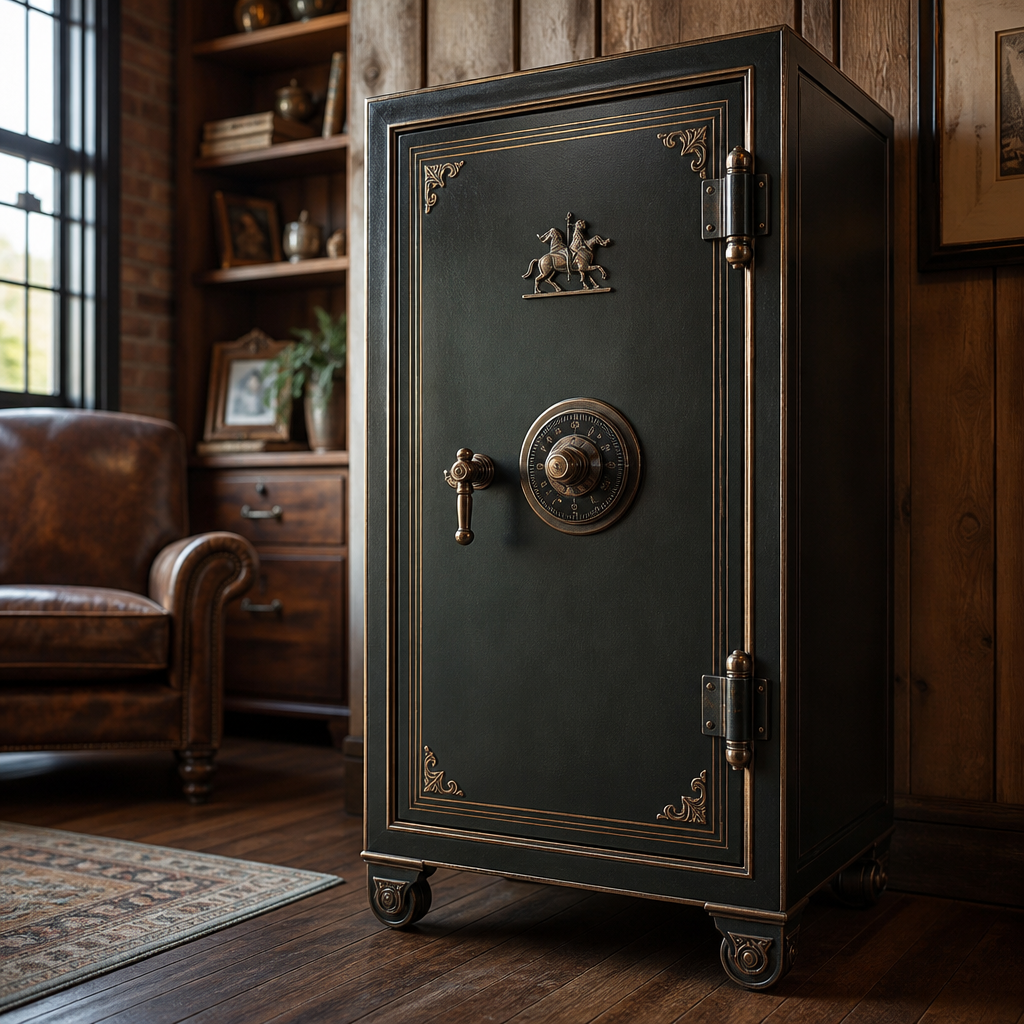
The Heritage Rough Rider Series stands out in the crowded gun storage market because it fuses the visual language of Old West revolvers with the practical demands of modern firearm protection. For buyers researching a Heritage Rough Rider safe, the appeal is obvious: you want a cabinet or safe that looks at home beside classic single-action handguns, lever guns, and rustic décor, but you also need real security, organized storage, and dependable access. In the broader Gun Safes & Safety category, product reviews matter because appearance alone is never enough. Steel thickness, locking systems, fire protection, interior layout, anchoring options, warranty support, and day-to-day usability all determine whether a safe protects firearms responsibly. This article serves as a product review hub for the Heritage Rough Rider Series, explaining what the line represents, who it fits, how to evaluate different models, and where this series sits among competing options. If you collect firearms, store defensive guns, or simply want a safe that complements a heritage-inspired room, understanding these factors helps you buy once and buy well.
In practical terms, a safe in this style category is not just a decorative cabinet. A true gun safe should provide resistance to unauthorized access, support safe firearm organization, reduce moisture risk, and help owners comply with household safety obligations. Across years of evaluating firearm storage products, I have found that shoppers often overfocus on paint, logos, or “Western” branding and underweight construction details that matter more after purchase. The Heritage Rough Rider Series deserves attention because it attracts exactly that style-driven buyer, yet style should be the starting point, not the conclusion. The most useful way to review this series is to ask direct questions: What does it store well? How secure is it compared with standard residential gun safes? Which locking options make sense? Is it better for collectors, families, or first-time handgun owners? And how does it compare with mainstream brands in the same price band? Those are the questions that guide the sections below and make this page a useful hub for deeper product review content.
What the Heritage Rough Rider Series Is Designed to Do
The Heritage Rough Rider Series is best understood as a style-forward firearm storage line aimed at buyers who want traditional aesthetics without abandoning baseline security features. The naming clearly evokes the Heritage Rough Rider revolver family, known for old-school single-action styling, and that branding signals a product meant to appeal to enthusiasts who value Americana, cowboy-action culture, rimfire plinking traditions, and visually cohesive collections. In review terms, this means the series should be judged on two tracks at once: visual execution and actual protective performance.
On the visual side, safes in this category typically use distressed finishes, antiqued hardware cues, rustic color palettes, embossed logos, or panel designs that echo saloon, ranch, or frontier motifs. Those choices matter more than many reviewers admit because a safe placed in a den, trophy room, cabin, or office is part of the room. Many owners do not want an industrial black box dominating the space. The Rough Rider concept answers that concern.
On the security side, however, the fundamentals do not change. A gun safe must still provide pry resistance, a reliable lock, solid door fitment, internal support for long guns or handguns, and secure anchoring points. Decorative elements cannot compensate for thin sheet metal, weak locking bolts, poor weld quality, or flimsy shelves. When reviewing products in this subcategory, I look first at body steel, door construction, bolt count, lock certification, and hinge design before I even discuss finish. That order matters because a beautiful safe that fails a basic break-in attempt is a furniture piece, not responsible firearm storage.
Core Features Buyers Should Evaluate in Every Product Review
A strong gun safe review should move through a repeatable checklist. First, assess steel thickness. Many residential security containers use 14-gauge to 12-gauge steel, while stronger units may step into 10-gauge territory. Thicker steel generally improves pry resistance and slows crude attacks with hand tools, though it also increases price and weight. Second, examine the locking mechanism. Electronic keypad locks offer speed and multiple user codes, while mechanical dial locks are slower but time-tested and less dependent on batteries or electronics. Third, review fire protection claims carefully. A rating expressed in minutes at a stated temperature is more useful than vague marketing language, but even then, standards vary widely by manufacturer.
Interior design is just as important. A safe can advertise a large gun count and still store firearms badly if scoped rifles clash, shelves sag, or door pockets steal depth. In real use, claimed capacities often assume unscoped long guns packed closely together, which almost never reflects an actual collection. Moisture control is another core consideration. Carpeted interiors, door seals, dehumidifier ports, and space for desiccants all contribute to preserving blued steel, walnut stocks, and optics.
Because this page functions as a product review hub, the table below summarizes the categories every Heritage Rough Rider safe review should cover in detail.
| Review Factor | What to Check | Why It Matters |
|---|---|---|
| Steel Construction | Body gauge, reinforced door, weld quality | Determines resistance to prying and forced entry |
| Lock Type | Electronic keypad, biometric, or mechanical dial | Affects speed, reliability, and maintenance |
| Fire Rating | Minutes, temperature, seal design, testing basis | Helps protect firearms and documents in a house fire |
| Storage Layout | Long-gun spacing, shelves, door organizer, handgun racks | Improves usable capacity and prevents damage |
| Anchoring | Pre-drilled holes, hardware compatibility, floor strength | Prevents thieves from tipping or removing the safe |
| Finish and Style | Color, texture, trim, branding, room compatibility | Supports the vintage aesthetic buyers want |
| Warranty and Service | Lock coverage, fire replacement, support reputation | Reduces risk after purchase |
Who the Heritage Rough Rider Series Fits Best
The Heritage Rough Rider Series is a strong fit for firearm owners who want their storage to complement a collection rather than disappear into a garage corner. The most obvious audience is the rimfire revolver enthusiast who already owns Heritage-branded firearms and appreciates continuity between firearm and safe. It also suits buyers furnishing a hunting cabin, lodge, ranch house, or home office where a conventional matte-black safe would look out of place.
Collectors benefit most when the safe’s interior supports handguns, memorabilia, boxed ammunition, and a modest number of long guns rather than a maximum-density arrangement. A collector with a few single-action revolvers, one or two lever actions, and important documents may find this type of safe more satisfying than a purely utilitarian cabinet. Families with children can also consider the series, but only if the chosen model meets the same access-control standards they would demand from any other safe. A themed exterior does not lessen the responsibility to keep firearms inaccessible to unauthorized users.
Where this line may be less ideal is for the buyer who needs the most security per dollar, plans to store a large tactical rifle collection, or wants commercial-grade burglary ratings. In those cases, brands focused on heavy steel, higher-end composite construction, or modular high-capacity interiors may offer better value. The Rough Rider concept is strongest when style and solid residential protection are both priorities, not when style must give way completely to maximum hardening.
Security, Fire Protection, and Real-World Performance
Security claims in gun safe marketing require careful reading. Many products described as safes are technically residential security containers, a distinction recognized in industry testing language. For the average homeowner, that does not automatically mean inadequate protection. It does mean expectations should be realistic. A well-anchored residential gun safe can stop smash-and-grab theft, deter curious visitors, and create a serious barrier for opportunistic burglars. It is not the same as a high-security vault designed to resist prolonged attacks with advanced tools.
For the Heritage Rough Rider Series, the practical question is whether it provides enough protection for the setting in which it will be used. In a low-crime rural home with alarm monitoring, cameras, and solid installation, a quality residential safe is often appropriate. In a city apartment with limited anchoring options or a home containing high-value NFA items and premium optics, a buyer may want a heavier-rated solution. This is why product reviews in this hub should always discuss context instead of issuing one-size-fits-all praise.
Fire protection deserves the same nuance. Fire ratings are often misunderstood. A “60-minute fire rating” does not guarantee that every item inside survives every house fire. Outcomes depend on fire intensity, placement in the home, exposure duration, humidity after suppression, and the vulnerability of stored contents. Wood stocks, optics adhesives, paper records, and ammunition all respond differently to heat. In testing and owner feedback alike, door seals, insulation quality, and post-fire moisture exposure often matter as much as the headline rating. Sensible buyers still use document pouches, dehumidifiers, and insurance inventories even when the safe includes fire protection.
Style, Interior Usability, and Daily Ownership Experience
The strongest argument for the Heritage Rough Rider Series is that it can make responsible storage easier to live with. When owners like how a safe looks and where it sits, they are more likely to place it in a convenient, accessible location rather than banishing it to an outbuilding or poorly conditioned garage. That can improve actual safety habits. A safe installed in a climate-controlled room is better for firearms than one exposed to humidity swings, dust, and temperature extremes.
Daily use also reveals details that spec sheets miss. Door swing angle affects how easily long guns come in and out. Shelf adjustability determines whether the safe works for revolvers today and scoped rifles tomorrow. Interior lighting, even simple motion-activated LED kits, materially improves visibility. Soft-lined barrel rests and handgun hangers reduce metal-to-metal contact. If the Rough Rider Series pairs vintage styling with a thoughtful interior, it becomes more than a novelty product.
One lesson repeated across many safe reviews is that organization drives satisfaction. Owners who add pistol racks, labeled bins, caliber-specific ammo separation, and moisture monitoring report fewer handling mistakes and less wear on their collection. A hub article on product reviews must emphasize this because buyers often evaluate only the purchase moment, not the next ten years of opening the door, rearranging gear, and expanding the collection.
How the Rough Rider Series Compares With Mainstream Alternatives
Compared with standard offerings from Cannon, Liberty, Winchester, Browning, Sports Afield, and Stack-On, the Heritage Rough Rider Series likely wins first on theme and room integration. That matters for buyers who see the safe as part of a furnished environment. Mainstream models, by contrast, usually win on selection depth. Larger brands often provide more size options, broader dealer networks, replacement parts availability, and longer track records for lock service and warranty administration.
Feature competition depends on the exact model. Browning often excels in interior long-gun access systems. Liberty is frequently praised for fit, finish, and support infrastructure. Winchester and Cannon commonly compete aggressively on bundled features at big-box retail. Stack-On and entry cabinets can beat almost anything on upfront price but usually not on security. The Rough Rider line needs to justify itself by delivering competent specifications plus distinctive styling, not styling alone.
That is why this page works as a sub-pillar hub for product reviews. Individual reviews can branch into comparisons such as Heritage Rough Rider vs Liberty Colonial, Heritage Rough Rider vs Browning Sporter, or Heritage Rough Rider vs a standard 12-gauge cabinet. Buyers searching those terms are usually asking a simple question: am I paying extra for looks, or am I getting a genuinely good safe? The right answer depends on the exact build details, but the review framework remains the same.
How to Use This Hub for Smarter Gun Safe Research
Use this page as a starting point for every Heritage Rough Rider safe review and for the broader Product Reviews section under Gun Safes & Safety. Start by defining your use case: collector display-adjacent storage, family safety, defensive access, or mixed firearm and document protection. Next, set minimum standards for construction, lock reliability, fire resistance, and anchoring. Then compare style-driven models like the Rough Rider Series against plainer alternatives at the same price. If the themed model meets your security threshold, the design benefit is real. If it falls short, move on.
Before buying, inspect dimensions carefully, especially external depth, door clearance, shelf spacing, and actual firearm count with optics attached. Confirm delivery logistics, floor load considerations, and bolt-down plans. Read warranty language for lock failures, fire replacement, and freight terms. If possible, handle the door and lock in person. Reviews, specifications, and owner reports are invaluable, but opening a safe yourself often reveals stiffness, flex, noise, and fit issues within seconds.
The central takeaway is simple: the Heritage Rough Rider Series can be an excellent choice when vintage style is paired with credible security, practical storage, and proper installation. Treat it like a serious gun safe first and a themed furnishing second. If you are building out your firearm storage plan, use this hub to compare models, read detailed reviews, and narrow the field to safes that protect both your collection and your peace of mind.
Frequently Asked Questions
What makes the Heritage Rough Rider Series different from a standard gun safe?
The Heritage Rough Rider Series is designed for buyers who want more than a plain, utilitarian steel box. Its biggest distinction is the way it blends Western-inspired styling with the core functions expected from modern firearm storage. For collectors and shooters who appreciate single-action revolvers, lever-action rifles, and vintage Americana, that matters. A safe in this series is meant to complement the character of a gun room, den, ranch-style home, or rustic interior rather than visually clash with it.
That said, appearance is only one part of the equation. A quality Heritage Rough Rider safe should still deliver the practical features people expect when protecting firearms: reinforced construction, a secure locking system, organized shelving or barrel supports, and interior layouts that help separate long guns, handguns, ammunition, and accessories. In other words, the appeal is not just that it looks distinctive, but that it can serve as a functional storage solution while reflecting the owner’s personal style. For many buyers, that combination of décor-friendly design and dependable security is exactly what sets it apart from more generic options in the Gun Safes & Safety category.
Is a Heritage Rough Rider safe secure enough for real firearm protection, or is it mainly decorative?
A Heritage Rough Rider safe should never be evaluated on looks alone. While the vintage-inspired styling is a major selling point, the real question is whether the safe offers meaningful protection against unauthorized access, tampering, and basic theft attempts. The answer depends on the exact model and specifications, but a well-built unit in this series can absolutely serve as legitimate firearm storage if it includes the essential security features buyers should always look for.
Those features typically include solid steel construction, a pry-resistant door design, reliable locking bolts, and either a dependable electronic lock or a well-made mechanical dial lock. Some models may also include pre-drilled anchoring points, which are extremely important because even a strong safe becomes more secure when it is properly bolted to the floor or wall. Interior protection matters too. Protective lining, barrel rests, and properly spaced storage help reduce wear and prevent firearms from knocking against each other.
It is also important to be realistic about use case. If you are storing a modest collection and your primary goals are child safety, access control, and organized storage, a quality Heritage Rough Rider safe may be an excellent fit. If you are protecting a very high-value collection or want maximum burglary resistance, you may want to compare steel thickness, lock ratings, fire protection, and overall safe classification against heavier-duty competitors. In short, it should not be treated as merely decorative, but buyers should still review the actual security specs carefully rather than assuming style alone tells the full story.
What types of firearms and gear can typically be stored in a Heritage Rough Rider Series safe?
One of the strengths of a Heritage Rough Rider safe is its ability to accommodate the kinds of firearms and accessories that often go hand in hand with classic Western and sporting collections. Depending on the model size, many buyers use these safes to store single-action revolvers, modern handguns, lever-action rifles, shotguns, scoped hunting rifles, and related accessories. The interior layout is especially important here, because a well-designed safe makes it easier to keep different categories of gear secure, separated, and easy to access.
Long-gun sections usually provide vertical storage with barrel notches or supports, while shelves or door organizers may hold handguns, optics, cleaning kits, magazines, documents, and other small items. Some owners also use the upper shelving for heirlooms, ammunition storage in appropriate containers, or range essentials. If you own optics-heavy rifles, extra-long barrels, or unusually shaped firearms, it is wise to verify interior height, depth, and shelf adjustability before buying. Manufacturer capacity numbers can sometimes be optimistic, especially if your collection includes scoped guns or wider stocks.
For collectors, this type of safe can be especially useful because it helps keep a themed collection organized without sacrificing security. Instead of hiding prized firearms in mismatched storage, owners can use a safe that better fits the visual identity of the collection while still maintaining safer handling and controlled access. The best approach is to think beyond the stated gun count and consider your actual mix of firearms, accessories, and how much room you want for future growth.
How important are fire protection, lock type, and installation when choosing a Heritage Rough Rider safe?
These three factors are extremely important, and they should be part of the buying decision from the beginning. Fire protection matters because firearm safes are often used to store more than guns. Owners commonly place documents, valuables, family records, and sentimental items inside as well. If a Heritage Rough Rider safe includes a fire rating, buyers should look at the tested duration, temperature threshold, and any supporting details about seals or insulation. While no safe can guarantee total protection under every fire condition, a documented fire rating can add meaningful peace of mind.
Lock type affects both security and convenience. Electronic locks are popular because they allow fast access and simple code changes, which many owners value for day-to-day use. Mechanical dial locks appeal to buyers who want a time-tested system without battery dependency. Neither is automatically better in every situation; the right choice depends on whether you prioritize speed, simplicity, long-term familiarity, or reduced maintenance. What matters most is choosing a lock from a reputable manufacturer and understanding how it fits your household’s needs.
Installation is just as critical and is often overlooked. Even an attractive, well-constructed safe performs better when it is professionally placed and properly anchored. Bolting the safe down helps deter smash-and-grab theft, reduces the chance of tipping, and adds stability when the door is opened. Placement also matters. A dry, discreet location with sufficient structural support and enough clearance for the door to swing fully will improve both security and usability. In practical terms, buyers should think of the safe itself, the lock, the fire features, and the installation setup as one complete protection system rather than separate details.
Who is the Heritage Rough Rider Series best suited for?
The Heritage Rough Rider Series is best suited for firearm owners who care about both presentation and protection. That includes collectors of Western-style revolvers, lever guns, and traditional sporting firearms; homeowners furnishing a rustic office, lodge, or ranch-inspired room; and buyers who dislike the industrial look of many conventional safes. For these customers, the safe is not just a storage necessity. It is also part of the environment and reflects the same taste that shapes the rest of the collection.
It can also be a strong option for practical owners who want organized, secure firearm storage without giving up visual appeal. If your goal is to keep guns protected from unauthorized access, reduce household risk, improve storage discipline, and maintain a cohesive aesthetic, this series makes a lot of sense. Buyers who are furnishing a dedicated gun room or displaying a curated collection often find this balance especially attractive.
That said, it may not be the perfect fit for every shopper. If your top priority is the highest possible burglary rating, commercial-grade protection, or ultra-large storage capacity, you may want to compare the Heritage Rough Rider line against more specialized heavy-duty safes. But for many households, enthusiasts, and collectors, its real value lies in offering a combination that is harder to find than it should be: a safe that feels appropriate to the firearms it protects while still addressing the essential demands of modern security and responsible storage.