
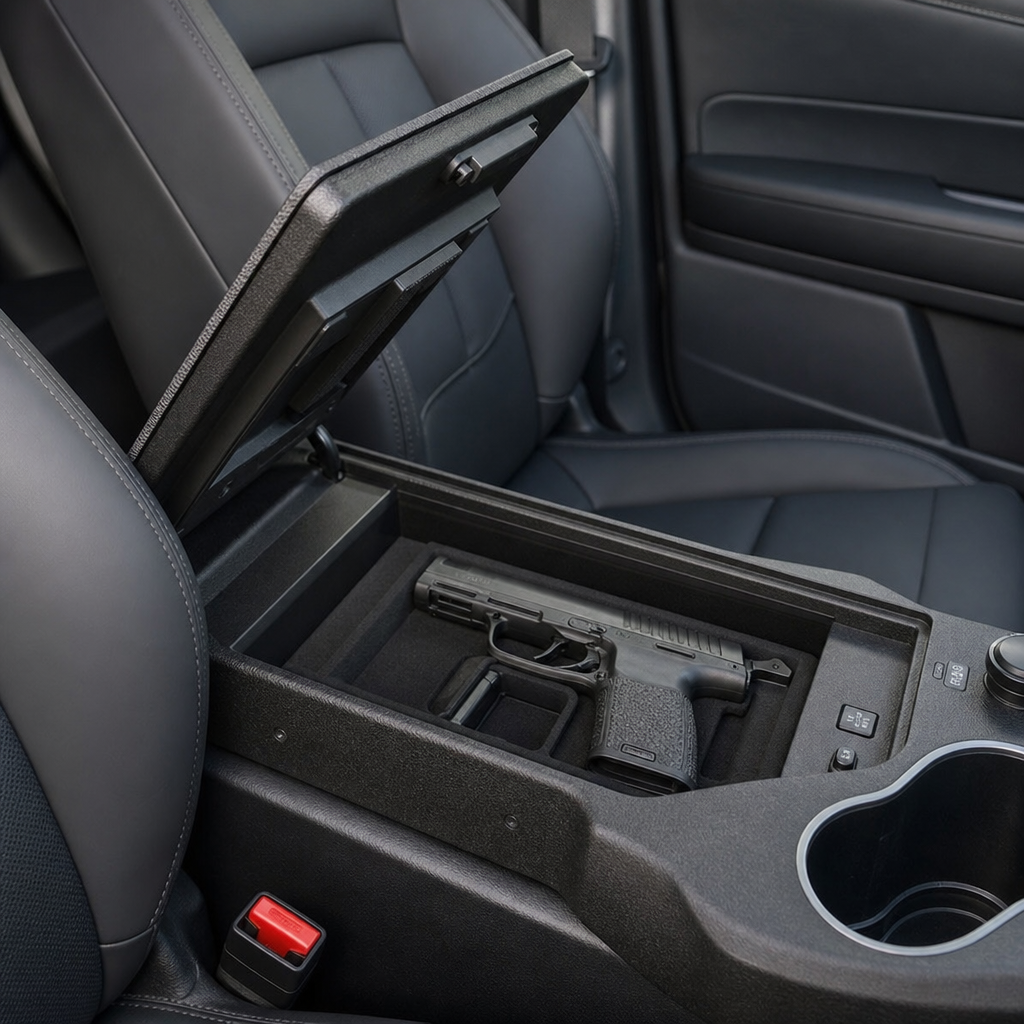
Hidden gun safes for vehicles solve a specific problem: how to keep a firearm accessible to the lawful owner yet shielded from theft, unauthorized handling, and plain view inside a car, truck, or SUV. In practical terms, these products are discreet lockboxes, consoles, vault inserts, under-seat enclosures, and custom compartments designed to blend into a vehicle’s interior while resisting prying, tampering, and smash-and-grab theft. I have installed and evaluated vehicle safes in daily drivers, work trucks, and family SUVs, and the difference between a cosmetic hiding place and a genuinely secure storage system is enormous. The best options are not merely concealed. They are mechanically strong, correctly mounted to the vehicle structure, compatible with local firearm transport laws, and fast enough to use under pressure without encouraging careless storage habits.
This matters because vehicles are one of the most common places from which firearms are stolen. A handgun left in a glovebox, soft case, or backpack under a seat is usually easy prey for a thief who has a few minutes and a pry bar. Hidden vehicle gun safes reduce that risk by adding delay, discretion, and physical security. They also help owners manage real-life transitions, such as entering a posted workplace, government building, school parking area, or any location where carry is restricted and secure temporary storage becomes necessary. For many households, the vehicle is also a shared space, which raises another concern: preventing children, passengers, valets, mechanics, and casual thieves from gaining access to a firearm that should remain under the owner’s control.
To choose the most secure option, it helps to define the core categories. A hidden gun safe for a vehicle may be a console vault that replaces or reinforces the factory center console compartment, an under-seat drawer or lockbox bolted to seat rails or floor points, a rear cargo safe for SUVs and overlanding rigs, or a custom built-in compartment that disappears behind trim panels. The word secure should mean more than lockable. In this context, secure means heavy-gauge steel construction, a reinforced door, concealed or protected hinges, a reliable lock, minimal exposed gaps, and mounting points that tie into the vehicle frame, seat brackets, or factory bolts instead of thin sheet metal. A discreet storage solution should also preserve normal cabin appearance, avoid advertising that a firearm is inside, and remain practical enough that the owner will use it consistently instead of cutting corners.
As the hub page for hidden and discreet gun storage solutions, this article explains the most secure vehicle-safe types, how to compare locking systems and mounting methods, where each option works best, and what tradeoffs to expect in speed, cost, capacity, and concealment. It also points toward the broader principles that apply across the entire category of hidden gun storage: layered security, lawful transport, responsible access control, and fit for the owner’s actual routine. If you are deciding between a console vault, an under-seat safe, a cargo-area enclosure, or a custom hidden compartment, start with the simple rule I use in every installation review: the safest vehicle storage is the option that stays out of sight, resists fast attacks, mounts solidly to the vehicle, and matches how you really enter, park, and use the vehicle every day.
What Makes a Hidden Vehicle Gun Safe Truly Secure
The first question buyers ask is usually, “What is the most secure hidden gun safe for a vehicle?” The direct answer is a properly fitted steel safe anchored to factory structure, with a strong lock and a low-visibility installation. Security starts with material thickness. Many reputable vehicle lockboxes use 12-gauge or 14-gauge steel, sometimes thicker on the door than on the body. Thicker steel increases resistance to bending and puncture, though design matters as much as gauge. A well-braced 14-gauge safe with a tight door gap and anti-pry flange can outperform a sloppily built thicker box. I look for continuous welds, gusseted corners, and doors that sit deep inside a recessed frame rather than flush against a wide opening that invites screwdriver attacks.
The lock is the next critical layer. Mechanical simplex-style pushbutton locks are valued because they do not depend on batteries, tolerate heat and cold well, and permit fast one-handed access with practice. Tubular key locks are common and inexpensive, but they shift the problem to key management, and many budget versions are easier to attack than buyers assume. Electronic keypad locks can be convenient, especially in family vehicles where more than one authorized adult needs access, but they must be paired with quality internals and fail-secure behavior. Biometric locks are popular in consumer marketing, yet in vehicle applications they can be less consistent due to dust, sweaty hands, vibration, and temperature swings. For that reason, the most secure options still tend to favor robust mechanical locks or proven electronic systems with backup entry methods.
Mounting is where many hidden gun safe setups fail. Cable-lock boxes are better than no lock at all, but a braided cable wrapped around a seat frame is not in the same security class as a safe bolted through reinforced points. The safest installations use existing seat bolts, console fasteners, or vehicle-specific brackets engineered to align with factory mounting geometry. This approach matters because auto sheet metal can tear under leverage. A thief rarely attacks delicately. They twist, pry, stomp, and yank. If the box can be removed and opened later, concealment alone has failed. Good vehicle-specific products from brands such as Console Vault, Tuffy Security Products, and Lock’er Down are respected largely because they address this mounting problem with model-specific fitment and structural hardware rather than generic universal straps.
Concealment is the final layer, and it should be subtle, not theatrical. A hidden safe works best when nothing about the installation draws attention. That means factory-matching finishes, low-profile lid seams, no tactical stickers on the vehicle, and no routine of opening a safe in public view. In actual use, the strongest security often comes from combining mundane habits with good hardware: parking in visible areas, locking the vehicle, using tinted windows where lawful, and never leaving a firearm overnight if there is a safer storage alternative. A vehicle safe is a risk-reduction tool, not a reason to become casual about long-term storage.
Console Vaults, Under-Seat Safes, and Cargo Boxes Compared
Vehicle owners often compare three main categories of discreet storage: center console vaults, under-seat safes, and rear cargo-area lockboxes. Each has a different balance of access speed, concealment, capacity, and resistance to theft. The best choice depends on vehicle layout and daily use, not on marketing claims. In sedans and half-ton pickups, a center console vault is often the strongest all-around answer because it uses existing interior space, stays naturally hidden by the factory lid, and can be accessed quickly from the driver’s seat. In crew-cab trucks and larger SUVs, under-seat and rear cargo systems can offer better capacity for a full-size pistol, spare magazine, documents, and other valuables.
| Option | Best Use Case | Main Security Strength | Main Limitation |
|---|---|---|---|
| Console vault | Daily concealed-carry storage in sedans, SUVs, and trucks | Excellent concealment under factory console lid with vehicle-specific fit | Limited space, especially in smaller vehicles |
| Under-seat safe | Trucks, SUVs, and larger cabins needing more room | Can anchor to seat rails or floor points and remain out of casual sight | Lower visibility from outside is good, but access can be slower |
| Rear cargo lockbox | SUVs, overland vehicles, and long-trip storage | Large capacity and strong mounting in cargo area | Not ideal for rapid driver access |
| Custom hidden compartment | Specialty builds focused on maximum discretion | Blends into trim and can be very difficult to detect | Quality varies widely; poor fabrication can reduce security |
Console vaults are among the most popular hidden gun safes for vehicles because they feel almost invisible in daily life. Products designed for Ford F-150s, Chevrolet Silverados, Ram trucks, Toyota 4Runners, Jeep Wranglers, and many SUVs replace or line the existing center console compartment with steel and add a locking lid beneath the original console cover. That preserves the stock look. In my experience, this is the easiest solution for owners to use consistently because it requires no crawling, no reaching behind trim, and no obvious external hardware. It also protects other valuables such as wallets, passports, and suppressor paperwork where legal. The limitation is dimensions. Some compact console inserts fit only one handgun and a few small items.
Under-seat safes work especially well in trucks with flat rear floors or front seats with generous clearance. Tuffy and similar manufacturers offer drawer-style and flip-lid systems that disappear below seat level. These are secure when bolted correctly and often hold larger pistols than a console vault can. They are also useful in vehicles where the console is too shallow or needed for everyday items. Their main drawback is ergonomics. Access from the driver’s seat can be awkward, and if the safe is visible from a low angle through the window, concealment depends more on shadows and interior layout than on true invisibility.
Rear cargo lockboxes are less about immediate access and more about robust transport and theft resistance. In an SUV used for travel, hunting, or range days, a cargo-area safe can secure a handgun, ammunition, documents, and sometimes a long gun broken down or separately cased where lawful. These systems shine when gear stays in the vehicle for daytime stops, especially if the cargo area has a cover. They are not ideal for a driver who needs quick temporary storage before entering a prohibited location. In that situation, the center console or under-seat position usually wins.
Choosing the Right Lock, Fitment, and Installation Method
The best hidden gun safe for a vehicle is only as good as its lock and installation. Buyers often overfocus on whether a lock is biometric, keyed, or digital, when the more important question is whether the complete assembly survives attack and works reliably in a car environment. Heat cycles inside parked vehicles are severe. In hot climates, cabin temperatures can exceed 140 degrees Fahrenheit. Cold weather adds contraction, moisture, and stiff lubricants. Vibration is constant. That is why simple, durable locking systems repeatedly outperform flashy ones over time.
If rapid access matters most, a mechanical pushbutton lock is hard to beat. The code can be entered by touch, there are no batteries to monitor, and there is less electronic failure risk. If multiple users need access, a quality electronic keypad from an established maker can be reasonable, but check battery location, emergency override method, and whether the keypad placement exposes the code entry to view. Keyed systems remain common in lower-cost lockboxes, and some are perfectly serviceable for temporary vehicle storage, but they are rarely my first recommendation for a primary defensive handgun because the key becomes another vulnerability to lose, hide, or leave in the car.
Fitment should be vehicle-specific whenever possible. A universal lockbox can work, especially in older vehicles or budget builds, but vehicle-specific safes generally waste less space and mount more securely. They also preserve cabin usability. Before buying, verify year, trim, seat configuration, factory console shape, and whether aftermarket accessories interfere. In trucks, details such as fold-flat rear floors, subwoofer placement, and power seat motors matter. A product that fits a 2021 model may not fit a 2024 refresh. The safest practice is to confirm fitment directly with the manufacturer and review installation instructions before purchase.
Installation should prioritize factory anchor points and tamper-resistant hardware. Use the supplied brackets if they are substantial, not generic afterthoughts. Thread locker, proper torque, and clearance checks are important. After installation, test the seat travel, airbag wiring paths, console lid operation, and latch engagement repeatedly. I also recommend a practical access drill with an unloaded firearm or a blue-gun training replica. Time how quickly you can reach the safe while seated, buckled, and under normal posture. If the process is so awkward that you dread using it, the setup may be secure on paper but ineffective in real life because inconsistent use is its own security failure.
Legal, Safety, and Daily-Use Considerations
A hidden gun safe for a vehicle must fit the owner’s legal environment as well as the cabin. Firearm transport and storage laws vary sharply by state and sometimes by city, employer policy, or parking lot statute. Some states protect lawful storage of firearms in locked private vehicles in employee parking areas, while others impose stricter conditions on loaded firearms, magazine placement, school zones, or campus property. The responsible approach is straightforward: verify your state statutes, understand reciprocity and restricted locations, and confirm whether a locked container, out-of-sight placement, or unloaded condition is required in your situation. A secure safe supports compliance, but it does not replace knowing the law.
Safety extends beyond theft prevention. If children ride in the vehicle, hidden storage must still be child-resistant, and the owner must avoid normalizing unattended gun storage. Leaving a firearm in a vehicle overnight, particularly in apartment complexes, hotel lots, airport parking, or trailhead lots, increases risk regardless of safe quality. If extended storage is unavoidable, choose the least visible parking spot that remains in active public view, remove any clues that a firearm owner uses the vehicle, and never pair the gun with documents that reveal home address and identity. A stolen registration and a stolen firearm create obvious downstream risk.
For day-to-day practicality, think through your transitions. A nurse entering a posted hospital, a contractor visiting federal facilities, and a parent moving through school pickup lanes all have different needs. In some routines, the ideal answer is a console vault that handles short, frequent lockups. In others, a deeper under-seat or cargo safe makes more sense because the firearm stays secured for longer daytime intervals with other valuables. The right solution is the one that you can use discreetly, lawfully, and consistently without exposing the firearm to onlookers in parking lots. Review your current vehicle, pick the strongest model-specific safe you can mount properly, and build your routine around secure, out-of-sight handling every single day.
Frequently Asked Questions
1. What makes a hidden gun safe for a vehicle truly secure?
A truly secure hidden gun safe for a vehicle does more than just conceal a firearm. The best options combine discreet placement, strong construction, tamper resistance, and reliable locking hardware. In my experience evaluating vehicle safes in daily drivers, the most secure models are built from heavy-gauge steel, use reinforced doors or pry-resistant lids, and attach directly to the vehicle frame, seat mounts, or other structural points rather than relying on light-duty screws into trim panels. That matters because a safe is only as secure as its mounting system. A thief may not have much time during a smash-and-grab, but if the box can be ripped free in seconds, the lock strength becomes almost irrelevant.
Lock type also plays a major role. Mechanical simplex locks are popular because they are fast, durable, and do not depend on batteries. Electronic keypads can be convenient, especially in low light, but quality varies widely, and cheap units can become unreliable over time. Keyed locks are common on entry-level vehicle lockboxes, but they are usually the least desirable for defensive-access use because they are slower to open and can be more vulnerable depending on the cylinder quality. The best hidden gun safes also minimize visual clues. A safe that looks like a factory console, seat base enclosure, or OEM-style compartment is often more secure in real-world use than an obvious metal box under the seat, simply because it is less likely to attract attention in the first place.
Finally, the right safe balances security with legitimate access. A hidden gun safe should allow the lawful owner to retrieve the firearm efficiently while still preventing unauthorized handling by children, passengers, or thieves. That is why the best products are not just “hidden,” but also purpose-built for the vehicle platform, solidly anchored, and designed to survive opportunistic attacks long enough to make theft impractical.
2. Where is the best place to install a hidden gun safe in a car, truck, or SUV?
The best installation location depends on the vehicle layout, your daily use, and whether your priority is maximum concealment, fastest access, or the highest resistance to theft. In general, center console vaults are one of the strongest all-around options because they use otherwise wasted space, maintain a factory appearance, and typically place the firearm within reach of the driver. In many trucks and SUVs, a console insert safe can be one of the cleanest and most discreet solutions because it blends into the interior so well that casual observers do not realize it is a lockable vault.
Under-seat safes are another common choice, especially in pickups and larger SUVs where there is enough clearance for a substantial enclosure. A good under-seat safe can be very effective when mounted to seat brackets or floor structure, but placement matters. If the box is too visible from outside the vehicle, especially through side windows, it loses much of the benefit of being “hidden.” Seat-back compartments, rear cargo-area vaults, and custom false-floor compartments can also work well, especially for owners who need to secure a larger handgun or additional gear, but these setups are usually better for storage than rapid defensive access.
For sedans and compact vehicles, space constraints often make fitment more challenging. In those cases, a purpose-built console safe or a low-profile lockbox mounted beneath a seat is usually the most practical answer. I generally recommend avoiding glove-box-only storage if security is the main concern, since many factory glove compartments are not designed to resist force. Likewise, loosely tethered portable lockboxes have their place for temporary legal compliance, but they are not the most secure option for long-term in-vehicle storage. The best location is the one that keeps the safe out of plain view, hard to remove, compatible with your normal seating position, and realistic for the way you actually use the vehicle every day.
3. Are console vaults better than under-seat gun safes for vehicle storage?
Console vaults are often better for many vehicle owners, but they are not automatically the right answer in every situation. Their biggest advantage is integration. A well-made console vault fits inside the factory center console, preserves a stock appearance, and does not advertise itself as a gun safe. That low visual profile is a major security benefit. In addition, console safes usually sit in a convenient location for the driver, which can make lawful access easier and more consistent than reaching under a seat or into the rear cabin. In trucks and full-size SUVs especially, a console vault is often the most polished and theft-resistant option available.
Under-seat gun safes, however, can provide more flexibility. They are often available across a wider range of vehicles, including models that have no dedicated console insert on the market. A properly installed under-seat enclosure can also offer excellent security if it uses thick steel and strong mounting points. In some cases, under-seat units provide more internal room than a console vault, which may matter if you need to secure a larger handgun, spare magazine, or other valuables. The tradeoff is that under-seat safes are sometimes easier to spot from outside the vehicle and may be less comfortable to access quickly depending on seat position, floor height, and the size of the opening.
When comparing the two, I look at four things: concealment, mounting strength, access speed, and day-to-day convenience. If a console vault is available for your exact vehicle and is built well, it is frequently the best combination of hidden storage and practical use. If not, an under-seat safe can still be a very secure option, provided it is not simply a thin metal box bolted into sheet metal with exposed hardware. The better choice is the one that fits your vehicle properly, stays out of sight, and remains usable enough that you will actually lock the firearm up every time it needs to be stored in the vehicle.
4. What features should I look for when choosing the most secure hidden vehicle gun safe?
Start with steel thickness and overall build quality. Thicker steel, reinforced corners, and anti-pry door designs generally indicate a more serious security product. A secure hidden vehicle gun safe should feel rigid, close cleanly, and resist flex when pressure is applied to the lid or door. The lock should also match the intended use. For many owners, a quality mechanical push-button lock is an excellent choice because it is dependable, quick to operate, and unaffected by dead batteries. Electronic locks can be excellent if they come from a reputable manufacturer, but they should have a good track record and an emergency access plan that does not undermine security.
Vehicle-specific fit is another major factor. A universal box can work, but a safe designed for your exact make and model often offers better concealment, stronger mounting options, and a more professional installation. Look closely at how the unit anchors to the vehicle. Strong attachment to seat bolts, console structure, or factory mounting points is far better than relying on small fasteners into plastic trim. Interior dimensions matter too. A safe may look large from the outside but provide limited usable space inside once the lock body and reinforcement are taken into account. Make sure your firearm actually fits with any preferred orientation, holster considerations, or accessories you intend to store.
Other useful features include protective interior lining, which helps prevent wear on the firearm; weather resistance if the safe is mounted in cargo areas or work trucks; and a design that avoids rattling during everyday driving. I also pay attention to whether the safe can be opened smoothly from the driver seat without awkward body movement. The most secure option is not necessarily the one with the biggest marketing claims. It is the one that combines real-world concealment, strong materials, a trustworthy lock, secure installation, and consistent usability in your specific vehicle.
5. Is it safe to leave a firearm in a hidden gun safe inside a vehicle?
A hidden gun safe is one of the best ways to reduce risk when a firearm must be left in a vehicle, but it should still be viewed as a risk-management tool rather than perfect protection. Vehicles are inherently vulnerable environments compared with home safes or direct on-body carry. A quality hidden safe can dramatically improve security by keeping the firearm out of sight, limiting unauthorized access, and slowing down theft attempts. That is especially important in parking lots, workplaces, gyms, posted buildings, and other places where lawful owners may need secure temporary storage. However, no in-vehicle setup is completely immune to a determined thief with enough time and tools.
The safest approach is to use the vehicle safe for temporary storage when necessary, not as a permanent place to keep a firearm. The longer a gun remains in a car, truck, or SUV, the more chances there are for break-ins, exposure to heat and humidity, or simple routine mistakes. Good habits matter as much as the safe itself. Lock the firearm away before reaching your destination if possible, avoid handling it in public view, park in well-lit areas, and do not leave any signs inside the vehicle that suggest valuables or firearms are present. If the safe is visible, partially exposed, or mounted in a flimsy location, the overall security level drops considerably even if the lockbox itself is decent.
From a practical standpoint, a hidden vehicle gun safe is absolutely a worthwhile upgrade for lawful owners who need secure off-body storage during the day. It is far better than leaving a firearm loose in a console, glove box, backpack, or under a seat. The key is to