
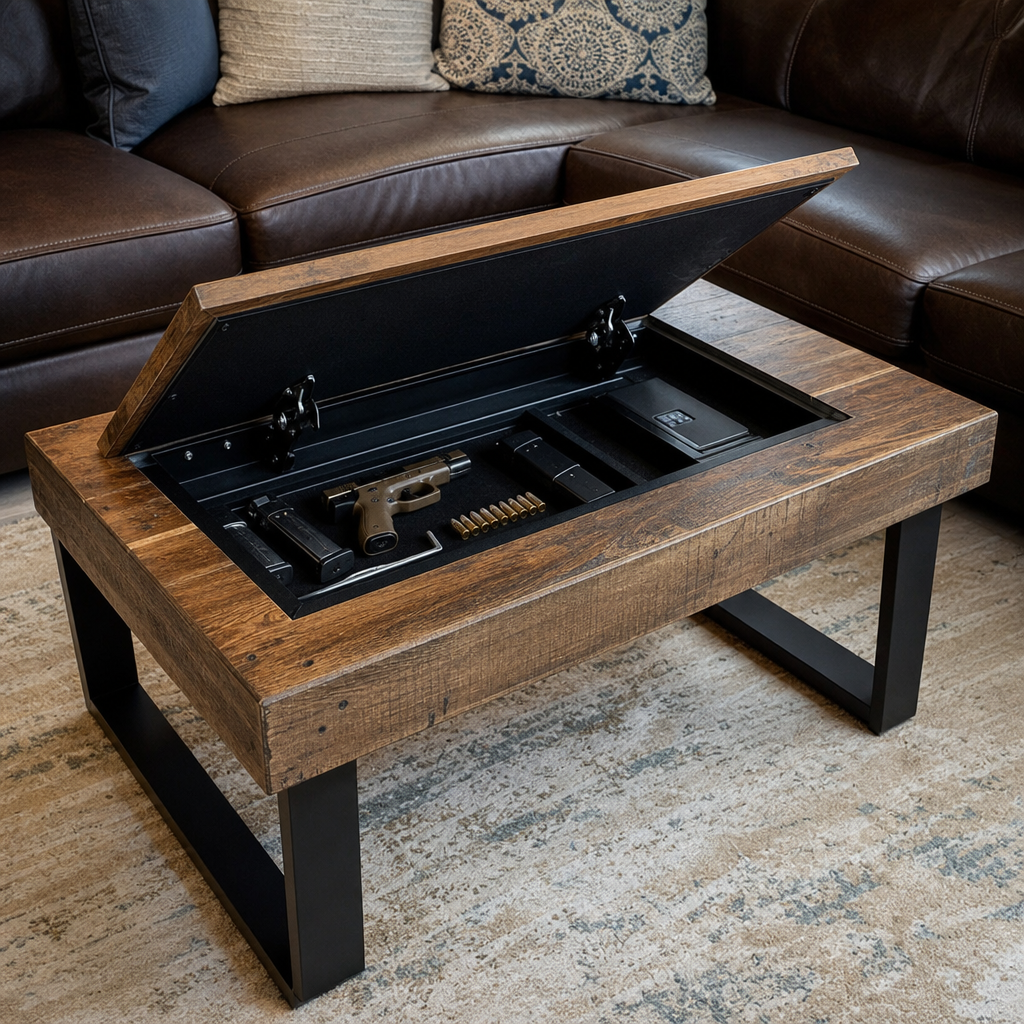
A coffee table gun safe solves a specific problem: how to keep a defensive firearm close at hand, out of sight, and inaccessible to children, guests, or thieves without dedicating visible floor space to a traditional safe. In practical terms, these products combine furniture design with secure storage, usually placing a lockable compartment beneath a lift top, sliding panel, or false drawer. For homeowners who want hidden and discreet gun storage solutions, the best coffee table gun safes balance concealment, speed of access, structural strength, and normal everyday appearance. If the unit looks tactical, feels flimsy, or opens too slowly under stress, it fails its purpose.
I have evaluated concealed furniture safes in homes where the coffee table had to survive real family use: feet on the lower shelf, spilled drinks, cleaning products, and constant opening and closing. That experience matters because many products look good in staged photos but reveal weak hinges, loud magnetic catches, or thin compartments once they are used daily. A concealed safe has to work as furniture first and security device second, while still meeting the core requirement of responsible firearm storage. That means preventing unauthorized access, reducing casual discovery, and allowing the owner to retrieve the firearm quickly when legally justified.
When buyers search for the best coffee table gun safes, they usually mean one of three categories. First are purpose-built coffee tables with an integrated locking vault sized for one or two handguns, spare magazines, and sometimes documents. Second are modular hidden compartments added to a standard coffee table, often using RFID, biometric, or remote-release hardware. Third are handcrafted concealment tables that emphasize invisibility over burglary resistance. Each category serves a different need. A family with small children should prioritize lock integrity and tamper resistance, while an apartment owner with limited space may care more about footprint and blend-in style.
This topic matters because the wrong storage method creates predictable risks. A handgun left in a drawer is easy to find. A bedside safe may be secure but too obvious in a living room. A full-size gun safe offers stronger protection but often cannot deliver the discreet placement many owners want for one defensive firearm. Hidden & discreet gun storage solutions fill that gap, especially in common areas where people actually spend time. As the hub for this subtopic, this guide explains what makes a coffee table gun safe effective, how to compare designs, where these tables fit among other concealment products, and what tradeoffs you should understand before buying.
What Makes a Coffee Table Gun Safe Worth Buying
The best models succeed in four areas: concealment, access, construction, and layout. Concealment starts with proportion and finish. A table that matches common living room dimensions, uses ordinary stain colors, and avoids visible seams is inherently harder to identify as gun storage. Good concealment also means functional misdirection. Open shelving for books, remote controls, or decor can help the piece read as normal furniture. Poor concealment often comes from exaggerated thickness, suspicious panel gaps, or hardware that announces there is a hidden compartment inside.
Access is the second deciding factor. For a defensive firearm, speed matters, but consistency matters more. In testing, mechanical simplex-style locks are reliable because they do not depend on batteries, though they are less common in furniture safes. RFID systems can be fast and discreet, especially when the reader is hidden under the finish, but users must manage backup entry methods and battery health. Biometric locks vary widely. High-quality fingerprint readers can work well with enrolled users, but low-end scanners often struggle with dry fingers, rushed placement, or partial prints. If you choose biometric access, insist on a key override and practice opening it in low light.
Construction separates concealment furniture from actual security products. A coffee table safe is not a substitute for a true burglary-rated safe, but it still needs reinforced locking points, steel-lined compartments, hidden hinges where possible, and solid joinery in the furniture shell. Thin MDF with a weak latch may stop a curious visitor, yet it will not resist a determined teen with hand tools. Better units use hardwood or quality plywood for the furniture body and a dedicated steel lockbox inside. The internal safe should anchor firmly to the table frame so the compartment cannot simply be pulled free.
Layout is the final factor. A concealed compartment should hold the firearm in a stable orientation with room for a mounted light or optic if your defensive setup includes one. Too many tables advertise generous dimensions but provide awkward internal bracing that blocks a full-size pistol grip. Foam inserts can reduce movement, though customizable closed-cell foam works better than cheap egg-crate foam. If the table stores documents, jewelry, or medical items alongside a firearm, keep the gun in a dedicated section so retrieval remains intuitive and safe under stress.
Best Coffee Table Gun Safe Designs and Who They Suit
Lift-top coffee table gun safes are the most familiar design. The entire top rises or hinges upward, revealing a hidden compartment below. Their main advantage is storage volume. They can fit a full-size handgun, spare magazines, a flashlight, and sometimes a compact lockbox for layered security. They also provide a natural furniture function because lift-top tables are already common for laptops and dining in the living room. The downside is motion. A large opening movement can be noticeable, and some tops require enough clearance that retrieval is less discreet if others are present.
Sliding-top designs are better for subtle access. Instead of lifting the whole surface, one section glides aside to expose a narrow compartment. This can be faster from a seated position and less visually obvious across a room. The limitation is size. Sliding compartments usually favor one or two handguns rather than broader storage. They also demand precise hardware. Cheap slides bind over time, especially in humid environments or homes where the table sees constant weight and vibration.
False-drawer and drop-down panel models are often the most discreet visually. They imitate normal drawers or apron panels, but a hidden release opens a shallow internal vault. These units work best for compact pistols, important papers, and other small valuables. Because the opening is more limited, they are less forgiving if your handgun has a red-dot sight, threaded barrel, or weapon light. Buyers should confirm internal dimensions with the exact firearm configuration they plan to store, not the factory handgun dimensions alone.
Custom handcrafted concealment tables appeal to owners who care most about matching existing decor. A local cabinetmaker can build around specific species, stain tones, leg profiles, and room dimensions while integrating an RFID lock or steel insert. In high-end homes, custom is often the best path because mass-market concealment furniture can look generic. The tradeoff is that craftsmanship varies, and many furniture makers understand woodwork better than secure storage. If you commission a piece, specify steel gauge, lock type, tamper resistance, hinge placement, and emergency access in writing.
| Design | Best For | Main Strength | Main Limitation |
|---|---|---|---|
| Lift-top | Multi-item storage | Larger compartment capacity | More visible opening motion |
| Sliding-top | Quick seated access | Subtle retrieval | Usually smaller storage space |
| False-drawer panel | Maximum visual concealment | Blends into normal furniture lines | Can restrict firearm size and grip access |
| Custom-built | Exact decor matching | Tailored dimensions and finish | Quality depends heavily on builder skill |
Lock Types, Security Standards, and Real-World Tradeoffs
No coffee table gun safe should be judged by appearance alone. The lock is the core of the product. Biometric locks are popular because they promise one-touch access, but performance varies dramatically by sensor quality, firmware, and user enrollment. Capacitive sensors are generally more dependable than older optical readers. Even then, fingerprints change with sweat, cuts, lotion, and dry winter skin. In homes I have assessed, the owners who had the fewest access failures were the ones who enrolled multiple fingers on both hands and tested the scanner monthly.
RFID locks are common in hidden furniture because they preserve the illusion of ordinary furniture. A card, fob, or bracelet triggers a latch without any visible keypad. This is elegant, but the system introduces management issues. The credential has to remain hidden yet accessible, and household members need clear rules about who can use it. Battery-powered RFID mechanisms also need preventive replacement. A low-battery lock that still cycles intermittently is worse than one that fails clearly, because intermittent operation creates false confidence.
Electronic keypad locks remain a practical middle ground. They are familiar, usually affordable, and can be reliable if sourced from established manufacturers. Backlit keys matter in dim rooms. So does button spacing, because cramped layouts increase entry errors under stress. Mechanical push-button locks, where available, offer strong reliability and no battery dependence, making them a favorite for many dedicated handgun safes. They appear less often in coffee tables because they are harder to hide elegantly, but from a pure function standpoint they are excellent.
Buyers should also understand what these products are not. Most coffee table gun safes are concealment devices with moderate unauthorized-access resistance, not TL-rated burglary safes and not substitutes for compliance with every local storage mandate. California Department of Justice roster language, ASTM child-resistance claims, and general firearm storage laws vary by jurisdiction, so check your state and local requirements before relying on any concealment furniture as your primary legal storage solution. If theft resistance against determined intruders is your first priority, a bolted steel handgun safe or full-size residential security container is stronger. Concealment helps prevent discovery; steel thickness, anchoring, and lock design help resist attack.
How Coffee Table Gun Safes Fit Within Hidden and Discreet Gun Storage Solutions
A coffee table safe is one branch of a broader category of hidden and discreet gun storage solutions. End table safes, nightstand safes, under-bed drawers, mirror safes, bookshelf compartments, wall art concealment units, and headboard vaults all solve the same basic problem in different rooms. The right choice depends on where you spend time and what threat model you are addressing. In many households, the living room is where adults actually relax in the evening, making a coffee table safe more practical than a bedroom-only solution.
End table gun safes are often the closest alternative. They provide easier seated access from one side of a sofa or chair and can feel more natural for a single user with a designated seat. Coffee tables, by contrast, offer central placement and can serve multiple positions around the room. That centrality is useful, but it also means the table may be touched by guests, children, or housekeepers more often. If traffic around the table is high, a stronger locking system and more convincing concealment matter even more.
Wall concealment units offer excellent use of dead space, particularly behind art or mirrors, yet they require installation, stud planning, and acceptance that access may be slower from a seated living room position. Under-bed storage maximizes hidden capacity but is tied to the bedroom and can be awkward for anyone with mobility limitations. Bookshelf safes and decorative concealment boxes are low-profile, but many are simply too obvious to anyone familiar with common hiding spots. The best hidden storage never depends on novelty alone; it depends on routine-looking placement plus controlled access.
As a hub page, this guide connects the coffee table category to the broader concealed storage landscape. If your priority is living room access, coffee table and end table safes belong at the top of your shortlist. If your priority is larger capacity, compare under-bed and wall-mounted options. If your priority is whole-home discreet staging, use one high-security primary safe for bulk storage and one or two concealment furniture pieces for limited-access defensive tools in key rooms. That layered approach is the most rational way to combine security, discretion, and convenience.
Buying, Placement, and Maintenance Tips That Prevent Mistakes
Start with the firearm, not the furniture. Measure the handgun as configured, including optic, mounted light, magazine base pad, and preferred orientation. Then compare those measurements against the internal dimensions of the lockbox, not just the outer furniture dimensions. Next, examine how the table will sit in the room. A coffee table safe should allow your knees, legs, and seating positions to access the opening naturally. If the lid cannot open fully because of a sectional sofa or rug edge, the design is wrong for the space.
Placement should minimize attention. Do not put the table in direct view of front-door visitors if the opening seam becomes noticeable from that angle. Avoid telling guests the table is concealment furniture, even casually. Concealment loses value once knowledge spreads. In homes with children, combine the hidden compartment with broader firearm safety practices: secure ammunition according to your plan, maintain a chamber status you have deliberately chosen, and teach age-appropriate rules that reinforce the gun is never to be touched. Hidden storage reduces accidental discovery; it does not replace supervision and education.
Maintenance is simple but essential. Test the lock on a schedule. Replace batteries proactively rather than after the first warning chirp. Check fasteners, hinge screws, slides, and interior padding every few months. Wood furniture moves with seasonal humidity, and small alignment changes can affect latches. Keep liquids away from hidden electronic components, especially if the table doubles as a daily-use family surface. Finally, run retrieval drills safely with an unloaded firearm or blue-gun trainer so access becomes consistent. The best coffee table gun safes are not merely purchased; they are integrated into a responsible storage plan and used deliberately.
The best coffee table gun safes deliver discreet access where people actually live, not just where traditional safes fit. A strong model looks ordinary, opens consistently, contains a properly sized steel compartment, and matches the way your household uses the living room. Lift-top, sliding-top, false-panel, and custom-built designs each have valid use cases, but none should be chosen on appearance alone. Lock quality, internal dimensions, construction methods, and room placement determine whether the table improves security or simply hides a gun in a more expensive piece of furniture.
Within the wider world of hidden and discreet gun storage solutions, coffee table safes occupy an important middle ground. They are more integrated into daily life than a bedroom-only option and more discreet in common areas than a visible handgun safe. At the same time, they are not a replacement for a true primary safe when you need serious burglary resistance or bulk firearm storage. The most effective setup for many owners is layered: a main safe for long-term security and selected concealment furniture for limited, controlled defensive access.
If you are comparing models now, focus on real measurements, proven lock types, child-access prevention, and a design that blends naturally into your home. Then review related options in this subtopic, including end table safes, wall concealment units, under-bed storage, and hidden furniture vaults, so your plan works room by room. Choose carefully, test regularly, and make discreet storage part of a complete firearm safety strategy.
Frequently Asked Questions
What is a coffee table gun safe, and how is it different from a standard gun safe?
A coffee table gun safe is a piece of functional furniture designed to look and perform like a normal living room table while concealing a lockable storage compartment inside. Unlike a traditional gun safe, which is usually a freestanding metal cabinet or heavy floor safe placed in a bedroom, closet, or office, a coffee table gun safe is built specifically for discreet access in shared living spaces. The main advantage is that it keeps a defensive firearm nearby without advertising its presence. Many models use lift tops, sliding sections, hidden drawers, or recessed compartments that are not obvious to casual visitors.
The biggest difference comes down to purpose and placement. Standard gun safes are typically optimized for maximum storage capacity, high fire ratings, and broad theft resistance, especially for long guns or large firearm collections. Coffee table gun safes are usually intended for quick-access home defense storage, often for one or two handguns, spare magazines, important documents, or other valuables. They focus on blending into home decor while still providing a meaningful layer of security against children, guests, smash-and-grab thieves, and opportunistic access.
That said, they are not all built equally. The best coffee table gun safes balance concealment, strong locking hardware, durable construction, and practical day-to-day usability. Buyers should think of them as a specialized hidden storage solution rather than a replacement for a full-size safe used for broader firearm storage needs.
Are coffee table gun safes actually secure enough for home defense firearms?
Yes, a quality coffee table gun safe can be secure enough for a home defense firearm, but the answer depends heavily on the design, materials, and locking system. A well-made model should provide reliable protection against unauthorized access by children, guests, and casual intruders while still allowing fast retrieval by the owner. In real-world use, that is the primary security goal. Look for solid hardwood or reinforced construction, internal steel compartments when available, tamper-resistant hardware, concealed hinges, and a dependable lock that does not create unnecessary delays in an emergency.
It is important to keep expectations realistic. A coffee table gun safe is usually not intended to match the burglary resistance of a large, bolted-down steel safe. Because it doubles as furniture, concealment is part of its security strategy. If an intruder does not recognize the table as a gun storage unit, that alone can reduce the likelihood of immediate targeting. However, if a thief has time, tools, and privacy, a furniture-based safe may be more vulnerable than a dedicated heavy-gauge safe. That is why many homeowners use a coffee table gun safe for one accessible defensive handgun and keep additional firearms secured elsewhere.
For the best results, choose a table with a proven locking mechanism, place it in a location that supports both quick access and low visibility, and maintain strict firearm safety practices. Security should always be layered: concealment, locking access, responsible storage, and, when possible, anchoring or weighted construction all work together to improve protection.
What features should I look for when choosing the best coffee table gun safe?
The most important features are concealment, speed of access, build quality, lock reliability, and interior practicality. Start with the access design. Some coffee table gun safes open with a lift top, some use hidden sliding panels, and others have false drawers or drop-down compartments. The right choice depends on how quickly you need to reach the firearm and how naturally the table fits into your room layout. A design that looks completely ordinary is often best for discreet storage, but it should not be so complicated that it slows you down under stress.
Next, evaluate the locking system. Common options include RFID, electronic keypad, biometric entry, mechanical locks, and hidden manual latches. Each has tradeoffs. Biometric locks can be fast, but quality matters a great deal. RFID and keypad systems can offer a strong mix of speed and reliability if well made. Mechanical systems may be slower but often reduce concerns about dead batteries or electronics failure. Ideally, the safe should also have a backup access method in case the primary system malfunctions.
Construction quality is another major factor. Look for sturdy joinery, reinforced internal compartments, robust hinges, smooth hardware, and materials that can handle daily use as actual furniture. Interior dimensions matter too. Some hidden compartments fit only a compact handgun, while others accommodate a full-size pistol, spare magazines, flashlights, documents, or valuables. Lining, foam inserts, and organizational trays can help prevent movement and protect finishes. Finally, consider aesthetics. Since this piece will likely sit in a visible part of the home, it should match your decor while still serving its security purpose effectively.
Are coffee table gun safes a good option for homes with children or frequent visitors?
For many households, yes, coffee table gun safes can be an excellent option when chosen and used responsibly. They solve a common problem: keeping a defensive firearm accessible to the homeowner while preventing children, visitors, cleaners, contractors, or overnight guests from seeing or reaching it. In a family setting, the hidden nature of the compartment adds an extra level of discretion beyond the lock itself. Instead of placing a visible bedside safe or leaving a firearm in a predictable location, a coffee table gun safe stores it in a way that is both concealed and integrated into everyday furniture.
However, concealment should never be treated as a substitute for proper security. If children live in or visit the home, the table should have a truly reliable lock and should remain locked whenever the firearm is stored inside. Owners should also make sure the opening mechanism cannot be easily discovered through casual exploration. Some low-end models may look hidden but still be vulnerable if a child or curious guest can pull a panel open without much effort. The best units combine hidden design with a real locking barrier.
It is also wise to think about your household routines. If the coffee table is used constantly, exposed to rough handling, or placed where children play, you will want a model that is stable, durable, and not prone to accidental shifting or hardware wear. In short, a coffee table gun safe can be a smart family-conscious storage choice, but only if it is built well, consistently locked, and used as part of a broader commitment to safe firearm storage.
Can a coffee table gun safe replace a traditional gun safe, or should it be used as a secondary storage solution?
In most cases, a coffee table gun safe should be viewed as a secondary or specialized storage solution rather than a complete replacement for a traditional gun safe. Its main role is quick-access concealed storage for a home defense firearm in a room where people actually spend time, such as a living room or den. That makes it highly practical for keeping a handgun close at hand without leaving it exposed or relying on a visible safe that may not fit the room. For this purpose, it can be extremely effective.
Where it usually falls short compared with a traditional safe is overall capacity and high-level security. Most coffee table gun safes are not designed to store multiple firearms, large collections, ammunition reserves, or high-value heirlooms with the same burglary resistance as a heavy steel safe. They also may not offer the same fire protection, anchoring options, or long-term storage environment that a dedicated gun safe provides. If you own several firearms or need to meet broader security goals, a full-size safe is still the better primary storage solution.
The ideal setup for many homeowners is to use both. A traditional safe handles the majority of firearms and valuables, while a coffee table gun safe provides discreet, fast access to one carefully selected defensive weapon in a common living area. That combination gives you the benefits of hidden furniture storage without sacrificing the security and storage capacity of a conventional safe.