
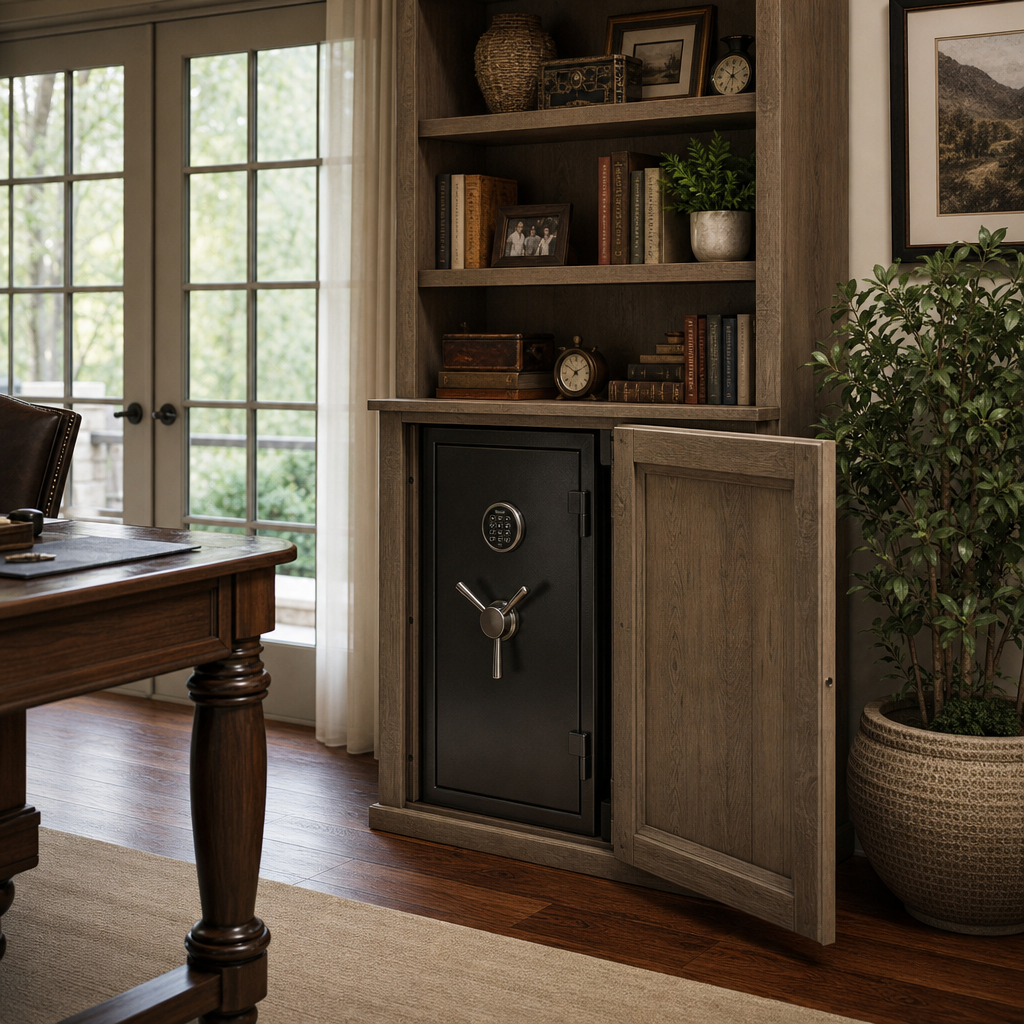
Hiding a gun safe in plain sight is about blending physical security, fast access, and everyday design so thoroughly that visitors see ordinary furniture, cabinetry, or storage while your firearms remain protected, organized, and out of unauthorized hands. In my experience helping homeowners plan secure storage rooms and retrofit interior spaces, the biggest mistake is assuming concealment alone is enough. It is not. A hidden gun safe works only when three elements come together: a properly rated safe, a believable disguise, and installation that resists discovery, tampering, and forced removal. Get one of those wrong and the entire system becomes vulnerable.
Before choosing a hidden and discreet gun storage solution, define the key terms. A gun safe is a secure container designed to resist unauthorized access, often using steel construction, reinforced doors, relockers, anti-pry features, and fire protection. Hidden gun storage means the safe is intentionally concealed behind or inside another element, such as a bookcase, false wall, bench, or closet system. Discreet storage is broader: the safe may be visible, but it does not look like a firearm safe and does not draw attention. Plain sight concealment sits between the two, relying on camouflage rather than invisibility.
This matters because theft patterns are predictable. Residential burglars typically spend only minutes inside a home, target primary bedrooms and home offices first, and look for obvious valuables, cash, and firearms. A gun safe advertised by its shape, brand badge, or placement in a garage corner is easier to target than one integrated into normal household architecture. Concealment also supports safety. Children, guests, contractors, and casual visitors are less likely to ask questions or test boundaries when storage is invisible to them. For many owners, especially in suburban homes, condos, and shared households, discreet storage reduces both curiosity and risk.
The challenge is balancing secrecy with legal and practical responsibility. Your setup must still allow safe loading, unloading, maintenance, humidity control, and emergency access. It also needs to reflect local laws about firearm storage, child access prevention, and transport within the home. The best hidden gun safe ideas do not start with décor boards; they start with threat assessment, room selection, access priorities, and realistic daily habits. This guide covers the full landscape of hidden and discreet gun storage solutions, from furniture safes to wall compartments to closet integrations, so you can choose an option that actually works in a real home.
Start with security, not camouflage
The safest way to hide a gun safe in plain sight is to treat concealment as a secondary layer, not the primary defense. I advise homeowners to begin by listing what they are storing: handguns, AR-style rifles, hunting rifles with optics, suppressors where lawful, ammunition, passports, cash, and hard drives. That inventory determines the safe’s size, door swing, interior layout, and lock type. It also affects where the safe can go. A full-size safe weighing 700 to 1,200 pounds belongs on a structurally appropriate floor and should be anchored into concrete or reinforced framing. A hidden wall safe for one defensive handgun solves a very different problem.
Look for objective security features first. Steel thickness matters; a body built from 12-gauge steel is entry-level, while 10-gauge, 7-gauge, or composite plate construction offers better resistance. Door design should include full-length locking bolts, hard plates that shield the lock, and relockers that activate after attack. If fire protection matters, verify whether the rating is independently tested or simply manufacturer claimed. In the gun safe market, claimed “fireproof” performance varies widely. Brands such as Fort Knox, Liberty Safe, American Security, Rhino Metals, and Browning all offer models with different security classes, but no brand name should replace careful review of specifications.
Access technology is another critical decision. Mechanical dial locks are durable and time-tested, electronic keypad locks are faster, and modern biometric locks can be convenient for quick-access handgun safes. The tradeoff is reliability under stress, battery maintenance, and false reads. For a concealed long-gun safe used less frequently, an electronic keypad often provides the best balance. For bedside hidden storage, speed may justify a higher-end biometric model from manufacturers such as Vaultek or Hornady, provided you test it consistently and keep backup entry methods ready. Concealment fails quickly if the safe is annoying enough that owners leave it unsecured.
Once the safe itself is chosen, then camouflage can do its job. A disguised cabinet built around a poor-quality metal box is still a weak storage system. By contrast, a mid-sized safe bolted inside a custom closet with ordinary shelving, hamper baskets, and clothing rods can be both inconspicuous and genuinely secure. Think in layers: rated container, structural anchoring, visual disguise, and controlled access. That layered approach is what turns a hidden gun safe from a clever idea into a defensible storage strategy.
Choose the right hiding location in the home
The best place to hide a gun safe in plain sight is usually not the place most people imagine. Primary bedroom closets are common because they offer privacy and daily access, but they are also one of the first places burglars search. That does not rule them out; it means the concealment must be excellent. A safe tucked behind built-in drawers, false back panels, or a floor-to-ceiling closet system stands a much better chance than a standard safe covered with coats. Utility rooms, home offices, mudrooms, dens, and under-stair spaces are often stronger candidates because they attract less attention while still allowing practical use.
Think about traffic patterns. A hidden safe should sit where family members can access it without performing suspicious rituals in front of guests. If the reveal requires moving a heavy dresser every time, the system will eventually be abandoned. I prefer spaces where concealment can be passive: behind a hinged mirror, inside full-depth pantry-style cabinetry, under a window bench with a reinforced compartment, or within a built-in media wall that appears fully decorative. In newer homes, dead corner spaces and oversized return walls often hide enough volume for a compact rifle safe or document chest.
Construction details matter as much as room choice. Exterior walls can invite moisture swings, which means you may need a dehumidifier rod, rechargeable desiccant, or a sealed closet envelope. Second-floor installations require floor-load planning, especially for heavier safes concentrated in small footprints. Garages are convenient but generally poor for discreet storage because of visibility, humidity, slab exposure, and delivery access for thieves. Basements can work well if climate controlled and if water intrusion risks are managed through elevation, drainage, and sump monitoring. The right location combines obscurity, structural support, environmental control, and believable day-to-day use.
A final location rule is simple: avoid the cliché spots unless the execution is exceptional. Behind a cheap picture frame, under a loose floor panel, or inside a hollow headboard may look clever online, but experienced thieves know those tricks. Better concealment mimics real design decisions. A built-in linen cabinet, deep entry bench, or workshop tool wall with lockable false fronts is less theatrical and far more convincing. If a feature would seem normal to a guest or contractor, it is a stronger candidate for plain-sight storage.
Hidden gun storage options compared
Different hidden gun storage solutions fit different needs, and the wrong match creates frustration or weakens security. Quick-access handgun storage serves defensive readiness. Concealed long-gun storage serves deeper retention, collection management, and family safety. Furniture-based concealment works best where aesthetics matter most, while architectural concealment usually provides better resistance and larger capacity. The comparison below highlights the practical differences homeowners should weigh before investing in a hidden gun safe system.
| Storage solution | Best use | Main advantage | Main limitation |
|---|---|---|---|
| Wall safe behind art or mirror | One or two handguns, documents | Excellent concealment in finished rooms | Limited depth between studs |
| Furniture safe in bench, cabinet, or nightstand | Quick access in bedrooms or living areas | Blends with décor and daily routines | Often lighter and easier to remove if not anchored |
| Closet-integrated modular safe | Rifles, handguns, valuables | Good capacity with strong visual disguise | Requires careful design and installation |
| Under-stair or false-wall safe room cabinet | Larger collections and ammo storage | High concealment and scalable space | Higher cost and construction complexity |
| Floor safe under finish surface | Documents, handguns, emergency cash | Hard to notice and difficult to pry | Slow access and potential moisture issues |
For most households, the sweet spot is a closet-integrated safe or built-in cabinet that hides a legitimate steel safe behind normal storage. This format supports long guns, accessories, and paperwork while avoiding the obvious visual signals of a freestanding safe. A well-designed version may include shallow front shelving, magnetic or concealed hinges, and trim details matching the rest of the room. If you need immediate defensive access, pair that main storage area with a separate quick-access handgun safe in a bedroom or office. Splitting roles usually works better than forcing one hidden compartment to do everything.
Furniture concealment deserves special caution. Many “hidden gun shelves” and concealment mirrors are useful for staging a defensive handgun, but they are not substitutes for full child-resistant storage unless they include a real locking mechanism and strong mounting. Some products are essentially secret compartments rather than safes. That distinction matters. Concealment products from companies like Tactical Traps can be part of a broader plan, but owners should understand exactly what level of delay and unauthorized-access resistance they provide. If children live in or visit the home, true lockable security is nonnegotiable.
Design principles that make concealment believable
A hidden gun safe works best when it disappears into patterns people already expect. That means matching materials, scale, and use. If every door in a hallway has painted shaker panels and one “decorative” panel has odd gaps or shiny hardware, it invites attention. The same applies to furniture. A bench that is too heavy to move, a mirror mounted at an unusual height, or a bookcase that contains fake books and no dust pattern looks staged. Good concealment design is less about gimmicks and more about visual consistency.
I use a simple test during planning: would a neutral observer describe the feature as normal without prompting? Built-ins generally pass this test better than add-on concealment pieces. A mudroom cabinet with shoe drawers, coat hooks, and one full-height locked section looks ordinary. A window seat with matching trim and lift-top storage also looks ordinary. In contrast, a giant distressed flag on a bedroom wall that opens with RFID hardware may telegraph exactly what it is to anyone familiar with concealment furniture. The more thematic the disguise, the weaker it becomes.
Hardware choices influence secrecy and usability. Push-latch systems reduce visible handles, concealed Soss hinges keep pivot points clean, and magnetic catches can support secondary panels. For serious installations, hidden access should not rely on one fragile touch latch alone. Use robust cabinetry hardware, align reveals tightly, and plan for serviceability so lock batteries, dehumidifiers, and interior lighting can be maintained. LED strip lighting with door-activated switches is especially useful inside closet-integrated safes because it speeds access and inventory checks without changing the exterior appearance.
Believable concealment also accounts for sound. Hollow panels, squeaky slides, and metallic vibration can give away a hidden compartment. Soft-close hinges, felt isolation pads, and snug interior framing help the reveal stay quiet. Finally, avoid overcomplicating the opening sequence. A hidden mechanism that requires a specific magnet position, pressure point, and shelf movement may impress visitors in theory, but complexity tends to fail when owners are tired, stressed, or wearing gloves. Simple, repeatable access is more secure in the long run because people actually use it correctly.
Installation, safety, and long-term maintenance
Even the best hidden gun safe idea can fail during installation. Anchoring is the first checkpoint. If a safe can be carried away, thieves can attack it later with more time and better tools. Use manufacturer-approved anchor points and appropriate concrete anchors, lag bolts into structural members, or steel backing plates where needed. For closet integrations, I often recommend building the surrounding millwork after the safe is secured so the cabinetry acts as visual masking rather than structural support. The safe should remain secure even if the finish carpentry is removed.
Access control and household policy are next. Hidden storage does not replace clear rules about who knows the location, who has credentials, and how firearms are staged. If the safe stores a defensive firearm, define whether it is loaded, chambered, or secured with a secondary device. If it stores a collection, log serial numbers, photograph contents, and keep records off-site or encrypted. Insurance carriers may ask about storage method, value, and any monitored alarm system. A concealed safe tied to door sensors, motion detection, cameras, and professional monitoring is much stronger than concealment alone.
Environmental management is often overlooked. Firearms stored in closets, basements, or exterior-adjacent cavities need humidity control. Aim to limit rust risk with stable indoor conditions, silicone-treated socks for long guns, and active or passive moisture control inside the safe. Check door seals, replace lock batteries on schedule, test override keys where applicable, and inspect anchoring annually. Dust also matters more than people expect in hidden cabinetry, especially in HVAC return-adjacent spaces.
The key takeaway is that hidden and discreet gun storage solutions work best as a system, not a product. Choose a real safe, place it in a low-attention area, integrate it into believable architecture or furniture, and maintain it like any other critical household security asset. Done well, plain-sight concealment lowers theft risk, reduces unwanted attention, and keeps firearms controlled without turning your home into a fortress. If you are planning upgrades in the broader Gun Safes & Safety category, use this guide as your starting hub, then map your next step: quick-access handgun storage, closet safe design, wall safe installation, or full-room concealed storage planning.
Frequently Asked Questions
What does it really mean to hide a gun safe “in plain sight”?
Hiding a gun safe in plain sight means making secure firearm storage look like an ordinary, expected part of the room rather than something valuable or tactical. In practice, that usually involves integrating the safe into furniture, cabinetry, built-ins, closets, utility spaces, or everyday storage so thoroughly that guests, contractors, and casual visitors do not notice anything unusual. The goal is not just visual concealment. It is to combine three things at once: a properly rated safe, a location that supports fast and reliable access for authorized users, and a concealment method that does not attract attention.
A lot of homeowners focus only on disguise, such as a mirror that opens, a bookcase door, or a bench with a hidden compartment. Those can be useful, but concealment by itself is not enough. If the safe is lightweight, poorly anchored, difficult to reach under stress, or installed in a spot that everyone naturally gravitates toward, then the hidden feature becomes more of a novelty than a serious security measure. A well-hidden gun safe should still resist tampering, remain organized inside, and open quickly when needed. It should also fit naturally into the patterns of the household so it does not create odd routines that other people notice.
The best plain-sight solutions are the ones that feel boring. A safe concealed inside a pantry-style cabinet, behind a section of master bedroom built-ins, inside a mudroom storage wall, or beneath a workbench in a garage can be very effective because those locations already make sense visually. When concealment, anchoring, access, and room design all work together, the safe stops looking like a target and starts behaving like part of the home.
Where is the best place in a home to hide a gun safe without sacrificing quick access?
The best location depends on how the firearms will be used, who lives in the home, and how quickly authorized access may be needed. In general, the ideal spot is one that balances low visibility, structural support, realistic daily access, and a natural visual cover. Primary bedroom suites are common because they offer privacy and predictable access, especially when a safe is integrated into a closet system, built-in cabinetry, or furniture piece. A home office can also work well if the space is not heavily trafficked by guests and the concealment blends with shelves, filing cabinets, or millwork.
For some households, a mudroom, laundry room, or utility-adjacent storage wall can actually be a smarter choice than a bedroom because those spaces are functional, unremarkable, and easier to customize without drawing attention. A garage workshop may also be viable if temperature, humidity, and security are properly managed, but it should never be chosen simply because it is out of the way. If the safe is too inconvenient, people are more likely to leave firearms unsecured temporarily, which defeats the purpose.
What should usually be avoided are locations that are obvious to thieves, difficult to anchor properly, or too exposed to visitors. Master bedroom closets are often searched quickly during break-ins, so concealment inside a closet needs to be better than simply placing a safe behind hanging clothes. Similarly, putting a safe behind a picture frame in the living room may seem clever, but if it is in a public area where many people spend time, it may invite curiosity or accidental discovery. The best location is one you can reach quickly, secure correctly, and disguise in a way that looks completely normal within the room’s design.
Is concealment enough, or do I still need a heavy, properly rated, anchored gun safe?
You still need a properly rated, well-built, anchored gun safe. Concealment is a valuable layer of security, but it is not a substitute for real physical protection. A hidden safe that can be pried open easily or carried out of the house is not doing its job. In fact, one of the biggest mistakes homeowners make is investing heavily in custom concealment while underinvesting in the actual safe. If the safe itself is weak, the hidden installation may only delay discovery, not prevent theft or unauthorized access.
A quality gun safe should be chosen based on construction, locking mechanism, fire resistance if needed, size, and how well it fits the intended firearms and accessories. It should also be anchored to an appropriate structural surface whenever possible. Anchoring matters because many residential thefts are fast. If a burglar can remove the entire unit, they can defeat it later in private. Even a very clever hidden installation can fail if the safe is not secured to the floor, wall structure, or a purpose-built platform designed for the load.
Concealment works best as part of layered protection. The outer layer is invisibility or visual blending. The next layer is physical resistance from the safe itself. Then comes controlled access through a reliable lock, responsible key or code management, and household procedures that keep firearms out of unauthorized hands. When those elements are combined, you get a setup that is not just hidden, but genuinely secure, practical, and resilient.
What types of furniture or built-ins work best for hiding a gun safe naturally?
The best furniture or built-in solution is one that suits the size and weight of the safe while matching the architecture and daily use of the room. Custom cabinetry is often the strongest option because it can be designed around the exact dimensions of the safe, include ventilation or clearance where needed, and visually match surrounding millwork. Built-in wardrobes, closet systems, window seats, office storage walls, mudroom lockers, and base cabinets are all common choices because they already belong in a home and do not raise suspicion.
Freestanding furniture can also work, especially if it is substantial and functional. Examples include storage benches, armoires, sideboards, media consoles, workbenches, or large nightstands with concealed access panels. The key is realism. If a furniture piece looks oversized, awkwardly deep, or strangely placed just to hide a safe, people notice. Good concealment design avoids gimmicks and emphasizes proportion, symmetry, and consistency with the rest of the room. In other words, the disguise should support the room first and the secret second.
There are also technical considerations. The furniture or built-in must allow the safe door to open fully, support the load safely, and avoid interfering with hinges, biometric readers, keypad entry, or interior lighting. You also want enough surrounding space to access firearms without fumbling or creating unsafe handling conditions. In many cases, homeowners benefit from treating the concealment as a cabinetry or remodeling project rather than buying a novelty hidden compartment online. Purpose-built integration tends to look better, last longer, and perform far more reliably.
How can I keep a hidden gun safe secure from children, guests, and burglars while still maintaining fast access?
The answer is layered control. A hidden gun safe should never rely on secrecy alone, especially in a household with children, teens, frequent visitors, service professionals, or extended family members. Start with a safe that has a dependable lock suited to your access needs. For many homeowners, that means a quality electronic keypad or biometric system with a backup method, provided it is from a reputable manufacturer and tested regularly. Fast access is only useful if it works consistently under pressure, in low light, and during the kinds of interruptions that happen in real life.
Next, manage the environment around the safe. Do not discuss the location casually, and avoid creating obvious habits that reveal where firearms are stored. If only one cabinet in a room is always locked or approached privately, people may start paying attention. Good concealment reduces these clues by making the storage look ordinary and by integrating it into spaces that already have normal reasons for use. Organization inside the safe matters too. Firearms, magazines, documents, and accessories should be arranged so authorized users can retrieve what they need safely and immediately rather than digging through clutter.
Finally, think beyond burglary. Child safety, unauthorized handling, and accidental discovery are often greater day-to-day risks than a highly skilled intruder. That is why concealment should be paired with household rules, access discipline, periodic lock testing, and maintenance of the safe and its installation. If the safe is hidden well, anchored correctly, opens reliably, and is used consistently, it can provide both discretion and readiness without compromising responsible firearm storage. That is the real standard to aim for: not just hidden, but secure, practical, and dependable every day.