
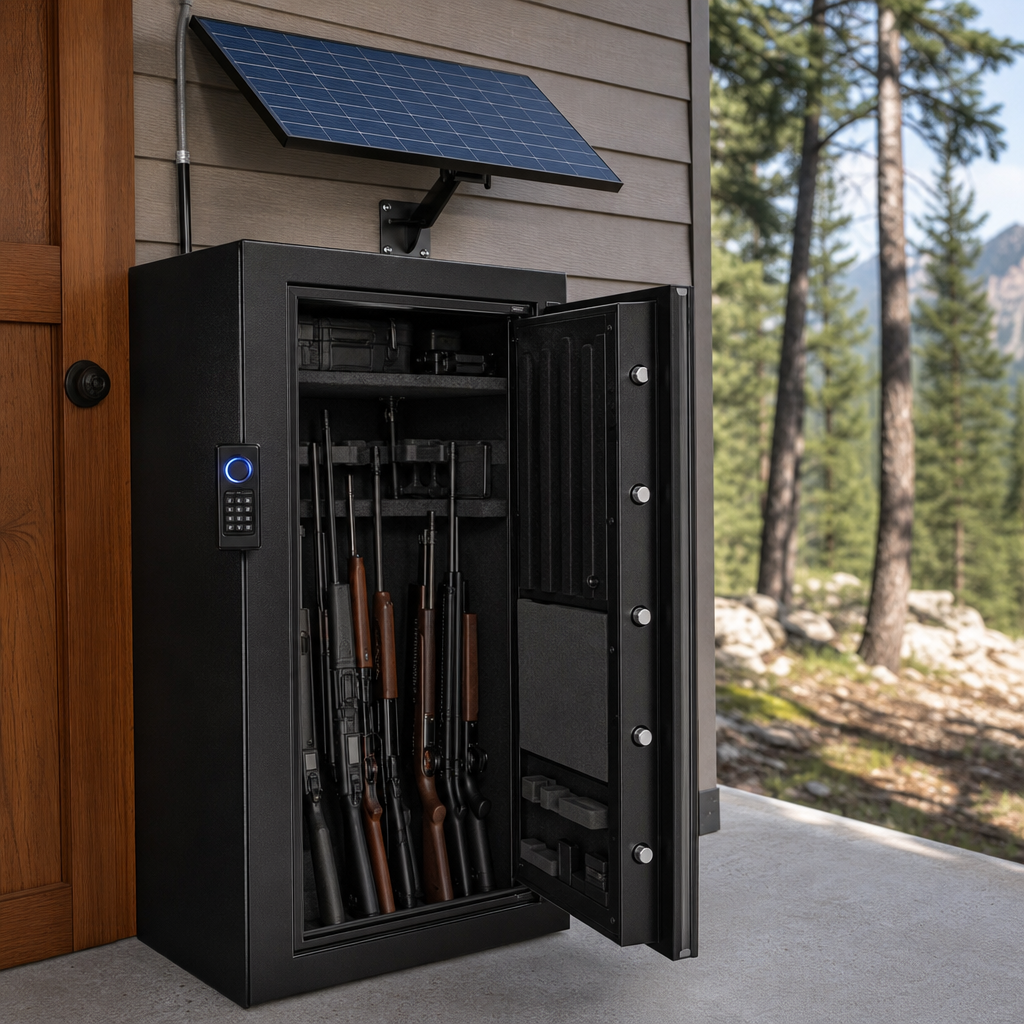
Upgrading a gun safe with solar-powered security features is one of the most practical ways to improve firearm storage when you want stronger protection, better monitoring, and greater resilience during power outages. In plain terms, a solar-powered gun safe upgrade uses a small photovoltaic panel, a battery, and low-draw electronics to run devices such as interior LED lighting, humidity control, tamper alarms, lock monitors, cameras, and wireless sensors without depending entirely on household electricity. For owners focused on gun safes and safety, this matters because the safe is not just a steel box; it is a controlled environment that must prevent unauthorized access, reduce corrosion risk, preserve documents, and keep working when utility power fails.
I have worked on safe retrofits in garages, closets, and dedicated gun rooms, and the same pattern appears every time: factory safes are usually strong on steel and locking bolts but weak on power management, visibility, and environmental control. A stock safe may have a pass-through for a power cord, but that alone does not create redundancy. If the outlet loses power, the dehumidifier shuts off, the camera stops recording, and smart sensors go silent. A properly designed solar-assisted system solves that weakness by adding an independent energy source that can maintain critical functions for hours or days, depending on load and battery size.
Custom and DIY gun safe modifications cover a broad category. They include interior layout changes such as rifle racks and pistol hangers, electrical additions such as LED strips and charging ports, security enhancements such as vibration sensors and door-open alerts, and preservation upgrades such as desiccant management and heating rods. This hub article explains how solar power fits into that wider modification strategy, what components work best, how to install them safely, what tradeoffs to expect, and where each upgrade belongs in a complete gun safe improvement plan. If you want a reliable roadmap for custom and DIY gun safe modifications, start with power, because every modern safe feature depends on it.
What Solar-Powered Security Features Make Sense for a Gun Safe
The best solar-powered gun safe upgrades are low-voltage, low-draw devices that deliver a clear security or preservation benefit. In most builds, that means a 12-volt or 5-volt system supporting four core functions: visibility, intrusion detection, environmental monitoring, and communications. Visibility usually comes from LED strip lighting with a door-activated reed switch. Intrusion detection can include vibration sensors, tilt sensors, or a siren module. Environmental monitoring often combines a hygrometer, temperature sensor, and dehumidifier control. Communications may involve Wi-Fi, LoRa, Zigbee, or cellular alert devices, depending on the safe’s location and your network reliability.
Not every feature belongs in every safe. A basic residential security container in a bedroom closet may only need interior lights, a humidity monitor, and a tamper alert. A heavier safe in a detached shop may justify a stronger package: internal battery backup, magnetic door contact, accelerometer, 4G alert unit, and a compact camera pointed at the lock area. In my experience, the highest-value upgrade is not the camera; it is a combination of door status plus vibration alerts, because those sensors consume little power and tell you immediately when someone is touching the safe.
Solar power works especially well with accessories that must remain active continuously but consume milliamps rather than amps. Examples include Aqara contact sensors through a hub, Shelly relays for power state monitoring, Yolink long-range sensors, and low-draw alarm modules used in RV and marine applications. For lighting, warm-white or neutral-white LED strips around 3000K to 4000K improve visibility without creating harsh glare on blued steel. For charging, USB outputs are possible, but they increase power demand and should not be treated as a primary design goal unless the battery and panel are sized accordingly.
A good rule is to separate “mission-critical” from “nice-to-have.” Mission-critical functions are those that protect access control or firearm condition during a grid failure: dehumidification, intrusion alerts, and lock power if your safe uses an electronic lock with an external support module. Nice-to-have functions include accent lighting, camera recording, and gadget charging. When owners skip this prioritization, they overspend on panels and undersize their batteries. A reliable gun safe upgrade starts by protecting the essentials first, then expanding capacity for convenience features.
Core Components of a Reliable Solar Gun Safe Power System
Every solar-powered gun safe build relies on the same electrical chain: panel, charge controller, battery, fuse protection, wiring, and loads. The panel converts sunlight to direct current. The charge controller regulates voltage and current so the battery charges safely. The battery stores energy for overnight use and cloudy periods. Fuses prevent wiring damage if a short occurs. The wiring distributes power to each device through a planned circuit. Most DIY safe projects are small enough for either a 12V sealed AGM battery or a lithium iron phosphate battery. LiFePO4 usually costs more upfront but offers longer cycle life, lower weight, and deeper usable discharge than AGM.
For compact installations, a 20W to 50W solar panel is often enough, especially if the safe only powers sensors, an LED strip, and a small dehumidifier fan. If you add a camera, router backup, or cellular transmitter, move toward 50W to 100W and increase battery capacity accordingly. A pulse-width modulation controller can work on a small budget, but a maximum power point tracking controller is more efficient, especially when panel conditions vary. Victron Energy, Renogy, and Morningstar are recognized names because their controllers are stable, accurately rated, and well documented.
Battery sizing should be based on actual daily load, not guesswork. Add the watt-hours used by each device, then multiply by the number of backup days you want. If your LED strip uses 6Wh per day, your sensor package uses 8Wh, and your communications device uses 10Wh, total demand is 24Wh daily. For two days of autonomy, that is 48Wh before system losses. After adding conversion losses and preserving healthy battery depth of discharge, a 12V 10Ah battery gives a comfortable margin. Owners often buy too small a battery because the devices look tiny, but standby electronics add up over time.
| Component | Typical Spec | Best Use in a Safe Upgrade | Key Consideration |
|---|---|---|---|
| Solar panel | 20W–100W | Charging backup battery | Mount where it gets consistent light |
| Charge controller | PWM or MPPT, 12V | Protecting and optimizing charging | Choose MPPT for better efficiency |
| Battery | 12V AGM or LiFePO4 | Running loads during darkness or outages | Size for at least one to two days of autonomy |
| Lighting | 12V LED strip | Interior visibility | Use door switch to reduce draw |
| Sensors | Door, vibration, temp, humidity | Tamper and environment monitoring | Favor low-standby devices |
| Alarm or comms | Siren, hub, Wi-Fi, cellular | Sending alerts | Network availability determines value |
Wiring quality matters more than many owners expect. Use stranded copper wire sized appropriately for current and distance, protect every positive lead near the battery with an inline fuse, and route cables through grommets where they pass metal edges. Anderson Powerpole connectors, ring terminals with adhesive heat shrink, and marine-grade fuse blocks are worth using because a gun safe environment may include temperature swings, low airflow, and occasional humidity. A sloppy electrical build inside a steel cabinet is asking for failures at the exact moment you need backup power.
Planning the Installation Without Compromising the Safe
The first planning rule for custom and DIY gun safe modifications is simple: never compromise the fire barrier, locking mechanism, or structural integrity to add convenience. Before drilling, check the manufacturer’s documentation and inspect interior panels carefully. Many safes use layered construction with steel, gypsum-based fireboard, and upholstery panels. Drilling in the wrong place can damage relockers, wiring for an electronic keypad, or fire lining. If a factory power pass-through exists, use it. If it does not, consider external mounting of the battery and controller with only low-voltage leads entering through a sealed grommet placed in a non-critical area after careful inspection.
Panel placement is usually outside the safe, not on it. A safe in a closet may use a small panel near a window, while a garage installation may use a panel on an adjacent wall or roofline feeding the battery by cable. Indoor window charging can work for light loads, but glass reduces solar efficiency and seasonal angle matters. If the safe is in a basement or interior room, solar may still make sense by placing the panel remotely and routing the cable to the safe area. The point is not panel proximity; it is dependable charging.
Inside the safe, organize the electrical system like a miniature utility room. Put the battery low and secure if it is internal, mount the fuse block and controller where you can inspect indicator lights, and separate wiring from firearms to avoid snagging optics or slings. Adhesive cable tie mounts can help, but in hotter environments they may fail over time, so mechanical fasteners into interior organizer panels are often better when possible. Leave a service loop in each cable so components can be removed without cutting wires.
Ventilation is another planning issue that gets overlooked. Some dehumidifier rods create gentle heat and need space around them. Batteries, especially AGM types, should not be boxed tightly among soft cases and paper documents. If you are adding a camera, test the field of view before permanent mounting so it does not stare directly into reflective stainless surfaces and wash out the image. A clean layout improves serviceability, and serviceability determines whether a DIY gun safe modification remains useful after the first year.
Best Security and Safety Upgrades to Pair With Solar Power
Solar power becomes most valuable when paired with well-chosen custom gun safe modifications that improve both access control and firearm preservation. Start with layered detection. A magnetic contact sensor tells you when the door opens. A vibration sensor reports impacts, drilling, or attempts to move the safe. A tilt sensor can detect relocation. Combined, these create a better picture than any single device alone. If your safe is bolted to concrete, a vibration alert has higher signal value because movement is more likely to represent tampering than normal use.
Next, improve environmental control. Corrosion is a real issue in safes stored in humid climates, coastal regions, or garages with temperature swings. A powered dehumidifier rod like a GoldenRod is a common choice on house current, but in a solar build many owners use a low-watt heating element or circulation fan paired with rechargeable desiccant packs and a digital hygrometer. Aim to keep relative humidity around 45% to 50% for most firearm storage situations. Much lower can dry wood stocks excessively; much higher increases rust risk. This is where a sensor with historical data is more valuable than a simple dial gauge.
Lighting and organization also have security effects. Good lighting reduces unsafe handling when retrieving a firearm in low light. Pistol racks, barrel supports, door organizers, and magazine bins make it easier to see missing items quickly. In several retrofits I have done, the owner first wanted a camera but later said the bigger improvement was simply opening the door and seeing every firearm and document clearly. Disorder inside a safe hides problems, from moisture to unauthorized access.
Finally, think about access continuity. If your safe has an electronic lock, follow the manufacturer’s guidance on battery replacement schedules and emergency override procedures. Solar should support monitoring and auxiliary devices, not encourage unapproved lock modification. Brands such as Sargent and Greenleaf and SecuRam have specific service expectations. Respect them. The goal of DIY gun safe modifications is to extend capability around the safe, not alter certified lock components in ways that create liability or failure points.
Common Mistakes, Costs, and When to Call a Professional
The most common mistake in a solar-powered gun safe project is underspecifying the power budget. Owners calculate panel wattage but ignore winter sunlight, battery aging, conversion losses, and sensor standby draw. The second mistake is unsafe wiring: no fuse at the battery, exposed splices, or wire routed against sharp metal. The third is choosing consumer smart-home devices without considering signal penetration. Thick steel walls can block wireless performance, so a sensor mounted deep inside the safe may not reach the hub reliably. In some cases, a wired switch through a pass-through or an external sensor arrangement is the better engineering choice.
Cost varies by ambition. A modest setup with a small panel, controller, battery, LED light, and two sensors may run a few hundred dollars. A fuller build with LiFePO4 storage, MPPT control, long-range communications, multiple sensors, and a compact camera can climb much higher. Spending more does not automatically mean better results. I would rather see a clean, fused, tested $300 system than an unreliable $900 setup assembled without load calculations. Value comes from matching the design to the risk profile of the safe’s location and contents.
There are times when professional help is the right move. Call a locksmith or safe technician if you need to work near the lock body, relocker, or boltwork. Call an electrician or low-voltage specialist if you are uncomfortable with battery systems, routing cables through finished walls, or integrating solar hardware with existing circuits. If the safe is under warranty, confirm that any modification will not void it. A hole in the wrong place can cost more than the entire upgrade.
The strongest approach to upgrading a gun safe with solar-powered security features is to treat the project as part of a complete gun safes and safety strategy, not as a gadget add-on. Start by defining what the safe must keep doing during an outage: control humidity, report tampering, illuminate the interior, and preserve access to essential monitoring. Then size the panel, controller, and battery around those needs. Choose low-draw devices, fuse every circuit, route wiring neatly, and avoid any change that weakens the safe’s structure, fire protection, or lock system.
As a hub for custom and DIY gun safe modifications, this topic connects directly to related upgrades such as safe interior organization, humidity management, LED lighting installation, alarm sensor placement, safe anchoring, and electronic lock maintenance. Solar power supports all of them by adding resilience. When the grid is down, the best gun safe upgrade is the one that keeps working quietly in the background. That is the real benefit: not novelty, but continuity.
If you are planning your next gun safe modification, begin with a written load list, a simple layout sketch, and the manufacturer’s documentation for your safe and lock. Build the power foundation first, test each feature one at a time, and expand only after the core system proves reliable. Done carefully, a solar-powered gun safe upgrade delivers better security, better preservation, and better confidence every day.
Frequently Asked Questions
1. What does it mean to upgrade a gun safe with solar-powered security features?
Upgrading a gun safe with solar-powered security features means adding a small, self-sustaining power system that can run security and environmental protection devices without relying entirely on household electricity. In most setups, this includes a compact photovoltaic solar panel, a rechargeable battery, a charge controller, and a set of low-power accessories connected to the safe. Those accessories can include interior LED lighting, dehumidifiers or humidity monitors, door-open sensors, vibration or tamper alarms, keypad or lock-status monitors, wireless alert modules, and even low-draw cameras in some cases.
The biggest advantage is resilience. If the power goes out during a storm, utility failure, or emergency, the safe can still maintain critical functions like alerts, lighting, and moisture control. That matters because a gun safe is not just about keeping unauthorized people out. It is also about preserving firearms, optics, important documents, and valuables inside. A solar-assisted setup gives you a backup layer that helps your safe continue working when the house power is unavailable or unreliable.
It also gives you more flexibility in where and how the safe is installed. Some owners place safes in garages, workshops, outbuildings, cabins, or other areas where convenient power access may be limited. In those situations, a solar-powered upgrade can reduce the need for extensive wiring while still supporting practical security features. In simple terms, you are turning a basic storage container into a more intelligent, monitored, and self-supported security system.
2. Which solar-powered features are the most useful to add to a gun safe?
The most useful features are the ones that improve security, visibility, and storage conditions without placing a heavy demand on the power system. Interior LED lighting is one of the best upgrades because it makes it easier to identify firearms, ammunition, documents, and accessories quickly, especially in low-light conditions or during a power outage. LED strips or puck lights use very little energy, making them ideal for solar and battery-powered use.
Humidity control is another top priority. Moisture is one of the biggest long-term threats to firearms because it can lead to rust, corrosion, mold, and damage to wood stocks, optics, and paperwork. Solar-supported humidity monitors, low-draw dehumidifiers, or small circulation fans can help maintain a more stable environment inside the safe. Even a simple digital hygrometer connected to your low-voltage system can give you valuable information about internal conditions.
For security, tamper sensors, door-open alerts, and vibration alarms offer excellent value. These devices can notify you if someone attempts to move, pry, or open the safe. If paired with a wireless module, they can send alerts to your phone or trigger a local siren. Some owners also add lock monitoring systems that report battery condition, lock status, or access events, depending on the type of lock and electronics used.
Small surveillance devices can also be useful, but they should be chosen carefully. Cameras consume more power than sensors and lights, so they need to be matched to the output of the solar panel and battery capacity. In most practical systems, the best approach is to start with high-value, low-draw devices like LEDs, sensors, and environmental controls, then expand to cameras or networked features if your power budget allows.
3. How do you choose the right solar panel, battery, and components for a gun safe upgrade?
The right system starts with your power needs. Before buying components, list every device you want to run and estimate how much electricity each one uses. LED lights and basic sensors usually require very little power, while cameras, Wi-Fi modules, and powered dehumidifiers use more. Once you know your daily energy demand, you can size the solar panel and battery so the system can keep operating through cloudy days, indoor low-light conditions, or overnight periods when the panel is not producing power.
For most gun safe applications, a small low-voltage system is the best choice. A compact solar panel paired with a sealed rechargeable battery, such as a lithium iron phosphate or sealed AGM battery, is common because these battery types are reliable and can be used safely in controlled indoor environments when installed correctly. A charge controller is essential because it regulates the flow of energy from the solar panel to the battery and helps prevent overcharging or battery damage.
You should also think about placement and realism. If the panel will be indoors near a window, energy production may be limited. If it can be placed outdoors or in a better-lit area, performance improves significantly. Wire routing should be secure and discreet, and any holes or pass-through points on the safe should be sealed properly so you do not weaken fire protection or create easy access points. In many cases, using factory cable ports or approved accessory openings is the safest option.
Quality matters. Choose components designed for continuous use, with proper voltage compatibility and built-in protection features. If you are adding wireless monitoring or smart notifications, verify that each device can operate on low power and that your backup battery can sustain it during outages. A well-designed system is not just about attaching a panel to a safe. It is about balancing generation, storage, and consumption so the upgrade remains dependable over the long term.
4. Will solar-powered security features still work during a power outage or emergency?
Yes, that is one of the main reasons people make this upgrade. A properly designed solar-powered setup can continue operating during grid failures because it stores energy in a rechargeable battery and uses the solar panel to replenish that energy when light is available. As long as the battery has enough charge and your devices are within the system’s capacity, critical functions such as tamper alerts, interior lighting, door sensors, and humidity monitoring can keep working even when the rest of the building loses power.
That said, performance during an outage depends on system design. If your system is oversized relative to your needs, you may get multiple days of backup runtime. If it is barely sized to handle your devices, a prolonged outage may drain the battery more quickly. This is why low-draw electronics are usually the best fit for a solar-powered gun safe. They stretch battery life and improve reliability during emergencies.
It is also important to separate local operation from connected operation. A battery-backed alarm or light can continue working inside the safe even if your home internet router or cellular service is down. However, phone notifications, cloud-connected cameras, or remote monitoring features may depend on other systems in your home. If you want truly resilient alerts, you may need redundant communications options or a standalone local siren in addition to app-based notifications.
The practical takeaway is that solar power can significantly improve safe performance during outages, but the system should be planned with backup runtime, battery reserve, and realistic communication limits in mind. If emergency readiness is your top goal, prioritize the functions that matter most when the grid is unavailable and size the system around those essentials first.
5. Are there any safety, legal, or installation concerns when adding solar-powered electronics to a gun safe?
Yes, and they should be taken seriously. From an installation standpoint, the biggest concerns are avoiding damage to the safe, preserving fire and theft resistance, and using electrical components safely. Drilling into a safe without understanding its construction can affect insulation, inner liners, locking mechanisms, or warranty coverage. Whenever possible, use manufacturer-approved cable ports, accessory openings, or mounting solutions that do not interfere with the structural integrity of the safe.
Electrical safety is just as important. Use properly rated wiring, fuses, connectors, and charge controllers, and make sure all components are matched for voltage and current. Batteries should be appropriate for indoor use and installed in a way that minimizes heat buildup, physical damage, and accidental short circuits. If you are not comfortable with low-voltage electrical work, having the upgrade installed or reviewed by a qualified technician is a smart step.
There are also legal and storage considerations. A security upgrade does not replace your responsibility to comply with local, state, and federal firearm storage laws. Depending on where you live, there may be requirements related to child access prevention, locking standards, transport, or safe placement. If your safe is part of an insurance policy or a compliance plan, changing the safe or adding electronics may affect documentation requirements or insurer expectations. It is worth checking your policy and any relevant regulations before making major modifications.
Finally, think about operational security. Smart features are helpful, but they should not create new vulnerabilities. Wireless devices should use strong passwords, current firmware, and secure apps or networks. Do not install visible external components in a way that advertises the presence of firearms or reveals how your safe is powered and monitored. The best solar-powered gun safe upgrades improve protection quietly, reliably, and without compromising the core purpose of secure firearm storage.