
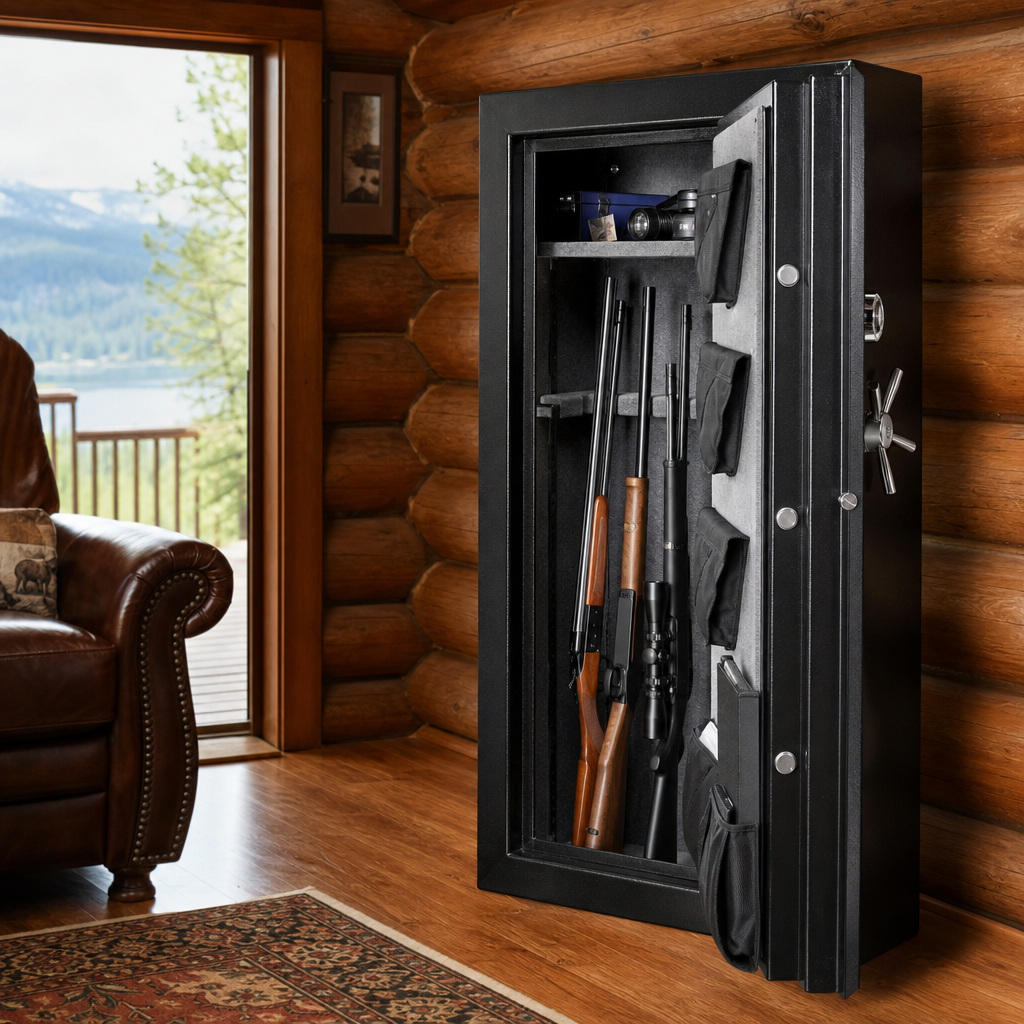
Choosing a gun safe for your vacation home or cabin starts with a different mindset than buying one for a primary residence. A second property is vacant more often, may sit farther from law enforcement, and usually faces wider temperature swings, power outages, and unpredictable foot traffic from cleaners, contractors, guests, or seasonal renters. In my experience helping property owners evaluate storage setups, those differences change everything: the right safe is not just about firearm capacity, but about burglary delay time, anchoring options, humidity control, access management, and how well the safe fits the owner’s habits. This matters because a poorly matched safe can fail in the exact conditions a cabin or lake house creates.
A gun safe, in practical terms, is a secure container designed to restrict unauthorized access, reduce theft risk, and often provide some level of fire resistance. For a vacation property, buyers should think in terms of personas rather than just features. A buyer persona is a profile that groups owners by their use case, risk tolerance, inventory, and operating constraints. The weekend hunter, family host, seasonal landlord, remote off-grid owner, and premium collector all need different solutions. The safest purchase is the one that aligns storage design with how the property is actually used. That is why this hub article focuses on gun safe buyer personas for vacation homes and cabins, so you can identify your profile quickly and make a decision grounded in real conditions rather than marketing labels.
Vacation properties create a layered security problem. Theft risk rises when criminals know a building is unoccupied for stretches. Moisture can trigger rust in blued steel and degrade optics, leather slings, and paper documents. Cabins with crawl spaces or pier foundations can complicate anchoring. Homes that rely on solar power, generators, or inconsistent broadband may not support app-dependent smart locks well. At the same time, owners still need practical access during hunting season, family visits, or emergencies. The best gun safe for a vacation home or cabin balances security, environmental protection, and usability in a package that matches one clearly defined buyer persona.
Start with the Risk Profile of the Property
Before comparing safe brands, map the property itself. The most important questions are straightforward: How long does the house sit empty, who has legitimate access, what firearms stay on site, and what is the nearest law enforcement response time? A cabin occupied two weekends a month is different from a lodge rented to guests all summer. I advise owners to list all key holders, service providers, and recurring visitors first, because access exposure usually drives safe requirements more than square footage does.
Construction details matter too. A concrete slab supports a heavier safe and stronger anchoring than a raised wood floor. If the cabin is in a humid forested area, you need dehumidification from day one. If the property is wildfire-prone, fire ratings deserve more scrutiny, but buyers should read those ratings carefully. There is no universal fire testing standard across the safe industry, so compare test duration, peak temperature, and whether the rating came from an independent lab such as Intertek/ETL or UL-related protocols for components. Marketing claims like “up to 90 minutes” mean little without context.
Burglary protection also needs a realistic lens. Many residential gun safes are technically Residential Security Containers under UL 1037 rather than true high-security safes. That does not make them useless; it means they are built to resist opportunistic attacks for a limited period, not determined assaults with power tools. In a remote vacation home, delay time is especially important because criminals may have more privacy. Heavier steel bodies, reinforced door edges, hard plates over the lock, internal hinges or protected external hinges, and robust anchoring matter more than glossy door panel organizers.
Gun Safe Buyer Personas for Vacation Homes and Cabins
The weekend hunter is the most common cabin safe buyer persona. This owner keeps a small number of long guns on site, visits during hunting season, and wants reliable access without constant maintenance. For this persona, a mid-size safe with practical shelving, a mechanical or proven electronic lock, and a dehumidifier rod usually beats a larger showcase model. A 12- to 24-gun safe is often sufficient, though stated capacities are notoriously optimistic because scoped rifles consume more space. The hunter benefits from a safe deep enough for long barrels, soft cases, ammunition segregation, and basic document storage.
The family host persona uses the property for holidays and multi-generational gatherings. Safety around children, teens, and inexperienced guests becomes the priority. Here, fast unauthorized-access prevention is non-negotiable. A safe with straightforward lock operation, interior lighting, and consistent lockout settings reduces user error. Owners in this group should avoid leaving defensive firearms unsecured in drawers or closets between visits. If they need a staged defensive firearm, a separate quick-access handgun safe bolted near the sleeping area can complement the main long-gun safe, but the main safe remains the central control point.
The seasonal landlord or short-term rental owner faces a different challenge: many unrelated people enter the home, and trust assumptions disappear. For this buyer persona, the safest practice is usually not storing firearms on site at all when guests occupy the property. If storage is necessary, the safe should be concealed, securely anchored, and inaccessible to cleaners, property managers, and renters. Access logs, temporary codes, and key control become essential. A network-connected lock sounds attractive, but if the cabin has inconsistent connectivity, a commercial-grade keypad with audited local management is usually more dependable.
The off-grid or remote owner prioritizes simplicity and resilience. In cabins powered by solar arrays, generators, or limited battery systems, I strongly favor robust mechanical dial locks or high-quality electronic locks with long battery life and easy field replacement. This persona should avoid systems that depend on cloud access for credential management. Moisture and temperature cycling are often worse in these properties, so insulation, airflow around the safe, rechargeable desiccants, and GoldenRod-style heaters deserve as much attention as the lock itself.
The premium collector or heirloom owner brings the highest value concentration. This persona stores engraved rifles, collectible revolvers, suppressors where lawful, optics, documents, jewelry, and perhaps cash. Standard big-box safes may be inadequate. A heavier safe with thicker body steel, composite door construction, advanced relockers, and stronger burglary ratings is justified. Insurance should be coordinated with the storage plan, because many homeowners policies impose sublimits on firearms and collectibles. A rider, scheduled personal property endorsement, or specialized insurer may be necessary.
| Buyer persona | Main risk | Best safe traits | Common mistake |
|---|---|---|---|
| Weekend hunter | Theft during vacancy | Mid-size, anchored, humidity control, practical interior | Buying by stated gun count alone |
| Family host | Unauthorized access by guests or children | Simple lock, interior light, separate handgun safe if needed | Leaving one firearm unsecured for convenience |
| Seasonal landlord | High access exposure | Concealed placement, strict code control, preferably no on-site storage during rentals | Assuming cleaners and renters pose low risk |
| Off-grid owner | Power and climate instability | Mechanical reliability, desiccants, heater, resilient installation | Choosing app-dependent locks |
| Premium collector | High-value concentrated loss | Heavier steel, stronger ratings, insurance coordination | Relying on basic homeowner coverage |
How to Match Safe Features to the Right Persona
Steel thickness is one of the clearest indicators of burglary resistance. Many entry-level gun safes use 14-gauge steel bodies, which may deter casual theft but yield faster to prying and cutting than 10-gauge or thicker bodies. Door construction matters even more because doors are the primary attack point. When I compare safes for second homes, I look for continuous welds, reinforced door jambs, quality boltwork, and lock protection such as hard plates and relockers. A flashy paint finish or elaborate interior does not compensate for thin steel.
Lock choice should reflect operating conditions, not trends. Mechanical dial locks remain slow but durable and independent of batteries. Electronic keypad locks offer speed and are often the best fit for owners who visit intermittently and do not want to remember dial sequences under stress. Biometric locks can be convenient for quick-access handgun boxes, yet fingerprint sensors are less compelling on a main long-gun safe in dusty, cold, or damp cabin environments. Whichever lock you choose, confirm serviceability, warranty support, and whether a local locksmith familiar with safe work can maintain it.
Fire protection deserves a balanced view. Fireboard-lined gun safes can reduce internal temperature rise, but door seals, body seams, and exposure conditions all affect results. In a remote cabin, the practical goal is not “fireproof,” which is inaccurate, but improved survivability for contents during a plausible structure fire. Owners storing paper records, passports, or digital media should consider a separate UL-classified document or media container inside the gun safe, because media can fail at lower temperatures than firearms.
Interior layout should match the collection and the persona. Hunters need room for scoped rifles, shotguns, ammunition bins where lawful, and cleaning gear. Family hosts need intuitive organization so no firearm is misplaced during a busy weekend. Collectors need barrel supports that prevent finish wear and shelves sized for pistols, optics, and archival boxes. Ignore manufacturer capacity numbers and count space by actual firearm dimensions. A safe advertised for 24 guns may realistically hold 10 to 14 scoped long guns with proper spacing.
Installation, Concealment, and Environmental Control
A great safe installed poorly is a weak system. Anchoring is mandatory in a vacation home or cabin because thieves often remove smaller safes entirely and open them later. The preferred method is bolting to concrete with manufacturer-approved anchors. On wood floors, reinforcement may be needed beneath the subfloor, especially for safes exceeding several hundred pounds. Always verify load paths before delivery. I have seen owners place heavy safes in loft spaces or on aging cabin floors without engineering review, which creates structural risk before security risk.
Placement affects both security and corrosion control. A safe should sit out of obvious sight lines, away from front windows, and ideally in a closet, utility room, or discreet corner where pry-bar clearance is limited. Avoid garages or outbuildings unless they are insulated, secured, and monitored, because those spaces face wider humidity swings and easier attack conditions. In flood-prone areas, raise the safe slightly above floor level using a stable base designed for the safe’s weight, but do not compromise anchoring integrity.
Humidity management is critical in cabins. Relative humidity above roughly 50 percent can accelerate corrosion, especially when temperature swings create condensation. The proven setup is simple: maintain the building envelope as consistently as possible, install a low-watt dehumidifier rod if power is stable, add rechargeable silica desiccants as backup, and use a hygrometer inside or near the safe. Wipe firearms with a corrosion-inhibiting protectant before long vacancy periods. Stainless guns resist rust better than blued guns, but optics mounts, screws, and bores still need attention.
Concealment should never replace physical security, but it adds meaningful friction. Curtains over a closet, built-in cabinetry, or a false storage wall can reduce discovery by casual visitors and service personnel. Document the safe’s serial number, photograph contents, and store records off-site or in encrypted cloud storage. If a theft occurs, those records are essential for police reports, ATF tracing where applicable, and insurance claims.
Buying Mistakes, Compliance, and the Best Next Step
The most common mistake is buying a safe that fits today’s gun count and nothing else. Owners forget optics, suppressors, documents, handguns, and future purchases. The second mistake is overspending on cosmetic upgrades while ignoring anchoring, steel thickness, or humidity control. The third is misunderstanding legal obligations. Firearm storage laws vary by state and sometimes by local jurisdiction, particularly when minors may access a property. If your cabin crosses state lines from your primary home, transport and storage rules may differ, and NFA-regulated items require extra diligence.
Another mistake is treating the safe as a complete security plan. For a vacation home, the safe works best with layered protection: monitored intrusion alarms where feasible, solid-core doors, quality deadbolts, exterior lighting, cameras with local recording, and discreet routines that do not advertise firearms ownership. Delivery also deserves planning. Professional installers can move and anchor a safe without damaging stairs, floors, or walls, and they reduce the chance that neighbors or contractors learn exactly what arrived.
The right choice comes from matching your buyer persona to the property’s real conditions. If you are a weekend hunter, prioritize practical capacity, steel strength, and moisture control. If you host family, optimize for unauthorized-access prevention and simple operation. If you rent the property, strongly consider removing firearms during guest stays. If you run off-grid, choose reliability over novelty. If you protect a high-value collection, step up to heavier construction and align insurance with the risk. Start by auditing who enters the property, how long it stays vacant, and what you truly need to secure. Then buy the safe that fits that reality, not the brochure.
Frequently Asked Questions
What makes choosing a gun safe for a vacation home or cabin different from choosing one for a primary residence?
A gun safe for a second property has to solve a different set of problems than one used in your main home. In a primary residence, the property is occupied more often, you are likely checking on the safe regularly, and changes in temperature or humidity are usually easier to manage. At a vacation home or cabin, the building may sit empty for long stretches, which gives thieves more time and privacy to work. It may also be farther from neighbors and law enforcement, which means delayed response times if something goes wrong. On top of that, cabins and seasonal homes often deal with higher humidity, winter cold, summer heat, inconsistent climate control, and occasional power outages.
Those conditions change how you should evaluate a safe. Capacity still matters, but it should not be the first priority. Construction quality, burglary resistance, anchoring options, lock reliability, and environmental protection become much more important. You also need to think more carefully about who has access to the property. Cleaners, maintenance crews, contractors, property managers, family members, or short-term guests may all come and go over the course of a year. That means the safe should support tighter control over access and should not be easy to locate, move, or tamper with. In practical terms, the best safe for a cabin is usually one that balances real theft resistance, sensible concealment, dependable locking hardware, and moisture control rather than simply offering the largest interior for the lowest price.
What size and type of gun safe works best for a vacation property?
The best size depends on what you truly need to store on-site, not what might fit in the largest model you can afford. For most vacation homes and cabins, I usually recommend thinking in terms of minimum necessary storage rather than maximum collection capacity. If the property is not occupied full time, keeping only the firearms you realistically use there can reduce both risk and cost. A well-built smaller or mid-size safe is often a smarter choice than a large entry-level safe with thin steel and basic locking components. In many second-home situations, quality matters more than raw interior volume.
As for type, a true gun safe or high-quality residential security container designed for firearm storage is generally the right direction, but the exact format depends on the property layout. If you store long guns for hunting or sport shooting, a vertical safe with an organized interior makes sense. If you only keep a limited number of firearms at the cabin, a compact safe installed in a closet, utility room, or built-in space may offer better concealment and be easier to anchor securely. If quick access is part of your plan, such as for a defensive handgun kept at the property while you are present, that should usually be a separate issue from long-term unattended storage. In that case, use a dedicated quick-access safe for temporary use while you are there, and rely on the larger anchored safe for secure storage when the property is vacant.
One common mistake is overbuying based on the advertised gun count. Safe manufacturers often overstate capacity, especially if rifles have optics, slings, bipods, or wider stocks. It is wise to assume the actual usable capacity will be lower than the label suggests. Another mistake is choosing a giant safe that cannot be placed discreetly or anchored properly. At a vacation home, a safe that fits the space well, can be hidden from casual view, and is securely installed is usually more effective than a larger model placed in an obvious location.
Which security features matter most when a cabin or vacation home sits vacant for long periods?
When a property is unattended for days, weeks, or even months at a time, the safe needs to resist more than just casual access. It should be able to slow down determined theft attempts long enough to make removal or forced entry difficult and noisy. The first thing to look at is steel thickness and overall build quality. Thicker steel in the body and door generally offers better resistance than a lightweight unit with an impressive paint job and lots of shelves. Pay attention to door fit, weld quality, internal reinforcements, hard plates protecting the lock area, relockers, and strong boltwork. These are the details that separate a serious safe from one that mainly looks secure.
Anchoring is just as important as the safe itself. Even a decent safe can fail its purpose if two people can tip it onto a dolly and remove it. A vacation-property safe should be bolted into concrete or a structurally sound floor system using the manufacturer’s approved anchoring method. Placement matters too. The best location is usually one that reduces visibility and limits working room for tools. A safe tucked into a closet, utility space, or built-in alcove can be much harder to attack than one displayed in a garage corner or open loft area.
Lock choice also deserves attention. Mechanical dial locks are often valued for long-term reliability because they do not depend on batteries or electronics, which can be appealing in remote properties with power issues. Electronic locks offer faster access and easier code changes, but they should come from reputable manufacturers and be maintained properly. For a second home, reliability is everything. A lockout is not just inconvenient when the property is several hours away. Finally, think beyond the safe itself. Layered security like monitored alarms, cameras, exterior lighting, reinforced doors, and discreet safe placement all increase the odds that the safe remains untouched or that an intrusion is documented quickly.
How do humidity, temperature swings, and power outages affect gun safe selection for a cabin?
Environmental conditions are a major issue in vacation homes and cabins, especially in wooded, coastal, mountain, or lake areas where moisture levels and seasonal temperatures can change dramatically. Firearms stored in a poorly protected safe at an unoccupied property are more vulnerable to rust, corrosion, swelling of wood stocks, and deterioration of optics, slings, paperwork, or ammunition packaging. That means environmental management should be part of the safe decision from the beginning, not an afterthought.
Start by choosing a safe with a good door seal and a design that helps buffer the interior from outside air changes. Fire-rated models often have better sealing characteristics, though fire rating should not be your only selection criterion. Next, consider how you will manage moisture inside the safe. In a climate-controlled second home, a dehumidifier rod or similar powered device may work well, but you need to account for outages and periods when the HVAC system is off. In less predictable conditions, many owners use a combination of passive desiccants and active dehumidification when power is available. Desiccants need regular replacement or recharging, so only rely on them if you have a realistic maintenance routine.
Placement also affects moisture exposure. Avoid damp basements, uninsulated outbuildings, and areas directly against exterior walls if possible. A safe installed in conditioned interior space generally gives better long-term protection than one kept in a detached shed or garage. If the property goes unheated in winter or lacks air conditioning in summer, inspect firearms and the safe interior on a regular schedule and use protective treatments appropriate for your firearms. At a second property, environmental neglect can do damage slowly and silently, so the right safe should support moisture control, but your storage plan should also include routine inspection and maintenance.
Should you keep firearms in a vacation home year-round, and what are the best practices if you do?
Whether you should keep firearms at a vacation property year-round depends on how often the property is occupied, how secure the site is, who has access, local laws, and your comfort with the risk. In many cases, the safest choice is to avoid leaving more firearms on-site than necessary. If the property is vacant for long periods or used by guests, contractors, or renters, permanent storage deserves extra scrutiny. A second home is simply a different risk environment. Even a good safe does not remove every concern if the property itself has inconsistent oversight.
If you do keep firearms there year-round, the best approach is to limit the number to what serves a clear purpose, store them in a properly anchored safe, and tightly control who knows the safe exists and where it is located. Review access protocols carefully. That means deciding whether anyone besides you should have the combination or code, how codes are changed if access needs change, and whether a property manager or family member should have emergency access at all. If the home is ever used as a rental, extra caution is warranted. In many situations, it is better not to leave firearms on-site during rental periods unless storage is fully isolated, legally compliant, and inaccessible to guests.
It is also wise to integrate the safe into a broader property security plan. Alarm monitoring, door and window sensors, cameras, and regular property checks can significantly improve overall protection. Keep an up-to-date inventory with serial numbers, photographs, and relevant documentation stored securely off-site. Confirm your insurance coverage as well, since standard homeowners or secondary-property policies may have limitations on firearms, theft, or vacant-property losses. The bottom line is that storing firearms year-round at a vacation home can be done responsibly, but it requires a deliberate plan. The safe is the foundation, not the entire strategy.