
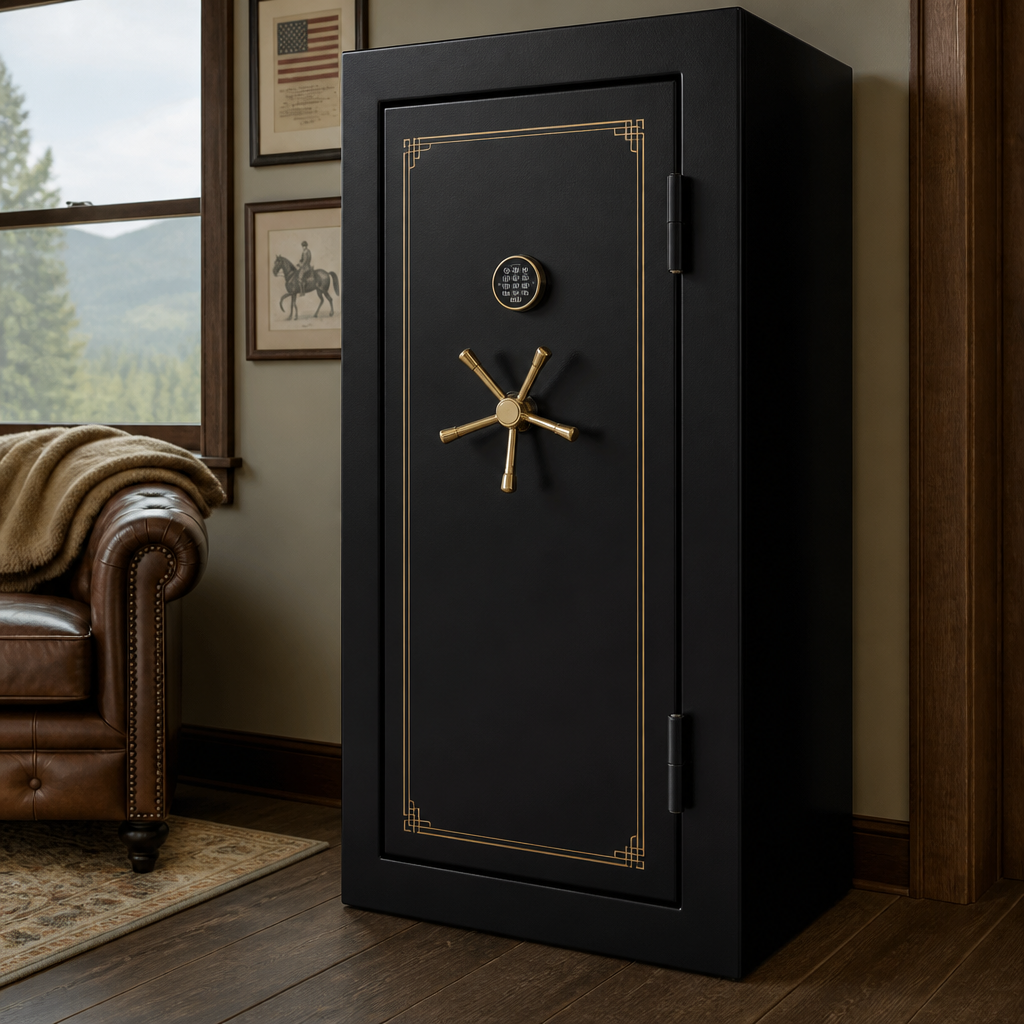
The Liberty Safe Colonial 50 stands out because it combines the familiar appeal of a traditional gun safe with the security features buyers now expect from a serious long-gun storage solution. In the gun safes and safety category, product reviews matter most when they move beyond brochure language and explain how a safe performs in daily use, where design choices, locking systems, interior layout, fire protection, and installation realities all affect long-term value. The Colonial 50 sits in a competitive segment: large-capacity safes aimed at owners with growing collections who want organized storage, reliable theft resistance, and a finish that still looks appropriate in a home, hunting property, or dedicated gun room. That mix of capacity and modern protection is why this model frequently becomes a shortlist candidate for families, collectors, and shooters upgrading from entry-level cabinets or smaller safes.
Before reviewing the Colonial 50 in detail, it helps to define the key terms that shape any gun safe buying decision. Capacity refers to the manufacturer’s advertised firearm count, but experienced buyers know those numbers assume slim, traditionally stocked rifles stored tightly together. Security depends on steel thickness, door construction, locking bolt design, relocker systems, and the safe’s ability to resist pry attacks long enough to deter smash-and-grab theft. Fire protection is measured by a rated duration and temperature threshold, but the practical question is how the safe is sealed and insulated, and whether documents, optics, and wood stocks will likely survive a real residential fire. Usability covers shelving flexibility, door storage, interior lighting, dehumidification options, and how easy the safe is to open, access, and maintain over years of ownership.
I have evaluated many full-size gun safes in homes, retail showrooms, and installation settings, and the same pattern repeats: buyers regret underestimating future storage needs more often than they regret buying slightly more safe than they thought they needed. That is part of the Colonial 50’s appeal. It offers substantial volume without immediately pushing into the heaviest, most specialized premium vault category. It also represents a useful hub example for product reviews in the broader gun safe market because it illustrates the tradeoffs shoppers actually face: mechanical versus electronic locks, stated gun capacity versus realistic spacing, fire rating versus budget, and polished interior features versus raw burglary resistance. Understanding this model helps readers compare adjacent Liberty lines and competing brands such as Browning, Winchester, Rhino Metals, or Cannon with much greater clarity.
For this product review hub, the Colonial 50 is best approached not as an isolated SKU but as a benchmark for what a modern classic gun safe should deliver. A review that only repeats dimensions and marketing claims misses the point. Buyers want to know whether the safe feels substantial, how intelligently the interior is configured, what kind of owner it suits, and where it sits in the hierarchy between entry-level value safes and heavy-duty premium units. The sections below cover those questions directly, using plain language and real purchasing criteria so readers can use this page as a starting point for the wider product review articles connected to the gun safes and safety topic.
What the Liberty Safe Colonial 50 Is Designed to Do
The Colonial 50 is a large-format gun safe built for owners who need broad storage capacity while still expecting a finished, consumer-friendly product rather than a bare steel vault. In Liberty’s lineup, the Colonial series generally functions as a step above basic storage offerings, delivering upgraded fire protection, respectable anti-theft construction, and more refined interiors. The 50 designation signals one of the larger capacity options in the series, making it suitable for mixed collections that include long guns, scoped rifles, shotguns, handguns, ammunition, documents, and valuables. For many households, this is the size category where a safe stops being a simple gun box and becomes the central storage platform for firearms safety and household asset protection.
In practical use, the safe is intended to solve three problems at once. First, it secures firearms from unauthorized access, especially by children, visitors, or thieves looking for quickly resold valuables. Second, it consolidates storage, replacing the fragmented approach of keeping rifles in one cabinet, handguns in another box, and paperwork in a closet. Third, it preserves condition by allowing more controlled organization with accessories such as dehumidifiers, lighting, and pistol racks. Those are not cosmetic benefits. A crowded safe increases the chance of stock dings, optic contact, forgotten paperwork, and poor muzzle discipline during retrieval. A larger model with a configurable interior reduces those issues immediately.
The Colonial 50 also reflects an important shift in safe buying behavior. A decade ago, many buyers focused almost entirely on the advertised gun count and sale price. Today, informed shoppers ask sharper questions: How many active locking bolts are there? Is the door panel useful or gimmicky? What is the steel gauge? Is there a drill-resistant hard plate? Can the safe be anchored effectively on concrete or wood framing? This model draws attention because it answers enough of those questions well to satisfy mainstream buyers, while still leaving room to compare it critically against heavier, more specialized safes.
Security Construction and Locking Features
The most important question in any gun safe product review is simple: how hard is it to break into quickly? The Colonial 50 is not marketed as a commercial TL-rated vault, and buyers should not confuse residential gun safes with true high-security jewelry or cash safes. Still, within the residential gun safe class, construction details matter enormously. Liberty has built its reputation on reinforced doors, multiple locking bars or bolts, hardened steel plates in lock areas, and relocking mechanisms intended to activate if the lock is attacked. Those features are valuable because most residential theft attempts are crude and fast. Thieves pry at door corners, strike lock areas, or attempt to tip and force the cabinet. A well-built safe delays entry and raises the effort required beyond what many burglars can manage on site.
Buyers should pay close attention to body steel, door edge design, and boltwork coverage. Thicker steel generally improves resistance to cutting and prying, but design is equally important. A door with good reinforcement and a solid fit in the frame can outperform a poorly designed heavier shell. Liberty’s stronger residential models often rely on military-style locking bars rather than simple round bolts alone, and that matters because broader engagement across the door edge can help resist pry attacks. In my experience, door construction is where quality differences become obvious: budget safes feel hollow and flexible, while better safes close with a heavier, more precise engagement that inspires confidence immediately.
Lock selection is another modern security feature worth reviewing carefully. The Colonial 50 is typically available with either a mechanical dial lock or an electronic lock, depending on configuration. Mechanical locks remain popular with owners who value simplicity, long service life, and no dependency on batteries. Electronic locks win on speed and convenience, especially for owners who open the safe frequently or want faster access under stress. Neither option is universally superior. I generally recommend electronic locks for users who access their firearms regularly and mechanical locks for owners prioritizing minimal maintenance and proven durability. What matters most is choosing a recognized lock platform, changing default codes promptly, and testing the lock routinely so there are no surprises when access matters.
| Feature | Why It Matters | What to Check on the Colonial 50 |
|---|---|---|
| Steel construction | Improves resistance to prying and cutting | Compare body and door build to similarly priced competitors |
| Boltwork or locking bars | Helps secure the door against edge attacks | Look for broad door engagement, not just bolt count marketing |
| Relocker and hard plate | Protects the lock area if attacked | Confirm lock-defense features in the model’s specifications |
| Mechanical vs electronic lock | Affects speed, maintenance, and user preference | Choose based on access habits, not trend alone |
| Anchor capability | Prevents thieves from tipping or removing the safe | Plan bolt-down installation before delivery day |
No review is complete without mentioning limitations. A large safe that is not anchored can still be attacked more easily than many buyers assume. Weight helps, but bolt-down installation is essential. If the Colonial 50 is placed in a garage, basement, or first-floor room on concrete, anchoring is straightforward and should be treated as nonnegotiable. If it is installed over wood framing, the installer should verify joist support and use appropriate hardware. The safe’s security features are meaningful only when paired with placement, concealment, and correct installation.
Fire Protection, Interior Layout, and Daily Usability
Fire protection is often the second major reason buyers move up to a safe like the Colonial 50. Liberty typically publishes a time-and-temperature fire rating for models in this class, and while no consumer fire rating is a guarantee of contents survival in every scenario, the rating still gives buyers a comparative baseline. Better fire protection usually comes from multiple layers of fireboard, expanding door seals that limit smoke and heat transfer, and more robust overall construction. For homeowners storing legal papers, passports, suppressor paperwork, family records, and photographs alongside firearms, that extra insulation matters. It is also relevant for optics, electronics, and wood stocks, which can all be damaged by heat and humidity before steel components visibly fail.
The interior is where the Colonial 50 earns much of its real-world appeal. Large-capacity safes succeed or fail based on layout efficiency, not brochure capacity alone. A flexible shelving system lets owners dedicate zones for long guns, adjustable shelves, handguns, documents, and jewelry or cash boxes. Door panel storage is especially useful because it turns otherwise wasted space into organized storage for pistols, magazines, passports, and small accessories. In actual use, that reduces clutter on shelves and helps owners keep frequently used items visible. If a safe owner can see what is stored, he is more likely to maintain organization, inspect equipment, and retrieve items safely without shifting half the collection.
Usability also includes details many first-time buyers overlook. Interior lighting is not a luxury when the safe is deep and heavily loaded. A power outlet kit or routed access for dehumidifiers can materially improve long-term storage conditions, especially in humid climates. A reinforced door organizer may add convenience, but too much door storage can interfere with scoped rifles if the interior width is already tight, so buyers should think in three dimensions. Another daily-use factor is handle feel and door swing. A large, loaded safe door should move smoothly and seal decisively without requiring awkward force. That may sound minor on paper, but after years of ownership it becomes one of the clearest differences between a pleasant safe to live with and one that feels cumbersome every time it is opened.
Who Should Buy It and How It Compares
The Liberty Safe Colonial 50 is best for firearm owners who have outgrown starter storage and want one safe that can serve for many years without immediate replacement. That includes avid hunters with multiple seasonal setups, sport shooters with scoped rifles and range gear, collectors mixing old and new firearms, and families seeking a single controlled-access location for guns and vital documents. It is also a sensible fit for buyers who care about appearance and interior finish, not just raw steel. In many homes, the safe will sit in a visible office, den, or climate-controlled outbuilding, and presentation matters alongside protection.
Compared with entry-level gun cabinets or thinner big-box safes, the Colonial 50 offers stronger construction, better fire protection, and more thoughtful organization. Compared with premium heavy-gauge or high-security models, it may not deliver the same steel mass, composite barriers, or specialized certifications, but that does not make it a weak option. It places itself in the practical middle ground where many residential buyers should be shopping. The key is honest expectation setting. If someone wants a serious residential gun safe with modern features and substantial capacity, the Colonial 50 is compelling. If someone needs elite burglary resistance against determined tool attacks, a heavier premium class safe may be the better answer.
For a product review hub under gun safes and safety, that comparison mindset is the main lesson. Good reviews do not ask whether one safe is perfect; they ask which buyer profile it fits best. The Colonial 50’s strongest selling points are capacity, balanced protection, and livable everyday design. Its main caution points are the usual ones for large residential safes: realistic firearm count is lower than the name suggests, final security depends heavily on anchoring and placement, and buyers should compare lock options, interior configurations, and dealer setup support before purchase.
The Liberty Safe Colonial 50 remains a classic safe because it respects the core purpose of firearm storage while incorporating the security and convenience features modern owners actually need. It offers the size many collections eventually require, the organizational flexibility that makes daily access safer and easier, and the theft and fire protection expected from a reputable full-size gun safe in its class. More importantly, it demonstrates how to evaluate gun safes intelligently: look past headline capacity, study construction, understand lock choices, verify fire protection, and plan installation as carefully as the purchase itself.
As a hub article for product reviews in the gun safes and safety category, this model provides a useful benchmark. It shows why broad, feature-rich safes remain popular and why nuanced comparison is essential before buying. If you are researching your next safe, use the Colonial 50 as a reference point, then compare adjacent models by steel strength, interior layout, fire rating, lock type, warranty support, and installation requirements. That process will lead you to a safer, smarter purchase and a storage solution that truly protects your firearms, your documents, and your peace of mind. Continue exploring related reviews to narrow the right fit for your space, budget, and security goals.
Frequently Asked Questions
What makes the Liberty Safe Colonial 50 different from other traditional gun safes?
The Liberty Safe Colonial 50 stands out because it delivers the classic look and straightforward purpose many buyers want in a traditional gun safe, while also incorporating modern security features that matter in real-world use. Instead of relying on appearance alone, it is designed to function as a serious long-gun storage solution with upgraded locking technology, solid steel construction, organized interior capacity, and fire protection that goes beyond basic entry-level expectations. For many buyers, that balance is the main appeal: it feels familiar, but it performs more like a safe built for current security demands.
Another important difference is how the Colonial 50 fits into the buying decision over time. A lot of safes can look impressive in a showroom or on a product page, but long-term value comes from how they handle daily access, firearm organization, expanding storage needs, and installation in an actual home. The Colonial 50 is often considered attractive because it offers meaningful capacity without immediately pushing buyers into the highest price tiers. That makes it especially relevant for owners who want a dependable, full-size safe that can grow with a collection while still preserving the traditional safe format many people trust and recognize.
How secure is the Liberty Safe Colonial 50 for protecting firearms and valuables?
In practical terms, the Liberty Safe Colonial 50 is built to provide a strong level of residential security for firearms, ammunition, documents, and other valuables, especially when compared with lighter-duty cabinets or low-end safes that focus more on marketing than actual protection. Security starts with the body construction, reinforced door design, internal locking components, and the way the safe resists common tampering attempts such as prying or basic forced entry. Buyers looking at this model are usually not just asking whether it locks; they want to know whether it offers a level of delay and resistance that makes unauthorized access significantly harder, and that is where a well-built safe earns its value.
The locking system is also a major part of the equation. Modern buyers expect more than a simple handle-and-dial setup, and the Colonial 50 appeals to that expectation by bringing current locking options into a classic platform. Depending on configuration, buyers may choose mechanical or electronic lock formats, each with its own advantages. A mechanical lock offers proven durability and a traditional feel, while an electronic lock can offer faster access and easier day-to-day operation. What matters most is that the safe is not just designed to store firearms neatly; it is designed to restrict access in a meaningful way. Like any residential safe, however, its security performance improves dramatically when it is professionally installed, properly anchored, and placed in a location that limits leverage and visibility.
Is the Liberty Safe Colonial 50 a good choice for large gun collections and mixed storage needs?
Yes, the Liberty Safe Colonial 50 is generally well suited for buyers who need room for a larger long-gun collection while also wanting flexible storage for handguns, optics, important documents, and accessory gear. One of the most important things to understand about any safe with a large stated gun count is that manufacturer capacity estimates are usually based on idealized conditions. Real owners often store rifles with scopes, slings, bipods, wider stocks, and other accessories that take up more room than a bare long gun. In that everyday context, the Colonial 50’s larger format is valuable because it gives users more realistic space to organize firearms without immediately running into overcrowding.
Its interior layout matters just as much as its raw size. A safe in this class is most useful when shelves, door storage, and long-gun sections support different storage priorities rather than forcing everything into one crowded compartment. That flexibility helps owners separate firearms by type, keep handguns and documents accessible, and make better use of available space as needs change. For someone starting with a moderate collection but expecting it to grow, choosing a safe like the Colonial 50 often makes more sense than buying a smaller unit and outgrowing it quickly. In that respect, the safe’s value is tied not only to capacity today, but also to how well it adapts to the way collections actually expand over the years.
How important are fire protection and daily usability in a safe like the Colonial 50?
They are extremely important, and in many cases they are what separate a safe that looks good on paper from one that remains satisfying to own over the long term. Fire protection matters because many buyers are not storing only firearms. They are also protecting paperwork, cash, heirlooms, digital media, and other irreplaceable items that can be destroyed by heat and smoke long before the structure of a safe fails. A safe like the Liberty Safe Colonial 50 becomes more valuable when its fire protection is considered part of a broader preparedness plan rather than just a line in the specifications. Buyers should still understand what fire ratings actually mean, how those ratings are tested, and how home fire conditions can vary, but a meaningful fire-protection package is a serious advantage in this category.
Daily usability is just as critical because a safe that is frustrating to access or awkward to organize often leads to poor storage habits. The Colonial 50’s appeal comes from pairing security with a user experience that feels practical in normal life. Door swing, interior visibility, shelf placement, lock responsiveness, and how easily long guns can be removed and returned all affect whether the safe works well every day. This is especially true for owners who use multiple firearms regularly or need to access important documents without emptying half the safe. The best safes are not simply hard to break into; they are also easy to live with, and that combination is a major reason a model like the Colonial 50 receives attention from buyers who want both performance and convenience.
What should buyers consider before installing the Liberty Safe Colonial 50 at home?
Before installation, buyers should think carefully about placement, floor support, room access, anchoring, humidity control, and how the safe will actually be used in the home. A large safe such as the Colonial 50 is not something most owners should treat as a casual piece of furniture. Its weight and size affect where it can safely sit, how it will be moved into position, and whether hallways, stairways, and door openings create delivery challenges. Ground-floor placement is often preferred, but what matters most is choosing a location with adequate structural support and enough clearance for the door to open fully and for the interior to be used comfortably.
Anchoring is one of the most important installation steps because even a well-built safe becomes more vulnerable if it can be tipped, shifted, or removed. Properly bolting the safe down adds a major layer of real-world protection. Buyers should also consider environmental factors, especially in garages, basements, or regions with high humidity. Moisture can affect firearms, paperwork, and other contents, so dehumidification and climate awareness are part of responsible ownership. Finally, installation should reflect actual use habits. A safe hidden away but impossible to access conveniently may reduce security discipline over time, while a well-placed, anchored, and properly organized Colonial 50 is far more likely to deliver the long-term value buyers expect from a serious firearm storage investment.