
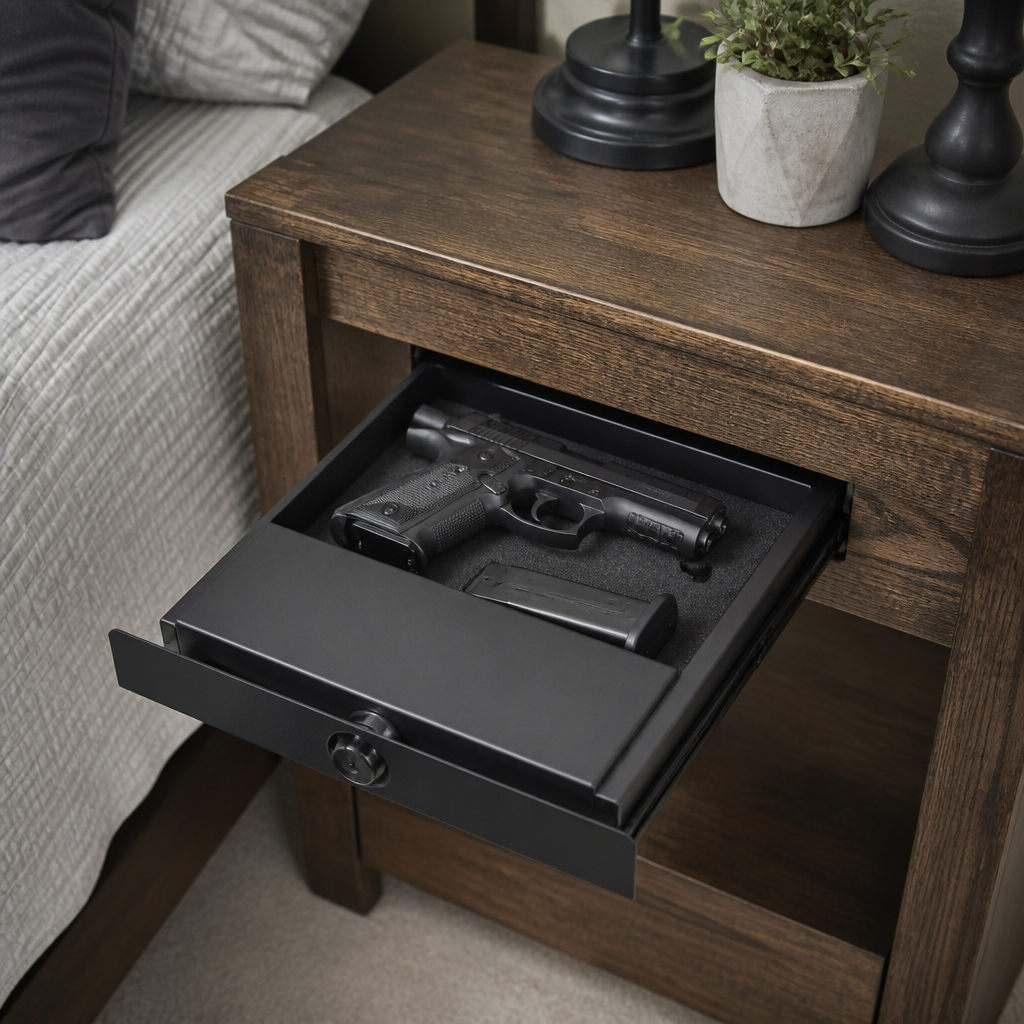
The SnapSafe Glide Vault is a pull-out handgun safe designed for quick access, discreet storage, and flexible mounting in places where a traditional bedside safe will not fit. Within the broader Gun Safes & Safety category, it also serves as a useful entry point into product reviews because it highlights the main questions buyers ask about modern pistol storage: how secure it is, how fast it opens, where it can be installed, and which users benefit most from its design. In practical terms, a pull-out safe is a compact lockbox mounted inside furniture, under a desk, or beside a bed, then accessed by sliding a tray outward rather than lifting a lid. That mechanical difference matters because storage geometry affects both speed and concealment.
I have reviewed many handgun safes that look good on a shelf but become awkward once installed in a real home, truck, office, or apartment. The Glide Vault stands out because it is built around actual use constraints: narrow mounting areas, the need to keep a pistol hidden from casual view, and the importance of opening the safe under stress with one hand. SnapSafe, a Hornady company, positions it as a space-saving rapid-access solution, and that positioning is accurate. This article examines the safe as a product review hub, covering construction, lock options, mounting, security tradeoffs, best use cases, and how it compares with other handgun safe formats so readers can decide whether it fits their storage plan.
What the SnapSafe Glide Vault Is and How It Works
The Glide Vault is a steel pistol safe built around a sliding tray system. Instead of a top-opening door, the internal drawer glides outward on rails after the lock is opened, presenting the handgun in a horizontal orientation. That design supports installations under counters, inside nightstands, in closets, or against a bedframe where overhead clearance is limited. Most buyers look at the safe for bedside defense, office storage, or discreet placement in a vehicle or RV, though any mobile installation should comply with local law and manufacturer guidance.
There are multiple versions of the Glide Vault, most notably keypad and biometric models. The keypad version uses a programmable electronic lock with a key backup, while the biometric version adds fingerprint access for faster entry when the scanner works with a well-enrolled print. In day-to-day use, the drawer releases and slides outward smoothly enough to allow quick retrieval. That sounds simple, but it solves a common problem with clamshell handgun safes: when mounted in a tight spot, the lid can strike furniture or force the user into an awkward wrist angle. The Glide Vault avoids that issue by moving forward, not upward.
From a review standpoint, the safe should be understood as a rapid-access retention device, not a full burglary safe. It is designed to keep a defensive pistol secured from children, visitors, or opportunistic theft while remaining accessible to the authorized owner. That distinction is important. No compact handgun safe with light-gauge steel and convenience-focused dimensions should be mistaken for a high-security vault rated against prolonged attack. Buyers who understand that usually judge the Glide Vault fairly and appreciate what it does well.
Construction Quality, Materials, and Real Security Expectations
The body is made from steel with a durable finish intended to resist wear from installation and repeated handling. In my experience, the fit and finish are consistent with quality compact handgun safes in the mid-market category. The tray slides on rails that feel more controlled than the flimsy drawer action found on some budget import lockboxes. That matters because access reliability is part of security; a safe that binds, rattles, or half-opens when you need it is functionally less secure, even if the lock itself is sound.
Security expectations need calibration. Compact pistol safes generally rely on a combination of locked steel enclosure, concealed placement, and anchored installation. The Glide Vault benefits significantly from proper mounting because the form factor makes it easy to hide, but that same compact size means an unsecured unit could potentially be carried off by a thief. Bolting the safe to solid material is not optional if theft resistance matters. SnapSafe provides mounting hardware, and buyers should use the strongest available substrate, such as hardwood framing or heavy furniture components, rather than thin particle board alone.
Like most quick-access handgun safes, this model is aimed at smash-and-grab resistance, child access prevention, and secure staging of a firearm in a controlled environment. It is not a substitute for a large UL-listed burglary safe if the goal is long-term storage of multiple firearms, jewelry, or documents. The practical review takeaway is straightforward: the Glide Vault performs best when buyers match it to the correct threat model. Used that way, it is a sensible product. Used as a stand-alone answer to dedicated theft, it is not.
Lock Options, Access Speed, and Reliability in Daily Use
Lock choice is one of the most important buying decisions in any handgun safe review. The Glide Vault’s electronic keypad model gives predictable access with a code and avoids the inconsistencies that can frustrate some biometric systems. For many users, especially those staging a firearm at home, a keypad remains the best balance of speed, simplicity, and reliability. Pressing a memorized code in the dark becomes automatic with practice. It also works regardless of dry skin, minor cuts, or scanner contamination.
The biometric version appeals to buyers who want the shortest path from lock to firearm. In ideal conditions, fingerprint access is fast and intuitive. However, every biometric handgun safe lives or dies by enrollment quality, sensor cleanliness, and the user’s willingness to test multiple fingers repeatedly. I generally advise enrolling at least two fingers from each hand and verifying performance from realistic angles, not just straight-on demonstrations at a kitchen table. If a scanner works for you after repeated testing, it can be excellent. If it does not, convenience disappears quickly.
Battery-powered electronic locks also require maintenance discipline. Replace batteries on a schedule instead of waiting for failure warnings, test the backup key, and verify the drawer opens smoothly after installation. These are basic habits, but they separate satisfied owners from frustrated reviewers. When readers ask whether the Glide Vault is “fast,” the direct answer is yes: it is fast enough for defensive staging when mounted correctly and practiced with regularly. Access speed comes from the combination of lock familiarity, consistent drawer travel, and intelligent placement near where the firearm may actually be needed.
Installation, Concealment, and Best Placement Strategies
Installation is where the Glide Vault earns its reputation. The pull-out format makes it unusually adaptable in spaces that defeat conventional pistol boxes. Under a desk, for example, the safe can mount high enough to stay out of sight yet low enough for a seated user to reach naturally. In a nightstand, the drawer can face the bed, reducing hand movement compared with opening a top lid and then fishing around inside. Inside a closet or cabinet, it can remain visually hidden even if the furniture door is opened casually.
Placement should begin with three questions: Can the unit be anchored securely? Can the user access it from the likely position of need? Will the path of travel remain unobstructed at all times? I have seen otherwise good safes installed behind hanging fabric, against chair arms, or in drawers overloaded with cables, all of which compromise access. A pull-out tray requires a clear forward path. Measure the mounting area carefully, including drawer extension room and hand clearance. If the safe will be used in darkness, test the motion at night before considering the installation finished.
Concealment is one of this model’s biggest strengths. Because it stores flush to a surface, it avoids the obvious “box in a drawer” look associated with many portable handgun safes. That can reduce curiosity from children and visitors. Still, hidden is not the same as secure. Concealment should complement anchoring, not replace it. Owners should also consider legal and household realities. In homes with minors, a chambered defensive pistol in a rapid-access safe may be appropriate only when the lock system is tested, the mounting is solid, and every adult user understands the access procedure.
| Feature | SnapSafe Glide Vault | Typical Top-Opening Pistol Safe | Portable Cable Lock Box |
|---|---|---|---|
| Primary access motion | Tray slides outward | Lid opens upward | Lid opens upward |
| Best use case | Hidden fixed installation | Bedside or shelf placement | Travel and temporary vehicle storage |
| Space efficiency | Excellent in tight vertical spaces | Needs overhead clearance | Compact but less optimized for fixed access |
| Concealment potential | High | Moderate | Low to moderate |
| Theft resistance when unbolted | Limited | Limited | Low |
| Access ergonomics | Strong for side or underside mounting | Strong on open flat surfaces | Usually slower and less ergonomic |
How the Glide Vault Compares With Other Product Review Categories
As a hub within product reviews, the Glide Vault helps define the major handgun safe segments. First are fixed rapid-access safes, including bedside keypad boxes and vertical pistol safes. These prioritize speed and routine home use. Second are discreet furniture-integrated designs like the Glide Vault, which trade some portability for concealment and better use of small spaces. Third are travel-focused lock boxes designed to meet transportation needs, often with cable attachments. Fourth are larger multi-handgun or long-gun safes intended for broader storage rather than immediate access.
Compared with a standard bedside safe from brands like Vaultek, Hornady, Fort Knox, or StopBox-style alternatives, the Glide Vault’s main advantage is mounting flexibility. Its main limitation is capacity. It is not the product for users who want to store multiple pistols, spare magazines, passports, and jewelry in one box. Compared with vehicle lockboxes, its advantage is superior fixed access ergonomics, while its limitation is that it is less purpose-built for frequent removal or travel. Compared with premium heavy-bodied handgun safes, it may offer less brute-force resistance but often fits spaces those larger units cannot.
That makes this model important in a review hub because it teaches readers to evaluate safes by use case rather than price alone. A $300 safe that fits the environment and can be accessed consistently may be better than a heavier $500 safe awkwardly placed across the room. Product reviews should always ask what problem a safe solves. In the Glide Vault’s case, the answer is clear: it solves the hidden-access problem for a single defensive handgun better than many generic alternatives.
Who Should Buy It, Who Should Skip It, and Final Buying Guidance
The ideal buyer is someone who needs fast access to one primary pistol and has a specific narrow mounting location in mind. Apartment dwellers, homeowners with limited bedside space, people setting up a home office, and RV owners often fit that profile. The safe is also a good match for users who value discreet installation over display storage and are willing to spend time on a careful mount. If you want your handgun secured but not obvious, the Glide Vault is one of the more practical specialized designs on the market.
Who should skip it? Anyone seeking storage for multiple firearms, serious anti-burglary protection, or a safe that will be moved frequently between home and vehicle. Buyers who dislike battery-dependent locks should also think carefully about which version they choose. If a user will not practice with the keypad or test the biometric scanner routinely, a simpler mechanical option from another category may be more appropriate. Likewise, if your available mounting surface is weak or the drawer path will be blocked, the core benefit of the product disappears.
The strongest buying guidance is to treat the SnapSafe Glide Vault as part of a layered gun safety plan. Pair it with disciplined firearm handling, secure anchoring, regular battery changes, and realistic expectations about compact-safe security. For many households, that combination delivers exactly what is needed: quick access for the authorized owner and meaningful protection against unauthorized handling.
The SnapSafe Glide Vault deserves attention because it addresses a real storage problem with a genuinely useful design. Its pull-out format improves concealment, fits spaces that defeat top-opening safes, and provides quick access when installed well. The safe is not a miracle product and should not be judged as a heavy burglary vault. It is a specialized rapid-access handgun safe, and within that role it performs credibly.
For readers exploring gun safe product reviews as part of a larger Gun Safes & Safety research path, this model is a strong reference point. It shows how lock type, mounting method, access ergonomics, and household context shape the right purchase. If your priority is a single-pistol safe that stays hidden, opens fast, and uses tight space intelligently, the Glide Vault belongs on your shortlist. Review your installation options, compare keypad and biometric versions carefully, and choose the model that matches how you actually live and store firearms safely.
Frequently Asked Questions
What makes the SnapSafe Glide Vault different from a traditional handgun safe?
The SnapSafe Glide Vault stands out because it uses a pull-out, sliding design instead of the more common top-opening or front-door format found on many bedside handgun safes. That difference matters in real-world use. A traditional pistol safe typically needs enough open space above or in front of it to fully access the contents, which can limit placement options. The Glide Vault is designed to slide out smoothly from a mounted position, making it especially useful in tighter locations such as under a desk, beside a bed frame, inside a closet system, in a vehicle, or under a shelf where a standard safe simply would not fit well.
It is also different in terms of discretion. Because the unit can be mounted in less obvious areas, it helps owners keep a defensive handgun close at hand without leaving a recognizable gun safe in plain view. For many buyers, that combination of quick access and low-profile storage is the biggest appeal. Rather than forcing the room layout to work around the safe, the Glide Vault allows the safe to work around the room.
From a product review perspective, it represents a modern approach to handgun storage: compact, purpose-built, and focused on accessibility. It may not replace a larger, heavier safe meant for long-term firearm storage or high-volume capacity, but for users who want a dedicated solution for one or two pistols in a space-constrained environment, the Glide Vault fills a very specific and valuable role.
How secure is the SnapSafe Glide Vault for storing a pistol?
The SnapSafe Glide Vault is designed to provide a meaningful level of security for quick-access handgun storage, especially in everyday home or vehicle use. Its primary purpose is to restrict unauthorized access while still allowing the owner to get to the firearm quickly when needed. That makes it well suited for situations where you want to prevent casual access by children, guests, or smash-and-grab opportunists, while also keeping the pistol stored more responsibly than leaving it unsecured in a drawer or nightstand.
That said, it is important to understand what category of security this type of safe belongs to. A compact pull-out handgun safe is not intended to function like a full-size, heavily reinforced gun safe or a vault room. It is a quick-access security product, not a maximum-security long-gun storage solution. Its effectiveness depends in part on how and where it is installed. When properly mounted to a solid structure, it becomes significantly more secure than a portable lockbox or unanchored handgun container. Secure mounting helps prevent easy removal and makes forced access more difficult.
For most buyers, the right way to evaluate the Glide Vault is to ask whether it improves safe storage, controls access, and supports responsible readiness. In that role, the answer is generally yes. It is a practical option for people who need a dedicated pistol safe in a confined space and want a better balance between accessibility and protection than many basic storage methods can offer.
How fast does the SnapSafe Glide Vault open, and is it practical for quick access?
Quick access is one of the central reasons people consider a product like the SnapSafe Glide Vault. The pull-out design is meant to streamline access by allowing the safe to be mounted close to the user and opened in a compact motion rather than requiring a lid to swing upward or a door to open outward. In practical use, that can make access feel more natural in tight spaces, particularly next to a bed, under a desk, or in other places where hand positioning and room clearance matter.
Speed, however, is not just about the mechanism itself. It also depends on placement, familiarity, and consistency. A safe mounted in an intuitive location that the owner practices reaching can often be accessed more efficiently than a technically fast safe mounted in an awkward position. The Glide Vault is especially practical for people who want to keep a pistol close by in a concealed mounting location but do not have enough room for a traditional bedside safe setup.
As with any quick-access firearm safe, real performance comes from repetition and responsible setup. Users should practice opening it safely, in low light and under realistic conditions, while following all firearm safety rules. The design supports fast access, but the best results come when the owner combines that design with good placement, regular familiarization, and safe storage habits.
Where can the SnapSafe Glide Vault be installed, and what types of spaces is it best for?
One of the strongest advantages of the SnapSafe Glide Vault is its flexible mounting potential. It is particularly well suited for locations where a conventional handgun safe is too bulky, too visible, or simply impractical. Common installation areas include under desks, on the side of furniture, inside cabinets, in closets, near bed frames, beneath shelves, and in certain vehicle applications where a compact, sliding safe makes more sense than a standard lockbox. Its form factor is built around the idea that many users need secure pistol storage in nontraditional spaces.
The best installation location is one that balances concealment, access, and structural support. Concealment helps keep the unit discreet. Accessibility ensures it can be reached quickly if it is being used for defensive storage. Structural support is critical because the safe should be anchored securely to a solid surface capable of handling repeated use. Buyers should always review the manufacturer’s mounting guidelines and the dimensions of the intended space before purchase to make sure the safe will fit, slide freely, and remain easy to operate.
This design is especially appealing for apartments, smaller bedrooms, home offices, workstations, RV setups, and other compact environments. It can also be useful for people who want a gun safe close at hand without making it visually obvious that a firearm is stored nearby. In short, the Glide Vault is best for users who need a discreet, space-efficient mounting option and who value flexible placement just as much as basic security.
Who is the SnapSafe Glide Vault best suited for, and is it a good choice for first-time buyers?
The SnapSafe Glide Vault is best suited for handgun owners who want a dedicated quick-access safe but have limited space or a nontraditional installation need. That includes people living in smaller homes or apartments, users setting up a bedside defense solution where floor or tabletop space is tight, and anyone looking for a more discreet storage method than a visible safe placed in plain sight. It also appeals to buyers who value organized, intentional firearm storage rather than simply placing a pistol in a drawer, bag, or unsecured compartment.
For first-time buyers, it can be an especially useful introduction to the broader Gun Safes & Safety category because it raises the exact questions new owners should be asking: How secure is the unit? How quickly can it be opened? Where can it be installed? Is it appropriate for the intended use? Those are the core questions that define whether a handgun safe is truly practical. In that sense, the Glide Vault does more than serve as a product option; it also helps clarify what features matter most when evaluating modern pistol storage.
It is a good choice for first-time buyers if their priority is a single-handgun or compact defensive storage setup with a focus on access and discreet placement. Buyers who need larger capacity, heavier anti-theft protection, or long-term storage for multiple firearms may be better served by a more substantial safe. But for someone seeking a compact, purpose-driven solution for responsible pistol storage in a tight space, the SnapSafe Glide Vault is a very sensible and highly relevant option.