
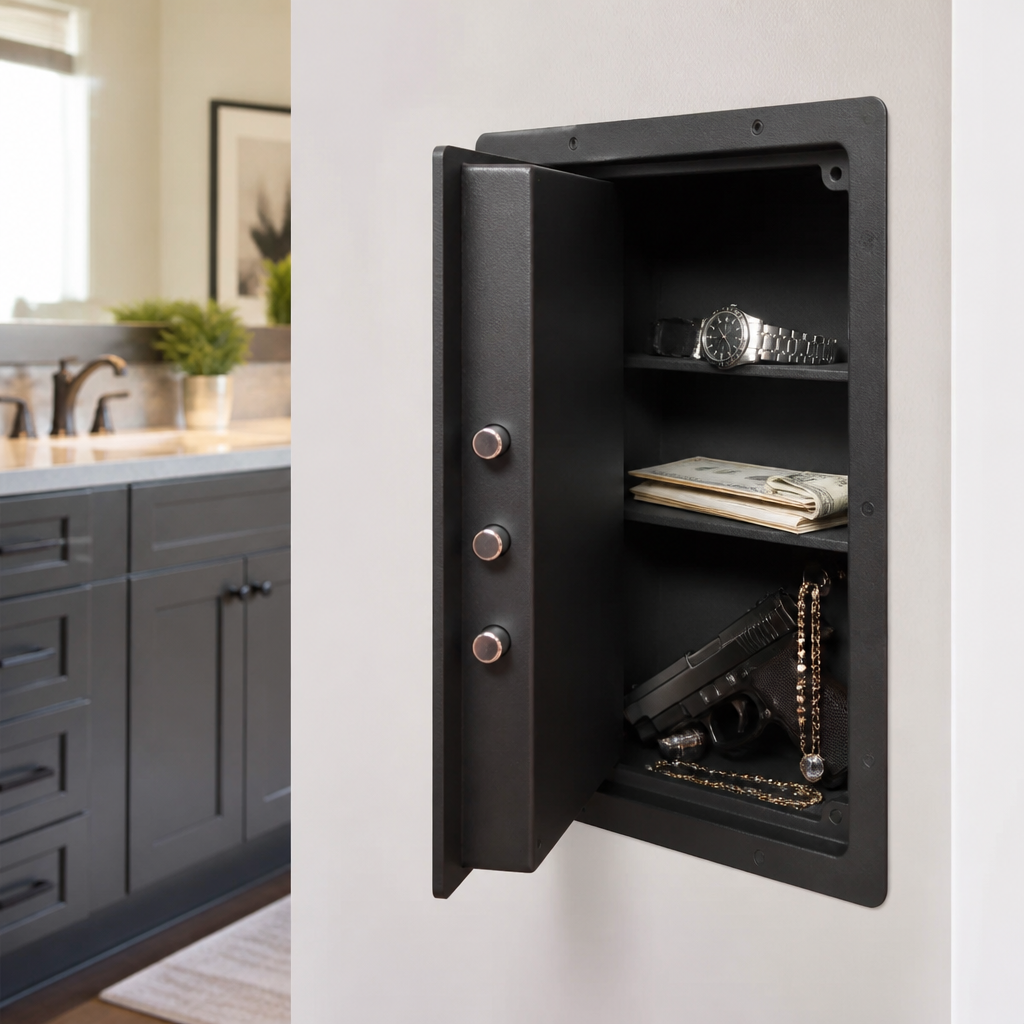
The SnapSafe In-Wall Safe is built for homeowners who want discreet, space-saving protection for valuables without giving up floor area or announcing where those valuables are stored. In the broader Gun Safes & Safety category, this product sits in an important niche: it is not a full-size gun vault, but it is highly relevant to buyers researching secure home storage, product reviews, and practical ways to separate firearms, documents, cash, jewelry, and emergency items from unauthorized access. I have evaluated wall safes alongside cabinet safes, biometric pistol boxes, and full RSC gun safes, and the first question always sounds the same: what problem does this design solve better than the alternatives? The answer is concealment and efficient use of dead wall space.
An in-wall safe fits between wall studs, typically in standard 16-inch-on-center framing, so the body of the safe disappears into the wall cavity while the door sits flush or nearly flush with the finished surface. That matters because many homes do not have room for another heavy floor safe or steel cabinet, and many owners do not want a visible box in a bedroom, office, or closet. SnapSafe’s in-wall format addresses both issues by turning unused wall depth into lockable storage. For readers looking at Product Reviews as a subtopic hub, this article also provides the framework you need to compare related storage options, understand tradeoffs, and identify where an in-wall safe belongs in a complete safety plan.
Key terms are worth defining up front. “Discreet” means low visual profile and easier concealment behind furniture, mirrors, or framed art, not invisibility or immunity from discovery. “Space-saving” means using wall-cavity volume that would otherwise go unused, not creating large-capacity storage equal to a traditional long-gun safe. “Secure” means resistant to casual access and smash-and-grab theft, with steel construction and a locking door, but not equivalent to a high-weight, anchored burglary safe or a dedicated fire-rated gun safe. Those distinctions matter because safe buying goes wrong when shoppers compare unlike products. The SnapSafe In-Wall Safe should be judged against other wall safes, document safes, and compact home security containers, not against a 700-pound gun vault with long-gun racks and certified fire protection.
Why does this matter in a Gun Safes & Safety hub? Because safe ownership is not one decision. Most households need layered storage. A full-size safe may secure rifles and shotguns. A quick-access lockbox may stage a defensive handgun. A discreet in-wall unit can protect passports, cash, spare magazines, suppressor paperwork where lawful, family documents, backup drives, or a compact handgun kept off-body but out of sight. Product reviews in this category should help buyers match the product to the use case. The SnapSafe In-Wall Safe earns attention because it solves a specific storage problem well, and because it often becomes the bridge product between no secure storage at all and a more complete home security setup.
What the SnapSafe In-Wall Safe Is Designed to Do
The SnapSafe In-Wall Safe is designed to recess into a wall cavity and provide hidden, lockable storage with minimal loss of room space. In practical terms, that means the safe can be installed inside a closet, bedroom, office, or hallway wall, then covered by a door swing, hanging clothes, framed picture, or decorative mirror. That concealment is the main advantage over a tabletop lockbox or visible cabinet. In my experience, buyers who choose this format usually prioritize one of three goals: keep valuables out of sight from guests and service workers, avoid adding bulky steel furniture to a room, or create a secondary secure storage point away from the main gun safe.
SnapSafe is known in the home security and firearm storage market for offering practical products that are easier to integrate into normal living spaces than many industrial-looking security containers. With an in-wall model, the company is appealing to homeowners who want a cleaner installation and simpler daily access. The product category generally includes pry-resistant steel doors, adjustable shelves, concealed hinges or protected hinge-side design, and either key, mechanical, or electronic locking options depending on the specific model. The core buying question is not whether it can replace every other safe in the house. It cannot. The right question is whether it gives you secure, discreet access to the small and medium valuables you actually reach for or need to hide most often.
This is also where product reviews should be read carefully. Capacity, lock type, steel thickness, door fit, interior depth, and installation requirements matter more than marketing phrases. A wall safe that looks sleek in product photos can become frustrating if shelf spacing is poor, if the keypad placement interferes with interior storage, or if the door swing is awkward in a narrow closet. Good reviews focus on these use details because they determine whether the safe works in real homes, not just in a showroom or an online listing.
Discreet Storage Benefits and Real-World Use Cases
The biggest strength of the SnapSafe In-Wall Safe is concealment through placement. Most burglaries are fast. The FBI Uniform Crime Reporting program has long shown that burglary events often involve limited time inside the home, and thieves commonly target visible, easy-to-carry valuables first. A recessed wall safe can reduce immediate visual detection, especially when installed behind hanging clothes, a framed piece, or inside a closet that does not draw attention. This does not make it theft-proof, but it improves the odds that a hurried intruder misses it entirely. In layered security, not being found is a meaningful defensive advantage.
For gun owners, the most practical use is often controlled storage of compact, high-value, or document-sensitive items rather than bulk firearms. Examples include one handgun in a soft sleeve, passports, trust documents, tax records, jewelry, cash reserves, encrypted backup drives, and original purchase receipts. If you own NFA-regulated items where lawful, keeping copies of relevant paperwork organized in a secured location can be useful. For households with children, a locked in-wall safe can also serve as a better default storage point than a dresser drawer, nightstand, or closet shelf. That benefit is basic but crucial: reducing unauthorized access prevents avoidable tragedies.
Another common use case is apartment or townhouse living. Renters usually cannot install a heavy floor safe or alter concrete slabs, but some may be allowed to complete reversible wall work with permission. Homeowners in smaller houses also value the fact that an in-wall safe does not consume closet floor area. In one installation I reviewed, the owner used a hallway linen closet wall to store passports, emergency cash, and a compact pistol, preserving every square foot of floor storage while keeping the safe hidden behind towels. That is exactly where this format shines: ordinary spaces, discreetly upgraded.
Key Features to Evaluate in Product Reviews
When reviewing the SnapSafe In-Wall Safe or comparing it with similar products, evaluate five areas first: construction, lock system, dimensions, interior organization, and installation flexibility. Construction begins with steel thickness and door design. The door is the attack surface, so stronger doors, solid deadbolts, and tight door-to-frame fit matter more than cosmetic finish. Many compact safes advertise heavy steel, but the difference between a reassuringly rigid door and a thin, flex-prone one is obvious once you handle both. If a review does not discuss pry resistance, hinge exposure, and bolt engagement, it is incomplete.
The lock system deserves equal attention. Electronic keypads offer fast access and easy code changes, but they require battery management and should include a dependable override method. Key locks are simple and familiar, yet they create key-control issues if multiple adults need access or if a hidden spare key is stored poorly. Mechanical pushbutton locks can be durable and battery-free, though they are less common in this style. For a wall safe used regularly, I generally prefer a quality electronic keypad with low-battery warning and straightforward code programming, provided the keypad is responsive and the backup access method is secure.
Dimensions are not just exterior measurements. Interior usable depth determines whether a handgun with mounted optic, document folder, watch box, or cash pouch fits without forcing awkward angles. Shelves increase versatility, but fixed shelves can block taller items. Adjustable shelves are better because they let the owner reconfigure the safe as needs change. Reviews should note whether letter-size documents lie flat, whether shelf lips waste vertical space, and whether the door organizer, if included, meaningfully increases storage. The best compact safes maximize every inch because wall-cavity depth is inherently limited.
| Review Factor | Why It Matters | What to Check |
|---|---|---|
| Door and bolts | Primary defense against prying | Door thickness, bolt count, frame fit |
| Lock type | Determines access speed and reliability | Keypad response, override method, battery access |
| Interior capacity | Defines real-world usefulness | Usable depth, shelf adjustability, document fit |
| Installation design | Affects stability and concealment | Stud spacing compatibility, mounting points, trim fit |
| Finish and layout | Influences everyday satisfaction | Interior lining, shelf quality, door swing clearance |
Installation, Placement, and Safety Considerations
Installation is where many in-wall safe reviews fail the reader. A good wall safe can become a poor purchase if your wall location is wrong. Standard framing often allows in-wall installation between studs, but you still must check for wiring, plumbing, HVAC runs, blocking, and local code considerations. Use a stud finder with AC wire detection, inspect from the attic or basement if possible, and cut exploratory openings carefully. Placement should prioritize concealment, comfortable access height, and structural practicality. Inside a bedroom closet is common because it combines privacy with easy cover, but home offices and hall closets can work equally well.
Mounting quality matters because a wall safe relies heavily on being secured to framing members. Follow manufacturer instructions on lag screws or other approved fasteners, and ensure the safe sits square so the door closes cleanly. Poor alignment can cause lock strain, rubbing, or incomplete bolt engagement. If you are not confident working with finished drywall and framing, hire a carpenter or experienced handyman. Professional installation costs more upfront, but it often pays for itself in cleaner trim, better concealment, and fewer operational issues. For many buyers, the installation is the real project, not the safe itself.
Safety also includes what not to store. Most in-wall safes are not substitutes for high-capacity fire safes, dedicated media safes, or full-size firearm safes. If your goal is to secure several long guns, large ammunition reserves, or highly fire-sensitive documents, choose purpose-built storage. If your goal is fast-access defensive storage, test whether the door opening, shelf layout, and lock speed support that role under stress. A wall safe can serve that function in some homes, but not every layout is ideal. The right placement and role definition prevent disappointment later.
How It Compares With Other Gun Safes and Home Security Options
Compared with a full-size gun safe, the SnapSafe In-Wall Safe offers far less capacity, lower mass, and typically lower burglary resistance, but much better concealment and a dramatically smaller footprint. Compared with a bedside biometric handgun safe, it is slower to access in some scenarios yet often more versatile for mixed valuables and better hidden from casual discovery. Compared with a fire document chest, it usually wins on concealment and mounting, while losing on certified fire protection if the competing product has tested fire ratings. These are not minor distinctions; they define the buying decision.
For a Product Reviews hub, this comparison logic is essential because users often arrive with incomplete category knowledge. Someone searching for “best gun safe for apartment” may actually need a layered approach: a cable-secured quick-access pistol safe for immediate use and an in-wall safe for documents, backup cash, and lower-profile storage. Someone searching for “hidden safe for closet” may not realize that concealment must be paired with realistic expectations about wall-safe capacity and wall construction. A strong hub page helps readers move to more specific reviews based on intended use, budget, and risk level.
The SnapSafe In-Wall Safe stands out most when the homeowner values unobtrusive storage over maximum volume. That sounds obvious, but it is the difference between satisfaction and regret. Buyers who expect a hidden miniature vault for everything are usually disappointed. Buyers who want tidy, discreet security for select items tend to be pleased, especially when the installation is clean and the interior layout matches what they actually plan to store.
Who Should Buy It and How to Use This Hub
The ideal buyer is a homeowner who wants hidden storage for important small valuables, understands the limits of wall-safe capacity, and is willing to install the unit properly. It is especially well suited for people building a layered home security plan, couples who want a discreet document-and-valuables safe in the primary bedroom, and gun owners who already use a larger safe for long guns but need a secondary secure location. It is less suitable for anyone needing broad firearm capacity, advanced fire resistance, or ultra-fast bedside deployment with one-handed access in darkness.
As a hub for Product Reviews under Gun Safes & Safety, this page should guide your next clicks. From here, compare in-wall safes with bedside handgun safes, biometric lockboxes, fire-resistant document safes, modular gun cabinets, and full-size residential security containers. Focus on your use case first, then match it to capacity, lock style, and installation realities. The main takeaway is simple: the SnapSafe In-Wall Safe is a smart, discreet, space-saving choice when used for the right purpose and judged by the right standards. If hidden storage fits your needs, use this hub to narrow your options and move on to model-specific reviews before you buy.
Frequently Asked Questions
What makes the SnapSafe In-Wall Safe different from a traditional freestanding safe or full-size gun vault?
The biggest difference is how the safe uses space. A traditional freestanding safe takes up floor area, adds visible bulk to a room, and often makes it obvious where valuables are stored. The SnapSafe In-Wall Safe is designed to fit between wall studs, which allows it to sit recessed inside the wall rather than occupying usable square footage. For homeowners who want discreet protection without changing the layout of a bedroom, office, closet, or hallway, that built-in profile is a major advantage.
It also fills a different role than a full-size gun vault. A large gun safe is typically intended for long guns, larger collections, and heavier-duty storage, while an in-wall safe is better suited for compact but important items such as handguns, passports, legal documents, cash, jewelry, heirlooms, backup drives, and emergency essentials. That makes it especially appealing to buyers who are researching practical home security solutions but do not need a massive steel cabinet.
Another important distinction is discretion. Because the safe can be placed behind a door, inside a closet, or concealed with wall art or furniture placement, it does not immediately advertise itself. That reduced visibility can be a real benefit in everyday home security. In short, the SnapSafe In-Wall Safe is not meant to replace every type of safe, but it serves a very valuable niche for people who want organized, hidden, and space-efficient storage.
What can you realistically store inside a SnapSafe In-Wall Safe?
This type of safe is ideal for compact valuables and items you may want both protected and readily accessible. Common examples include important documents such as passports, birth certificates, insurance policies, property records, and estate paperwork. It is also a practical place for cash reserves, jewelry, watches, precious metals, prescription medications, family keepsakes, and small electronics like external hard drives or flash media containing sensitive information.
For buyers in the Gun Safes & Safety category, the safe is also relevant as a way to separate and secure firearms-related items. Depending on the internal dimensions, many homeowners use an in-wall safe for a handgun, spare magazines, ammunition stored according to local rules and manufacturer guidance, or other defensive essentials. That said, capacity matters. This is not the right solution for long guns, large collections, bulky optics, or extensive ammunition storage. It works best when the goal is controlled access to a limited number of high-priority items rather than broad-capacity storage.
It is smart to think in terms of layered security and organization. Many homeowners use an in-wall safe as a central location for “must-protect” items they may need in a hurry during a burglary, evacuation, or family emergency. If you want a discreet place for compact valuables that does not consume floor space, the SnapSafe In-Wall Safe is well positioned for exactly that purpose.
Is an in-wall safe secure enough for firearms, valuables, and sensitive documents?
An in-wall safe can absolutely be a useful security tool, but it should be understood in the right context. Its strength comes from a combination of concealment, controlled access, and secure mounting inside the wall structure. Because it is recessed and less visible than a freestanding unit, it may be overlooked entirely by opportunistic intruders. That hidden placement is one of its strongest real-world security advantages.
At the same time, no safe should be treated as a one-size-fits-all answer. An in-wall model is generally best for deterring unauthorized household access, keeping children away from restricted items, reducing grab-and-go theft risk, and protecting important belongings in a discreet location. For a single handgun, critical documents, jewelry, or emergency funds, that can be a very practical level of protection. For very large firearm collections, exceptionally high-value assets, or users who need maximum burglary resistance and fire protection, a heavier dedicated safe may still be the better primary solution.
The most accurate way to view the SnapSafe In-Wall Safe is as part of a broader home security strategy. Used properly, it gives homeowners a smart way to store select items securely and out of sight. If firearm storage is part of the equation, owners should always follow all local laws, safe handling standards, and any requirements related to locking devices, access control, and keeping firearms inaccessible to unauthorized users. When matched to the right storage goals, an in-wall safe can be both secure and extremely practical.
Where is the best place to install a SnapSafe In-Wall Safe in a home?
The best installation location is one that balances concealment, convenience, and structural compatibility. In many homes, the most effective spots are inside closets, behind bedroom doors, in home offices, hallways, dressing areas, or other low-traffic locations where the safe will not be obvious to guests or service workers. Homeowners often prefer areas that allow the safe to be hidden behind hanging clothes, framed artwork, shelving arrangements, or other natural visual barriers.
Wall cavity placement is important because in-wall safes are typically designed to fit between standard wall studs. Before installation, it is essential to confirm the stud spacing and check for electrical wiring, plumbing, HVAC runs, or other obstructions inside the wall. That is why careful measuring matters. A good location is not just hidden; it also provides the physical clearance needed for the safe body, door swing, and convenient access.
Think about how you plan to use it. If the safe will hold passports, legal papers, or jewelry, a closet or office may be ideal. If it will store emergency cash, medical items, or a defensive handgun, you may want a location that is accessible to authorized adults but still secure from children and visitors. The right placement depends on your daily routine, the items being stored, and your preference for convenience versus maximum concealment. A thoughtful installation location can make the safe significantly more effective in real-world use.
Who is the SnapSafe In-Wall Safe best suited for?
This safe is best suited for homeowners who want a more discreet alternative to bulky security storage. It is particularly appealing to people living in homes where preserving floor space matters, including smaller bedrooms, condos, home offices, and multipurpose living areas. If you like the idea of secure storage that does not dominate a room or visibly signal that valuables are present, an in-wall design is an excellent fit.
It is also a strong option for buyers who are somewhere between having no safe at all and investing in a large, full-capacity gun vault. Many people do not need storage for multiple long guns or a large inventory of gear; they simply want a reliable place for a handgun, family documents, jewelry, emergency cash, and other essential valuables. In that middle ground, the SnapSafe In-Wall Safe offers a practical blend of concealment, organization, and everyday usability.
Ultimately, this product is best for people who understand that security is about matching the tool to the need. If your priority is discreet, space-saving protection for a focused set of important items, the SnapSafe In-Wall Safe makes a lot of sense. If your needs grow into larger firearm storage, heavy-duty burglary resistance, or expanded capacity, it can also work well as a secondary safe that complements a bigger primary unit elsewhere in the home.