
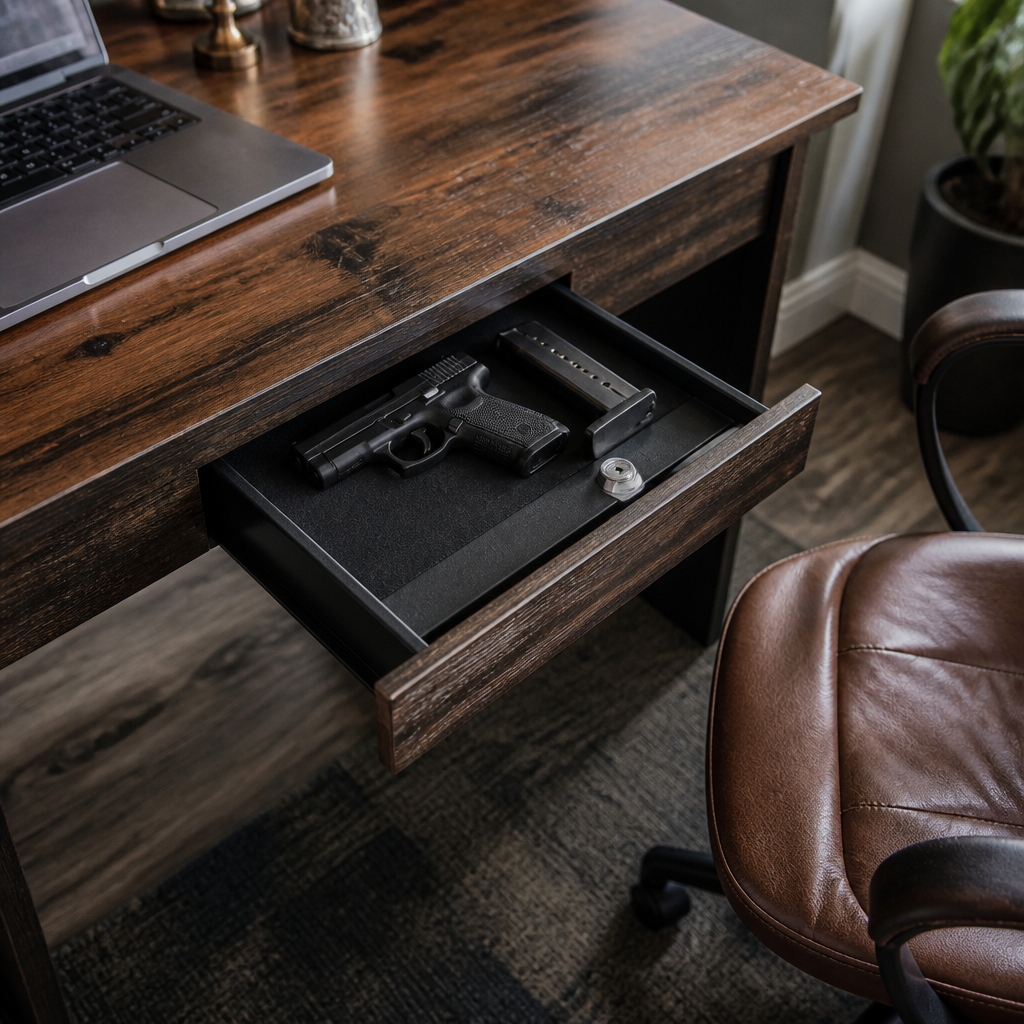
Home offices have quietly become one of the most practical places to keep defensive firearms, yet they are also among the easiest rooms to overlook when planning secure storage. Hidden gun storage solutions for home offices combine rapid access, concealment, theft resistance, and household safety in a space that already contains furniture, electronics, documents, and daily traffic. In plain terms, hidden storage means a firearm is secured inside an item that does not obviously appear to be a gun safe, while discreet storage can include both disguised products and low-visibility lockboxes integrated into ordinary office layouts. The distinction matters because concealment alone is not security, and security without access may fail when seconds count.
I have helped clients evaluate under-desk safes, wall compartments, locking file cabinets, and furniture safes, and the same pattern appears every time: the best setup depends on who uses the room, how often the firearm is accessed, whether children or visitors enter the space, and what threats matter most. A solo remote worker with a daily carry pistol has different needs than a parent taking video calls with toddlers nearby. Renters face different installation limits than homeowners. People in humid regions need more corrosion protection than those in climate-controlled environments. The right answer is rarely a single product category.
This hub article explains the best hidden gun storage solutions for home offices by breaking the topic into practical choices, installation factors, legal and safety concerns, and common mistakes. It also serves as a foundation for deeper pages on biometric safes, furniture concealment, wall safes, and child-resistant storage. If you want a clear starting point, prioritize three outcomes in this order: unauthorized users cannot access the firearm, the owner can access it reliably under stress, and the storage blends into the room without advertising what it holds. When those three outcomes align, hidden storage becomes genuinely useful rather than merely clever.
What makes a home office a unique environment for hidden gun storage
A home office is not just another room with a desk. It often functions as a workplace, video meeting background, document archive, electronics hub, and sometimes a shared family space. That mix creates unusual storage challenges. A visible safe may draw attention during service calls, cleaning visits, or virtual meetings. A poorly placed quick-access box can be exposed every time a drawer opens or a webcam angle shifts. At the same time, a home office often offers excellent structural anchors, predictable owner access patterns, and furniture that naturally conceals secure compartments.
For most people, the primary firearm in a home office is a handgun, though compact rifles or short defensive firearms may also be considered where lawful. Handguns fit more hidden formats, including under-desk safes, false-bottom drawers, locking shelves, and concealment furniture. Long guns require deeper cabinets, wall cavities between studs, or larger furniture pieces such as credenzas and bookcases. The more compact the firearm, the more options you have for genuine concealment without sacrificing retention or accessibility.
Threat modeling helps narrow the field. If your main concern is keeping a handgun nearby during the workday while preventing child access, a quick-access biometric or mechanical lockbox mounted under a desk is often stronger than a magnetic concealment shelf. If your main concern is deterring smash-and-grab theft during a burglary, a heavier safe bolted into cabinetry may outperform lightweight disguise products. If discretion during meetings matters most, a hidden compartment built into ordinary office furniture can reduce visual exposure while keeping the room professional.
Best hidden gun storage solutions for home offices
The strongest hidden gun storage solutions for home offices usually fall into five categories: under-desk safes, drawer-integrated lockboxes, concealment furniture, in-wall storage, and retrofitted locking cabinets. Each can work well, but each carries tradeoffs in speed, concealment, cost, and installation complexity. Buyers should compare steel thickness, locking method, pry resistance, mounting points, interior orientation, and whether the firearm can be retrieved cleanly while seated.
| Storage type | Best use case | Main advantage | Main limitation |
|---|---|---|---|
| Under-desk safe | Daily handgun access while working | Fast seated retrieval and strong concealment | Limited capacity and visible hardware if poorly installed |
| Drawer lockbox | Existing desk with deep drawers | Low visual profile and easy retrofit | Drawer dimensions restrict pistol size and presentation angle |
| Concealment furniture | Design-focused office layouts | Blends into décor without obvious safe appearance | Quality varies widely; some prioritize disguise over security |
| In-wall safe | Homeowners planning permanent installation | Excellent discretion behind art or shelving | Requires stud spacing, wall work, and careful placement |
| Locking cabinet conversion | Larger offices storing gear and documents | More capacity for firearms, magazines, and valuables | Can become obvious if cabinet style or lock looks unusual |
Under-desk safes are often the most practical answer. Properly mounted to the underside or inner knee panel of a desk, they keep the pistol within arm’s reach while remaining invisible in normal room views. Models from brands such as Vaultek, Hornady, and Fort Knox vary in lock style and construction, but the best versions have steel bodies, reinforced latch areas, and mounting patterns that resist simple screwdriver attacks. I recommend checking whether the door drops straight down or springs open, because some designs force an awkward wrist angle from a seated position.
Drawer-integrated lockboxes work well in executive desks, lateral credenzas, and built-in cabinetry. Instead of relying on a magnetic latch hidden in a drawer face, use a true lockbox secured through the drawer base or frame. This gives you both concealment and controlled access. Foam inserts can orient a handgun consistently, which matters under stress. If the drawer holds office supplies as camouflage, make sure none can interfere with the trigger guard or block retrieval.
Concealment furniture includes shelves, wall art compartments, printer stands, and side tables with hidden lockable interiors. Quality is extremely uneven. Better products use real locking mechanisms, solid joinery, and steel liners rather than simple wooden cavities with magnets. In practice, these are best when appearance matters and the firearm is a secondary access tool, not when the room is frequently used by children. A decorative solution that can be opened by curiosity alone is not secure storage.
In-wall storage offers excellent discretion for homeowners. A recessed safe installed between studs behind framed art, acoustic panels, or a cabinet door can nearly disappear. The major mistake is placing it where thieves instinctively look, such as behind the only large painting in the room. Better placements align with natural office features: behind a hinged bookshelf face, inside a built-in, or adjacent to existing shelving lines. Fire-rated wall safes are available, but many small hidden models focus more on concealment than fire performance.
Retrofitted locking cabinets are useful for people who need mixed storage. A standard office cabinet or credenza can be internally reinforced with a hidden steel box for a handgun while leaving the outer furniture appearance unchanged. This approach works especially well in larger home offices where a cabinet would not seem out of place. It also creates separation between visible office organization and hidden defensive storage.
How to choose the right hidden storage by access speed, safety, and theft resistance
The best hidden gun storage solution is the one that still works during a stressful, imperfect moment. Start with access speed. If you expect to retrieve a handgun from a seated position, test the movement path: hands under desk, unlock, door clears knees, full firing grip acquired, muzzle remains safely oriented. Many products look sleek online but become clumsy once mounted near chair arms, power cables, or drawer slides. If possible, mock up dimensions with cardboard before drilling anything.
Next, look at locking methods. Biometric locks are convenient, but not all sensors are equally reliable. Capacitive fingerprint readers from established manufacturers generally outperform cheaper units, especially with dry skin or partial finger placement. Mechanical simplex locks remain one of the most dependable quick-access options because they do not rely on batteries. Electronic keypad locks can work well if buttons are tactile and codes can be entered by feel. Every electronic safe should have a low-battery warning and an emergency override process you have actually practiced.
Theft resistance matters because home offices are attractive burglary targets. They contain laptops, monitors, and small valuables, which means thieves already spend time there. A hidden storage unit should be anchored to framing, masonry, or substantial furniture, not just thin particleboard. Steel gauge, hinge protection, anti-pry lips, and concealed mounting hardware all matter more than glossy marketing. Hidden products that can be carried away are rarely acceptable unless they are inside a second secured structure.
Safety extends beyond locking the gun away. Store the firearm in a consistent condition based on your training, local law, and household risk profile. Use a holster-compatible safe interior or a molded tray that fully protects the trigger. Keep a small desiccant pack or dehumidifier rod where appropriate. Separate spare magazines if they impede retrieval. Most important, never let concealment become an excuse to skip true access control.
Placement, installation, and room design strategies that actually work
Good placement beats expensive hardware installed badly. In home offices, the ideal location is usually close to the primary work position, outside obvious sightlines, and anchored to something stronger than finish carpentry. Under the dominant-side edge of a desk, inside a credenza near the chair, or in a wall cavity behind functional décor are common successful placements. Avoid areas directly visible from the doorway, webcam, or windows. Also avoid spots exposed during routine tasks such as plugging in chargers or opening shared supply drawers.
Installation should account for ergonomics and structure. Desks made from MDF or thin laminate often need backing plates or reinforcement to support a loaded steel safe. Wall installations require stud finders, depth checks for electrical wiring, and careful measurement of door swing. For cabinet conversions, through-bolting with washers or steel plates improves resistance dramatically. I also recommend using thread locker on mounting hardware after final positioning because vibration from drawers and chair contact can loosen fasteners over time.
Design integration matters more than many buyers expect. A hidden gun safe should disappear into the office’s normal visual language. If the room has modern walnut furniture and matte black hardware, a glossy keypad box in bright silver will stand out. Concealment works best when the safe feels native to the space. That may mean matching furniture finishes, using cable management to reduce visual clutter around under-desk units, and keeping surrounding shelves naturally populated so no single object appears staged.
Finally, think about maintenance access. Batteries need changing, biometric sensors need cleaning, and hinges need inspection. Choose a location that supports routine checks without making the safe conspicuous. Hidden storage is only effective if it stays functional year round.
Legal, family, and operational considerations people often miss
Gun storage laws vary by state and locality, especially where minors may be present or unauthorized access leads to liability. Some jurisdictions impose specific requirements for secure storage, negligent access, or child access prevention. That means the best hidden gun storage solution for a home office must be evaluated against your local legal standard, not just product marketing. If you travel across state lines or work in a regulated profession, document your setup and keep product manuals for reference.
Family dynamics also shape the right choice. If children, teens, caregivers, guests, or contractors enter the office, security must assume curiosity and occasional unsupervised access. In those homes, disguised shelves with simple magnetic releases are usually inadequate. Use a genuine locking safe with audited access habits. If your spouse or another adult may need emergency access, train together on the exact opening sequence and include battery replacement in your household routine.
Operational discipline is the final layer. A hidden gun safe does not help if it is left open during the workday, blocked by storage boxes, or used as a catchall for unrelated items. Keep the interior dedicated, predictable, and uncluttered. Practice access safely with an unloaded firearm, then reassess quarterly. Small adjustments in chair position, desk height, or hand dominance can change what works. Build your hidden storage plan around real use, not assumptions.
Conclusion
The best hidden gun storage solutions for home offices balance concealment with true security, fast access, and day-to-day practicality. Under-desk safes, drawer lockboxes, in-wall units, concealment furniture, and reinforced cabinets can all work when matched to the room, the firearm, and the household. The core rule is simple: choose a storage method that unauthorized users cannot defeat, that you can open reliably under stress, and that does not advertise itself during ordinary office life.
If you are building out this part of your gun safes and safety plan, start by mapping your office traffic, access needs, and structural mounting options. Then compare products by lock reliability, mounting strength, and placement ergonomics rather than appearance alone. A well-chosen hidden storage setup protects people first, preserves discretion second, and supports responsible ownership every day. Use this hub as your starting point, then evaluate the specific storage category that best fits your home office and install it with the same care you would give any other critical safety system.
Frequently Asked Questions
What makes a home office a good place for hidden gun storage?
A home office is often one of the most practical rooms in the house for hidden gun storage because it naturally supports both concealment and routine access. Unlike a bedroom closet or a hallway cabinet, an office already contains large pieces of furniture, drawers, shelving, desks, filing cabinets, and wall décor that can discreetly house a secured firearm without attracting attention. For many people, the office is also a room they use daily, which means a defensive firearm can remain close at hand during working hours without being openly visible.
Another advantage is predictability. A home office tends to have a more controlled layout and less casual traffic than living rooms, kitchens, or entryways. That makes it easier to create a storage plan based on where you sit, how you move through the room, and how quickly you may need access. For example, a lockable hidden compartment built into a desk, bookshelf, or filing cabinet can place a firearm within reach while still keeping it secured from children, guests, or service providers.
That said, a home office is only a good storage location if the setup balances concealment with real security. Hiding a firearm inside a decorative object or unsecured drawer is not enough. The better solutions are designed to prevent unauthorized access, resist casual theft, and maintain fast retrieval under stress. In other words, the office works well because it offers opportunities for discreet integration, but the storage method itself still needs a reliable locking mechanism, solid construction, and a placement strategy that fits your household’s safety needs.
What are the best types of hidden gun storage solutions for a home office?
The best hidden gun storage solutions for a home office are the ones that combine secure locking, discreet appearance, and realistic accessibility. In most cases, this includes furniture-based safes and concealed compartments built into items that already belong in an office. Common examples include hidden desk drawers with biometric or RFID locks, locking wall shelves with drop-down compartments, concealed storage integrated into filing cabinets, and hidden compartments inside bookcases or credenzas. These solutions work well because they blend into the room and do not immediately signal that a firearm is present.
Biometric storage units are popular in offices because they offer quick access while still restricting entry. A fingerprint reader can allow fast retrieval when seconds matter, especially if you spend long stretches seated at a desk. RFID and keypad systems can also be effective, particularly when paired with a backup key override. For users who want furniture that does not look tactical or security-oriented, professionally built concealment furniture can provide a polished office appearance while housing a handgun or compact long gun behind a secure panel.
Wall-mounted options can also be excellent if installed correctly. A hidden shelf safe or framed concealment compartment can keep a firearm off the desk and out of obvious sight while using vertical space efficiently. However, the strongest options are anchored into wall studs or other solid structure, not simply hung like decorative items. Likewise, under-desk mounts and slide-out compartments may offer very fast access, but they should still include a true lock rather than relying solely on being out of sight.
Ultimately, the best choice depends on your firearm type, office layout, and who has access to the room. A compact handgun used for defensive purposes may fit well in a locked desk compartment near your seated position, while a larger platform may require a more robust hidden cabinet. The ideal solution is one that looks ordinary, opens reliably, stays secured against unauthorized users, and allows you to access the firearm from the position you are most likely to occupy in an emergency.
How can hidden gun storage in a home office stay secure from children, guests, and thieves?
Security starts with understanding that concealment and security are not the same thing. A firearm hidden in an office item may be less noticeable, but if that item is easy to open, remove, or break into, it is not truly secure. To protect against children, guests, and thieves, hidden gun storage should include a dependable locking mechanism, strong materials, and installation that prevents the entire unit from being carried away. A locked hidden compartment is far safer than a simple stash spot, no matter how clever the disguise may seem.
For homes with children or frequent visitors, quick-access safes with biometric, keypad, or RFID entry are usually the best fit. These systems help ensure that only authorized adults can access the firearm. The lock should be tested regularly, and backup access methods should be available in case of battery failure or sensor problems. It is also wise to avoid obvious routines, such as opening the compartment in front of others or discussing the location with anyone who does not absolutely need to know.
To reduce theft risk, choose storage that is either built into heavy furniture or anchored directly to structural components such as wall studs or flooring. Small standalone lockboxes hidden in drawers may be easy for a burglar to steal intact. By contrast, a concealed safe integrated into a desk or secured behind a fixed wall feature is much harder to remove quickly. The longer it takes to identify, access, and extract the storage unit, the better your odds of frustrating a smash-and-grab theft attempt.
Layered security also matters. A home office firearm should be part of a broader protection plan that may include door locks, alarm systems, cameras, reinforced entry points, and disciplined household rules about access. Hidden storage works best when it is not the only line of defense. The goal is to create multiple barriers: the room itself, the hidden nature of the storage, the physical lock, and the anchoring or construction strength of the unit. Together, those layers create much better protection than concealment alone.
Where should hidden gun storage be placed in a home office for the best balance of access and concealment?
The right placement depends on how you actually use the room. In most home offices, the best location is close to your primary working position but not in a place that draws attention or invites casual handling. If you spend most of your day at a desk, then a secured hidden compartment within or beneath that desk may offer the best access. If your office includes built-in shelving or a cabinet wall, a concealed compartment at arm’s reach from your usual seat can also be highly effective. The key is to avoid storing the firearm so far away that access becomes slow and impractical during an emergency.
At the same time, visibility and traffic patterns matter. Storage should not be placed where guests, cleaners, contractors, or children are likely to interact with it. A decorative shelf behind your chair may be less noticeable than a drawer on the front side of the desk that visitors can easily access. Similarly, placing hidden storage near windows or in obvious areas visible during video calls can create unnecessary exposure. A good placement strategy takes into account not only how fast you can reach the firearm, but also who else may be able to observe or discover the storage location over time.
Ergonomics should also be considered. In a high-stress situation, fine motor skills can degrade, so the compartment should open in a way that is simple and consistent. Practice reaching the location from your normal seated posture, from standing, and from likely movement paths within the office. Make sure chair arms, desk supports, cords, and other obstacles do not interfere. A hidden safe that looks perfect on paper can become a poor choice if it is awkward to access quickly or forces you into an exposed position.
In general, the best placement is one that supports rapid, repeatable access for the authorized user while remaining unobtrusive to everyone else. It should fit the room naturally, stay out of common sightlines, and be difficult for an intruder to identify during a quick search. Good placement turns hidden storage from a novelty into a genuinely functional part of a home defense plan.
What should you consider before choosing a hidden gun storage solution for a home office?
Before choosing a hidden gun storage solution, start with the fundamentals: who needs access, who must be denied access, what firearm you are storing, and how quickly you may need to retrieve it. Those questions shape everything else. A single adult working alone from a private office may prioritize speed and discreet integration, while a household with children will need stronger safeguards and more disciplined access control. The type of firearm matters as well, since a compact handgun, full-size pistol, or defensive long gun will each require different dimensions, support, and retention features.
You should also evaluate the quality of the locking system and the reliability of the product itself. Not all hidden storage products are built to the same standard. Some are essentially decorative concealment boxes, while others are true security devices with reinforced construction, tested locks, and tamper-resistant installation. Look for solid materials, dependable hinges, consistent lock performance, and secure mounting options. If the product relies on electronics, confirm battery life, backup entry methods, and how it behaves in low-light or high-stress conditions.
Room design and daily use are equally important. Think about where the storage will fit naturally, how it will affect workflow, and whether it can remain discreet during meetings, family activity, or cleaning. A solution that blends seamlessly with your office furniture and habits is more likely to remain useful over time. You should also think beyond the gun itself. Storage may need room for a spare magazine, a mounted light, or other essentials, and the compartment should hold the firearm securely in a consistent orientation for reliable retrieval