
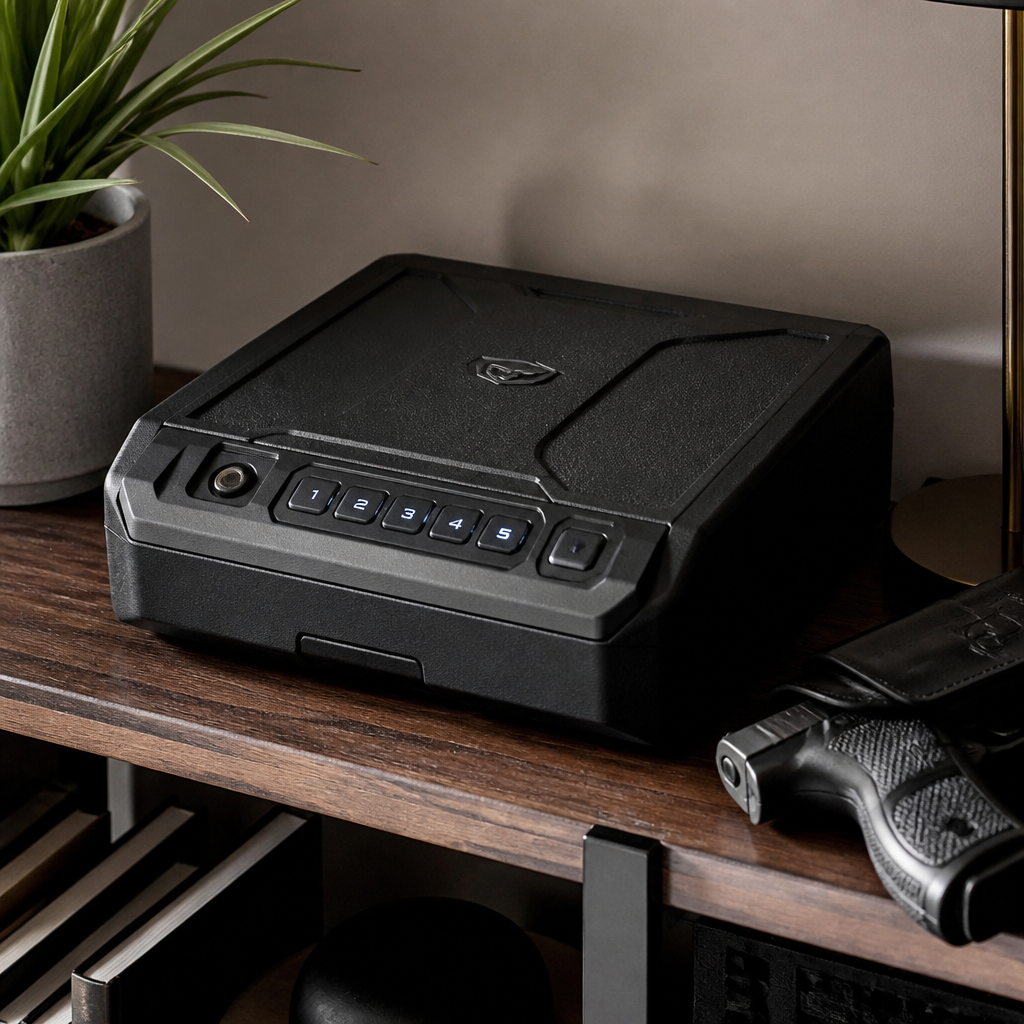
The Vaultek Barikade Series occupies an important place in the handgun safe market because it brings core smart-safe convenience to buyers who do not want to spend premium Vaultek money. In plain terms, a smart safe is a firearm storage box that combines physical security with faster access methods such as electronic keypad entry, backup keys, and in some cases app connectivity or biometric unlock. The Barikade line does not attempt to be a luxury flagship. Instead, it focuses on the needs most handgun owners actually prioritize: keeping a defensive pistol away from children, visitors, and smash-and-grab theft while preserving practical bedside access.
That balance matters. In my experience reviewing handgun vaults, the gap between marketing claims and real-world usefulness is widest in the entry-level category. Some low-cost pistol safes look solid online but arrive with flimsy lids, poor welds, unreliable electronics, or mounting designs that are too weak for serious use. Others are secure enough but so awkward to open under stress that owners stop using them. The Barikade Series is relevant because it addresses that exact problem space. It aims to deliver basic electronic access, reinforced steel construction, and compact footprints at a price point that is approachable for first-time buyers and practical for secondary locations around the home.
As a product-review hub within Gun Safes & Safety, this article covers the Barikade Series comprehensively while helping readers evaluate related reviews across the handgun-safe category. The goal is not to treat one model in isolation, but to explain what the series is, where it fits, what tradeoffs come with a budget-friendly smart safe, and how to judge whether this line matches your storage needs. If you are comparing bedside safes, vehicle lockboxes, or compact vaults for apartments, dorm-style living, or shared households, this review framework will help you narrow the field quickly and confidently.
Vaultek built its reputation on modern firearm storage with clean industrial design, anti-pry features, and electronic access systems that usually feel more refined than generic import safes. The Barikade Series inherits part of that design philosophy, but with simplified features and lower material complexity. Understanding that positioning is essential before you buy. A budget-friendly smart safe is not a substitute for a full-size, fire-rated gun safe or a high-security TL-rated burglary safe. It is a quick-access handgun vault. Judged by that standard, the right questions are straightforward: How durable is the shell and lid? How reliable is the keypad? Can the safe be anchored properly? How intuitive is access in low light? And does the value hold up against direct competitors?
What the Vaultek Barikade Series Is Designed to Do
The Barikade Series is designed primarily for compact defensive handgun storage in accessible locations. Think nightstand, closet shelf, desk drawer, or vehicle-adjacent use where a larger safe is unrealistic. In practical terms, these safes are meant to solve three problems at once: unauthorized access by children or guests, delayed access caused by hidden or unloaded firearms, and the general inconvenience that causes many owners to leave a handgun unsecured. That last problem is more common than manufacturers admit. A safe that is fast enough to use every day is usually safer than a theoretically stronger box that owners bypass.
From a construction standpoint, the defining elements in this category are steel gauge, hinge design, lock engagement, anti-pry geometry, and mounting provisions. Vaultek generally emphasizes rigid shells, compact dimensions, and simple digital controls. On the Barikade line, buyers should expect practical security rather than heavy burglary resistance. These units are intended to resist casual tampering and opportunistic theft, especially when bolted down or cabled correctly, not to defeat extended attacks with pry bars and power tools. That distinction is important because many negative reviews of affordable handgun safes come from unrealistic expectations rather than product failure.
For handgun owners, the most significant use case is staged home defense. A properly mounted quick-access safe keeps a loaded pistol inaccessible to unauthorized users while still allowing the owner to retrieve it in seconds. That is why keypad logic, lid spring tension, and interior layout matter as much as steel thickness. During testing of similar safes, I have found that tiny keypads, mushy buttons, or cramped interiors can add enough friction to undermine the entire concept. The best budget models succeed by reducing those friction points, not by pretending to offer commercial-grade burglary protection.
Key Features That Define the Barikade Value Proposition
The reason shoppers consider the Barikade Series is simple: it typically packages the most important daily-use features without charging for premium extras many buyers will never use. Depending on the model, those features generally include an electronic keypad, manual backup key access, predrilled mounting points, compact form factors, and interiors sized for one or two handguns plus a spare magazine. Vaultek also tends to pay more attention to fit and finish than many unbranded safes sold through mass marketplaces, which can improve confidence in long-term use.
One of the biggest practical benefits is straightforward electronic entry. For bedside use, a responsive keypad is often the right compromise between speed and cost. Biometric scanners can be fast, but entry-level fingerprint sensors vary widely in consistency, especially with dry skin, dirty hands, or rushed placement. App-enabled safes add convenience, but they also add battery demands, software dependencies, and higher prices. A well-executed keypad safe avoids many of those complications. For buyers who want dependable basics, that matters more than novelty.
Another advantage is size efficiency. The Barikade footprint is usually suited to apartments, dorm-adjacent adult housing, RV travel, and rooms where discretion matters. Compact safes can also function as dedicated storage hubs within a larger security plan. For example, many owners keep long guns in a full cabinet or residential security container and place a quick-access handgun safe near sleeping areas. In that layered approach, the Barikade line makes sense as a supplemental device rather than a complete storage solution.
| Review Factor | What to Check | Why It Matters |
|---|---|---|
| Access method | Keypad responsiveness, code programming, backup key quality | Determines speed and reliability during urgent access |
| Construction | Steel body rigidity, lid flex, hinge protection, finish quality | Indicates resistance to tampering and long-term durability |
| Mounting | Bolt holes, cable points, included hardware, anchor surface | Prevents easy grab-and-go theft |
| Interior layout | Pistol fit, spare magazine space, protective lining | Affects usability with optics, lights, and larger frames |
| Power management | Battery type, low-battery warnings, lockout behavior | Reduces failure risk when the safe is needed most |
| Value | Feature set versus price and warranty support | Shows whether the budget price truly delivers savings |
How the Barikade Series Performs in Real-World Use
In day-to-day ownership, affordable smart safes succeed or fail on routine interactions. The Barikade Series generally performs best when used exactly as intended: mounted securely, opened regularly enough to maintain familiarity, and loaded with realistically sized handguns. If your primary pistol is a compact or standard-size semi-auto without an oversized competition optic, the fit is usually more accommodating than many budget boxes in the same price tier. Problems tend to arise when buyers assume every compact safe can comfortably hold a full-size duty pistol with a weapon light, red-dot sight, threaded barrel, and extended magazine.
The opening sequence is especially important. On a bedside safe, tactile familiarity in darkness matters more than showroom impressions. A keypad must be easy to locate and actuate without looking down. Lids should clear quickly without binding. Interior padding should prevent finish wear but not snag sights or controls. In my experience with quick-access vaults, minor ergonomic flaws become major frustrations after repeated use. A safe that requires awkward wrist angles or multiple corrective motions can negate the time advantage of electronic access. Vaultek products tend to understand this better than many low-end competitors, which is one reason the brand remains prominent.
Noise is another real-world factor buyers often overlook. Electronic beeps, spring-assisted lid action, and metal-on-metal contact can reveal access at inconvenient times. For some users, especially parents retrieving a handgun without waking a household, muted operation is a genuine quality-of-life feature. Budget safes vary sharply here. If a Barikade model allows sound management or naturally avoids harsh mechanical clatter, that becomes a more meaningful advantage than a spec-sheet bullet point might suggest.
Reliability over time depends heavily on installation and battery discipline. Most electronic handgun safes, regardless of brand, receive avoidable complaints caused by weak batteries, poor anchor setups, or neglected keypad familiarity. High-quality alkaline batteries, periodic access drills, and occasional hardware checks go farther than buyers expect. Even an excellent compact safe should be tested monthly with the exact code entry sequence you plan to use under stress. Responsible ownership includes verifying that the lock, lid, and backup key all function before there is an emergency.
Strengths, Limitations, and Who Should Buy It
The clearest strength of the Vaultek Barikade Series is value-oriented execution. Buyers get a recognizable firearms-storage brand, competent quick-access design, and stronger quality control than many generic alternatives, usually without entering premium pricing territory. That makes the line appealing for first-time handgun owners, apartment dwellers, and experienced gun owners who need a secondary safe for a specific room. It is also a reasonable option for households that want secure storage but are not ready to invest in biometric systems or connected features.
Its limitations are just as important to state plainly. A budget-friendly smart safe is not ideal for high-volume collections, jewelry-heavy mixed storage, or environments where the unit cannot be anchored. Lightweight compact safes are inherently vulnerable if left portable. They also provide limited interior flexibility. Owners of full-size pistols with mounted accessories should verify internal measurements carefully rather than assuming fit. Another limitation is category-wide: electronic access introduces dependence on battery maintenance and electronic components, even when backup keys are included. Mechanical simplex-style locks, while slower to learn for some users, remove part of that risk.
So who should buy the Barikade Series? The strongest fit is a handgun owner who needs fast, controlled access in a low-space environment and understands that this is a retention and access device, not a high-security burglary safe. It is especially sensible for a nightstand setup, a discreet closet shelf, or a secondary location where a larger safe is impossible. Who should skip it? Buyers needing heavy pry resistance, long-term document protection, multi-handgun capacity, or advanced smart integrations may be better served by stepping up to a higher-end Vaultek model or a different safe class altogether.
Within a broader Product Reviews hub, that positioning makes the Barikade Series useful as a benchmark. It shows what “good enough” looks like in the entry-level smart-safe segment. Once you understand its tradeoffs, comparisons with biometric pistol safes, mechanical lockboxes, and larger bedside vaults become far clearer. That is why this line deserves attention: not because it is flawless, but because it helps define the practical middle ground where many real buyers shop.
How to Use This Review Hub for Smarter Safe Comparisons
If you are researching handgun safes systematically, use the Barikade Series as one reference point inside a larger decision process. Start with your use case, not the feature list. Ask whether the safe is for daily defensive access, child access prevention, temporary vehicle storage, or supplemental organization inside a bigger gun-safe system. Then match the safe type to that task. Quick-access electronic vaults excel at immediate retrieval. Heavier mechanical boxes may sacrifice speed but reduce electronic dependence. Premium connected safes add monitoring and logs but raise cost and complexity.
From there, compare three categories consistently: access reliability, physical resistance, and installation quality. Access reliability means more than opening once on a workbench. It means repeated successful entry in darkness, under mild stress, with the firearm you actually use. Physical resistance means looking beyond advertising language to shell rigidity, latch engagement, and pry exposure around the lid. Installation quality means deciding whether the unit can be bolted to solid furniture, framing, or other suitable structure. A great compact safe that is not anchored is only partially doing its job.
As this Product Reviews hub expands, readers should use related articles to compare biometric handgun safes, travel lockboxes, under-bed vaults, and traditional bedside safes by the same criteria. That creates apples-to-apples evaluations instead of spec-sheet shopping. The Vaultek Barikade Series fits into that framework as a budget-conscious, brand-backed option that gets the fundamentals mostly right. For many owners, that is enough to make it the practical choice.
The main takeaway is simple: the Vaultek Barikade Series is a budget-friendly smart safe for handguns that makes sense when you need quick access, limited footprint, and better-than-generic build quality without paying flagship prices. Its strengths are sensible design, straightforward electronic entry, and credible everyday usability. Its weaknesses are the same ones shared by most compact electronic safes: modest burglary resistance, limited capacity, and dependence on proper mounting and battery maintenance.
That balanced view is exactly how handgun safes should be reviewed. A compact safe does not need to be perfect to be worthwhile. It needs to be secure enough for its role, fast enough to use consistently, and honest about what it can and cannot do. The Barikade line clears that bar for many buyers, particularly first-time owners and anyone building a layered home-storage plan around a defensive handgun.
If you are comparing options under Gun Safes & Safety, use this article as your starting point for Product Reviews, then move to model-specific comparisons based on your firearm size, room setup, and access preferences. Measure your handgun, confirm your mounting location, and choose the safe class that matches your real use case. That is how you buy smarter and store more safely.
Frequently Asked Questions
What is the Vaultek Barikade Series, and who is it best suited for?
The Vaultek Barikade Series is a lineup of handgun safes designed for buyers who want faster access and modern convenience without paying the higher price typically associated with premium smart safes. In practical terms, it gives users the essentials that matter most: secure handgun storage, electronic keypad access, backup key entry, and a compact form factor that works well in bedrooms, closets, offices, or vehicles depending on the specific setup. Rather than trying to compete as a feature-loaded flagship, the Barikade series is aimed at people who want dependable day-to-day function and straightforward operation.
It is especially well suited for first-time safe buyers, budget-conscious gun owners, renters, and anyone looking for a secondary handgun safe in addition to a larger home safe. It also makes sense for users who prioritize quick access over luxury extras. If your main goal is to keep a defensive handgun secured from unauthorized access while still being reachable in an emergency, the Barikade fills that role well. Buyers looking for advanced biometric systems, extensive app controls, or heavier-duty anti-theft construction may want to compare higher-end models, but for practical handgun storage at a more approachable price, the Barikade occupies an important sweet spot.
How secure is the Vaultek Barikade Series compared with more expensive handgun safes?
The Barikade Series is best understood as a balance between affordability, convenience, and baseline handgun security. It is designed to provide meaningful protection against casual access, especially from children, guests, or anyone who should not be handling the firearm. Its steel construction, locking mechanism, and electronic access system make it far more secure than leaving a handgun in a drawer, under a mattress, or in an unsecured case. For many households, that step alone represents a major and responsible improvement in firearm storage.
That said, buyers should keep realistic expectations. A budget-friendly handgun safe is not intended to deliver the same level of pry resistance, steel thickness, lock sophistication, or anti-tamper engineering found in more expensive premium safes. In other words, the Barikade is built for quick-access security and access control, not as a substitute for a full-size burglary-rated gun safe. It works best when used properly: placed discreetly, secured when possible, and treated as part of a broader storage strategy. If your main concern is preventing unauthorized handling while preserving fast access to a defensive handgun, it performs well for its category. If your main concern is prolonged attack resistance from a determined thief with tools, you should look at heavier and more robust safe options.
What access methods does the Barikade Series offer, and how fast is it in an emergency?
One of the main reasons buyers consider the Vaultek Barikade Series is the combination of secure storage and faster access than a traditional keyed lockbox. The typical access setup centers on an electronic keypad, which lets the user enter a code quickly in low-light or high-stress situations. That can be a meaningful advantage for anyone keeping a handgun nearby for home defense. In addition to keypad entry, the inclusion of backup keys is important because it gives users a non-electronic fallback if the battery is depleted or if there is an issue with the keypad system.
In real-world use, speed depends on setup and familiarity. A well-practiced user who has placed the safe in a sensible location and regularly rehearses access can generally open it much faster than someone fumbling for a hidden key or dealing with a mechanical lock under stress. The Barikade’s value is not just that it opens electronically, but that it simplifies a critical task. That said, no safe is truly “instant” if the owner has not practiced. The best results come from choosing a code you can reliably remember, installing fresh batteries, testing the keypad periodically, and storing the backup keys in a secure separate location. When used that way, the Barikade can provide the kind of rapid, repeatable access that many handgun owners want at bedside or in another defensive storage position.
What are the main trade-offs of choosing the Barikade Series over a premium Vaultek smart safe?
The biggest trade-off is feature depth. The Barikade Series is designed to deliver the core experience at a lower cost, which means buyers should expect fewer premium touches and fewer advanced technologies than they would get from Vaultek’s higher-tier models. Depending on the specific safe being compared, that can mean less robust app integration, fewer customization options, fewer access methods, simpler interiors, and lighter overall construction. In short, the Barikade focuses on the essentials instead of trying to impress with every possible upgrade.
That trade-off is not necessarily a downside for every buyer. In fact, it is part of the product’s appeal. Many handgun owners do not need smartphone features, top-shelf fit and finish, or premium biometric systems. They want a secure place to store a handgun, a quick way to access it, and a price point that feels reasonable. The Barikade delivers on that basic mission. It is often a smarter buy for practical users who are more concerned with function than prestige. The key is to match the product to the use case. If you want affordable electronic access and a trusted brand name, the Barikade is compelling. If you want the highest-end smart-safe ecosystem Vaultek offers, then a premium line will likely be the better fit.
Is the Vaultek Barikade Series a good choice for responsible handgun storage at home?
Yes, for many households it is a very sensible option. Responsible handgun storage is about balancing security, accessibility, and consistent daily use. A safe that is too expensive may never get purchased, and a safe that is too inconvenient may get ignored. The Barikade Series addresses that problem by offering an approachable entry point into safer storage habits. It gives owners a dedicated, lockable place for a handgun that still supports relatively quick retrieval when needed. That makes it especially useful for people who keep a defensive firearm but do not want to leave it unsecured.
Its effectiveness, however, depends on how it is used. Owners should place the safe in a stable and discreet location, maintain the power source if the model uses batteries, keep the backup keys secured away from unauthorized users, and practice opening the safe so access is second nature. It is also important to remember that no compact handgun safe replaces broader firearm safety practices. Safe handling, proper training, secure ammunition management where appropriate, and thoughtful household planning all matter. As part of an overall responsible storage approach, the Vaultek Barikade Series is a strong option for buyers who want the benefits of a modern handgun safe without moving into a premium price bracket.