
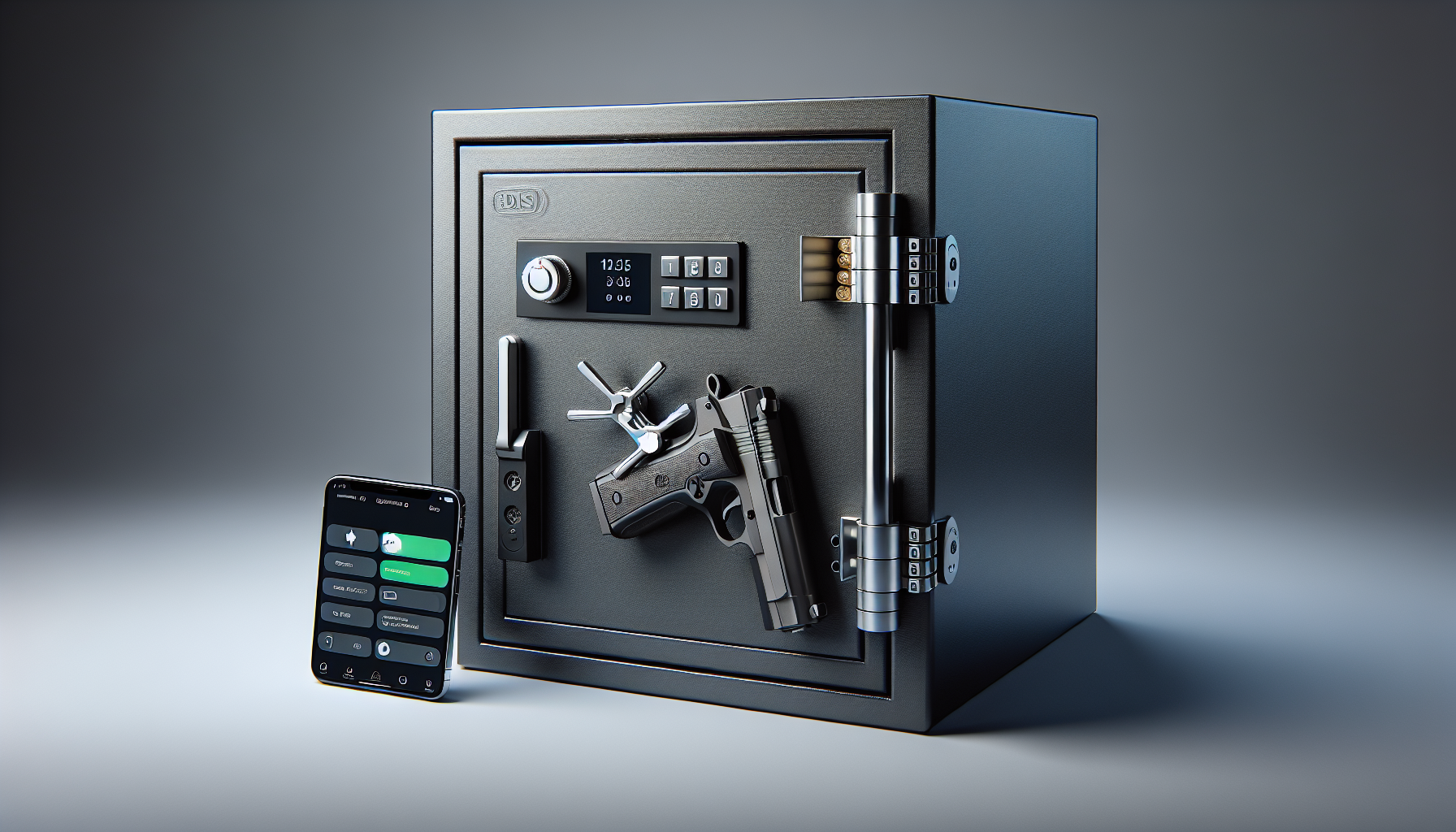
The best gun safes with remote access and mobile app integration combine burglary resistance, responsible firearm storage, and real-time digital control. In practical terms, these safes let an owner lock, unlock, monitor, and receive alerts through a smartphone, while still relying on traditional barriers such as hardened steel, reinforced doors, relockers, and secure mounting. As more buyers look for connected home security products, smart gun safes now sit at the intersection of physical protection, legal compliance, and convenience. That makes this buying guide especially important for anyone building a complete firearm storage plan under the broader Gun Safes & Safety category.
Remote access means the safe can communicate beyond its keypad or biometric reader, usually through Wi-Fi, Bluetooth, cellular backup, or a gateway device. Mobile app integration means a manufacturer provides software for setup, permissions, notifications, battery status, activity logs, and sometimes remote opening. These features are useful, but they also change how a buyer should evaluate a safe. A good traditional safe can be judged by steel thickness, lock quality, fire rating, door gap, bolt work, and anchoring options. A connected safe adds another layer: encryption, app reliability, firmware updates, user management, event history, and failure behavior during power or network loss.
I have worked with firearm storage buyers who focused only on gadget features and ignored the fundamentals, and that is where expensive mistakes happen. A phone alert does not compensate for thin steel. A polished app does not replace secure bolt-down installation. The best smart gun safe is not the one with the longest feature list; it is the one that protects access, protects contents, and behaves predictably under stress. For households with children, frequent travel, multiple authorized users, or a need to audit access, remote access can be genuinely valuable. For others, it may add cost and complexity without meaningful benefit. This hub article explains how to buy wisely, what features matter most, which tradeoffs deserve attention, and how to compare options across handgun safes, long-gun safes, bedside vaults, and modular cabinets.
What remote access and app integration actually do
A remote access gun safe connects physical access control with software-based oversight. The exact feature set varies by manufacturer, but most app-enabled safes include some mix of instant notifications, tamper alerts, low-battery warnings, access history, administrator controls, and temporary permissions. In higher-end models, the app can also confirm whether the safe is open or closed, monitor humidity through optional sensors, and trigger remote unlock only after identity verification. That matters because smart access is not just about convenience; it is about maintaining control over who accessed the safe, when they did it, and whether anything unusual happened while you were away.
Buyers often ask whether Bluetooth counts as remote access. Strictly speaking, Bluetooth-only systems offer local wireless control, not true remote access, because your phone usually must be nearby. Wi-Fi and cellular-connected models can send alerts to your phone from another location, which is what most buyers mean when they want to monitor a safe remotely. If your goal is travel monitoring or after-hours oversight at a second property, Wi-Fi or cellular matters. If your goal is fast bedside access without entering a code in the dark, Bluetooth plus biometrics may be enough.
Another common question is whether app-enabled safes are less secure than mechanical or standalone electronic safes. The honest answer is that connectivity introduces additional attack surfaces, but strong implementation can keep risk manageable. Reputable brands use encrypted communication, signed firmware, multi-factor identity checks, and local fail-secure behavior if the network drops. Weak brands often provide vague security claims, infrequent updates, and little information about cloud architecture. When I evaluate a connected safe, I treat the software stack the way I treat a lock body: if the manufacturer cannot explain how it works, I assume corners were cut.
Core buying criteria: physical security comes first
The single biggest mistake in this category is shopping like you are buying a consumer gadget instead of a security container. Start with the safe body. For handgun safes and bedside vaults, look for heavier steel than the ultra-thin shells common in low-cost imports. For full-size gun safes, attention should go to body gauge, door plate thickness, continuous welds, internal hinges versus exposed hinges, hard plate protection for the lock, and active locking bolts that engage the frame cleanly. Many residential security containers are sold with attractive interiors and bold marketing, but their true performance depends on steel, lock protection, and anchoring.
Certification matters. California Department of Justice firearm safety device listings help confirm baseline compliance for some storage products. UL certification for locks and burglary classifications, where available, is even more useful, though many consumer gun safes are not fully burglary rated in the way commercial safes are. Fire ratings deserve similar scrutiny. Ask who performed the test, how long the exposure lasted, whether the rating was independently verified, and what internal temperature threshold was used. A label stating thirty or sixty minutes means little without testing context.
Mounting is nonnegotiable. A compact smart handgun safe with excellent app features can still be carried out by a burglar if it is not anchored to structure or heavy furniture. In real installations, I recommend evaluating pre-drilled anchor holes, supplied hardware quality, and whether the mounting surface can support both security and quick access. For closet installations and modular cabinets, confirm clearance for door swing, app-enabled keypad access, and service access for batteries or electronics.
| Buying factor | What to look for | Why it matters |
|---|---|---|
| Connectivity type | Wi-Fi for remote monitoring, Bluetooth for local control, cellular backup if offered | Determines whether alerts and commands work when you are away |
| Locking system | UL-listed electronic lock, quality biometric sensor, physical override policy | A smart app cannot rescue a weak primary lock |
| Steel and construction | Heavier gauge body, reinforced door, anti-pry design, lock hard plate | Prevents smash-and-grab and pry attacks |
| Power management | Replaceable batteries, external power option, low-battery alerts | Reduces lockout risk and keeps remote features operational |
| Software support | Regular firmware updates, event logs, account security, stable app reviews | Connected security products need ongoing maintenance |
Key smart features worth paying for
Not every connected feature justifies a higher price. The most valuable features are those that improve security or accountability in a measurable way. Real-time alerts rank first. If the safe is opened, tampered with, moved, or left ajar, a fast push notification gives you a chance to respond. In family homes, access logs are also highly useful because they show exactly when the safe was opened and by which enrolled user. That is more than a convenience feature; it creates traceability and reinforces storage discipline.
Multi-user management is another feature that deserves careful attention. Some households need two authorized adults, while others want one administrator and one emergency user. The best apps let you manage permissions precisely, revoke access immediately, and avoid sharing one universal code. Temporary digital credentials can be useful for ranch properties, guided hunts, or supervised range access, but only if expiration rules are clear and local unlocking methods are still strong.
Battery reporting sounds minor until a safe fails during an emergency. Good connected safes report battery level early, not only when charge is critically low. Some also support external jump power from a USB battery pack or 9-volt source. I consider this essential for bedside safes and vehicle vaults, where delayed access can defeat the product’s purpose. If a manufacturer does not explain failure mode during battery depletion, that is a warning sign.
Biometric integration needs balanced evaluation. A quality fingerprint reader can speed access, especially under stress, but poor sensors create frustration and false rejections. The best implementations allow multiple enrolled fingers per user, combine biometrics with a keypad or app fallback, and store prints securely on-device rather than relying on remote verification. For defensive access, redundancy is a requirement, not a luxury.
Comparing safe types for different buyers
Connected handgun safes are the most mature segment. They are popular for nightstands, closets, offices, and vehicles because app features match the use case: fast access, tamper alerts, and remote status checks. Buyers choosing a bedside unit should prioritize one-handed opening, quiet operation, interior lighting, and a mounting method that prevents theft of the whole box. Hornady, Vaultek, and several newer brands have pushed this category forward, though feature quality varies widely by model.
Full-size gun safes with mobile app integration are less common but increasingly relevant. These are better for owners storing multiple long guns, optics, documents, and ammunition in a single controlled space. In this category, remote features are most useful for door status, interior environmental monitoring, and audit logs rather than instant remote unlocking. I generally advise caution with any large safe marketed primarily around opening from a phone. On a full-size safe, durability of the lock mechanism, relocker design, fire sealing, and anchor strategy matter more than flashy app demos.
Modular gun safes and gun cabinets occupy a middle ground. They can fit apartments, upstairs rooms, and tight closets where welded safes are difficult to move. App connectivity may be attractive here because these products are often installed in lived-in spaces where monitoring matters. Still, modular construction needs close review. Panel joints, fastening systems, and anti-pry geometry should be examined as carefully as the software.
Vehicle gun safes deserve special mention. A mobile app may help with status alerts, but vehicle storage brings heat, vibration, and power challenges. Electronics that work well indoors can behave differently inside a truck through summer and winter extremes. If you are shopping for a console vault or tethered lock box with smart features, verify operating temperature range, battery performance, and whether the app remains usable without dependable network coverage.
Security, privacy, and reliability concerns buyers should not ignore
Any device with a wireless connection raises obvious security questions, and firearm storage deserves a higher standard than ordinary smart home gear. Start by reading the manufacturer’s privacy policy and support documentation. Does the company explain whether access logs are stored locally, in the cloud, or both? Does it support two-factor authentication for accounts? Are firmware updates delivered securely and issued regularly? Can you delete user data if you sell the safe? These are basic questions, yet many buyers never ask them.
Reliability matters just as much as privacy. A safe should fail secure when the internet goes down, but it should also provide a dependable local opening method for authorized users. In field use, I look for app history that records offline openings once the device reconnects, clear warning indicators for lost connection, and straightforward battery replacement procedures. A connected safe that becomes confusing the moment Wi-Fi drops is not ready for serious use.
There is also a legal and ethical layer. Firearm owners are responsible for preventing unauthorized access, especially around children and prohibited persons. Remote monitoring can support that duty, but it does not replace safe handling, separate ammunition practices when appropriate, and household training. In some states, storage laws impose specific obligations after a minor could reasonably gain access. Buyers should confirm local legal requirements before relying on any product claim about compliance.
How to make the final buying decision
The best way to choose among gun safes with remote access and mobile app integration is to rank needs in this order: security level, access speed, storage capacity, connectivity reliability, and total cost of ownership. Security level means resistance to theft, prying, and unauthorized access. Access speed means how quickly the right person can open the safe under normal and stressful conditions. Capacity means realistic room for firearms, spare magazines, optics, documents, and future purchases rather than a marketing number based on tightly packed rifles without accessories.
Total cost of ownership is often overlooked. A safe may require batteries, a subscription for expanded alerts, replacement desiccants, accessory sensors, mounting hardware, or a Wi-Fi bridge. Warranty support also matters. I give more weight to brands with responsive support, clear replacement parts availability, and documented firmware support windows. Reviews should be read carefully; patterns of failed app pairing, lockouts, or poor customer service are more meaningful than isolated complaints.
For most buyers, the right choice is a physically robust safe from a manufacturer that treats connectivity as a security feature, not a gimmick. If you want a bedside handgun safe, prioritize reliable local opening and useful alerts. If you want a full-size gun safe, prioritize steel, fire performance, anchoring, and audit-quality monitoring over remote unlocking theatrics. If you are comparing products across this Buying Guides hub, use each subtopic article to go deeper on fire ratings, biometric locks, modular construction, installation, and child-access prevention. Start by defining your use case, then compare safes against the criteria in this guide, and buy the model that protects both your firearms and your peace of mind.
Frequently Asked Questions
What features should I look for in a gun safe with remote access and mobile app integration?
When comparing the best gun safes with remote access and mobile app integration, start with security first and smart features second. A quality connected safe should still be built like a true security product, not just a metal box with Bluetooth. Look for heavy-gauge steel construction, a reinforced door, anti-pry edges, internal or external hinges designed to resist attack, live locking bolts, and relocker protection that helps secure the mechanism if someone attempts forced entry. Pre-drilled anchoring holes are also important because even a well-built safe can become more vulnerable if it is not properly mounted to the floor or wall.
On the digital side, the mobile app should do more than simply unlock the safe. The best systems allow you to monitor lock status, review access history, receive tamper alerts, manage user permissions, and get low-battery notifications. Some models also support geofencing, audit trails, temporary access codes, and multiple authentication options such as biometrics, keypad entry, RFID, and smartphone control. Reliable encryption, two-factor authentication, and regular firmware updates are especially valuable because connected safes are now part of a broader smart home environment. In short, the ideal product combines burglary resistance, responsible firearm storage, and dependable app-based visibility without sacrificing core physical security.
Are smart gun safes with app control actually secure, or do they create new risks?
Smart gun safes can be secure, but only when they are designed properly and used responsibly. The biggest misconception is that app integration replaces traditional protection. In reality, remote access should be viewed as an added control layer, not the primary defense. A secure smart gun safe should still rely on hardened steel, a strong locking mechanism, reinforced construction, and secure anchoring. If the unit is physically weak, mobile features will not make it safer. The app matters, but the safe itself matters more.
That said, connected features do introduce additional considerations. Any device with wireless capability can present cybersecurity risks if it uses weak encryption, outdated firmware, or poor account security. That is why it is important to choose brands with a strong reputation for secure software development, encrypted communications, and consistent update support. Owners should also use strong passwords, enable multi-factor authentication if available, keep the app and firmware up to date, and avoid sharing login credentials. Many buyers also prefer safes that maintain local access methods such as keypad, biometric reader, or mechanical override in case internet or phone service is interrupted. Used correctly, a smart gun safe can improve security by delivering real-time alerts, access logs, and faster control, but it should always be part of a layered approach that includes strong physical construction and safe firearm handling practices.
How useful are mobile alerts, access logs, and remote monitoring in everyday firearm storage?
These features can be extremely useful because they turn a gun safe from a passive storage device into an active security tool. Mobile alerts can notify you if the safe is opened, left unlocked, tampered with, or experiencing a low battery condition. That kind of real-time awareness is valuable whether you are at home, at work, or traveling. If a child, unauthorized person, or intruder attempts access, immediate notification can give you time to respond quickly and appropriately. For households focused on responsible firearm storage, this visibility can provide meaningful peace of mind.
Access logs are also one of the most practical advantages of app-connected safes. They create a record of when the safe was opened, how it was opened, and sometimes which user account was used. This can be helpful for multi-user households, training environments, or owners who want accountability over access events. Remote monitoring does not eliminate the need for careful storage habits, but it can support them by making it easier to verify that the safe is secured. In practical terms, these digital tools help owners maintain tighter control over their firearms while still depending on traditional security elements such as steel body strength, door design, lock integrity, and proper installation.
Can a gun safe with remote unlocking still be considered responsible and compliant for firearm storage?
Yes, but only if it is used within the framework of safe ownership, local laws, and common-sense access control. Remote unlocking can be convenient, especially for verifying status, granting temporary access to an authorized adult, or managing the safe while away from home. However, convenience should never undermine secure storage principles. Responsible firearm storage still means keeping firearms inaccessible to unauthorized users, especially minors, prohibited persons, or visitors who should not have access. A connected safe should support that goal, not weaken it.
Before relying on remote features, owners should review state and local storage laws, child access prevention standards, and any rules that apply to their specific circumstances. In many cases, the issue is not whether the safe has app control, but whether the firearm remains securely stored and inaccessible to unauthorized individuals. Features such as permission-based user profiles, app alerts, audit trails, and secondary authentication can help support responsible use. It is also wise to store the safe in a discreet location, anchor it properly, separate ammunition when appropriate, and avoid enabling remote access for anyone who does not genuinely need it. A smart gun safe can absolutely fit within responsible firearm storage practices, but only when the technology is paired with disciplined owner behavior and a strong physical security design.
What are the biggest differences between Bluetooth, Wi-Fi, and biometric app-enabled gun safes?
The main difference is how the safe communicates and how that affects convenience, range, and reliability. Bluetooth-enabled gun safes typically connect directly to your phone at short range. They are often simpler to set up and may reduce internet-related exposure because they do not always rely on cloud access. This can be appealing for users who want nearby smartphone control without extensive remote connectivity. The tradeoff is that Bluetooth generally limits how far away you can manage the safe and may not provide the same level of off-site monitoring as a Wi-Fi model.
Wi-Fi-enabled gun safes usually offer the most robust remote features. They can send alerts while you are away, sync access history through the app, and let you monitor status from virtually anywhere with a secure connection. For buyers who want real-time oversight as part of a broader smart home setup, Wi-Fi integration is often the most capable option. However, it also increases the importance of good cybersecurity, strong account protections, and reliable firmware support from the manufacturer.
Biometric gun safes add another layer by using fingerprint recognition for quick local access. In many modern models, biometrics are combined with keypad entry and app management to create multiple ways to unlock and monitor the safe. This can be especially useful for rapid access in a home-defense context, though fingerprint performance varies by sensor quality, finger condition, and environmental factors. The best approach is usually not choosing only one technology, but selecting a safe that combines strong physical protection with redundant access methods. A well-designed safe may offer biometric entry for speed, keypad access for consistency, and app integration for monitoring and control, all backed by reinforced steel construction and secure mounting.